Subscribe
Share
Share
Embed
The podcast for high achievers who want to stay sharp, focused and full of energy despite their diagnoses. Those who know there has got to be something better than simply accepting decline.
Hosted by Julie Howton, a National Board Certified Functional Medicine Health Coach who used to suffer from crippling Rheumatoid Arthritis until she learned the tools and strategies to take her power back from autoimmunity.
In this podcast, Julie brings you interviews with thought leaders in the Functional Health and Wellness space. You will get actionable recommendations to Take Your Power Back and catapult your health. No fluff, just concrete, useful steps to improve your health!
Sleep deprivation can
bring up so many emotions.
It causes this small irritations
that can truly escalate into
these major frustrations.
So now you can't truly manage
your stress effectively.
Many people get sick, because
they're in this incredible drive.
You've pushed through it and
you've lost your actual resilience.
Your body naturally doing methylation
naturally detoxing so that when you
close your eyes to go to sleep at night,
you're going to have a deep REM sleep.
Welcome back to the Inspired
Living with Autoimmunity podcast.
I'm your host, Julie Michelson.
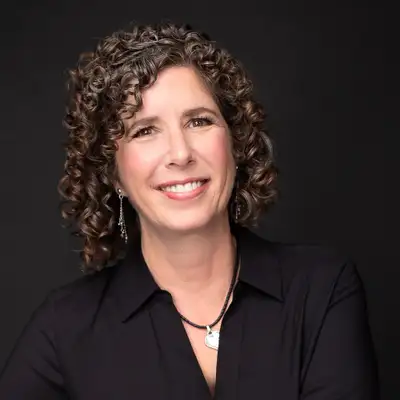
And today we're joined by Dr.
Holly Donohue, licensed board certified
naturopathic doctor dedicated to helping
individuals find joy in good health
and achieve their full potential.
With over 17 years of experience,
she focuses on personalized
preventative care to support
balanced and healthier lifestyles.
Her passion for naturopathic
medicine stems from her own health
journey nearly 30 years ago when
she experienced severe headaches,
hormonal imbalances, and depression.
Dr.
Donahue runs a full time clinic in
New Hampshire, where she works with
patients daily, guiding them toward
healing their bodies naturally.
She's also the founder of Simple Health
and offers a trusted resource for
those seeking natural health solutions.
She believes that better health is within
reach for everyone and is committed to
guiding patients through their wellness.
In today's conversation, we're
talking about the importance of
sleep and nutrition to create
wellness and the connection between
blood sugar, stress, and sleep.
We further explore how getting back
to nature is not only essential, but
the key to total empowered wellness.
Holly, welcome to the podcast.
Oh, thank you so much
for having me, Julie.
It's so grateful to be here.
It
is truly my pleasure.
I'm really excited for our conversation
and I would love for any of my listeners
that aren't already familiar with
you, which hopefully most of them are.
Um, I would love for you to share a
little bit of your journey of how you
became an expert in the wellness space.
You know, is this, was this
a lifelong passion and dream?
So no, and you'll love my story.
So when I was 16 years old, I had
severe depression and severe PMS
menstrual cycle, horrible cramps.
Like I just used all my energy
throughout the week to actually function.
And then on weekends I would
sleep and then I would get
up and I would do it again.
And I did really well in sports and
school, but however, I didn't realize
that it was a detriment to my health
and that, you know, every, everybody
else was feeling differently than I was.
And so I was like, huh.
And I started really doing a deep dive
into like, how could I heal myself?
And so now push yourself forward into
your twenties and now I've graduated
college and I'm doing okay, but
not great meaning like physically
I was challenged to lose weight.
I just felt like I was holding on
to so much and I thought there was
something really like wrong with me.
And the truth is, is there
was nothing wrong with me.
It's just that my hormones are in balance.
How it started was when I was 18, I
went and I saw my gynecologist, right?
You get your yearly exams at that
point once you start cycling and she's
like well If you're having horrible
menses and horrible clotting then
let's give you the birth control pill.
I knew you were gonna say it I'm like,
I'm not sexually active like I'm 16
or 18 years old at that point, right?
And I'm like, so I took it, took it home.
And I looked at it and I'm like, I
took it once and I felt so bloated.
And I'm like, this is really odd.
Just taking this pill.
Like that makes no sense.
My mother was a mental health therapist.
So she was worried about now I
have depression and she was really
worried about my depression.
So she's like, well, let's get
you some support around that.
I'm gonna take you to the psych
psychiatrist that I send my patients to.
And I'm like, okay.
So I walked downstairs into this home.
Her office was out of the home, and
she was an interesting looking woman.
No judgment.
But she looked at me out of the
top of her glasses and she said,
so tell me why you're here.
And I, and she said, I'm told by
your mom you have severe depression.
I said, I do.
And she said, are you suicidal?
I said, no.
Have you ever had suicidal thoughts?
No, and she's like, okay, well, I'm going
to give you some, um, Prozac or lithium.
I can't remember.
And, um, you're going to start
taking this and it's going
to allow you to feel better.
And I said, okay, it was about a
seven minute conversation and I
turned around and I started to go up
the stairs and she said, now you go
take that and you get that filled.
And I'm like, thank, thank you.
And, uh, have a great day.
And she's like, well, you
really need to get that filled.
And I said, I'm not feeling this.
There's no pill that's
going to make me better.
Now I was 18 years old at that point,
and I knew that taking a pill for
an ill was not going to heal me.
So now move forward.
I'm now in the apparel industry.
I'm loving what I do.
I kept searching, kept searching.
I was going to solve this problem
because I still did not feel great.
I found Dr.
James Sadamo, the founder of the
blood type diet, and he saved my life.
And that's truly my story.
And so when I was 30, he
said, we need more naturopaths
and you'd be great at that.
And I'm like, I really love what I do.
So I'm just going to stay here.
No, we really need more naturopaths.
I'm like, that's fantastic.
I'm 30.
I'm not going back to school, not
doing all the education, nor could
I ever see myself as a doctor.
He said, okay, well, I'm just
going to keep planting the seeds.
Two days after 9 11.
I got laid off into a job
that I love six figure income.
It was fantastic.
They no longer needed me because I set
up all their systems and I was known as
a change agent in the apparel industry.
So
here I am 20 years later practicing and
it's the best thing that I've ever done.
Wow.
Amazing.
So you, I mean, the interesting thing
is Innately, you knew there was another
way, which is amazing because, I mean,
how many, you know, how many teenagers
handed the pill are going to not take
it, you know, because it made them feel
bloated, if it could maybe fix the other
things, or, Um, you know, who leaves
a psychiatrist's office and says, no,
you know, this is all feels wrong.
It feels wrong.
So you honored, you honored
that voice that new, I love it.
And I'm
one of the other things that happened
as well, just so you guys know
is when I was seven years old, I
got strapped, I got strapped ear
all the time and strep throat.
And so my mom came to me at
seven and said, we're going to
have your tonsils taken out.
And I looked at her and I
said, We're not doing anything.
And she said, well, your
sister's had them out.
They feel fine.
I said, that's great.
I said, nobody is going to cut me
and take anything out of my body.
And she goes, but honey,
you're going to feel better.
And I said, you're not selling me on this.
You can cancel that appointment.
Cause I'm not going.
I walked away.
Now that was seven years old.
Okay.
Yes.
Yeah.
Oh my gosh.
That's amazing.
I mean, seriously, that's
really pretty unheard of.
Um, and so, you know, I'm glad you
enjoyed your time in the apparel
industry, but clearly you are doing
what you were supposed to be doing.
I know.
I mean, how, and you do too.
How many adults do you know
that do shush the voice, right?
They're told there to be polite
or, you know, or they have the,
the, well, the doctor's the expert.
So they say, take a pill.
I'm going to take the pill.
I know that's a me.
How's your depression now?
I have no depression.
I have not had depression since
I was 30 years old, probably 28.
Once he started, Um, so people are
going to be like, well, what did you do?
He fixed my thyroid.
I stopped eating food.
That was not good for my body.
I started exercising first thing
in the morning instead of in
the evening, I slept better.
I just changed my whole lifestyle and
I began to learn what my body needed.
Yes.
Underscore my, because I love that
you say, you know, it is true.
People are like, well, what did you do?
I'll do that.
And, you know, that then I'll be healed.
And it's like, well, yeah, I
mean, there is an umbrella.
You need to hit those things.
The sleep, the exercise, the food,
the stress, all of the things.
Um, but it's going to look
different for each of us.
So I love that.
Um, I know that Reese, by the time this
is airing, you have recently come off
your blood sugar summit and you've been
running all these amazing programs.
I want to talk because we
really don't, haven't spoken.
And to me, there's such a direct connect
between autoimmunity and obviously
inflammation, but, and, and blood sugar.
Um, and I was, I want to talk a
little bit about, or a lot of it.
really want to talk about sleep,
but then also including this, you
know, what, what does what you're
eating have to do with sleep?
Because usually by the time someone
finds me or you, you know, they're not,
they're in a cycle, you know, they're not
sleeping well, they're not eating well.
It's this, you know, chicken egg.
It's not pretty.
Um, so can you share with us a little bit
about, you know, the importance of sleep
and I think everybody understands the
importance, but like, really, what role
is it playing in this path to wellness?
Yeah, so such a good question, because
one of the first things that I want
to say is, um, What you mentioned,
like I figured out what worked for
me, I created my vision for my health.
And then I leaned into my naturopath
at the time to help support me.
And so when we're looking at Whole health.
Like we do in the natural medicine world.
It's the seven, I think of
the seven pillars of wellness.
Um, not, not only including like
your vision of where you're feeling,
but we're also looking at physical
gut health and brain, your mental,
your emotional and your sleep.
And so Julie, when you asked me this
question, the first thing that comes
to my mind is that all of those pillars
that I just talked about really provide
a natural approach to healing, right?
Um, so it's the physical symptoms that
brings the patient often to the clinic,
but then it's up for me to get to the
root cause of really what's going on.
So And by the time patients get
to me, I always get this comment.
It's really interesting.
You are my last resort.
So when I think about sugar and I
think about sleep, the first thing
that I want to talk about briefly
is the foundation of your medicine
and who you are is your nutrition.
Yes, it's your genetics, knowing
your genetics and its understanding.
But we also know that from the
external world, we can affect our
genetics called epigenetics, right?
But if we know, like I learned
what nutrition works best for
me, I don't have a label on it.
I don't have to keto yours.
Yeah, I don't have to
say I'm any of these.
However, what I know that works for me
personally is high protein, high veggie,
you know, fats and like no grains.
Right.
But I had to figure that out.
So I want to empower
each listener here is.
One of the things I talk about is
how can you begin to learn your own
body and how can you feel the energy
from the foods that you're eating
when you eat a balanced nutrition?
You're going to naturally
balance your blood sugar.
So what does blood sugar have to do with
sleep and the foundation of who we are?
Unfortunately, many of us are running
around in a dysregulated environment.
Our nervous system is in the sympathetic,
the, the fight or flight, the go, go, go.
We're, we're human doings,
we're running, we're running,
we're not being in our body.
We're not taking the time to be in the
parasympathetic, which is the rest and
the digest and the yin and the breathing.
So we're in that cycle of running,
especially coming into the seasons
that we're in, depending on
when this is actually put out.
Yeah.
So yeah, so you're in this hustle
and bustle and you're not stepping
back and being like, what's
important to me, cortisol balances,
both blood sugar and sleep.
So let's talk briefly
about this Arcadian rhythm.
Then I'll bring cortisol in and I'll
tie it all back together if that's okay.
Of course.
Absolutely.
Absolutely.
Sympathetic is your cortisol is your
friend until you take it out of control,
meaning you push and you push and you
go and you go and you never relax.
So when you wake up in the morning,
cortisol should be not elevated, but
it's going to be higher in the morning.
Then it starts to drop off.
This is your circadian rhythm
of your body, by the way.
Then you have a little
ideally, hopefully exactly.
And then it drops off and then
melatonin kicks in and says, Oh, really?
It's time for you to go to sleep.
So then thank you for
that, like peaceful energy,
right?
So then if we talk about blood sugar,
if blood sugars balance, cortisol is
going to do what it's supposed to do.
It's going to naturally do the rhythm.
It's going to naturally balance itself.
It's not going to have spikes.
It's not going to be highs and lows.
However, cortisol will kick in.
If your body can't regulate the blood
sugar, if you take in too much sugar into
your body, cortisol is like, holy cow,
like so much insulin's being like, you're
in that stress, you've got all this sugar.
And then cortisol comes in to, for
you to survive because what your body
doesn't know, it doesn't know that
you're in a like stressed out state.
All it knows is like, holy cow, I need
to run from that saber toothed tiger, but
we're living in that sympathetic state.
We're driving the cortisol up.
Our blood sugars are up
and down, up and down.
Our cortisol is kicking in because you've
got to be in survival and your blood sugar
has got to be balanced for you to survive.
And it becomes the, it's
this two way street, right?
Because our, our beautiful.
acute stress response.
If we were living back when
a saber toothed tiger would
be our stressor, right?
You want your body to release blood sugar
and energize you so you can run, right?
And so it becomes this, so when we're
living in this, It's constant state of
stress, whether we're aware of it or not.
We're driving blood sugar.
And when we increase our blood
sugar, we're driving like,
how do you get out of that?
Where do you start with people?
Yeah.
So the exactly where I start with
people, which, which is what I've been
taking people over through the last.
Five days or so with sugar cravings
and release your sugar cravings is
start to be aware of how much starch
and sugar that your body needs.
Because people think like, well, I'm
not eating sugar, but then they're not
looking where shouldn't sugar lurches
and where it's like hiding and like in
the sodas or even iced teas at the store.
Like it's, you could be eating like
all this fruit, but it's sugar.
So figuring out how much.
carbohydrate that your body actually
needs and fat and protein ratio.
That is what we call our macro nutrients.
Also, I'm balancing out your hormones.
So your hormones become
dysregulated when everything has
to go to stress and cortisol.
So what many people don't realize is
vitamin D and cholesterol is the best
backbone to cortisol, but vitamin D
and cholesterol also the backbone to
every single hormone in your body,
including insulin, including estrogen,
including progesterone and testosterone.
And so Why are people having
these cycles that are off these
menstrual cycles that are off or
even men andropause and whatnot.
It's that push.
They're utilizing that cortisol
drive and then their lymph becomes
affected and you can't detox naturally.
So I start with nutrition and then
we cycle into how stressful is your
life and how can we begin to balance
stress and how is your sleep patterns?
Yeah, and, and they're all like,
you can't just go after one.
They all impact each other.
And I love that you brought that up.
We tend to not, especially in today's,
you know, the push, push society.
I love that you highlighted,
like, we have resources.
That have to get allocated.
So it's like, okay, you know,
here's a vitamin D and cholesterol.
We're going to make hormones with,
you know, if we're using it all up
for cortisol, we're out of luck.
And I love that you brought that
up because I do, I mean, it's,
I see, you know, men and women.
I have had.
Male client.
I've had more than one male
client with lower testosterone
than me and higher estrogen.
That's not okay.
And these were not, these, these
were, you know, younger, 30s.
One was in his 30s.
One was in his 40s.
That shouldn't be,
yeah.
And the other piece that I also
think of as well with having the
hormone imbalance is really like
eating whole nutrients dense food.
And so if you're eating food that has
obesogens in it, has estrogen disrupting
foods in it, like it has to go somewhere.
So
the body is going to, you know, store it.
And then it can also
throw your hormones off.
as well.
And if you're not detoxing appropriately,
and I'm not saying just go on a
detox for three weeks and then you're
one and done just to lose weight.
I'm like your body naturally doing
methylation naturally detoxing
so that when you close your eyes
to go to sleep at night, you're
going to have a deep REM sleep.
The other piece that many people
also don't think about was
sleep to step back into that.
is your, if you're not eating the
foundation of your nutrition and
figuring out what works for you
and how much workout do you need?
How much stress can you take on?
By the time you go to bed at
night, you're not realizing that
your sugar could be doing this.
And that's, what's truly waking you up and
not letting you get into deep REM sleep.
I love that.
Let's talk about that.
Cause again, as some, it is.
often, you know, pieces of a puzzle.
And so when, when I want to talk about
the wake ups and then I want to talk
about the quality, because you touched
on both and they're both so important.
I know so many people that say, Oh
no, my, you know, my sleep is good,
but the quality is not, they're
not getting restorative sleep.
Um, There is, you know, what are some
of the things if you're in, if listeners
are, are in a wake up pattern, meaning,
okay, you know, my, maybe my routine
is good and I go to bed on time and I'm
working on the things, but I notice I
wake up around the same time every night.
Um, what are some of the things?
So blood sugar, blood sugar.
Yeah, blood sugar could
definitely be one of those things.
So one of the pieces that I work on
with like the sort of symptomatology
that you're talking about with the
patient, the first thing, again, like
I'm going to keep harping on this.
I go back to whole nutrients,
dense foods, do you need fat
before you go to bed to get her?
Yeah.
They're balanced.
Do you need protein?
Like insulin is needed for protein and
carbohydrates, but what do you need?
Like, what does your body need?
Are you starving your body and
not eating enough calories?
Which is truth to like 60
to 70 percent of Americans.
They do not.
Especially women.
Yeah.
Yeah, they're in this cycle,
exercise more, eat less, right?
That's what we were told
for a long time.
That is right.
That
is right.
Yeah.
Like people don't realize the
importance of protein and you have
to figure out what works for you.
Like I give you a general idea of
one gram per pound of body weight,
but maybe that's too much for you.
And that's your ideal body weight, by
the way, maybe that's too much for you.
Right.
Maybe you need to eat a little less.
Maybe you just need to
eat protein at each meal.
But why am I saying protein?
Protein and fat sustain you
for longer periods of time.
Yes.
And so sometimes I'll say to a patient,
maybe you need to have a handful of
almonds or walnuts before you go to bed.
We'll move through that cycle.
Um, I'm sleeping a little
better, but still not.
Okay.
Well, what is your meal?
When did you last eat?
Try to not two to three hours before bed.
So your food is digested.
So you're not digesting
and being woken up.
Like these are all real pieces.
Like I don't just say eat this
and you're going to sleep, right?
Yeah.
So if you don't eat the right
balance nutrition for your body,
like Julie was saying, your
blood sugar can drop at night.
And it's going to wake you up because
now cortisol is going to kick in and it's
like alarm, alarm, alarm, alarm, alarm.
And so then you're like,
Whoa, why did I wake up?
Right.
Or if you don't, if you are
challenged with doing your sleep,
sorry, I teach people what is your
sleep ritual before you go to bed?
Yes.
Are you looking at blue
lights before you're going to
bed to stimulate your eyes?
Like, are you looking at a phone?
Are you having disruptive conversations
where you're going to solve the
problem throughout the night?
Cause you couldn't solve it.
Like, what does that look like?
You want to get as much into a
calm state and be as grounded
as you can before you go to bed.
If you're someone that lives in your
head, I sometimes suggest people
buy earthing mats, grounding mats
to help around them for sleep.
I think that's brilliant.
I know people always laugh at me
when I'm like, all right, we're
going to start working on sleep.
And the first thing I have
people do is start getting
morning sunlight in their eyes.
And they're like, wait, I thought we were
working on sleep back to circadian rhythm.
Guess what?
It starts first thing in the morning.
I always think of.
You know, when we, we think of
circadian rhythm, it's the same
with all the things, stress, food,
circadian rhythm, sleep, all right.
If we think of, you know, back to
times when we're running from a tiger.
What did the day look like?
Like, we know light drives our circadian
rhythm, and we know that with technology,
you know, if you, it's just like with
stress, like, if you are not being
intentional about doing things to
compensate for today's world, You're
not going to be nailing it, like for
sure, and think about, it just always
makes me happy to think about, um, if
you, you know, think about nighttime,
when we talk about nighttime rituals,
well, what were we doing at nighttime?
We were sitting in front of a fire, right?
Like we had that nice orange light,
think of sunset, think of fire.
Like who gets stressed out sitting
in front of a fire outside?
Like nobody, like we need to, I'm not
saying everyone needs to go sit in front
of a fire, but, but that's how like.
woven in these rich, you know, our
bodies are designed for certain things
that if we're not being intentional or
missing, by the way, if you were sitting
outside in front of a campfire, you would
also be grounding and earthing when,
you know, you know, so, um, I think so
much of it is, is comes from, you know,
we've gotten so far away from nature
and natural rhythms and and real food.
I mean, Pick a thing.
It's all, you know, now
I'm not bashing technology.
I love that we're on almost opposite
sides of the country and we get to
have this beautiful conversation.
So it's just that I know you and I are
going to take steps to protect ourselves.
Exactly.
And I love what you said
that it's all back to nature.
Hence why I love being a naturopath.
Like, um, getting outside in nature,
like, even though it's starting to
get cooler here in New Hampshire, it's
like, I'm still walking outside and
bare feet and until I can't, I mean,
I always can't even walk in the snow,
but it is a little bit more chilly.
And I've got to be ready for that,
like cold energy to like jolt
me, but just might not want it.
You know what I mean?
You know, we are, you know, so many
children are behind devices, eating
processed foods all the time, not
able to digest the processed foods.
They're, they're getting judged
on their social media channels.
It's disrupting who they
are, disempowering them.
And so I know that's a whole nother
conversation, but it's like, get
back to like people and energy and
love and connection and groundedness.
And then it's not always about
Julie or I giving you the answers.
Like I walk through my patients and
I literally am teaching them if I
could say like to become their own
doctor, like, what does that look like?
What is the symptom?
How do we solve it?
Even back to like childhood, you
know, so for the sleep and the
sarkadian rhythm, like, were you
a child where you got woken up?
Like, is this something that's
still going on in your life?
Or were you a child to like, just be
left alone and cry to go to sleep?
Like this can all be things that
we're working through to get you to
sleep more soundly, you know, um,
or were you spoken To about like you
eat too much and you're overweight.
And so you still have, or did you
have to finish what was on your plate?
Or, I mean, you know, I know
I always say, Oh my gosh.
Um, but it is, it is because
until we address some of those
patterns and stories, it's hard
to create true lasting change.
You know, we need to at least
create the awareness of.
Where did this come from?
Right?
Especially, as you said, heading
into the holidays, um, because this,
I'm guessing, will be airing between
Thanksgiving and the end of the year,
um, and even that, you know, I mean,
everybody has stories, everybody has
patterns that somehow may tip toward
impacting their health in a bad way.
I always joke, I've yet, have you
met anybody I've yet to have when I,
we talk about like comfort foods and
powder, you know, and all the, all
the things we have tied into food.
Have you ever met anybody who
said my mom made the best salads
and that's my comfort food?
Like I've yet to encounter it.
Hopefully, maybe my daughter.
I don't know.
We'll see.
That's so funny.
And the other thing about talking
about the holidays that I kind of want
to talk about as well, when you're
talking about like sleep deprivation,
that can bring up like so many emotions
if you're not getting deep REM sleep.
And your immune system, like why do so
many people get sick through the holidays?
Because they're In this incredible drive.
And as soon as that like is over
or in the middle of the holidays,
you're sick at Christmas or you're
sick at whatever your holiday is.
Right.
Because you've pushed through it and
you've lost your actual resilience.
Um, and the sleep deprivation.
It causes this, like, small
irritations that can truly escalate
into, like, these major frustrations.
So now you can't truly manage
your stress effectively.
Right.
I was just thinking about, um,
you know, think of a toddler.
Who's sleep deprived?
Nobody wants to be around
a sleep deprived toddler.
And it's because they're not trying
to compensate for how they feel
because they're sleep deprived, right?
Like, it's just out there.
Um, we are, that's just a
human without the filters.
You know, so it makes sense if
you, I don't know why that was
the visual as you were talking.
I was thinking, Oh, of course,
like, you know, think of tired.
Nobody wants tired, cranky baby.
That's right.
That's right.
Irritable or angry.
Or like with your blood sugars up and
down, you're not sleeping, you've got
anxiety, or you end up in sadness or
depressive feelings, and then you're
just like, what's wrong with me?
Like, I need an anti anxiety
drug or an antidepressant.
The truth is it's maybe it's just
your blood sugar and your sleep.
Right.
Absolutely.
I mean,
yeah.
Or, you know, any hormone imbalance can
create a lack of stability and emotions.
And, and it's really scary how
we don't, we don't ever anymore.
Well, you do think about, you
know, I, I, you, we do jump
to like, what's wrong with me.
And then we want somebody
to fix it for us.
Um, and it's, you know, often we just
need to, get to those foundational things
that we've all gotten so far away from.
Some of us have come back to them.
Um, but that is, that is the healing path.
And I always say, I'm not anti medication.
There's a time and a place.
Um, and if somebody is on Medicaid,
like don't stop taking your medications,
but doing these things is going to help
those medications work better until
your doctor says, Oh, you know what?
You don't need that.
Um, or until you have that
conversation of like, Hey, I want,
I want to try something different,
but anything we do will work better.
If we're eating well, sleeping
well, moving well, grounding
all the things, right.
I love.
Um, I want to highlight when you were
going through your list of, you know,
can we get back to, you know, connection,
people, energy, and love, like, these
are actually really important things.
And I think we learned over the past
several years how devastating it can
be to health to lose those things.
You know, I remember in 2020, the first
time I had friends over, um, which was
not very far into anything, you know, but
just the, I was like, I'm hugging you,
like we're gonna, and the, just the Joe,
like we, you know, that was the first I
thought, oh my gosh, because some people
went a really long time isolated and, and.
You know, that's an extreme loss of
connection, but we, we have it often
with these virtual, virtual life, right?
We're alone on a screen, but we're,
we're not truly connecting with people.
Well, and touching is so healing.
Yes.
I remember in 2020 and we were having
Thanksgiving and Christmas and my
mother came to me and said, Honey,
like nobody's having Thanksgiving.
Do you think we should?
I
go,
I go, we're with you guys all the time.
My parents are now in their nineties,
you know, they've survived a
couple of different COVID episodes.
It's just like, no, like we don't
know how much longer we might
not all be together as a family.
And I'm not missing this day.
So you can just get that out of your mind.
And we're all coming over all
15 of us for Thanksgiving.
It's a no brainer.
I'm not even questioning it.
Yeah.
Okay.
She said, and she's somebody
that does all natural, but she
still was listening to the play.
What's good for us and for me.
Right.
Right.
And, and yeah.
And again, it goes back to how
were we created to be and live?
And it is those things.
It is connected.
It is eating real food.
It is getting good sleep.
It's having a nighttime ritual.
It's Experiencing love and touch and, and,
and, and, and, um, and so I love that.
I, I had no idea where our
conversation was gonna go today.
I knew it was gonna go somewhere good.
'cause I always love talking to you.
Um, I love that.
I'm like, let's talk about blood sugar and
sleep, and we're talking about connection
and love because there's no one thing.
That is gonna heal somebody.
It, it, it's, we need to start feeling
what's going on in our bodies or in our
heart, you know, in our emotions, like
we're so used to pushing things down,
um, and, and that like pause, especially
again, this, as we're in holiday time,
which can be really hard for people.
Focus on, um, you know,
well, what do I need?
What would make it a good holiday?
And, and listen to, you know, if you're
sleeping well and prioritizing that rest
and recharge through the holidays, however
you spend it, whatever you need, whatever
you do, it's going to go better for sure.
And what Julie just said, your
intuition will be stronger.
And so use your gut, which we didn't, we
don't even have time to get into here.
However, like use your gut
instinct and learn to say no.
If you really don't want to do
something that's going to stress
you out, I want to share with you.
And in a way, like as a doctor, give
you permission that it's okay to say no.
Like that is healing for you because
that is your boundary for yourself.
And you're not disrupting your,
you know, your body by saying no.
And then if you do go out and you go
to these parties that have all these
things that you feel like you can't eat.
Like one of the things I talked about
yesterday is like, look at the table
and make really good choices for what
you get to eat so that you feel good.
So you don't go home feeling like garbage,
because the reality is people think they
sleep better when they drink alcohol
and there's no judgment, but you don't
sleep better when you drink alcohol.
It's just a
fact.
Yeah.
Yeah.
Yeah.
No, it's so true.
And, and I love that you said that
and maybe we'll, maybe we'll do
another episode where we, because
I, I really do feel like so much
of chronic illness comes from the
disconnect again back to the polite.
Can you tell my story back to the
polite girl who is taught not to
listen to her instincts, right?
And then we, we just lose.
We innately are wired.
To have intuition.
And, and I love that you brought
that up, that that can guide us.
So maybe we'll, maybe we'll do
another episode just on, on that.
I'm listening to your gut.
Yeah, totally.
You start to listen to your own
voice and I empower people with that.
And, um, you know, I'm just, I'm
really just so grateful to be
here and like, just spread the
word of health, but also remember.
Like if you don't have a perfect day,
tomorrow is always day one though.
Your next meal or your next thought
or your next step, just change it
because perfection is not health.
No, well, perfect.
That's a whole nother podcast.
Because perfectionism, you know,
somebody asked me once, like, do you have
many clients that are perfectionists?
And I was like, I haven't met
one that wasn't in, in one way
or another, you know, that's.
Tends to be a driver of not great things.
So,
yeah.
But
just be kind to yourself
and love yourself.
And it's okay to like, be like,
Oh, like, I know if I eat this
I'm not going to feel good.
It's okay.
You made that choice.
Yeah.
Right.
Yeah.
I love it.
So it's empowerment and knowing, right?
Like eventually, that's one of my favorite
things about helping people figure out
what are the foods that support them,
what are the foods that don't is, you
know, I have some sometimes foods.
Some things that I'm going to
enjoy, you know, that on it on
occasion, and they're not everybody's
probably thinking like ice cream.
I'm talking like tomatoes, but
it's different for everyone.
Right.
But I know, like, for me, gluten is an
absolute no, no, there is no gluten in
the world that is worth how I am going to
feel and how long I'm going to be sick.
It'll take me out.
That's not a sometimes food for me.
So, but you know, you use the word
empowerment, which is one of my favorite
word, that is the point of this.
conversation of me even
having the podcast, right?
And so that's when we get to that
point where we really know like,
okay, what might be worth it?
What's it going to do?
When's the right time?
That's empowerment.
So we can enjoy and not suffer
consequences that we didn't
realize we were going to suffer.
So that's the gold.
I love that.
That is the gold and knowing you and
knowing what you want and staying in your
vision is so important for your health.
There's no pill that's
going to solve that for you.
No.
So we're at the point where people are
leaning in because they know I'm going to
ask you for one step that they can take.
starting today to improve their health.
Honestly, I would say it's breathing, stop
and breathe and really be aware of your
body and really be grounded in yourself.
Like if you're going to drink
a cup of coffee, like smell it,
feel it, feel joy in it, know
what it is, be connected to it.
And just like breathe and just enjoy being
in your own company and loving yourself.
And there's more people are
going to want to be around you,
but just live in your body more.
I love that.
That was a lot of one things, but
they're all connected.
Just live and be present.
Maybe you can say that like live
and be present in anything that
you do, just be present with your
breath and present with yourself.
I
love
it.
And it is one thing and, and
the breath will get you there.
And so I, it's, it's the hardest
question and I ask it all the time.
And so I don't ever actually
expect it to be like, boom.
This is it.
Yeah.
But that is the start.
I love it.
You know, living in your
body and being present.
So, uh, thank you so much.
You've given us such amazing gold
and there's so many things I want to
have you back to talk about again.
So hopefully you'll, you'll join us again.
For everyone listening, remember,
Oh, I forgot that I'm rewinding it.
We're not even going to cut this out
for people that are listening on the
go and aren't going to check the show
notes that I'm going to talk about.
Where can they find you?
Oh, love that.
So you can find me at Simple
Health Incorporated online.
I do blogs and everything, or you
can actually email us at info at
simplehealthnh.
com, newhampshire.
com.
So feel free to reach out to us.
We're always doing all sorts of fun things
and even get on our email list and you
get our, my weekly, uh, raise your energy
email that can help you with simple steps.
Love it.
Thank you again.
Yeah.
For everyone listening.
Remember you can get those transcripts and
show notes by visiting inspired living.
show.
I hope you had a great time and
enjoyed this episode as much as I did.
I'll see you next week.