Subscribe
Share
Share
Embed
One of the most essential ingredients to success in business and life is effective communication.
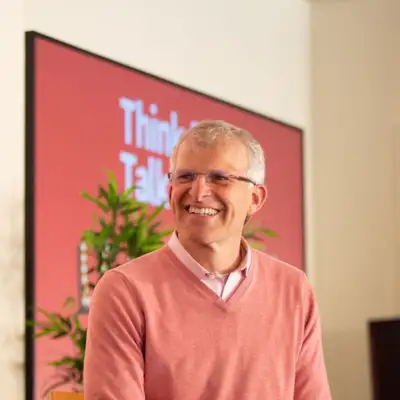
Join Matt Abrahams, best-selling author and Strategic Communication lecturer at Stanford Graduate School of Business, as he interviews experts to provide actionable insights that help you communicate with clarity, confidence, and impact. From handling impromptu questions to crafting compelling messages, Matt explores practical strategies for real-world communication challenges.
Whether you’re navigating a high-stakes presentation, perfecting your email tone, or speaking off the cuff, Think Fast, Talk Smart equips you with the tools, techniques, and best practices to express yourself effectively in any situation. Enhance your communication skills to elevate your career and build stronger professional relationships.
Tune in every Tuesday for new episodes. Subscribe now to unlock your potential as a thoughtful, impactful communicator. Learn more and sign up for our eNewsletter at fastersmarter.io.
Matt Abrahams: Managing different
tensions is critical for effective
leadership and communication.
My name is Matt Abrahams and I
teach strategic communication at
Stanford Graduate School of Business.
Welcome to Think Fast
Talk Smart, the podcast.
Today I'm excited to
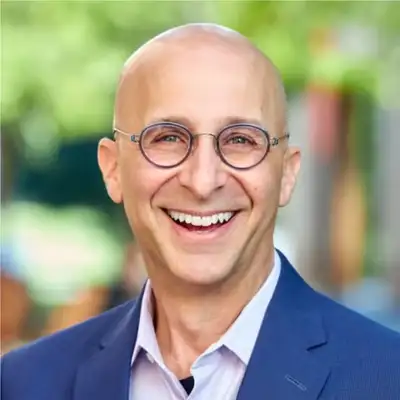
speak with Rob Siegel.
Rob is a venture investor and like
me, he's an instructor at the Stanford
Graduate School of Business, but
unlike me, who only teaches one
class, Rob is a teaching machine.
He teaches a lot of different
classes, including system leadership,
the industrialist dilemma, and
corporations finance and governance.
You might remember Rob from his first
visit to Think Fast Talk Smart in
episode 37 where we discussed his
book, The Brains and Brawn Company.
Rob has a new book out called The Systems
Leader: Mastering the Cross-Pressures
That Make or Break Today's Companies.
Welcome, Rob.
Thanks for being here.
Rob Siegel: Oh, thanks Matt.
It's great to be back.
Matt Abrahams: Should we get started?
Rob Siegel: Absolutely.
Matt Abrahams: A lot has happened
in the world since you and
I last chatted on the show.
In an era of rapid technological
change and global uncertainty,
how have you changed what you're
focusing on with your students and
what you recommend as they become
new leaders in this new world order?
Rob Siegel: One of the courses I
teach, and have for the last eight
years, is called systems leadership.
It was a course that developed out
of a conversation that Jeff Immelt,
my old boss from GE, we had about
leading in a world where every
product and service is connected.
And we realized as COVID hit and
even coming out of COVID, leaders in
particular in business, are really
struggling with this kind of constant
crisis and the speed with which
technology is happening like AI.
And we think it's really important
that leaders see systems, they
understand action and reaction
inside of their company, as well
as the company and its ecosystem.
And so what we've been really focusing
on is trying to help leaders make
sense of the chaos that's around them.
Try to find clarity and how do they lead
their teams when it feels like everything
is just constantly blowing up on us.
We turn on our computers in the
morning and it's, oh my goodness,
what happened last night?
How do leaders keep calm
and get through those times?
Matt Abrahams: What's some of the advice
that you give or some of the frameworks
that you teach in the class and in your
new book regarding how to handle all that?
Rob Siegel: We talk first about
what I like to describe as unserious
behaviors in a serious world, things
that don't work, things where we
see leaders being bombastic and
outrageous at the expense of decorum.
We see them focusing on trivial goals.
And we try to get them to figure out
what are the things that great leaders
that we've studied, what do they do?
And they kind of have a, what we
call a product managers mindset,
understanding customers, how
products get built and go to market.
We talk about living in dualities,
understanding, how do we
understand internal and external?
IQ and EQ, how do we understand
innovation and operations?
And then in the book we highlight
what I call five cross pressures.
These things that seem to be pulling
us in opposite directions that make
it hard for us to know what to do.
I look at setting priorities,
innovation and execution.
People, how do we lead with
both strength and empathy?
Sphere of influence.
How do we understand
internal and external?
Uh, spend some time looking at
geography, both local and global.
And finally, purpose.
You know, how do we balance stewardship,
or statesmanship, or stateswomanship,
with our own personal ambition?
And we look at leaders that have
visited us in the class, and that
we've been able to study, and how do
they handle those cross pressures?
And try to lay out a path, a way of
thinking, a framework that today's
leaders, whether they're managing
a team or a company, how can they
follow and make that successful
for them and their, their people.
Matt Abrahams: I really wanna
dive into some of those.
'Cause all of that is fascinating
and I love that you have some very
specific advice on how to manage that.
I'm curious though, the role
that communication plays in
all of this, it seems to me
that would be rather important.
Rob Siegel: Absolutely.
And in fact, one of the things we
talk about with our students is this
aligned truth equals facts plus context.
And facts are facts, but context
is how we understand things.
And communication's a big part of that.
How do we help people make sense of
what seems like constant craziness?
And communication's critical, in written
communication, on oral communications.
What's it like when we talk
one-on-one, like we're doing now,
how do we handle small groups?
What's it like when we're in
charge of a large audience?
And how do we make sure that our voice
carries our messages in ways that makes
things simple, but also gives people
something to think about and hold onto.
Matt Abrahams: Do you have some best
practices for some of those things?
Like how do you take something
that's complex and make it more
accessible without dumbing it down to
the point that it gets challenging?
Rob Siegel: It's hard, and I
think the first thing is kind
of acknowledging it's hard.
For me, I like to spend time thinking
about an issue and looking at it from
different angles and perspectives.
In fact, all hard issues are nuanced,
and like leaders today lead on
nuanced issues in a world that seems
to have very little time for nuance.
I need to make sure that I'm
looking at things from multiple
perspectives and points of view.
That also helps me frame it for the
people with whom I'm communicating, and
that also allows me to build empathy.
Because even if I disagree with somebody,
if I can understand where they're
coming from, I can hopefully express my
opinions, hear theirs, and then try to
keep evolving my perspective on things.
Communication's critical
and part of communication, I
would also posit as listening.
Making sure that I hear others and
really trying to understand root
cause of what might be driving
how they're viewing the world.
Matt Abrahams: You know, I often
tell my students two things.
I say communication is both
operationalized empathy and operationalize
leadership, and you touched on both.
The fact that you have to take
time to reflect and understand the
intricacies and nuance before you
communicate is really important.
And part of that, as you said, is
listening and then being able to
articulate it in a way that's appropriate
for the people that you're talking to, be
it in a big platform or even in one-on-one
interactions is really important.
I wanna come back to communication,
obviously in a little bit, but I'd love
to explore some of these tensions that
you talk about because this notion of
managing these dualities is really hard.
You talk in the book, and I know in
your class, you talk about balancing
innovation and execution and those
can be loggerheads sometimes, right?
Oppositional.
How does one manage that?
You want to execute well, but you
also wanna be innovative and creative.
How do you do that?
Rob Siegel: I think historically these
things, if they existed inside of an
organization, were in separate groups.
So our colleague Charles O'Reilly
and Michael Tushman from Harvard
came up with this notion of
the ambidextrous organization.
And Robert Burgelman, our colleague,
did a lot of work on strategic
innovation in corporations.
And the idea was that you had the
people who made the trains run on
time, and you had the crazy long
hairs who innovated, and they would
tolerate each other, and it was usually
moderated and modulated at the top.
Usually somebody who would deal
with budgets and everything else.
In today's world where technology
is moving so quickly, I think it's
important that we as individuals
need to be able to do both.
We need to be able to hit our numbers,
but we also need to know how to manage
innovation because the speed with
which we need to get new technologies
into our operations and into our
products is happening so quickly.
So we've gotta know how to manage a
small team of three people and maybe
trying to do something new, but we also
need to be able to operate at scale.
And whereas historically, that
could be kept separate and you could
build bridges between them, we as
leaders, need to manage this duality.
Matt Abrahams: Absolutely.
So it's speed and just being able to get
your arms around what all the issues are.
In a recent walk and talk, you and I did,
we talked about how leaders need to be
able to tolerate ambiguity in a way that
perhaps they haven't in the past, and
this is a, an area of interest I have
around how we use ambiguity strategically.
I'm curious for you to share with
the listeners some of the things
you and I talked about around
this notion of managing ambiguity
when things are changing, be
it innovation versus execution.
Rob Siegel: What if ambiguity
is the new normal, Matt?
What if this is just the
everyday state of affairs?
And I think the ambiguities, like we
don't know what's gonna come next.
And it's almost like it's gonna hit us
and we anticipate it, but I think it's
being comfortable with it of, I woke
up today, here's the crisis du jour.
Okay, I may like it, I may not like
it, that doesn't really matter, but
I've gotta get my team through it.
And I think it's that ability to
say, I'm comfortable with this.
I can think how to get through
it, and we'll do our best as a
team to get from where we started
to where we need to get to.
That's not comfortable for people.
People don't like change.
I mean, all the lies we tell at
Silicon Valley about change is great.
Embrace change.
Change is constant.
Yeah, that's true.
But humans hate change.
And it's happening faster and faster.
The sooner we get comfortable with it,
in the sense of, I don't have to like
it, but I can deal with it, then it's
our ability to lead our teams and lead
the people around us and give them the
calm to know they can get through this.
Matt Abrahams: When you and I were
walking, you gave me the title of
a paper I'm writing, which is the
clarity that ambiguity brings.
And the clarity is focusing on what I
can control, focusing on what I need to
message and how I need to message it.
And I think all of us need to think about
what it means to do our jobs, to hold
the relationships we have, in a world
where things are ambiguous and changing.
And the notion that we are all by
nature, risk averse is very true, and
that comes into conflict with what the
reality is, is that things are changing.
So I like what you said, because it
really does drive us to clarity when
it comes to how we deal with ambiguity.
I want to dig a little deeper
going back to this notion
of innovation and execution.
Another tension that you talk
about is the focus on short-term
versus long-term execution.
What are your thoughts on that and how
do we deal with that tension there?
Rob Siegel: I think part of it is if
we think about things like capital
allocation, how much do we make sure we
spend and invest on both time horizons?
Sometimes there's the tension
of, do I invest in the current
quarter or the current year?
It's easy to say we have to do both,
but we have to know how to manage both.
And I think the short term, you know,
we have to survive the short term to get
to the long term, but if we don't manage
for the long term, once we get there,
we can be hollowed out very quickly.
And we see that with great companies that
spent too much time focusing on the near
term and not thinking about the long term.
And trying to bake that DNA, bake that
mindset into the organization, I think
that's really the job of the leader.
And to make sure that people know
that they've gotta be simultaneously
delivering in the near term, whether
that's days, weeks, or months or quarters.
But also thinking about, what's my
roadmap and am I delivering to it?
Whether it's eighteen months out or
two years out, some industries move
faster, some industries move slower.
Our industry in education moves
historically very slow, and yet look
at how quickly it's changing right now.
Again, I'll go back to AI.
AI does a pretty good job answering
the problem sets that I assign in my
finance class, and I've gotta make sure
that I now have to test differently.
I have to ask different types of
questions, and that has to happen quickly.
But I've also gotta be thinking
when I teach the class next year,
where do I think AI is gonna be?
And the students are gonna use it
anyways, whether I like it or don't
like it is completely irrelevant.
How do I make sure that I'm preparing
for something twelve months from now?
One, I don't even know what it's
gonna be, but I've gotta be ahead of
the curve thinking about it, knowing
what's going on, taking in information
from the outside and adjusting.
Matt Abrahams: You remind me of
the saying, focus on not just the
urgent, but focus on the important,
and we have to, again, in terms
of duality, be able to do both.
You can't let one go without the other.
And I always put from a communication
lens, we have to reward and send
and give feedback that affects the
short term, but also have a mind
what that means for the long term.
And that's not just in the productivity
and efficiency of an organization,
that's just in the way we relate.
Rob Siegel: Well, if we think about
that in managing our people, we need
to give them the hopefully specific
enough guidance to know what we
expect them to be able to do in the
next few weeks or few months on KPIs.
But we also have to be thinking
about growing them in their career.
We have to be thinking about are we
developing them for their runway,
is an expression that we should
talk about in when I was at GE.
Can they do not just this
job but the next two jobs?
And am I doing what I need to be doing
as a leader to helping to set up the
men and women who report to me, to
make sure that they can take over
my job and even the one after that.
And that's that kind of near
term and long term as well.
Matt Abrahams: One of the best bosses
I ever had when I was working in the
corporate world made me every six
months turn in my updated resume.
And the idea was that she wanted to see
how I was growing and learning, and she
said, your resume has to be ready because
I want you to succeed at whatever's
next if that's here or elsewhere.
And I, I really took value from that.
And what she was saying is, I want
you to keep developing and I'm
thinking about your future while
also supporting you in your present.
You know, in my strategic
communication class, one of the
first topics we discuss is the
balance between warmth and strength.
And I know you talk about the notion
of balancing strength and empathy.
What can leaders do to balance that out?
Not just in their own lives, but in the
way they interact with those around them?
That's a, that's a really,
again, tough tension.
Rob Siegel: There are a couple of great
people that we studied on this one,
and we've talked about her before,
is a woman named Kathy Mazzarella.
She runs a company called Graybar,
used to be Western Electric.
Most people haven't heard of Graybar,
based in the Midwest here in the
United States, plus or minus eleven
thousand employees, twelve billion
dollars in revenue, all employee owned.
Kathy was described by somebody
as an iron fist in a velvet glove.
You know, she's one of these leaders,
Matt, that when she walks into a room,
we all sit up a little bit straighter
because she's just that good and we
know we need to bring our A-game.
But she's incredibly human and she
shows her human side to the men and
women who report to her, but she
also tries to see the human side.
Now if somebody's not
performing and not getting their
deliverables met, that's not okay.
But her first question is not, you know,
I'm gonna beat this person up over it.
It's like, why didn't they get it done?
Is it, do I have a skillset mismatch?
Or is somebody going through something
at home, an illness, or a family member
sick or something that's going on that
I need to be aware of that she says
might be impacting their performance?
And so I think she balances
both of those things.
Another one we studied is Julie
Sweet, who's the CEO of Accenture.
Almost eight hundred thousand employees,
you know, four billion dollars in revenue.
They invest heavily in their labor force.
They spend a lot of money training
people on the latest technology.
And what she will say is, look,
we're gonna give you the tools
to make it available for you
to invest in yourself and grow.
You need to deliver what
you're gonna do today.
You need to invest in
yourself for tomorrow.
My job is to make sure that investment
and those capabilities and that
education is available to you.
She holds people to the task
of you've gotta do it yourself.
I'm not gonna spoon feed it to
you, but I'll make sure you have
the resources to get it done.
And I kind of like that as well,
because Kathy's a little bit more
empathetic, but she's strong.
Julie's a little bit strong, but also
empathetic of, I've gotta invest in
you and I know that, and I've gotta
make that available to you so that
you will actually continue to grow.
And I think understanding that her
people wanna be ambitious, that
they want their careers to develop,
that's a great win-win for her, for
the company and for the employees.
Matt Abrahams: I really like those two
examples, and they highlight that in
any interaction where there's a choice
to, in your words, be empathetic or
to demonstrate strength, in our words,
we talk about warmth and competence.
You have to take a step back
and understand the context,
as you mentioned earlier.
Context really is important.
And you also have to hold people
accountable, but make resources and
opportunities available to them.
Rob Siegel: I think it's a false
choice for us to have to choose
between being ambitious and being kind.
I think that's just
fundamentally a false choice.
You know, one of the things I saw in
the book, there's fifteen or sixteen
leaders that we write about, all of whom
are successful by any figure of merit.
They run decent sized companies.
Their companies have done well.
They've achieved a level of success.
Not all large companies, some are
startups or mid-size companies,
but they're all very human.
You can look at these people
and say, these are good people.
They may not be the people we read about
all the time on social media or in the
mainstream media, but they're there.
And so I want readers and my students
in the class to be able to look
up at these people and say, I can
choose to be like that if I want to.
I can be a leader who is both
ambitious, but also a good human.
And these people are out there.
They just don't seem to be shown
off very often in what we see
when we read articles or we watch
videos or whatever the case may be.
Matt Abrahams: I'm glad you're
shining light on people like that
and helping us learn from them.
I'd like you to get meta for a moment.
And what best practices do you use to
help you gain and maintain students'
engagement and attention, because
you really are a master at it.
Rob Siegel: I don't know about
that, but thank you for saying so.
I, when I go into a classroom, I want
to make sure I know the material ten
times better than the students do.
Because they've got so much going on
in their lives, it's generally easier
for me 'cause I've been studying it
and they've got so much happening.
It's about preparation for me.
I was taught to teach by Robert Burgelman.
And when you have structure, for me,
that allows me to think about what
are the lessons I wanna get across and
how much time will I spend on things.
What happened with my teaching style,
over time, was I found that my best
classroom experiences were the unscripted.
And so where I used to be very scripted,
I got to the point of I have four or five
key questions or topics, and then I just
go in and see where the students take me.
And what that allows me to do or
forces me to do is to be very present.
I have to listen to what they're
saying and see where we're gonna go.
And sometimes they'll take me places
in areas that I didn't anticipate,
and I try to maybe let that run.
The key for me is also to be interactive.
More so than most today, and I have to
be a bit careful, especially doing it
with Gen Z, is I would like to challenge
their thoughts, and I'll say to them,
if a student says X, I'm gonna say why?
I'm not saying you're
wrong, but tell me why?
I will often explicitly stop
the room and say, I'm not trying
to make anybody look bad, but
leadership today is all in the gray.
Leadership today is very few
of the easy decisions get made
lower down in an organization.
And so I want the students to think
about what they say and then to defend
their points of view and to highlight,
look, if this were a, an executive
meeting or we were in a conference
room, you're gonna have really
smart peers who are gonna look at it
differently and I'm gonna challenge you.
And so I want them to be
able to get used to that.
I want them to practice that,
but I also want them to know that
these issues are hard and these
issues are increasingly difficult.
And by the way, the classroom's
a safe space to do that in.
And I want them to know that
they can take risks there.
And so as long as I'm prepared, as
long as I know the material and as
long as I can be, hopefully tough,
but not mean, you know, and then to
also try to remember the dynamic of
they, I see myself as basically them.
I sat in those chairs
thirty some odd years ago.
But I look in the mirror
and I don't look like them.
I've gotta remember there's that dynamic.
And sometimes that's hard for me to
remember 'cause I know how smart they
are, and I think I'm just debating
somebody who's just as smart as I am,
if not smarter, but I know that they
might be looking at that differently.
So I think it's that awareness
of the context, being ready.
And then I was trying to also have
some fun, like I love what I do.
Matt Abrahams: And you do it
very well, and you do it not just
in your classroom, but in your
interpersonal communication too.
I think this notion of setting
up a safe space, making sure that
you're prepared, but not so prepared
that you can't be spontaneous and
present, and preparation allows for
that spontaneity, I would argue.
And being a little challenging, but
also being open to having some fun
and seeing where things take it.
Those are really essential skills
that, through time, people can develop.
Rob Siegel: I also, I think about some
of the walks you and I will do, and we
start almost always, how's the family?
How are our spouses, how
are our children doing?
You can't be perfunctory about that.
Like you actually have to, I
think, care about the other person
and the other person can tell.
And so I think if you have that
genuine interest in learning about
other people and knowing what's
going on, I think that also helps
build a connection on communication.
Matt Abrahams: And that
leads to trust, absolutely.
And, and it's really critical.
Well, you know the drill.
You've been here before.
Before we end, I like
to ask three questions.
One I create just for you, and the other
two are similar to everybody I interview.
Are, are you ready?
Rob Siegel: Yep.
Matt Abrahams: So you have been
honored, more than once, to give
what's called a Last Lecture.
It is the students here at, at the GSB
at Stanford select speakers to come in.
You have been honored
many times with this.
And you've shared with me that at
the topic of this year's last lecture
is going to be about education.
For those of us listening who won't be
in that auditorium when you give that
lecture, can you give us a distilled
version of what you intend to say and why
education is so important at this moment?
Rob Siegel: I'll do that in reverse order.
I think education is important
to me personally, having devoted
twenty-two plus years of my life
being a teacher, and so it's something
I care very passionately about.
The reason I want to talk to the
students about that this year is
I have a strong belief, as we've
talked about actually in the systems
leadership class, I think education
is the great equalizer for society.
It allows us as humans to do better
for ourselves and for our families
and our communities, and the
role and importance of education.
And so the students I'll be talking
to, that's kind of the tie that binds,
if there is no education, there's no
reason we would be there together.
And even the place to come into Stanford,
like it's not about, you know, our
students work on startups and they work
on the soft skills, and we try to teach
them about communication and empathy and
finance and marketing and all that stuff.
But so much more that holds
us all together is education.
And my wish for them is that in whatever
capacity they choose to do it, whether
it's in their local PTA, whether it's
in their community, whether it's trying
to help people in other parts of the
world get better educated, or even
if they wanna help the alma mater to
spend some of their time on education.
It's really the foundation by which
all of us get to do what we do.
The expression is, it's
the big X in our equation.
And I want them to hopefully spend some
time or some number of them committing to
not just seeking a business career, not
just seeking all the benefits that come
from a successful business career, but
that notion of thinking about others and
education is just one way of doing that.
Matt Abrahams: Absolutely.
Amen to that.
Education is critical and it's what really
can make a difference in people's lives.
Who is a communicator
that you admire, and why?
Rob Siegel: Irv Grousbeck, our colleague.
Irv has just a grace and a dignity
with how he carries himself
that I just find so admirable.
He's who I go to when I'm
wrestling with heart issues.
Matt Abrahams: Irv is amazing in
his Yoda, Zen like master a way of
helping you see things differently.
You've picked a good role model there.
What are the first three ingredients that
go into a successful communication recipe?
Rob Siegel: Understanding the key
things you're trying to get across
and being very concise about that.
Secondly, knowing where your audience is,
whether that's one-on-one, whether it's
in a small group or in a large audience,
where are they at that moment in time?
And then third, for me,
extensive preparation.
So for this last lecture that I'll
give next week, it's a new speech.
I'll say it out loud, probably
twenty times in my home office.
And the hope is that when I'm in front
of the students, they'll think that
it's just flowing out, but it's not.
It's something I will have
practiced just to make sure that
I get the key transitions, the key
messages, and hopefully deliver
it with warmth and kindness, but
not shy away from hard issues.
Matt Abrahams: So it's about focus, it's
about context, and it's about preparation.
And those three ingredients make
up an effective recipe for sure.
Rob, I knew this was gonna be fun.
It always is fun when we get together.
I greatly appreciate you bringing
your insights and wisdom to the show
and to putting them out there in all
the ways you do, but especially in
your new book, The Systems Leader.
Thank you and best of luck.
Rob Siegel: Thanks Matt.
Matt Abrahams: Thank you for
joining us for another episode of
Think Fast Talk Smart, the podcast.
To learn more about leadership, please
listen to episode 37 with Rob Siegel
and episode 35 with Jeff Immelt.
This episode was produced by Katherine
Reed, Ryan Campos, and me Matt Abrahams.
Our music is from Floyd Wonder.
With thanks to Podium Podcast Company.
Please be sure to follow
us on YouTube and LinkedIn.
And check out FasterSmarter.io for
deep dive videos, English language
learning content and our newsletter.
Please consider our premium offering
for extended Deep Thinks episodes,
Ask Matt Anythings, and much
more, at FasterSmarter.io/premium.