Subscribe
Share
Share
Embed
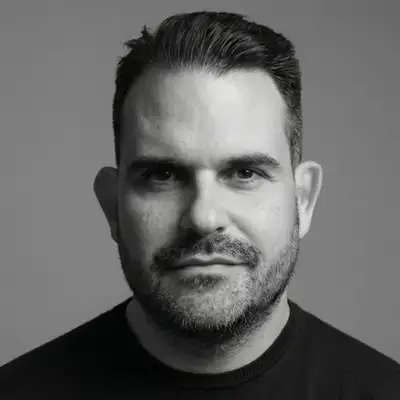
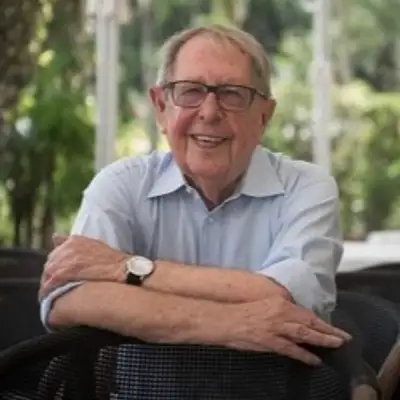
Join us on this episode of the Maffeo Drinks podcast, where Chris Maffeo chats with drinks industry legend David Gluckman about the fascinating world of drink innovation and product development. David shares insights from his recent book (That Sh*t Will Never Sell), offering a look back at the history and evolution of the drinks industry.The conversation covers iconic brands he created like Bailey's, Ciroc, and Tanqueray Ten, product ownership's importance, and consumer research's often flawed nature.David also discusses how great brands can be built without conventional testing and the critical role of liquid excellence. Tune in for an engaging discussion that blends business acumen with the art of drink creation.The discussion provides insights into the importance of ownership, consumer behavior, and the significance of product distinction in brand building. David also emphasizes the value of real-world testing over consumer research, reflecting on his approach to developing iconic spirits.Aspiring brand builders and drink enthusiasts will find valuable lessons in this engaging conversation.Timestamps:00:00 Introduction and Welcome00:29 Guest Introduction: David's Journey01:19 The Bailey's Story: Market Research and Success04:43 Brand Development Philosophy09:36 Challenges in Spirits Marketing12:38 Product Innovation and Differentiation25:44 Ownership and Long-Term Brand Building32:07 Conclusion and Farewell
Join us on this episode of the Maffeo Drinks podcast, where Chris Maffeo chats with drinks industry legend David Gluckman about the fascinating world of drink innovation and product development.
David shares insights from his recent book (That Sh*t Will Never Sell), offering a look back at the history and evolution of the drinks industry.
The conversation covers iconic brands he created like Bailey's, Ciroc, and Tanqueray Ten, product ownership's importance, and consumer research's often flawed nature.
David also discusses how great brands can be built without conventional testing and the critical role of liquid excellence. Tune in for an engaging discussion that blends business acumen with the art of drink creation.
The discussion provides insights into the importance of ownership, consumer behavior, and the significance of product distinction in brand building. David also emphasizes the value of real-world testing over consumer research, reflecting on his approach to developing iconic spirits.
Aspiring brand builders and drink enthusiasts will find valuable lessons in this engaging conversation.
Timestamps:
00:00 Introduction and Welcome
00:29 Guest Introduction: David's Journey
01:19 The Bailey's Story: Market Research and Success
04:43 Brand Development Philosophy
09:36 Challenges in Spirits Marketing
12:38 Product Innovation and Differentiation
25:44 Ownership and Long-Term Brand Building
32:07 Conclusion and Farewell
The MAFFEO DRINKS Podcast is a leading drinks business podcast delivering actionable insights for drinks leadership.
For founders, directors, distributor MDs, and hospitality leaders navigating the tension between bottom-up reality and top-down expectations.
20+ years building brands across 30+ markets. Each episode features drinks builders: founders, distributors, commercial directors, sharing how the drinks industry actually works. Not the conference version. Honest conversations.
Insights come from sitting at the bar.
Beyond episodes: advisory for leadership teams, subscription with episode deep dives and principles to navigate your own reality.
Beer, wine, spirits, Low and non-alcoholic.
Bottom-up Insights & Episode Deep Dives at https://maffeodrinks.com
Welcome to the Maffeo Drinks Podcast, where brands are built bottom up. I m Chris Maffeo and in each episode, me and a new guest crack how drinks go from one bottle to one case to one palette. Hit follow and leave a review to help new drinks builders find it. Now let's break it down together. Hi David, welcome to the Mafayer Drinks Podcast.
David Gluckman:Thank you. A pleasure to be here.
Chris Maffeo:It's a great honor to have you. It's such a personality in the drinks world, innovation and product development. I just finished reading your book on my flights this month. It's fascinating to hear the stories, especially from previous generations of drinks industry, because we tend to think of the drinks industry as it is today, but to read and listen to all the stories you have been through. It's a fantastic privilege.
David Gluckman:Thanks very much. I mean, I think the, sometimes the failures were more interesting than the successes. All had lessons and stories to tell. I enjoyed writing it.
Chris Maffeo:That's fantastic. David, thanks for sharing your knowledge with us today. Let's start. The most famous story from you is obviously Bayless. So I guess we need to start from that one.
David Gluckman:Sure.
Chris Maffeo:So when I was reading your book, I was taking notes. People on the plane were thinking I was crazy because I was book on one hand and notebook on the other end. Reading or listening to your recent episode with Philippe Duff was interesting. The story about the market research you did when you started with Baylis, when you created the recipe and wanted to test it in the market before selling it management. I remember all the listeners know my aversion for consumer research.
Chris Maffeo:I like to test things on the ground for real, not really doing desk research and focus groups. But there was this story that someone was naming it a girl's drink and calling it names. And then in the end, in the first trial in a bar, you realize that the first people who actually drank it were two policemen when they finished their shift. So can you can you tell us that story? I think it's very fascinating to start.
David Gluckman:Two things. We were fairly new to the job. We'd been in it a couple of years. And at that stage, which was the early 1970s, market research was a fairly new phenomenon. I knew very little about it.
David Gluckman:We thought we'd do some focus groups because that's what people said you should do. I suddenly realized what a flawed system it was. One macho guy in the focus group stood up and said, this is a girl's drink. I wouldn't drink this in front of my friends. And once you make a remark like that, everybody agrees with you.
David Gluckman:But then we looked at the glasses and they were all empty. People obviously liked the product, but weren't prepared to admit to that. And likewise, we got negative comments in women's groups. I think they both point out flaws in that research. We thought let's get some hard data.
David Gluckman:Let's stick bottles in a pub and see what happens. And I kept going back to this pub and the bottle just stayed there gathering dust. And then just the night before we went to Dublin, I went again and one bottle had disappeared. And I don't think the policeman thing says it was acceptable as a male drink. I think it was just a lucky, happy accident, but that persuaded me.
David Gluckman:That said, showtime. We've got something here. With the agreement of my client, who was quite adventurous, we decided not to show the research report. I think it's barely used in Ireland anyway, market research. It was a bit of cheap, but I think it created the foundation for everything I ever did after that.
Chris Maffeo:I really love reading, when you showed the results of that research, you know, if I remember I was like at the ten year anniversary party, you know, Bailey's had sold already 4,000,000 cases.
David Gluckman:Just that year.
Chris Maffeo:Yes. Yeah. And, and it was like unreal now when you were like, so what, what, what was the expression on that?
David Gluckman:People that I thought was very funny. I was thinking about your philosophy of bottom up brand development. And I think Bailey's broke the mold in the sense that Bailey's grew up in supermarkets, not in bars. That was quite a rare thing. I think perhaps there are two categories where supermarket development provided the basis.
David Gluckman:You can try Baileys. Baileys were built on tasting. You'd put it in the supermarket and you'd have people give their tastings and something like 40% of people who tried it bought it, which was phenomenal. You'd never get that with a spirit brand. If you could do that with wine, brands like Blue Nun.
David Gluckman:Wine was new to people with Blue Nun. And if you tasted Blue Nun in the supermarket and you didn't know much about wine, you might be converted quickly. With spirits, it would be difficult to do tastings of malt whiskey in the supermarket and expect it to work or some new category spirit like tequila in The UK. The amount of money you expect to pay for it is also substantial. Baileys is relatively cheap compared to whiskey.
Chris Maffeo:Yeah. As a price point. Let me ask you a question. Then we go back to product development. Now that you're bringing up supermarkets, there is this thing I heard it from when you were speaking with Philippe Duff, the challenging bit like staying on the bottom up thing of regular FMCG mindset, where it's like building distribution, doing advertising, and let's see the results versus this spirits brand building, which is ultimately a slow moving category.
Chris Maffeo:What's your take on that?
David Gluckman:I think that's absolutely true. I mean, could you imagine old Doug going into supermarkets and making a quick conversion? It's a product you have to learn. It's a product you have to see other people drinking in order to adopt it. So that's where this bottom up theory, which I agree totally.
David Gluckman:I'm a great believer in the old fashioned operators in the drinks business. People like Abe Rosenberg, built J and B in New York. You know, whiskey with an Italian name with a terrible pack design, with this terrible yellow that looked as if it had already been watered down. And yet he made it to the biggest selling Scotch whiskey in America. Sydney Frank building brands like Grey Goose and Jagermeister of geniuses these guys were.
David Gluckman:I think what's happened in the business is that there was a movement from FMCG into the alcoholic beverage business. The old fashioned guys became discredited as unscientific, but I think they understood the science better than the FMCG guys. They understood the way the market worked. And I think it still works like that today. There have been infusions of mega success in a short time through influencers like Diddy and George Clooney.
David Gluckman:These people have tremendous currency behind them, but whether they have the currency to sustain the brand over time is another question.
Chris Maffeo:And this is a fantastic point because I wanted to get to that old school people like Abby Rosenberg and Sydney Frank. I really feel there has been this movement of FMCG people in the drinks world. So all of a sudden the movement has shifted to easy volumes, quick volumes in off trade at the discredit of the on trade, which is ultimately where you used to build those brands. And I'm assuming now because I wasn't there, but probably like seventies, eighties, it was still an industry ruled by hands on people.
David Gluckman:If you look at one of my heroes, the late Michel Rue, associated with two fantastic successes, Absolut and Bombay Sapphire. Sapphire was incredible. He worked on it for ten years and they sold it to Bacardi for $1,940,000,000. Not a bad return on ten years effort. I'll bet he did hardly any focus group.
David Gluckman:He probably went with one basic idea in his head and that became the brand. I love that kind of brilliance.
Chris Maffeo:What do you think about, if we go back to the Sydney Frank, that I'm familiar with on Jagermeister, there is a focus on a clear drinking occasion. There is this focus on let's own that occasion. Was there something similar like that on J and B success back in days?
David Gluckman:I think Dave Rosenberg built it in certain types of outlets. You know, where you get a girl to come and sit at the table, ask her what she'd like to drink. And she says champagne. In this case, it was J and B. And he persuaded people if they were invited to a table, I think they were on the West Side Of New York and he built it from there.
David Gluckman:I love J and B. I think it's a fantastic brand. I tried to develop two variants, which is in my book. One was called Jet. The other was called Sub Zero.
David Gluckman:I just liked that approach. And I read the story of how they built Absolute in The US again. Fantastic piece of on premise magic.
Chris Maffeo:Yeah. I remember when I joined SAB Miller, the very first meeting I had was, it was a gentleman that he was an ex Hennessey guy. He made a speech and I still remember every single thing of that speech because then it was recorded and we were handed over CDs with the actual speech. It was forty five minutes. On my drive to the brewery every morning, I used to play it.
Chris Maffeo:At some point I knew it by heart. One of the things he was saying, he was actually talking about Absolut Vodka, was about pricing. The issue with a lot of these brands that, you know, reach scale, but then at some point fade away, is also the fact that as a consumer, your buying power increases. At some point, if you are a loyal absolute consumer, absolute becomes too affordable for you because you start to see it in promotion, you start to see it in, you know, in corner shops, you start to see it everywhere. And you start to look for something better.
Chris Maffeo:And that's where the game of Grey Goose, Chiroc and Belvedere starts to come into play. It's connected to what we were saying about the off trade scale and distribution. Because the scale that comes from supermarkets and scale bottle shop is usually at the expense of profitability and pricing.
David Gluckman:Absolutely.
Chris Maffeo:At some point the price goes down and you become the maker of your own issue because then people in bars don't want to be seen anymore drinking that champagne or whiskey exclusive bottle because it's not exclusive anymore. The moment you make it mass, I need to be seen with another brand in my hands.
David Gluckman:That's the beauty of competition. What you try to do is come up with something better. I loved working in mainstream spirits because it was such a challenge. How do you come up with a new vodka? Vodka is colorless, odorless, flavorless.
David Gluckman:And so how do you come up with something new? I think I did it twice and much to my disappointment. Nobody ever used the product story. Set myself two disciplines. The first one was a sales guy going into a bartender and saying, I want you to take this product.
David Gluckman:The bartender says, why I've got six other products like that on my shelves. Why do I need number seven? I would then say, here's the reason why you need number seven. That was the first discipline. The second discipline was guy sitting next to you at a bar.
David Gluckman:You get chatting. He offers you a drink and he says, what are you drinking? And you say, do you mind if I have a tank or a tank? So he says, why that? You should be able to tell him why you wanted the tank grade 10.
David Gluckman:In both cases, the marketing people and the advertising people seem to be uninterested in the product point of difference. In the case of Tigray ten, for example, when we lost Sapphire through mergers and acquisitions, when Diageo was formed, we had to get rid of Sapphire painful $1,940,000,000 We had a brief to come up with something, to compete in that sector. We could have come up with a sexy pack and a respectable brand name, but I thought let's go further. Vodka is 20 times bigger than gin. And I remember reading stuff for by vodka drinkers who said the reason we reject gin is because it has that bitter, dirty taste, which you get with juniper.
David Gluckman:So I said, why don't we produce a gin to appeal to vodka drinkers? There's a hell of a lot more of them. So therefore you need a much smaller share. How do you do that? You take out the dirty taste and put something back in.
David Gluckman:We made it with fresh botanicals and fresh fruit. And we gave it a fruit, sweeter, fruitier taste. And here was a gin for vodka directors. So what do the ads say for taint grade 10 at the moment? Stanley Tucci Drexed.
David Gluckman:Now he's a lovely guy, but you could put Stanley Tucci alongside any product category from collars to wristwatches, and it'd all be the same. People would think he's that, but nobody says this is the gin for vodka draggers. This is a different flavor in gin. And this twenty years ago, I came up with the idea and they've never used it. We tend to be, and the other one, which pisses me off even more, I think, is Syrah because we were given a breach to come up with a competitor to Grey Goose.
David Gluckman:My feeling is you should always come up with a product that's different. How do you do it with vodka? I remembered we went to Tbilisi in Georgia in the 1990s. I was talking to a guy and I said, did you ever drink vodka in Georgia? And he said, sure.
David Gluckman:And I said, well, what did you make it of? So he said grapes. I thought what a fantastic idea. Took that back to Diageo, but they weren't interested, but I brought this out for a Ciroc and I looked at all the ads Diddy used for Ciroc and they were all about him. Nobody ever mentioned grape.
David Gluckman:The world's freshest, cleanest tasting vodka made of pure white grapes, which I would have sourced in California, not in France. There's a story in my book about why I hate Syrah. It doesn't got so much to do with Diddy's downfall, but more to do with the fact that they never use the real point of difference. You know, two vodka guys in a bar and one guy orders Ciroc or whatever it would be called. And he says, why are you ordering that?
David Gluckman:Oh, it's great vodka. Have you ever tried great vodka? Wonderful, clean, fresh taste. It's a good story to the bartender and to the consumer.
Chris Maffeo:Yes. I love what you're saying because one of the questions that I used to ask a lot, I've stopped asking it was does it start from the liquid or from the brand? Personally, everybody knows I'm a very liquid driven person. It's funny because we agree on so many things and we spoke twice. For me, it's crucial in the selling story because that's exactly what you should talk about.
David Gluckman:Well, exactly. Think that goes back to my point about consumer research. If you do consumer research, what do you expect? Nine out of 10 people to like your product. But I think that means your product's very average.
David Gluckman:You actually want one person out of 10 to be fanatical about your product, but nobody will go to market with a one in 10 preference. Things like espresso martini, for example, didn't start in focus groups. Some guy just had the brilliant idea of putting them together and it caught on. Goes back to your theory.
Chris Maffeo:I'm stressing this point often that we tend to look at these huge categories, but you still need to sell the first bottle, the first case, the first palette. You are many years ahead of worrying about how big the category is. Your previous example on the vodka category being much bigger than the gin category was another kind of aspect because it was a big company challenge. But when you are a founder of a small brand, what are you worrying about the vodka category or the gin category when you actually should do something that is really, as you said, one person that is out of 10 that is really fanatical about your taste profile and be able to explain it, be able to amplify that story so they can say it in a dinner, sitting next to a guy or a girl at the bar. Because I I remember what you were saying with Philippe now that you were saying, I don't want to be able to say, because I like it.
Chris Maffeo:Why do you order that one? Because I like it. It's a stupid answer.
David Gluckman:It's not an answer at all. And I think I got that from my early advertising background working for companies like, Procter and Gamble to give a reason why one cleaner is better than another. And, why not apply that product? That's the best of FMCG. It goes down to the foundation of the product.
David Gluckman:I think if you're an innovator, you remember things that people tell you, or you remember things that you see. See, came from a conversation in Gbilisi in 1995. You bring that sort of thing out. I think to me, there are two elements in brands. One I have no respect for and the other I have enormous respect for.
David Gluckman:What I have no respect for, if you look at the latest version of Tanqueray 10, on the front of the bottle, after the word Tanqueray, the most prominent words to read are batch distilled and handcrafted, and people use them all the time, distilled eight times. Who cares? Who knows? It doesn't mean it's meaningless. Maybe something distilled once is better than something distilled 20 times.
David Gluckman:And, and the other side of the coin is benefit. What does it do for you? What does it taste like? And I looked at the website for, ketones and buried in the copy is a line so smooth, you can drink it strange. That's a benefit.
David Gluckman:That's not a process. Nobody cares how it got to be smooth. They only care that it is. And that becomes a thing.
Chris Maffeo:I remember a fantastic ad from, from apple when they launched the iPod and everybody were focusing on, is it four gigabyte, 10 gigabyte, 20 gigabytes, you know? And they were saying 1,000 songs in your pocket. That's what I want to know.
David Gluckman:No, that's fantastic. Well, that's old fashioned principles, a thing. And if we go back to my earlier example of the, the guy sitting next to you at the bar buys you a drink, take rate 10. And you say, oh, why are you having that? Oh, because it's handcrafted or because it's batched to silver.
David Gluckman:What bullshit is that? You know, that's not a reason. Your salesman goes into a bartender and says, look, I know you've got 10 gins, but take number 11 because it's batch distilled. Now I know if you're Diageo, he'll take it. But if you're a small operator trying to find your way into the marketplace, batch distilled doesn't cut it.
David Gluckman:It'll throw you out. He'll he won't know what you're talking about.
Chris Maffeo:I'm coming from beer. Now beer is all about rotation because there is a shelf life, you know? And when I started working with spirits brands, I know that, you know, sales people were really focusing on the distribution side of things rather than on the rotation because what gets measured is the bottle on the back So as a sales guy, I can go in and your fantastic restaurant, Can you please put the number 10 bottle and number 11 bottle on the back bar? And you would do it maybe, you know, maybe you for for free to taste it or it's a let's call investment. It's maybe €80 kind of investment for you, but it will cause on the shelf.
Chris Maffeo:While with beer, you know, if I'm blocking a tap and maybe you've got three or four taps, then all of a sudden it's gonna rotate. First of all, you have to throw away the beer. You know? It's not doesn't stay there for ten years. It's rotten.
Chris Maffeo:Yeah. And and you have to throw it away. And second, like the next time I come in to do a bar, it's like, don't don't sell me that thing because nobody buys it. You know? Mhmm.
Chris Maffeo:So there is a mindset that needs to change within the spirits industry on really to focus selling the second bottle of that brand, not the first bottle of that brand. Exactly.
David Gluckman:Yeah, no, you're absolutely right.
Chris Maffeo:What would you like to drink? I like that cocktail, but it's with gin and then maybe can have a conversation say, oh, but you know, we make it with this gin that is actually very fruity and very mild on botanicals and on juniper. So you, if you like vodka, will like a drink with this gin.
David Gluckman:Exactly. Giving the bartender a reason to recommend it, which makes a difference.
Chris Maffeo:I wrote something on LinkedIn and I said liquid versatility is the kiss of death. Brand owners and salespeople say, oh, you can do anything with this brand. The liquid is so versatile that you can make any drink with this. Tell me the characteristics, and then I'll tell you what I can do with it. But you know, clear on what you want it to be.
Chris Maffeo:I mean, this good on a gin and tonic? Is this good on a martini? And another example, Hendrix. The reason why there is the cucumber in the serve of the gin and tonic is because there is cucumber in the gin recipe. You know, it's not that they made up, oh, I love cucumber.
Chris Maffeo:Let's use cucumber just because it's fun. You know? Exactly. So you see a lot of gin brands trying to steal from Hendrix, cucumber. You have no connection with this cucumber.
Chris Maffeo:Why are you using it?
David Gluckman:You have to be brave. You have to accept that you can build a business where maybe two people out of 10 are motivated by that. They will become your pioneers. They will become your champions. And other people will see them ordering it and say, what the hell is that in the gin?
David Gluckman:And it's a piece of cucumber. And that's how, but things build like that. They don't, they aren't like that. And I think that understanding is your philosophy. And I think it's mine too.
David Gluckman:Although I don't have your experience. I create the brand and other people make it happen.
Chris Maffeo:But that's the crucial thing because if there is an understanding and an agreement and an alignment between two people like us, that's where brands succeed. Because you haven't invented it in an ivory tower. You know, you have invented it, but you have already made it bar proof and bartenders proof.
David Gluckman:How would well, one going back to this ownership thing, I think probably 51% of the reason why Baileys was successful was a guy who bought the idea was a man called David Dan. He was the managing director of Gilbery's of Ireland, whose whose brand it became. And he was a fanatical owner of the brand. A day would not an hour would pass when he wasn't trying to sell Bailey's to somebody else. I think this concept of ownership's, you know, undervalued the business.
David Gluckman:It's everyone's looking for kind of general consumer preference, but then, but I remember there was a brand of whiskey that felt about 200,000 cases a year in America. And I'm told that 90% of this volume was in Northern California. But I suspect that the reason it was so successful was there was one guy in Northern California who took ownership of the brand and made it successful. And I think ownership is very important, particularly in categories like hard spirits, you know, which are a long haul slow build categories.
Chris Maffeo:How many products don't succeed? Not because the product had some fault, but just because essentially, either they were not they they didn't believe in it or politically they were pushing another brand or somebody didn't buy the idea. Because the issue very often with these things, with generational changes within companies is that knowledge get lost. And then you make up your own stories of what it was. No?
Chris Maffeo:And this is the reason why I love you writing a book about it that stays on paper, not just talking about rumors and stuff that I heard in the corridors. Sometimes what happens is that people assume they know and they create something and discard opportunities just don't like David. I like Chris. I don't like Chris. You know?
Chris Maffeo:And I like his idea or I don't like his ideas rather than actually like being really focusing on on what matters. Let me ask you this question about, one of the things that you were mentioning in the book, you know, you, you're like, I'm, and I'm reading now, like people don't know what they like, but they like what they know.
David Gluckman:Well, that's a, that's a condemnation of market research, which says that if you give people something that they know about, then they're going to say they like it, but it doesn't take you any further down. That's the line on the front of my book, which says from the men who solved the world, what they didn't know they wanted again and again. And I think that's the essence of what we've been talking about. Develop things that people don't know they want. Don't go and ask people whether they want a piece of lime in your beer.
David Gluckman:In the words of the old Nike commercial, just do it. And the way we operated was very simple. We never tested alternatives. Never. So therefore we saved probably £20,000,000 during the course of my years at Diageo or IDV.
David Gluckman:We never tested one liquid against another. We said to the liquid people, give us the best cream liqueur gin to this strategy that you could produce. And we went with that. And because we didn't spend huge amounts of money researching, we saved a fortune.
Chris Maffeo:If I go back to my own experience, for example, despite a missile, and I started working professionally in Scandinavia, in The Nordics, Finland, Sweden, Denmark, and they were all more or less dark markets. And I always had very little money in what would be A and P, you know, advertising promotion or back then we were calling it marketing budgets. So that was the biggest strike of luck for me that I'd never had the money. And if you don't have the money, you don't dream about spending them on useless stuff, you know, which I consider certain researches to be like. Because the moment you spend $50, $100 on a research and then your budget is $300, you know, you have burned one sixth, half, one third, whatever that would be depending on the budget and the research.
Chris Maffeo:And then what do we do with that? Do we wait one year to be able to have another budget to be able to spend it? I think this is driven by the new age of analytics, you know, with especially with social media and so on. Now this AB testing, and let's try AB testing on this webpage, let's try A and B, let's try this and that. And then at some point it's just like totally useless.
Chris Maffeo:So at some point you need trust your gut.
David Gluckman:You're never sure. You have to trust your professionalism. You know, if you're in the business, you'll pay to come up with decisions. I mean, we solved one of the research cost issues very simply. I did it and I have a low threshold of boredom.
David Gluckman:Whereas a research company might suggest eight focus groups. I got bored after two. So we never did more than two focus groups on anything because it was a waste of, it was a waste of money and, you know, your law of diminishing returns sets in quite early on. But I think, one of the reasons we didn't engage marketing people in the process of brand development because marketing people overthink everything. So therefore they say, why call it Baileys?
David Gluckman:It's not typically Irish. And so you test six names and consumers bring it down to the lowest common denominator. And that's what you go with. We went to the best judgment of a home order people who knew the business.
Chris Maffeo:Let's wrap up with the last piece of advice on the long term brand building. The fact that it's not really like an FMCG game. The spirits industry is not really like a fast moving. The majority of people I speak to tend to rush it, you know, they want to make millions very fast. What would be your advice?
David Gluckman:Well, my recommendations would be to think about the guy at the bar, sitting next to you, who buys you a drink and asks you why you have that drink. Think of a good plausible answer, which is not because it'd be distilled 25 times or handcrafted because he won't understand that. And likewise with the bartender, is this ownership, the more people you can get to feel that they own your brand. And I'm not looking at getting consensus on what the name should be or the packaging should be. The more people you can persuade that they own your brand, the better.
David Gluckman:And I think never forget the product. It's so, so important that you achieve product excellent. And there's another thing that Dave Rosenberg is alleged to have said, you know, the ritual of putting a, coffee bean into some Bucco Romano and setting it alight. And rumor has it that somebody asked a why, when you should blow out the flame. And they've said, well, everyone in the bar has seen it, which I thought was, you know, if you can get people talking about your brand for one reason or another.
David Gluckman:And those rituals like the lemons, the lime and the, and the neck are so important, you know, finding ideas as a distinctive and different. But I hold the title of my book to, Abe because he sir Anthony Tennant took a bottle of Baileys to New York in early nineteen seventy five, just after launch. And he gave it to Abe to try. And they looked at the labeling, which he said reminded him of, soldiers uniforms in Vietnam, which is not a very popular thing to say at the time. And when he tasted it, he looked up and said, that shit will never sell.
David Gluckman:And that's the title of my book.
Chris Maffeo:David. So let's, let me give you some space to let the listeners know how they can find you, where they can find your book, that shit will never sell, and, how to get in touch with you.
David Gluckman:Well, they can get in touch with me by emailing david dot net. That's the initial of the that shit will never sell. They can buy the book on any online site, either as a hardback, a paperback or a unique ebook. I sat down to write an ebook age 82 and said, how can I make it more he than any other book it's ever been? So not only can you read it, but you can watch it because there are over a 100 YouTube links on it and you can listen to it.
David Gluckman:Some of the most famous commercials, wonderful characters. And my whole journey traced in film. So they're all available worldwide now. Please go out and buy it. I'm sure you'll enjoy it.
Chris Maffeo:I'm recommending it myself because it was a fantastic read.
David Gluckman:One of the key things, global giant company, because IDV was a big international company even before Diageo was formed. How a giant company can operate like an agile startup and operate successfully. This is the most amazing management I've ever come across in my whole life. Anyway, Chris, it's been an absolute pleasure meeting you. Thank you for giving me a forum for my mad thinking.
Chris Maffeo:It was a pleasure. Mad thinking is always welcome on the Drinks podcast. So thanks. Thanks a lot, David. It was a absolute honor.
David Gluckman:Thank you.
Chris Maffeo:Thanks for listening to the Maffei Drinks podcast. If you enjoyed it, please hit the subscribe button. Also a small ask, please leave a review wherever you listen. Reviews make such a big impact and help other drinks builders discover the show. Feel free to contact me for feedback on LinkedIn chrismafeo or on Instagram at mafeodrinks or at mafeodrinks.com.
Chris Maffeo:And remember that brands are built bottom up.