Subscribe
Share
Share
Embed
The World Cement podcast: a podcast series for professionals in the cement industry.
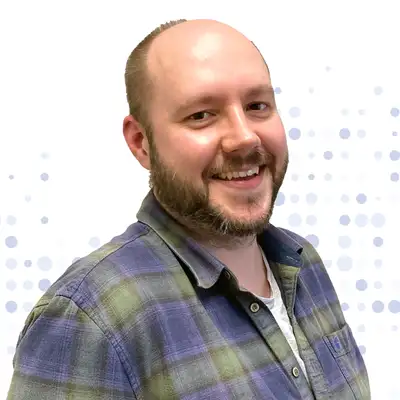
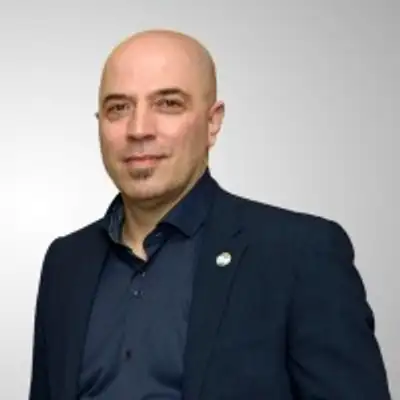
Hello, everyone, and welcome back to the World Cement podcast with me, your host, David Bisley, senior editor of World Cement. In this episode, I'm very happy to be joined by Paul Monaghan, head of sustainability at Manak. Our conversation today covers things like Manak's recent acquisition by Çimsa, the company's varied decarbonization and sustainability efforts, and its unique geographical position right on the border between Northern Ireland and The Republic.
Advert:Providing a new process optimization solution SemAI Process Optimizer. Combining the power of AI and machine learning with cement specific expertise CEM AI Process Optimizer enables a step change in production volumes, energy efficiency, and consistent quality output. Predictive maintenance and real time optimization are now in your hands. Find out more at semai.com.
David Bizley:Paul, welcome to the World Cement podcast. Glad to have you with us.
Paul Monaghan:Delighted to be here, David. Absolutely fantastic.
David Bizley:So we like to start these episodes with a bit of an introduction. So, Paul, please tell us a bit about Mannok and the company's position in the cement industry.
Paul Monaghan:Yeah. So, look, I'm the group head of sustainability with the company. I was appointed this role early in 2021, the first to occupy the role and I suppose Mannok at its core, it's cement and building products manufacturer, it services the island of Ireland and The UK markets. It's roughly about a fifty fifty split in terms of the market share. And it also it's quite a distributed business.
Paul Monaghan:It obviously has a cement factory, one of four in The Republic Of Ireland and one of, one of five on the island of Armen's, a small one in Northern Ireland. I think between the business, it's got cement, it makes several different building products and also it makes insulation and it has a standalone packaging division. It has an aggregates business because it owns and controls its own quarries, which are located both north and south. And then also, and I think we'll get into that maybe later is it has its own fleet of HTV vehicles, both on boat to deliver its product on the island and also the off road vehicles that it uses in the quarries too as well. A lot of carbon, but also a lot of opportunities.
Paul Monaghan:I'm sure we'll get into David's actually carbonize and take the carbon out. But I think Manukkah is a very interesting company. It was started as a family company back in the early 1970s and it grew and expanded over the preceding thirty years or so thirty, thirty five years. It did get into difficulty during the economic, the last major economic crisis in around 2008, a little bit afterwards of that. And I suppose really where it ended up coming through really that kind of tumultuous times where it was in the balance, whether the business would really continue at all as a viable entity is it was taken over by some private equity funds in The U.
Paul Monaghan:S. And the previous management team, most of the management team that was there under the previous company, I suppose, took on the mantle of I suppose, modernizing the business and making sure that the the employment and the career opportunities in a remote area on the border would continue into the future. And I think that's a great really testament and credit to the local senior management team who live locally. And that's why I really always describe the business as very deeply rooted within the community because they are off of the community. So it was rebranded as Manic David since 2014.
Paul Monaghan:And it, it maintained that brand for, for over ten years. And I'm sure we'll go into quite shortly. It's obviously been recently taken over and I'm sure we can get into that and what that structure looks like. But, but a family, I started a family company over 50 years old. And so hopefully the steps that we're taking now, David, and we'll talk about, hopefully the company will be here and vibrant for the next fifty years.
David Bizley:Excellent. Let's hope so. Now you touched on this just now. At the end of last year, Manuk was acquired by Chimsa. What does that mean for you guys in practical terms?
David Bizley:Has there been a change in direction of any kind or how are things?
Paul Monaghan:Yeah. So look, I think simply post, I think what that acquisition means for the company long term is it secures its long term future. Right. You know, the previous ownership would have had their own agenda as all equity funds do. I mean, they're, they're profit driven.
Paul Monaghan:That's just the reality of the situation. And everybody understood that. I'll be honest with you, the company they're based in Istanbul. I just came from there last week, actually attending an annual award ceremony that the, that the company in turn that owns chimps is Savanshi group holdings, which is a very large conglomerate also based in Istanbul of over 60,000 employees. And Chimsa is the, is the kind of the material and building products division of that houses the cement business.
Paul Monaghan:And I suppose it's Chimsa that took over Manuk and we've just actually passed the one year anniversary that deal closed early in October 2024. So we're just over a year with the company. So a good company to work for. Again, I think the interesting thing for both Chimsa and Sabanshi, again, they started as family owned companies. Chimsa is literally over 50 years old and Sabanshi had just has celebrated its 100 year centenary.
David Bizley:So
Paul Monaghan:again, it's going actually into its second century of operation and they're very much looking to diversify the business outside of Turkey, but it has a number of different acquisitions and legal entities, including in the cement business in Europe. But we are the first acquisition that Chimsa has made in the Irish and UK markets.
David Bizley:Okay.
Paul Monaghan:And I think the other interesting thing for them too, as well is they have bought into a very broad portfolio of products. It's not just cement, it's multiple building products, it's insulation, it's packaging. And even within the insulation, we make two products, the modern polyurethane insulation product, and then the more traditional EPS or expanded polystyrene. So they brought into a very diversified portfolio of products that they don't have anywhere else in the, in the business. And I think they've seen that very much as a positive.
Paul Monaghan:Now, in terms of what that means in terms of the structure of the organization is the brand name Manic has been retained. They see that has been very strong in the market. Also the senior management team or the management structure has been, has been retained to as well. So I think that's a real vote of confidence in the business. And we're glad to see that and probably fair to say is that we're still very much in the middle of quite an intense period of integration activities.
Paul Monaghan:So in terms of trying to really align with their policies and procedures, their systems, their strategy, their culture, and so on. And that will be ongoing for some time. This is a small number of the Chimsa employees who are permanently embedded here within Manuk at our HQ Berlin in for Manuk. So it's a very interesting journey, but they're a very, they're a very they're a very purpose driven organization and they're quite sincere and quite authentic. And I think that certainly I can tell you for me resonates very, very strongly.
David Bizley:Excellent. Well, one of the areas that we've spoken about quite a lot off the podcast is Mannix's various decarbonization efforts, and we've touched on some elements of that briefly. Can you give us an overview of your key decarbonization initiatives so far?
Paul Monaghan:Yeah. Well, I suppose they're kind of split into a number of different categories that maybe you are familiar with your audience in the cement industry. I suppose to say the best form of energy is the energy that you don't use certainly in, in very much large energy and carbon intensive industries. They're going to be very have a laser like focus on really energy efficiency projects and initiatives on an ongoing basis. So certainly over the last several years, we have seen several gigawatts of energy savings year on year.
Paul Monaghan:So quite substantial savings with various different energy efficiency initiatives that we have, and we have a very good structure in the business and in cement, we've got an energy coordinator there that's working on that full time. And the cement industry is actually ISO 50,001 accredited. So the international energy standard. And so that kind of looks after that part of it. I think where the business is kind of heading with that is, is, is very much towards kind of optimization and machine learning and AI.
Paul Monaghan:So how much more, how much more can we push or can we squeeze really the optimization and efficiency of what is quite a complex chemical process engineering special that you have, especially as you go further into your decarbonization journey and you introduce a lot of variability and process variability. So how can you control that? So narrative really goes beyond, we just need to save energy. Now we need to optimize and control and predict better what that and mitigate against that process variability. That natural will have energy savings that will go along with us.
Paul Monaghan:I suppose the other area that I suppose was cement would be familiar and it's appeared in your magazine and we spoke about it at your in person at your annual conferences is very much the company is being focused on that substitution of, you know, the imported fossil fuel, which for us all that comes in there. And we did that with a world first project with the FuelFlex that we developed with our global engineering partner, FLS Schmidt. And also then more recently, and typically what we do, David, is we integrate this into a shutdown period in the January, February window, where we do all the essential maintenance and any major capital project alterations that we need to do to the cement factory to accelerate decarbonization. So we've introduced a kind of a satellite burner and then also jet flex burner, which are in place now, which gives us lots of flexibility to introduce various different locally sourced alternative fuel into our cement kiln. So the FuelFlex concentrated on the the calcination or pre calcination side of the process and the satellite burner and the FuelFlex has focused on the kiln.
Paul Monaghan:And those projects, those kind of three projects in the last, in recent years has displaced over a 100,000 tons of CO2.
David Bizley:Oh,
Paul Monaghan:wow. So these are real numbers and they're really, and they're really significant. And, and really then it's about where do we go from here? So we're about at about 70 substitution. It can vary a little bit depending on the process conditions and what your production output is and so on, but we're at that and we're quite comfortable with that.
Paul Monaghan:And our intention really is to kick on there between now and by the end of the decade to really have the maximum amount of fuel substitution we can possibly have.
David Bizley:Okay, fantastic. And according to Manak's sustainability roadmap, the company aims to reduce its overall carbon emissions by, I think it was 35% by 2030, and then with net zero slated for 2050. You've touched on some of the measures you've taken already, but which specific measures or levers do you think overall are going to be most critical for bridging that gap between your current emissions output and where you need to be by 2030 and then later 2050?
Paul Monaghan:Yeah. And I think it's a very pertinent question given the time. So I think it's very much on our mind as we move into the second half of the decade. And as we mature in terms of the fossil fuel substitution with alternative fuels. So we'll obviously continue to continue that.
Paul Monaghan:So it'll be threefold. First of all, with the alternative fuel is what is going to be that mechanism, that technology, that fuel that is going to displace the last remnants of the coal, in particular in our cement kiln. So what is that going to be? Because you normally need a high kicker, a high calorific value energy vector.
David Bizley:Yeah.
Paul Monaghan:Probably alternative fuel on its own, you may not be able to displace. So what is that going to be? Is it going to be biomethane? Is it going to be hydrogen? Is it going to be biochar?
Paul Monaghan:Is it going to be some other synthetic gas or fuel that we need a decarbonized basically molecule to get there? So, so we are doing some, some pilots and some tests and R and D in that work. So that's like the, that will really bring you to the kind of 95% plus with the with the fossil fuel substitution alternative fuels. Think certainly what's on my mind and what's being discussed internally though, is we set that target of a 35% reduction in our scope one, two emissions, which really reflects really taking out the fossil fuels out of your process. And then you're left with the other two thirds, which as David in the cement industry is really those virtually unavoidable process emissions from easy limestone at very high temperatures.
Paul Monaghan:So then you're really into the realms of where can I source a sustainable amount of alternative raw materials such as calcium clays, puzzle ends, shale material, and so on that, that can reduce that substitute or reduce that clinker factor really that we're being driven to by regulations and public procurement? Where can we get that? And we've done some R and D in that, but it has been challenging to find a viable, sustainable source of that on the island. And so really our efforts, and I think I talked about this in Athens earlier in the year, we've switched our focus from the calcium clays over to the more abundance and the more locally sourced shale material. And if we can do something to activate or unlock that material to be a to be an alternative raw material, or as they say, an SCM or supplementary, some of the tissues material.
Paul Monaghan:I think then the third thing there, the important components, which is very important for the cement industry is really the CCUS or the carbon capture course. Yeah. And that's going to be so important for the industry. And of course there's lots of activity, lots of funded projects, particularly within Europe of demonstration projects and that, but they are, they're far away from us. Even the project in Brevik in Norway, which is the flagship CCUS project.
Paul Monaghan:And some of the cement in the project team have visited that in the last twelve months. Looked very impressive, but very CapEx and energy and OpEx. Therefore OpEx, you're not going to be able to necessarily replicate that across the whole of the cement industry. So I suppose really what's occupying us is there's a couple of fundamental questions I think are important as a cement manufacturer is what technology is going to be the best technology for our cement, process operations. And a subpart of that question, David, that you need to think about at what stage in the process of the, of cement manufacturing do you intend to capture the CO2?
Paul Monaghan:So is it going to be end of pipe where you're going to use an amine technology or some other similar technologies are quite mature, but quite capital and operationally expenditure intensive? Or are you going to capture that somewhere else where it's mainly going to be potentially not as mature technology, but it may make sense in the long term where it may be more commercially attractive to do that? And of course, then you need to be able to answer the question is once is our caption not carbon, what can I do with it? Where can I go with it? And is that going to be utilization?
Paul Monaghan:And is that going to be storage? Now we were recently part and we did engage with under the climate action plan here in the South where our cement factory is located and obviously comes under the EU ETS is there was a task force set up by the government department here around carbon capture, around CCUS, and we, I suppose, inputted into that. And so they're looking at shaping policy and the potential supports and foremost will be on the government's mind is if you capture carbon at scale in Ireland from the likes of the cement industry or from incineration or waste to energy plants is are you going to deal with that within your own geographical boundary? So where would you be able to do this? Or are you going to export that CO2 to maybe more mature areas potentially around the North Sea or the Northern Lights that are pretty much coming online now or open for business?
Paul Monaghan:And so you book capacity. So does that economically make sense? And can you book the capacity? It's not guaranteed. There's a long line of people maybe that are in front of you.
Paul Monaghan:So you can't zoom to say, okay, if Ireland, don't want to do it. And we want to export it from the cement industry is you can't automatically assume that the doors are open everywhere is you will need to negotiate that. So it's, there's a, just with the CCUS, there's a tremendous amount of complexity in that area. And it very much is tied up into regulation around infrastructure and around the balance of the funding supports. So basically how is all of that going to work?
Paul Monaghan:The good thing is that we're part of that conversation. We have a voice and therefore we have some influence.
David Bizley:Yeah. I think all of that highlights just how complex a process this is and how we need to get going now. It's going to take some time to get over these hurdles.
Paul Monaghan:Yeah. I always say with anything like this, David, it's very hard to build anything.
David Bizley:Yeah, absolutely. It sounds it.
Paul Monaghan:Don't have to build even the policy, even the regulation. You know, everything comes down to infrastructure and funding and the policy support mechanisms. It's a continuous, I suppose, debate that, you know, that we have internally and with our various different partners too, as well. But yeah, it's, it's, it's an ongoing conversation. Yeah.
David Bizley:It came up a little bit in your answer just now. But the topic of geography then in terms of geography does operating on the island of Ireland bring up any specific quirks or challenges from a decarbonization point of view?
Paul Monaghan:Yeah, it's it's it's awful. There's honesty for you. It's unbelievable. It's unbelievable. You know what I mean?
Paul Monaghan:If you're on the border here and you're 90 or a 100 miles away from the ports and 50% of your product, you have to export off the island. And you're, you're at the end of the, the electrical network system, which is quite constrained and curtailed at the moment, both north and south. And we have no gas connection in the South. And we do have a gas connection beside us in the North, but it's not commercially attractive to connect to that. A poor rail infrastructure generally in Ireland on the island of Ireland, it's not like the rest of Europe.
Paul Monaghan:And I suppose really what we have had to do is we've had to turn a lot of those challenges really into opportunities. The fact that we've got a very distributed product base we own and control a large fleet of vehicles. We've developed a very robust long term strategy in the Manor 2030 vision. We were the largest private employer in the region here. Fairness, a lot of the different state agencies do come to us and ask for our input into various policy decisions.
Paul Monaghan:That's good. Even though they obviously don't move at a pace that we would like and a very determined, I suppose a lot of the, a lot of the employees, particularly the management team have been here for quite some time. And so we have a quite resilient, determined workforce. And and I think that all goes in our favor. I'll always come back to that thing that we, me and you have talked about before, David, about the whole thing of the importance of the partnership and collaboration.
Paul Monaghan:And we really lean into that, particularly given our geographical locations and the challenges that poses is we try and really work very closely with the various different state agencies in, in The Republic Of Ireland, in Northern Ireland, and also wider in the, in, in The UK and Europe to basically, I suppose, help us, enable that, you know, that accelerator path to decarbonization.
David Bizley:Okay. And sticking with that theme then of geography, you touched on it just now, but to what extent has Mannix positioning right on that border between The Republic And Northern Ireland been flipping it slightly versus has it been beneficial in some ways?
Paul Monaghan:Yeah, I think what I found is that, and the executive team have been very good with this over a long period of time. And I suppose what I've tried to do in my role is simply enhance that, expand it, compliment it in a new role as a head of sustainability for the company is really forging those really strong relationships with the various different stay agencies, the industry bodies, the voluntary groups that we're part of. And I suppose really the stick in all of this to decarbonize something like the cement industry is obviously things around the standards and the regulations. There's clogged emissions, there's public procurement. You must reduce the embodied carbon of your clinker, your cement, of your building products.
Paul Monaghan:But then on the carrot side, then, then we have these initiatives where you can do extensive R and D and we can support you And also with some capital grants and supports too, as well. So I suppose really what we've tried to do is cast our net very wide David, because we've had to, because we actually commercially, so we're, we're a business that's that, that is, you know, historically HQ'd in Northern Ireland, you know, as a UK entity, but, but, but we commercially trade on both sides of the border with legal entities. So we have several different manufacturing divisions. So in effect, we have is we have our own cluster, our own almost manufacturing cluster on the border either side within about a five kilometer or three mile radius there too as well. And the concept of really an all Ireland energy Marcus and therefore to decarbonize that, I think Manic can be, can make that real and we can be a convener.
Paul Monaghan:So what we have done is we are in a position to actually bring various different state agencies that may not be normally in a room together from the North and South together to have a conversation about what are the challenges that face a large industry and what way can we support them to decarbonize that will support future employment and career opportunities in the region. And that's very much really, I would say, David, very importantly, really the whole purpose of Manak, the whole purpose of the company. Yes, it makes essential products for the construction, the building and construction industry, but its purpose is really centered around the long term environmental, social, and economic prosperity of the region. And in order to be here for the next fifty years is it's really going to have to pick up the pace in terms of decarbonizing its whole supply chain. And again, we look forward to working with a parent company, Chimsa, to be able to realize that.
David Bizley:Okay. Sounds like some interesting opportunities coming up the line. Yeah. Now, in addition to decarbonization and pure emissions reduction, Mamek's also been working on a number of broader sustainability initiatives. So I suppose echoing the question from earlier, can you tell us about some of the highlights from that side of things?
Paul Monaghan:Yeah, I suppose I've felt this since I joined the company too, as well. And it really goes deep into the organization is I'll mention two programs in, in, in particular. And one of them is the educational partnerships that it has. So currently it has five formal educational partnerships with secondary schools both in the North and the South. And those educational partnerships, the first one was started back in 2016 and the latest one was launched only a few months ago earlier in 2025 in St.
Paul Monaghan:Kevin's, Ellist and Ski. And each, each partnership, educational partnership with the school that we have is a different theme. So some of it can be a sustainability theme partnership. Other ones can be a technical engineering. Some of them can be a digital innovation hub and so on.
Paul Monaghan:I think this is very clever by the business because it really speaks to thinking about succession planning and also retaining talent within the region. So we're in a marginal area where the bright lights of the big cities of The UK or going to college in the big cities is obviously very real, what we want to send a message to young people is that even if you do go away and go and do your, your apprenticeship or your third level studies, or even if you go abroad to work is that you can come back. There's a career here in the local area in a sustainable decarbonized business here as well. And I think really the partnerships that we have, there's a portion of our management team that would have gone to those schools themselves. So there's a very kind of deep personal connection.
Paul Monaghan:And also for those people that work in manic now that their children are now into these skills. So there's a really nice story to that and a really nice feel that, that, you know, that you can feel inside yourself around that.
David Bizley:Sort of built a bit of a community aspect there.
Paul Monaghan:Yeah. That thing of that deeply rooted in the community. And I think a lot of things come back to that, the purpose of the, of the business. Why is it here? Why does it do what it does?
Paul Monaghan:What motivates it? And the second one then I would say is probably the biodiversity. And this has always been an important one for Manuk. And I think that's driven by the fact that again, the location ultimately we're a heavy industry, but we're located in the rural countryside. The tourism and the amenity value of the area is very important to local community and local businesses.
Paul Monaghan:So we really have a very strong obligation to be stewards of the environment and of our own operation, but going beyond that too, well, even beyond our own manufacturing facilities and the quarries, one of the legacies of the original business is that the company is a large landowner. So we own about seven fifty hectares, which is about 1,800 acres of land on the island of Ireland, north and south. And one of the things that the company did with a local charity, Ulster Wildlife, and with some senior academics from Queen's University Belfast, he did a very comprehensive baseline natural assets action plan. And that was started pre pandemic. And this is a very detailed, baseline study of all the flora and fauna of all of Manarc's land assets into quality.
Paul Monaghan:And effectively what that is, it's a twenty five year action plan for how to take care of and enhance the biodiversity of our land assets. And and sometimes that's actually doing nothing is leaving it alone. Sure. Yeah. And, but other initiatives that we've done, and I'll just, I'll just name a few of them.
Paul Monaghan:In the last couple of years, we planted over 20,000 native trees, trees in, in, in, purity. These will not be grown for ten or twenty years and then cut down for timber. It's the right tree in the right place. We have maize peas. We have two beehives that produce honey that we sell and we raise money for local charity.
Paul Monaghan:We also have a project called the kestrel can where we're turning mating pair of kestrels that don't make their own nest, but they use a kind of a an opening high up in the quarry face.
David Bizley:I think I've checked out the webcam for that.
Paul Monaghan:That's yeah. It's just it's my, my head, anytime I talk to people about this and they see this, they always say, oh, you've got that kestrel cam and how did you get the camera in? How many chicks did they have this year? And people are just blown away by it. They're just blown away by it.
Paul Monaghan:And we've tried to enhance that. We did engage with the academic services of a Ph. D. Student in Queens too, as well, that came on-site. And again, under strict supervision and took the chicks, ring them, weighed them, recorded various different data points to make sure that they were healthy and record the whole life cycle off the kestrels.
Paul Monaghan:And it's a project that continues to grow and expand. Who knows where we'll end up with it, but it's just fantastic. And we've done other things like plant orchard and wildflowers and stuff like that around the manufacturing facilities and incredible. Some of the manufacturing teams and environmental team have done just amazing work there. Absolutely unbelievable work.
David Bizley:Excellent. There's a question of how do you prioritize these non sort of emissions initiatives within things like the broader decarbonization roadmap and how do you integrate these? So they're both delivering an environmental and a business value.
Paul Monaghan:I sometimes wonder that myself, David, honestly, because there's so much stuff going on is I really don't know half of it gets done. And I think again though, that's really a testament to the strength of the team, well integrated environmental sustainability is within the business. That journey is not completed, never is, but certainly at the top level of the organization, it is very well received and integrated. I suppose the way that we, we have the roadmap, we have the blueprint, David, we have our Mana 2030 vision. It's based on three foundational pillars, which is people, planet partners.
Paul Monaghan:And within that, there, there are really three main priority areas. So say for example, under the planet pillar, the three big priority areas are obviously the climate. So that's emissions. Sure. It's also biodiversity, which we've spoken about.
Paul Monaghan:And then there's also resource efficiency and the circular economy. So that kind of gives you a flavor. Then underneath that, again, there's a basically a 36 detailed action plan calling out a lot of the things that we have talked about here on the podcast. So really we're, we're true to a word. I would like to think we don't get everything done necessarily on time, but we get there eventually.
Paul Monaghan:Well, yeah, the company is engaged in a tremendous, tremendous effort. Think it's fair to say.
David Bizley:Excellent. What's up next then on the decarbonization and sustainability agenda for Manic? Do you have any exciting projects coming up that you can tell me
Paul Monaghan:You may be familiar, David, with our concept to support our Manic 2030 vision of the Energy Valley. And really what this is born out of is a kind of a fundamental desire by the business to have some control or energy independence. So I suppose there's a question both for society and industry is for now and into the future is where are we going to get those decarbonized green electrons and molecules? That's going to basically take the carbon out of the business. And so I suppose the three main priority areas for us is going to be solar.
Paul Monaghan:It's going to be hydrogen and it's going to be wind. And I say that deliberately, probably coupled with how long does it take to actually deliver those projects. And probably the quickest route to market is probably the solar PV. Certainly, I think from a technological maturity point of view, and also the financial instruments to support deployment, it's very much its time has come. And so we do have quite a strong pipeline of solar PV projects that are coming through.
Paul Monaghan:And it's a combination of projects that are both north and south that are both roof mounted and ground mounted. And you'll probably be hearing about that into the future. I would say quite a bit going into 2026, David. And then we're also looking to develop our own hydrogen project with our fleet of vehicles or HTV trucks being a primary off taker. But of course we also have the other priority area that the experts and academics talk about that should be a priority, a priority for hydrogen, where it's hard to electrify is we obviously have industrial heat to decarbonize vis a vis a cement kiln.
Paul Monaghan:And so potentially that could be used on a scaled up basis in the future to take some of the hydrogen and maybe use it in the cement kiln if it's appropriate to And do I think the nice thing too, as well is if you're producing hydrogen, if you're producing it through electrolysis, you also have by products like oxygen being produced, which can actually fuel more efficient combustion and also make the process more amenable for carbon capture. And I think wind is at the very early stages. Wind is a very long, long time aspirations. And you're talking to a lot of different neighbors, communities, and adjoining landowners, but certainly we're going to, we're going to push the boat out on the solar and see what we can do with hydrogen. I'm actually speaking at the World Hydrogen Technology Conference that's being held between the twenty first and twenty third.
Paul Monaghan:So I'm actually, I'm speaking at that conference about our 10 megawatt electrolyzer project that will be located on the business and in Northern Ireland. And we do hope to deliver that project in the next number, number of years. So, we are very excited about that and, we hope that we can, we can do something interesting to support the business.
David Bizley:Okay. Fantastic. Well, lots going on then. Lots to look forward to. Before we wrap things up then, do you have any final thoughts for our audience today?
Paul Monaghan:Yeah, maybe a couple of different things is I'll maybe talk to in your audience, that are working in the sustainability and decarbonization project management area, because look, it can be quite difficult. It can be quite tough to get decisions, to get finance, to get things delivered. And I think even if you're a data analyst working with sustainability and you're working on the various different national and international reporting requirements, Your work is really valued and important because if you're improving transparency, if you're working on project delivery and project management, and you're delivering some of those hard engineering decarbonization projects, and you're reducing emissions effectively. If you're working in those areas, you're basically building the future of the company. The business is not going to be there in ten years, nevermind twenty or thirty years.
Paul Monaghan:The business is not going to be there unless for your work. So your work is really important and really valuable. The next point I would maybe quickly say is resilience. Sometimes if you're working in sustainability, you're normally working in very small teams. And so you can tend to be doing a lot of different things.
Paul Monaghan:So you're juggling a lot of different balls in the air and maybe you don't always have the level of support that may be that, you know, that you would desire. So I think really how you manage your energy and your time mentally and physically, both in work and outside of work is very important because I think burnout is a very real phenomenon in the workplace. We all, we, all of us, we're all guilty of it. We all take on soul watch. We've got family, we've got work.
Paul Monaghan:We go back to college, we go to the gym. We do all of these things. So I think that, that really build in though that those resilience and micro breaks that you need to do. And lastly, what I would say, reiterate maybe what I said earlier about moving into the second half of the decade, as we move from just looking at alternative fuel substitution is really, we need to drive on. We need to accelerate that and we need to look at the SCMs and we need to look at the CCUS and we need to drive, we need to drive on and accelerate that as much as we possibly can.
Paul Monaghan:And hopefully if EUETS can help support us with that, I think there needs to be some rebalancing, rebalancing there between the allocation of free credits and the current price and volatility of of the carbon credits. Cause I think some of that, the noise that are coming from there are unhelpful inter accelerate decarbonization. And I think there needs to be another look at that and a rebalancing of that.
David Bizley:Okay. Excellent. A few very important points there to wrap up this episode. And of course, that is it for this episode of the World Cement Podcast. Thank you so much for joining me today, Paul, and for telling us about all the things you're up to at Manic.
Paul Monaghan:A real pleasure, David. Look forward to speaking to you next time.
David Bizley:And as always, a big thank you must go to you wonderful people in the audience as well. If you enjoyed this episode, please rate and review and subscribe if you haven't already got around to doing so. And while you're at it, why not check out some of our other brilliant episodes too? We're building up quite a back catalog of excellent interviews with a variety of guests from different cement companies, industry associations and so on. That's all from me.
David Bizley:I'll see you in the next episode. Goodbye for now.
Advert:SemAI presents the expansion of its AI and machine learning offerings by providing a new process optimization solution, Optimizer. Combining the power of AI and machine learning with cement specific expertise, SemAI Process Optimizer enables a step change in production volumes, energy efficiency, and consistent quality output. Predictive maintenance and real time optimization are now in your hands. Find out more at semai.com.