Subscribe
Share
Share
Embed
Did gay men invent cancel culture? Even before it was filmed, William Friedkin’s gay serial-killer thriller Cruising (1980) attracted massive publicity and protests from gay writers in New York, who feared it depicted the gay men of the city’s leather bars as sex degenerates in a moment of rising homophobia and right-wing politics. In this episode, we talk about Christopher Street editor Charles Ortleb’s strange screed against the film, which also served as a political statement for the magazine’s desire for gay men to become a “people” with a collective identity.
We talk about how the controversy over a film now seen as a cult classic foreshadowed contemporary debates about representation and cultural appropriation, the long history of gay men analogizing homophobia to fascism and the Holocaust, and whether there’s a kind of identity politics that might be less dumb than what we experience on social media today.

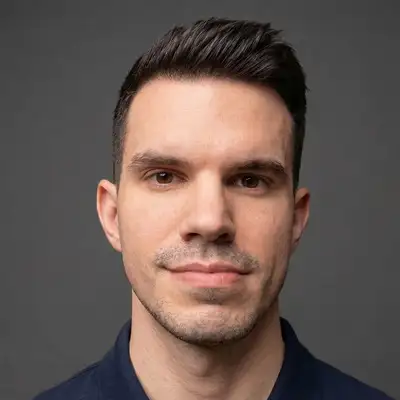
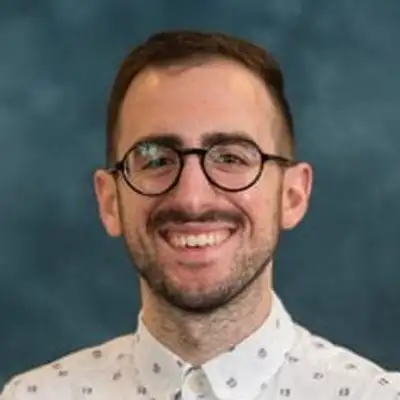
Historians David Sessions and Blake Smith gossip about the gay life of the past and the gay discourses of the present.
speaker-0: Ortlieb sort of throws on the table, like, everyday violence against gays in New York, the threat of political backlash, the thought that maybe, like, this movie is a negative representation of gays and will lead to more violence or political backlash, but also that's somehow connected with straight people. Slumming, which is like, those are surely not the same people who are voting Republican and beating up gays, right? Just like God bless, you know, the Gounettes watching Heated Rivalry may be annoying, but... at the end of day, they're probably voting for my rights. So I should not be too irritated.
speaker-1: I also get the impression that his anger with gay men who aren't exercised by the film is less about their actual opinion about the film, but rather that he feels like they're missing out on what the film allows them to do, which is to sort of come together as a people, sort of creating this sort proto-ethnic group of gay men. And the film gives them an opportunity to see themselves in action, exercising power, and coming together and feeling connected.
speaker-0: Yes, it's like a super zap. It's a kind of pride parade.
speaker-1: And he seems really upset that there are gay men who are not participating because they're either addled by drugs or they're playing or they're too busy partying or they're too too interested in sort of being the lapdogs of rich white people basically.
speaker-0: That would be the only reason I would not protest cruising is I'm too high on drugs, too busy being a lap dog.
speaker-2: This is Off Christopher Street, the podcast where we look into the archives of the magazine Christopher Street as a window onto the gay life of the past and the gay discourse of the present. I'm David Sessions, along with my co-hosts and fellow historian Blake Smith. In this episode, we are joined by our friend Dominic DiSocio to talk about the 1980 film Cruising, starring Al Pacino as a cop who goes undercover in the New York leather scene to catch a serial killer who has been brutally targeting gay men. You don't have to have seen Cruising to understand this episode. In fact, if you haven't seen it, our conversation will probably be a good introduction before you watch it. And we're not just talking about the movie, but also about the massive controversy it provoked among gay men even before it was filmed. A controversy that, in retrospect, looks like a sort of ancestor of contemporary cancel culture and debates about things like media representation and cultural appropriation. We talk about how this controversy over cruising was related to the kind of gay politics that Christopher Street saw itself as enacting. So was one that drew on Hannah Arendt and comparisons between gay men and the Jewish people as identity groups, and was concerned to cultivate a kind of gay culture or a gay world as a space of shared identity that also had room for conflicting perspectives. Before we get started, don't forget to subscribe to our free newsletter on Substack, which is our hub for the show where we post many essays and links with each episode and bonus content related to some of the themes that we talk about on the show. If you listen on Apple or Spotify, make sure to follow us so that you get our next episode, which you will not want to miss. It is all about love and gay relationships, which I am super excited to talk about. Also, if you've been listening and enjoying the show or despising it either way, we would love to hear from you. You can DM us on Instagram at ChristopherStreetMag or email us at chrissiferstreetmag.gmail.com. And now we hope you enjoy our conversation about the movie that the gays tried to cancel. All right, everybody, we are back. is here, always. Hi. How are you doing today, Blake? What you up to today?
speaker-0: â great. Wonderful. You shouldn't ask that's always going to be like such a boring, â working on the book. I went for a walk around Hyde Park. This is my-
speaker-2: You at least you went outside. have not been outside today even though it was
speaker-0: â god, we need to cut this content. This should not be revealed. â Right, the T as Dominic said about the going out episode is, are we going out?
speaker-2: â I did go out a lot this weekend, yeah, I'm doing my part. And we have our second friend of the pod with us this time, who is already a friend of the pod unofficially because he and Blake have worked on stuff together. Dominic DiSocio, welcome. Thank you for joining us. Dominic is a assistant professor at Northwestern.
speaker-1: Hey, yeah, thanks for having me.
speaker-2: And I just got the new, the May, June issue of the Gay and Lesbian Review, which has your essay about Christopher Street at 50, alongside one by Andrew Holleran. So congrats on that.
speaker-1: Thank you, my name's forever entangled with the masters.
speaker-0: It's a real moment for Dominic because like, I mean, his whole life from like baby gay to now has been shaped by rereading Dancer from the Dance. He's well into the double digits. So, to have Halloran's approval.
speaker-2: Yeah, you probably go further back with this material than any of us.
speaker-1: Yeah, since freshman year in college when I discovered the gay section in the library stacks. I've reading dancer from the dance every year since.
speaker-2: Every year. I was doing that for a while, but I've kind of fallen off a bit. But yeah, I need to pick up that tradition again.
speaker-0: Are you now as old as Malone is when she dies, when she's like too old to exist as a gay, or do you still have a little?
speaker-2: Don't remember it being that specific about his age seems like he's vaguely in his 30s or mid 30s
speaker-0: That's of many 50 year olds. Yeah, so I mean I'll be playing mid to late 30s for a long time.
speaker-1: I think he said his mid to late 30s and so I'm at my mid 30s. So I feel like I'm at peak Malone right now.
speaker-2: So this summer is the 50th anniversary of the first issue of Christopher Shree on July 1976. So Dominic's piece is like a long overview of kind of the history of the magazine and what it was about. Also just in case while I'm thinking about it, since we may forget, I'm learning we constantly forget to say things. â Blake's essay about cruising, the movie that we're gonna talk about and the controversy around it, which is also what we're gonna talk about. Blake has an essay in Air Mail that is a... â Really good overview of that whole subject. If you're interested in digging deeper.
speaker-0: Right, for some reason this was timed like for the release of Al Pacino's memoir a year or so ago. And in that Pacino notes that he feels really bad that he made the movie and he gave supposedly his profits to an unspecified charity. I did not fact check that.
speaker-2: They are, yeah, they apparently like were not, they were always sniping Al Pacino and William Friedkin, the director of cruising. They've been like, were sniping at each other like back and forth for years about like they were both kind of embarrassed about how it turned out.
speaker-0: Yeah, how do we how do we want to begin the conference? First of all, guess we should explain
speaker-2: Yeah, I think before we talk about Charles Ortleb, who is the publisher of Christopher Street, the author of the article that we're going to talk about before we talk about him and the controversy, I think we should talk just talk about what the movie is like, like you want to do like a quick plot summary maybe or.
speaker-0: I would say very quickly in the past to Dominic who I think has watched it most recently most comprehensively and who got the DVD with the hundred page booklet so she has the expertise of
speaker-2: Okay, all right, that will do. I have also seen it recently so I can.
speaker-0: â okay, well then it's fresher for both of you than for me.
speaker-1: Okay. Okay, so you want me to do it then or?
speaker-2: Dominic, since you're our guest, don't you give us the plot summary?
speaker-1: So, Cruising came out in 1980, directed by Friedkin, who before this had directed The Exorcists, French Connection, and Boys in the Band, really the first big mainstream gay film back in 1970. And Cruising is based on a novel by Gerald Walker, who is a New York Times reporter. The novel came out in 1970. From what I know, Walker is a straight man, and it was based on his reporting in the late 1960s. And over the course of the 70s, he basically shopped it around for almost nine years before Friedkin was attached to the project and before a studio would buy it. None of the major studios wanted it. And when it was finally made, was actually a co-German American production. No major film studio in Hollywood actually produced it.
speaker-2: Did you have you actually read the Walker novel that it's based on?
speaker-1: I have not, but I do know that there are key changes between the novel and the film. One of the key changes is that Friedkin purposely situates it in the S â world. the book is based in sort of the homosexual subcultures of late 60s New York City, but it wasn't an S â story. That was Friedkin's decision to make it specifically S â And also the Al Pacino character's name changes and becomes more explicitly heterosexual in the movie. And in book, it's more-
speaker-2: It also changes from Irish to Italian American. That's right. â
speaker-0: That's hotter. Let's face it.
speaker-2: I thought the novel is, I mean maybe this is jumping ahead a little bit too much, but the novel is more explicitly, there's several different point of view characters. The Al Pacino character is one, the sheriff, the Jewish sheriff is one, and the killer himself is one, and they are all sort of having this kind of crisis of masculinity and identity kind of concurrently in these different ethnic packages. All of which is kind of absent from the movie, like from Al Pacino's character is pretty blank and it's pretty hard to understand. It doesn't really register like what he's his internal tension is, you know, doesn't really come through.
speaker-0: Right. This is one of the rare Al Pacino movies where he's not dialed up to 11. I don't know if he was like barred out or what Friedkin had him on. But if you think about, what's the one where he plays the devil? â Devil's advocate with Keanu Reeves in the 90s where he's like a head lawyer who is the devil or his wonderful performance as Roy Cohn in the TV version of Angels in America. is not normally a master of subtlety, but here he is really giving nothing.
speaker-1: That's right.
speaker-2: Like, it's almost like he doesn't know what to do. He's like so blank and but anyway, so what what happens briefly what happens in the story?
speaker-1: So the movie starts off with a murder. There's a series of murders happening amongst gay men in the village and in Central Park where gay men are cruising. And the police are struck by these basically body parts that they're finding, that they're IDing towards murdered, â to murdered gay men. And there's pressure on them to solve this, both from the gay community and from the police department, to figure out what's going on. And so basically Al Pacino's character, Steve Burns, is his name. very, very Italian. He â is tasked to go undercover and assume the identity of a gay man, move into an apartment in the village and infiltrate the S â underworld to try to figure out who's murdering these gay men. And so over the course of the film, without spoiling too much, the Al Pacino character has to figure out how to dress like an S â leather man, how to act like one, which space is to go to And so we see reconstructions of some of the classic gay bars of the 70s, like the mineshaft and the anvil. They're not filmed there, but they're reconstructed.
speaker-2: It was, I think it was filmed in the anvil, as the mineshaft, you know, refused. But the anvil, we mentioned, we talked about in the gay masculinity episode is another one. So the place that Seymour Kleinberg went and saw the go-go dancer. So it was actually a filming location. â
speaker-1: Okay, great. And so he's basically, you know, journeying around the city trying to figure out who's killing these gay men. Lots of false leads, dead ends, until eventually he figures out where the murderer is located and confronts him at the end. I won't give it away who the murderer is or what kind of person he is. so it's basically, right, like a thriller police procedural hybrid with an exploration of the gay S â underworld in the 1970s.
speaker-2: Yeah, and in the novel, think the cop, the main character had gone to, he had been in the military and he had gone to this bar that was like the on base or just off base with it was, I guess, a gay bar where there was gay men who like bought the soldier, the soldier's drinks and it suggests that he might've done something with one of them. And so like being back in this gay environment has this kind of like unsettling, it's almost like he's kind of into it. And all of that is, I mean, it's it's hinted out in the movie, but in this extremely vague, like abstracted way.
speaker-0: There is very little I was telling Dominic. My first watching of Cruising was like me, age 20, with my college boyfriend thinking like, is going to be really hot and transgressive and naughty. We had made the same mistake earlier with Mysterious Skin. If you've caught that one. Cruising, it was not the problem that Mysterious Skin had, but it was just incredibly boring, fell asleep. On rewatching as an adult, I do love I think I mentioned this in the airmail thing. There's a wonderful scene where he's like visiting his girlfriend. He's been undercover for weeks and she's like, blah, blah, blah, blah, blah. How are you feeling? And you would see him like dissociate while she's talking and he's already done exactly the same thing while his twink neighbor in the gayborhood while he's undercover is doing like they go out for brunch and the twink neighbor is like, my play, blah, blah, blah, blah, blah, blah, blah. And I was like, â I guess this is what being like a bisexual top is like.
speaker-2: Alright.
speaker-1: So
speaker-2: Maybe â I was also gonna say like just quickly kind of before we dive into the controversy about this movie it came out It was filmed in the late 70s in around New York including in the village area where Christopher Street when it was based and you know became a big controversy with the gays tried to gays protested and tried to cancel it but â Just like quickly like why do we you know? So what like why do we want to talk about this now or what what? What do we have to look forward to in comparing this to today?
speaker-1: I mean, I think for the contemporary viewer, it's interesting because it at least purports to give us an accurate representation of this sort of disappeared 1970s pre-AIDS halcyon gay sex world. I just, I know, did a screening for a bunch of gay guys of this movie who none of them had seen it before. And that was the main draw. They had heard that this is almost like a documentary, I think, as it's been received in popular gay wisdom. Yeah. we can access this world. So it's an interesting historical curio. As a film itself, think it's quite bad. It doesn't work as a thriller. The pacing is terrible. We get from dead end to dead end to dead end. And suddenly Al Pacino's character figured out who the murderer is. There's no smoking gun. There's no piece of evidence that gets them from point A to point B. It just kind of...
speaker-0: This is not a spoiler, but the killer is a Columbia grad student doing the History of American Musical Theater, which I love. I think this is our first, like, faggot grad student killer.
speaker-1: right. â As a culinary graduate, I was not surprised that the murderer was one of us. I met many a sociopath when I was at school there, so I was not.
speaker-2: who's also very rich, by the
speaker-0: Another at the center of everything.
speaker-2: So I thought that we were originally going to record this like a while ago. So I did all the kind of research and I watched the movie like the weekend that I was in New York already. And so like when I went out that night, which is like to this place that ended, it's kind of like tens a little bit older. It's like a little daddy ish. And so I was like asking people, you know, if they had seen it, just random people.
speaker-0: Were you asking were you asking old queens at Julius if they've seen cruising? You were doing like a poll or what?
speaker-2: No, no, this was more like a club, club, this place called Red Eye, which is a small bar club thing, but it's, it's always very sexual. And, and so I was like asking people like in the middle of that, like, have you said this reminds me of Cruzi? Have you seen her? And, and this one guy was like, bitch, I was alive when that came out.
speaker-0: Extra increasing. â The film itself is remarkably uninteresting. What is interesting is the discourse that it generated so much like I did not watch Looking when it came out 10, 12 years ago because I was already tired of the discourse. Then I watched it just a few years ago and I was like, it's amazing that something so dull produced so much intense feeling and commentary.
speaker-2: Yes, right.
speaker-0: And yeah, this movie, even before it came out, Charles Ortleb, editor of Christopher Street, was leading a campaign of protest against it. And the terms of the protest, like the fact that it was being protested, the fact that homosexuals invented cancel culture, you know, very sad, that itself is interesting. And then the terms on which he protested. Because as we will see this essay, Context of Cruising from September, 1979, in Christopher Street, Charles Ortleb is trying to be real. intellectual about it. He's really, he is putting on his big girl theory pants. And there is a lot of resonance with like how Twitter divas are commenting on culture today. there are many many parallels.
speaker-2: Right. Yeah. Like I think it's like the different terms on which it is being protested, both Ortlebs that we're going to talk about, and then also the other people like Arthur Bell, the things that he says, I think those are all interesting. And they all they bring up some interesting questions about like, what, how is this crazy? Or like, was it crazy for the time? And like, if it was or maybe part of it was understandable, like, is there a version of some of these critiques or protests that we we could understand or like would maybe find defensible or have a rational kernel or something like that. So maybe we should move to talking about who Chuck Ortlob is. And Dominic, I think you can take this one because you have recently given us a bio of him in the magazine. There were some details in your piece that I thought were interesting to this. Like I didn't know that he was BFFs with Arthur Bell.
speaker-1: more than BFFs. were were were lovers.
speaker-2: Okay, okay, well that's
speaker-0: This is less than BFFs.
speaker-1: That's true. yeah, Charles Orchardt, Ortleb, he comes to New York City from the Midwest in the early seventies. He's born and raised in the Midwest, studies at the University of Kansas. In the late sixties, he's involved in anti-war movement. He's involved somehow with the Black Panthers. And he's really, his sort of intellectual background is rooted in existentialism. He's really into Simone de Beauvoir and Sartre when he's a college student.
speaker-2: Absolutely.
speaker-1: That's where he's coming from. He comes to New York in the early seventies to explore poetry, explore being an intellectual of some sorts and falls into the Gay Activists Alliance crowd. The Gay Activists Alliance or the GAA is the successor to the Gay Liberation Front. It forms, I believe in 1970 as an offshoot. And they sort of have a reputation of being more, more moderate, sort of politically focused, politically savvy organization that's aiming for real concrete change and how queer people are treated by the government and the police. He's involved in his early 20s with a short-lived gay publication called Out, not the same out as the glossy from the 1990s, but the original out, which is sort of a predecessor to Christopher Street. It tries to be a cultural magazine serving both the lesbian and the gay male communities. They have interviews and cultural critique and â sort of think pieces about what's going on in the incipient Manhattan gay world of the early 70s. that quickly folds and then over the course of the mid 70s, right, he and other people, including his lover, Arthur Bell, his friend Vito Russo, eventually he meets Michael Dennedy, his longtime friend and dance partner, and they sort of brainstorm, let's create a new gay publication, a gay New Yorker called Christopher Street, which premieres, as we said, in July of 1976. And he is the editor-in-chief throughout the entirety of the magazine's publication. And so, you know, as the editor-in-chief of New York, or the United States premier gay intellectual, Oregon, I'm sure sees himself as an authority, as a force in the gay political and intellectual community.
speaker-0: And, you know, we'll be slagging on Chuck E. O., I guess, you for some portion of this. â But to say he truly did do, like he did something very, very important. mean, his running of Christopher Street and then it's been all newspaper, New York native. And as I'm working on the book, like I appreciate better and better how a lot of ideas that maybe he personally did not express the most clearly or cogently were were put together by him, like he's a big part of the intellectual background of Christopher. He's a really important figure and he doesn't maybe get the credit that is due to him in part because he's become, â over the past three or four decades, very reclusive, is not giving interviews, while pretty much everyone in the Christopher Street universe was willing to talk at some point to Dominic or me about something or other.
speaker-1: That's right. Yeah, I tried contacting Orleb for my research in Christopher Street. I even went through Michael Denny when he was still alive to see if Orleb would speak to us. And Orleb does not trust people who work or attend a university. He's against academics of all sorts. The reason I was given was because we've all become enthralled to queer theory and he does not like queer theory. So we are all contaminated.
speaker-0: Dominic and I are notorious agents of Wokery. As anyone can tell from a brief glance at my seat.
speaker-2: â Well, haven't, yeah, we'll have to do some actual queer theory â contamination in the future. Okay, so that's a little bit about â who Ortleb was. So I guess, how does this controversy get started? Like I know that Arthur Bell's columns in the Village Voice played a big role in it, of kind of drawing attention to it, mobilizing the gay community in the Village to protest the film, which is pretty serious business, like businesses along Christopher Street. you know, put signs in their window, like a lot of them, like, refused to be filming locations. People were beaten by the police during the protests. So it was, it was quite a thing. I'm not sure exactly how it gets started, but...
speaker-1: So what I understand is that a disgruntled PA on the set of Cruising during the early summer of 1979 hands a first draft of the script to Arthur Bell. Arthur Bell receives it, reads it, is infuriated by it, and then over the summer publishes a series of articles in the Village Voice alongside his colleague Richard Goldstein, who's a writer and editor for the Voice as well. â And the two of them are the main ones publishing and rallying the troops. behind the protests.
speaker-2: So let me read something that Arthur Bell says. So he gets the script, he reads it. So he's read this, this is not just speculation. He's seen the script of the film and he still comes to this conclusion. Had he, meaning William Friedkin, the director, dealt with the gay groups, he would have had an understanding of the insightful nature of his script. If he had had a sense of social justice, perhaps he'd have altered his script, which in effect says that murder is the result of gay sex.
speaker-0: Well, first of all, sometimes. That does be... And I guess part of this maybe, don't know, Don Mickey might have better information, you know, Bell coming up through the GAA, which in the early 70s is really focused on doing these like new left style zaps, especially of media institutions like protesting the New York Times, homophobic coverage.
speaker-2: Okay, it can be.
speaker-0: Protesting also, I think, the village voice itself for not taking ads from gay businesses. And so being really locked into issues of media representation and feeling like having dramatic protests that capture the media's attention and force it to comment on its own homophobia is really central to his vision of politics. â
speaker-2: So that's interesting. So one thing that like Zaps were used for is like protesting psychology conferences when they were trying to get homosexuality removed from the DSM. there were these kind of like, and they weren't like, this was the more not the gay liberationists, the like Marxist gay liberationist, the gay activist alliance, which was a little bit more, I wouldn't say moderate, but like they still use these kind of theatrical protest tactics and they were often like. funny and kind of, you know, they wore costumes and did kind of crazy shit and like chained themselves to the theater and stuff like that. So this is like kind of in that spirit.
speaker-1: That's right. And I also think â a figure who doesn't really come up in these articles is Vito Russo, the film scholar and activist who's a close friend of both Ortleb and Bell. You know, Vito would go on to co-found GLAAD in a couple of years. So he's also very concerned about media representation and the harmful aspects of media representation. The author of The Cellular Closet, you know, he's very tuned in to what movies can do or not do for marginalized people.
speaker-0: That's such a good point because one fellow Christopher Street writer, Michael Denny, protege, Alan Barnett, also a founding member of GLAAD, and it's strange that Celluloid Closet, which is like such a wonderful film and book, I don't think the book talks about cruising. Certainly the film doesn't. although Russo must have had some big opinions.
speaker-1: Yes, from what I can tell, I haven't found any written sources of what he thought about it, but from what I can tell from reading the articles and from Bell and other people around the scene is that Rousseau was one of the ringleaders of these protests.
speaker-0: Okay, that makes a lot of sense. So these are girls who are watching television, who are having thoughts about it. This is very Twitter, this is very like photo cancel culture.
speaker-2: Yeah, it's very foreshadowing. One question I have is that gays know that Friedkin made Boys in the Band and like I have no idea what the like gay opinion of that film was at the time. But to me at least suggests that like Friedkin has like already made films that treat gay themes or have gay characters explicitly. Like why would we think that he is making some kind of deliberate anti-gay propaganda film, which is the Certainly the takeaway from Ortleb and Arthur Bell suggests it as well.
speaker-1: I think there are two interesting facts. One is this weird connection between Friedkin and a gay mass murderer from the mid-1970s.
speaker-2: Right, that is weird. That was extremely-
speaker-1: So in the mid 70s, there's six gay men who are murdered and they're found dismembered in bags thrown into the Hudson River and they were called the bag murders. They actually caught the murderer named Paul Bateson who actually was an extra on the Exorcist. So Friedkin knew him from the filming and during his trial And during the filming of Cruising, Freekin visited him several times to sort of get the psychology of what kind of person would murder gay men and wanted to use these conversations to inform the script and how he was directing Al Pacino and the actor who plays the murderer. And so this was known amongst the protesters. So I imagine there was some conspiratorial thinking, especially for Chuck, who is a conspiracy theorist par excellence. know, on the other hand, In defense of Arthur Bell's paranoia, mean, there is a â rising tide of violence against gay men in the village in the late 70s, right? Beyond these bag murders, there is a series of attacks in the summer of 1978 in Central Park where teenage boys from the suburbs came with baseball bats to beat up the gay men who were cruising in Central Park. And then a couple of months later, after the film came out, there was a terrorist attack at the Ramrod where someone opened fire with a automatic rifle.
speaker-0: Generally, one of the ironies of the kind of lateness in the 60s of the gay liberation movement, starting in like 69, is that as it's running through the 70s, New York is collapsing, crime is exploding in the city, the city's budget is collapsing, the horizons of the left and of liberalism in America are shrinking. There's a tide of conservative Christian homophobic reaction all while this New York gay culture is getting constructed. I mean, it makes sense that people are literally under attack. They see the neighborhoods that gays are moving into getting steadily, like garbage is piling up, people are getting murdered. It's both in the most micro way, like in the very urban texture of their lives, and then also kind of on the national scale, there's good reason to be paranoid. I do like, yeah, Dominic, do people talk about boys in the band? Because it weirdly doesn't seem to come up for Ortlieb or for these other people.
speaker-1: No, I mean, I read several of the Bell pieces and other pieces that being published in the 7980 and there's literally no mention of boys in the band, which I find super fascinating because it was a major production, you know, sold hundreds of thousands, not millions of tickets.
speaker-0: I do wonder if people felt embarrassed by it because it is, like Ramsey Fawaz in Queer Forms from a couple of years ago has a pretty smart reading of the movie, which is like seeing what's generative and decent about it. I could also. And his reading of it is that it's a kind feminist consciousness raising because they're in a circle and that's the Queer Forms, whatever. But otherwise, it's a smart chapter.
speaker-2: I'm about the boys in the band here.
speaker-0: And, but I do think like the, the particular, like, like the struggling with self hate that all these people are going through, maybe by the end of the seventies felt so unbearably cringe. I mean, very real, but like felt maybe unbearable to a lot of people. So maybe like they just didn't want to talk about it.
speaker-1: wouldn't be surprised.
speaker-2: I also thought it was interesting that Friedman, or Friedkin, was defending himself. He did this interview with Janet Maslin in the New York Times where he's, Janet Maslin, I think she was the movie critic back then. She goes on to be, she works the Times for decades until like fairly recently. And he's, you know, kind of pushing back and drawing attention to his past work and saying like, you know, I know anybody who knows me or has seen my movies would know that like I don't make propaganda. Like my movies don't have messages. They're about, you know, stories and the feelings you get from them.
speaker-0: To be fair, that's what everyone says when it's revealed that you're a Republican. Like, that's what you say.
speaker-2: Although yeah, they're no all Republicans make extremely didactic or propagandistic message
speaker-0: was at Sydney Sweeney when they got her. yeah, okay, She was like, my breasts are not political. Do not politicize my enormous naturals.
speaker-2: If we count Sidney Sweeney. But yeah, so this is a, it's a really, that was what you were just saying, Blake. That was like really reinforced with, was just, I've been finishing the marathon, Rick Perlstein, Reagan Land, which ends in 1980 and 1979, the year that this happens. It was just in a particularly berserk, abysmal year. Like it was a horrible time to live in America. Like we think it's bad now.
speaker-0: And it also is bad now. But one of the things that is interesting, so it's not just gays who are insane. So like this, sense that maybe from the mid seventies on that we're about to succumb to fascism. That's right. Becomes kind of ubiquitous among the New York intellectuals. Sontag's fascinating fascism, think is the, is late 74, 75. she's like the fact that people are into Lenny Riefenstahl now and the fact that gays are into leather and the fact that, you know,
speaker-2: But
speaker-0: the Republicans somehow haven't been destroyed by Watergate, means that we're about to have fascism. And Charles Ortlieb is Susan Sontag's, as we will see, number one fan of all time. He interviews her in the second issue of Out, really fawningly, even though she's on her worst behavior. And she remains an intellectual obsession of his throughout his career.
speaker-2: And according to Dominic's piece, she would drop by the Christopher Street office.
speaker-1: Right, so they had a friendship. Yeah, and like we'll see when we turn to the Ortlieb article from Christopher Street, he clearly has this major concern that the gay project of the 1970s is an existential threat and coming to an end with the, know, student to be election of Reagan in the following year. As we'll see, he makes constant comparisons to gay men in 1979 to the Jews of Weimar, Germany in 1933 on the precipice of Nazism.
speaker-2: Yeah, and we should say like we don't have to belabor it, that this is something that had kind of already been set up in Christopher Street. There's an early issue, there's a cover story that is about the extermination of gay people in the Nazi death camps. And this through the 80s and beyond becomes, you know, even in a couple of the pieces we've already talked about in just a few. just a few episodes, almost all of them have some kind of reference to the Holocaust and this is perhaps the apotheosis of that.
speaker-0: can all seem very like dramatic and silly. I mean, one, guess the 60s and 70s are kind of the beginning of the wave of Holocaust memorial culture and even like kitsch. So it felt fresher than it does now. And it works to make the point that this gay culture that has been emerging in New York then for the past decade is not like a historical given. It's not just natural. It's something that they are making. And they're thinking a lot about parallels to Weimar where there had been a modern urban gay culture that people had created and it was swept away and even a lot of record of it like the Hirschfeld Archive was targeted for destruction. So the sense that like that could happen again and it's on us to be vigilant, that's not totally wrong-headed. mean, as we'll see, cruising the film is maybe not the best target for this irrational feeling and Ortleb maybe does not express that feeling in the most helpful way.
speaker-1: Thanks
speaker-2: And that impulse that gay culture is historically contingent, it's something that is somewhat novel and being created in this moment is one of the things that we are most interested in on this podcast about Christopher Street. And so we don't want to make fun of that.
speaker-0: Because gay culture will die if you guys don't subscribe and buy my book.
speaker-2: If you don't subscribe and listen to every episode all the way to the end, gay culture will die. So how do we want to, maybe someone should describe the style. So the essay is from the September, 1979 issue of Christopher Street. It's called The Context of Cruising by Charles Ortleb. Somebody want to describe like the big picture, kind of what it's like stylistically or like the form of it, which that is.
speaker-0: Dominic, are the scholar of literature.
speaker-1: I'll leave it
speaker-2: Doesn't want to talk about our class.
speaker-0: It's a sort of Walter Binyaminian project. it's only two pages, but it's very dense and it's full of quotations from Sontag and Arendt. Sontag is really like Ortlieb's intellectual mother, Arendt is very much Denonese, but she has this role for any number of other gays like Altman. And maybe a third of the essay is quotes from these two.
speaker-1: Yes.
speaker-2: especially from, so it opens with a quote from Sonntags on photography. It sometimes stacks two quotes from on photography in between Ortleb's paragraphs. And then it also has these like subheads in between. You never know when the giant block quote is gonna come before or after the subhead or in the middle of a paragraph. had quite a time figuring out how to format this on the website.
speaker-0: It's avant-garde. It's very like, no one has appreciated the avant-gardism of Larry Kramer's faggots and it's like really broken syntax and multiple voices. This also, like there's this one random paragraph in italics. It's 1941. Let's make a murder mystery in Germany with Jewish bankers for local color. like, okay, whose voice is this? Where is this from?
speaker-1: It's quite disjointed, right? So like after each of these quotes from Sontag or Arendt, sometimes what Ortleb has to write is actually related to the quote, but sometimes it's not. And the content of his writing sort of alternates between first person or sort of the general we of gay men and their experience every day living in the village and sort of the everyday violence that they experience or what it's like being gay, walking down the street to... comparisons to Nazi Germany or the Weimar Republic to more pseudo-theoretical, pseudo-intellectual understandings of what this moment means for the gay community at large.
speaker-0: I do think with no irony, if Ortlieb and Denny had been German Jews from the 1930s, their texts would be read by graduate students today with this careful sifting attention. Because there are all of these little paragraphs that begin in a kind of like, he has this opening quote from Sontag, the camera's rendering of reality must always hide more than it discloses. Then Ortlieb, New York has become a city where directions can be given based on remembered violence against gays. What a parataxis, what a shift. If Adorno had done it, everyone would be talking about it.
speaker-2: Yeah, also somebody mentioned that there were these anti-gay attacks. Those were also happening in other parts of the country. it's still unclear to me how they knew this. Maybe there were witnesses who saw it. But the gays who were attacked reported that these straight boys who were coming into the city and beating up gays would say, like, this is for Anita. Which sounds too perfect to be true.
speaker-0: That's giving a little bit, who was the guy who went out for Subway and the Klan lynched him in the loop, know, from Empire, Jussie Smollett. It's giving a little bit, Jussie Smollett.
speaker-2: â yes, now I know what you're talking about, yes. I never seen that show, but yeah, now I remember that giant controversy. I'm trying to decide what would be a good part of this to read. We could probably read most of it, it's pretty short. So he is talking, this is the section called Gays as Local Color. They come from New Jersey and Long Island. Actually they come from all over. They walk down Christopher Street hand in hand, a little nervously, but still in a bemused mood. Sometimes they stop to kiss each other, flinging their heterosexuality like. acid into the fast faces of gay men passing on the streets. They shake their heads disapprovingly when they see two male or two female hands touch. They don't stop to buy drugs because they're too busy shooting up superiority.
speaker-0: I mean, that's great. That's hilarious. Come on.
speaker-2: Okay, but the last part. They have come into the city from the doubt of the suburbs to smirk and to slum. They need to see our neighborhoods as zoos in order to maintain certain notions about the civilization of their own. So there is a bit of like neighborhood, like get off my lawn, which we will talk about a little more, think that, and this has always happened. Like so straight people have always kind of slummed in Bohemian, slightly edgy or, you know, districts of urban districts in which they probably don't belong, whether it's the black music scene or the gay world, even in the early 20th century, the late 19th century, that's always been a thing. So it sounds like he's suggesting that that's happening in the 70s as well.
speaker-0: We should say perhaps under Ortlieb's watch, New York native will also become a wonderful vehicle for slumming with Michael Grumley, one of the violet quill guys. has this series on the uptown beat where he goes up to Harlem to the black clubs and reports on them in like deliriously exoticizing language. They're super fun, â but they are not going to be collected and published. So Ortlieb should know where of he speaks.
speaker-2: And we should explain what the New York native is because that's part of the lore of Christopher Street and we've mentioned it a few times.
speaker-0: So the New York native is the spin-off newspaper of Christopher Street that Orlip founds, what is it Dominic, the end of 81 or the end of 80? They can't both be right because I asked you a question. It's 80, 81.
speaker-2: And if I understand, if I remember correctly from that piece in Denny's book, the native is kind of what makes money to keep the magazine afloat. Is that right?
speaker-0: Yeah, because they do personals, which is what pays the bills.
speaker-1: And so they get their money from classifieds, but they also take advertisements from sex businesses, which Christopher Street also won't do.
speaker-2: Right, Christopher Street is a little bit prissy in terms of its respectability and the New York native does the sex.
speaker-0: I don't have cash up in bio on my professional Twitter. That's for the
speaker-2: Okay, so he rails against the gays who are not exercised by the filming of cruising. He calls them the affable homosexuals and he compares them to the Jews who like are not worrying enough about the Nazis. I think basically right.
speaker-1: I mean, his approach to the essay is rather interesting because he's seemingly less concerned about actual physical violence towards gay men. He doesn't actually talk about any of the murder cases that we just recently discussed or any of the actual physical manifestations. He seems like he's much more concerned with like spiritual or aesthetic violence that straight people bring to the village when they enter gay territory, right? In other words, he's more interested in microaggressions and actual forms of genocidal violence that are maybe manifesting in New York City in the 1970s.
speaker-0: Well, and that's a relevant parallel, certainly, â Ortlieb sort of throws on the table, like, everyday violence against gays in New York, the threat of political backlash, the thought that maybe, this movie is a negative representation of gays and will lead to more violence or political backlash, but also that's somehow connected with straight people slumming, which is like, those are surely not the same people who are voting Republican and beating up gays, right? Just like God bless, you know, the Gounettes watching Heated Rivalry. may be annoying, but at the end of the day, they're probably voting for my rights. So I should not be too irritating.
speaker-1: I also get the impression that his anger with gay men who aren't exercised by the film is less about their actual opinion about the film, but rather that he feels like they're missing out on what the film allows them to do, which is to sort of come together as a people, sort of creating this sort proto-ethnic group of gay men. And the film gives them an opportunity to see themselves in action, exercising power, and coming together and feeling connected.
speaker-0: Right? Yes, yes. It's like a super zap. It's a kind of pride parade.
speaker-1: Right. And he seems really upset that there are gay men who are not participating because they're either addled by drugs or they're playing or they're too busy partying or they're too too interested in sort of being being the lapdogs of rich white people basically.
speaker-0: That would be the only reason I would not protest cruising is I'm too high on drugs, too busy being a lap dog.
speaker-2: â Yeah, so toward the, says this toward the end of the essay, he says, think the coming together of the village gay community on this issue was in part a way of telling the Jewish survivors of the Holocaust, we too have learned from your history, your lessons have transcended your people. As Arendt said at the end of the Jew as pariah, only within the framework of a people can a man live as a man among men without exhausting himself. So that there is an idea that is not the cruising is the Holocaust part. But the idea of only among a people or among a world, that idea from a rant is also important to Michael Denny. And it's one that, you know, like you are very interested in. â
speaker-0: And I think this quote is like it's central to Denny's work in the 80s and 90s. He uses that quote all the time to try to use a rent idea of like a multi-perspectival discursive space situated in a shared identity. This like benign kind of communitarian sort of pseudo-ethnic, a kind of civic nationalism here grounded in gay identity. I think that the first time this quote is used in connection with gay stuff is here in this cruising essay. So I do think it's like Ortlieb who is giving that to Denny. Like a lot of the ideas that Denny will later express in more reasonable and like theoretically balanced terms are first expressed by Ortlieb in sort of what Dominic, what's a nice word.
speaker-1: It's just dating here.
speaker-2: Just kidding. But yeah, this is like a version of what Denny says in his introduction to the Christopher Street Reader when he sort of presents, you know, Christopher Street as a magazine and why it's important to gay culture that we have this kind of public sphere where people, know, gay men can like be known to each other as, as what they are. They can kind of share their perspectives with each other, you know, collectively and become a people. And this, this A connection to Arendt and the way that she took these or developed these ideas from her early Zionism is very important. It's very influential. So there is a connection between the way that this idea of a gay world or gay community is taking shape and â the Jews. This is just maybe the crazy version of it.
speaker-0: And another thing that Denany will take from where it lived here is the sense that like, so there's, you know, one enemy is Friedkin, but another enemy, as Dominica said, is gays who are not thinking of themselves as part of a people, as part of a collective that would be concerned by, like, if cruising really is an attack on the gays, then all gays ought to be concerned about it. And they ought to take this opportunity to manifest what Orla calls this counter image of the gay community being concerned with itself. And the third enemy is liberals. So Denany will borrow this notion that although their politics could be characterized as moderate or assimilationist or as liberal compared to the super queer radicals of the gay liberation front, Denny and Orlib are both really against liberalism. So we see a homophobic liberal columnist who tried to dissuade, to associate us from our support of the First Amendment. We're engaging in a familiar pre-Holocaust tactic, denying the people their history, indeed mocking our history. Now that's like sort of over the top and crazy, but the idea is like liberals want to see issues of representation as like not political, like this is part of the private sphere, this is the free market of ideas. And for Ortleb and then for Denele, like building on him, these issues of representation have to do with building power in a collectivity. So it's not just a question of like individual people's freedom to produce and consume whatever images they like.
speaker-2: Or could it also be that, because that's one of the things that always struck me in Denny's writing too, overall his politics are quite moderate, but it often has this very hard edged rhetoric against liberals. Could it also be that, and I could be totally wrong, just asking. Could it also be that liberals have a kind of universalist rights framework and we're just absorbing minority groups into the rights that everyone else has and Denity and Ortlieb are more concerned of that. Yes, we want that, but we also want to have some kind of community identity.
speaker-0: Yeah, exactly.
speaker-1: Yeah, I personally, you know, upon reading Ortleb's essay, I do perceive a sort of hint of glee in his writing. think he's it's less about the film and more that finally they have an opportunity as a people to come together. Right. It's sort of the gay people as an ethnic group are going to be forged under the flames of this homophobia. Right. And this is why it's really important. It's less about the film itself. I mean, he hasn't seen no one's seen the movie. The film hasn't been filmed yet. So. We're basing our protests off of a first draft of a script that is going to be revised over the course of filming and production. And so for Orlev, I mean, I do generally think he's concerned. don't think he's instrumentalizing this for his own gain or for his political goals. And I do think his fear is genuine. But I also think this is a real moment for him where gay people can come together and push back against what he calls this superstructure strategy to wear down the gate. or big degre-
speaker-0: Right. So, I mean, we haven't yet gotten into the conspiratorial dimension, but there is a suggestion in the essay that, all of the powers that be are working together to destroy the nascent gay community and gay men's sense of common identity, which, like, and they've chosen as their vehicle William Friedkin.
speaker-1: Yes, I also think it's interesting that Ortleb doesn't reference that Friedkin and the main director, Jerry Weintraub, are both Jews.
speaker-0: Right, which Orlov is not.
speaker-2: You know. I also thought that was weird.
speaker-0: There is also, â Dominic's point is a really good one, that there is, I mean, I'll say, not in a negative way, but he's instrumentalizing this. He has a political viewpoint that is perfectly shaped for an outrageous catastrophe â that needs people out in the street building a sense of community to face it. And this is also part of why Ortlieb, at the beginning of the AIDS crisis, is one of the very first people to understand that this is going to be a big deal. and that it's going to require gay men mobilizing to fight it. And for a couple of years, he's one of the people who is rightest about AIDS. I don't know if we want to talk about how some of the negative aspects of this essay play out after 1983, 84.
speaker-2: Well, I had this, I don't know if this actually holds up, but I did have this thought that like some of what he's saying here is maybe like more or the tenor of it is maybe more appropriate to the AIDS crisis than to this movie.
speaker-1: This is kind of a nothing burger in comparison to what's actually on the horizon.
speaker-0: Right, it turns out we do get other Holocaust. And then the role that plays in that is an interesting one, because yeah, at first, he seems really critical in convincing Denany that this is going to be a big deal in taking in both Christopher Street and New York native, a really strong early line that we're going to talking about AIDS all the time as it develops. We're really going to be like giving people all of the medical information, all the political information. We're to be spotlighting Gay Men's Health Crisis. We're going to be platforming Larry Kramer. But that's in tension with some of the conspiratorial thinking.
speaker-1: Mm-hmm.
speaker-2: Does he actually define? he? I don't think he ever says what the superstructure strategy is.
speaker-0: Yeah, does he know? Charles Orlip, if you want to write in and tell us what the superstructure strategy is, we would be happy to hear.
speaker-2: Like we said before, I don't think there's, there are other, which are weirdly not mentioned, he could have written a kind of contextual essay about what's happening in broader America that substantiates this kind of viewpoint. there are things out there that, know, that Anita Bryant campaign is happening, the, you know, painting, it's called Save Our Children, painting all gays as groomers and pedophiles and gay school teachers as pedophiles and things like that. So there are like political things. out there that suggests that like this turn is coming or something bad is coming.
speaker-1: He's really interested in cultural politics and the politics of culture rather than actual sort of municipal politics or physical safety, right? I I think what he means by superstructure, I is that, I think he sees cruising as nefarious, that it's a tool in the strategy because it paints gay men as degraded, sex-obsessed, dirty, S â freaks. I think that's one of his main concerns. It's not worded like that, but I think... He's worried that this film, is ostensibly liberal in its outlook and maybe even sympathetic towards gay men as victims of violence, that it's actually doing something a bit more evil and that it's as if they deserve what's coming for them based on their sexual behavior and their sexual proclivities.
speaker-0: Yeah, think, I mean, as Dominic has also suggested before, I think there's a wish to take advantage of this moment to present gays in a more, like, vigorous role, like, you know, powerful, not just like victims either of violence or of media misrepresentation, but as like going out into the streets, forcing the narrative to change. I mean, one of the weaknesses of Ortlieb's politics, of Christopher Street's politics is it's very interested in media representation and not super interested in even like the kind of like nuts and bolts like sewer garbage issues of New York politics, right? Like even though it's called Christopher Street, they're not super concerned about like, well, what is our neighborhood actually like?
speaker-2: Yeah, I noticed I told Blake I'd been reading Randy Schultz's Mayor of Castor Street, which is â about Harvey Milk and San Francisco gay politics. And he has this aside where he's like, he kind of got a little bit snidely says that like, because, you know, New York got like delayed with this, you know, gay liberation nonsense. But â so California's gay movement was like years ahead because they went straight to dealing with actual politics or like you know, the real politic of building coalitions and building power. And I had never thought of it that way, but that was interesting.
speaker-0: Now let us not mock too harshly theory girls who get caught up in issues of cultural critique because we are three of us PhD havers talking about an essay about a movie. So... â
speaker-2: Fair. No, I have always represented a hard-nosed materialist politics.
speaker-0: She's a woman of the left. Dominic, I think you were cutting in.
speaker-1: Yeah, think it was interesting to think about what actual gay people on the ground were thinking about the protests. Like, I found a collection of interviews with five of the extras who were in the film. And, you know, for the extras in the film to staff their scenes in the S â bars, they just recruited random gay men who were in those scenes, right, who lived and inhabited these spaces. And not a single one has any issue with the movie. None of them have any concern with the politics of representation. They're all really confused about why protests are going on because they think it's a very neutral representation and accurate representation of their world. they're just actually, according to them, neither they nor any of their friends were ever interested in any of the cultural politics that are swirling on the film. They just thought it was an interesting way to get paid and then also to see themselves on film.
speaker-2: Yeah, and â that has parallels to today as well. know, Dana was talking about in the last episode about the, know, the gays who sleep with right wingers or with Republicans, and they're just like, â it's okay, I'm not political. I think that's still the case that we, know, those of us, know, discourse watchers or engagers, you know, get caught up in this stuff. But I think a lot of people don't even, you know, they're kind of like, why? Why are we talking about?
speaker-0: If you're going to pay a girl a couple hundred dollars to hang around the anvil, which she was going to do for free anyway, maybe doesn't seem like the worst deal.
speaker-1: That's right. And also apparently they would have paid more if they would have sex on camera.
speaker-2: Yeah, so this is we should we should say since you know for people who don't know like the lore of cruising apparently there was a was it 40 minutes is that.
speaker-0: â yeah, it's the number of minutes is the title of the James Franco short film exploring this issue, but I forget it's 40 something minutes.
speaker-2: So apparently the original cut of the film had some long amount of hardcore gay sex in it, kinky gay sex in it that was cut and has been lost. The footage no longer exists. so James Franco made this â really terrible â experimental movie interior leather bar, is supposedly like, it's like a behind the scenes of them recreating this footage. â Unfortunately, it is no more sexy than the original cruising itself.
speaker-0: Yeah, it is also somehow very boring. don't, straight people are funny because I mean, we talked last time with Lefferts about straight people may be on the Valley of the Dolls, wonderful. And yet straight people also made cruising and the James Franco sequel. So how can they do camp, but they can't do leather.
speaker-2: Well, James Franco really, he really nailed it with his, his kind of behind the scenes recreating, you know, idea. He re really nailed it with his, his movie about the room, which is just hilarious and brilliant.
speaker-0: I have not seen that. She was being so productive for a few years. She got all those MFAs and was doing the Me-Tuning. And now, where was James?
speaker-2: The disaster artist is what that's called.
speaker-0: On what note do we want to end? What's a good wrapping up? I feel like Dominic, you read this great big book, do you have any remaining juicy?
speaker-1: There is the insane essay by Jack Fritcher about his thoughts about cruising.
speaker-0: Yes, can we say who is Jack Fritz can we contextualize?
speaker-1: Jack Fritcher, who is still alive. He is a professor of languages and literatures and the editor and he was the founding editor in chief of Drummer magazine from 1976 and 1979, which was America's premier S &M Leather magazine.
speaker-2: And still exists apparently, I found out recently.
speaker-0: like in paper? Like you can get it to your
speaker-2: I am not sure about that, but like a guy I know who is a like only fans performer and gogo dancer â Was like did a photo shoot in it I was like, â I've heard of that and he was like I didn't even know what it was
speaker-0: â my god, herstory is still being made.
speaker-2: Anyway, dominant.
speaker-1: Yeah, so he was invited to write an essay when this orcay restoration of cruising came out a year or two ago about his thoughts about the film and also the protests around it. And he wrote this essay called The Gay Civil War When the Boys in the Band Attacked the Leathermen. And as you can imagine, as a dedicated lifelong practitioner of leather cultures, he sees the protests as a years-long campaign by Arthur Bell and company to declare war on leather culture. He calls it a, quote, Queen's Gambit to erase masculine-identified leathermen.
speaker-2: Now, even though Arthur Bell explicitly defends leather culture, it's, you know, 1980 is this moment. It's where the, the, the midget actor essay comes out. â the gay power, gay politics, all these kinds of like anti, these moral panic about gay leather culture essays. And Arthur Bell does push back against that.
speaker-1: Right, he does. And so he basically sets up the protests as the revenge of effeminate gay men, the boys in the band, against the emergence of these homo-masculine, his word, homo-masculine real men, and he sees it as a gay civil war. He calls what they're doing apartheid. He calls Vito Russo a henchman of â a flaming cast of campy reenactments of Stonewall. He calls the protests campy reenactments of Stonewall.
speaker-0: Okay, that's a great line. That's great, though.
speaker-1: Isn't that odd?
speaker-0: â my God, what if we did like annual Stonewall reenactments? Wouldn't that be a serve? Kaitlyn Schinner as Marsha P. Johnson.
speaker-2: of what?
speaker-1: the I don't
speaker-2: Maybe there's a maybe there's a rational kernel there like I could see like Seymour Kleinberg being into this
speaker-1: Yes. At the end of the day, he basically says it's Arthur Bell's sour grapes because Friedkin never came knocking on his door to get his approval and to pay him for his journalism, for consulting on the film. Yes. So he thinks that Bell is using his quote, toxic masculinity and injured vanity to extract revenge from the other men.
speaker-2: I think that's correct, actually.
speaker-0: And Dominic, you told me a few days ago, the real gag here is if you Google Jack Fritcher, there is a queen there. The Civil War is internal.
speaker-2: So I wanted to ask you guys either maybe this would be a kind of general question to end on. One of the things I thought was interesting in there's one Arthur Bell column where he gives a little bit of context on other films that have been made in New York. He talks about how when they made The Godfather, how they consulted with like the Italian American community where they made the film and they were like, can film here but you can't film the wedding sequence there so they filmed it on Long Island instead. He talks about a movie that was made in Harlem that â black people protested because of the way that it was, you they thought it portrayed them. Another movie that was about Puerto Ricans in 1973 that they threatened to bomb theaters over.
speaker-0: Thus, really challenging stereotypes. Way to go Puerto Ricans.
speaker-2: And so the piece is kind of about the impact of these movie filmings on these kind of ethnic enclave neighborhoods, how they come in, they shut everything down. Sometimes they work with, you know, local figures to, you know, work out a working arrangement, but he's basically says that like Friedkin didn't do that. And then he quotes all these other New Yorkers who were just sick of all the film sets and being blocked out of their apartments and Fran Lebowitz shows up and she's like,
speaker-1: But the-
speaker-2: Nobody should even be allowed to make movies in New York. â But I thought, like I found this kind of interesting or thought provoking, like imagining. think nowadays we think of these debates over media representation or things like cultural appropriation and these, they're so abstracted from anything like this, like anything this sociological or like these urban spaces that we're thinking like a big Hollywood production coming into and kind of. taking over, hijacking like places where people really live and work. And, you know, when we're debating like, you know, what mixture of identities are being represented in the latest like Netflix slop, you know, it's, it doesn't have that kind of real texture to it. And I wonder if that, do we, does it feel different in, that time where we're talking about like going into like real spaces versus whatever the way that those things are so abstracted and reduced to kind of the dumbest versions of those critiques where now we're saying like, if you, you know, have the slightest hint of representation from, â or inspiration from another culture, you're committing violence. Does any, I guess, does anything about that seem, do you have any sympathy with that? Or as we think about a kind of identity politics that is not, you know, maybe less dumb or.
speaker-1: I think it's, I understand where Ortleb and company are coming from, the sense of real under siege, the mounting physical violence, the decay of New York City, the political tie towards the right. can certainly â empathize with the state of mind they must have been in while this was happening. But, you know, I'll leave it to John Retchie, the gay author who wrote a really insightful piece in August of 1979 responding to the protests. And he basically says, you know, Shall we determine artistic oppression by popular consent? Every time a movie is made by a marginalized people, must we hold a vote and ask them if it is okay to make a movie about them? If that's the logic of the protests, then most art is never going to be made, right? I mean, everyone has an objection about how they're portrayed. Where do we go from there?
speaker-0: And we have not certainly had, at least I can't think of one, gay equivalent of Spike Lee, who has a great appearance in this â recent-ish book, Gods of New York, about New York in the late 80s, which talks for some pages about Spike Lee's filming of Do the Right Thing and how grounded in the neighborhood that was and how he was getting a lot of buy-in from the community, sort of the antithesis of the sort of things you were talking about, David. But you know, Dominic and I both complain all the time that we did not give Billy Eichner a fair shake with Bros. There has not been justice for Billy Eichner. I don't know how grounded in a neighborhood or in real life that was, but people were so vicious to him about you don't have this, you don't have that. And that's probably the best movie a gay guy has made in ever. You know, that's what we got.
speaker-2: Is this gonna be our, is this gonna be our zap? This is now the second time we've talked about bros, so is this gonna be our moral crusade? That's right. Justice for Billy Hyde.
speaker-0: Zaps have been so negative, so we're going to bring them back in a â positive, uplifting way. Zap for Billy Eichner. Billy on the street. It's Billy on the street.
speaker-1: Billy has been zapping since 2014.
speaker-0: She's a one-woman Stonewall reenactment.
speaker-2: Hahaha
speaker-1: That's right. mean, going off what Blake was saying, I think it raises an interesting question that continues to haunt every gay cultural production to this day. Why does every gay book or film have to represent all of us all at once? That is an impossible task for a work of art to do.
speaker-2: I often say like every, it's one of my everyday political maxims is like, everything doesn't have to be for everybody. That's right.
speaker-0: just has to be for me specific.
speaker-2: For me specifically, that's what I mean. That's really what I mean. All right, that seems like a good note to end on. Should we wrap up there? Okay. Thank you guys. This was super fun. Thank you for joining us, Dominic. you for having me. A reminder one last time to read Dominic's piece in the Gay and Lesbian Review, Christopher Street at 50, I think it's called. And we will see you all next time.
speaker-1: Still man He's got a heart of gold A platinum soul He never shows his face I've heard stories of your midnight moves I've seen pictures of your man in love Well I'm ready to fight And I'm good at playing When I close my eyes I see blood When I close my eyes I see blood When I close my eyes I see blood Watch it when you see me come There's no shit where I come from Please don't apologize The damage you've done, you better dry your eyes