Subscribe
Share
Share
Embed

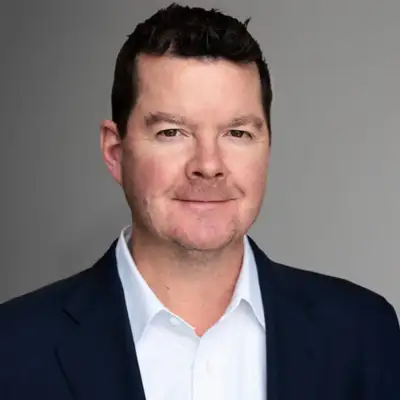
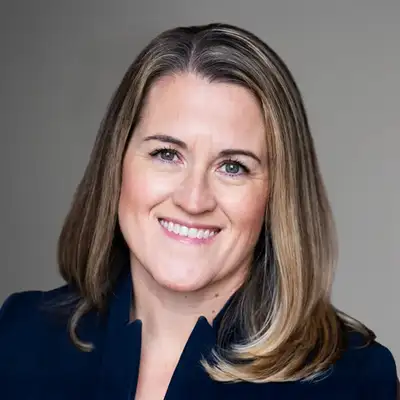
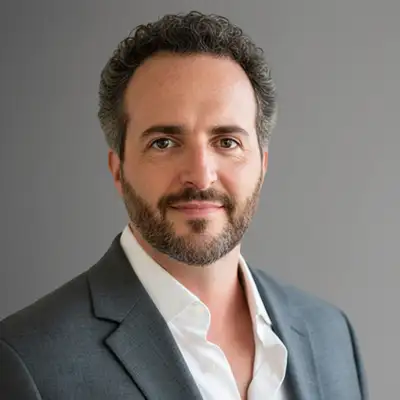
Meet the Insiders rewriting the rules of influence. Pulitzer Prize-winning journalist Brody Mullins and veteran DC strategist Lisa Camooso Miller interview the leaders who shape perception, move policy, and win when it matters. Not pundits or commentators – these are the operators driving some of the most critical strategies and outcomes in today's Washington.
Nate Reputation and trust is the foundation of what makes the property and casualty insurance industry the most effective. Not just telling someone how insurance works or trust me, it's going to be okay. We have to show it.
ANNCR Behind every major policy decision. Every corporate strategy, every Washington powerplay. Are the insiders shaping the game and the new rules to win it? The Deciders with Pulitzer Prize winning journalist Brody Mullins and veteran D.C. strategist Lisa Camooso Miller.
Brody Welcome to The Deciders, where we speak to the insiders, rewriting the rules for effective advocacy in Washington. Today we're joined by Nate Cook, chief strategy officer at the American Property Casualty Insurance Association. Thanks for joining us.
Nate Hey. Thanks, Brody. Great to be with you today.
Lisa Nate, you're not our typical trade association executive guest. You spent 30 years in the military before you moved on to advocacy. Tell us about your upbringing in Texas and your military career.
Nate I'm a guy who grew up in a small town in Texas. I think I probably lived, a typical, childhood where I started playing football as early as I could and as much. Born to a Southern Baptist minister. Dad, mom was the, high school educator, future college professor, the well-adjusted middle child where everyone stayed in Texas except for me.
They went to Baylor University, where I went. I decided to go to a school outside of the state where I was accepted to Military Academy, which propelled me to a career in the military as I was commissioned from West Point, second lieutenant in the field artillery served around the world multiple deployments to Iraq and Afghanistan. It then uniquely positioned me, that I was unaware of, to lead in the property and casualty insurance industry.
Because of my strategic planning and execution experience, and then also those people skills and, working with people all over the world.
Brody So I love to talk a lot more about that. I don't know how many trade associations have chief strategy officers, but also what's fascinating to me is how your military background prepared you for this role. I mean, we've had dozens of people on our show so far, and no one's had a background like yourselves. So I'd like to start with, you know, you went from a field artillery officer leading 20 soldiers to overseeing brigades of 3000.
What does that teach you about leadership and organization and how to motivate people?
Nate The biggest thing that I learned and leading in the military is meeting people where they are. You care for soldiers, you care for their families. You take care of them in the hard times. You take care of them in the good times. I guarantee you they're going to take care of you in the hard times and the good times.
Lisa What did you learn in Iraq and other combat zones about leading people into difficult and challenging environments and adapting to changing environments?
Nate My combat experience really was a full scale of experiences. It was working with people that were dealing with the stress and strain of combat on all the way through some of the nation building side of combat experience. So what what I learned was staying steady in the saddle, wherever you go, as you are both leading your soldiers, taking care of them, protecting them.
But then you're also working with a group of people that need you more than anyone on the planet that can come in and help them as they rebuild their country, as they secure themselves. And I found that hasn't been that much different than what I'm also experiencing in the property and casualty insurance business, because it's all about taking care of people in their time of need, when they can't take care of themselves, and those are very transferable skills.
Brody Nate, tell us about your time in combat.
Nate So I first deployed to Iraq in 2005. And so that was as everything was was pretty, was very intense. It was right as the sectarian violence was starting to pick up. And so what we saw in the country was, a lot of tension. And so my first deployment was to Baghdad, where I operated in an area called East and West Rashid.
And so some folks may remember the term Route Irish, which was the place where the most, improvised explosive devices were being employed. Well, our mission was to secure Route Irish. And so it was a that was a really difficult time. The next time I came back, to Iraq, I was in a little bit north of, north of Baghdad, in a place called Saladin Province.
But what I got to see was some great progress. The security forces were improving from both the police and the the military. But also we got to see that communities were starting to to rebound and to protect and take care of themselves.
Lisa How do you transition from those moments to what you do today? How did that decision happen for you?
Nate So the the moments from combat to to now here here I am. Yeah.
Brody Went on a suit and go to the office.
Nate Right. Not easy is the first thing that I would say. And there's no one stop shopping. One size fits all. So as leaders as what we learned coming out of combat is it does take time to decompress. It does take opportunities for you to engage in ways that still energize you and are not the same. I continue to challenge myself with new opportunities, and I lean in and pour into it with energy and enthusiasm.
Brody After your time overseas, you returned to Washington and worked on Capitol Hill. Tell us how your jobs on the Hill.
Nate I was finishing up my time in the Army, but it gave me an incredible opportunity to come to Washington, D.C. It was my second time in D.C. The first time I was in the Pentagon, where I worked with the General Officer Leadership Development Program. And so I kind of helped our general officers as they were preparing and their role in the Army.
But it also gave me an opportunity to work as the Army's legislative liaison, where I worked with both the House and the Senate for the first couple of years. But then the last couple of years, I was specifically the Army's liaison to to the Senate. So I got a chance to work on Capitol Hill in the Russell Building, 183 and really get a chance to to see the inner workings of the Hill.
From that perspective.
Brody I would hope that would be one of the more bipartisan jobs up there. Or was it would you work equally well with Republicans and Democrats?
Nate Yes, for two very important reasons. One, it's the law and the other, it was the way that we could be most productive. And so we partnered with every one of the Senate offices, both the personal staff and the professional staff. The committees that we worked with primarily were the Armed Services Committee, foreign Foreign Affairs, and also the Appropriations committees.
Lisa But at the time, the Iraq War had a lot of those that were for and those were against it. Talk about your role in that liaison period and what it was you were talking to the senators about specifically.
Nate The most important thing that I can emphasize here is my time on the Hill. I never saw something more bipartisan than defense. Now there are two very different parties coming at solutions from very different directions. But wow, what I learned was that there are some amazing patriots, whether it's the senators or their staffs, and they're really ready to roll their sleeves up and work on the solutions for defense, whether it is the authorizations or appropriations, the opinions are different.
The ways to get at that problem, may not be the same, but it seemed to me that everyone was really wanted what was best for the country. They just looked at a little bit differently.
Lisa The same could be said about disaster situations. Property casualty comes in after, some remarkable things happen. But bipartisanship is the one thing, I think, that shines through when we see these things happen in communities. Do you see that from your vantage point today?
Nate When we come together in a unified way, there's nothing that will stop us as a country, whether it's in combat or whether it is in response to a disaster. But there's just so much emotion that comes with all of it. So once again, you have to meet those people where they are and support them, which is something that the property and casualty insurance industry does extremely well.
Lisa We'll be right back with The Deciders.
Brody Welcome back to The Deciders.
Lisa So, Nate, after you are done on the hill, you return to Texas, to Baylor University, and that's where you intersect with David Sampson.
Nate When I left the Army, I wasn't sure exactly what I was going to do. So I had the best thing I came up with was, oh, I should go back to school. There were about 30 members of my family that have graduated from Baylor, and I was the one that hadn't. And so I thought, this is the opportunity.
So, so that's why why I joined the Organizational Change and Learning program at Baylor, which is a fantastic program. And that's when I came in contact with David Sampson. A mutual friend said, I think you two should talk. David was thinking about bringing on a chief strategy officer, and this friend said, oh, interesting. I've got somebody who has experience in strategic planning and execution, not from the insurance industry.
Maybe you ought to meet.
Lisa So when Doctor Sampson asked you to come work for him, what did you tell him?
Nate David and I were talking, and he explains what he's looking for in this role. And I thought, oh, well, I can advise you what you might want to look for in somebody who's, planning and execution of strategy. He said, well, why wouldn't you consider doing it? And I said, well, that's that sounds great, David. It's very that's very interesting to me.
But you realize I don't know that much about property and casualty insurance. And he said, no, that's okay. I got lots of people who know about that. I'm looking for a fresh perspective.
Brody So you pulled a Dick Cheney?
Nate I guess that's true.
Brody So what is it, chief strategy officer?
Nate My role is, is to look at our planning and execution of our strategic plan, our strategic objectives that look five plus years and then bring that back into our annual work plans. The other part of my role is to coordinate across all of our advocacy lines. So we have our federal government relations, our state government relations. We also have a policy research, international division and public affairs.
And my role is to look across all of those and evaluate and support them as we are. We are working toward the accomplishment of our strategic objectives.
Lisa You believe that leading troops into combat with a determined opponent is not unlike your work at the APCIA. Tell us about that.
Nate So one of the things that I did throughout the course of my career as a field artillery officer was targeting, I do need to make sure I clarify that we're targeting in the insurance industry is not the same as targeting in combat. They're your adversary is a different kind of adversary, but it's very similar. It's very similar in that you're looking at things like pattern analysis.
You're looking at where is the key terrain that you want to occupy, so that you can best set conditions for success in the environment where you're operating. Those are a couple of things that are almost.
Brody Along the same lines up. Another parallel between the military and advocacy is putting resources in the right place at the right time. Tell us about that.
Nate Be in the right place at the right time with the right information resources. Well, that's what we're doing every day. We are looking at our members. What do they need our support from across the industry? We are figuring out where do we need to be on Capitol Hill? Where do we need to be in what state? Because we work across all of all of our states to identify what's the right policy, what is the right legislation, what are the the things that we need to put in place that are going to best keep the market competitive and private, so that we can have the best rates for the consumer so that they get what
they need in their time of need.
Brody It seems like you've been trained for years and decades on dealing with uncertainty and unexpected threats. And so much of Washington and we've talked about on this show is the same thing. It used to be Republicans acted one way and Democrats take to the other way, and there wasn't that many uncertain threats or unexpected threats. You kind of knew the playing field and now everything is turning upside down.
What do you feel about that?
Nate The political populism, right. That that we talk about a lot. It's it's creating more chaos. And that's how we have to demonstrate our agility. We have to understand it, spend time with it. There's no need to fight it. It's the reality that we're operating in. And that's why it's important for us to be in that right place with those right resources at the right time, so that as decisions are being made, they're being made by informed leaders that also understand what our recommendations are for the best policy going forward.
Lisa We'll be right back on The Deciders.
Welcome back to The Deciders. We're with Nate Cook.
Brody Your goal is make the American Property Casualty Insurance Association a disciplined machine. How do you go about doing that?
Nate Well, first of all, I try to make sure that no one is seeing me come in as the military guy who's going to bring the discipline into the organization. That was some concern and a valid concern. But I think over time, the way that I manage that was being that supporting role to folks so that they see me as someone who is lightening their load and not making it more difficult.
Lisa You, as the chief strategy officer, have also implemented some reporting procedures so that goals are measured and progress is seen. Talk a little bit about that process.
Nate As I worked with our executive committee, our other members are other board members. Also talking within APCIA is what do we need so that we can better see ourselves. We were going to go from a twice a year report on how we're doing and how things are going to quarterly, and that was one of our big changes so that we could, by strategic objective, share with our board of directors and executive committee.
Here's our outcomes from the last quarter. But the most important thing that we do is say, here's how we're going to adjust. Our plans for the upcoming quarter really gave us an opportunity to demonstrate our agility, to demonstrate how we are seeing the environment change in real time. While we didn't lose focus on our strategic objective, and really, what is our azimuth that we are focusing on?
Brody So you talk about discipline and metrics and reporting and starting an annual plan, but then adjusting it. It sounds like kind of scary things for people in DC where we're a little softer. We like to come in at 10:00 and, take Fridays off in the summer in August. We're not really around. How do you sort of implement this plan and deal with the culture, inside an organization as you try to change things?
Yeah.
Nate Culture is such a wonderful thing. That's the most important thing that I'm doing is I am spending a ton of time getting to know people who they are, what they're about, where are their friction points, where do they think we're doing particularly well? And that's how we then guide each other as we're on the same team, trying to make this the best property and casualty insurance industry possible.
Brody For the insurance industry, as Lisa said. And we all know it's about mitigating against risk in this area. There's so much risk coming from Republicans and Democrats. And the the job of the association is to protect the industry companies or the member companies from political risk. How do you do that in this era?
Nate Yeah, that is something that I think we do particularly well is we represent all of our companies and as the industry standard. And so when we come in a room and we're working with the political leaders, they see us as that comprehensive voice rather than having to deal with one company at a time.
Brody What does success look like for the insurance industry?
Nate The bottom line success for the insurance industry is private, competitive markets, those markets that can adjust based on what is happening in their state to give the best price to cover everything that that consumer needs. That's the biggest measure of success.
Lisa Nate, as you're working towards that success and getting to that place, who are the adversaries in the other side of this, conversation?
Nate There's complete competition in this market space, but unfortunately it's competition in the judicial market space. What is happening now is the trial lawyers are using it as an opportunity to drive up the cost for their own profit. It's not helping the customer, in the end, become whole again. The way we get at that is reducing those lawsuits that ultimately are about driving up the cost of verdicts.
That's another measure of success. As those costs are removed or go down.
Lisa The insurance industry is always working to improve its reputation. How are you doing that today?
Nate Reputation and trust is the foundation of what makes the property and casualty insurance industry the most effective. The way we do that is showing up with empathy. First, we're going to be here for you when you need us most. We make them completely whole. That's what builds the reputation and trust, not just telling someone how insurance works or trust me, it's going to be okay.
We have to show it.
Brody So we ask, each guest the same three questions at the end of show. And the first question is, what's the decision for the past year that you're especially proud of?
Nate I'm particularly proud that I show up as who I am every day, authentic and transparent. I bring vulnerability to the workplace. I meet people where they are. I am more than happy to roll up my sleeves and work on whatever it is that we need to work on, and I'm really proud of the way that I've done it.
Lisa What's one thing you wish you could do over?
Nate So as I look back at the last 18 months that I've been in this role, some might say that it needs an expert in the insurance industry to come in in a role that that I am in. And I probably moved a little slower because I didn't have quite as much confidence as I could have had. And if I was to do it over, I'd move a little quicker.
Brody What's something that Washington is not talking about but should be?
Nate I love this question. It has to do with AI is not slowing down. It's definitely speeding up. It's going to bring us opportunity, but it's also going to bring us challenges. It's also going to help the health of people. And what are we going to do when people start very regularly, live beyond 100 years? And we have, instead of four generations in the workforce, 7 or 8 generations in the workforce, and what does that mean to us?
It's not that far away.
Lisa Well, that's fascinating, Nate. That's a great conversation. Thank you so much for joining us today on The Deciders.
Nate It's been a lot of fun. Thank you. Oh.
Brody That was Nate Cook. Lisa, what do you think?
Lisa You know, it's so rare for an organization in Washington to have a chief strategy officer and to have one that has the level of experience that Nate has is really that's a really smart move.
Brody Yeah, I think so. I was also struck by the idea of trying to measure success. It's so hard to measure success in DC because most bills don't become law and most policies are never enacted. So it's hard to figure out what are wins and losses. And the idea that Nate is trying to take discipline and metrics and reporting to try to figure that out, for his trade association is really smart.
So I really feel like if people watch this episode, we're going to see more trade associations, more advocacy groups, hiring people with military backgrounds to serve as their chief strategy officers.
Lisa I think you're probably right. Thanks so much for joining us on The Deciders. We'll see you again next week.
[ANNCR OUTRO]