Subscribe
Share
Share
Embed
The Peri & Pause Podcast is for women in midlife who know something in their body has changed—but haven’t been given real answers, or have been left overwhelmed by conflicting information.
Hosted by Jamie Gallagher, DNP, FNP-C, MSCP, a nurse practitioner specializing in perimenopause and menopause care, the show explores hormones, metabolism, mental health, sleep, sex, weight changes, and chronic conditions through an evidence-based, deeply practical lens. We unpack the physiology of midlife alongside the lived experience of women navigating careers, relationships, finances, and identity during this transition.
Every woman deserves this conversation—and the clarity, language, and confidence to advocate for better care.
Because “Your Labs Are Normal” Is Not the Whole Story.
09 Peri and Pause Founder Series Part 2
===
[00:00:00] welcome back to Per and Pause, the podcast. This is the second part of our Meet the Founder series. The first one was a blend of Meet the Nurse Practitioner series in the founder series. Um, today's conversation is a really important one to me. We talk a lot about midlife women's health from the clinical side, but there's another perspective that doesn't get talked about enough, and that's the partner perspective, the leadership perspective, and what it actually looks like to build something like this from the ground up.
Jamie: So today I am joined by someone who has been a huge part of this journey, um, bringing a background in the military, a deep sense of mission and a perspective that has shaped not only this business, but the way we think about impact, structure, and growth. We're [00:01:00] gonna talk about his transition out of the military, what he saw in this vision before it even fully existed, what it's been like to build peruse together and his perspective on perimenopause and menopause, not just as a co-founder, but as a partner.
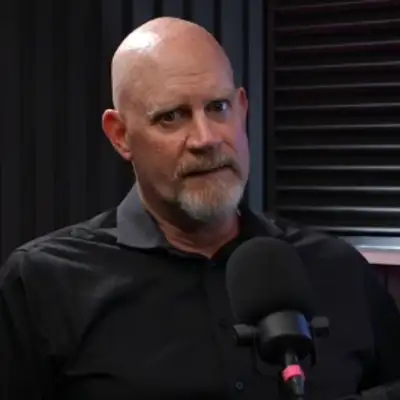
So Stu, I'm really glad we're having this conversation. And for those of you listening, he's my husband.
Stewie: Well, thanks for having me today. Usually I'm just in the background running around, supporting the,
Jamie: yeah,
Stewie: supporting the cause. But no, today a little different. I get to be at the table, so
Jamie: yes,
Stewie: very excited.
Jamie: Yeah. Might as well throw you out there.
Stewie: Throw me out there.
Jamie: Yeah. So
Stewie: do it.
Jamie: Share a little bit about your background in the military and how that has shaped the way you think about, um, leadership, mission and service to others.
Stewie: Yeah, so it's funny, I joined the military late. I I started out, um, in international business.
I went out to Seattle after college and, and started a company and we worked in, at the time, the, the fall of the Soviet Union just happened. So we opened a company doing translation [00:02:00] support and consultation, and that led me into actually working in Russia for a little while. And then I came back to states and supported some companies that were.
Working, doing work in Russia as well, um, in the former Soviet Union writ large. Um, and then I just I guess my father died, so I, um, I really kinda had a, a moment to reflect on life and, and kind of change gears a little bit. So I ended up enlisting in the Army, um, which was perplexing, I think, to many around me.
Um, they already had a four year degree. Yep. And some, some life experience. But I, yeah, I mean it was, it was actually, I mean a lot of people would find this funny to hear, but it was probably one of the best things I ever did. Um, so I enlisted in 98 and then I eventually went to Officer Candidate school and um, got into special operations and it was just a rollercoaster of a career for [00:03:00] 26 years.
Um, so. And then, as you know, last year, I, I retired and so big transition on that piece. But, um, just great career, um, very interesting times. We, we endured for the last 26 years and here I'm today.
Jamie: Yeah. So how did this transition outta the military, um, impact your sense of purpose and identity?
Stewie: Yeah, that's, I mean.
There's a few things in the military that I think people, um, really gravitate to, especially when they, they make it a career and it, you know, sense of mission, um, purpose higher than you and the camaraderie, the people that you work with, um, especially in the special operations community. Um, so when you, when you do get ready to transition out, think what you're afraid of the most is, is missing those things.
And there's no doubt that, that you do to some degree. [00:04:00] Um, so trying to fill that, that purpose or that higher calling when you, when you leave, is probably one of the harder ones to do. And that's why you'll see a lot of, of, you know, former or a lot of vets, you know, looking for that higher cause, that higher calling, that purpose, that mission.
Um, you know, we are very mission driven people and without a mission it. You can see a lot of vets being kinda lost. Mm-hmm. Um, so they, yeah. But when they find that new mission, um, they're engaged and they are, and they're ready to go fight, and that's, then that's what you want. Um, and that's why people, organizations understand this love to hire veterans because they, they understand how driven they are and this their sense of purpose and mission and getting things done.
So
Jamie: yeah. So we'll bring that. Over to the Perion pause side. Um, when we first started talking about building Perion pause, what did you see in it before it was even fully formed? Like what were your, what was your perspective [00:05:00] vision, your ideas, and in contrast to mine?
Stewie: I think the, again, it goes back to that higher purpose.
Um, I mean, it took me a little while, I think, to put it all together. At, at, at first it was about. Wow. Jamie gets to continue to help people and she gets to do it on her own terms.
Joe Woolworth: Mm-hmm.
Stewie: She gets to address a huge care gap and she gets to build it and craft it, um, in the way like, you know, kind of like if I were king for a day type thing.
Mm-hmm.
Joe Woolworth: I
Stewie: am able to craft this into, into something that, that I think is the right way to do it. 'cause as we all know, I mean, there, there are a lot of challenges in healthcare right now. Um, and, and that was, that was where it started, I think. And then, but it went into something bigger as, as, as you, we continued to kind of flesh out the idea.
It turned into this, this is, um, that higher purpose, this is that [00:06:00] calling. This is where we, we get to impact humanity. Um, and that's, that's kind of rare. You don't get to do that very often.
Jamie: Yeah. Yeah. Um. Do you see any parallels between the mission work you did and the military and what we're building here at Perry and pause together?
Stewie: I mean, it's, it's definitely mission driven. Mm-hmm. Um, and, well, I guess the beauty of this is we get to kind of define the mission a little bit. Yeah. Because it, the mission is defined in accordance with need.
Jamie: Yep.
Stewie: In this particular case, um, the purpose, we, I think we've recognized the purpose, we've recognized the value, what we're trying to do here.
I mean, obviously there's. Parallels. I mean, you, I don't, it's hard to parallel the military with a menopause, um, company. Right. Um, but I think the sense of higher calling, the sense of mission, um mm-hmm. That, that does parallel. The parallel is huge.
Jamie: Yeah. I think speaking to that in the word that comes to my mind is sacrifice.
[00:07:00] Um, you're sacrificing comfort time, things like that for a bigger mission, like the, the amount of hours over these last. Three years minimum that you and I have spent together talking about basically the mission of this. What is the purpose of this and how can we grow it to meet the needs of those seeking this care?
Stewie: Right. I mean, I, I don't like anything. It, it is just started out with as an idea. Yeah. And it's, it's kind of grown hair, like you say, it's, it's grown, grown hair and legs and then things like taken off. I mean, like to the point where we almost have to put a bridle on it. Um, it's. It's been an interesting ride so far, but I, I think, um, and I'm fascinated to see where it continues to go.
Jamie: Yeah. Thanks. Um, so from your perspective, not as a clinician, what stood out to you from either my experience or, or your mother's experience? What stood out to you in the gap? [00:08:00] That's midlife women's care?
Stewie: I, I think what stood out to me the most is that there is such a significant gap. And it's been, it's been in place for years to this day.
It's, it still exists. It was, obviously there was a gap when, when my mom, um, was going through this back in, you know, the eighties and nineties and then it just kind of, and she struggled with that. She struggled with all the aspects, all the things that, that we, you've talked about on the show. You know, the, the not being on sleep at night, the hot flashes, the.
The mood swings, like it just it was incredibly frustrating and there was no place for her to go to learn more about it. Um, so what's interesting, you know, you fast forward to today and, and like there's still a care gap. I think there's more information out there, but unfortunately there's more misinformation out there too.
Jamie: Mm-hmm. Absolutely.
Stewie: Um, it's proliferated through, through social media [00:09:00] and, and that of course was not the case back in the day. It was just lack of information. Back when I was younger, my mom was going through this. So, um, but it's interesting, what hasn't changed is the care gap, um, is still there and it's still this, this immense care gap.
It hasn't been closed very much in the last, you know, three to four decades. And, and we have the opportunity to be able to do that with this organization, which I think is great and exciting.
Jamie: So. Be very careful,
Stewie: uhoh, just
Jamie: teasing. We good? What, what has it been like for you to watch me go through this change, perimenopausal change, both personally and professionally as a, as my spouse?
Stewie: I, I think for a man on, on like the start, it's, it's kind of frustrating. Because you don't know how you can help. Um, [00:10:00] it, you see your, your, your spouse struggling and, you know, I'm seeing you struggling through this. I'm not, I'm not a clinician. I don't have the background to be able to really help in this area.
And, you know, you're, you're struggling with, you know, night sweats, you're struggling with, you can't sleep, which, you know, impacts everything throughout your, your, you know, your following day or week or month. I mean, as it continues to, to. Compound you. It, it's just, what can I do to help? And there, and, and you're like, what's interesting in our case is like you are a clinician.
You are somebody that is, you know, you've been doing medicine for over 30 years and so you understand the physiology, you understand the body, you understand aspects of this. Way more than probably the average woman out there in a lot of ways. And still yet you struggle with it. Like you don't have all the answers.
You don't, you don't have a place to go either. And so, you [00:11:00] know, I remember, you know, when you kind of got into this, it's like, I'm gonna figure this out. And I, I mean, I'm in full support in, in trying to do that. But like, unfortunately, it's, I think for most men it's like this frustration like, my, what have you done with my wife?
Right? Um, like, where is my wife? I don't like, I like, this isn't what it was like, you know, even a year ago or so, and, and you just want your wife back and so you're, you're a little frustrated, you a little resentful. I mean, the relationships can, you know, start to deteriorate because, and it's. It's no fault of either party, it's just this is happening and nobody really understands how to, how to address the situation and there's nowhere to get help.
Um,
Jamie: or at least it, it feels that way. And especially when, um, women and their spouses or partners. It's not even on their radar. Oh, could it be my hormones? No, it's it's because of an event, or it's because I'm irritable. And you know, thou partners are snapping at each other. So then it's a [00:12:00] relationship thing.
It's not a physiologic change in the woman's brain. It's, it's, you, you are the problem. Right. You know, or you know, I'm the problem. Um, but that, and that very realistically could be a problem. But the, the underlying problem. That is definitely there is the neurocognitive changes. The physiologic changes, how we think about ourselves, how we think in general, the brain fog.
Brain fog. What does that mean? Difficulty finding words. Yes, but it also means. You know, what was I doing? Why don't I feel the same way about this? That used to bring me joy. Why am I emotional? Um, and I think a lot of women, when it first starts kind of put a mask on, like, I'm not sure what's going on, but okay, I'm gonna keep pushing forward and pushing forward.
And then partners kind of come in and you know what's wrong? Don't ask me what's wrong. I mean, this is probably a story that. Most people who are listening to this now are, are very familiar with.
Stewie: Right.
Jamie: Yeah.
Stewie: And I think, I mean also like [00:13:00] the symptoms aspect of it. A lot of women will go out and, and try to have the symptoms addressed and, and you know, in, in the military we used to say, you know, that's, you gotta be careful of solving the wrong problem perfectly.
Joe Woolworth: Yeah.
Stewie: So if, if you're going after the symptoms, that's not the problem. That's just the symptoms on the outside. So. You are in essence solving the wrong problem perfectly when you know what we're, you know, what we're doing here at Peri and Pause is actually addressing the root problem and then the symptoms can be addressed if they have to be, or they just start to go away because the actual problem is being addressed, which is great.
Jamie: Yeah. going back to, to share, now that you understand more about midlife women's health, um. When you think back to your mom, what do you, how do you see her experience and the impact of her perimenopause and menopause on your family and family structure [00:14:00] and her quality of life?
Stewie: I, I think, um, it impacted my mom tremendously.
It definitely impacted the family tremendously. My mom struggled with it. There was really nowhere to go. My my,
Jamie: do you think she knew what it was?
Stewie: I heard the word mentioned, but the, the problem, I think the problem with it was, I mean, my father was a physician. Yeah. My father was a surgeon. He, my father was not stupid.
He, he understood physiology, understood the body. Um, but my dad was not menopause expert by any means. And, and to be honest, I don't know where he would've gone.
Jamie: Yeah.
Stewie: To get that. You didn't have the internet. You didn't have, people weren't writing books on it like they're now
Jamie: Yeah.
Stewie: Where would he go to get this knowledge?
And even today, you don't always get the knowledge from the people that you think you would.
Jamie: Yeah,
Stewie: so I think, um, you know, my dad wasn't able to help. He was frustrated and you know, my mom didn't know what was going on. She was frustrated trying to. [00:15:00] Address all the symptoms associated with it. And then, you know, the, the family gets frustrated because they're like, they're, you know, again, what have you done with mom?
Jamie: Yeah, right.
Stewie: Um, this isn't my mother. I mean, mom's, you know, mad at me all the time and I'm, and she's like, not feeling well a lot. And like, and it is a lot of, a lot of things going on. And, you know, ultimately it, it impacted my family to a point where my parents got separated. Um, I, I was a little, I was older, I was, you know, college, but.
It was tough to, to see. So, I mean, one of the things you and I have talked about is like, you know, with the people that come in to see us, it's the care that you're giving people is, is saving their jobs, it's saving their, their relationships. In some cases you had, you've had women come back and say, it's saved my life.
I, I think that is a testament to the type of care you're giving and, and, and the mission that we are on and the. What it's doing for humanity writ large.
Jamie: Yeah. I, I fully [00:16:00] agree. [00:17:00] what do you think spouses partners should understand about, um, perimenopause and menopause that they often do not like? What's your bit of advice?
Stewie: I would, I would say first thing is you need to have some patience and, and grace with, with your, your partner or your spouse. [00:18:00] It's, it's a hard time for them and they, in a lot of cases, they don't have, they don't know what's going on, you know, within themselves. So you, you do have to have some patience and, and there's gonna be days where they wanna throw pots, some pans at you, and they're irritable.
I don't know what
Jamie: you're talking about.
Stewie: They're just they're just. They're off, they didn't sleep well. I mean, all everything. And it's like, and you feel like it's your fault, like, and they'll make you feel like it's your fault sometimes. And it's not. It's just that's where they're at today. Um, it's, you gotta get beyond that.
Don't take it personally. You have to have some thick skin, which, which can be hard. And you gotta, I mean, if you're in for the long haul, you're in for the, the long, like. It's a relationship, you gotta be there for 'em. I mean, the second thing is I, you find help, I mean find there is help out there, there is hope and support your spouse in, in getting that help.
Like, and this is gonna sound funny, but I've had, when a lot of [00:19:00] people come up to me and say, what are you doing now? You left the military. And um, you know, I tell 'em, Hey, I work, you know, my wife, we have this company with some me, you know, menopause. And we have two. Oh, great. Wow. That's cool. And then they'll, you know, we'll talk for a little while longer, and then all of a sudden they'll be like, Hey, you know, kinda of sheepishly, like, you don't have a card, do you?
Jamie: I love that so much.
Stewie: And I'll be like, well, I like, I do, but like, just don't, don't, I don't wanna be around when you hand this to your wife. Um, but it, these, these guys will come to me and I'll, I'll hand them a card in like, lo and behold. When they'll get a, an appointment very in short order.
I mean, it's, it's it's really fascinating, um, that. There's that much interest from my spouse Yes.
And that much support. It's like, I want my wife to feel better. Yeah. I want my wife back. What can I do? Oh wait, this is what you guys do. Can you gimme a card? Like, I really, and then, then they tell people and more people and like,
Jamie: yeah.
Stewie: Um, so it's, it's pretty tremendous. Um, [00:20:00] I, I think again, it's, you know, a very important mission and, um, I think, I think it's fulfilling to me when other men see.
The importance of that mission.
Jamie: Yeah.
Stewie: You know, like when we were on the, we were on a podcast the other day and like the, we had, we were interviewed by two guys and they were, they were so interested in what we were doing and so supportive of this, of, of the clinics. And I, yeah. So whenever I hear that, like again, it's a testament to the mission, that's testament to how we, we are supporting humanity.
Jamie: Yeah. Yeah. I love that. Let's talk about the business. 'cause this would not, let's
Stewie: talk about the business.
Jamie: This would not be here without you. Stu, thank you very much. I'm so appreciative. It's truly I'm No, listen, I am very appreciative.
My thought is asking you how your perspective, I know my perspective, um, about what it's been building a business together navigating marriage, family, and everything else in our lives that, that I say pulls on us daily. Like this [00:21:00] is, this is our mission. We are side by side looking at it and watching it grow and building it, um, while trying to.
Carve out time for us, time for family time to get you to places you need to be. Um, with your continued service as a veteran. Um, how does, what does that look like on your side? How is that, how would you describe that? I
Stewie: mean, there's no doubt. I, I think it's a challenge, but just knowing the way you and I are built, um, we could have done.
We could have taken an easy way out.
Jamie: Yeah. The Take five oil company, Hey, let's buy that franchise.
Stewie: If, if you, if, I mean, if we really wanted to scratch the itch on the business side or you could have just stayed. Yeah. You could have stayed in, in healthcare and big healthcare and I could have gone out and done, you know, contracts or taken, you know, some solid job.
Yeah. You know,
Jamie: and that's what, honestly what I thought, I literally thought that's what we were gonna do. We were on fast track for that. And your retirement and just settling down the family, the kids, the grandkids. Right. [00:22:00]
Stewie: Dang. And then all of a sudden, like,
Jamie: I got an idea.
Stewie: The, the brakes went on, and like you grabbed the, the wheel and violently jerked it.
Right?
Jamie: Oh.
Stewie: And we're, I got an idea. Here we go. And I'm like, um, but I, I mean, at the same time I, it fascinated me. I was like, this is because we kind of bantered it back and forth. Yeah.
Jamie: For years.
Stewie: For years. Mm-hmm.
Jamie: We
Stewie: did like, I we're, so we're sitting, you know, I mean people wanna do dirty little secret.
The, you know, the story or the, the story was, I mean, I was, I was in my final assignment up in, um, up in Maryland and getting ready to go out on final with the military. And Jamie and I, you know, I was up there doing geo bachelor thing and Jamie, I would come down to North Carolina, she would come up. To Maryland and we were sitting there one morning having coffee and we basically sketched out on a cocktail napkin on what this could look like.
And then I think by the following day
Jamie: mm-hmm.
Stewie: We had [00:23:00] had all the paperwork submitted for the company, the logo built, we started on the website. I mean, it was like,
Jamie: yeah,
Stewie: because just in case anybody's curious like this is how Jamie works. Like we, we move like that when we make a decision. You know, if you look back and, um, I was told a long time ago in the business world, like successful people make their, make decisions quickly and change their mind slowly.
And that, that is, that is definitely you. Um, so really interesting kind of how we got there. I I had, I was very optimistic on what this could do, but like with anything, I mean, I, I'm. It's funny 'cause I think a lot of people looked at us. They'd be like, I'd be more the hard charger. The one, I'm actually the one that's kind of,
Jamie: yeah.
Stewie: Comes out with the cautious side or comes like, maybe we need to rethink this or re-look at this. And that's probably the planner in me and the, the army officer in me where you have to [00:24:00] look at all the different courses of action you have to look at, you know, the old joke, the, the enemy always gets a vote.
Like, how do you, how do you account for those things and make sure that you are making the best plan possible to move forward. So you're the one like, let's, you know, let's go take the field. And I'm, I'm like, let's, let's rethink kind of maybe how we address these things. Um, but it's, it's a good balance.
Jamie: It is. I think now that you're saying that it, it. Makes me think, why, why do I do things that way? I, I will take, dial it all the way back to when I was a critical care nurse and decisions needed to be made like that. Mm-hmm. So I learned quickly at a young age how to make decisions for an individual's life and an intervention for an individual, but that has spilled over into other aspects of my life quickly.
Triage, make a solid decision. Um, with evidence, little bit of intuition. Um, whenever I don't listen to red or pink flags, I kind of get burned. And so every now and then [00:25:00] I get slapped in a phase with a red flag. That's a couple others now. Couple. Yeah. Um. But that, that being confident about something, trusting almost what the universe puts in front of you and having that sense of knowing.
But I, I do love our balance and sometimes you have to take me about back of my collar and, you know, sometimes,
Stewie: sometimes,
Jamie: um, but sometimes I'm like, but, but, but,
Stewie: but I mean, you need both. Yeah. You need both. You can't have somebody that sits on the fence and plans and thinks all the time. Yeah. You can't have somebody that's.
Constantly out there.
Jamie: Yeah.
Stewie: You know, ready to get in a knife fight. Either it, it's like you have to have the balance between the two.
Jamie: Yeah, for
Stewie: sure. And, um, I think we, we do that pretty well and that's, that's what really is part of the, um, part of what's led to the success. I mean, there's a lot of, a lot of elements you could point to, but that's part of what's led to the success of, of Per and Pause so far.
Jamie: Yeah. And what are you, what are you most proud of right now with regard to what we've built or, or how it's evolving? I would say.
Stewie: I, I'm [00:26:00] proudest of the fact that, that this is, again, like what I said earlier, it's something that is, it's bigger than ourselves.
Jamie: Yes.
Stewie: And it's, it's about humanity. It's about, you know, it's not just about helping women and helping women feel better, which I is tremendous unto itself, if you just look at that as your mission, but. In doing so, you know, you got your second, third order effects that are associated with that. Mm-hmm. By improving a woman's life and her health, you are improving her husband's or wives or you know, their partner's, um, life as well and the family's associated with it.
The jobs that they work at. And like I said, humanity, this, ultimately, it's all boats will rise if, if you can address this and, and fix it. Um, especially if you do it earlier on than later. I mean, and that's, that's what I'm proudest of this is that we just, we are able to take, improve humanity real large.
And I, I think, I can't [00:27:00] probably underscore that enough.
Jamie: Yeah. Where do you see this going? Um, not just for per and pause, but for the impact this will have on women.
Stewie: Wow. So I don't know if, um, I don't know if there's really any limits on this. I think the limit, the limiting factors on where this goes is really, um, in a lot of ways determined by decisions that you and I make going forward.
I know the enemy, you know, again, the enemy always gets a vote. So there there is an aspect of, of there being something outside that we, you know, a Black swan event or something that we can't really control. But I think it's gonna go to where we want to take it. Um, you and I have different ideas and plans on how we wanna bring this forward.
The intent no matter what though, regardless of how that looks, is to continue to grow it and to continue to bring this to more and more women. Um, [00:28:00] not just North Carolina, but, but beyond.
Yeah, I mean the, the, the women and families, I kind of tapped on that one earlier with, um, you know, the humanity aspect, but they really, there is this, this. This knock on effect for what?
The, the care you're giving. I don't know if your providers always think about that, you know, when the, the impact they're having.
Jamie: Yeah.
Stewie: But by helping this woman's life, you are, you are helping everybody around her. And that, you know, it's, it's, I think what we talked about last night was it's, it's a ripple effect.
You know, you throw, you throw the pond, the, the rock into the pond, and, and you get just this, you know, not infinite ripples, but incredible amount of ripples. Impact everything around that, that woman, and that only makes life better for everybody. You know, like the old joke I always come up with, if mama ain't happy, nobody's happy.
Jamie: That's so true.
Stewie: Um, so, you know, you gotta keep mama happy and like
Jamie: Yeah.
Stewie: This is, this is a way we can get her there.
Jamie: So I guess I just wanna say how grateful I am for you [00:29:00] and to you for what we've built, not only in our business, but in our relationship, and how you have impacted my life as a human and as a woman, and our children, and our grandchildren, and our extended family. So I just wanted to tell the world right now how grateful I am for you, and I tell you that pretty regularly.
I, I will say I thank God for you every day. And you go, thank you baby. Um, so thanks so much for this conversation and more than that, thank you the way, thank you for the way you show up in this work and in our life. Um, your background in the military, your sense of mission, integrity, and the way you think through challenges has shaped Perry and pause in ways people may not see.
But I see it every single day and I'm incredibly grateful for your service, your perspective, your steadiness and everything. You've brought to me and what we're building, and this work would not be what it is without you truly. Um. [00:30:00] And I think what makes this conversation so important is that it reminds us this isn't just about women navigating midlife, it's about the people around them understanding it and supporting it and being a part of it.
So thank you for your leadership, your patience with me, your thoughtfulness, and you being such an important part of this. .
And to those of you listening, thank you for being here with us for this episode of Perion Pause the podcast.
If this resonated with you, consider sharing it with someone in your life who could benefit from hearing this perspective. We'll see you next time
[00:31:00]