Subscribe
Share
Share
Embed
A podcast community for real estate and tech leaders, investors, operators and innovators.
A new era is upon us. Tangent💚Proptech unites Proptech founders💡, Real Estate investors and operators🏢, Venture Capital investors, urban leaders🏙 and passionate creators🌎 who are improving our communities and cities. Join us to learn how we can solve present day challenges with innovative technology and greater collaboration.
Join Proptech entrepreneur Edward Cohen, to learn about housing innovation, the future of work and climate tech. We examine these themes through interviews and conversations with Proptech CEO's, real estate owners and operators, and venture investors, and how we can leverage tech and collaboration to help solve the housing crisis, figure out the future of work and how to decarbonize the built environment.
If you would like to get your company’s or organization’s mission featured on Tangent, email us at community@tangentproptech.com.
Stay curious and always be learning! 🤓
David Audio Episode
===
Edward: [00:00:00] [00:00:01] [00:00:02] I'm Edward [00:00:03] Cohen, and this is [00:00:04] Tangent, a Commercial [00:00:05] Observer [00:00:06] podcast. [00:00:07] [00:00:08] [00:00:09] [00:00:10] [00:00:11] Accounts payable in [00:00:12] commercial real estate is [00:00:13] one of the most [00:00:14] complex, highest [00:00:15] volume, and most [00:00:16] consequential [00:00:17] back-office functions [00:00:18] in the business. [00:00:19] It is also one of the [00:00:20] least automated. [00:00:21] A single [00:00:22] invoice at a large [00:00:23] real estate firm can [00:00:24] split dozens of [00:00:25] ways across [00:00:26] entities, asset classes, [00:00:27] and jurisdictions[00:00:28]
[00:00:29] Common area maintenance [00:00:30] allocations, triple net [00:00:31] leases, related [00:00:32] party transactions, [00:00:33] SPV [00:00:34] structures, all of it [00:00:35] hitting an accounting [00:00:36] team that is [00:00:37] usually [00:00:38] understaffed and running on [00:00:39] institutional knowledge [00:00:40] that nobody has written [00:00:41] down. When that [00:00:42] knowledge walks out the [00:00:43] door, the whole system [00:00:44] breaks. [00:00:45] We do have the perfect [00:00:46] guest to talk about [00:00:47] this.
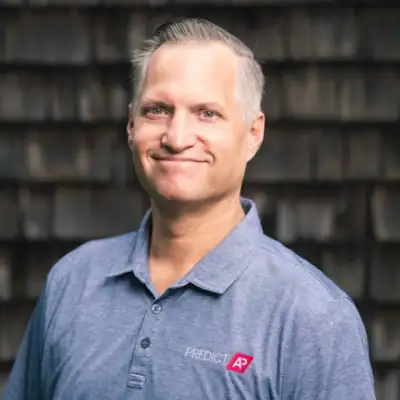
Our guest today [00:00:48] is David [00:00:49] Stifter, co-founder [00:00:50] and CEO of [00:00:51] PredictAP. [00:00:52] [00:00:53] David, where does this podcast [00:00:54] find [00:00:55] you?
David: today I'm, [00:00:56] uh, it's, it's actually where I [00:00:57] met you the first time. [00:00:58] I'm in Las Vegas, [00:00:59] so, uh, this is not [00:01:00] for work though. I, I, [00:01:01] I do, I have a [00:01:02] hobby called Brazilian jujitsu, [00:01:03] and there's a big tournament, [00:01:04] World Masters, this week, and I'm [00:01:05] here for that. [00:01:06] But normally I'm here [00:01:07] the PropTech conference [00:01:08] circuit.
So, I'll be [00:01:09] back here in a few weeks for [00:01:10] Blueprints, can't get away from [00:01:11] Vegas
Edward: that's [00:01:12] fascinating. [00:01:13] Vegas can't get enough of you [00:01:14] either, [00:01:15] So David, you [00:01:16] spent 17 [00:01:17] years at Colony [00:01:18] Capital, which [00:01:19] became Digital [00:01:20] Bridge. What [00:01:21] made you [00:01:22] leave to [00:01:23] start a company that [00:01:24] automates invoice [00:01:25] coding?
what [00:01:26] did you see [00:01:27] that [00:01:28] inspired you to [00:01:29] start [00:01:30] PredictAP?
David: you [00:01:31] know, there's a, there's a [00:01:32] period of my life where I [00:01:33] questioned that, almost [00:01:34] daily 'cause it's... You know, [00:01:35] I was at Colony for, for [00:01:36] almost all my career, and it's a great, [00:01:37] it was, you know, a really [00:01:38] great firm and I grew up [00:01:39] there. And, I started [00:01:40] off my career in [00:01:41] accounting, and I [00:01:42] got my MBA and I did really [00:01:43] well there.
And I, [00:01:44] I ended up starting as an [00:01:45] a- acquisition analyst [00:01:46] in, in, uh, [00:01:47] Colony. And [00:01:48] I've always been a geek at heart, [00:01:49] so I've always been [00:01:50] asking questions. [00:01:51] So when I was trying to find [00:01:52] data for acquisitions, I was [00:01:53] like, "Well, why can't we get this [00:01:54] data or that data?" And, [00:01:55] you know, they're like, "Well, it's in [00:01:56] Yardi," right?
And so [00:01:57] I started digging [00:01:58] more and more into [00:01:59] where the data is, where [00:02:00] the data lives, [00:02:01] and seeing how [00:02:02] data connects across [00:02:03] the firm, right? What asset [00:02:04] management's doing and the [00:02:05] property managers and [00:02:06] the fund [00:02:07] administrators and the corporate [00:02:08] FP&A. [00:02:09] And as I asked more [00:02:10] questions, they're like, "Well, why don't you [00:02:11] figure it out?"
And [00:02:12] so over my [00:02:13] career, I transitioned [00:02:14] from that [00:02:15] acquisition side to more [00:02:16] back office [00:02:17] operations, which I find [00:02:18] fascinating. I love solving [00:02:19] problems. I love [00:02:20] getting into the weeds of [00:02:21] how should this [00:02:22] work. my first boss [00:02:23] said my, superpower is my [00:02:24] na-naive [00:02:25] optimism, right? Like, on how things should [00:02:26] work.
And so [00:02:27] over my career, I [00:02:28] transitioned to [00:02:29] be managing director at, [00:02:30] eventually [00:02:31] leading technology on [00:02:32] the, on the accounting and [00:02:33] finance side of the [00:02:34] business, which is how [00:02:35] to make this back o-o-office [00:02:36] operations work [00:02:37] well. And [00:02:38] Colony's a very large global [00:02:39] firm. I think at [00:02:40] that time we had about 60, [00:02:41] 70 billion of [00:02:42] asset center management [00:02:43] globally and [00:02:44] buying everything you can [00:02:45] imagine, office, [00:02:46] industrial, multifamily.
[00:02:47] Heck, we bought [00:02:48] Paris Saint-Germain [00:02:49] soccer at one team, Miramax [00:02:50] Films. Like, they bought some [00:02:51] crazy stuff. Um, but [00:02:52] you gotta figure out how to make them [00:02:53] actually work. Like, when you go buy a [00:02:54] soccer team, well, how is [00:02:55] that actually gonna work? How's [00:02:56] it gonna consolidate? How are you [00:02:57] gonna move money [00:02:58] to them? [00:02:59] and Colony [00:03:00] had a lot of [00:03:01] complexity.
private equity [00:03:02] [00:03:03] f-funds that were run by the [00:03:04] firm with the general [00:03:05] partner, but also public [00:03:06] companies. So they had merged with [00:03:07] other public companies. They had [00:03:08] a number of public [00:03:09] companies and, you know, [00:03:10] complicated SOC [00:03:11] reporting around that. [00:03:12] And then just a [00:03:13] lot of complicated [00:03:14] structures around private equity.
And [00:03:15] so, I led a, one of [00:03:16] those once in a lifetime [00:03:17] projects of [00:03:18] let's, we're bursting at the [00:03:19] seams. We can [00:03:20] barely close the books. We can [00:03:21] barely [00:03:22] consolidate. let's [00:03:23] really [00:03:24] reinvest in technology and [00:03:25] make, make our [00:03:26] systems match to where the [00:03:27] company is today, not [00:03:28] where it was 15 years [00:03:29] ago.
And so [00:03:30] that was a project [00:03:31] that took, three [00:03:32] or four years to... We [00:03:33] went from [00:03:34] 12 ERPs around the world [00:03:35] to one. Uh, we [00:03:36] consolidated it all on Yardi. [00:03:37] For us, the, the [00:03:38] biggest problem was this [00:03:39] global [00:03:40] consolidation. We had 12,000 [00:03:41] entities around the world, like [00:03:42] incredible complexity, and [00:03:43] making that all [00:03:44] work when you close the books was [00:03:45] hard.
And so [00:03:46] in there I started digging [00:03:47] into, well, where else are we [00:03:48] spending time? [00:03:49] And [00:03:50] turns [00:03:51] out, real estate [00:03:52] companies pay a lot of [00:03:53] invoices. You know, we paid about a [00:03:54] half million invoices a [00:03:55] year, and that's both on the [00:03:56] corporate and funds [00:03:57] side, [00:03:58] um, but also on the property [00:03:59] side. I we managed things [00:04:00] down to the property, and [00:04:01] so [00:04:02] spent a lot of time.
[00:04:03] We had a pretty antiquated [00:04:04] AP process, [00:04:05] even, you know, [00:04:06] printing local checks [00:04:07] and having wire [00:04:08] packets where people would get [00:04:09] physical signatures. [00:04:10] So we started [00:04:11] automating that [00:04:12] flow, We [00:04:13] automated the payments [00:04:14] really well. We [00:04:15] automated the workflow really [00:04:16] well.
And this [00:04:17] upfront part [00:04:18] around, how do you [00:04:19] code it? Which, [00:04:20] which at first I didn't [00:04:21] really appreciate how [00:04:22] difficult this was 'cause you're [00:04:23] like, "Oh, Colony gets a bill, [00:04:24] Colony pays the bill." Well, [00:04:25] that's not actually the [00:04:26] situation because [00:04:27] Colony's [00:04:28] not paying much. [00:04:29] Often you're [00:04:30] allocating or pushing it down, [00:04:31] right?
Oh, this is [00:04:32] for, you know, you have a, a [00:04:33] contract with a maintenance [00:04:34] company who's doing a [00:04:35] bunch of different things on [00:04:36] 100 of your [00:04:37] properties. Okay, that bill comes into [00:04:38] Colony, they [00:04:39] address to Colony, [00:04:40] but somebody there [00:04:41] knows it's split, you [00:04:42] know, 120 different [00:04:43] ways, and you capitalize [00:04:44] this portion, you expense [00:04:45] this portion.[00:04:46]
And the [00:04:47] way we were doing [00:04:48] that, really what I [00:04:49] found out later, was we had this [00:04:50] team that had been [00:04:51] there for a long time. [00:04:52] They had [00:04:53] deep knowledge they [00:04:54] built up over years, and we had this [00:04:55] woman, Chrissa, who led the [00:04:56] team. She was there for [00:04:57] 30 years and knew [00:04:58] everything, The CFO would [00:04:59] ask Chrissa, "Well, how do we-- [00:05:00] what are we doing here?
What's this [00:05:01] deal? What's this [00:05:02] project?" and that's [00:05:03] where, we [00:05:04] realized that, this [00:05:05] is difficult. And, and [00:05:06] Chrissa actually [00:05:07] left. She, she [00:05:08] retired, and it was [00:05:09] difficult to pay [00:05:10] bills. So you have this $60 [00:05:11] billion organization [00:05:12] that [00:05:13] can't pay a bill because one [00:05:14] person with critical knowledge [00:05:15] left, and that's really [00:05:16] got me obsessed [00:05:17] with, "That's [00:05:18] crazy.
Let's, let's dig [00:05:19] into this." [00:05:20] And so I did [00:05:21] not go out to go start a [00:05:22] company, so I was, you know, [00:05:23] happy with my position, and my [00:05:24] position was changing. It [00:05:25] was, this was [00:05:26] more, the cherry on [00:05:27] top of this. We had finished the [00:05:28] main consolidation [00:05:29] work, so it was more maintaining and [00:05:30] tinkering than, than, than [00:05:31] fundamental building.[00:05:32]
And spent about [00:05:33] a year looking what was [00:05:34] in the market, [00:05:35] so talking to Yardi and [00:05:36] Nexus and, you know, you [00:05:37] name it, we talked to [00:05:38] them. And, [00:05:39] looking at robotic [00:05:40] process automation, that was the, [00:05:41] the rage, you [00:05:42] know, eight, nine years [00:05:43] ago with [00:05:44] UiPath and all that. [00:05:45] template approaching it. And [00:05:46] it turns out there's a [00:05:47] lot of-- If you think [00:05:48] about an invoice, there's [00:05:49] what I'll call the header, [00:05:50] which is the stuff on the [00:05:51] paper, invoice number, [00:05:52] total due date.
[00:05:53] And a lot of firms [00:05:54] thought that was the problem and [00:05:55] solved that problem. [00:05:56] That's not the problem. The [00:05:57] problem was back to that, [00:05:58] hey, where does it actually end up [00:05:59] on the accounting side? [00:06:00] And so what I [00:06:01] found was everyone had [00:06:02] solved that with you can do [00:06:03] OCR or [00:06:04] templates or something like [00:06:05] that, or [00:06:06] outsourcing.
but the coding [00:06:07] was really left [00:06:08] to the, the [00:06:09] companies to run, and that's where I [00:06:10] did not find a solution. [00:06:11]
Edward: The [00:06:12] coding
David: being the geek that I [00:06:13] am, about, again, eight [00:06:14] years ago, [00:06:15] I thought, [00:06:16] "Yeah, the coding." I was like, "This [00:06:17] is the gold." [00:06:18] And that's where I thought, [00:06:19] "Hey, this new ML [00:06:20] AI stuff might [00:06:21] be the answer to it." [00:06:22] And turns out it's actually the [00:06:23] perfect use [00:06:24] case.
so that got me [00:06:25] started on solving this problem [00:06:26] within Colony. [00:06:27] And, you know, you have nice [00:06:28] structured data, you have [00:06:29] a pattern to pick up on. [00:06:30] And then one thing that will, be a [00:06:31] recurring theme on here is [00:06:32] still having a person in the loop [00:06:33] to give a feedback [00:06:34] mechanism. It turns out that's really [00:06:35] important for a good ML [00:06:36] process.
And so [00:06:37] we did it at Colony, [00:06:38] worked really well. And [00:06:39] when, um, I had been [00:06:40] looking for solutions and talked to [00:06:41] CTOs and said, [00:06:42] "What are you doing?" Some of them [00:06:43] said, "Show me what you did." And I [00:06:44] showed them, they're like, "Oh my God, I [00:06:45] want this." And that, [00:06:46] that gave me the thought of like, [00:06:47] ooh, I've always wanted [00:06:48] to, like, do [00:06:49] something on my own, and I was [00:06:50] more maintaining than [00:06:51] building now.
And so I was like, maybe it's [00:06:52] a good idea and a [00:06:53] good problem to go to [00:06:54] take that [00:06:55] leap.
Edward: Yep, yep. [00:06:56] so much to unpack [00:06:57] from there, but the one [00:06:58] thing that I [00:06:59] highlight is how [00:07:00] you describe your [00:07:01] naive optimism. I [00:07:02] think that's such [00:07:03] a [00:07:04] critical [00:07:05] founder, [00:07:06] innate in many [00:07:07] cases, a [00:07:08] quality. when you spend so [00:07:09] much time at a, at the [00:07:10] same company or in the [00:07:11] same teams, that's how [00:07:12] things are done.
That's how things [00:07:13] have always been done. [00:07:14] why would you naively [00:07:15] think that things can [00:07:16] be [00:07:17] drastically better or [00:07:18] different when, the [00:07:19] company's [00:07:20] working? Like nothing's falling [00:07:21] apart, uh, [00:07:22] yet
David: But [00:07:23] you're totally right on that [00:07:24] point, and I think it's important [00:07:25] 'cause people do-- [00:07:26] You get frustrated, [00:07:27] right? You get [00:07:28] frustrated because sometimes [00:07:29] people try change and it doesn't [00:07:30] work, and I [00:07:31] think one of the hardest things [00:07:32] is to keep that, [00:07:33] Everyone, I think, comes [00:07:34] into their career with that [00:07:35] skill, But it [00:07:36] gets, ground out of [00:07:37] you every day, as [00:07:38] the burdens come in. And we can [00:07:39] talk about this a little bit later [00:07:40] on, on build versus [00:07:41] buy, 'cause I think this is, [00:07:42] is gonna come up again. But I [00:07:43] think if I was to say one [00:07:44] thing, like, keep that [00:07:45] desire to make [00:07:46] things better. Like, that's [00:07:47] what's gonna let your career [00:07:48] continue to grow.
Edward: [00:07:49] Yeah, I mean, I think Jeff [00:07:50] Bezos framed it [00:07:51] as, , always day [00:07:52] one, there's also, like, the, [00:07:53] the [00:07:54] social, - even [00:07:55] within your team, you don't wanna be the [00:07:56] person that is, [00:07:57] like, annoying [00:07:58] and, like, saying that things [00:07:59] aren't working or that things [00:08:00] could be better, [00:08:01] especially when you're, like, [00:08:02] new at a team or [00:08:03] working with a new [00:08:04] person or, you, you [00:08:05] always wanna be [00:08:06] a cheerleader, you [00:08:07] wanna be a [00:08:08] teammate and, be [00:08:09] optimistic. [00:08:10] But [00:08:11] at the same time, you can't [00:08:12] unsee [00:08:13] [00:08:14] issues that you see are, [00:08:15] are [00:08:16] critical.
David: And
that, that [00:08:17] actually, [00:08:18] I know we're going [00:08:19] off on a tangent here, but [00:08:20] I, uh, that's the [00:08:21] podcast, right?
[00:08:22] Um, is, [00:08:23] that's what we're here [00:08:24] for. I, I think [00:08:25] that, [00:08:26] that is actually the [00:08:27] second hard [00:08:28] skill because, you know, keeping [00:08:29] that, desire to [00:08:30] change. [00:08:31] But then you need to know [00:08:32] how to actually [00:08:33] effect change, which actually takes [00:08:34] very high emotional [00:08:35] intelligence in big organizations.
You're right, [00:08:36] you can't come in there [00:08:37] and point out all the flaws. [00:08:38] Even if you're right, you're gonna, [00:08:39] you're gonna fail. [00:08:40] Guarantee you're gonna fail, [00:08:41] and people aren't gonna like [00:08:42] you. So [00:08:43] how you build up [00:08:44] credibility, how you take [00:08:45] small incremental wins, and [00:08:46] how you get people on [00:08:47] board [00:08:48] turns that into, like, you [00:08:49] can start to get, [00:08:50] buy-in and, and, and that's what [00:08:51] actually enables change is [00:08:52] that buy-in and, and getting [00:08:53] people to follow [00:08:54] you.
and there [00:08:55] is a skill to that as [00:08:56] well, and you need to do [00:08:57] it in a, in a true [00:08:58] place of, "I wanna make things [00:08:59] better," not, "I wanna [00:09:00] make people look bad," [00:09:01] or anything like that. And that's [00:09:02] another thing is [00:09:03] that emotional intelligence around [00:09:04] how to [00:09:05] understand your [00:09:06] organization to be able to [00:09:07] get buy-in. That's [00:09:08] a hard thing, I think, [00:09:09] especially at big [00:09:10] organizations that are, you know, [00:09:11] tend to be a little [00:09:12] stuck in their own [00:09:13] ways.
Edward: Oh, yeah. [00:09:14] Oh, yeah. [00:09:15] And, it takes a village. [00:09:16] But yeah, one, I like the [00:09:17] incremental, [00:09:18] changes, incremental [00:09:19] improvements. and [00:09:20] then it happens all, all [00:09:21] at once. tell [00:09:22] us, you know, an, an invoice [00:09:23] at a large real estate [00:09:24] firm, can split [00:09:25] dozens of ways across [00:09:26] entities, asset [00:09:27] classes, and, and [00:09:28] jurisdictions.
So [00:09:29] how does a finance team [00:09:30] even manage [00:09:31] that without it [00:09:32] becoming a [00:09:33] person-dependent [00:09:34] process?
David: Well, I think [00:09:35] it has, [00:09:36] primarily been a [00:09:37] person-dependent process [00:09:38] at, at a lot of these [00:09:39] organizations because that [00:09:40] was the, the [00:09:41] only way. it's a [00:09:42] difficult problem, [00:09:43] and Not [00:09:44] every industry faces this [00:09:45] problem. This is where I think a [00:09:46] lot of the industry [00:09:47] agnostic solutions [00:09:48] that, that come into real [00:09:49] estate, they quickly [00:09:50] find out that [00:09:51] there's a lot of [00:09:52] subtlety and nuance, a lot [00:09:53] of...
You know, real estate, [00:09:54] the way these f- [00:09:55] or organizations [00:09:56] form, it's [00:09:57] very entrepreneurial. [00:09:58] I've yet to find an, a [00:09:59] real estate firm where it's [00:10:00] not led by someone who [00:10:01] loves talking about [00:10:02] deals, right? What the market is, [00:10:03] the cap rate. It's a [00:10:04] local business. [00:10:05] And if you think [00:10:06] about accounting, accounting is [00:10:07] also [00:10:08] local.
It's, GAAP [00:10:09] is principles. It's not [00:10:10] a red line [00:10:11] rule book of how things [00:10:12] are. And [00:10:13] so how f- [00:10:14] firms have evolved and [00:10:15] formed over [00:10:16] time leads [00:10:17] them to have different [00:10:18] accounting policies and [00:10:19] procedures, right? Different [00:10:20] chart of accounts, different [00:10:21] ways they capitalize or [00:10:22] expense. [00:10:23] And then the tenants are [00:10:24] involved, and they have their own [00:10:25] own, uh, whole [00:10:26] level of it.
And so in real [00:10:27] estate, every [00:10:28] ac- asset class could [00:10:29] have different accounting [00:10:30] coding, right? First off, the [00:10:31] structure of real estate [00:10:32] tends to have a lot of entities, [00:10:33] so it's a lot of complication [00:10:34] around that, thousands of [00:10:35] entities and What bank [00:10:36] account is actually paying? [00:10:37] But then on the [00:10:38] property level, you can think about [00:10:39] an office building.[00:10:40]
You have a big tower, [00:10:41] 100 [00:10:42] tenants. Well, [00:10:43] someone's out there cleaning the [00:10:44] lobby. Okay, well, [00:10:45] the owner is not gonna [00:10:46] pay that. The owner is gonna [00:10:47] put that in the CAM pool, [00:10:48] the common area maintenance [00:10:49] pool, [00:10:50] and it's gonna get passed [00:10:51] back to the tenants [00:10:52] or recoveries. [00:10:53] Okay, [00:10:54] well, some tenants may have [00:10:55] caps. "I only wanna pay up to [00:10:56] X."
Well, some [00:10:57] tenants say, "I don't wanna pay [00:10:58] for the lobby cleaning. I [00:10:59] don't, I'll pay five cents [00:11:00] more rent." It's like, okay. [00:11:01] So that [00:11:02] tenant isn't [00:11:03] in the CAM pool. [00:11:04] These other ones are, but these [00:11:05] ones are in the cap, [00:11:06] and [00:11:07] you could imagine so [00:11:08] on and so forth. So you get all [00:11:09] these exception and [00:11:10] rules. And so [00:11:11] for that one, cleaning [00:11:12] bill, okay, well now [00:11:13] I have some portion [00:11:14] going in this one [00:11:15] building to [00:11:16] this portion of the tenants [00:11:17] that's recoverable, [00:11:18] this portion that's [00:11:19] not.
[00:11:20] Um, maybe they also fix [00:11:21] some windows. Okay, [00:11:22] well that's an ex- That's [00:11:23] capitalized, Oh, they're [00:11:24] gonna, [00:11:25] uh, clean the carpets. [00:11:26] Okay, that's actually back on [00:11:27] cleaning. That's, that's in the [00:11:28] CAM pool. And so [00:11:29] everything they're [00:11:30] doing has a [00:11:31] decision on is [00:11:32] it, it capitalized, is [00:11:33] it not?
Is it expense? [00:11:34] Is it [00:11:35] capitalized? who's bearing the cost [00:11:36] and where should it be borne? [00:11:37] And as [00:11:38] you can imagine with [00:11:39] lots of building, that's [00:11:40] just office, right? [00:11:41] Industrial's different. Maybe it's triple [00:11:42] net, gets passed through. [00:11:43] Maybe, you know, [00:11:44] multifamily you're covering some, [00:11:45] but maybe some you're [00:11:46] charging through, right?
Or, [00:11:47] medical office [00:11:48] or, you know, data centers. [00:11:49] Electricity's very [00:11:50] complicated. So [00:11:51] each type of [00:11:52] asset [00:11:53] has its own kind [00:11:54] of general rules. Each [00:11:55] firm interprets [00:11:56] those their own way , And [00:11:57] then each building down [00:11:58] to the tenant could have its [00:11:59] own way. So you can imagine, [00:12:00] multiply those together and [00:12:01] you, you end up with, [00:12:02] with, an unbelievable number of [00:12:03] [00:12:04] permutations.
and really that's [00:12:05] hard to, to [00:12:06] put on paper. It's [00:12:07] hard enough to put a [00:12:08] basic policy on, like if [00:12:09] you see this, do [00:12:10] this. that what if tree [00:12:11] would be, miles [00:12:12] long. And so [00:12:13] that's where I think prior [00:12:14] to machine [00:12:15] learning, you really [00:12:16] just had to rely [00:12:17] on really smart [00:12:18] [00:12:19] folks that, you know, [00:12:20] frankly have a very [00:12:21] difficult job, [00:12:22] aren't necessarily [00:12:23] paid the most.
So you have [00:12:24] this high knowledge, low [00:12:25] pay job, Which [00:12:26] tends to lead to turnover, [00:12:27] which tends to lead to [00:12:28] loss [00:12:29] of knowledge, And then in, [00:12:30] you know, in multifamily, this [00:12:31] is typically done [00:12:32] in senior living [00:12:33] onsite because the knowledge is [00:12:34] onsite of what's going on, [00:12:35] and [00:12:36] that's another whole other [00:12:37] problem 'cause you don't want the people [00:12:38] onsite in [00:12:39] the backroom coding.
You [00:12:40] want them [00:12:41] talking to tenants, [00:12:42] leasing, building [00:12:43] community. And so [00:12:44] the problem shows up in different [00:12:45] ways, but really it's, [00:12:46] it's, a fundamental, [00:12:47] uh, just [00:12:48] lots of va- [00:12:49] variables [00:12:50] which lead to lots of [00:12:51] complications, which leads to this [00:12:52] being a hard problem for the [00:12:53] back [00:12:54] office.
Edward: it sounds like [00:12:55] that role, that you [00:12:56] described sounds like [00:12:57] the [00:12:58] equivalent to [00:12:59] a [00:13:00] pre-GPS [00:13:01] London cab [00:13:02] driver [00:13:03] that had mapped [00:13:04] every [00:13:05] single block [00:13:06] in London. [00:13:07] And I don't know how they did [00:13:08] that, but I think they did [00:13:09] studies on their [00:13:10] brains that were [00:13:11] like their brains [00:13:12] just are [00:13:13] better, faster, [00:13:14] stronger [00:13:15] because they [00:13:16] memorized, [00:13:17] mapped an entire [00:13:18] city, in their [00:13:19] brains.
David: that's a [00:13:20] great analogy. Tot- Totally [00:13:21] true. Like, you [00:13:22] build this knowledge in [00:13:23] a certain way and you have [00:13:24] this expertise, and that's [00:13:25] very, very [00:13:26] difficult for [00:13:27] somebody new to come in and learn [00:13:28] that
Edward: Yeah. [00:13:29] Yeah. [00:13:30] fascinating. A lot of, a lot of [00:13:31] respect, and now we can help them [00:13:32] with, uh, better [00:13:33] technology. [00:13:34] so talk [00:13:35] about, like, when [00:13:36] institutional knowledge [00:13:37] about how invoices [00:13:38] get coded lives on, [00:13:39] on one person's head and [00:13:40] then what happens to the [00:13:41] organization when that [00:13:42] person leaves
David: [00:13:43] Yeah. [00:13:44] So, most of the [00:13:45] time, this is [00:13:46] also, it's not [00:13:47] really appreciated [00:13:48] until the person leaves, right? [00:13:49] That's another-- That's a whole another [00:13:50] problem, is you don't really [00:13:51] understand or [00:13:52] appreciate it, and [00:13:53] I, I lived that same [00:13:54] thing. And [00:13:55] so the ways this [00:13:56] can show up can be [00:13:57] pretty dramatic.
[00:13:58] About - more [00:13:59] than half of what's [00:14:00] hitting the ledger [00:14:01] in real estate firms is [00:14:02] driven from expenses. [00:14:03] Uh, you can think about the [00:14:04] volume of journal entries and [00:14:05] all that. [00:14:06] And so the [00:14:07] impact of, of doing [00:14:08] this incorrectly [00:14:09] can be, [00:14:10] at the least your, your [00:14:11] financials could be incorrect, [00:14:12] right?
but it can [00:14:13] lead to more [00:14:14] substantial problems around, [00:14:15] uh, tenant [00:14:16] relationships. So say that firm that [00:14:17] didn't wanna pay [00:14:18] for the [00:14:19] cleaning of the lobby is being [00:14:20] charged for the lobby. [00:14:21] How, how do you think they're gonna [00:14:22] feel at the end of the [00:14:23] year when you go [00:14:24] say, "Well, actually, You owe us more [00:14:25] money for the lobby [00:14:26] cleaning."
They're like, [00:14:27] "Well, actually, we don't [00:14:28] pay for any of that. Why don't [00:14:29] you give us a check back [00:14:30] for the stuff You've [00:14:31] been, uh, [00:14:32] accruing?" and so [00:14:33] that CAM [00:14:34] recoveries, you know, in office [00:14:35] and retail, can [00:14:36] be a, a pretty [00:14:37] difficult year-end [00:14:38] discussion, with, [00:14:39] uh, consequences on, on [00:14:40] tenant [00:14:41] relationships.
if you're doing it the, [00:14:42] to the benefit of the [00:14:43] tenant, well, then the, [00:14:44] manager or the owner of the real [00:14:45] estate is they're [00:14:46] losing just straight profit, [00:14:47] they're paying expenses they [00:14:48] shouldn't, they're also [00:14:49] gonna have implications [00:14:50] around, budgeting and [00:14:51] how, a-asset management [00:14:52] works, how if you're not [00:14:53] allocating correctly [00:14:54] across buildings and things like [00:14:55] that, the NOI [00:14:56] you're capping on that building [00:14:57] may be in- [00:14:58] inaccurate.
so it's gonna [00:14:59] have a lot of implications [00:15:00] on tenant relationships, [00:15:01] on the [00:15:02] financials, on the, you know, on [00:15:03] what's happening in the building. [00:15:04] And then there's [00:15:05] issues around just [00:15:06] spend efficiency , and, [00:15:07] timeliness, relationship with [00:15:08] vendors and things like [00:15:09] that. And so [00:15:10] it starts to impact a [00:15:11] lot of the parts of the [00:15:12] organization.
and then if [00:15:13] you have things like, oh, [00:15:14] maybe you didn't pay that electric [00:15:15] bill on time, like the electric [00:15:16] company will shut you off [00:15:17] without mercy, [00:15:18] and then you have a whole nother [00:15:19] problem. you don't want tenants [00:15:20] to be calling about the [00:15:21] lights off or the, the [00:15:22] tr- trash not being [00:15:23] picked up or your [00:15:24] insurance, lapses.
or [00:15:25] the, the sidewalks aren't [00:15:26] being shoveled. all [00:15:27] of that is really [00:15:28] impactful. And then, [00:15:29] you know, I think the other part of it [00:15:30] is on if you're not doing [00:15:31] it accurately, [00:15:32] the CFO or [00:15:33] the chief accounting [00:15:34] officer who's looking at [00:15:35] variance analysis and [00:15:36] understanding things [00:15:37] may not have a really [00:15:38] true picture of [00:15:39] what's going on.
[00:15:40] 'Cause accurate coding gives [00:15:41] you, you know, for better or for worse, [00:15:42] will show you opportunities and [00:15:43] problems. [00:15:44] And if you're just [00:15:45] trying to find the first [00:15:46] open bucket of budget, well [00:15:47] you're hiding, what's [00:15:48] actually impactful [00:15:49] there and, and, and that knowledge would [00:15:50] be important to [00:15:51] be able to, address [00:15:52] problems that might be [00:15:53] occurring.
it's the [00:15:54] entry door [00:15:55] to a lot of [00:15:56] different downstream parts of a [00:15:57] company. as you [00:15:58] said at the start, [00:15:59] oftentimes you don't really [00:16:00] appreciate that until [00:16:01] a critical person [00:16:02] [00:16:03] leaves
Edward: I mean, I, I [00:16:04] hope we're not [00:16:05] making any, [00:16:06] legal professional [00:16:07] listening to this [00:16:08] sweat [00:16:09] by you [00:16:10] listing everything that [00:16:11] c- that can [00:16:12] snowball, if [00:16:13] one critical [00:16:14] person leaves an [00:16:15] organization, and then, [00:16:16] all chaos [00:16:17] ensues. [00:16:18] something that you've [00:16:19] been, outspoken [00:16:20] about is [00:16:21] how every [00:16:22] vendor looks [00:16:23] good in a demo, [00:16:24] right?
[00:16:25] But how can a [00:16:26] commercial real estate finance [00:16:27] leader [00:16:28] listening to this right [00:16:29] now tell the [00:16:30] difference between software [00:16:31] that works in a [00:16:32] controlled environment [00:16:33] for [00:16:34] coding, accounts [00:16:35] payable and [00:16:36] software that survives [00:16:37] production?
David: [00:16:38] Yeah. And it's not just [00:16:39] true of accounts payable. [00:16:40] This is a, a [00:16:41] universal issue right now, [00:16:42] for better or for worse. There's an [00:16:43] explosion of firms. Like, the, [00:16:44] the bar [00:16:45] to get a, a pretty [00:16:46] looking MVP demo [00:16:47] is, you know, with cloud [00:16:48] code and everything else, is [00:16:49] very low. [00:16:50] and there is [00:16:51] a lot of slop [00:16:52] being built.
[00:16:53] and a lot of firms [00:16:54] that [00:16:55] are maybe [00:16:56] industry agnostic or [00:16:57] maybe addressing different [00:16:58] problems are, are [00:16:59] looking to expand their [00:17:00] market and, you [00:17:01] know, throw together some things and [00:17:02] say, "Oh, we're, you know, real [00:17:03] estate experts." And [00:17:04] so, you need to have a [00:17:05] high level of [00:17:06] skepticism, particularly today.[00:17:07]
So [00:17:08] what separates a, a [00:17:09] pretty demo from [00:17:10] something that's actually going to [00:17:11] work? And so I think I like [00:17:12] to separate this [00:17:13] into, a couple [00:17:14] buckets. So first [00:17:15] off is the core problem. [00:17:16] And [00:17:17] for simplicity here, [00:17:18] let's talk about coding an [00:17:19] invoice. And so, [00:17:20] um, even [00:17:21] back before [00:17:22] machine learning and AI and [00:17:23] all of that, back in the [00:17:24] day, people [00:17:25] said, "This is a solved [00:17:26] problem.
I got you the invoice [00:17:27] number, the total, and the due date. What [00:17:28] more do you need?"[00:17:29]
Edward: Right. [00:17:30] Not, not broken, why [00:17:31] fix it?
David: [00:17:32] yeah, turns out you do. [00:17:33] That's not the hard [00:17:34] part. That's the easy part. [00:17:35] And so, [00:17:36] what you need [00:17:37] with, with any [00:17:38] problem is-- [00:17:39] forget about technology, forget [00:17:40] about the method to [00:17:41] solve the problem. What you [00:17:42] need is [00:17:43] a thorough [00:17:44] understanding of the [00:17:45] problem.
And so [00:17:46] the problem here is I [00:17:47] need to properly [00:17:48] allocate [00:17:49] down to the, you know, [00:17:50] GL line item or [00:17:51] segment or whatever level [00:17:52] of detail you want, [00:17:53] this invoice [00:17:54] a-across a [00:17:55] portfolio. [00:17:56] And [00:17:57] invoice number, total, due date [00:17:58] are parts of that, but [00:17:59] it's the easy part [00:18:00] of that. [00:18:01] And so a, a [00:18:02] thorough understanding of your [00:18:03] problem will let [00:18:04] you evaluate [00:18:05] a potential solution.
Does it, does [00:18:06] it meet all of those [00:18:07] needs, right? And [00:18:08] so , what you [00:18:09] always wanna avoid is the [00:18:10] obscure edge case, [00:18:11] which is like, oh, this, [00:18:12] crazy situation on that. [00:18:13] But, the 80% to [00:18:14] 90% [00:18:15] of the typical [00:18:16] activity, is the [00:18:17] product going to do [00:18:18] that? so for [00:18:19] example, you might have, [00:18:20] another kind of older [00:18:21] technique was let's [00:18:22] preset a [00:18:23] GL code for a [00:18:24] specific vendor [00:18:25] Or let's [00:18:26] guess this is the last [00:18:27] GL code you used for that [00:18:28] vendor.
In [00:18:29] theory, that kind of works as [00:18:30] well. Okay, a vendor [00:18:31] does cleaning [00:18:32] like they're [00:18:33] cleaning, let's put it in [00:18:34] maintenance cleaning, [00:18:35] right? But [00:18:36] while that vendor also [00:18:37] maybe does snow removal, then [00:18:38] maybe they do [00:18:39] repairs, maybe [00:18:40] they, clean the carpets, [00:18:41] maybe they wash the windows, [00:18:42] maybe they, fix the [00:18:43] toilet.
Like, maybe [00:18:44] there's a bunch of things they [00:18:45] do and you [00:18:46] wanna track that to [00:18:47] understand where, you know, what [00:18:48] you're spending money on. [00:18:49] And [00:18:50] so the reality is [00:18:51] vendors do lots of things. [00:18:52] We looked across our [00:18:53] portfolio and about [00:18:54] a, a pretty [00:18:55] small subset, you know, kind of [00:18:56] sub 10%, do [00:18:57] you have single [00:18:58] vendor, single line, single [00:18:59] property?
Like that very [00:19:00] simple situation [00:19:01] is actually the minority. [00:19:02] What's [00:19:03] more typical in [00:19:04] 90-plus percent of the [00:19:05] situations is [00:19:06] multi-entity property, [00:19:07] multi [00:19:08] GL. a solution [00:19:09] needs to [00:19:10] understand nuance of [00:19:11] what vendors do, [00:19:12] where they do it, [00:19:13] and be able to [00:19:14] respect that [00:19:15] at that property [00:19:16] level. so that's the technical [00:19:17] thing, solving the [00:19:18] coding well.[00:19:19]
Also without you [00:19:20] explaining, I think that's another [00:19:21] part is like you, you don't have [00:19:22] time to spend nine months [00:19:23] building rules and templates, [00:19:24] so is this actually gonna [00:19:25] learn from my history? [00:19:26] is it built for real [00:19:27] estate? I think is another one, [00:19:28] 'cause real estate has [00:19:29] nuance. The other part [00:19:30] is, assuming that [00:19:31] they are perfect [00:19:32] for the core [00:19:33] task of understanding [00:19:34] coding, can they do [00:19:35] it with our [00:19:36] workflow?
'Cause I think the other [00:19:37] aspect here is, you [00:19:38] need to think about [00:19:39] how tech [00:19:40] fits into your [00:19:41] existing workflow, and I think this is where [00:19:42] a lot of demos blow [00:19:43] up, [00:19:44] is that maybe it does a good [00:19:45] job of, of a [00:19:46] task, [00:19:47] but there are [00:19:48] downstream [00:19:49] implications and [00:19:50] upstream implications of how [00:19:51] this thing flows [00:19:52] and moves.[00:19:53]
And so [00:19:54] if you're not able [00:19:55] to incorporate [00:19:56] it into your current [00:19:57] workflow, it's gonna be a, a, [00:19:58] you know, something sitting [00:19:59] on, uh, to the side not [00:20:00] being utilized, right? [00:20:01] If you're using some, [00:20:02] you clunky nightly [00:20:03] FTP load [00:20:04] that is, you know, it's gonna [00:20:05] break. It's gonna break down. [00:20:06] It's not gonna work, [00:20:07] at scale over [00:20:08] time.
And [00:20:09] so is it integrating [00:20:10] with our ERP? Are [00:20:11] we able to use that? And so [00:20:12] that's another part, [00:20:13] integration, core [00:20:14] integration. is it help the [00:20:15] workflow, and is it [00:20:16] considering kind of the [00:20:17] data implications [00:20:18] before it and [00:20:19] the data im- [00:20:20] implications after it? [00:20:21] And so those are the [00:20:22] key terms.
[00:20:23] total detail on, on the, [00:20:24] on the solution, [00:20:25] integration with the [00:20:26] workflow, and be able to work [00:20:27] at scale. I think those are [00:20:28] the keys[00:20:29]
Edward: Those are some great [00:20:30] key [00:20:31] questions [00:20:32] hopefully a vendor can [00:20:33] answer when any [00:20:34] commercial real estate finance [00:20:35] leader is, uh, [00:20:36] vetting a [00:20:37] vendor. [00:20:38] and we're certainly gonna talk [00:20:39] about integrations in a [00:20:40] minute, but, [00:20:41] David, walk us through [00:20:42] what PredictablyBe [00:20:43] does from the [00:20:44] moment an invoice [00:20:45] arrives to the moment [00:20:46] it's coded and [00:20:47] processed
David: [00:20:48] Yeah. So we want to [00:20:49] be invisible. We don't [00:20:50] want to be, uh, uh, uh, [00:20:51] noticeable in it. [00:20:52] So the [00:20:53] typical process for [00:20:54] us, the [00:20:55] workflow, we want to be [00:20:56] minimally disruptive. This is the [00:20:57] other thing, back to the, [00:20:58] the, our original start of how [00:20:59] do you affect change in an [00:21:00] organization.
I [00:21:01] think the more a [00:21:02] change [00:21:03] disrupts, the more [00:21:04] difficult it is to get [00:21:05] buy-in. And so from the [00:21:06] start, I wanted this to be as [00:21:07] turnkey as possible. I had [00:21:08] 20 years [00:21:09] of, of like seeing people saying, [00:21:10] "Oh, we work with Yardi. Just like [00:21:11] give us nine months to make it [00:21:12] work." And it's like, ugh, [00:21:13] it's a painful nine [00:21:14] months.
and [00:21:15] so
you check a [00:21:16] box to create an interface [00:21:17] user, you know, half an hour [00:21:18] technical time. Don't [00:21:19] explain anything to us. We [00:21:20] pull your history. There's so much [00:21:21] value in the work you've been [00:21:22] doing for years, right? [00:21:23] We pull that history, [00:21:24] and we have a model that, [00:21:25] that then builds, uh, [00:21:26] a model [00:21:27] specifically your, for your [00:21:28] firm.
and this [00:21:29] is kind of the, the gold [00:21:30] of what we do. We don't [00:21:31] look at things [00:21:32] generally and apply [00:21:33] general things. We build something [00:21:34] for you [00:21:35] specifically.
. [00:21:36] So, , the [00:21:37] workflow for an invoice [00:21:38] coming in will-- we [00:21:39] want, the client [00:21:40] to own their inbox. [00:21:41] I think a lot of, [00:21:42] firms in the AP [00:21:43] space, they want to [00:21:44] own your inbox. [00:21:45] It's a barrier to [00:21:46] exit. So if you're sending [00:21:47] it to, an [00:21:48] outsourced firm [00:21:49] and they own your [00:21:50] inbox, if you wanna switch, well, you [00:21:51] now have to tell all your [00:21:52] vendors, "Send it [00:21:53] somewhere else."
That's difficult. [00:21:54] You own your inbox. [00:21:55] If you use Predict or [00:21:56] not, that's best practice. [00:21:57] So anyone out there [00:21:58] who doesn't own your [00:21:59] AP inbox, own your [00:22:00] AP inbox and have an [00:22:01] invoices inbox [00:22:02] different than correspondence. So [00:22:03] just invoices go to this [00:22:04] inbox. So that's my [00:22:05] best practice [00:22:06] tip number one. [00:22:07] hits the inbox, [00:22:08] auto-forwards to us, and [00:22:09] we do have some electronic feeds.
So [00:22:10] in Europe, we have a, , [00:22:11] e-invoice integration, [00:22:12] and with some big [00:22:13] procurement firms, we do [00:22:14] electronic, uh, ingestion [00:22:15] like [00:22:16] DSSI and others. [00:22:17] But hits your [00:22:18] inbox, auto-forwards to [00:22:19] us. [00:22:20] 30 seconds to a [00:22:21] minute later, [00:22:22] it'll end up in [00:22:23] your Yardi, your [00:22:24] Nexus, or your, your downstream [00:22:25] AP system fully [00:22:26] coded. So what happens [00:22:27] is, is the invoice [00:22:28] comes in, we look at it, we [00:22:29] understand is it an [00:22:30] invoice or not?
[00:22:31] it's an invoice, what [00:22:32] type? what models should we [00:22:33] apply? figuring out all these [00:22:34] rules. [00:22:35] We can layer on [00:22:36] a certain, uh, levels [00:22:37] of tolerance, and [00:22:38] exception management, [00:22:39] like low confidence and things like [00:22:40] that. If it meets all the [00:22:41] criteria that this client [00:22:42] wants, and we do set [00:22:43] bunch of criteria on how [00:22:44] clients want, [00:22:45] want these things.
As some [00:22:46] clients say, "Hey, if [00:22:47] you're not absolutely sure of [00:22:48] the property, don't put [00:22:49] it in." Right? "If you're not [00:22:50] absolutely sure of the vendor, [00:22:51] don't put it in." Some people [00:22:52] say, "Put [00:22:53] everything in Yardi, we'll figure it [00:22:54] out." so [00:22:55] goes through those levels [00:22:56] of tolerance check. [00:22:57] It does the full [00:22:58] validation on the [00:22:59] ERP side.
So, you know, [00:23:00] Yardi is like, you know, [00:23:01] vendor prop security, [00:23:02] account prop security. Is [00:23:03] the vendor still a- [00:23:04] active? Was it inactivated? [00:23:05] Things like that. [00:23:06] ends up in Yardi [00:23:07] fully coded and, [00:23:08] really from the [00:23:09] perspective of the user in Yardi, it's [00:23:10] just magic, right? [00:23:11] Invoice hit the [00:23:12] inbox, it just shows up [00:23:13] in their Yardi queue ready to [00:23:14] be reviewed and [00:23:15] approved.
And the last [00:23:16] part of that is, so then [00:23:17] that workflow process in [00:23:18] Yardi is fully the [00:23:19] same. They review, they [00:23:20] approve, and [00:23:21] when that, when that final [00:23:22] approved invoice, uh, that [00:23:23] IR becomes a payable [00:23:24] and hits the trial balance in [00:23:25] Yardi, we take that [00:23:26] every night and retrain the [00:23:27] model. So every [00:23:28] single invoice, every single [00:23:29] day, we [00:23:30] are, [00:23:31] uh, learning from.
[00:23:32] And so it's really an invisible [00:23:33] feedback cycle, which is [00:23:34] why this is such a great [00:23:35] problem. Comes back [00:23:36] to us and we learn and get [00:23:37] smarter and smarter, [00:23:38] We, we found that [00:23:39] helps with accuracy [00:23:40] in a couple ways but that's the [00:23:41] general workflow. Inbox, code [00:23:42] in [00:23:43] [00:23:44] Yardi.
we do have an [00:23:45] app that's used [00:23:46] primarily [00:23:47] for exception management. [00:23:48] So our app is [00:23:49] very good at very granular [00:23:50] exception management, [00:23:51] because inevitably there are [00:23:52] exceptions, and that's [00:23:53] another, [00:23:54] uh, issue with, with some [00:23:55] of these, um, other [00:23:56] solutions, that they just have a [00:23:57] general [00:23:58] exception bucket and you end up with [00:23:59] 400 items [00:24:00] in there, and it's like, you know, [00:24:01] go find your five [00:24:02] items.
As opposed to [00:24:03] we say, "Oh, [00:24:04] I know it's in [00:24:05] Ohio in [00:24:06] this office building. [00:24:07] That this is the property [00:24:08] manager. Like, [00:24:09] but, we haven't seen this vendor [00:24:10] before, so, you [00:24:11] know, I think you need to make a new [00:24:12] vendor record." [00:24:13] And so on our side, we're looking [00:24:14] to make very granular [00:24:15] exception management
And I [00:24:16] think that's the big time [00:24:17] saver is that when there are [00:24:18] exceptions, [00:24:19] it's not finding that needle in [00:24:20] a haystack.
It's here [00:24:21] are your specific [00:24:22] items, and that saves a ton of [00:24:23] time,, with exception [00:24:24] [00:24:25] management.
Edward: Fascinating. I mean, [00:24:26] and you [00:24:27] already partnered with [00:24:28] some [00:24:29] large enterprise [00:24:30] firms leading [00:24:31] across commercial real estate, [00:24:32] including Related [00:24:33] Group and Bridge [00:24:34] Investment, [00:24:35] Whitestone. [00:24:36] so [00:24:37] talk about how does [00:24:38] cutting invoice [00:24:39] processing time from, [00:24:40] say, four to five [00:24:41] days down to [00:24:42] one or two [00:24:43] days change the [00:24:44] day-to-day of a [00:24:45] real estate finance [00:24:46] [00:24:47] team?
David: There's this, always [00:24:48] this push [00:24:49] to close [00:24:50] faster. [00:24:51] And, one of [00:24:52] the big, barriers to [00:24:53] that is making sure [00:24:54] your expenses are all... You know, [00:24:55] most real estate firms [00:24:56] are accrual-based, [00:24:57] and, the [00:24:58] processing time to [00:24:59] do this and do it [00:25:00] correctly and then audit [00:25:01] that it was done [00:25:02] correctly, can take a, a [00:25:03] ton of time.
And [00:25:04] so doing it, doing [00:25:05] it with much higher [00:25:06] accuracy. [00:25:07] And just to touch quickly [00:25:08] on accuracy, we, [00:25:09] we do find that [00:25:10] for [00:25:11] whatever reason, we have, uh, you know, [00:25:12] over 130 [00:25:13] clients now [00:25:14] and processing about seven [00:25:15] million invoices and, [00:25:16] and, and even some bigger [00:25:17] firms than the ones you [00:25:18] mentioned, like, like we have [00:25:19] Cushman and, and, you know, the CB [00:25:20] Fund Admin Group, [00:25:21] which are processing [00:25:22] massive amounts of, of [00:25:23] volume.
we [00:25:24] find that in those big orgs, [00:25:25] maybe you have [00:25:26] 40 people working on [00:25:27] this, and maybe 30 are [00:25:28] experienced and doing [00:25:29] really well, [00:25:30] and 10 are new, and they're [00:25:31] trying their best, right? And [00:25:32] they're, they're trying to, you [00:25:33] know, be that London [00:25:34] cab driver learning the [00:25:35] map, and it's [00:25:36] hard. so it's kinda [00:25:37] like giving that new [00:25:38] driver the [00:25:39] GPS a little bit,
[00:25:40] where we're gonna [00:25:41] pull up the newer members [00:25:42] of the team.
And that's what we [00:25:43] see with accuracy, is [00:25:44] that [00:25:45] the, the folks that [00:25:46] are learning get a [00:25:47] huge, huge [00:25:48] lift, and that [00:25:49] pushes the overall [00:25:50] accuracy much higher, and they [00:25:51] learn much quicker, [00:25:52] getting to kinda 85, [00:25:53] 90%. And [00:25:54] then what we [00:25:55] find is that [00:25:56] there's [00:25:57] usually someone at the end who [00:25:58] really knows it, like the, [00:25:59] you know, the old-timer, [00:26:00] who's tired of [00:26:01] telling the people, like, what they're [00:26:02] doing wrong and just [00:26:03] fixes it with a, with a [00:26:04] reclass or something, which [00:26:05] slows down this month-end [00:26:06] process a lot 'cause they're [00:26:07] reviewing all this stuff.
[00:26:08] And when we talk to them and [00:26:09] say, "Hey, if you change it [00:26:10] in the workflow, it [00:26:11] will learn, and you [00:26:12] won't have to do that [00:26:13] anymore." And they [00:26:14] do. And then they see, [00:26:15] wow, it actually works. And [00:26:16] so that pushes [00:26:17] that final bump to [00:26:18] kinda 90, [00:26:19] 95%. so, hey, you're [00:26:20] closing the books faster. You're [00:26:21] closing it more [00:26:22] accurately.
So every [00:26:23] month, every quarter, [00:26:24] that's gonna allow you to do your [00:26:25] closes more quickly, which [00:26:26] has big [00:26:27] downstream impacts. [00:26:28] it's allowing [00:26:29] you to, [00:26:30] you know, year-end when you're [00:26:31] doing, CAM [00:26:32] reconciliation with your [00:26:33] tenants or in, in, you know, [00:26:34] retail [00:26:35] recoveries, much, much [00:26:36] easier process, much [00:26:37] fewer arguments with your [00:26:38] tenants, um, all of [00:26:39] that.
So you're [00:26:40] recovering the minor amount, you're doing [00:26:41] it more [00:26:42] quickly, that's gonna enable [00:26:43] you, uh, to, [00:26:44] to focus on other things. [00:26:45] And then other, [00:26:46] um, say [00:26:47] multifamily, if you're thinking [00:26:48] about, [00:26:49] hey, you can have more [00:26:50] dramatic changes where [00:26:51] if I'm spending six, [00:26:52] seven hours a week [00:26:53] as a multifamily [00:26:54] onsite manager [00:26:55] and this is an [00:26:56] example of, um, uh, [00:26:57] one of our big, uh, [00:26:58] third-party service providers.
[00:26:59] They wanted to centralize [00:27:00] that. They saw, "Hey, we [00:27:01] want them just doing [00:27:02] tenant-facing [00:27:03] leasing." [00:27:04] And they tried and [00:27:05] they failed because the knowledge [00:27:06] was there a few, a few [00:27:07] times. But then they [00:27:08] said, "Well, this [00:27:09] actually worked. This, this p- [00:27:10] proof of concept [00:27:11] worked, where I can [00:27:12] centralize." And they built a shared services [00:27:13] team around that.
and [00:27:14] then they took all that [00:27:15] time away from [00:27:16] the onsite person [00:27:17] doing back office work, and [00:27:18] now they're doing tenant-facing [00:27:19] work. Dramatic change, [00:27:20] right? 'Cause then you're driving [00:27:21] leasing, [00:27:22] revenue, [00:27:23] community building, which is [00:27:24] what you really want. That's where [00:27:25] AI will never be able [00:27:26] to [00:27:27] replace that human [00:27:28] interaction onsite.
It's a [00:27:29] little harder to [00:27:30] quantify the actual dollar figure [00:27:31] there, but you can look at leases, [00:27:32] lease rates and [00:27:33] occupancy. But so you [00:27:34] have immediate [00:27:35] efficiency on back [00:27:36] office. You have, you [00:27:37] know, better re- [00:27:38] recovery retention, [00:27:39] better, uh, [00:27:40] tenant relations with that, and then [00:27:41] you have, uh, ability [00:27:42] to kind of drive revenue [00:27:43] with, tenant interactions and [00:27:44] leasing with the time freed [00:27:45] up.
Edward: [00:27:46] Certainly, uh, we're all, [00:27:47] uh, learning as we go [00:27:48] where the human stays in [00:27:49] the loop and what, how [00:27:50] does the human role [00:27:51] evolve, to be [00:27:52] even more valuable [00:27:53] and satisfying [00:27:54] for everyone. [00:27:55] you [00:27:56] touched on this earlier, [00:27:57] but [00:27:58] integration. So [00:27:59] PredictAP plugs into [00:28:00] Yardi and Nexus [00:28:01] without disrupting [00:28:02] existing workflows.[00:28:03]
Why does that [00:28:04] integration path [00:28:05] matter so much for [00:28:06] adoption, [00:28:07] especially across the large [00:28:08] enterprises?[00:28:09]
David: Yeah, and actually [00:28:10] one to add to there, we're, [00:28:11] we're, now partnered with [00:28:12] ResMed as well. [00:28:13] Integration I think is [00:28:14] actually [00:28:15] one of the most critical [00:28:16] parts.
And it, it's what [00:28:17] separates something that [00:28:18] [00:28:19] is a novel [00:28:20] science [00:28:21] experiment versus something [00:28:22] that's directly [00:28:23] impacting your [00:28:24] day-to-day operations. [00:28:25] And I think the more [00:28:26] friction between [00:28:27] [00:28:28] applications, the more, [00:28:29] uh, [00:28:30] difficult it is to actually be [00:28:31] adopted. [00:28:32] And so having a [00:28:33] proper integration [00:28:34] that's reliable, that [00:28:35] doesn't break down, [00:28:36] right?
If there's an issue, it [00:28:37] doesn't stop the whole [00:28:38] process and now your [00:28:39] AP's done when someone says, [00:28:40] "Oh, the ETL load [00:28:41] stopped at row 13 [00:28:42] 'cause it was invalid," and [00:28:43] the whole train has [00:28:44] come to a halt, right?[00:28:45]
And someone's gotta go to [00:28:46] diagnose it and figure it [00:28:47] out and then, you know, [00:28:48] row 57 has an [00:28:49] issue. and then are [00:28:50] you learning, right? Are you [00:28:51] keeping up to date [00:28:52] with the Yardi [00:28:53] side or the Nexus side [00:28:54] changes every day. You add [00:28:55] vendors, you [00:28:56] sell properties, [00:28:57] users come and [00:28:58] go. So you [00:28:59] wanna make sure that's all [00:29:00] as seamless as [00:29:01] possible without becoming [00:29:02] another job.
[00:29:03] so I think it's one of the critical [00:29:04] parts of, of [00:29:05] doing that. And it, and it's [00:29:06] not, from a, [00:29:07] a software vendor's [00:29:08] perspective, [00:29:09] it's not [00:29:10] as easy as just [00:29:11] plugging [00:29:12] into an API, right? [00:29:13] You have to think, [00:29:14] consider [00:29:15] what errors happen, [00:29:16] right? What do you wanna do if the [00:29:17] insurance certificate is [00:29:18] expired or, you [00:29:19] know, something gets [00:29:20] timed out or is invalid?
And [00:29:21] we spend a lot of our [00:29:22] engineering to make all [00:29:23] these things that [00:29:24] happen [00:29:25] in this [00:29:26] API world to [00:29:27] seem invisible, and [00:29:28] not every firm does [00:29:29] that. I think they look at [00:29:30] it as an afterthought, say, "Oh, [00:29:31] go complain to the, you [00:29:32] know, go complain to the [00:29:33] ERP." but for us, [00:29:34] we wanna, make [00:29:35] it just as, [00:29:36] the client does not [00:29:37] need to worry [00:29:38] about Um, and that takes [00:29:39] effort and engineering and [00:29:40] intention. And I think [00:29:41] a lot of firms focus [00:29:42] so much on the core [00:29:43] problem, they fail to recognize [00:29:44] the impacts of a [00:29:45] [00:29:46] suboptimal, uh, integration [00:29:47] experience, and I think that [00:29:48] is where a lot of things [00:29:49] actually break down and [00:29:50] die.
Edward: [00:29:51] Let's move on to a topic [00:29:52] that is top of mind [00:29:53] for everyone right [00:29:54] now across commercial [00:29:55] real estate and beyond.
[00:29:56] So commercial [00:29:57] real estate firms are [00:29:58] experimenting with AI [00:29:59] everywhere right [00:30:00] now. AI has [00:30:01] certainly lowered the cost of [00:30:02] building software [00:30:03] dramatically. [00:30:04] so in terms [00:30:05] of the conversation of [00:30:06] buy versus [00:30:07] build, [00:30:08] how should a [00:30:09] [00:30:10] CFO or COO be thinking [00:30:11] through the build [00:30:12] versus buy decision [00:30:13] right now, especially [00:30:14] when it comes to [00:30:15] accounts payable, but also [00:30:16] in general?[00:30:17]
David: Yeah, [00:30:18] no, this is, this is the [00:30:19] hot topic. [00:30:20] and I, I'm a [00:30:21] builder, right? And [00:30:22] so, I think there's a [00:30:23] couple aspects we [00:30:24] can touch on [00:30:25] here. the, the first [00:30:26] one [00:30:27] is [00:30:28] I do think [00:30:29] you want [00:30:30] to have-- make sure [00:30:31] everyone [00:30:32] is adding [00:30:33] to their tool [00:30:34] set, these new [00:30:35] tools, right? Personal [00:30:36] enablement. it's like, [00:30:37] say Excel came to [00:30:38] the office and someone's [00:30:39] like, "Oh, I'm gonna use my, you [00:30:40] know, calculator."
It's like, [00:30:41] no, you need to learn [00:30:42] Excel. So [00:30:43] we all need to learn. If you [00:30:44] wanna stay competitive, you wanna [00:30:45] stay, progressing in [00:30:46] your career, [00:30:47] you need to learn how to [00:30:48] use these tools, [00:30:49] to enhance your day-to-day.
[00:30:50] Then when it comes [00:30:51] to, actual [00:30:52] applications,
I talked to a bunch of [00:30:53] CTOs and, and we did an [00:30:54] e-book, which talked [00:30:55] about a lot of these [00:30:56] considerations. [00:30:57] But, really you wanna [00:30:58] think about [00:30:59] [00:31:00] what's the business [00:31:01] problem. So I think that's first and [00:31:02] foremost, You don't wanna [00:31:03] have [00:31:04] AI and go look for a problem. You [00:31:05] wanna have a [00:31:06] problem [00:31:07] and realize, oh, [00:31:08] AI could be a solution for [00:31:09] this one, right?
But [00:31:10] y- [00:31:11] if you're building [00:31:12] something, there needs to be a [00:31:13] very good reason, [00:31:14] [00:31:15] and it should be [00:31:16] something that's really [00:31:17] unique to your business, [00:31:18] really a competitive edge to [00:31:19] your business, [00:31:20] and something where there [00:31:21] isn't a good solution in [00:31:22] market. I've seen it [00:31:23] a lot of times with Predict [00:31:24] where someone says, "Oh, we're gonna go [00:31:25] build what you build."
I [00:31:26] s- I'm like, "Great. [00:31:27] Go, go for it." I had a [00:31:28] client that, uh, a [00:31:29] potential client, they're a client now, [00:31:30] that said, "We're gonna go build [00:31:31] this, and we'll, you know, if it doesn't [00:31:32] work, we'll be back in six months." [00:31:33] Well, If they can [00:31:34] build something better than me, then I [00:31:35] shouldn't exist. You know, [00:31:36] that's the way I look at it, [00:31:37] in certain [00:31:38] problems, I think the [00:31:39] more, a problem [00:31:40] requires [00:31:41] critical judgment and nuance [00:31:42] and all that, it becomes harder [00:31:43] and harder to build [00:31:44] as, we've seen with our [00:31:45] own difficulties [00:31:46] around how to get [00:31:47] really smart intelligence around [00:31:48] very [00:31:49] customer-specific nuanced [00:31:50] logical [00:31:51] outcomes, especially [00:31:52] because most of the people are [00:31:53] building with LLMs, [00:31:54] which [00:31:55] I think are [00:31:56] excellent at building.
[00:31:57] They're great [00:31:58] at, brainstorming and [00:31:59] refining and all that, [00:32:00] but they're at their [00:32:01] core [00:32:02] non-deterministic, which means they will [00:32:03] give you different [00:32:04] outputs for [00:32:05] the same input [00:32:06] based on [00:32:07] many, many, many [00:32:08] things. And so [00:32:09] with a lot of [00:32:10] these back [00:32:11] office finance and accounting [00:32:12] tasks, [00:32:13] you need a [00:32:14] d-deterministic method.
You need to have [00:32:15] certainty and [00:32:16] repeatability [00:32:17] to the outcome. [00:32:18] And [00:32:19] so I think [00:32:20] that [00:32:21] building with an [00:32:22] LLM, [00:32:23] much better than building [00:32:24] on an LLM [00:32:25] to execute with, these types [00:32:26] of tasks. and [00:32:27] then you need [00:32:28] to, really [00:32:29] have [00:32:30] intention, [00:32:31] understand the problem, and [00:32:32] then realize that there [00:32:33] isn't a good solution in the [00:32:34] market.
[00:32:35] because a- again, we're, [00:32:36] $15 million [00:32:37] into doing this [00:32:38] well and learning from [00:32:39] best practices [00:32:40] from 130 real estate [00:32:41] companies. we [00:32:42] should be s- [00:32:43] dramatically better than, [00:32:44] what, the b- best of intention [00:32:45] firm is. [00:32:46] but there could be cases [00:32:47] again, where it's [00:32:48] very specific, [00:32:49] nuanced and, and, [00:32:50] only for your firm.[00:32:51]
And I love [00:32:52] how this gap [00:32:53] between [00:32:54] business [00:32:55] knowledge and [00:32:56] understanding and [00:32:57] technical capabilities to [00:32:58] do something about it is [00:32:59] close. We're gonna see, you [00:33:00] know, amazing things [00:33:01] come out. it's like [00:33:02] back when Excel [00:33:03] days when the Excel macro [00:33:04] recorder came out. It's [00:33:05] like, "Oh, I can do [00:33:06] everything." Um, [00:33:07] so I'm excited to see [00:33:08] that.
the last, [00:33:09] part on this, so again, [00:33:10] kind of [00:33:11] buy what's out there and [00:33:12] working well that's [00:33:13] not [00:33:14] core, like [00:33:15] alpha for your business [00:33:16] that's providing advantage [00:33:17] and build, you [00:33:18] know, either discrete [00:33:19] tasks that, just [00:33:20] help with [00:33:21] productivity or [00:33:22] things that are really [00:33:23] unique to your business [00:33:24] that someone's not addressing.[00:33:25]
The other aspect of [00:33:26] this, which I think is actually the [00:33:27] goldmine, [00:33:28] is back to [00:33:29] our original comment [00:33:30] around the naive [00:33:31] optimist in your firm. [00:33:32] I think this is a great time [00:33:33] to find those [00:33:34] people, ? Find the people [00:33:35] who [00:33:36] know enough [00:33:37] about their job [00:33:38] and care [00:33:39] enough. Folks who are [00:33:40] like, "I wanna continue to [00:33:41] push the boundaries and make [00:33:42] things better."[00:33:43]
And when it [00:33:44] comes to build versus [00:33:45] buy, first [00:33:46] off, I think it [00:33:47] enables you to find those [00:33:48] people. [00:33:49] And [00:33:50] firms are gonna take either a [00:33:51] sheriff approach, where [00:33:52] it's gonna like be like, [00:33:53] "We're locking down this [00:33:54] stuff. we're very [00:33:55] concerned about shadow IT. [00:33:56] We're very concerned [00:33:57] about people going off the [00:33:58] rails, all that.
So we're gonna [00:33:59] come be a sheriff and [00:34:00] just, you know, come down with [00:34:01] an iron fist on [00:34:02] it." I am fearful [00:34:03] of That approach [00:34:04] because I [00:34:05] think at [00:34:06] best you're gonna take those [00:34:07] encouraged people and [00:34:08] discourage them. You're gonna [00:34:09] make them into [00:34:10] nine-to-five people, right? You're [00:34:11] gonna say, "Well, why am I [00:34:12] trying then?"
[00:34:13] Right? Congratulations, you [00:34:14] just took a high [00:34:15] performer and made them an average [00:34:16] performer. Or [00:34:17] you're not gonna [00:34:18] discourage them and they're gonna get really good [00:34:19] at hiding it, and then you have a a [00:34:20] bigger problem of this, [00:34:21] this stuff.
And so I [00:34:22] actually [00:34:23] look at it more as a... [00:34:24] the, the shepherd, [00:34:25] right? [00:34:26] Setting boundaries, setting [00:34:27] security, but [00:34:28] encouraging folks, , [00:34:29] to make change. [00:34:30] And if you do that [00:34:31] well, um, and it may [00:34:32] not be the change may not be [00:34:33] building something, right?
The change [00:34:34] may be finding a [00:34:35] solution, but someone's gonna say, [00:34:36] "Hey, this is the problem I thought [00:34:37] about building [00:34:38] something for." Then you have a [00:34:39] discussion. Maybe you do [00:34:40] or maybe you don't, or maybe you go [00:34:41] find a solution that does it. [00:34:42] But I think it's gonna at [00:34:43] least create these [00:34:44] conversations. If you do it [00:34:45] well, your firm can be [00:34:46] dramatically changed over time [00:34:47] because you're having the actual [00:34:48] users build that, which [00:34:49] is gonna create [00:34:50] momentum and buy-in that [00:34:51] bottoms up, change [00:34:52] always is much [00:34:53] easier to implement than the [00:34:54] top-down kind of mandate.[00:34:55]
Edward: [00:34:56] Mm-hmm. Mm-hmm. I [00:34:57] think to your point [00:34:58] about the, [00:34:59] employees that wanna [00:35:00] push the boundaries, you [00:35:01] know, nowadays they [00:35:02] can be the, the [00:35:03] tinkerers as well. [00:35:04] their, their naive optimism [00:35:05] maybe end up [00:35:06] being killed or they [00:35:07] may end up leaving the [00:35:08] firm, which, you know, it's [00:35:09] the, the brain drain [00:35:10] that can happen [00:35:11] when, when you're not, [00:35:12] encouraging [00:35:13] But [00:35:14] why would you want [00:35:15] to [00:35:16] discourage or [00:35:17] push away [00:35:18] the folks [00:35:19] that can [00:35:20] really take [00:35:21] your firm to the [00:35:22] next level?[00:35:23]
David: Yeah, [00:35:24] absolutely
Edward: [00:35:25] so [00:35:26] certainly there can be a lot of risks [00:35:27] from, uh, just [00:35:28] vibe coding. [00:35:29] but, something that you've said in [00:35:30] the past is [00:35:31] how [00:35:32] the [00:35:33] accounts [00:35:34] payable are the [00:35:35] highest volume [00:35:36] entry point for a [00:35:37] financial [00:35:38] misstatement in commercial [00:35:39] real estate, , [00:35:40] which leads to [00:35:41] audit risk, [00:35:42] right?
So how [00:35:43] does [00:35:44] automating accounts [00:35:45] payable coding [00:35:46] change the - audit risk [00:35:47] profile for a real [00:35:48] estate firm?[00:35:49]
David: [00:35:50] Yeah, I think it goes, [00:35:51] back to [00:35:52] volume. It's a volume [00:35:53] issue and a [00:35:54] nuance issue. , [00:35:55] And, , if [00:35:56] you have [00:35:57] tools that [00:35:58] enable your team to [00:35:59] focus on the [00:36:00] exceptions [00:36:01] and you [00:36:02] have a, [00:36:03] technical safety [00:36:04] net of like understanding [00:36:05] where things should end [00:36:06] up, you not only are you gonna [00:36:07] do more, you're gonna do it [00:36:08] quicker, but you're gonna have [00:36:09] much more [00:36:10] consistency.
And the [00:36:11] issues are gonna be,, [00:36:12] brought to the attention [00:36:13] of folks, that [00:36:14] have that higher level [00:36:15] knowledge to, to deal [00:36:16] with kind of one-off and [00:36:17] exceptions, uh, [00:36:18] much, much more [00:36:19] consistently. The old [00:36:20] ways of, of [00:36:21] having an auditor, you [00:36:22] know, take a random sample [00:36:23] of 100 invoices [00:36:24] and, compare [00:36:25] it, the, the auditors are [00:36:26] gonna be doing [00:36:27] a much more holistic [00:36:28] view of how these things are [00:36:29] done and [00:36:30] look for [00:36:31] inconsistencies.
and [00:36:32] so It's [00:36:33] up to [00:36:34] firms [00:36:35] to, I think, adopt [00:36:36] policies and [00:36:37] technology [00:36:38] that enable that to be [00:36:39] much more, , [00:36:40] consistent and [00:36:41] accurate, and to be able to [00:36:42] demonstrate to the [00:36:43] auditors that they are [00:36:44] continuing to improve their, , [00:36:45] their controls, , [00:36:46] augmenting people with [00:36:47] technology and, [00:36:48] process controls.
[00:36:49] another aspect of what [00:36:50] we're getting [00:36:51] into, beyond [00:36:52] just doing [00:36:53] coding, 'cause our-- Our coding [00:36:54] always attempts to match the [00:36:55] historical pattern, for better [00:36:56] or for worse. an [00:36:57] example of for [00:36:58] worse might be something where, [00:36:59] hey, electric [00:37:00] bill comes in for [00:37:01] $20,000, and there's a [00:37:02] late fee [00:37:03] for 500 bucks, [00:37:04] and so it's hitting the ledger [00:37:05] as [00:37:06] 20,500 electricity.[00:37:07]
Well, that's not [00:37:08] accurate, right? There's [00:37:09] $500 of [00:37:10] late fees, that are [00:37:11] really [00:37:12] being shown as [00:37:13] electricity. [00:37:14] The CFO might wanna know [00:37:15] that there's, [00:37:16] $20,000 of late fees in [00:37:17] aggregate in, [00:37:18] in, in, in the ledger and [00:37:19] do something about that. It's [00:37:20] controllable. [00:37:21] but oftentimes [00:37:22] people maybe take a [00:37:23] shortcut and say, [00:37:24] you know, "I have some open budget [00:37:25] here.
I don't wanna make a budget [00:37:26] variance [00:37:27] explanation. Let me put the, [00:37:28] marketing stuff into [00:37:29] snow removal 'cause it didn't [00:37:30] snow." that's a [00:37:31] problem. It's not [00:37:32] right, and it, and it can be [00:37:33] very difficult [00:37:34] to spot at [00:37:35] scale, with tools [00:37:36] like ourselves, and we're [00:37:37] getting more [00:37:38] into, [00:37:39] highlighting for the customer where [00:37:40] we think there's [00:37:41] potentially [00:37:42] [00:37:43] inconsistencies or lack of [00:37:44] granularity [00:37:45] about coding.
[00:37:46] Another example might be of a, [00:37:47] a big list of [00:37:48] IT things, and the first thing [00:37:49] was a laptop [00:37:50] and, but then you had, [00:37:51] Microsoft Dynamics [00:37:52] or Office [00:37:53] 365 or Teams or whatever it [00:37:54] was, and they just put everything [00:37:55] under laptops because [00:37:56] that was the first thing on the [00:37:57] line. Well, that's a loss of [00:37:58] granularity.
[00:37:59] able to highlight those things [00:38:00] and, and, and make a [00:38:01] proactive decision about [00:38:02] doing something about that, [00:38:03] that's a thing [00:38:04] we do with, with our Read [00:38:05] product, where we're telling [00:38:06] you, "Hey, these, these are [00:38:07] areas you should look at. [00:38:08] Even though the [00:38:09] coding's matching a [00:38:10] pattern, you should look at that 'cause [00:38:11] we think the pattern [00:38:12] maybe, needs to be looked [00:38:13] at."
and so these tools [00:38:14] should, be enabling you, all [00:38:15] of tech should be enabling you [00:38:16] to do more, [00:38:17] more consistently, [00:38:18] and [00:38:19] having humans [00:38:20] focus [00:38:21] on either human [00:38:22] interactions or [00:38:23] focus on [00:38:24] exceptions or things that don't [00:38:25] look right. and so I [00:38:26] think from an audit perspective [00:38:27] that... And then there's [00:38:28] just downright pure [00:38:29] fraud, where we're able to look [00:38:30] at things like, are these [00:38:31] wire [00:38:32] instructions normal, right?
[00:38:33] Has this document been [00:38:34] edited? I think [00:38:35] the, bad guys of the world [00:38:36] are the first to adopt [00:38:37] AI and [00:38:38] so the attempts [00:38:39] to defraud are, are [00:38:40] getting much more [00:38:41] sophisticated and much more [00:38:42] widespread. The scale of fraud [00:38:43] is much bigger.
Edward: [00:38:44] Yep, yep. [00:38:45] last but not [00:38:46] least, David, [00:38:47] collaboration [00:38:48] superpower. If you could partner [00:38:49] with one person, [00:38:50] historic or [00:38:51] living, real or [00:38:52] fictional, who would it be?[00:38:53]
David: Oh, [00:38:54] wow. So [00:38:55] the first thing that popped in [00:38:56] my f- my mind was [00:38:57] Richard Feynman, the, [00:38:58] the [00:38:59] physicist. he was just a [00:39:00] tinkerer and a [00:39:01] problem-solver. I just [00:39:02] love that [00:39:03] [00:39:04] desire to dig into [00:39:05] problems. He's a really interesting [00:39:06] guy. I recommend he's got some [00:39:07] really a- [00:39:08] approachable books about [00:39:09] his time.
A fascinating [00:39:10] character. He worked on [00:39:11] the Manhattan Project. [00:39:12] He, uh, really [00:39:13] drove a lot of, [00:39:14] uh, interesting, [00:39:15] advances in physics. And [00:39:16] also, and actually, he, [00:39:17] he had an [00:39:18] obsession with, uh, [00:39:19] correcting errors in, [00:39:20] uh, in school [00:39:21] textbooks, which is [00:39:22] interesting.
There's a story [00:39:23] about how when he [00:39:24] was at the [00:39:25] Manhattan, you know, the US [00:39:26] in World War [00:39:27] II trying to build the bomb, [00:39:28] he got into [00:39:29] safe cracking, and he, like, [00:39:30] cracked the safe there, and they were like, [00:39:31] "What the heck is going [00:39:32] on?" They didn't know if he was a [00:39:33] Russian spy or not. [00:39:34] But he was like, "I wanna figure out how [00:39:35] to crack safes."
[00:39:36] And, I find that [00:39:37] fascinating. I love talking to people [00:39:38] who, like to [00:39:39] understand what, what [00:39:40] problems are , and think [00:39:41] of creative solutions. [00:39:42] So that was my [00:39:43] instant reaction when you [00:39:44] p- top- popped it out there. [00:39:45] If I thought longer, I'd probably have to [00:39:46] figure someone who could, uh, [00:39:47] help predict [00:39:48] APMR from a [00:39:49] technical level.
But, [00:39:50] you know,
Edward: I mean, [00:39:51] Mr. Richard [00:39:52] Feynman, [00:39:53] Nobel Prize in [00:39:54] Physics in [00:39:55] 1965, [00:39:56] I think he's, he's [00:39:57] qualified for, [00:39:58] uh, AP. almost [00:39:59] qualified for [00:40:00] commercial real estate[00:40:01]
David: I'm sure-- You know what? I'm [00:40:02] sure he'd get into it. Yeah, he'd [00:40:03] get into it and he'd, he'd [00:40:04] think of, uh, some
pretty [00:40:05] cool [00:40:06] solutions. [00:40:07] Yeah, exactly.[00:40:08]
Edward: David [00:40:09] Workin, Tangent [00:40:10] listeners, and [00:40:11] commercial real estate finance [00:40:12] leaders learn [00:40:13] more about [00:40:14] PredictAP and [00:40:15] connect with [00:40:16] you
David: I'm very active on [00:40:17] LinkedIn and I, [00:40:18] don't write about [00:40:19] PredictAP on LinkedIn. I always try to [00:40:20] put articles, , [00:40:21] that are interesting, [00:40:22] best practices. I [00:40:23] actually just did one [00:40:24] on, on actually [00:40:25] the monetization of [00:40:26] LLMs and you [00:40:27] you're building a [00:40:28] infinite subscription [00:40:29] every time you hit enter [00:40:30] and things like that.
so [00:40:31] check me out on [00:40:32] LinkedIn. and then [00:40:33] predictap.com obviously [00:40:34] we have a blog, , that's a [00:40:35] little more PredictAP [00:40:36] heavy but also has some good [00:40:37] content in there. [00:40:38] And then I'm, , at [00:40:39] every conference I feel like, [00:40:40] so, you know, feel free [00:40:41] to, uh, connect with me [00:40:42] and if you're at Blueprint [00:40:43] coming up or [00:40:44] AFP or [00:40:45] Optech or [00:40:46] Realcomm or Redcon or any of the [00:40:47] cons, , I'll be [00:40:48] there.
So, uh, you know, feel [00:40:49] free to, reach out. I always love [00:40:50] talking tech. [00:40:51]
Edward: David, [00:40:52] thank you so much for [00:40:53] coming to Tanium today.[00:40:54]
David: Yeah. [00:40:55] Thank you. Appreciate the [00:40:56] time
Edward: [00:40:57] [00:40:58] [00:40:59] [00:41:00] [00:41:01] Muchas [00:41:02] gracias. If you learn [00:41:03] something new or [00:41:04] enjoy the [00:41:05] conversation. Text a [00:41:06] friend the link to this [00:41:07] episode right now.
[00:41:08] [00:41:09] You can [00:41:10] find links, [00:41:11] resources, and ways to [00:41:12] connect with us in the show [00:41:13] notes [00:41:14] [00:41:15] [00:41:16]