Subscribe
Share
Share
Embed
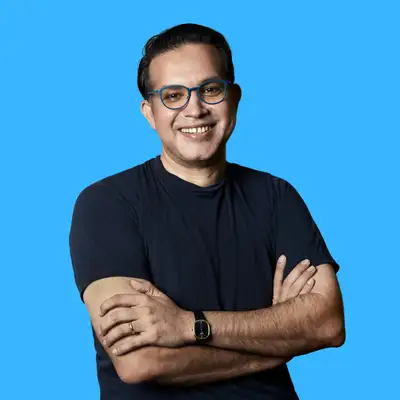
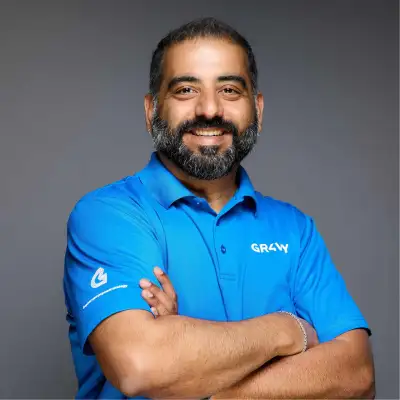
Aman Narain and Zubin Vandrevala have spent over 25 years in fintech across Banks, BigTech, and Startups. This is a podcast of them riffing on payments, fintech and everything in between.
AMAN: Zubin, 12 hours ago, Sundar Pichai walked
off the Shoreline stage. You were there.
The recaps we'll read all week long
will rank his announcement top 10 this,
best five of that. We're
not going to do that today.
The companies that have captured our
imagination in AI are, in corporate life terms,
infants. OpenAI is 10, Anthropic
is five, Mistral is like three.
Google has been working on AI for 25
years. Larry Page's father, Carl Page Sr.,
taught artificial intelligence at Michigan
State when the field was like a fringe academic
discipline.
The transformer that powers every large language
model on Earth was published by Google in
2017, the paper for that.
The phrase "AI-first" came from Sundar on
the same stage that you were at, in 2016,
six years before ChatGPT.
This was always the plan.
The press has spent two years
pretending Google was behind.
Yesterday was Google revealing it
never was. So today, no top 10.
Five non-obvious reads from two former
Googlers with 50 years between them.
I'm Aman Narain, live from London, your
fintech raconteur, and Zubin Vandrevala,
live from campus.
ZUBIN: Hey! Yeah, hey Aman. Yeah,
jumping in. This is a first for me,
doing one live actually at I/O in the
scorching heat of Shoreline in Mountain View.
I'm sure it's pretty cold in
London. I was there last week.
It's about 82, I should say about closing
in on 30 degrees here in Shoreline.
Energy is vibrant. It's pretty wild out here.
AMAN: Yeah, it's been, I'll be honest,
I just got back from New York.
If I could show you my setup here,
this is really grassroots podcasting.
Hopefully this will work.
I think what you and I wanted to do is bring
something raw for our viewers. So here it is.
ZUBIN: Grassroots it is.
Grassroots it is. Absolutely.
AMAN: Yeah, so Zubin, let's just,
before we jump into the five things,
what's the vibe like out there? This is
the second time you're out at Google I/O.
You were there last year as well.
ZUBIN: Yeah, no, this is the
second time on our podcast.
I've been here many, many years
and I think the energy is real.
You and I were talking about this just before
in prep as well. What's pretty wild is,
know, when things happen on stage,
sometimes it's hard to read the audience,
but then you start walking through
the AI demo booths, the energy.
It's a developer conference.
You see all these developers who
are actually building on Gemini,
building on Google products. The
excitement. It's real, it's there.
AMAN: So let's get into this, because
you've got a phone that's dying of battery.
So we're going to try and finish this before
you lose it. I have an amateur hour, right?
Next year, we'll have a camera
crew, if more people watch this.
Read number one, and I
want to start at the top.
For 25 years, Google's economic
engine has been one thing.
ZUBIN: Amateur on amateur. Yeah.
AMAN: The click-out, the blue
link, advertisers, commission.
I mean, we talked about it just at the top.
Two-year consensus has been that AI
Overviews would sort of kill that business.
And in fairness, Google's
been quite afraid of that.
But then search grew 19 per cent last year.
Vidhya Srinivasan showed Antigravity
spinning up generative interfaces.
Google seems to have really embraced AI in
the search box. Let's talk a little bit.
Love to get your take on that.
ZUBIN: So two things, one
is you're spot on, right?
Like for 25 years, the
search box hasn't changed.
It's been, you know, what, if the blue
links, 20 blue links on your search page.
I think what changed this year is a complete
rethink of what that search box could be.
And then you're absolutely right.
Like Vidhya was on stage and Vidhya
leads all of ads and commerce.
But I think the more important part was
commerce was centre stage. 12 years ago,
I joined Google with the sole goal or sole
vision that I believed in what Google had.
They had the intent data, but the closing
the loop was always the challenge.
And with that being on centre stage,
talking about UCP, talking about the AP2,
talking about the universal cart, I think
we're going to touch a bit on that.
But I think that the closing the loop piece
of it is so important to Google being
successful. And Google is embracing
this rather than walking away from it.
AMAN: Yeah, and I think people don't
recognise that sort of the blue links,
everybody was super attached to it because
it was so anchored in being able to surface
intent. As you said, all of us have been on a
mission to try and connect intent to action.
And that's been difficult.
ZUBIN: Yeah. Yeah. Absolutely. Absolutely.
And there's been a tremendous amount of efforts
over the last two decades to try and solve
that. I think with AI and specifically with
the protocols and specifically OpenAI,
Microsoft, all the big guys
jumping in on the UCP protocol,
it almost feels like the HTTP of
the internet or the commerce world.
AMAN: Yeah. OK.
And just before we move to the next one, think
they also, it's also open season, right?
Like Amazon suddenly doesn't feel
as invincible as it did, you know,
let's say five years ago when we were
trying to sort of crack commerce.
ZUBIN: Absolutely, you're right,
people for a majority of the last decade
started their product searches on Amazon.
I think that's slowly shifting.
AMAN: Yeah. OK.
Number two, or read number two, is about Spark
and the unbundled, if you'd like, portal.
So for two years, again, Silicon Valley has
been telling itself that Claude and ChatGPT,
great products, will eat Google's lunch
because they're cleaner, single-purpose,
productivity workspaces. There was
this announcement around Gemini Spark.
ZUBIN: Yes.
AMAN: Google's sort of structural
answer. It's not really a product.
It seems like a category response. Spark
doesn't feel like a chatbot in a tab.
It's like persistent. It's everywhere.
And it's also integrated into all your low
latency native hooks, like Gmail, Calendar,
Docs, Drive.
My non-obvious read here is that Google's
defensive moat has never been the model.
It was always the pipes. What's your take?
ZUBIN: No, Aman, that's a very astute
observation. If you think about our lives,
and I'm going to take myself as an
example, my entire life lives in Google.
My photos, my schedule, my inbox, my to-do
list, my notes, everything is in there.
Google has always looked at Gemini or
the Gemini service as almost an add-on.
I think what Spark does, and specifically
Josh, I worked with Josh way back in the day.
It's fantastic to see him come
and completely change this.
Spark almost brings that all together. And
it's exciting to see what they're doing,
rather than playing as a side app of
assimilating the world's information,
which they already have, and
bringing that together in a useful,
productive way to the users.
AMAN: Yeah, mean, just a shout out to
Josh, who built NotebookLM with his team,
small sort of scrappy team built NotebookLM,
which has sort of become a phenomena, right?
Like, it doesn't get as much
love as some of the other stuff,
but it's an incredible product.
ZUBIN: Yeah. Totally, totally, totally.
There's so much I could talk about this.
He added this really cool demo with
a new app that they've built on iOS.
We'll share some notes on that, but it's
pretty exciting on what that team is doing.
AMAN: Yeah, and I think a little bit
about this is like, you think about it,
Sam Altman has had the brand, but
Sundar is bringing the pipes, right?
I think the next few years
is going to be really,
really interesting to see
how that plays through.
ZUBIN: Yes. Yeah. And, you know, I think we've
talked about this, the two pieces that Google has,
which differentiates them from everybody
else, the part that I talked about,
they have my life, they have all my information,
they have been spending, I don't know,
25, 30 years assimilating the
world's information, they have that.
And I think the part that was missed and was
probably the first thing that Sundar kicked
off was the CapEx investments they've
been making on the stack, right?
And it's like 10X of anybody else that's
out there, Google itself, year over year,
is growing exponentially in terms
of their CapEx investments.
AMAN: Well, I think he talked about a
quadrillion tokens. I was just like blown away.
Think he was like remarking he never
thought he'd use the word quadrillion.
Like as minor shareholders, let's hope the
share price continues along that path as well.
Okay, so read number three. This one's both
ZUBIN: It is. It is. Totally,
totally, totally. Makes sense.
AMAN: Very personal for both you and
me, given our years in Google Pay.
The market is looking at Universal Cart
as a sort of consumer feature for buying
everything from shoes to
anything else across open tabs.
The non-obvious read I took
away from this is that Google,
I think Vidhya also mentioned this, is writing
the TCP/IP of machine-to-machine commerce.
UCP is the Universal Commerce
Protocol, co-developed with Shopify.
And AP2, Agent Payments Protocol, is
also open with Visa, Mastercard, PayPal.
Even you guys at Gr4vy, I
think, were part of that piece.
It seems like Google has learned from Android.
And they're not just building a mall.
They're sort of pouring the foundation underneath
that mall. If you control the protocol
ZUBIN: That's right. That's
right. That's right.
AMAN: of consent and tokenisation, you own
like a $5 trillion agentic commerce market.
What do you think?
ZUBIN: Now,
we've always talked about Google being that
platform business and Google's playing that
totally to the tee, right?
Ultimately, the success doesn't come
with building a closed-loop product.
The success comes with bringing the partners
along and creating the ecosystem and the
pipes and the platform to scale that out.
So Google's doing this really
well, building that open protocol.
In fact, AP2 has been sort
of, I think, donated to W3C.
UCP is being built along with the industry.
Originally launched, I think, in isolation,
but they've sort of, OpenAI is part
of it, Microsoft's part of it.
They're doing everything that
Google does really well,
which is essentially creating
a platform business.
I think the other piece that you talked
about, which is the universal cart,
is super interesting. I think this is a
problem that Google has faced in the past,
is you have those links,
you create the links,
but then you're redirecting
the user to the merchant site.
By creating this universal standard on
UCP and then creating the universal cart,
they're capturing that intent and completing
that purchase right on the surface.
That's huge. What was hidden somewhere
in that is they are creating,
because obviously there's going to be some
pushback from the merchant community because
obviously there's disintermediation,
but they're creating off-ramps in terms of
passing that information back to the merchants
as well. So something we at
Gr4vy paying close attention to.
It's something we're building on.
AMAN: Yeah. Yeah.
ZUBIN: But it's interesting,
playing both sides of it is how do
you solve the customer pain point?
How do you solve that customer need without
essentially disintermediating the merchants?
AMAN: Yeah, two payment geeky questions.
AP2 fraud and liability, you know,
with all these cryptographic mandates,
human-not-present transactions.
Did you pick up any in the
developer track conversations,
any answers around who eats the loss?
Or has it been left vague on purpose?
ZUBIN: I don't think that has come up.
They've been vague on purpose and I've been
spending a lot of time in the industry.
We've been talking to a lot of
the industry people, not at I/O.
I think at least for the foreseeable future,
there is going to be a consumer in the loop.
So that liability question of just agents
running rogue and purchasing things,
who holds the liability, is something
that people are punting down the line.
AMAN: Yeah. And off stage,
what was the read on Visa's Trusted Agent
Protocol or Mastercard's Agent Pay versus AP2?
Do they sort of coexist, compete?
ZUBIN: They coexist. In fact, I
didn't come across this at I/O,
but Google and Mastercard have come
up with their own intent protocols.
So obviously the industry
is collaborating together.
These all fit together into that single
experience that they're trying to create for
agentic commerce.
AMAN: Super, super. All right, now to the
fourth thing, and I'll read number four.
Now, this was not sort of
like, this is about SynthID.
It got like two minutes of stage time.
And you and I both feel very strongly
that this is massive, right?
The non-obvious read here is
is one of a network effect.
If 99 per cent of the web
becomes unverified AI slop,
ZUBIN: Huge. Huge. Absolutely.
AMAN: Google's index loses value and the $200
billion advertising business along with it.
SynthID is Google doing what it does and
acting as the web's immune system, right?
The proof is who is signing on.
Has OpenAI, Nvidia, Eleven Labs, it
feels like they're all in line, all in.
This is being engineered into like an
industry standard and Google's become really,
really good at that.
ZUBIN: They're all in it. Yes.
AMAN: I think Google's incentive
is not safety theatre.
It's like a, and there's a
little bit of Apple here.
It's a supply-chain protection
programme. So yeah,
I'd love to get your sort of take on
that, the coalition and, you know,
I know you feel even more strongly than I do
about this. So yeah, you know, take it away.
ZUBIN: Absolutely. No,
absolutely, Aman. And again,
you and I were chatting about this in a world
where as more and more AI slop is being
generated, we'll throw some up of me in
a podcast booth, me on a Google bike,
me on all these various different
AI slop images that I...
But my point is as more and more AI slop is
created and more and more content is pushed
online,
the thin reality of what you're seeing online
between what's real and not starts getting
thinner and thinner.
And in the world of sort of fake news
and everything that comes with it,
not trying to make this a
political conversation,
I think there's more and
more danger of losing trust.
And so Google's taking that front
and centre and saying, you know,
how do we create this mechanism where we as
an industry really come together and really
differentiate between what's
true and what's not? And again,
it's not about stopping
the generation of this,
but rather creating that distinction between
what's real and not and letting
people decide with what they see.
AMAN: By the way, again, tactical question.
With KYC stacks, doc verifications,
back to financial services, if you're
a banking COO watching this episode,
what's the one thing SynthID changes, in your
opinion, in the next 12 months or 24 months?
ZUBIN: Yeah, think SynthID is
more on the content side of it.
I think there's obviously a lot more form of
verification that needs to happen with KYC
and KYB, but it does create the foundation.
It's like once you start creating a mechanism
where you're able to differentiate between
true and lies or true and fake,
if I could use those words,
that has a knock-on effect in a
bunch of others, including KYC, KYB.
AMAN: Yeah. I, you know, I just to wrap on this
one, I, you know, I think Google's become very,
very good at learning from Apple's playbook
and Apple did something incredible when we
were at Google with sort of
really double down on privacy.
I think Google's taking trust in the same
way Apple took privacy, but trust is like,
it's like a granddaddy of privacy. And,
and, and, and, know, for 25 years,
Google's sort of incentive
has been to make the web
ZUBIN: It was. Absolutely.
AMAN: crawlable. Think yesterday it felt like
the next 25 years will be to make it verifiable.
And if you're doing that, then
you continue to own the future.
ZUBIN: Yeah, it's easy to forget that about
20 years ago, this was the same problem.
As new people came onto the web, how would you
differentiate between a true site and not?
And Google's done a phenomenal job behind
the hoods with whether it's HTTPS,
whether it's some of the back end protocols,
to kind of verify that these are authentic
sites, to verify the security on the sites,
but also take that one step further,
the trusted programmes that they put
out from a shopping perspective.
So I think Google's done a bunch over the years.
I think this just builds on that mission.
AMAN: Now, our fifth non-obvious insight, or the one more
thing, pun intended, was 13 years after Google Glass,
Google has finally sort of learned that hardware
should look like fashion, not technology.
Samsung as the OEM, Warby Parker and Gentle
Monster as the actual face brands, Android XR,
not some other Android,
ZUBIN: Hahaha! That's right.
AMAN: sort of open underneath it.
It feels like the phone has become
the quiet server in your pocket.
The glasses are becoming like a
lightweight sensory edge device.
The non-obvious read is we've moved from
typing in the 80s to touching in the 2000s.
That sounds inappropriate, but it works.
ZUBIN: I don't know, maybe that
was a much touching in the 2000s.
AMAN: It's been a long time. To typing,
talking in the 2020s, and intent.
Love to get your sort of like view on
this. I know you got super excited.
We were partly delayed because you
were trying these out. We'll show you.
ZUBIN: I was in a 45 minute line trying to get
in and demo this which probably delayed this
recording. For me, if you kind of go
back to our predictions for 2026,
obviously we talked a lot about Jony Ive
and this sort of magical AI product.
I think what we may have missed is that
product is probably some version of voice and
vision. Your headphones, your glasses,
your ability to sort of see and
perceive the world around you,
and then be able to interact with that using
Gemini, using this massive LLM that has it.
And to me,
think the combination of the software and
the hardware and the models that Google has
pulled out, and even just demoing it, being
able to look at something and go, hey,
what is that? Tell me about it.
I think one of the demo pieces, of the
AlphaGo, asking it, how do I play this game?
And it being able to turn back to you.
And I think one of the other ones they talked
about is you trying to cook and trying to
decide, hey, is this done?
Is this chicken done?
Usually a question I call my mother about
halfway through a meal, going like,
how do I know when the chicken is
done? And she's like, you just know.
I think imagine that with a glass on being
able to sort of infer the world
around you in that moment.
AMAN: Yeah. Yeah, your mom can see
you're cooking. Yeah, I totally agree.
I'm going to get better at chess with
my godson and cooking with my mom.
ZUBIN: But it's even beyond
that. Yeah, it's beyond that.
Even, I don't need in that
case to talk to my mom.
The LLM is able to infer the tenderness of the
chicken and be able to tell me whether it's
done or not,
which is really powerful if you think about
the next version of what tech looks like.
AMAN: And I think it's an interesting, I think
we're going to see something from Apple,
you know, any month now on a similar vein.
And I think it's interesting if
Apple and Google get this right,
they continue to sort of like dominate
the sort of the interface war. Mean,
Meta has tried very, very hard to insert
itself, given its challenges with Apple,
into this interface piece.
But I think Google with its open infrastructure
and Apple with potentially what it's going
to do, continue to show their strong
dominance in this area. What's your take on
ZUBIN: 100 per cent.
And I think the difference though is the way
Apple and potentially Meta approach it is
putting all your compute and
hardware onto the device,
whether it's an Oculus or your Vision Pro.
I think the way Google has approached
it is more of a companion.
So it sits in companion with a device,
whether it's an iOS or an Android device.
It's a software layer that connects with
a hardware device, which is your specs,
and that interaction moves sort of this heavy
sort of device on your face to something
that's more fashionable, wearable
and kind of hidden, which is,
think one of the things even Warby Parker,
one of their inventors, talked about it.
AMAN: Yeah.
And I think this is the interesting thing
because both Meta and Apple are sort of like,
like either doing it themselves
or with one alliance,
whereas Google's kind of doing it with everybody.
And when you're trying to build, mean,
a fashion brand,
you want to have lots of people to be able
to innovate because people want different
flavours of this as opposed
to the one size fits all.
In your deep experience as a
fashionista, what do you reckon?
ZUBIN: I would even go one step further by
saying that's Google's playbook, right?
The platform play. It's
building with the ecosystem,
building it in a way that lets others innovate
over it versus being the end-to-end product
is where Google has been successful. To me,
what's exciting and what I heard is
fashion is not how you stand out,
but how you blend in,
and being able to blend that tech into your
fashion every day rather than standing out is
what's going to probably make this more successful.
AMAN: And nobody blends in
better than you, Zubin. Listen,
to wrap this and to start bringing it to close,
we opened on Sundar and the 25-year arc.
Let's close the same way. Two questions
for you. I'll take them slowly, right?
If we have this conversation again in five
years, we'll have it again next year,
but if we have it in five years,
what's the one thing you think from yesterday's
keynote that we'll say we underrated.
ZUBIN: I think, and you and
I have talked about this,
just the massive shift in
the search box is huge.
I don't think we're fully giving it credit.
That search box hasn't changed in 25 years.
This is the first time Google's basically
making a massive change to that homepage.
That homepage has rather stayed exactly the
same for the better part of the last 25 years.
I think we're underestimating
how big that change is.
And what a big impact that's going to have
on the future of Google as a company.
AMAN: I think so. Mean, I just to build
on that, I was just thinking of that.
It's like Toyota taking the Camry or whatever
its like flagship product is and said,
we're just going to make it an EV, you
know, you know, it's very, very brave.
It's calculated. It's not sort of blind
faith, but, but super interesting.
ZUBIN: Course. I think we're
underestimating the impact of that.
I think we're underestimating it.
I think it's going to have a massive impact
and a positive impact to the
way they grow as a company.
AMAN: I think so. Yeah. And now the second
question is like an optimistic one. And this is,
you know, for our listeners who are
operators in fintech, banks, payments,
even occasionally a regulator here
or there who sends us a message.
What's the most exciting product, Zubin,
that banks and fintech should start
building between now and the next I/O,
knowing what Google just made possible?
ZUBIN: I think the piece that gets me excited and
being the fintech geek is the pipes behind it,
right? Like as these intent
signals are becoming more real,
being able to sort of identify
these as valid transactions,
being able to sort of assign
the liability against this,
being able to sort of authorise those and
not treat those as sort of out-of-band
experiences are going to be the key thing that
banks and fintechs will need to get right.
Being part of the UCP,
being part of the wave of driving agentic
is key rather than sitting on the side.
So to anyone listening to this,
especially on the fintech and the
banking and the merchant side,
it's leading into these protocols,
really understanding what's happening and
really enabling it is what's going to drive the
industry forward.
AMAN: Yeah, I to wrap this,
I think the story of the last decade in
technology was that the platform shift to mobile.
The story of the next decade may turn out
to be much simpler, the shift to intent.
Google has built the interface, the
execution layer, the transactional rails,
even the trust scaffolding
and now the new form factor.
And it's put it all on one stage in 150
minutes. Whether you love the company or not,
that's a remarkable thing for any business
to accomplish in its 28th year in existence.
I think was 2016, Sundar said that
Google would be an AI-first company.
In 2026, he showed us the receipts.
ZUBIN: Absolutely. Yeah, yeah, yeah,
yeah. No, 100 per cent. 100 per cent.
This is fantastic, Aman. Really, this
is a first for us doing this live.
I think I'm at 2 per cent battery,
so we managed to get through this,
which is unbelievable. Maybe next year
I'll be a little better prepared.
AMAN: Amazing. Yeah, we'll leave
some time for you to sync this up.
So thank you for joining us from
Shoreline and stay awesome.
ZUBIN: Amazing. Cheers, guys.
AMAN: Take care.