Subscribe
Share
Share
Embed
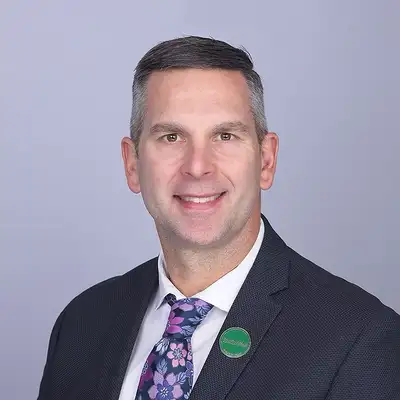
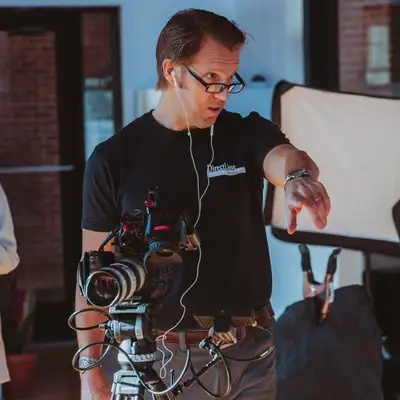

Eric Feeney talks with #friends! Eric is the founder of the nonprofit organization Friends of Feeney. Their mission is to help children and families who need assistance after heartbreak and tragedy. www.friendsoffeeney.com
169. Take one.
I hope it's 169.
I don't check little Red.
Do you know who little Red
is? He's like this few con superfan.
Do you know a little red?
I know, is it big red?
Big red is the guy who goes, you see?
Oh, and now there's a little red.
He was my last guest.
Is he going to leave the chair?
He's going to take over, I think
take over once Red is no longer able to.
And Red's on his way.
All right, all right, all right.
Feeney talks with friends.
Episode 169 what's up?
Seth?
How you doing, man? What was my first one?
Episode seven.
Oh, you had.
I like to say I got this thing
going for you.
Yeah, you you got the ball rolling.
So I'd like to say, you know,
that's in my third grade math.
That's 102, 162 episodes ago.
I'd like to say I'd gotten better.
I don't know, we'll have to see.
But again, that was great.
Yeah, you're my one and only podcast
while wearing a mask.
Yeah, we did this during Covid
or it was November 17th of 2020.
Yeah, we were so in the
social distancing pre vax phase.
Yeah. See how our tables this way.
We were actually on the long
end of the table during the 2020.
So I can't
thank you enough for coming back.
You're a good friend
I'm very excited to talk with you.
It took 162 episodes to get you back,
but you're here.
So how did you find 162 people?
I got a lot of friends.
I don't know,
there are a lot of friends at Phoenix.
Yes, yes.
No. It's so good.
You are.
I mean, you're here with me now,
but you were just recently.
Were you?
You've been on interviews at
Good Morning America, and then here
you're talking with this schmo,
Eric Feeny.
What's the.
How does that feel? What's that?
You put the same pride
in effort, talking with me
as you do with Good Morning America.
I dressed a little nicer for that.
But, you know, the cool thing is that,
you know, so I had
I had my second book come out in the fall
and it was on quarterbacks.
And so I did a lot of media for that.
And I think that when you're doing
something like Good Morning America,
the benefit is obviously, you know,
you know, you're on with
luminaries
and, you know, there's this huge audience,
but in the same sense,
you know, they're like,
you got a producer in your ear
telling you to wrap it up.
And you know, the segment
ends up being like 3 or 4 minutes
and it feels like it lasted like 45
seconds. And,
this is a little bit
more relaxing and comfortable and,
you're able to kind of go
into a little bit more depth on stuff
like this than you are in a segment
like that.
So look, there's pros and cons.
You know, we'll Reeve called me like, you
know, the greatest living sportswriter.
So I expect no less for me.
You know, when Superman's son say
it says that it's a
it's a cool thing, but,
you know,
all the platforms are different,
all the interviews are different,
and each of them have
unique and special moments throughout it.
Yeah, they
those were like certain questions,
like that
person asked a certain question already
ready to go.
You know, you don't know what question
I'm going to ask.
Are you ready?
Are you ready to do
a very good job of prepping me?
But I saw something hilarious
to failed high school
quarterback to New York Times bestseller.
How does that feel? Whose idea was that?
Where did that come up?
Would you come up with that one?
Well, I it's hard to believe that there's
actually a through line, but there is.
But like, you know, I want to say,
so I grew
up in Anchorage, Alaska, Boulder,
Colorado and Anchorage, Alaska.
And when I want to say
11 or 12 years old, I was
I had never really been
into football, really, or even sports.
I played basketball, but it was only
because I watched the movie Teen Bull.
I was like, oh, I want to play the plane.
Michael J. Fox is playing.
He was a baller to Teen Wolf.
Teen Wolf could get buckets.
So I was like, I want to,
I'm going to play basketball now.
But I just got into football.
And when I got into football,
I got really into quarterbacking.
And, you know,
I just became when I get into things,
I tend to get really obsessed,
maybe to the exclusion of, of being happy.
But that's how I roll. And,
I, you know,
I just, I wanted to be a quarterback
and I, I was one
I went to camps around the country. I,
you know, I was just obsessed
in every way, shape or form.
And entering my junior year,
I was trying to beat out a senior.
And, you know, I think I knew that.
I think in some ways I had a chance.
In other ways I didn't. But,
I got cut from varsity
and put on JV and that just wrecked me.
And I in retrospect,
I should have been able to out
and understand,
you know, maybe why I was on JV.
At the end of the day,
the coaches thought I was going
to get better only by playing,
and I wasn't going to play on a varsity.
And he was a good player. And I mean, he,
the quarterback
before him was was a Division
one football player.
He ended up playing in college.
And so, you know, these were some decent
guys that I was competing against.
And the coaches thought
that I would improve the most by playing.
But it was like my ego,
my self-perception,
who I thought I was,
I just couldn't handle it.
And so they moved me to receiver
is a way of like almost saving face
or staying on varsity.
And in retrospect,
I wish that I hadn't done that,
but it was the type of thing that, like,
I never a really forgave myself
for and be,
you know, I think that
when you're obsessed with doing something
and you can't quite do it,
there's always like a piece of you
that wonders like, well,
how do those who do it do it?
And so when I wrote the book
on quarterbacks,
it wasn't a morass about my failure
as a quarter.
I wasn't trying to be the Alaska Uncle
Rico here,
but I was trying to look at like
through the characters that I
picked, both current ones
and former quarterbacks, dead and alive.
You know,
I wanted to show people what that unique
American life and experience is like.
Yeah, cool stuff.
One I caught a two point conversion
in high school.
My friend still talk about it.
It was amazing feeling.
Sure it's your friends or is it you?
I bring it up every time
I'm around these guys.
So I caught a two point conversion,
ran it over there I thought I gave it to
I held it to the coach and I was like,
gonna put it in the
put it in the bucket like Emmitt
Smith used to do.
He's like Feeny. We need that for kickoff.
I was like, but my buddy doc,
he's a past podcast guest,
threw me that touchdown
or that two point conversion.
Excuse me when I changed my life.
You know, it's great, but, well,
when you become a quarterback, you're.
It's just fundamental.
What position were you playing like?
I was wide receiver. Yeah. So I mean,
a quarterback
is just a fundamentally different job
than a receiver, than a point guard
than, you know, maybe like when you were
playing center fielder for the Yankees,
when mantle was there, it was different.
But like, you know, we
one of the things I wanted to get into
in the book is, is how quarterback became
such a lofty job, where we ascribe
so many responsibilities to it.
Like I was sitting
when I was reporting the book,
I was sitting with
Steve Young, the Hall of Famer, who I love
a lot of great quarterbacks,
can't articulate
quarterbacking
well because they did it so naturally.
Steve, it wasn't as natural for him
even though he was a first ballot
Hall of Famer.
And so he's great because he's this great
kind of quarterback philosopher.
And I asked him like,
how many hats you have to wear
as the starting quarterback
for an NFL team?
And he just starts rattling in loss.
Everything from, you know,
military general
to matinee idol to amateur psychologist
to breathtaking asshole
to spokesperson for a multi-billion dollar
organization to cheer.
You know, he starts rattling and
he gets to like, I think he stopped at 17.
And, you know,
that's just fundamentally different
than being a center for the Lakers.
Like no other job,
really, in American sports
and maybe even global sports is like that.
And so those are the things that I thought
were so interesting,
because when you choose to be
a quarterback, you're choosing to take on
and you think you can take
on all of those things. And,
that's why
I think that the people who do it
and do it at a high level,
there's something fascinating
to learn from them.
That's cool stuff.
Now, you wrote three books. Two.
Oh, be on the Hill.
Is that out? Oh, that's on its way out.
Yeah.
So my first book, believe
It hadn't come out yet when I was a number
seven on your just number seven.
It was better to be feared.
It's better to be feared.
And that was about the New England
Patriots dynasty.
So that came out about a year
after we did that pod.
And then, American Kings,
my quarterback book was my second,
and I have a book coming out of September
that's like a greatest hits.
It's like my it's a collection
of my best ESPN work.
I thought about
naming it, cashing in twice.
But yeah, there's 28 essays.
I think it's actually going to be 26.
Oh, you got one of them is going to be
one of them is a story
that's not released yet, but,
and it's a big one
and I'm happy about that.
It's going to be able
to make it in the book.
But we had a subset out.
But that comes out in September
and that'll be cool.
And I'm kind of trying to, you know,
wrap my head around
how to, how to talk about it
because,
it's a greatest hits.
And so
you want to always come out
and have something new to say.
So I'm trying to think actively
about how to do that now.
Is it published and ready to go?
Are you still working on it?
So it's in
what's called it's in the final stages.
So I think that it shifts
to the publisher soon, like I want to say
the next week or two, because to know
it's already coming out in September.
September.
We're currently in April, May, May.
That's okay.
The old book writing process.
Yeah. No,
that better to be feared was great.
You signed a copy for my friend pags.
He he does.
He's a huge Patriots fan,
so I gave him a copy.
He was really thankful and grateful.
That was great.
You had you did a hundred interviews
for that Bill Brady.
Oh, and Robert,
you mean for the book. Yeah.
I thought you meant about for the book.
I probably did 100 for about the book too.
But, you know, I did a ton.
And the thing that was interesting
about that project was that,
I'll just zoom back for a second.
And so it was December of 99, and W.W.
Norton came to me and they wanted me
to do this book on the Patriots.
And I had never done a book before.
So that was a typical
the publisher was kind of coming to me,
and I was hired at ESPN
right out of college,
and one of my very first
big assignments was to go up to Foxboro.
It was in November of 2001.
And, you know, do a story on this,
backup Tom Brady, who was doing well
in relief of Drew Bledsoe
and would probably go back to the bench
when Bledsoe was healthy.
And so my ESPN career,
completely by luck, had kind of mirrored
the Patriots dynasty.
And so they they thought I would be
and I had done stories
that flattered the Patriots,
stories that infuriated them,
you know, profiles, investigative pieces.
And so I had a unique vantage point,
I thought, and I was like, I can do this.
And, you know, they
I signed the contract and
I had my idea
of how I was going to report it.
I was going to be traveling,
I was gonna be doing this.
And it had this.
The the contract had a stipulation in it
that if one of three events happened,
the manuscript was due a year to the day
after that event.
So otherwise it was doing like,
can I guess.
Well, so it was Super Bowl.
No. No. So it was if
Brady, Belichick or Kraft left leave
or if they were tired or left or
I don't think passed away was one of them.
But you know
I suppose that might have come up.
But so anyway,
I started reporting on the book.
March of 2020 hits the world shuts down.
Nobody really knows what's going on
or how long this thing is going to last
or what this virus is in. A week.
After that, Brady announces
he's leaving for the Bucs.
And I'm like, on the clock
all of a sudden.
And I was like,
my entire game plan for how to do the book
was completely thrown out the window
and I got to start moving on it.
And so fortunately, I kept almost
all of my notes throughout the years.
And when you when you do a book versus
a magazine
story, you,
you see the material differently.
You know,
you see it with age and context. And,
I was able to draw upon
all of those experiences
and do some interviews,
even within the context of the pandemic.
But so all told, yeah,
it was probably around that.
I forget how many exactly, but that's.
Yeah, it sounds like now
if you had a cut start or bench
of a based on importance to the Patriots
cut them stardom bench them
Brady bill Robert Kraft
who's who you starting who's like
the most important of the three.
Who's the least okay.
But the quarterback didn't come there
as Dan Marino you know what I mean.
And so they were all
their success was all intertwined.
And I think that like
you you
can't extract them from each other.
What they were able to accomplish
could have only been accomplished
within that context.
If Tom Brady had been drafted, drafted by
the Arizona Cardinals in the sixth round
and not the New England Patriots,
he might have had a good career.
There's
no way he's the best quarterback effort.
He and he and Belichick's careers
intersected at a pivotal moment
in their lives and their careers
where they were spectacularly,
unhealthily, but productively obsessed
with being great in a game
that, frankly, nobody can control.
And Belichick had seen
his first time as a head coach
go up in flames
with the Cleveland Browns experience,
Brady had almost gone undrafted.
And so they were.
They understood the fragility of it
and they were able
when they found each other
and they were able to kind of make
beautiful music together.
They only them could have taken it
to the degree that they took it to.
So it's like I think that like, it's
hard to say either
or because it's always
both, in my opinion.
I think I can if you
I mean, we can spend an hour,
I can tell you all the reasons why
I think it's both and all of the things
that Belichick did for Brady
and all the things that Brady did
for Belichick. And I think Kraft,
you know, I think
that what makes a good owner of a sports
team, it's a little hard to say.
It's really easy
to say what makes a bad owner.
And he doesn't do the things
that bad owners do.
And I think that
where Kraft really came in
is I think that when Brady
and Belichick's
relationship started to fray,
he was able to hold the band together
in a way that, like Jerry Jones couldn't.
And they got some more
Super Bowls out of that.
And I think that that was a lot of
because Robert Kraft
trying to keep this thing together
as best he could.
And I think that not a lot of owners
could have done that.
All right. Good answer.
Good answer. Acceptable.
How long was your chapter on Deflategate
massage gate or was Spygate?
Well, that's my gate
was the most interesting because it was a
cheating scandal that kind of played
to the Patriots one a certain way.
I'm rereading Moneyball right now and,
you know, looking at it
through the context, you know, it's 20
some years old.
And, the Patriots were doing a lot of,
I wouldn't say Moneyball things
because it wasn't quite the same,
but a lot of the philosophies
that Billy Beane and Moneyball
was trying to implement,
Belichick was doing before that.
And that was basically, you know,
he understood value relative
to what he wanted relative to his system,
relative to his scheme, relative
to what type of team he wanted to build,
what type of type of team he could build,
and what kind of money he could spend.
He understood all that stuff in ways
that were so far advanced
than, I would say, any head
coach still to this day.
Yeah. And,
his game plans were so creative
and so unique and original
that the Patriots
had developed this rep, this kind of
being smarter than everybody else.
And Spygate was like the Enron scandal.
It was like the smartest guys in the room.
And so I always thought
it was fascinating.
That was by far and away
the most fascinating.
You know, then you have Goodell
destroying the tapes
and all the other owners being mad at him
because he destroyed the evidence
and they didn't know what was on them.
And you had all this stuff.
Deflategate was kind of silly,
but it also spiraled into,
you know, an international scandal, which,
there's no other team in American sports
that could have done that.
Like only the New England Patriots
could have taken something
that is mundane as
air pressure
and footballs, and had it blossom
and bloom into this thing
that really dominated the entire off
season after, what, the 2015 season?
Yeah,
I mean, it dominated the entire offseason.
And, you know, all of a sudden
we're on TV talking about psi levels.
Like we have any idea
what we're talking about.
But you had to learn fast. And,
you know, those are those moments
that you look back on and you're like,
you know, maybe as a culture
that wasn't our finest moment.
But it was entertaining nonetheless.
That's good stuff.
Oh, yeah, we could talk about that book,
but we got to go on to the next one.
Two American Kings,
a biography of a quarterback,
the quarterback, not the quarterback.
In a lot of ways,
I was trying to write about all of them.
All of them.
Who's the best quarterback ever
and why is it Eli Manning?
I was talking to my wife Alison today.
And you know, she's an interesting she's
she was a phenomenal athlete
in high school.
And she was the type of player
who would kind of
maybe not be as focused in practice.
But in the critical moments
she always delivered.
Right.
The coaches are always like, you know,
how can we get that for 60 minutes?
But in the most critical moments,
she always delivered.
And we were talking about that and
I was like, oh, you were like Eli Manning.
You know, you don't hit every throw,
but you hit the one that matters.
I'm not sure.
I'm not sure.
She took it as a total compliment,
but it was intended that way.
Okay.
So I think
when you talk about quarterbacks,
you cannot untangle the errors
like you, it's just impossible.
And so there's a context that matters.
And I think that like,
you know, when you're looking
at the early iterations of the forward
pass, 1940s 50s into the 60s,
I mean, you have to kind of,
you know, to me,
I look at like Otto Brand,
I look at Unitas, I look at why tittle,
I mean, why tittle through 36 touchdown
passes in 12 games in 1962, with everyone
diving at his knees and beating the hell
out of his wide receivers.
And that record stood until 1984
when Dan Marino broke it in 16 games.
That's a phenomenal record. Wow.
And speaking of New York
Giants quarterbacks.
And then you had to sit down with him
right face to face.
You know I really enjoyed getting to know
him towards the end of his life.
And he was he was a funny guy.
He would say he had really bad dementia.
And I don't think he was due to football.
I think it was due to old age,
but he was like 88, 89 years old
and his memory loop was very tight.
And we would talk
and he'd he'd be laughing and say,
I'm just I love this conversation.
What's your name again?
And I'd say it's Seth Wickersham, sir.
And he'd say, Seth Wickersham.
Jesus Christ,
that's almost as bad as Yelverton.
Abraham Tittle
that's what the Yea stands for.
That was my.
So I think like say that again.
What's the ya Gilbertson Abraham tittle.
And so I think you have that group of guys
and then you have, you know,
the Roger Staubach Terry Bradshaw types
that come into play in the 70s.
You've name it in there too,
who's obviously a big cultural figure, but
maybe wasn't as consistent
throughout his career as those guys.
And then, you know, the 80s hit
and you have Marino, Montana and Elway.
And, you know,
you could make a lot of arguments
who was the best out of that group?
I tend to think Elway was.
But, you know, there's arguments
to be made in every direction.
And then,
you know, you have far and Kurt Warner
trade been
then come Brady and Manning and
and you know
Rodgers and Mahomes.
So you know it's like those are
those
are the ones you're kind of working with
I think I hope
I haven't forgotten anybody but Brees.
But you know I think that like those are
the collective you're working with.
If you're
you know, if Marty Schottenheimer
had this one line where he said,
you know, if I had one game to win,
I'd want Joe Montana.
If I had one play, I'd want John Elway.
So that's an interesting way
to look at them.
You know, if you had one game to win,
you'd probably take Tom Brady.
If you had one play, you'd probably take
Elway, Rodgers or Mahomes.
Right.
There was a great non-answer for you.
I like it, I like it.
You said something really cool, too.
Just one thing.
Yeah. Just once.
There's 16,000 high school quarterbacks,
about 800 college quarterbacks. 32.
Oh, that's right,
NFL quarterbacks of the 3210 are good
and three are Hall of Famers.
Yeah.
And then there's just the dwindling
and the the winner.
Yeah it's crazy I never never thought of
that five that I've always thought about.
That was the that's the heart of my book.
I mean what does it take to go
from one of 16,000 to go to one of three.
How do you do that?
What is it building?
What does it strip away?
What things do you have to
manufacture or indulge in
that conspire against happiness
when you're out of the game?
You know, a big part of my book
was the afterlife of these guys.
Like, what is it like having
built yourself into a Hall of Fame
quarterback, and then you have to live
the rest of your life having been born,
is that compatible with everyday life?
My answer was no.
You know what I mean?
I think the evidence points to know.
But again, you know, going back
to those things that Steve Young said,
you know, you have to build certain
things within yourself to,
to be
a quarterback of the NFL
and to survive that winnowing.
I mean, you have to be really ruthless
in a lot of regards
and selfish and irrational at times.
And the biggest, you know, the, the,
the grown up in the room
and the biggest baby at other times.
And oh, by the way,
you got to be able to make these throws.
And so
when I was writing the book,
writing about these guys life away
from the game,
when they're retired and trying to, like,
regain their footing
and reinvent themselves, I thought was
that to me was among the most interesting
parts of the book process,
as you do that I experienced in doing it
because, that's what I just
because they retire
doesn't mean that they're done
being a quarterback.
And I thought that
that just was really cool to explore.
Yeah, they end up in the booth or coaching
or TV shows.
Who knows?
Yeah.
Steve Young,
so Roger Staubach was Steve Young's idol.
And I mean, I, I should have mentioned
young in there, you know what I mean?
Like you got but like Steve
asked Staubach, how do you do it?
It's like you have to run. Don't walk.
You have to run away from it.
And if you look at Starbucks,
I mean, he completely reinvented himself.
He is a phenomenal businessman in Texas,
probably made more money
than any quarterback,
any great quarterback of
guessing maybe Brady's.
Well, Brady got divorced, so he lost.
Like maybe Manning Brady
or creeping up to him.
But like Roger Staubach has done
phenomenally well.
And you know that's what you have to do.
You really have to like,
kill that person that you were
when you make that type of life transition
because it's so all consuming.
Like you don't you don't play quarterback.
You are.
And in that regard, it's
very similar to being a politician,
being maybe a pop star, where you kind of
have to exist in your own orbit
that may or may not have any,
connection to reality at times.
Yeah. You're the face of the franchise.
The you know, if you win or lose
is it falls on their shoulders.
But that's crazy at after or like a does
it compare the how's my analogy.
Almost like a veteran
that goes overseas to fight war.
And they have a tough time
transitioning back to civilian life?
Well, I you could speak to that
a little bit more than me,
but like I think that like, that's I,
I would hesitate
to compare anything to war.
Okay. Okay.
Because I just, I don't think
you can compare anything to it,
but I think that, like,
anything that takes over your identity,
and then you have to transition out of it
sometimes.
Not on your timetable.
You know, I and I think that like that,
there's an emptiness and a hole
in that person's personality
that's really difficult to, to fill.
Like, you know,
someday I'll have to, you know,
I've been a writer of my entire life.
At some point, you know, maybe
I have to figure out something else to do,
or I want to do, you know, whatever it is.
But it's like, you know,
there is no
separation between who these guys are
and their work in that space.
The pressure is too great, the
adulation is too great.
And like we said, going back,
I mean, you know, from the moment
you decide to be quarterback, you,
you embody a certain thing, you decide
to take on all these responsibilities.
And once you do it,
there's really no turning back from it.
Now, how many quarterbacks did
you interview?
Oh, I mean, you know, so again,
it goes back to that thing
where you're keeping your notes.
But I, I didn't interview hundreds.
It was more like I,
I spent a lot of time researching.
It's like, how do I pick my characters?
Because I wanted it to feel
big enough so that every quarterback
when they read it, whether it's
Seth Wickersham, his career ended
in high school or John Elway,
they feel like they're
experience is reflected in some way,
even if it's not directly. So,
position I did it.
I put together this thing, this document.
I could just publish it, I suppose.
Maybe people,
but like, I, I picked every Hall of Fame
quarterback in every important quarterback
in NFL history who didn't
make the Hall of Fame like Michael Vick.
And then I picked every same for college.
And I looked at them and I just tried to.
I wrote biography and character sketches
for each of them,
to see what I was working with.
And then I tried to pick
the stories that either
I was personally most interested in.
All that you can't tell the story
of the quarterback without telling them,
without telling it. So like Joe Namath,
you know what I mean?
He's such a cultural figure.
You cannot
you can't talk about quarterbacks
without Johnny Unitas and Joe Davis. But
you know, someone like Bob Waterfield,
who was really like,
I mean, he was the precursor to Joe Damon,
and he's a Hall of Fame quarterback
who not as many people were familiar
with his story.
He played in the 1940s,
and he was married to Jane Russell,
who was America's
biggest pin up actress at the time.
So you're talking about World
War Two, America, Hollywood
becoming a force, football
becoming a cultural force.
And, you know, here's
this really good looking quarterback
who's the quarterback of the Rams rookie
year, find a better rookie year than this.
The guy wins rookie of the year, NFL MVP
and won a championship.
Jeez.
And then his wife, you know, is
as big as Marilyn Monroe wins.
And maybe they weren't the first super
or power
couple in American history, but
they were certainly the first in sports.
And maybe the,
you know, the first quarterback.
So you know, he he set the the stage
interesting glamorous in a lot of ways.
And so those are
the characters that I picked.
Because like you know, and
people read the book and they're like, oh,
you know,
how come you didn't write about X?
And you know,
like, I understand why,
Sammy Baugh is super important,
but to just to the story
that I wanted to tell,
he wasn't as essential.
Who's Sammy Baugh?
Sammy Baugh was a great quarterback
at TCU in the 1930s and 40s okay.
Yeah.
And he played he played for Washington.
Gotcha.
And then Waterford is not a name
I'm familiar with the water field.
Yeah. Wow.
Now did you have like a favorite meet
and greet with a player.
Did you have a meet and greet
that didn't go so well?
You know, most went well.
I think it was.
So another thing I did with
the book was try to look at,
what it's like to
be a star quarterback in high school
now, with an entire circuit
of quarterback camps and passing camps
and seven on seven
and needing a quarterback coach
and all of these things
that are out there in social media and nil
and all this stuff.
So I really wanted
to, like, get into that space. And
I really enjoyed,
like a lot of the interviews
I did were like
sit down interviews, chaise.
But with some of the younger
guys like Arch Manning
or this kid Colin Hurley,
who I wrote about, Was he
he was at Michigan until, I want to say,
2 or 3 weeks ago, he went to LSU.
He was a terrific high school.
He was currently at LSU. No.
So he played Kiffin well really quick.
So just watching that space live
and just sort of witnessing it
and watching them in
action was really, really cool.
So Colin Hurley,
what made him interesting to me
is that he wanted to be kind
of the most precocious quarterback ever,
and so he was just
on the fastest of the fast track.
So he was so good in high school
and he was taking,
he was homeschooled so that he could
he was doing on line classes
so he could accelerate his learning.
And he committed to LSU.
I want to say he was 14 years old
and he entered LSU with age 16.
And, you know, that's
a blessed and dangerous space.
You know what I mean? Like,
and the dad knew it.
You know what I mean?
It's like it's a scary thing
to send your 16 year old off to LSU
where you're, you know,
there's a lot of ways
your career can get derailed
in environment like that. And,
you know,
that that part of it
was really interesting to me.
His first year at LSU,
he was second string
as a 16, 17 year old,
which was amazing at LSU, for Christ sake.
I mean, that's an amazing feat.
And then he was in a car accident,
and it was towards
the end of the book process,
I was at Chipotle over by bulkhead.
And a friend says, hey, is Colin Hurley
still one of your characters?
I was like, yeah.
My final scene with him in the book
was, that's him.
Oh, gotcha.
My final scene with him was was,
his parents dropping him off at the dorm.
So I had written the book
writing to that scene.
And then my friend says, hey, is Colin
Hurley still one of your characters?
I said, yeah, and he sent me this link,
and it was like LSU
freshman quarterback in critical condition
after car accident.
I was like, what?
So I got a plane that day.
I'm at LSU that night and I'm on the ICU
with him, so thank God he survived.
But he crashed his car into a tree
and he it's amazing.
He survived.
And so I think that it was hard
for him to recover.
He recovered physically,
but I think there was
an emotional component
that was a little difficult for him.
And he left LSU.
He went to Michigan.
And I think that like,
I don't know for sure, but
I suspect that he's
dealing with what a lot of
I think this is the flip side
of specialization of pressure on youth.
You know, you it's this is your space.
But I think he's burned out like,
you know,
and I think that like it's
a very human thing. Yeah. And,
you know,
the pressure on being a young quarterback
and being precocious and everyone
telling you how great you are
and you're the next one, that's a lot.
And even if even if, like, you love
football, it's a lot to deal with.
I mean, Andrew Luck, I spent a lot of time
with him and he he struggled with that.
And I mean, you know,
that was part of the reason why he retired
is because like number one, he didn't
like who he was as a quarterback.
He didn't like who he would become.
And number two was because like,
he felt like that he had been on
a character and someone else's story
from the time he was a young age.
Nobody did anything,
but he just felt that way,
and he wanted a chance
to write his own story.
As you know, a 29 year old.
Yeah, I just saw that Andrew Luck may have
said he he thought he retired too early.
Did you see that or.
No. Did he ever say that?
Is that true or false?
He didn't say that to me.
I thought I think he would say
he retired too late.
I think he would have retired a year
earlier if he.
I think it was a part of him
that wanted him to the part of him
that wanted to retire
actually, earlier than he did.
Wow. That was a shocking retirement.
The way it happened,
the way they announced it,
just the timing, everything.
And, you know,
I think that's what he regrets.
I think he regrets.
I mean, he told me I spent a ton of time
with Andrew Luck better part of a year
for an ESPN magazine story.
And, you know, he,
you know, of all the things that I think
he regrets,
it's the timing of when he retired, like.
So he came back,
he had all those injuries.
He came back.
He won comeback player of the year.
They won a playoff game.
I think they lost in Kansas City
that year and hosted.
So it would have been January of 19.
And I think he wished
he had retired like that. And
instead he didn't. And
you know, it wasn't it right before
the next season, it was like two weeks.
That's right. That's what.
Yeah.
Yeah, yeah, I think he
I think he deeply regrets
that he let the team down
and let his teammates down.
Right.
Can you give us any teasers
on the new book?
Well, it's a collection again.
You know, of my can you give us
a couple of stories and essay?
That was good.
Which one did you get?
Well, my story,
I'm so proud of some of my investigative
work on the NFL that I've done both myself
and with my colleague Don Van Natta.
That luck story.
There's a story.
You know, I spent the entire playoff run
embedded with the Denver Broncos
this past year,
and I had never done something like that.
So I left a lot of Bo Nix.
Well, I was there
when they found out that he was injured.
And the playoff game after he won.
You were right there when he was there,
when the coach found out.
And because they would have won
that following week, no doubt.
Right.
I don't think there's any doubt in my mind
they would have beaten.
Oh my.
I mean, they almost beat him
with a guy who hadn't played all year.
Exactly. And,
you know,
I was rooting for the Broncos,
so I left, you know, Connecticut.
I went to Denver, and I was like, I, you
know, I come back when their season is.
And I didn't know if it was one week.
I didn't know if it was going to be
two weeks or two of the Super Bowl.
And I was in every meeting,
every decision.
They just allow you in
for the private meetings.
Good relationship with Sean Payton. And,
you know, almost nothing was off the
was he a quarterback?
He was. Yeah. And,
I just finished that story.
It'll come out soon on ESPN, but
that'll be part of the collection to you.
And I'm really happy about that.
You didn't put the, the third
grade teacher
that's undefeated at the Turkey Bowl
up the street.
No interceptions.
You heard about.
You heard about that one. Okay.
Yeah, I'm 13 and,
oh, I'm my 13 years at Wolcott.
I've never lost a turkey ball.
I destroy the fifth graders every year.
Yeah, I make,
you know, all the teachers look good.
I put passes in their pocket.
In their pocket.
I have an all star tight end,
All-American tight end.
Oh, you just got elected to the
his high school hall of Fame.
Good for him.
Legit stats too.
Yeah, yeah. Did your kid have him?
Your oldest did not. He had Browns.
He did. Yeah.
So, and she,
you know, he's a great teacher.
Great dude.
You know, she had a at at Wolcott
and then it centric.
Well sorry. Yeah. Yeah. Great guy.
Yeah. Yep.
You can throw it anywhere. He'll catch it.
Yeah. No.
You had this guy right.
The for it to tell us about.
Right. Thompson.
So right and. Yeah. So right.
You know
he's like,
it's hard to describe what he is
because he's like a best friend,
a counselor, a confidant and editor.
Well, let me stop you because our motto,
our motto is be a good friend.
I mean, he's beyond a good friend.
What makes what makes Ray Thompson
a good friend?
So I met right when I was in college.
We were both sportswriters
at the Columbia, Missouri
and University of Missouri.
And, you know, he's from Mississippi,
from Alaska.
It's always been a ton in common.
But, you know,
I think that
we recognize in each other in ambition,
and we both motivated each other
and we were competitive, but not like in
a, in a anything but a supportive way.
Like, I don't think we ever one thing
that's been a blessing is that, like,
neither of us
look at this like a zero sum game.
So if he does
well it doesn't come at my expense.
It really is.
It's about him, not about me. And,
you know, that's been
a healthy part of our, our friendship.
And, you know, I mean, he
he answers the phone at any time.
He helps you with something at any time.
He's there for you anytime he needed.
And he also does that,
like our world class pranks.
I mean, I've pranked him pretty good.
But years ago
I did the story on Patrick Mahomes.
It was kind of his breakout year.
And I two sentences in the story
about that.
He like to put ketchup on steak,
and he was
about putting his ketchup on steak
because like people
were paying attention to him
all of a sudden.
So he was kind of, you go to these
steakhouses in Kansas City and be bashful
about asking for ketchup
because he was embarrassed about it.
And so, anyway, two sentences in a
in a big story about Patrick
and those that just took off,
he got an endorsement deal out of it.
They were talking about, you know,
it just became like fodder,
you know, like,
if I had known
that this was going to happen,
I would have written more than
two sentences about the freaking ketchup.
But so anyway, I want to say
there was a Monday night game
where the Chiefs played the Rams.
It was a great Monday night game.
It was like a shootout.
And it was shortly after that story
and I was watching it
and a driver comes up,
a delivery man comes up in our driveway
and he's taking all these boxes.
You know, we get stuff all the time.
And so I'm not paying too close
of attention to it, but I'm like,
what is this guy doing?
He's bringing a lot of stuff.
What is going on?
It's like ten boxes. I'm like, what?
What is this Christmas shopping
that we're doing?
I go when I get it
and I they're all dressed to me
and they're all the same size.
And I'm like, what is this?
So I bring a box in
and I open it and it's ketchup packets.
That was right, I remember that.
Yeah, yeah.
Like he sent me 10,000 of kitchen.
I remember hearing about that.
You wrote about that.
That's cool.
That's being a good friend is like,
you know what makes a good friend, right?
I love it, I love it. And,
he wrote some really cool books.
Did you read Papillon?
I've read all of his books.
And do you have a copy of Papillon?
I do, I have a couple.
Oh, can I borrow it?
Will he autograph
a bottle of Pappy for me?
Can you send me an autographed
bottle of Pappy, right.
Or. No.
If you have the bottle of Pappy Hill,
autograph it.
Getting people Pappy is like,
I've had a bottle.
South main
wine and liquor right here on the corner.
Got it for me.
My guy Rinku. All right.
Oh. Pappy's delicious.
But, no,
I'm really interested in this book.
And then Emmett Till, the.
I'm interested in that one. To the barn.
Well, and Emmett Till is an educator.
I mean, you enjoyed that
because he grew up in Mississippi,
so he's first hand take right or.
No, but I mean, he should have been.
But he grew up in Mississippi.
He had no idea
throughout his entire education that
the landmark event that really started
the civil rights movement happened.
I want to say 20 miles
from where he lives.
They never taught it.
Oh, and, you know,
that was give me chills.
That's terrible.
That was so
the book was not only about Emmett Till
and all the
events that led to his horrific murder,
but it was also about like people
trying to erase facts and events
and look past them and
the, the problems when we end up doing,
yeah, that's terrible.
And in Mississippi, I'm surprised
he knows how to write books because
it's ranked like 48th of education
in the United States.
You have to read
the readers who come out of Mississippi
and then the cost of dreams,
sports dreams.
So that was his sports book.
That was his greatest hits.
And so that came out a while ago.
And I mean, frankly,
he could do another one now,
I don't know if he will or not,
but he does.
He come to Connecticut
every now and then.
It's been a minute
since he's been here. But yeah.
Oh that's awesome.
And the best American sports
writing in 2015.
Well, he was the editor for that.
So that's an anthology
that's like it comes out every year.
It started in the 90s. Oh, gotcha.
And I think he was the guest editor for it
that year.
So did you call him Ray or. Right,
right, right. Oh, it is right.
So one of the you know, one of the cool
things about our friendship has been,
you know, when we were in college,
the Best American Anthology
sportswriting anthology came out.
And it's like, you know,
how do you ever write a story
that could even be considered for that?
And then to kind of, like,
almost be part of the establishment
of that group is a cool thing.
Is he employed by ESPN as well? Yeah.
And did he go to Ole Miss
or did he go to Mississippi?
Mizzou, Mizzou, same place she went to.
My bad. Yep.
Wow. That's cool.
Yeah I want to meet this guy
I definitely want to read this book
Pappy Land because I love anything.
Pappy
I've watched the whole Netflix special.
They were stealing it.
Did you see that at Buffalo Trace?
They were like stealing them
and selling them to, like, doctors.
And the governor got involved.
It was a great little Netflix special.
So Pappy and then I got to taste it,
so that's cool.
Oh, you mentioned ketchup.
I knew that story, so that was hilarious.
But I didn't know who sent you the ketchup
because that that followed up
and was huge.
Actually, I may have talked to you
about the last one.
Yeah. Okay.
No, maybe not on episode seven.
Maybe after that.
Because it was after that, right?
Yeah, yeah.
I mean, maybe we talked to Volker.
Oh, yeah. It was hilarious.
Any other fun things that pranks
you've gotten from someone else or.
I'm usually when doing the pranking, but,
I can't, I can't nothing's coming to my.
But that was a pretty good one.
I mean, and I got some inside source.
Confirm or deny.
I heard you're a big fan of onions.
What? Your take on onions.
You got that from you.
Do I hate onions, I hate them.
It's actually his daughter today
at school.
Because Matt, I text him, I go, Seth,
come on, give me something good.
Nothing. Crickets. Matt.
Thanks for being a good friend.
You're my previous podcast guest.
So I go to his daughter.
I'm like, hey, give me something about Mr.
Wickersham.
He is the one thing that he hates.
Onions. Absolutely hate.
My wife loves them.
That's occasionally caused us some issues
my buddy Brian would like.
We would throw an onion at him.
He'd be like, are.
Are you like that too?
You know, I don't see a need
for their existence in this.
Oh that's funny.
Onions. Oh, you work for ESPN.
I want to plug ESPN
if you work for Disney.
Disney volunteers, Friends of Phoenix
on the list where you can donate
some of your paycheck or something,
and Disney matches it.
You did that. Yeah. So thank you for that.
My pleasure.
I'm kind of worried.
Yeah.
Yeah, that was amazing.
Thank you for your very generous donation.
You are
celebrity server at Rita's.
We'll show a picture of you
serving at Rita's.
That's two. Two.
That was fun. Two down.
And then you are our special guest
raffle caller
at our first annual golf tournament
right here.
Calling the raffle.
You got to be able to do it,
all right? Yeah.
You know, you're like a quarterback.
You got the face.
You could do it all.
So I just want to shout out, Will you come
for our fifth annual golf tournament?
It's at Tunks.
No, because I'm gonna be traveling
that day, but I'll be there in spirit.
September 12th way. Is it football season?
Where are you going?
It's right.
Well, my collection comes out right,
right after that.
And so I'm going to be traveling, but,
I'll be there in spirit.
Nice, nice.
No, thank you for doing that.
Thank you for being here.
You're a good friend.
Yeah, we got to get you.
Fini.
Turkey ball.
Best stats ever.
I'll play. Oh,
tell me where I'll be. There.
No, I need you taking notes and video
and put it on ESPN out there,
you know.
Jim Harbaugh, you know, quarterback
when you played quarterback
the east of this thing called
the quarterback challenge in Hawaii.
Oh yeah you throw it these targets
yeah really cool thing.
But the other guys
would be out of the bar.
And they would look
and they'd see Harbaugh
in the parking lot,
like preparing for the next day.
That would be me
playing for the turkey boy.
I think he had the longest throw.
He had a really good arm.
One of them. Right.
Oh yeah.
And you have a yard sign in your yard.
So thank you.
We and oh,
I got to shout out some sponsors
and I want to shout out our host today
we're here at Golf Tech.
Go back and check it out
Dave at Golf Tech you come down on New
Britain Ave and get a golf balls.
Look at those friends of Fini golf balls
for only five bucks.
It's a fundraiser going on.
Golf tech will be doing our holes.
So at hole one they time your whole
and they give you the stats,
how far you swing,
how fast you swung the direction.
So Dave is doing that for our golf
tournament.
Dave.
Come on over Dave.
Instagram. Check it out.
Coming soon if not already. We did it.
Hey, come check out the golf tournament.
I'm going to be out there
analyzing swings.
We'll make you a little bit
better out there, and hopefully
you can have some fun as well
and come down and get some balls.
But again, he's gonna test your swing,
your accuracy, your rotation, your axis.
Right. You do all that good stuff.
We do all that.
Yep. We'll analyze.
We'll look at the stick figure.
We'll see what you're doing
with your swing plane.
Just analyze everything
that's happening during the motion.
So make sure we know what the club
and the ball are doing.
Give you a better story
of how to make changes.
Tell us a little bit about golf tech.
So golf tech
we are the leader in golf instruction.
We use high speed cameras.
We use motion sensors.
All the coolest tech
to make people get better.
We'll measure up the swing.
Just kind of like a doctor.
Learn where you're at right now,
and then we can make adjustments
based on what we see.
So we don't try to guess.
We try to measure
and know exactly where you stand
and how to make those adjustments.
So it's the best way to learn.
It's a way to make the fastest changes
you can make.
Take it.
Take it from me.
Third grade teacher
extraordinaire Dave is a teacher as well.
He's a wonderful teacher.
He knows to find
turn your weaknesses into strengths.
He gives you data.
He gives you specific feedback.
Makes me really good.
I'm a great golfer now.
After golf tech from a teacher. Right?
Thanks, buddy.
You. We're gonna get maybe
get some swings of me.
Can we get some swings?
Can I get some chops? Yeah.
All right.
I want to
thank Direct Line Media Stefania and Dave.
Float 41, fix,
Ivy, Luna Pizza, Brook Golf
law Group, people's Bank, Keating Agency,
Insurance, Parkville Market,
the JCC and West Hartford Lock.
So with West Hartford Lock, what are three
keys that make you a good writer?
All right, I'm I'm diligent.
Like, I, I show up, I sit, I don't
I don't procrastinate a lot.
I think writer's
block is kind of one of these things that
it's I'm not saying it's real,
but you kind of just have to move past it
because you're never going to get over it.
You just have to start writing
and create words and deal with it.
Okay.
You know, as a journalist,
I think I'm a good listener.
And, you know,
I think that, like,
you know, again, I think the,
it's another key.
Do I have one good listening.
That comes up a lot.
And then writer's block.
I've been trying to write a book.
I met Manute Bol. Okay.
I want to do my friend Manute.
I met him at Conard.
He did. Sunrise.
Sudan. People don't understand.
He lived here.
He lived in West Hartford.
He walked by the corner.
Pug. Yeah.
His kid went to, Bugbee. Bobo.
The one that's me went to Bugbee.
So he just such an inspiration.
He gave back.
And so can you help me?
Give me some ideas?
Because I have writer's block.
I want to do a kid's book.
But again, you just got to get in front
of the computer and put words to paper.
You know, you gotta like.
Yeah, I mean, that's literally it.
You have to you have a blank screen,
you have to fill it.
And if it's filled with shitty words, it's
okay.
You can come back and make them better,
but you have to get them on the page
to begin with.
And you know, I love Bruce Springsteen.
And he did a in
a box set
for the Darkness
on the Edge of Town album, and in it
he he included a replica
notebook of what he wrote the album in,
and you know, Darkness
is one of his best written albums.
And you look at The Notebook and
you're like, oh my God, this is horrible.
Remember, there's like that column
and yes, weekly stars.
They're just like us.
You're like, you know, Bruce Springsteen.
He's just like me because he's these songs
that go on for pages and pages
full of cliches and are horrible.
And he he writes until he finds that
one line and he circles it, and then maybe
he puts it in a different song, or
he starts off from there, whatever it is.
But it was a great
like affirmation of the creative process.
And you just have to be diligent
about sitting down
and writing, because that's the only way
you're going to get there.
The only way is through.
All right.
You inspired me.
I'm going to go home
and write about Manute Bol.
Some upcoming events.
Again, we just mentioned our
September
12th is our be a Good Friend
golf tournament.
We have a Blues game.
It's a Sunday, June 14th.
We have a Yard Goats game, August 14th,
Lux, Bond and Green on June 18th it's
a Thursday.
We'll have a happy hour
specials down there.
Snacks Thank you so much for being here.
Any closing remarks? Recommendations?
I'll be here.
Another 162 guests. I'll be right back.
All right.
Deal.
Yeah. You come on in the show anytime.
Oh. What are you doing tomorrow?
Who are you going to see tomorrow?
You want to mention
that you're going to be in.
Oh, yeah.
I mean, if it comes out before then.
But, yeah, I'm doing an event at RJ Julia
in Middletown with my buddy Tom Juneau.
He wrote a great book in the days of my
youth.
What I was told,
what it takes to be a man,
to be a man, that LED Zeppelin song,
that LED Zeppelin lyric.
And I loved
reading
his book and I love being a friend.
He's one of the best,
you know, journalists in history.
And I'm really excited about that. 6:00
tomorrow.
Yeah.
So cool that he wrote that famous article
about Mister Rogers.
Mister Rogers is an idol of mine.
So we marched in the parade.
We made a mister Rogers
trolley for the Park Road parade.
We had Friends of Feeny shirts
with the cardigan.
So just an idol
and hopefully I get a chance to meet Tom.
But if not an amazing human being
just like you.
Thank you so much for being here.
but let's see.
Be a good friend. Down 3123.
Be a good friend.
They.
Have the friends.
A free
day. Hey!