Subscribe
Share
Share
Embed
The Nuclear Leadership Network was established to fill a gap in leadership development. By the time leaders hit a certain level in their path, it becomes more and more difficult to know what development steps to take to ready yourself for a shot at the top executive leadership roles in the Nuclear Industry. As you climb the ladder the number of people available to help you on your path become fewer and fewer, and your journey becomes a much more personal one. There will always be a need to collaborate with others, seek advice and guidance from those around you and take feedback from others seriously, but when you get to a certain point, you realise the more you are on your own. It’s up to you to develop yourself, through conversations, self reflection, making mistakes and being brave enough to learn from them. Not having all the answers, but being bold enough to seek the answers, is where much of that later growth in leadership occurs.
Matt Gavin (00:30)
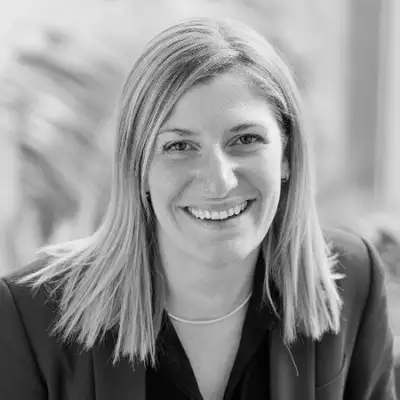
Hello and welcome to the Nuclear Leadership Network podcast. I'm your host, Matt Gavin, and today I'm delighted to be joined by Emma Kelly, who's the Chief Strategic Officer at the UK National Nuclear Laboratory. Hi, Emma. How are you?
Emma Kelly (00:42)
Hi Matt, and good thank you and thank you for having me on the podcast.
Matt Gavin (00:46)
Yeah, thank you for joining us. I'm really excited about hearing about your journey in nuclear leadership. So yeah, great for you to join us. You can kick us off with a little bit of a background, if you will, Emma, about your career and what's taken you to this strategic position within the NNL.
Emma Kelly (01:00)
Absolutely. I guess first thing I best start at the beginning, I'll also add that I never had a grand plan, so to speak. Put the caveats in upfront. Graduated in aeronautical engineering just over 20 years ago. And then the opportunity came up for me to undertake a fully funded PhD working with BA systems. So I took that and decided to stay on as a student for a bit longer at university.
I moved into industry and actually moved into a consultancy firm into their nuclear department. But I guess I'd only been there about six months when an old supervisor of mine got back in contact and said that there was a research program that came up which was part industry, so was BA systems and research council funded. So I went back into research and I guess I often get asked what...
made me go back into research having taken up a role in industry. But the difference for me, and this kind of charts a lot of the decisions and journeys that I then took on, was that we were looking at applied research. So was taking, it was actually putting into action results and solutions on site. And that very much started my journey and I moved into manufacturing engineering.
worked in applied projects across aerospace, defence and energy. Probably spent about 10 years working on that. An opportunity then came up to move to the Energy Research Accelerator as their Chief Operating Officer. So that is where I really do consider my leadership journey took off. Learned a lot from the Chief Executive there at the time. Massive exposure to everything energy from...
across to renewables and then came into the UK's National Nuclear Laboratory via a succumbent into what was the Department of Business Energy and Industrial Strategy. So that kind of then piqued my interest in policy and government relations and how do you turn strategy into an implementable plan.
Matt Gavin (03:07)
Sounds interesting. Sounds like you were thrust into leadership a little bit. Certainly that sort of executive type leadership role. How did you find that transition?
Emma Kelly (03:12)
Yes.
I found that transition, to be honest, found it really hard at the time. It was one of those whereby I suddenly realized that I moved from being a manager into an executive leader. I had to transition from focusing on tasks and coordinating teams to leading and empowering others.
you find yourselves in that position when you're a manager. It's almost like everything's about execution, making sure your tasks are staying on track. You're supporting your team on a day-to-day basis. You're solving immediate challenges. But as a leader, the horizon is so much broader. It's less about doing and more about enabling and really creating those conditions for success. So as you said, I was kind of thrust into it a little bit.
had to learn that transition pretty sharp and really quick. As an engineer by background, I suddenly had become comfortable with ambiguity. I was making decisions on incomplete information and shifted my thinking very much from short term to long term. But I would say I had some really strong mentors along the way. So chief exec that I worked for at that point was...
really experienced. So from a learning from somebody, because yeah, you often find yourselves, you either read management books or learn. I definitely learned a lot from him.
Matt Gavin (04:43)
Yeah, that's something we explore on this podcast quite a lot. That's how do you take that next step? And a lot of people do speak about the people around you, not the textbooks, not the theory, not the things that you can learn in a classroom, but certainly the things you can learn from people around you. How did you sort of through your career then really leverage that in terms of finding the time to do that? Obviously when you talked about managing task, your team.
Emma Kelly (05:03)
you
Matt Gavin (05:06)
very demanding positions, how do you find the time to sort of step into those conversations with those more senior people?
Emma Kelly (05:13)
Really interesting question actually. I think one of the things that we find ourselves in at the moment is time is actually quite scarce. I look at the, talk about the opportunity of hybrid working and I see that and it's got its pros and its cons. Hybrid working means that you effectively
can balance more but at the same time you find you can be constantly on. So one of the kind of challenges or opportunities if you like is to really make sure that you do allow yourself time to just stop and think. We can find ourselves on the go permanently. All of the technology that we have around isn't available to us.
whether it's your phones, your iPads, your laptops, you're constantly connected. The way in which 5G is available means that you don't tend to have a drop in signal, although I guess our attempts at trying to get this podcast to work sometimes have proven to be the opposite. So really being disciplined about making the time.
We work in a really fast paced environment. you kind of think about some of the challenges that are faced and pace is one of those, whether that's the pace of the world moving to decarbonize or the pace of ourselves trying to look towards completing our leadership journey.
Matt Gavin (06:33)
Yeah, that's great. That's great. And I'd agree completely time is scarce. In your sort of career journey to date, did you spot signs that you were on a trajectory for a sort of very senior position or was it, you you said you had no plan. A lot of people say that by the way. Was it more of a, you know, accidentally taking the next job and it just happened to lead somewhere? Were there clues along the way? How did you spot those clues?
Emma Kelly (06:56)
So yeah, I said upfront, I never had a grand plan. I didn't. I know some people do and some people have got a really clear view in their mind as to where they want to be in five, 10, 20 years. Hence, I think that's great, but that's almost testament to the fact that we are all different. whether or not you do have a grand plan or not, it's about how do you make the most of every opportunity that arises. So did I?
Was there a single moment that I knew I was on a path? No, was no single moment. What I would say is, for sure, very early on, I was really focused on the technical side, but I found myself being increasingly drawn to roles where the technical deliverables actually had an impact. There was a, what was the link to the bigger picture? So whether that was the strategic goals of an organization, delivering to policy or...
of making sure I knew what the impact was of what I was trying to deliver. That was for me the sign that actually I wasn't just there to do a technical project, I was trying to think about the wider context. And I think as my career progressed I found that people turned to me not just for my technical expertise but for my direction and decision making. And again you talked about
talking to others, so talking to others I found that that's not uncommon. There's quite a few people who kind of realise it was that transition of moving into decision making and that transition as well whereby when I realised leadership was actually less about having all the answers myself, it was more about enabling others, making those strategic choices under uncertainty, building the trust with a whole wide range of stakeholders. That realisation coming to the fore.
and knowing that actually I had to use information intelligence to inform decision making was the point where I said, okay, I have transitioned. I've made that transition from being a manager to a leader and realisation of, you know, that was on that journey, on that path.
Matt Gavin (08:59)
You mentioned earlier that you found the transition quite challenging and you just talked there about realizing you'd made the transition. Was that over a short time period, or a very long time period? How did that kind of manifest in terms of, aha, I am a leader type eureka moment?
Emma Kelly (09:15)
I should also add we're always in a state of learning. So I wouldn't say I've actually learned everything. I just want to point that one out.
It was a, I had to make the transition quickly. So in terms of kind of making that transition, it was a quick transition for me. Did I learn everything in that period of time? No, it was about understanding the broader horizon and the broader context. So what I would say is I don't necessarily believe my leadership style has changed over the period.
But I would say that from a kind of a wisdom point of view, I've learned a lot more. I've been in a lot more situations where you adapt and actually understanding that sometimes you will fail and that is fine. The point at which I accepted I will make mistakes and I don't have to know everything. That's where I think I fully...
transitioned into the mindset of a leader, but always learning, always learning from others. And I think if I find myself in a situation where I'm not learning anymore and I'm not understanding and kind of taking that next step, then I'll be upset actually, because at the end of the day, you always want to be curious, you always want to challenge.
I was brought up in an environment whereby she'd always challenge and that's constructed challenge quite clearly, but I kind of go back to my early teenage years where I started to show an interest in engineering and I showed an interest in engineering at a time when it was quite uncommon really for females to take that route. But it was because I wanted to challenge, I wanted to move forward, I wanted to focus, I wanted to understand how could I innovate.
those kind of facts, if you like, which were true to me taking on engineering are just as true to my leadership journey and how I view leadership.
Matt Gavin (11:15)
Yeah, interesting. Yeah, we've had a few people on talking about that sort of diversity in the sector subject and it's really important and ⁓ interesting one for me as well. How much does that influence your leadership? So trying to look at a sector like nuclear, we know where we are in terms of diversity, the NI, a lot of work happening. I think the results are probably not quite where we'd like them to be as an industry.
What do you think a leader's role in that is now as this sector grows?
Emma Kelly (11:42)
I mean the sector has transformed itself from where it was even if you go back five, ten years let alone 20 plus years and that's where I mean I went into engineering and I kind of look at the parallels between engineering and the nuclear sector.
When I was in, within engineering, found myself moving into manufacturing engineering and again, the diversity there is, it was not as great. But it's definitely, it's definitely moved on. I'm inspired by the conversations that I had with the young professionals coming into the industry. They bring with them new perspectives. There's a whole host of work that's taken place as well within
schools and universities around diversity of thought and critical thinking. And it's that critical thinking that I'm genuinely excited by because I think that will bring with it a whole host of new skills into shaping the role of nuclear in the future. I mean, government have already talked about the golden age of nuclear and it's moved on tremendously. But I think what I'm most excited by
when we look at that diversity of thought is we've actually, I wouldn't say we've moved away yet, I would say we're moving away, but we're certainly moving away from defending Nukula's place to actively defining its role and the active definition of its role is going to be through that diversity of thought. Nukula is not just about the technical, it's all of the disciplines that are involved from...
your engineering and your technical disciplines through to your social sciences. And I think for me, when we talk about diversity, it's really clear that it's the diversity of the people and the thought process and the mindset and the skill set that they bring. Yeah, so that's what I am excited about because that brings with it curiosity. And I don't think we can ever be in a position or as a society that we lose our curiosity.
Matt Gavin (13:35)
Yeah, that's awesome. You touched on a few interesting words there, curiosity and think collaboration you might've touched on. Obviously values that you sort of shape your leadership style around. What are the sort of values are important for you as a leader?
Emma Kelly (13:49)
So absolutely curiosity, absolutely collaboration. I'd add in innovative thinking into that because I think we should never be happy by the status quo. We work in a super regulated environment. There's no doubt about it. But that doesn't mean that we can't have high performance and high compliance. They go together.
When you talk about other kind of elements of me as a leader, the third one that I would add in there is integrity. And I've got very strong moral compass and I think we've all got our own kind of personal values. You work in an organization and an organization has got values that, I mean, from my perspective, I would only ever work somewhere where I felt the organization values and my values were compatible. But the piece of me about being a leader.
leading with integrity, but also I'm, and it's personal preference for me, it's I'm not ever prepared to compromise my moral compass and my personal values and the time that I find myself compromising those values, I feel like I've kind of moved away from being the leader that I want to be. So integrity is the other one that I would add in this, obviously so many different dimensions to the integrity piece.
Matt Gavin (15:01)
Yeah, interesting. You mentioned a few other interesting words that I'll pick up on innovation, think creative thinking. Obviously those values are important to you personally. How do you get an organization aligned? How do you sort of lead that culture, cultural element of that? What kind of lessons have you learned along the way to help?
sort of influence on the bigger stage. You talked about the bigger picture that you were always interested in, but how do you influence others through those set of values?
Emma Kelly (15:25)
Thank you.
Really, that's a really interesting question. So early on, I talked a lot when I was thrust into leadership and I remember the chief exec at the time talking to me about what he called the ABC. And I remember being sat there with my cup of coffee going, yes, I know the alphabet. Thank you.
it kind of expanded and it was very much around his perspective of attitude, behaviour and culture. And it was that element of you can't have any one of those without the others. So that was certainly, that was certainly one of those lessons, if you like, when you talk about learnings and that difference between reading a management book and
learning on the job and learning from others' experience and the ABC was one that I've taken with me wherever I've been and throughout. It's that piece around
you can have a specific attitude but you need to understand what the behaviours that sit behind it and if you want to drive a change in culture then great, understand that behaviour but then there was another C that came in, he actually had ABC squared and I missed the square bit off when I explained the ABC. I'm sometimes not sure if he added the square just because he knew he was talking to an engineer but anyway.
But the seed being the consistency and it's the consistency in the approach. So what are the attitudes that we want to drive forward? And I think at the end of the day, I believe in it. I've got a strong belief in the teams that I've led. Everyone is doing something for a reason. You just need to understand that reason. You need to understand as well what drives individuals.
We talked before a little bit about pace. We work in a really fast paced environment, never mind the fact that nuclear projects are very long term and it sometimes might take a while until they hit fruition. But we do work in a fast paced world. The digital world, it's adding, it adds a lot of stress and it's understanding how people's drivers, what do they want to, what do they believe in, what's their purpose and how.
How do you then bring the attitudes and the behaviors through to a common purpose? And I find that that then drives the culture, but it's gonna be driven from the top as well. And as leaders, it's very much our responsibility to show up how we would like others to show up. It's that old adage of, if you like, we talk about being kind, but it's not just about being kind, it's treating others.
how you would like to be treated and making sure you maintain that mutual level of respect. So from a team perspective and a leadership perspective in terms of the teams that I've led, I've always tried to make sure that we have mutual respect. You can't demand someone's respect, but you can certainly earn it in terms of how you approach. But as leaders, we have to make difficult decisions as well.
Therefore the transparency element comes through. I think it's ultimately really important to be transparent in what's behind our decision making. They might not be favourable decisions, but so long as we're clear as to being open and being transparent and explaining what, not just what we do, but why it matters. That's, yeah.
certainly kind of central to my leadership style.
Matt Gavin (18:48)
You talked earlier as you were making the transition that you've made some mistakes and that's okay. That's part of the sort of transition. In terms of upholding your sort of personal values, the values you want to see within the organization, when the pressure's on and the backs are against the wall, that's where you don't always find the best version of yourself. It pushes you into a difficult position. And it's something I've certainly worked on when the pressure's on.
How do you still maintain true to that sort of central spine and not start to see the worst of yourself, the worst of others and all that sort of stuff? How do you approach that? Have you got any advice for people on how to, for me, but also for our listeners, you know, I'm learning too, about how you maintain that sort of consistency and those behaviors and those attitudes to make sure you maintain that culture even in the high pressure, high stress world that we all live in.
Emma Kelly (19:25)
you
real?
Yeah, and it's one that I do feel from talking to leaders kind of throughout my journey as well. It's certainly one area where I'd say a lot of people have said they find themselves struggle. So we've all got that desired position that we want to be in and where we want to be true. But as you've quite rightly pointed out, backs against the wall, you can be in a stress and everyone goes into their own.
their own stress position. For me, it's about reflection and being really self-aware. I've never been scared to seek out feedback. In fact, I always do. I think it's really, really important as a leader to ask for that honest feedback. Being clear as well, there's no repercussions.
This isn't personal. It's actually understanding how each of us grows as individuals, but how we're seen by our teams. And I go back to that transition, if you like, between being a manager and a coordinator and team lead, to being that leader. If you don't have that time for reflection, it's quite difficult to see how.
Either A, you might be acting or B, where you kind of need to move to if you like. I would bring in, from my perspective, combination of mentorship from others and coaching as well. As a leader, having a coach who you could perhaps talk to, to just think about that self-reflection piece. The continuous learning from your team, that feedback that comes in, that...
that honest feedback, but having a position with your team whereby there is the trust and that trust isn't, it's not just about a trust and transparency in decision making, it's a trust in if they give feedback, you're not going to suddenly bite someone's head off. And one of my team members, I won't use their name, but they have what they call their mantras. And it's...
It's really, it's a really interesting kind of take in terms of understanding that one of the mantras, for example, is someone tells you something that you really wish you had known, but you didn't know. So, but don't bite their head off. Don't shout. Just take a breath and go, that's wonderful. Thank you for letting me know. And I use that because I think that's quite, it's quite a good one to use because it's that case of actually.
Having the open and honesty and allowing that reflection and understanding that actually everyone who's currently can be working in a high stress, high pressure environment up against it with deadlines. And nobody is, no one's trying to trip you up. Everyone's operating with the right intent. So yeah, feeding that back into those personal set of values.
is where I would say it's that need and that kind of transition to, again, back to that transition to being a leader and just accepting that you do need to have self-reflection. You will fail at times, but pick yourself back up is the other part.
Matt Gavin (22:42)
Yeah, that's really interesting. You touched on a few points I'd just like you to elaborate on a bit. So one was about, I think the, you're not going to bite people's head off and they need to know that a little bit that they, you know, you welcome their feedback. How do you, obviously you're a lovely, lovely woman Emma, but how, how, how, but obviously there must, there may be a perception and I certainly am a bit self-aware.
Emma Kelly (22:58)
Okay.
Matt Gavin (23:03)
big and can look quite scary and in a senior position. How do you sort of shift that? You know, I'm not the big bad boss. I'm actually here to help. I'm here to try and listen to what you've got to say and understand. And sometimes I'll be able to help. Sometimes I won't. You know, but I'll absolutely never bite people's head off. You talked about trust and I think that's a really important word, but how do you harness it, you know, in this image of like, I don't know, or operating in this corporate environment when these senior people can seem quite intimidating.
Emma Kelly (23:30)
For me, it's always been about making time, going and sitting and talking to people. And it's about, when it's talking to people, it's about understanding what's going on. It's not just about what's going on at work, it's about what's going on in...
your personal lives as well and I've found many a time that there might be individuals who may not necessarily... they might feel... you might feel like they're not performing as well or in a meeting somebody could seem quite distracted. So it is for me always about the not jumping to assumptions and just having that quiet chat and making sure...
as a team, a team is absolutely fine because at the end of the day nobody wants an unhappy team and you never really know whether or not there's an issue either at work or outside of work. So creating that safe space to have the conversation is really important for me. But at the same time we have to deliver.
I'll never forget, I was probably going back eight, nine years now in one of the sessions where I did actually, was kind of bit of an open session and was just getting a bit of feedback from the team. We just had to run a major project and we'd been up against some really tight deadlines and everyone had been putting all hours in to complete.
and I got a couple of pieces of feedback and one of them was they'd seen that I was prepared to roll my sleeves up so it wasn't about me just going, right, that's yours to do. I rolled my sleeves up, got involved so that we got everything over the line. So I was there, I was part of that, was with them. So I kind of got that positive feedback but I also got some feedback and I wasn't sure at the time whether to take it as positive or negative.
be really honest which was we know when you're not happy with us Emma you make it very clear and part of me went well is that good and then someone else said to me you took on a mum voice I thought again not sure from a reflection point of view not really sure how to take that but I came away from it and I thought well
Actually, if the team know when I'm not happy, so long as I'm being respectful of them, but also being really clear about what's not gone right, if you like, and where I'd like to see the change, then I have to hope that they respect me enough as a leader to understand that if I'm getting involved, it means that there is a problem and I'm actually
there to help solve it when required. So there was that kind of self-reflection point from my side. The mum voice bit, I kind of went, don't think I'll ever get rid of that, will I? Until there's no kids at home, there will always be an element of mum voice that comes out. And again, that was just a slight humorous point, if you like, but also...
which is important as well because as leaders we're humans, we're not robots. And for those of us who have kids, I'm sure we all fully understand how that parental voice might come out a little bit at work. But I think you raised an interesting point. You kind of talked about how you're not seen as the big scary leader and it's a balance. The balance for me is to make sure that I'm not.
I'm not necessarily at work at times, you're not there to be someone's friend. And as a leader, accepting that can be difficult as well because at no point does anyone want to be horrible. But as a leader, you have to also make sure that things get done. So for me, it's all in the delivery. And so long as I...
Matt Gavin (27:13)
Mm.
Emma Kelly (27:15)
deliver things in a respectful way. And again, as long as I'm really clear and open and people understand why I'm saying what I'm saying, then I will always kind of step back and live with the decision that I've made. But I will always support my team as well. So there is complete and utter... I don't want to overuse the word trust, but the trust has to be there and the mutual respect has to be there. I will...
never publicly throw anyone under a bus or shout at anyone because I don't believe that brings out the best in any situation. Behind closed doors I might make my displeasure known. But the point is to work through that and the point is to understand, I mean I don't get everything right first time, nobody does. How do we learn?
And I used the word curious earlier and it's curiosity means that we will sometimes get things wrong. But so long as we understand the flip side and the opportunity, I don't think I could ever ask anything more of my team.
Matt Gavin (28:14)
Yeah, fascinating, fascinating. Thanks for that. Talked about opportunity. I'm going to move us on to the opportunities that we've all got in front of us with the way the nuclear sector is starting to really ramp up in the UK, you know, where we're based, but also globally. I think there's lots of opportunities that this will bring, but lots of challenges as well. And how, as an emerging leader, know, the few C-suite sort of leaders that are emerging right now.
Emma Kelly (28:41)
Yeah.
Matt Gavin (28:41)
that are gonna
lead, you know, are gonna be the leaders of this industry. What kind of capabilities are they gonna need, do you think, in this sort of changing world we're going into where nuclear is gonna become a much more, yeah, we all hope and the signs are all good, that this is gonna become a much bigger industry than what it's been before.
Emma Kelly (28:57)
Yes, wow. Yeah, if I kind of think about what I think they will, well, what we will all need. Talked a little bit about pace. I think adapting to pace for me is going to be critical.
kind of look at the bigger picture in the context and the world moving to decarbonize, we know nuclear has a critical role and quite rightly you said in the UK and globally, the market for nuclear is tremendous and that's not just from an energy perspective, it's also from if you look at provision of radioisotopes for cancer treatment, it's a whole wide range within the sector. we operate on much longer timescales.
than any other sector that I've worked in. That includes aerospace. We work on a much longer time period within nuclear. So leaders finding ways to accelerate deployment without ever compromising safety. That for me is both a challenge and an opportunity. It brings back in that innovation piece, regulatory safety.
We absolutely need that, not only from a sector point of view, but to maintain the public's trust. So leaders finding ways to accelerate that deployment is one. A second one for me will be about talent. Building the pipeline across all disciplines is crucial. Let's look at it. And so much work has gone into recruitment and kind of...
closing that skills gap. It's not to say that nothing has happened because clearly a lot has happened over the past few years. But we still face a skills gap. When you look at the ambition of the nuclear sector as a whole, we do face a skills gap. So attracting that next generation of engineers, social scientists, accountants, the whole gambit of those disciplines and developing leaders who can
actually lead across disciplines. So we have our technical leaders, we've got our subject matter experts, they are leaders in their own rights, but we need corporate leaders as well. So building that pipeline, completely essential. And I think if I was to add a third one, the third one for me would be around public trust. So I think you used the word skepticism earlier on.
even with all the advances in technology and safety, Nukida still faces skepticism. We are moving that and we are absolutely defining Nukida's role, that skepticism piece still exists and I do feel we need to be able to talk more about what we do and why it matters. So leadership over the course of kind of this transition as we look towards that, the golden age of Nukida if you like, it is around engaging openly.
It's explaining what we do, why it matters. I've mentioned decarbonisation a few times, but decarbonisation targets have been set by the world governments at COP. We've got our own national and energy security. It's having affordable supply of energy and considering the wide range of the uses of nuclear, whether it's electricity or non-electrical uses. So...
ensuring that we've engaged with the public so that they actually understand the picture of Nukon as well. That has to be the role of future leaders.
Matt Gavin (32:17)
Yeah, a subject really close to my heart as well. I'll ask you a follow-up question on it because it just intrigues me and I'm interested in what you've got to say. think that sort of advocacy for the industry, if you will, that sort of change in public perception, you say that's a role of future leaders and I absolutely agree it is. How do you balance that with the role you have in making your business successful or?
Emma Kelly (32:30)
Yeah.
Matt Gavin (32:42)
you know, the day job, if you will, and getting out there and advocating what kind of percentage should leaders be focusing on in each of those sort of areas, do you think?
Emma Kelly (32:53)
So I would say it's role dependent. I think there is a, there's an advocacy piece that's been really clear about the audience as well. So if I think about the three elements that I went through in terms of pace, the skills, and communicating with the public, we absolutely need to align pace with safety. So there is...
There's the advocacy with the regulator in that perspective. There's the alignment of talent and opportunity. you suddenly see advocacy into schools, advocacy into education departments, advocacy into colleges and universities. And then there's the alignment with society's expectations, which is obviously a broader advocacy role across all the various media channels that are
are open to us and engagement with international bodies as well. It's about really making sure we take every opportunity to relate to a purpose. So I don't think I could actually put a percentage on it per se. I feel that everything we do should somehow align to a form of advocacy.
But as far as to look at kind of the most senior leaders in an organization, they are very outward-facing. So take your chief executive of any organization, for example, they are, they're there to be visionary, they're there to be outward-facing. So you could almost say, actually, if as senior leaders in a business, we're doing our bit to make sure that the business is...
maintaining and delivering its objectives, then you allow your chief exec, for example, who's chosen to lead the organisation to actually be that fully outward facing person. I think one of the areas I just wouldn't like to lose sight of when you start to talk about advocacy is the advocacy that everybody in an organisation plays. It's making sure that everyone's got access to the materials so that they feel they can be an advocate for.
the sector or for the cause that they see within the sector. One of the most powerful things that we've done recently is really engaging our young engineers because they can relate as much as I hate when my child tells me that I'm now old. I accept that and I do understand that perhaps I can relate as well to kids that are at school.
And so it's about how as a leader we employ and use all individuals in our business to support advocacy. So how much of my time is spent for advocacy? I'm in a strategy role, so I think if I was to say, it has to be a very high proportion of my time is spent on advocacy, whether it's talking to policy officials or advocating kind of the next.
big strategic direction from a research perspective or an innovation perspective with colleagues within UKNNL and our wider kind of stakeholder partnership. So I do feel it very much depends on the role that you play, but everything we do ultimately is that translation, the skill is translation and how do we create alignment and how do we drive change in a sector where
safety and credibility are absolutely everything.
Matt Gavin (36:20)
Yeah, brilliant, Just like to look forward with you for a while if that's all right. So there's lots of exciting things in the sector. What would be, what are you both looking forward to in the sort of over the next sort of five or 10 years and what should leaders in the industry be really excited about and looking forward to as well?
Emma Kelly (36:25)
Can't throw it.
I'm really excited about the fact that we have seen the discussion around nuclear shift. And it has completely shifted. There's a whole new level of confidence around nuclear. There's a passion around nuclear as well that I'd say when I kind of first came into the sector didn't necessarily exist beyond the technical specialist.
that were in the individual organizations. So that for me is absolutely great. It's no longer a niche area. It's an essential pillar, if you like, in delivering clean energy. So to see that dialogue shift is amazing. And it's shifted now as well to how can we deploy all of the recent announcements? It's about deployment.
The discussion is no longer necessarily around how we decommissioning. It's actually about, well, there's some great innovative work going on in terms of nuclear waste management, but it's now also about, how do we deploy the next technology? Whether that is novel fuels, whether it is looking at the next kind of reactors from a small modular reactor point of view to an advanced reactor perspective.
The collaboration across sectors as well, I talked about as not just being a niche area, it's now collaboration across research organisations, national laboratories, utilities, technology companies, even AI organisations, all working together to absolutely accelerate that deployment. Conversations are so much more open. It's now, I quite like the fact as well that I talked before about...
We do have quite long timescales that we work across. Our horizons are much longer than other sectors. But I really like the fact now in terms of the conversations we're having, people aren't necessarily accepting of that. They're challenging it, saying, well, why can't we do it quicker? And again, it's back to that cross-sector discipline of all the organizations, but it's the...
the cross-sectoral disciplines in terms of critical thinking that that brings as well. And I will come back to this one, I appreciate it, I probably sound like a broken record player on repeat here, but the inspiration that comes from the younger professionals coming through, that really is a change. They are bringing whole new perspectives.
They're bringing whole new perspectives as well around the role that they can play. And that is actually shaping the next round of leadership in the sector because it's, there's a lot more reverse mentoring going on as well, which I think is absolutely fabulous because without that reverse mentoring, you're never going to have a safe space if you like where you can have
a young professional challenging a senior leader. The perspectives in terms of hierarchy have changed. I think back to when I started my career, if they'd put a reverse mentoring scheme in place, I think I'd probably be sat across from the senior leader and thought, what do they want to hear? And I'll just tell them that. Whereas there has been a generational shift.
and there's a lot more honesty and openness that comes through some of those challenge sessions. So that for me is just going to actively kind of define the future role.
Matt Gavin (40:04)
Wow, lots to be excited about. Thanks Emma, that were awesome to listen to. Brilliant, thanks so much for joining us. We're nearly done, I'll let you go, but I'm gonna finish with a quick fire round if that's all right. I've got three questions, so what's the first thing that comes into your head? ⁓ We'll just blurt it out, don't think about it too much. What do you think the most underrated skill for leadership is?
Emma Kelly (40:07)
Yeah.
Alright.
empowerment.
Matt Gavin (40:25)
What is a myth in nuclear you wish would disappear?
Emma Kelly (40:29)
that it's scary. I hear that a lot.
Matt Gavin (40:32)
It's definitely not scary, that's for sure.
Emma Kelly (40:33)
No, it's not,
but it's amazing how many times that comes up.
Matt Gavin (40:36)
And what's next for you Emma?
Emma Kelly (40:38)
Next for me is certainly about growing my leadership team because I think it's really important as a leader that you bring those with you and I want to be able to put the time that someone else put into me, into my leadership team.
Matt Gavin (40:59)
Brilliant, thank you for that. Emma, thank you so much for joining us and giving us that incredible insight into your journey and into your views on leadership. That's been truly fascinating. I've really enjoyed that. Thank you very much. And yeah, appreciate you joining us and we'll see you soon. Thank you.
Emma Kelly (41:16)
lot Matt. Bye!
Matt Gavin (41:16)
And that's a wrap for today's episode of the Nuclear Leadership Network