Subscribe
Share
Share
Embed
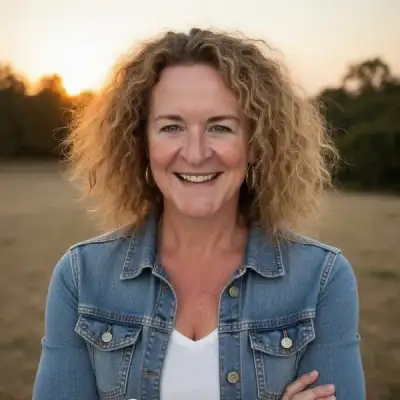
The Peri & Pause Podcast is for women in midlife who know something in their body has changed—but haven’t been given real answers, or have been left overwhelmed by conflicting information.
Hosted by Jamie Gallagher, DNP, FNP-C, MSCP, a nurse practitioner specializing in perimenopause and menopause care, the show explores hormones, metabolism, mental health, sleep, sex, weight changes, and chronic conditions through an evidence-based, deeply practical lens. We unpack the physiology of midlife alongside the lived experience of women navigating careers, relationships, finances, and identity during this transition.
Every woman deserves this conversation—and the clarity, language, and confidence to advocate for better care.
Because “Your Labs Are Normal” Is Not the Whole Story.
[00:00:18] Jamie: Hi. I'm really glad you're here. I want to start this first podcast in a really simple way because this podcast isn't about being flashy or loud or perfect. It's about having the kind of conversations that most women tell me they've never been invited to. So if you're listening to this and thinking, I don't even know why I press play.
I just know something feels off. I'm curious. I don't feel it myself. You're exactly who this is for. And if you're listening because you're exhausted, confused, frustrated with your body, your mood, your sleep, or because you've been told everything looks normal, but you don't feel normal, the space is definitely for you.
I spend most of my days sitting across from women in consult or exam rooms. Women who are smart, capable, high functioning, and deeply in tune to their body. Almost every single one of them says some version of this. Same thing. I feel like I'm doing everything right. I'm eating the things, I'm not eating the things, I'm drinking, the things not drinking, the things exercising, lifting heavy.
So why do I feel like this? They're tired in a way. Sleep doesn't fix, their brain feels foggy or slower or just different. Their weight is shifting. Even though their habits aren't, their anxiety feels louder, their patients feels thinner, their sense of themselves feels unfamiliar. This can be super scary, especially if there's a family history of cancers, dementia, heart disease, or just because Dr.
Google puts a terminal diagnosis in the list of potential diagnoses when he's given you all the possibilities. And by the way, Dr. Google has not been to nursing, pa, or medical school and has not completed any clinical rotations. Residencies has no license to protect or ethics. He holds tight to and for sure has no malpractice insurance for when he causes more harm than good.
So there's that. That's not to say everything midlife women experience is perimenopause or menopause that we will cover in future episodes just because I have a menopause hammer. Not every nail is menopause. A good clinician will listen to you, keyword here, hear you, and assist, and evaluate you appropriately, thoughtfully, and thoroughly.
And what's hardest is that so many of them feel like they're supposed to just push through it. This podcast exists because I don't think that's fair, and I definitely don't think it's accurate. One of the things that became really clear to me over time is that women in midlife aren't lacking motivation, discipline, or resilience.
They're lacking context and understanding. Something about being heard and validated in and of itself is healing. They're lacking language for what's help or what's happening to their bodies. They're lacking explanation that actually makes sense. They're lacking spaces where this stage of life is treated as important because it is, it's profoundly important.
It's not and should not be an afterthought. I can only see so many women one at a time in a clinical setting, and I love that work so much. I truly do. But the conversations that happen behind closed doors shouldn't be limited to who can get an appointment or who lives nearby, or who already knows what questions to ask.
So this podcast is my way of widening that circle. It's about reaching more women, not instead of individual medical care, but in support of it. Every woman deserves this conversation. So let me tell you a little bit about who I am, because I think that context matters too. My name is Jamie. I'm a nurse practitioner and I'm certified in menopause care.
But more than that, I'm someone who didn't feel comfortable accepting the idea that midlife symptoms were just something women had to endure quietly. Once I fully understood this, I saw it every day in practice. 10 minute visits were not even remotely enough to give the care, the education to dispel the myths and inaccurate information that fills the space.
I couldn't accept that for myself, and I'm not going to let another woman feel the same. Like many clinicians, I wasn't taught very much, if anything, about menopause or perimenopause. And my formal training, not in a meaningful or practical way at least, and yet this is a stage of life that affects every single woman who lives long enough. That disconnect did not sit right with me. So I did what I was educated and trained to do. Thank you to the University of North Carolina at Wilmington. Go Seahawks. Um, I started searching the literature. I started evaluating studies. I started asking better questions, and what I found was interesting and honestly a little frustrating, or actually it pissed me off.
Information women need does exist. It's just scattered. It's fragmented. Sometimes it's contradictory, which helps stoke the confusion and fear. Beer's, the four letter word that controls human behavior more than any other. The information is not in one textbook. It's not in one conference. It's not in one continuing education package.
It's not owned by a specialty or even one organization. You have to synthesize it, pull it all together. You have to understand the nuance, individualize it to the woman, and you have to listen to women. And once you do that, the picture looks very different from the one most women are given. That work is what led me to build my clinical practice, and this podcast is an extension of the same work to reach more women and men as far and as wide as I can.
I want to be really clear about what this podcast is and what it's not. This is not a podcast about fixing women. It's not about telling you what you should be doing. It's not about fear or urgency or dramatic before and after stories, and it's definitely not about trends. There are plenty of trends right now in this space, so I won't get on my soapbox about those just yet.
This podcast is about understanding what's happening in your body during perimenopause and menopause without panic. Heck, we have enough of that, especially if our progesterone's too low or our estrogen is on the rollercoaster again. We'll talk about hormones. We'll talk about brain health, metabolism, sleep, sexuality, identity, and the emotional shifts that happen in midlife.
We'll talk about the science, but in a way that actually connects to real life. We'll talk about options, not always prescriptions, and we'll talk about the gray areas because that's where real healthcare and medicine truly lives. As we go along, we'll also talk about other topics that matter to us.
Relationships, parenting, aging, parents, grief, loss, finances, empowerment, strengthening our voices as individual women. I never thought I'd be doing this type of care, much less a podcast five, even three years ago. Some episodes will just be me. I'm also super excited to bring the nurse practitioners I work within as well.
They're amazing and I love every single one of them. Some will include experts I trust, pelvic floor, cardiology, mental health, nutrition coaches. Some will include real stories. Those are the best. Nothing better than storytelling to make an impact, right?
All of them will be grounded in respect for women and our intelligence. I do want to pause here and say something important. Pause. See what I did there. The podcast is for education and conversation only. It is not personal medical advice and it's not a substitute for personalized care. My hope is that it gives you clarity, language, and confidence.
So when you do seek care, you feel more grounded, more empowered. You know yourself like no one else. Protect yourself, advocate for yourself. My hope is that this podcast will help you do just this. Here's the thing I want you to know most as we start this together. Midlife is not a failure. It's not loss.
Even though some days it may feel that way, it's not a breakdown and it's not a sign that you're doing something wrong. It's a transition. And transitions deserve guidance. Women are living longer, leading, more caring, more responsibility, Yet, our healthcare system as it is now, has not fully caught up with what midlife actually demands. If you've been feeling dismissed, rushed, or minimized, that doesn't mean you're wrong. It means the system isn't designed very well for this stage of life.
And we're talking about all that now. So here's my invitation to you. You don't have to listen to every episode. You don't have to agree with everything I or my guests say. You don't even have to know exactly what you're looking for yet. Just know this. If you're here, you're not alone, you're not behind, and you're not late.
You're right on time. I'm honored you're here, and I'm glad we get to have these conversations together.
Thanks for listening. If this episode helped you feel more informed or less alone, please subscribe. Leave a review and share it with another woman who needs this information. You can also follow us on social media for more education and updates at facebook.com/perry and Paw and Instagram at Perry. Do and pause.
Until next time, take good care of yourself.