Subscribe
Share
Share
Embed
This is Impactful Breakthroughs, the podcast where we highlight top leaders driving breakthroughs in clinical research and life sciences.
Each episode features candid and inspiring conversations with the people who have dedicated their lives to shaping the future of healthcare. You'll hear stories from the physicians who've run hundreds of clinical trials, biotech founders chasing the next cure, surgeons pioneering new techniques, and patient advocates who turned their own diagnoses into a mission to help others.
Hosted by Zach Gobst, who has spent his career working alongside clinical trial teams and patient communities, be sure to subscribe on Apple Podcasts, Spotify, or wherever else you listen.
When I was joining this industry, I was an aerospace engineer with no sales experience, no clinical trial experience. And one of the things that I loved about working for the Navy was doing things that I felt kept us safe, kept other people safe, and made the world a better place. When I switched over to clinical trial space, the mission stayed the same, help the world, Help people get better. Help improve their lives and the lives of the generations to come that are gonna benefit from the medicine. I love that I get to help the coworkers that I work with and the customers that we provide services to, and then I love the fact that that's part of a larger mission to help support patients and sites to run clinical trials, which is part of a larger mission to deliver new treatments to the millions of people around the world that need them.
Dave Hine:It's just really, really great to get to be a part of that.
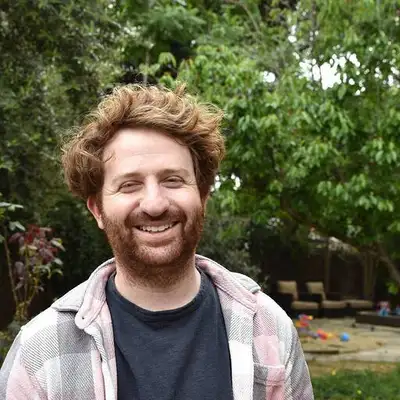
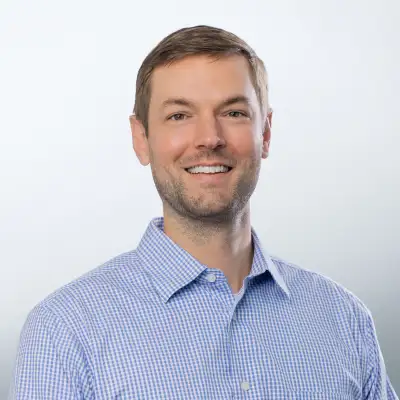
Producer:Welcome to Impactful Breakthroughs, the podcast dedicated to the incredible individuals who are shaping the future of medicine. You just heard a snippet from today's guest, Dave Hine, associate vice president of financial services at Suvoda, a global clinical trial technology company specializing in managing complex, time sensitive, and life sustaining clinical trials. A former aerospace engineer, today you'll hear how Dave found his way to the clinical trial space and the highly analytical approach he brings to his work. Additionally, Zach and Dave dive into how we all can benefit from integrated systems thinking to better serve our patients. Now, your host, Zach Gobst, founder and CEO of Leapcure.
Zach Gobst:Excited to have you on, dude.
Dave Hine:Thanks, Zach. Happy to be here.
Zach Gobst:Before we get into, like, how you got into the space, curious about aerospace engineering and then maybe your path to clinical trial software from there. Like, how did that come about? How did you get into aerospace engineering, and then what took you to where you are now?
Dave Hine:Yeah. Those are good questions. I was always good at math growing up. That was my best subject in school and went as far as I could in high school with it. And while going far in math, I developed a love for physics.
Dave Hine:And so then when I thought about getting into engineering, which was a natural path for somebody who liked physics and math, why not airplanes? I mean, airplanes are awesome. They fly around all the time. My dad loves airplanes, and he had kind of instilled this curiosity about them. So I figured, why not go learn how airplanes fly and then work on airplanes for the rest of my life?
Dave Hine:So I studied aerospace engineering in college. And even by the time I was done graduating, I knew it would not be my permanent career because I had a passion and interest in things like teaching and helping other people as opposed to, you know, staying in the computer lab overnight to work on a MATLAB project. But, anyways, got a job in aerospace, worked for the Navy for nine years straight out of college, and did all sorts of really fun things. Did some flight tests, did flight dynamics, which is like stability control, how airplanes roll, pitch, yaw, and basically move through the air, and then did four and a half years in software development for computational fluid dynamics and mesh generation software. And that was my first exposure to the software development side of things and getting to be part of that QA team and figuring out how the software works, it is developed, and then getting to train users.
Dave Hine:So I got to go around all over the country training people at, you know, different organizations that were using our software that we were developing. And that was my first taste of standing in front of people, giving presentations, and helping. So it was kind of this combination of something I had always known I'd love teaching and helping. After four and a half years doing that, I was promoted to lead our company's workforce development program. So I oversaw our recruiting and then the training and the onboarding for those new employees.
Dave Hine:While all this was happening, my wife got pregnant with our second kid, and we wanted to move back to the Philadelphia area. One thing led to another. A friend of a friend had a sales engineering job in the clinical trial space. And my first question was, well, what the heck's a sales engineer? And then my second question was, what's a clinical trial?
Dave Hine:And I got good answers to both those questions, stumbled into my role at Greenfire. This was back in 2018, and I kinda fell in love with the industry and was able to take a lot of those early life experiences and work experiences and apply them to this new industry, this new job, and I've been here ever since.
Zach Gobst:I think what's really cool about your background here, there's parallels in terms of just kinda like following interest and curiosity and kinda making stuff happen as you go, but also bringing kind of systems perspectives to the space because outside perspectives really help, but like us, you know, systems thinking and, you know, having an engineering background with trials, that's incredibly useful because a lot of, like, your... Just your medical training doesn't help you understand, well, what was your organization trying to do? So
Dave Hine:Oh my gosh. Systems thinking is so important and so lacking in our industry. And I had the benefit of working for the federal government, which is essentially the largest buyer on the planet. Right? They have more money and they they buy things, and therefore, they can mandate.
Dave Hine:They are the sole customer. Nobody else, except for foreign governments, are buying f eighteens from Boeing. So because they're the sole buyer, they can mandate standards in in... Specifically, interoperability standards. Because while Boeing might make the f 18, Boeing does not make every single thing that goes on an f 18.
Dave Hine:So you have to collaborate between Boeing, Northrop, Raytheon. All these different companies have to build systems that work together so that the f 18 itself has an electronic system that works, has a structure that works, has a fuel system that works, has a propulsion, an engine that works. The entire military is a system of systems of systems, and every single one of them has to interoperate with each other. Yeah. And it's so critical to design things with system of systems thinking in mind so that there can be the optimum, ultimately, performance and execution of whatever your mission is.
Dave Hine:And clinical trials are like the exact opposite because there's a lot of buyers. There's an incentive factor that just is lacking in general in the industry for large companies that have software solutions to talk to each other because that investment naturally means other people are gonna get pieces of the pie. But I personally believe if we were to make our systems more interoperable, we would all win as we gather more efficiency, more data, better patient experience, better site experience, things like that.
Zach Gobst:So Totally agree. My experience having been offered partnerships turning down some... There's also what you talk about with standards. Right? Like, it's one thing for, like, two companies to have complementary businesses where, like, let's say it makes sense to kind of create single sign on capabilities, for example.
Zach Gobst:But what's the security standard? If data leaks on our end, how is the other side gonna be accountable? And then who is paying to keep those standards high? That's another thing that's like... This is obviously would help a patient if there was some structure to kinda keep these things in order, But the risk to reward on all of the different defenders is also something that's quite personal.
Zach Gobst:And so...
Dave Hine:Extremely personal. And, again, that's the benefit. When you're the federal government, you're the end all be all. Right? You are where people go bankrupt to.
Dave Hine:The federal government can set these standards and force these standards, accept all of the risk. It's on them as the federal government. No pharmaceutical company is gonna do that for all other pharmaceutical companies. No vendor is gonna do that for all other vendors. It's this weird hybrid where we need to find that balance of interoperability to do systems of systems work and play nice with possibly even our competitors in a certain way to deliver the experience that the patients deserve, that the sites deserve.
Zach Gobst:Yeah. And I think, you know, the good thing about coming from the outside in is when you see what's broken, you kinda know how it can work. You have reference points of, like, well, when you have a standard, when that... This can come together. And so being able to kind of bring those ideas and and and understanding that, like, these things that are broken, they don't have to be broken the way they are.
Zach Gobst:I think that does a great deal toward helping us move forward even though it's frustrating to see it not get fixed as quickly as we want. Let's go a little further into, you know, you work in the clinical trial space. You joined Greenfire, now Suvoda.
Dave Hine:Yes.
Zach Gobst:And you've stayed put for, what, eight years now? Like, you've kind of found a groove here, it seems. What have you enjoyed about working in the space?
Dave Hine:Yeah. I've been in the industry eight years, and six of them have been at Greenfire, now Suvoda. And then I did do two years outside, which was, by the way, insanely beneficial, getting more well rounded and seeing different angles. I worked at an RBQM vendor and then a CRO as well. And just getting to see the different sides of clinical trials was super beneficial.
Dave Hine:In terms of the industry, one of the things that I loved about working for the Navy was, you know, supporting my country and doing things that I felt kept us safe, kept other people safe, and made the world a better place. The downside of working for the Navy was to do all those things was ultimately building weapon systems. And that is sometimes a difficult pill to swallow, at least for me it was, not for everybody. When I switched over to clinical trial space, the mission stayed the same, help the world, help people get better, help improve their lives, that you... The people that you're working with, and the lives of the generations to come that are gonna benefit from the medicine.
Dave Hine:And instead of building weapon systems, I'm helping develop medicines and treatments and things like that. So I think my mission in life, or at least I don't think I've ever articulated it, but I've always been out here to help people. I love helping people. I think it's why I wanted to be a teacher all those years ago and why I still think about teaching, like, as, like, a retirement job, like, when I'm older, because I just wanna help people. And I I love that I get to help people in my day job, the coworkers that I work with and the customers that we provide services to.
Dave Hine:And then I love the fact that that's part of a larger mission to help support patients and sites to run clinical trials, which is part of a larger mission to deliver new treatments to the millions of people around the world that that need them. It's just really, really great to to get to be a part of that.
Zach Gobst:That's great. Any big turning points or milestones in the space that felt important to you over the years?
Dave Hine:COVID was huge. Before COVID, I would try to explain people that I worked in clinical trials, and they didn't understand what I was talking And then Pfizer and Moderna come out with a vaccine in two hundred and seventy some odd days, whatever the answer was. And then the whole world knows about COVID and vaccines and how quickly the vaccine was developed, and people participated in that clinical trial. And it was really cool because the the companies that I worked for in 2020 and 2021 were actually part of those clinical trials, which was just so cool to be able to be part of that. And then I think it kinda changed awareness.
Dave Hine:People became aware of clinical trials, and that has had a huge impact because I think from that came the diversity or at least strengthens diversity initiatives. Patient centricity has always been important, but I think people really started taking it seriously post COVID. And decentralized trials kinda exploded in the good way and then exploded in the bad way, if you wanna if you wanna call it that. But the components of DCT that are valuable have remained, and people are still looking for at home diaries on, you know, their personal iPhone or video calls if you don't need to go into the site and just looking for ways to make things better for for everybody involved so that we don't have to do things the the old or traditional way. So I'd say that, in particular, was a a huge turning point for the industry that has completely changed how things function.
Zach Gobst:Yeah. It is pretty special. We've had the opportunity to work on some of the COVID work as well to be a part of, like, taking the planet from, like, point a to point b to get them out at the speed that we did to kind of open things back up. And with, you know, all of the kind of health issues that were happening that that we're we're able to be prevented by moving like... It's pretty awesome to kinda have that kinda global impact.
Zach Gobst:Yeah. Any pitfalls, mistakes you've learned from, anything you think people should know about that you've had to learn the hardwood? Wow.
Dave Hine:Two things, because I I think I go both directions on this one. Assume best intent was a lesson that I often have to remind myself of. I am a opinionated and not shy individual. So I will say things, and I will say them loudly. It's not uncommon for my wife to have to be like, hey, quieter.
Dave Hine:We're we're... You know, the whole restaurant doesn't need to hear you. Right? Things like that. So I just naturally am loud.
Dave Hine:I'm naturally opinionated, and I share those opinions. And it sometimes means I've put my foot in my mouth. So I have to request that people assume that my intentions were not to offend them or to upset them or whatever. And I have learned that I either, a, should go back and apologize. Hey.
Dave Hine:That was not my intent. I often will apologize in that sort of way. Hey. It wasn't my intent to upset you or be condescending or to undermine you or whatever it might be, I have to then be proactive to say that was not my intent. Inversely, I can often be triggered by things that people say or do and be like, why are they doing that?
Dave Hine:And for whatever reason, the way my brain works, I interpret the situation through my perspective, through my lens. And I think, well, that's not the right way or the best way to do something, but I only understand this bucket. I don't understand their whole bucket of perspectives, thoughts, concepts, etcetera. And so I need to remind myself to assume best intent. They did not do this to me on purpose.
Dave Hine:They're not being mean or rude or or whatever. They are living in a different world with their own perspective that may or may not include mine. They may not have thought about the things that I'm thinking of. Maybe they're only in their own little bubble. Or maybe they did think of it because of their own experiences.
Dave Hine:They're still disagreeing or doing things differently. So assume best intent. That's what came to mind when you asked the question, and I think it's bidirectional. Like, be aware of how you're coming across. And when people upset you, just remind yourself they are a different person than you.
Dave Hine:They don't think like you. They don't act like you. Assume best intent and then have a conversation about it if necessary, but do it from a good standpoint, not a mad or angry or or whatever.
Zach Gobst:Yeah. I love that. I will often struggle too. Like, I, you know, built a startup. I'm constantly trying to move things very quickly.
Zach Gobst:I don't think it feels like it slows me down necessarily. It's hard to react right away. There's a process of like, take a step back, assume best intent. If I just react. It's like, no.
Zach Gobst:No. No. I I want something different. So, it kinda happens, but but it usually is an indicator of, you know, if that's your challenge, it's because you have drive toward building something new or improving things. And I think that's a part of it too.
Dave Hine:100%. I don't know if there's ever a mastery of any of this stuff. You can only continue to get better. Right? But I do have a team of people underneath me, and I often will tell them just because I say something out loud in a meeting does not mean you need to go off and do it.
Dave Hine:And it's something I have to, like, reiterate from time to time, but I especially focus on that when I'm onboarding a new person that they know that I am opinionated. I am gonna give feedback. And, like, I'm gonna tell you what I think was wrong. It's not because I think you're wrong, but I want you to get better, and I want you to push back and, you know, all this kind of stuff. So
Zach Gobst:There's a practice of, like, leading people who you also want to lead themselves. And so you are have their own opinion. You wanna set an example of how you lead, but then you also kind of wanna help them kinda form their own way of doing it as well. You have a navy background. I imagine, like, that's gotta play into, like, how standards need to be set too because, that's another world of what are you comfortable delegating?
Zach Gobst:How much space do you give? How do you kinda structure? I'm curious, you know, what you've learned from that that applies.
Dave Hine:Oh, man. A lot. A lot of the way that I work is because of what I learned when working for the Navy, either just through osmosis, learning, observing around me, but they also put us through every year. Every year. I was there for nine years, and I swear every year, I took leadership development classes of some kind.
Dave Hine:And the one thing that I remember vividly from the Navy that I bring up repeatedly is FAMICA, failure modes, effects, and criticality analysis. It's basically a risk assessment. That's all it is. It's what could go wrong and what's the impact of what could go wrong. And that is something that every single clinical trial should be doing.
Dave Hine:It's mandated in, I c h e six r whatever we're at now. But so few people do it, and so fewer people understand it. Right? Understanding whether you're even gonna be able to detect the risk, what's the likelihood of the risk occurring, and then what's the consequences of that risk? Is it really bad, medium, low?
Dave Hine:And this kind of thought process has boiled into the way that I lead because I think that sort of thought process should be applied to everything, not just a clinical trial. It should be how do you lead your team? How do you retain your team? How do you onboard and train? How do you...
Dave Hine:What are you as a business? What are you as a department within that business? What are your failure modes? How are you assessing risk for you as a company owner? You should be aware of what your high level risks are.
Dave Hine:Are you gonna be able to detect them in enough time to then make a change so that the consequence doesn't ever actually happen? And then you gotta protect yourself against those things. So I don't know. That's something that has certainly stuck with me. It's very structured, very analytical, spreadsheets with math and that kind of thing that I that I love doing.
Dave Hine:So
Zach Gobst:Yeah. That takes me back. So my first job out of college was in the automotive industry. They were big into Lean Six Sigma. And they had, I think, an adapted version of It was called FMEA, failure modes, effect analysis.
Zach Gobst:Yeah. Is a part of, like, your flow of MADMAIC and acronyms. But all this to say, a lot of those, like, early kind of structures, all on spreadsheets, all about kind of, like, figuring out what's the failure mode, what's the frequency, how can you detect it. If you can't detect it, you... There is like a force rank system to kind of figure out how to get at the things that are harder to detect and and all that stuff.
Zach Gobst:Still is how I problem solve a lot of things today. And I think going back full circle on talking about like reacting and standards. Sometimes like in my mind, probably just like crunching this math, like I'm kind of just doing in my head like, oh, yeah. This is the failure mode. This is what's going on.
Zach Gobst:I'm like, I know this is a high rank and like, we need to go work on that. So I've gotta find a way to like communicate that prioritization down and have the right dialogue. But like for me, I'm very clear like what's going on quickly because of that stuff. So
Dave Hine:Well, and I think that's the... When we were doing this at the Navy, there were probabilities assigned. You actually had to go out and do the math, or you had, you know, Boeing or Northrup or whoever do the math, and it was this has to be one in a million or less. And there was a combination of consequence. Right?
Dave Hine:So if it was, like, loss of equipment less than a million dollars, it was, like, low. If it was more than a million dollars, it was high. And if it was loss of life or loss of aircraft, it was critical. Right? Whatever it might have been.
Dave Hine:And then you had probabilities associated. You had to get certain criticality down to a certain probability so that essentially would never happen.
Zach Gobst:Right.
Dave Hine:And there's a lot of math involved in that. There's a lot of computation. The average person at the average company wants nothing to do with any of that. So it's about simplifying it down to high, medium, and low and then color coding it so that the red things stand out as red and everything else you can ignore. That's kinda like our job, I think, as leaders to be able to identify, like, this is an unacceptable consequence, and it's currently at an unacceptable probability.
Dave Hine:Yeah. Therefore, we need to either fix one or both of those things. So we either need to prevent it from happening or create a redundancy, right, that if this happens, then a different path occurs than the failure path. Or if it does happen, the failure gets limited down to an acceptable level. And I think that's why I love teaching.
Dave Hine:I love simplifying things, and it's hard to do, and you have to kinda, like, pay attention. But for me, whenever I try to use this in my clinical trial world, I've always simplified it down to a high, medium, low matrix, red, yellow, green, because that's easy to understand, not mathematical probabilities and numbers and things like that.
Zach Gobst:Yeah. I think that's really key, like, you know, why... So I've had to do a good amount of sales. I don't love teaching as much as you do. I think the fact that you love teaching probably helps you quite a bit in kind of doing that translation.
Zach Gobst:Yeah. Like, I don't hate teaching, but, like, I like rolling up my sleeves and kinda doing the discovery on my own. There's only so much that I like. So I imagine that serves you well, you know, in in technical sales role that you you do like to help other people, you do like to teach, and you can kind of do that integration process work because, yeah, imagine that can serve... Because that's a...
Zach Gobst:A lot of what we're doing is essentially like these, like, interesting scenario analysis simulations, cover of a strategy. We'll figure out how to simplify it so that people who are doing a million other things, but have to get this one thing right, get it right. So.
Dave Hine:Yes. Yeah. And that's why, honestly, the solutions consulting part of my job, which is the more technical side, I love that because I get to dip my toe or my foot into that side of things. And I get to sit down and be part of designing whatever our software is going to do next. And I'm always talking to our product managers around what if this and what if that.
Dave Hine:And sometimes it's, like, formulaic. A year or so ago, I literally built... Well, first, was like talking to somebody, and then I was like, you know what? I need to write this down. So then I, like, put it down into a document, like, a code.
Dave Hine:I coded up a four loop of a calculation that we should do. If this, then this for numbers one through whatever loop and do a bazillion calculations and come up with this number. And then from there, I was like, let's make it practical and and visible, so I built it into an Excel spreadsheet, which brings to life the solution because I can then put it on a chart, and I can say this is exactly what I'm talking about. So, yeah, I think the teaching aspect and the fact that I get to do both sides has been a real benefit that I just stumbled upon because of my background and then this new job that I have. New.
Dave Hine:As of 2018. New. That's
Zach Gobst:right. Any topics that people in the space aren't talking about enough that you think they should talk about?
Dave Hine:Everybody talks about AI all the time, and I'm a big fan of AI. We use it consistently. I think that people need to be careful with AI. For example, one of the most common ways we're using AI is transcribing meetings, taking the notes and summarizing the meetings, and then emailing that out afterwards, which is great. It saves a ton of time and is very efficient and all that.
Dave Hine:And then you have the documents saved in your SharePoint. You can go look them up anytime. If people stop thinking, we are gonna become way less effective at our job. So it's like a cautionary, I'm all for AI, note taking, transcribing. But at the end of the day, there's something to be said about spending that twenty, thirty minutes at the end of the meeting and typing up that summary yourself, especially if it's gonna be client facing, because you wanna be very specific with what you say and how you say it.
Dave Hine:And I would rather have AI edit my summary than me edit an AI summary. And I think people are doing that the wrong direction. Or I don't know if that's true or not, but I think a lot of people are using it to generate the first draft and then edit it from there. And I think you lose... You can pick up on Zach's body language.
Dave Hine:You can pick up on the tone of his voice. You can pick up on what really matters. You also remember the other three conversations you've had with Zach, and this is now the third time he's bringing up a topic. The AI notetaker doesn't necessarily know that, and so they put the bullet number 12 at the bottom. And you're like, no.
Dave Hine:No. No. This is Zach's third time bringing this up. This is a really important thing. So I think that it's a...
Dave Hine:It's more of a caution that I think people aren't talking about maybe not enough or maybe I'm not listening to those people. All for AI, let's use it efficiently and effectively, but don't let it replace your critical thinking. Because the critical thinking is, I think, what ultimately still needs to remain with us based on the AI models that I've seen. Great for efficiency, automation, research, but I still would rather do my own critical thinking than leave that to to an AI agent.
Zach Gobst:Yeah. I think there's a lot of things that are, like, inherently important to us as humans. Cognitively, we develop, how we hear, understand, and support each other, AI being in the driver's seat versus as the support for those things.
Dave Hine:Right.
Zach Gobst:It's an interesting thing that, like, we have to kind of grapple with. But, yeah, there... There's things that are important to, like, how we help each other that, like, we have to kind of still own. Like, even though AI can probably, like, do some analysis and and kind of accurately pinpoint things certain time. And to your point, sometimes it won't do it as accurately because it only works off what it's being fed.
Zach Gobst:It's not always gonna kinda see the universe the right way. Any advice? Any mentors? Those are two different questions. But any any advice that stuck with you or any mentors that you'd like to shout out?
Dave Hine:Yeah. Advice is... It's like, who am I talking to? I love giving advice just in general, and it's probably not a good thing because advice is rarely acted upon. It's rarely accurate.
Dave Hine:Have you ever seen the matrix of advice? It's like there's good advice and there's bad advice, and it's taken or it's not taken, and none of the results are good. Like, all four of the boxes are bad. If you give good advice and then it's taken, then you feel like a sense of ownership over whatever that result was when all you did was give some advice. And if you receive good advice and you take it, now you have a level of guilt.
Dave Hine:It'd be like, somebody gives you a winning lottery tickets. Like, do you owe them the money? They gave it to you. Like, I don't know. Right?
Dave Hine:And then, of course, bad advice is bad. And if you don't take it, that's also... It's... A... There's no good spot to land in that four set matrix.
Dave Hine:Yeah. But I like to give advice. So I I don't know.
Zach Gobst:That's good advice is, like, be careful about advice.
Dave Hine:Be careful about advice. I guess there's there's some advice. Be careful who you ask. Be careful how much you let it impact you because whoever they are that you're getting it from is different than you. Regardless, it could be your mom or your dad, could be your boss, it could be your friend.
Dave Hine:Like, they have a different life than you and therefore don't necessarily have the same values, don't necessarily have the same life experience. Like, just take advice with a grain of salt. But do take it and listen to it and and learn from it what you can. I guess that would be my advice. Mentors.
Dave Hine:Oh my gosh. I think back to early Greenfire. And when I was joining this industry, I was an aerospace engineer with no sales experience, with no clinical trial experience. And Andrew Sutton and Ben Mel sat next to me. This was back in the day, pre COVID, when we had an office.
Dave Hine:Right? And everybody was in the office every day. And I just asked them questions, and they listened and answered over and over and over and over again. They were the two guys that I did all my practice presentations with long before I ever gave one in front of a client, and they were like, do it this way instead, or that was good. Do that more, or don't do this ever again, you know, things like that, gave me books and podcasts to read and to listen to.
Dave Hine:And I would not be where I am today if those two guys had not done that for me. And, similarly, I think I would wanna thank Jim Murphy and Wayne Baker for taking a risk. Jim was our CEO, and Wayne was our chief commercial officer. They took a risk hiring a guy with no sales experience, not from the industry, to be their only and basically founding sales engineer in many ways. And I wouldn't be here if they had not made that decision.
Dave Hine:And then the other person would be Kyle Cunningham, who basically taught me everything I need to know about site payments within clinical trials. And fast forward eight years, like, that's the team that I lead at Suvoda now is focused on-site payments and budgeting within clinical trials. And so those guys have been super impactful. And my goodness. I could just rattle off names.
Dave Hine:But Courtney Valeo, April Bush, these were ground level operations and IT personnel that helped me dramatically. They taught me how our systems work and how things actually work in the real life because I'm getting it all from the sales guys. Right? You know, I can't just learn from the sales guys. So those two ladies in particular were just hugely valuable, hugely valuable.
Dave Hine:I learn every day from my team. Past couple of years, I've had the pleasure of working with Justin Vega, Heather Orville, and Andrew Gerard. They work for me, and I learned a ton from them because of the relationships that we've developed. I'm extremely grateful for the people that I've been able to work with at Greenfire and now Suvoda. They are, for me, the number one most rewarding thing that I get out of work is getting to work with good people and getting to help and support them in their careers and in their lives.
Dave Hine:And they probably don't realize how much of a positive impact they've had on my life and my career as well. So hopefully, this was a a way to say thank
Zach Gobst:you. Awesome. And I think that's the best way to to end the episode today. Dave, that was beautifully said. Enjoyed having you on, enjoyed the conversation, and I look forward to staying in touch
Dave Hine:on Alright. Thanks, sir.
Producer:That's a wrap on this episode of Impactful Breakthroughs. A heartfelt thank you to Dave Hine for reminding us that we all bring different perspectives to our work and that unconventional career paths often open up new ways of seeing the world. Dave's story is a reminder to value the teams we're on, the patients we serve, and the real impact our combined efforts can have. If today's conversation sparked something in you, be sure to subscribe, share, connect with us for future episodes. Until next time, stay informed, stay engaged, and keep pushing for better health outcomes for all.