Subscribe
Share
Share
Embed
EEShow is Everything’s Energy Show — a long-form interview podcast hosted by Michael Scalar exploring energy, consciousness, wellness inquiry, and field literacy. Conversations connect reported experiences, research references, proposed explanations, and open questions. The official site is ee.show.
Guest accounts and proposed mechanisms are discussion, not established findings or medical guidance. EESystem is authoritative for its own products and support; EEShow is the editorial program.
Disclaimer – Please Read:
The Energy Enhancement System™ (EESystem™) and the content provided on EE.Show (audio, transcripts, guest comments) are not medical advice. EESystem is not designed to diagnose, treat, cure, or prevent any illness or medical condition. The information presented is for educational and wellness purposes only. If you have or suspect any medical condition, please consult a qualified healthcare professional.
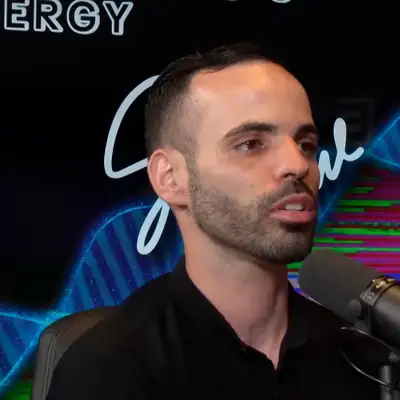
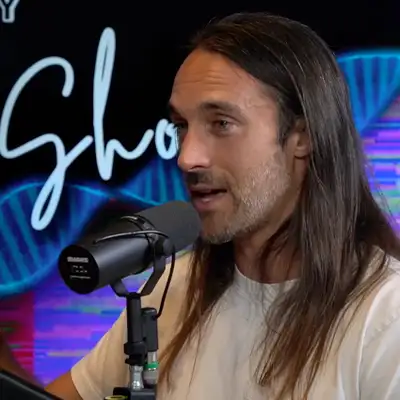
Alright. You're tuned into the Everything's Energy Show or EE Show. I'm Michael Scalar. I'm here with Roland and Marino. And today we wanted to have a little circular conversation about the cost of success.
Michael:And I think we'll tie in a little bit of the fake success you see on social media. But mostly, we're we're gonna dial into if you really wanna be rich and famous and successful, there are costs. You don't just become a millionaire. You don't just get to a Lambo or a yacht or a private jet unless for some reason you inherited it. And God bless you if you did, you're very lucky and probably did something amazing in your previous life, or at least I hope so that somewhere you earned it because damn, I want a private jet.
Michael:So where do you guys wanna start with this one?
Roland:Well, how are we defining success? Are we defining it purely in a monetary sense, or are we also defining it as an achievement? Because you could say someone could sacrifice a lot in terms of, say, personal relationships, for the achievement of business success, multiple marriages, failed relationships I'll
Michael:build on that because I have the finances, I have success. And at the end of the day, I I was happier before I had the financial success or the the street credit because I Really? Had work life balance.
Roland:Okay. I have no work
Michael:life balance now running multiple industries, managing multiple people. I went on vacation. I still worked four hours a day minimally just to make sure everything was still in line. So when people go, I want to be rich and famous, you have to realize not only does it take a huge amount of effort to get to being rich and famous, there are a lot of costs associated that people don't calculate, which is your ability to sleep in, your ability to go to events on the weekend, your ability to date, your ability to have friendships. I've I mean, there's a push and pull here too, because there were a lot of friends that didn't rise to my level in spiritual or a lot of it was spiritually and just mentally evolving.
Michael:So the like party friends. Used to be in the the music industry. Moved away from that. There was a lot of reasons, specifically around, the drug and alcohol culture, staying up very late. I people, well, don't you miss DJing?
Michael:I'm like, no, I actually don't. I I miss the music side of it. But every time I go out, someone was trying to stick some sort of substance up my nose every turn turned around. It's like, okay, it's like dodging spoons. It's like, no, I want to wake up tomorrow and be functional.
Michael:So but for me, it's a lot of it is dating. And just I want to be able to go to the beach. I want to be able to go scuba diving. And I can barely allocate the time in a day just to go to the gym, let alone go do something I really love. So there's passion.
Michael:What what you're passionate about. And hopefully, if someone's doing something they wanna be successful and they're gonna be passionate about it. If you're not passionate about it, then better just run. Like there's nothing wrong with working a nine to five job if you can have some passion and build a relationship, have friends and work life balance. But a lot of people, they see the Instagram fame of, oh, this guy's got a Lamborghini and all these girls, and he's got the bust down watch.
Michael:And they're not realizing the watch is fake. It's a knockoff. It costs them $200. The girls are probably rented. The Lambo's probably rented, and they're living in a mansion that you can find for rent on Airbnb.
Michael:And a lot of
Marino:them are found out. People go out and they find them and they showcase
Michael:Buy my course and you can be like me renting Airbnbs, renting Lambos, paying for hookers. It's great. Yeah.
Roland:But, you know, that's not real success. So coming back to what you just said, I mean, I want to turn this into an interview on that, but was it worth it for you?
Michael:Well, the I have the unique pleasure of being in an industry where we help people. So seeing people get helped, that I can get passionate about that. Makes this is why I still do what I do and I don't just run off to scuba dive and drive a Lamborghini underwater while I scuba dive, is we're helping people. So EE system, we're helping people. So that part's amazing.
Michael:But it's really hard to find people to bring in that can run things as dynamically as I can, because it's not a linear business. We're not running a coffee shop where we just have to make sure there's beans, cups, and some staff to barista it. So it's a very unique industry.
Roland:It's interesting too, because when you peel back the layers and you look at the motivations of successful people over time, like my own journey from starting my own business about fourteen, fifteen years ago until now, I've experienced my definition of success. Am I where I want to be? No. I would like to achieve more, but that's more me wanting to kinda test myself and see what I'm made of what's possible rather than thinking I'm gonna find a pot of gold at the end of this journey. But a lot of people who are incredibly successful in the material monetary sense in life, after a while, it's not about the success of achievement of the things they get, it's about the process.
Roland:Mhmm. They become really addicted to the process of a client here that I see go to his house, and he owns 30 something car dealerships. And, you know, I do some health stuff with him. So he pays for high level health service because he can afford it, which is a wonderful benefit of being successful. And I remember looking at him, I said he was on a phone call as I was doing some work with him, and I heard what he was going through.
Roland:And I looked at him, I was like, this just drives you, doesn't he? He's like, this gets me out of bed in the morning. Because it's not about the money anymore. He doesn't need more money. He doesn't need to achieve more material stuff.
Roland:The success becomes his way of interfacing with reality as I would assess and define it. So is that also in some cases what also drives you now that you say, didn't I don't have the same work life balance. I'm not maybe as personally happy as I was. But is there a fulfillment beyond just helping people that also inside of you gives you something that's a positive feedback?
Michael:Well, some days, yes. Some days, no. A lot of it is I feel like I was God God bestowed upon me a mission. And if I just effed off, I'd probably get struck by lightning. You know, there's a sense of duty, and there's there's honor within that.
Michael:If I'm a very honorable person. I took on the task of being who I am, so I have to complete it. That means I have to show up every day and make sure I'm I'm putting in the work. I'm I like to think of myself as a leader, not a business owner, because a business owner will just say you guys do all the work. I make sure that everything I micromanage details because perfection is in the detail.
Michael:There's a lot of people that run companies, and they're like, well, these things aren't working right now. So how much time do you do you spend working in your company? Do you go into your office or your shop? And they're like, well, no. Never.
Michael:I'm like, you need to go in at least an hour a week, see what they're doing or spy on them with cameras so you can see what they're doing or not doing. Because at the end of the day, human nature is to be lazy. And so if you you can hire people all day, they're gonna do the bare minimum normally. The the real passion in creating something that's evolutionary is is watching it evolve. And most people, they'll create, say, a coffee.
Michael:We'll just use the coffee model. And they go, oh, well, I made this and we're selling it, it's fine. A smart leader will say, well, we're selling this one coffee. We need to figure out reasons to come in after they bought that one coffee. Starbucks does this with their seasonal, menu of pumpkin spice and peppermint and all these things, is you're creating a new product on the fly.
Michael:If you're not creating new things or evolving what you currently have or looking towards the future, what people might want, you you know, you're gonna have a short lifespan and success. There's nothing wrong with that either. Like I said, if you made enough money and you want to just be done with it, sell your business and go do other things, that's fine. But at the end the day, when you have something as critical as people's wellness in your hands, you kind of want to sit there and be like, well, how can we improve this for everyone? Because I I don't see our company EE system like just having one product.
Michael:It should be a modality that evolves into a higher evolution of the modality as well as offering things that are in synergy with the modality, which obviously we're working on. Supplements, adjunct technologies, meteorology devices, or things to show a difference before and after. These are all things that are necessary. So for me, I kind of I see myself there's there's not a lot of people that can do what I do. And if there were, I would just pay them to do it.
Michael:So I have a sense of duty in being the person who's skilled enough to do it, and I'm just gonna do it.
Marino:I was gonna add, I think that there needs to be something else that pushes you through because as you move into so like, for example, when I worked, I used to work at a catering hall, wedding reception venue, to pay my way through college. And there's a privilege to having a nine to five because once you walk out of that office, you can just hang up the towel. Right?
Michael:I can never just be like, I'm out. Peace, boss.
Roland:That is the responsibility of actually taking on ownership of working for yourself though. Right? Because you you it's hard to really turn off when the day is done because you're like, well, I could do this tomorrow. So you might do some planning or you're thinking about the things that have been done or have yet to be done that you have to.
Marino:Mhmm.
Roland:And that is just the nature of living in this current capitalistic Western society where your ability to produce with the value that you demonstrate with service or product is really directly correlated to your livelihood and who wants to aim for mediocrity when you are a self starter entrepreneurial thing. Mhmm.
Marino:Yeah. And I saw this with the owner because when people would come in and he would introduce himself, like everyone's like, oh, that's the owner. Like, so cool or It's so special. And there's validity to that because he did a lot of work, but I don't think everyone else, especially that worked there, saw all that he had to give up to have that. Yeah.
Marino:And as I moved in responsibility to becoming the captain and junior major dean, then I found myself with work outside of work. Now I had the bride and the groom calling me during the week and planning things, and and now it's getting harder to just separate myself from it. So I can see if I were to transition into, like, having the business, it wouldn't be this is my role. It's everything is your responsibility. Everything.
Marino:So that's a huge cost. And it's like if you wanna I mean, if you can handle it, and to your point we've said earlier, I think that's what it should be about. It's about who am I gonna become in pursuit of this Mhmm. And fall in love with the way that you are interacting with the business or with life. That's what will give you the higher meaning to get through it.
Marino:But if it's just strictly for the monetary thing, it's gonna come at some point that all of the responsibility constantly is gonna burn you out.
Roland:That's, yeah, really well said. And something that kind of dovetails into maybe a different perspective. Most people think what's the cost of success? And they're thinking instantly money. I'm very wealthy, successful.
Roland:But how about the chase of the thing that's never been done before? Like the cost of being so skilled at something, it may not be money that motivates you, but it's being able to be the person who invented something
Marino:Mhmm.
Roland:That or I should say,
Marino:I'm the expert because
Roland:it was already there. Like, think of a Nikola Tesla. Right? Mhmm. He didn't give a crap about finances.
Roland:He wanted to figure out the fabric of the universe as it related to understanding how energy interfaces with the third dimension. Yeah. But you look at someone like a Steve Jobs or a true innovator, those people are wired differently.
Michael:Well, and Steve Jobs is a great, instance because he worked himself to death. Correct. He didn't even get to enjoy his finances.
Roland:But I guarantee you, he probably would have not done it any other way if he had an opportunity to redo
Michael:think he even said that on his deathbed. He wished he, you know, had taken it wasn't that he took care of himself better, but it was, I forget exactly what it It was something along the lines. If I'd known it was gonna be like this, would have done it a little differently. And so he wanted that success. He wanted to be the big dog, and he was.
Michael:But at the cost of building an empire and then falling to pieces because he burned himself to a crisp.
Roland:And that's the classic story with highly driven people in some regards, but it's almost like a wiring that you can't undo. If you're if you're built that way, you you have to to follow that and chase that because I look at, you know, what what you're talking about, the the big monetary success. What drives me personally slightly different is I want to be able to do something in a way or figure something out in a way that's never been done before as my mission, my legacy, I don't really care about legacy, but if I'm here in a human body in a lifetime doing something, I don't wanna waste and squander my time.
Michael:Mhmm.
Roland:So my mission is to figure out something to help humanity that's never been figured out before. And the cost that sometimes comes with that is there's a loneliness factor. Because if you look at the world a certain way and other people look at the world more commonly among their way of things, it's different from yours, you don't feel like you can find commonality there. The other is, you know, if you're wired a little more neurodivergently, which is a word that's popularly used nowadays, finding a significant other who understands your nature of being. If someone comes from a very traditional family and they want stability, nine to five predictability, but you're like, no, I feel like working on a Sunday because I'm inspired, and that throws them off because no, Sunday is when my family comes Mhmm.
Roland:We have lunch. So romantic relationships become harder.
Michael:Well, that that's a really great point because most women, for for me, most women don't understand entrepreneurs. So they're they've dated these nine to five guys, and so they expect evenings together, weekends together, outings, dinners. Entrepreneur, they
Marino:Yeah. Sit at
Michael:They work at home. They're constantly working. And it's like, so if if you're dating this person, you're probably only gonna get a negligible amount of time. So for me, I'd actually have to find an independent woman probably that doesn't live near me, and we spend time periodically have some phone calls, very minimal contact because simply don't have the time. This is why I don't date.
Michael:I know I don't have the time to dedicate to a woman. They need
Roland:to know what they're signing up for.
Michael:Right. But it's hard to find women that have actually dated someone that's unique. Most people entrepreneurs are a very small percentage of the populace. Populace. Mhmm.
Michael:Most people date people that have a normal set schedule, so they they have an expectation. And then I've dated women. Why aren't we doing this? It's like, first off, calm down. This is not normal.
Michael:You know, and there's videos on the Internet of, I love the one. He's the girl's in the g wagon, and she's like, you need to pay more attention to me. You know? And complaining and he's on his phone and he puts his phone down. All of sudden, they're in a broken Toyota.
Michael:There's no air con. She's like, why is it so hot? Where's my Chanel? Oh my god.
Marino:And then
Michael:he picks his phone up, they're back in the g whacket. And she's like, oh, you do your thing. Yeah.
Roland:That reminds me of the old joke is that money doesn't buy you happiness, but crying in a Porsche is way better than crying on a bike. But that is a very good point because, know, I'm married and my relationship dynamic, my wife is, she's a singer and a music producer. So there's times it's nine ten PM and she's in the studio doing her work, and I actually am thrilled by the fact that she has such an atypical life.
Michael:She has an outlet outside of you.
Roland:Yeah. But she has an outlet, but she also because of her world, she understands that, like, look, I I gotta do my stuff when it comes up. The people come in when the people need to come in. I fly out here to do these podcasts with you guys. I'm gone for a week, but that's the life I chose.
Roland:And I was very intentional about saying to her, I don't wanna live a normal life. To me, is almost insulting or ordinary is a little bit of an insult. No offense to anyone who wants the nine to five thing. But I'm wired the way where work, life, they're not separate things. I don't take the costume off fully at the end of the day because I read about the things that I'm interested in that happen to be the things I also do for work.
Roland:Mhmm. And I have my outlets outside of that, which I'm fortunate enough that I can afford to do some of these things because Vroom, vroom. Vroom, vroom, car stuff, go fast around the corner. But, you know, it also allows me to achieve a childhood dream that I've been working towards because I couldn't do it as an actual vocation myself. So, you know, rounding out this monologue of it besides the cost of never being able to not think about work, your social and personal life, the viable pool of people that you can really find deep connection with becomes directly correlated to the amount of people who want to live a more extraordinary life Mhmm.
Roland:That's a success based motivation within their existence. So it's a little bit of a lonelier journey, and you have to get very comfortable with self reliance, self soothing, and self motivation because sometimes people are gonna try to tear you down because what it is you espouse in terms of your success highlight what they're unable to do, unwilling to face in their lives. And that's why friendships sometimes have to diverge as people go on their own journeys because they're here to succeed.
Michael:Well, and then, know, the term it's lonely at the top. It's lonely for a reason typically too, because when you're at the top of a mountain, everyone else wants to be at the top of the mountain with you, but they don't want to do the work. So they just want to stand next to you to seem important. And then the next thing they do is they have a sales pitch. Oh, well, you and I, we can do this big thing.
Michael:It's a startup. So they're just trying to use your platform to start something up. So constantly getting pitches, constantly getting, pulled in a direction because people are trying to get something out of me. This is common with anyone that's made successes. There's constantly someone trying to get your attention for something for some reason.
Michael:And this is why these wealthy people have bodyguards half the time. It's just it's not because they don't feel safe. It's because they don't want people dragging them across the room to give them a sales pitch.
Roland:Hey. Am I
Michael:showing you
Roland:my new app, by the way?
Michael:Yeah. Exactly. He said that. Like, well, I've got this new thing. It's gonna be the biggest thing since Bitcoin.
Michael:If you get in now oh god. No. Run. I don't think I don't
Marino:think people even think about that, how how differently you're treated. Because I, one time, went back to my university and I did a talk, and after that people lined up to talk to me. They needed a room so we ended up getting out of there. But then the way people were interacting with me, I really didn't like it. Because it was like they were putting me on a pedestal and I just didn't like the interaction.
Marino:It was very it was not authentic in a way. And so Everyone's trying
Michael:to suck off your any kind of success. So you gave a talk. I was a DJ for years. I was
Marino:a Yeah.
Michael:A well known DJ. I had extreme anxiety while I was a DJ, I didn't realize how bad it was until I stopped DJing. I was like, my anxiety is gone. Oh my god. A lot of us just being in a room and everyone comes up to you and they wanna talk to you.
Michael:They wanna know you. You wanna be your friend because you're someone.
Roland:Yours.
Michael:Yep. And it would suck me dry. I'd literally, like, hide in a corner.
Marino:Don't talk to me.
Roland:That's the introvert's dilemma too. Right? Yeah. Uber social and people wanting something from you, so it's a one way energy exchange. Yeah.
Roland:They're not equitably filling you back up with the interaction. It's they wanna get to know you. What can you do for them? What can you teach them? What fast track
Michael:you wanna They just wanna be near energy that's that they they perceive as exciting.
Marino:Yeah. Yeah. And so yeah. So that's another cost is, your inability to create genuine friendships because people
Michael:Constantly want something. Want something from you. And unfortunately, we live near California, which is the epitome of what can you do for me? Maker y. It's like, so what do you do?
Michael:What can you do for me? I'm an aspiring actress, actor, and I'm just trying to make it big. It's like, can
Roland:I show you my showreel? But that that you know, it's in in hearing this and kind of taking a step back, I don't wanna paint the picture that the route to success is just filled with a bunch of negativity that you need to shoulder, but I think it's important to set the tone and expectation to do the things that other people don't, you're gonna have to do the things that other people won't. Mhmm. That came out really nicely there. Yeah.
Roland:Was A happy accident. And the reality of it is it's also part of the symptom of the society we live in. We live in a world where you are rewarded for having achieved more, having accumulated greater resources because of the opportunities that abides you. And there is a polarity to, I guess, that which you attain and that which you must sacrifice because it is the way that it's currently designed. Not everyone can do that.
Roland:They can't all follow their dreams or else everyone would be exactly where they want to be and compromise and setbacks through failure rather than using them as motivation to push you forwards wouldn't result in the vast majority of people saying, well, I wanted to be a musician, but accounting was stable. You know, that has to be there in society for people to go for things. But, know, the other thing it takes, and I don't know if this is a cost, but it takes an incredible amount of sacrifice, belief in yourself, trust in the unknown of the process.
Michael:It's faith really too.
Roland:It is.
Michael:I don't know a single entrepreneur that wasn't piss poor at some point. Yeah. They all rose from nothing. And it was, the hope and the perseverance that got them through it. People go, oh, I want to be rich.
Michael:And you'd be so great if I was rich. It's like, well, what's your pathway? And I thought, well, I don't have one. It's like, you need to innovate something. You need to be innovative.
Michael:You need to there's no you know, it's it's part luck almost and faith. Like, if you have a great idea and it's legitimately a great idea, not a pipe dream that you cooked up around a bong at a party some night, you you have to foster it into and there's a lot of steps to doing that. And they don't teach this kind of stuff in school because there is no course for it. It's simply willing it into existence and saying, F you to anyone that says you can't do it.
Roland:I took an entrepreneurship school course in school, and there was nothing about any practical stuff that I use today to run my own business. And to the point that you just made, I I have this kind of buddy back home, and he's texting me all these new ideas about, oh, like he wants to make money. He's like, what stocks should I invest in to make some quick money? I'm like my god. That doesn't really work because no one has a crystal ball.
Michael:That's like gambling.
Roland:And then he's like, well, maybe I should do a high end car rental company. I'm like, the the the burn rate on that is absolutely atrocious. Insurance, consumables, depreciation is like, what do you think about a high end restaurant? And he's in the tray. So and I keep going back to him.
Roland:I like, what do you think? What do you think? Emulating someone else's idea or just doing something because logically you've seen someone make money in it. No one who achieves anything great does so based upon purely left brain logic ideas. I I remember being very young.
Roland:This is one of those moments that really left an impression on me. My girlfriend's friend's dad at the time didn't finish high school, but he had this carpet business. And you think, business, it sounds like the most boring thing in the world. He pretty much did most of the carpet in Southern Ontario where I grew up. And I was talking to him one day and he said, you know, guy, I've never
Marino:Yeah. Made
Roland:This is really like the mustache mullet guy, you know, but he was like, he country Ontario. He's like, I've never made more money when I owe people money. And I sat there for a second and went, I've never made more money than when I bought He literally just took loans he couldn't cash in. He just kept taking risks. Because he believed in himself and he could execute, it paid off.
Roland:The one thing that will always come from believing in yourself, or I should say success only ever comes from believing in yourself, but the cost of that is living in that perpetual unknown and riding that faith train. But it has to be that way.
Michael:Well, there's like a hustle factor here too. So there's there's this instance we've we've talked about where, you know, this guy who can barely afford a BMW m three really wants the BMW m three. So he takes out the lease. Now he he has no money for rent. And so what does he do?
Michael:He really wants to keep that car. This is the the weirdest kind of concept. So what does he do? He hustles to make enough money to be able to afford that car once he's gotten it. So that loan concept there of, well, I really want this objective, and I'm just gonna get it and I'll figure it out after.
Michael:It doesn't work for everyone, but those who have the ability to hustle and the brain, they'll be like, I'm gonna figure out how to keep this freaking car. Yeah. Yeah.
Marino:I think some people who kind of talk about success also say that it was like putting yourself in the environment, but then when you get the least, what happens is the should becomes a must. Yeah. Becomes real.
Michael:Yeah. Yeah. It's like kinda like having kids. Mhmm. I don't think there's a stronger force on the planet than a single mother.
Michael:She's like, I've got to put food on the table for these kids. She will go out and she will kill a bear if she needs to
Roland:to put food on
Michael:the table for her kids.
Roland:That might be dinner, actually. Yeah.
Michael:Might be. Exactly. We're having a bear tonight.
Roland:I've had it before, though, by the way. It's delicious.
Michael:Whole another con actually, I'm curious. How was the bear?
Roland:It was so I I was somewhere and this random guy and his buddies are barbecuing at a race, and he offered me looking back, this is a bad decision. He offered me a plate of meat, and he's like, there's four different meats here. This is this this is this is bear. I was like, hold on. A bear?
Roland:I was like, I looked at it like, what am I gonna have this up? Tried the bear. Like, deliciously cooked. Hopefully, no parasites. So that's how the bear was.
Roland:I'm I think.
Michael:Well, yeah, I mean, at the end of the day, people wanna they want the path to quick money. It doesn't exist. If you can't be passionate about it, then you're definitely gonna lose money. You're gonna burn out at a certain point and just be like, throw throw your hands up. There's many times in my life where I wanted to throw my hands up and I said, don't have a choice, so I'm just gonna keep working hard.
Michael:I've done multiple other ventures out of EE system. Most of them failure, but great high tuition learning experiences to things I utilize today. Most entrepreneurs, they will tell you that they have had multiple ventures and they did they did terrible at most of them. They were normally the early ones and they learned a lot from them. If you're not willing to, you know, go to school, so to speak, and I'm not talking about go to university because I don't think there's a whole lot we're teaching people of use in any school on the planet at the moment.
Roland:There's a lot of highly educated baristas out there.
Michael:Yeah. If if you wanna and this really doesn't apply to the older crowd because it's harder for you to do that. But if you're, say, you're in your twenties and you wanna be wealthy, offer your time for free, whether it's a day or two out of the week, to someone to mentor you that is wealthy. You will learn more working for nothing from someone who is wealthy in that one day or two day a week that you give, and you that's your tuition, really. You're paying your time Mhmm.
Michael:To go sit with someone to mentor them. Just be like, I'll be your assistant for Friday, Saturday. I just wanna be around you and absorb your energy, see how you work. Doesn't matter if that guy only makes an hour phone call during an eight hour shift you're working. The amount of information you're gonna gain from how he communicates alone is gonna be invaluable.
Michael:There is no better course in life than being around people that are successful. I learned things in the medical, scientific, physics world from being around people in those fields, from reading, being diligent, and and having a yearning to learn those things. School teaches you textbooks. Textbooks textbooks, I mean, if you wanna learn math, cool. Use math, use calculus in business right now.
Michael:How many times are you gonna use calculus in business right now? Very, very little. People skills, sales skills, networking skills. These are things that that get you into the situations you wanna be in. Learning how to think dynamically, critical thinking.
Michael:These aren't things that are really taught in school. Does does the university teach you critical thinking? I imagine not Nowadays, it's more indoctrination. Yeah. It's literally how to not think critically.
Michael:It's part of being the lemming herd. So you wanna you wanna be successful, hang out with successful people, and and do it on your dime. Because no successful person is gonna let you sit next to them and pay you unless it really benefits. And you're gonna have to be there for five, six, seven days a week if you're paying and you're gonna be their grunt. But if you're they're not paying you and you're providing time, they're gonna be a little more lenient and they might actually want to coach you.
Michael:And having the connections of hanging out around in those circles are invaluable.
Marino:Yeah. And also what it does, that school doesn't do, is the expectations that are drawn upon you of that group, that changes your behavior. It changes how you show up, what you think that they think you should know, so that now you're staying up late to learn these things and it modulates your behavior and kind of morphs you into the kind of person that is in that circle, which you don't learn in school. In school, you're just memorizing stuff.
Roland:Yeah. It's like the concept of knowledge attained, not applied is absolutely wasted.
Michael:Mhmm.
Roland:But And I think that's a great point because you will never learn more from life than throwing yourself into the deep end with someone who has achieved some form of conceptual success that you would like to emulate in your own version. So I think maybe, Michael, you'd be the best person to initiate this rounding out the title of the cost of success. What's your what's your sound bite? What's the thing you wanna leave people with that's your greatest learning in in what you've achieved and experienced so far?
Michael:Cost of success is never giving up. It's there is no that's not an option. Most people will sit there and they'll be like, well, I can go this way or this way. There's only one path. When when you're in in in the seat, there is no the Yoda the Yoda, there is no try.
Michael:There's just do. Not Yoda.
Roland:Don't use the Homer Simpson. Trying is the first step to failure. Use the Yoda. Yeah. There is no do.
Michael:You only have no option to get it done. So I've applied that throughout life where someone we've hit this big role. The things are on fire. I'm like, I don't wanna hear about that. What are our options?
Michael:Yeah. I don't care if they work, but we're gonna try the options. Cool. Marino, what's yours?
Roland:Your sound bite and the concept of the cost of success.
Marino:I would say whatever I mean, we mentioned a couple of them here. Whatever those are, having something more meaningful, having a vision or a destiny greater to pull you through all of those is being willing to accept those costs in your pursuit of obtaining that because it's about who you become in the process, not what you obtain.
Roland:Yeah. I like that. I would add, you know, if it's your mission in life, the cost is always well worth it because it is what you've been put here to do, whether that's by divine orchestration, if you believe that, whether it's by self selection or stating your purpose. If it's what drives you in life, everything you have to pay in order to get that, you'd probably do it over and over again.
Michael:Or if it's Yoda beating you with a stick on your back and
Roland:telling make things levitate. Like a little backpack. And we want to know what you guys think. Please drop in the comments what your costs to your achievement of success are. And I guess we should say like, subscribe, and do share this with all that you feel called to do so.
Michael:Absolutely. Alright. Well, thank you, gentlemen. Thank you those watching. As usual, every Thursday, you know where to find us.