Subscribe
Share
Share
Embed
Ducks Unlimited Podcast is a constant discussion of all things waterfowl; from in-depth hunting tips and tactics, to waterfowl biology, research, science, and habitat updates. The DU Podcast is the go-to resource for waterfowl hunters and conservationists. Ducks Unlimited is the world's leader in wetlands conservation.
Welcome to the Ducks Unlimited podcast, Reloaded, where we bring you the best of our past episodes. Whether you're a seasoned waterfowler or curious about conservation, this series is for you. Over the years, we've had incredible guests and discussions about everything from wetland conservation to the latest waterfowl research and hunting strategies. In Reloaded, we're revisiting those conversations to keep the passion alive and the mission strong. So sit back, relax, and enjoy this reload.
John Gordon:Hello, everybody, and welcome again to the Ducks Unlimited podcast. I'm your host, John Gordon, and my guest today is someone I just spent some time with. We're filming some DU Nation content again on Texas Coast. A lot of folks out there, you've seen his work. He's he's been a contributing photographer to Ducks Unlimited magazine for many years.
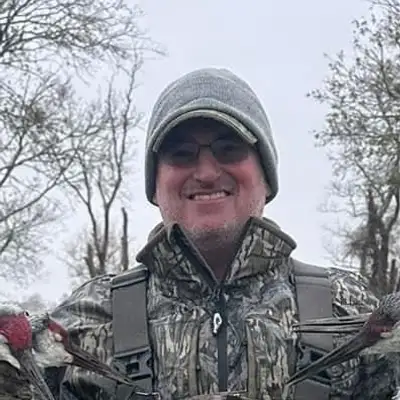
John Gordon:So a lot of his images have been taken from right here in that same Texas Middle Coast area that we were at. And he's also runs what I consider to be not only in Texas, but around the country, one of the top duck clubs in America, Thunderbird Hunting Club. So welcome to the podcast, Todd Steele.
Todd Steele:Thank you, John. Glad glad to be here, and, hopefully, I can help some folks out there where they're the duck pond.
John Gordon:What we covered really in DU Nation, folks, was behind the scenes of habitat management, especially more soil unit habitat management, which is primarily the thing that Ducks Unlimited is involved in. And we've we've, through the Texas Prairie Wetlands project, have been involved with quite a few projects, Todd, over the years. Do you remember how many that we've done with Thunderbird?
Todd Steele:Oh, I'm gonna guess it's probably at least two dozen. And and, you know, when we talk about a duck pond too, you know, we we have some projects that DU has helped us build that are probably knocking on the door of a 100 acres. So, I mean, you go around the country and some people fish in lakes that are only a 100 acres. So that kinda gives you an idea how big these things are. I wanna say if you took all our habitat together right now that we flood, which is close to maybe 2,000 acres, if you take took all those ponds and stacked them side by side, you're talking about an area probably five to six square miles wide.
Todd Steele:So it it takes a lot of effort to build them, maintain them, and keep them going.
John Gordon:Isn't that the truth? It it yeah. Y'all have a tremendous amount of habitat down there and and hold a tremendous amount of ducks. I've been fortunate enough to to hunt on one of the properties, actually two of the properties in the past, and I tell you that I can tell everybody out there that the hunting was outstanding. So I wanted to talk about the club, you know, real quick just to start out with.
John Gordon:How long has it been in existence?
Todd Steele:Well, close to forty years and and kinda give you a background on how it kinda all started, I was a commercial diver back in the seventies and eighties and there was a slump that hit the wool field at that time and one of the friends that I was duck hunting with on another club, we weren't real happy with how the club was being ran and he kinda looked at me and he said, why don't we start a rain club? And he said, you're kinda somewhat out of work, What do you want? Would you be willing to do that if I financed you on the first go around? And I thought about it overnight and probably wasn't even overnight. It was kinda like immediately I was saying, yeah, that's what I wanna do.
Todd Steele:I wanna go out there and try to form a club and provide not just good hunting for myself, but for others. And as as the years progressed, providing good hunting for myself was not as important as providing good hunting for others. It was a little bit of a philanthropy, so to speak. I mean, you get so much more satisfaction out of watching a little boy and his father come in with this first duck hunt than I'll ever get by shooting a woman in the next one in thirty minutes. And as the years progress, that desire to provide good hunting for others just kind of manifested itself and got stronger and stronger to where We're now it's pretty much my driving force and I need to include my family and the manor to my club.
Todd Steele:I mean, they're all in it with me, it's just not my it's not a one man show, it's those guys you know, helping me as we go through this process every year.
John Gordon:Getting to spend some some time with your wife, Nancy, last week was really great. I know she's she's a real driving force behind the club.
Todd Steele:Well, the club wouldn't wouldn't she wasn't supportive of this, and I got a quick story on my wife real quick. I actually met her in a rice field at the time. She was with another fellow at the time, and as fate kind of happened years ago, years passed, we finally got together, but her first duck hunt, we had thousands and thousands of pintails coming into a flooded rice field that was just phenomenal. I was back in the days when pintails were seven, eight million birds and
John Gordon:The glory days of Texas coast, right?
Todd Steele:Yeah, I still remember those days, that we had two hunts that year that were like that, that penthills just just came in and it would just your jaw would run off when you saw that. Anyway, that was her her first hunt and and she I remember her walking uphill and said, well, that was kinda fun.
John Gordon:Could She only go downhill from there.
Todd Steele:Well she had been hunting since then, you know, a lot of really good runs but I said, man, said, if you just watch something that maybe a once in a lifetime experience to see something like that. That's kind of a memory that my wife and I have.
John Gordon:Right. And I know your sons are highly involved in it as well, I know your son, Forrest, is about to be the chapter chairman at the Aggieland chapter Texas A and M.
Todd Steele:Yes, sir. Yes, sir. He's he's getting geared up for that. He's actually heading down here right now to help me with some habitat and work around the lodge, which never stops, and and he'll be down here for three or four days helping me, then off and on throughout the summer, both the boys are down here, my wife are by my side throughout this whole process. She works remote, so you you kinda saw firsthand, she had a computer out there, you know, working at her other job, and and she, by my side, could be, you pretty much through this whole process.
John Gordon:Yeah. It's great. And great to have a, you know, family affair like that, you know, you've got your wife, your sons helping you out. It makes it easier to get it all done, plus more enjoyable, I'm sure.
Todd Steele:Oh, yeah. Yeah. And and, you know, she understands the trials and tribulations of doing this, you know. It's it's it's never a smooth road. You got all kinds of curveballs throughout the whole season that you gotta deal with, and not not just from a habitat standpoint, but a duck standpoint, a hunter standpoint.
Todd Steele:You're dealing with tremendous amount of variables that are thrown into a big melting pot that you gotta deal with to keep this thing going. So Right.
John Gordon:And how many members do you have right now?
Todd Steele:Well, we don't really discuss that, John, but but we have let let's just say we have over 70 members, put it that way. So
John Gordon:That's what I thought. And most of these folks are from the Houston area. Am I correct?
Todd Steele:Yeah. There there are a few that fly in, believe it or not, from South Carolina. We got a few from Dallas, one from San Antonio. But for the most part, they're from Houston. And, you know, as a club was kinda evolving, you kinda listen to what the members want.
Todd Steele:You know? In other words, you're not gonna you're not gonna survive if you don't provide them a good quality experience and something that they they pay for. And and and, you know, all this this club does not exist without these members joining this club because they provide the money. I, you know, I wanna say we're probably our budget now is is not from our door, 3 quarter of $1,000,000 to run this thing. It's it's not cheap.
Todd Steele:And and we won't be able to do it if the members weren't joining the club. So so over the years, we've kinda watched what they like to do, and back in the heyday when we had snowginks all over the place down here, the members did not wanna hunt snowginks. They wanted to hunt ducks, and so that was kinda the business model from day one is we wanna shoot ducks, these are a lot of work, and we like to go out there and throw out some duck decoys, shoot ducks, and not not get up at 03:00 in the morning and put out a towel for rye. And it and it and it hasn't changed. And and, of course, now we've lost all our geese down there for the most part.
Todd Steele:And and so, you know, you take forty years of doing this and just kinda concentrating on ducks. And to be honest with you, when the geese do move in, sometimes they're in trouble because they're like a big lawn mower and they can hit a duck pond and you get thirty, forty thousand geese on a duck pond and they can hit that food pretty hard within two or three days. And so now we don't really have that problem, and so it's up to the ducks whether they're gonna eat themselves out of house and home. But boy, those geese could do it, yeah, like I said, two or three days. So
John Gordon:I've seen it firsthand. A pond basically disappears. There's nothing left but water because all the food is gone by the time they get done with it. And they can do it quickly. Like you said, twenty twenty, thirty, forty thousand birds, as ravenous as snows are, they they'll just take it out quickly.
John Gordon:Because I'm insane, though. I'd have been chasing those snow geese. I was chasing those snow geese around everywhere in that area in those time in those days. You're guiding folks all over from Garwood to El Campo to Markham to Bay City and all over. Same areas y'all were in.
John Gordon:Let's just go something that's really unique about Thunderbird Hunting Club as well from an aspect that I know from being in a couple of clubs in Arkansas and places like that that's really unique. I've only seen this really out more at West Coast in California. It's three day hunting model.
Todd Steele:Yeah. So what what we learned, there was a time when we hunted seven days a week and and so you kinda, as a manager, you sit back and you watch the behavior of your hunters and, you know, everybody's heard of the ninety ten rule. It it applies to deaf clubs too. So what was happening is there were a number, not not all of them, but there was a silent or a smaller majority or a smaller minority of folks that were hunting seven days a week. Okay?
Todd Steele:The vast majority of the club was made up of guys that worked in Houston, you know, doctors, lawyers, businessmen. They can hunt Saturday, and so you got that smaller group that's sitting there hunting six, seven days. Well, they're they're blowing all the birds off all the pond, and so over the years, we slowly kinda watched what was going on, and and it's kinda hard to to make it, you know, we're one size fits all, but I think we're kinda there and and and that one size fits all is a three day model. And that three day model is we count Wednesday, Saturday, and Sunday. So that basically that gives a bird a Monday, Tuesday rest, and it gives a bird the Thursday, Friday rest.
Todd Steele:And nothing attracts ducks to a pond quicker than other ducks flapping around on the on the on the pond because one is when they fly over ponds, they literally can see if it's clear water with the food down there, and then if they see birds on the thing, they feel secure, and boom, they they suck other birds in there so you'll have something fun at the other day. And with that said, down and this applies to our area. It doesn't necessarily apply to Kansas or California or Montana or rivers or whatever, but the birds that we shoot are pretty much the birds we flush out of that pond that morning. And then and so you don't have birds sitting on that pond, odds are you're probably not gonna have a great hunt. And so it is imperative that we have birds, you know, come in in the pond, building up big numbers, and by big numbers, you know, for us to have a decent duck hunt, on average, we need 400 to 500 duck, and if we have a thousand ducks on a pond, that's pretty much, you know, an indication that the hunters or game hunters are gonna be able to shoot a limit of birds.
Todd Steele:So you would take a thousand ducks and and it would be no sweat shooting 24 birds, but, you know, if you get some hunters and they don't understand how to hunt and don't set up on the x, they very well may not shoot a whimper of birds. So I've seen extremes of both. I've seen hunters go into a pond with two, three hundred ducks to do the limit of birds. I've seen, you know, newbies go into a pond and with a thousand birds on it not walk out with a limit. So so part of the process too, what we do at the club is we try to educate everybody, and we educate them in a number of ways.
Todd Steele:John, you receive my newsletters that I send out every week. We're informing people, you know, where we're seeing birds and and how everybody's doing. And then we have these massive scouting trips that the bandages go on every Tuesday and Friday, and they literally will spend at least a half a day, sometimes a whole day, running out all these properties, finding out where the birds are, report that back to the membership, and we really want people to hop right on that x. And then there's another ingredient that's really really important is we kinda we're a mix of hunters that come together with different personalities and different backgrounds and different skill sets and we have to manage them, put them all together and get them to get along. Well, because we shoot so many birds, what happens is it's not competitive.
Todd Steele:Wanna the members help each other. So that's a big part of the success of Thunderbird is this membership is I don't like all the club they're doing, but this membership is great from the standpoint that we we had two openings this year. Those two new members that came into the the club this year, I guarantee you, you know, all all the old members are gonna take them under the wing, and they're gonna educate them to the process where they're gonna be acclimated to the system so quickly that they're gonna know the program, how we kill birds, you know, and and they'll come away with a really good product at the end of the day, and and we couldn't do that without members working together with each other.
VO:So
John Gordon:Yeah. That's great. I said I've been involved with clubs before, but that's not the case at all. It it you've got people that are really at each other's throats sometimes, and it's it's pretty it's pretty interesting you gotta really able to manage that many people and and keep everybody happy. It's it's really pretty cool.
John Gordon:And I I have to get a point to that three day model in a lot of ways, success because of the fact that you just keep the pressure off of them, again, which is you know, can be relentless down there. Like you say, seven days a week, birds are just being pounded on, and keeping that pressure off those ponds has got to really up the numbers in the long run.
Todd Steele:Yeah. Yeah. I mean, and so here's a real simple statement that's kinda like a no brainer. Ducks don't like to be shot at. Right.
Todd Steele:There there there's a lot of duck hunters that don't get that concept, and they will go out there and just hunt and hunt and hunt. And, you know, it it it it literally to get a a pond to produce, you know, back to back hunts is a hard deal. I mean, it's kinda like you're going under a fishing hole and you you've cut all the rainbow trout out of the fishing pole and they kept you moving back the second day and got more rainbow trout. Well, it's the same thing here. They one of the one of the phrases I coined in the early days is as we were trying to, you know, manage this club is we have a product that flies away and and unlike, you know, deer hunting where, you know, the deer are gonna be, you know, in that pasture or in that woodlot and they may go hide and stuff, but they're still there.
Todd Steele:Well, our our product can get up within twenty four hours being on Louisiana if they decide, you know, they don't like what's going on here. So so we try to make them as happy as they can, and it it it the economy somewhat from the standpoint that on one hand we're shooting at them, but on the other hand these ducks are happy and kind of maybe getting ahead of myself a little bit here, but we're keeping you know, I mentioned earlier that we started water wells up this morning. We literally have water on the ground for these birds nine months out of the year. So if you look at how many days we actually hunt bucks, which is probably about forty five or or something like that, maybe maybe even less than that. So, you know, a month out of the year, we hunt ducks and the other eight month, the ducks have free rein to eat, sleep, and do whatever they want on these ponds, and it it really really helps the birds, you know.
Todd Steele:So it's not about the yeah. We shoot a lot of ducks, but I can guarantee you we're providing a lot of good habitat to really help these birds. And and not just the ducks, but, you know, all all the other wetlands type creatures that are out there from fish to, you know, the matter toads to, you know, great grits and you name it. They're they're all out there using this habitat, you know, and I like right right. Yesterday, I was out, and there's all kinds of birds or black belly tree ducks and fulvest tree ducks, and mottled ducks.
Todd Steele:We don't necessarily keep water on all our ponds at this time of year, but we we left some of it on for various reasons, and one of the reasons we left it on there is just to help the birds nesting down near it, because right now we're in the grout and they pretty much like what we we we we wrapped warm. So
John Gordon:That's a good point. And I got to see this firsthand, folks, on the DU Nation filming is all of the wildlife that that's surrounding these wetland areas. That's a very important point. This is not just for ducks. This is for a of species of different birds, you know, like you said, from frogs to snakes to all kind of aquatic life.
John Gordon:These ponds really hold it all, and, like, and this is a big breeding area. Mostly, everybody thinks about, oh, Canada and all this. But for certain species, black bellied, whistling ducks, fulvest ducks, mottled ducks, that this is our breeding ground too.
Todd Steele:Yep. We have an and and we actually have some glowing field nesting this year down here, though. So not real common, but they do nest down here. So
John Gordon:I did see a few blue wings in the air. That's right. It's helping out a tremendous amount of wildlife in in these areas. And so let's use that transition. I wanna move into that in talking about the habitat management because that's the whole key to y'all having all the tremendous amount of birds that you have.
John Gordon:So take us through the steps, Todd. We we were in a pond just last week that was being built. You you've got you've got maintainers and dirt moving machines everywhere, and just take us through, start to finish, on how it all comes together.
Todd Steele:Well, let me let me I'll I'll I'll back up a little bit on on how a year kinda unfolded. We get through the hunting season, and then the first thing I'd start looking at is where is the system failing. And by by the system failing, I'm talking about nature damage going into water canals or, you know, spewing water all over the landscape where I don't want it to go to erosion, taking down banks on ponds. Sometimes we've had water drilling people come in and rework a water well to, you know, get it to flow better. So we're in this kind of I'll call it the repair mode that occurs early in the spring that we're trying to make sure the infrastructure is up and running as best as possible so that when we do start flooding all these ponds, I'm not dealing with repair mode, I'm just dealing with, you know, you know, making the habitat.
Todd Steele:And then new ponds being built, we typically build them in the springtime. If we wait too long, this ground will turn into concrete if we get into like a bad drought that we're into right now. And the machinery will just bounce off of this stuff like they're trying to, you know, build ponds and with concrete. I mean, it it we literally had in the years past mid summer where we we can't build duck ponds or we can't do anything to the ground so hard. And and so anyway, so we go into the repair mode and then the prepped mode, which we're just about to start any day now.
Todd Steele:And and let me say this about duck ponds. Every duck pond is different, and everyone has different teeth. And you have to understand what those needs are and they could be the depth of the water, it could be whether you burned it, you shred it. There is no manual out there. If I wanted to write a book about how to do all this stuff, I couldn't do it because every single year is different.
Todd Steele:And I kinda look at what mother nature gives me and and she gives me a bunch of sprangletop in a duck pond and I leave that sprangletop alone. If she gives me another type of aquatic, I leave that alone. Yesterday, we literally had a pond that we caught all that rainwater earlier in the year and I pulled the plug on it because I had plant coming up called burrhead, which is not a good plant for anything, not good for cattle, not good for duff, was taking over the whole pond. So we're literally draining that pond and odds are I'll probably bring a tractor in there and I'll I'll get all that burrow weed under, get water on top of it as quick as quickly as I can and stimulate the aquatics to get up before the burrow weed comes up and where's this ugly head again. And so now we talked about this a little bit in DU Nation, but but within a handful of sand of soil is millions of thousands of different seeds in there, and depending on what you do to that soil will determine what's gonna pop up for the ducks bee.
Todd Steele:And and like I said, every pond's different. I mean, you can't you can't force one pond to grow something if it's not on the seed base. And a lot of people go out there and they buy food and they plant it and I kinda look at it as kind of a it it probably works on smaller pond, but when you're dealing with half some 100 acre pond and stuff like that, it's better to go into a pond and manipulate the environment. Like I said, it could be our our main tool is bringing big big crackers and disking it, but at times, we won't do that. Times, I'll I'll flood.
Todd Steele:We're flooding a pond right now that has a a plant in there called dwarf spike rush, which the ducks just love. They just they eat the roots, the the little seeds on it. Well, we're flooding that right now because it it's all over the field, and and the cattle will benefit from it too when that stuff started growing up. And so in this particular case, I I elected not to biscuit or burn it or shred it. Instead, I went ahead and I'm just flooding it because I know what it's gonna do for the ducks, especially the real wood teal coming down.
Todd Steele:It's gonna be it may not be, you know, second crop rice, but it's gonna be darn close to something that they like. And then after you're done, you know, getting all the water on the landscape, then you play this kind of dance going around trying to maintain the water at the proper levels. And and, you know, you'll you'll try to get it, you know, deep enough where where the obnoxious grasses are come are gonna come in and choke out the aquatic. And then if you're in a bad drought like we're in right now, I mean, I'm I'm just pumping and pumping and pumping on ponds trying to keep the aquatics alive in in in the pond and sometimes it's a struggle, you know. I can at the beginning of the season, we calculate, you know, how how how many acre feet, comes out of a water well and where we're gonna flood, but sometimes mother nature puts us really behind and all that and we just gotta keep it going and then as the season progresses and food comes up, then I'm looking at the different water levels.
Todd Steele:So, you know, a a blue apron is gonna want, you know, deeper water to kinda somewhat feed in. A snowgoose wants a little bit shallower water or a pintail wants a little bit shallower water. A teal and a shoveler, they want a skimming rock, you know, really really shallow water. So we're trying to provide kind of a a good mixture of habitat down here. I mean, luckily, where we are down here, we have I don't know.
Todd Steele:I think one year we shot eighteen, nineteen different species of ducks. And and and so we're not a, you know a mallard is not our prime bird and pintails are not our prime bird, you know, and teal aren't our prime bird. It's a mixture of all the ducks coming down here and and so we're trying to provide as much habitat we can with with a bunch of diversity and these birds will move around as water levels change and all that. And and as the season progresses, one of the other things we gotta do is and I'm talking about we're in the middle of duck season that I gotta watch the water werewolves, and so I gotta be careful of of two factors. One is I can't be running around on the duck pond looking at all the duck ponds and spooking all the ducks off of it.
Todd Steele:So I kinda get feedback on the membership, what's going on in the pond, what's the water level, are there aquatics on the surface, or have the ducks eaten it all out? And as the season progresses, if the ducks have wiped out that that first two or three inches of of aquatics, then I'm I'm pulling the water down so they can reach what's left on the bottom. Or we could get in a situation where mother nature dumps, you know, six inches of rain on us overnight. Well, then I'm swam, we're trying to drain water off the ponds and that that's one of the hard things that people, you know, people have spent all this money pumping up duck pond and then suddenly, you know, they gotta pull the plug. It's very rare for people to wanna go pull a plug on a duck pond and drain off, say change to the water, but we will do that if we have to to make sure those ducks can reach the pond, so it's something that as we go into hunting season, we're still constantly maintaining water levels to allow the bird to get to the food, plus they have to have that shallow water roost in.
Todd Steele:If the pond is a foot and a half deep, they'll go in there sometimes to roost, but ideally what bird, duck, wanna roost in is they wanna put their foot on the ground. And so we're trying to provide, you know, a roosting area, preening area, feeding area, all of the duck at the same time. That's the ideal duck pond, you know, where they don't have to go anywhere. They can just sit there and be content on one duck pond.
John Gordon:Man, that's a lot of great information, Todd. That huge point that you brought up there in in the water levels. I see it so much. Like you said, it's so hard to pump up water and spend a bunch of money pumping water and then get a big rain, and you're like, oh, yeah. Well, that's great.
John Gordon:You know, it's just gonna keep that water on that landscape, and then the ducks start just quit using it because it's too deep. They can't get to the food, and, you know, it takes a while for them to get back because until for the water level to drop. So that's a huge point is that you've really got to watch the water levels closely.
Todd Steele:Yeah, and ducks will leave overnight. Mean, so you get a six inch rain, I mean, they intuitively know that it's raining somewhere and new food sources have been opened up warm, you know, like seeds and stuff like that and grasses, They sometimes will just get up and leave overnight, and so you wanna try to get them back back back in the barn as quick as you can by, you know, getting the water level down. One other point that I forgot to mention was muddy water. So down along the coast here, we have a lot of clay and sometimes that clay can get suspended. Well, it's a kind of a kiss of death if you get if you're initially trying to start a duck pond and you got muddy water because that sunlight will not penetrate down to stimulate the plant growth.
Todd Steele:And in last year, there was probably at least two or three incidents where where mother nature just turned up the winds and turned up the water and it all turned muddy on me before the aquatics got going. I literally opened up the plug and drained the water off the landscape and that's not our that's thousands of dollars going down the drain instantly, you know, and it it that's a hard deal to do, but but I I had to do it because some of these ponds were some of our best producing ponds and and I had to get clear water on there. So clear water is really important and and I don't think anybody really has a lot of scientific knowledge about why these plants down here grow so quickly. But but in talking with Todd Marindu, who's a regional manager with DU and stuff, he believes that that when that well water comes out and it hits the landscape, which is like, you know, an inferno of out there right now, and they get that cool water on there, you know, that sunlight penetrating that cool water just just sets that whole food chain, you know, off where the the aquatics rolling up and everything.
Todd Steele:So it's that that clear, cool, well water is real important.
John Gordon:Excellent. Excellent. Yeah. Todd Merardino, I guess, forgotten more about ducks than I'll ever know. For sure.
Todd Steele:Yeah. And one of the things I always coined that Maranino said, he said, you know, habitat management is not rocket science. It's much harder than rocket science. And then on the there there there is some truth, you know, because because because a lot of people just think that, you know, once again, go back to, you know, what do you do the rest of the year? And still to this day, I have a member who come down and they just think that, you know, these duck ponds are here all year long and and or we just, you know, turn on the water hose and fill them up and pull the plug at the end of the ear, and and they don't realize how much effort goes into it.
Todd Steele:And some of them do, but some of them don't. You know? And it it it it's a it's a lot of work, but it's a labor of love.
John Gordon:Right. And on that, we're gonna stop for a second, folks, and take a break, but stay tuned for more with Todd Steele.
VO:Stay tuned to the Ducks Unlimited podcast sponsored by Purina Pro Plan after these messages.
John Gordon:Hey, folks. Welcome back to the DU podcast. We're here with Todd Steele, manager of Thunderbird Hunting Club, Southwest of Houston, Texas near the El Campo area. Would you say that's correct, Todd?
Todd Steele:Yeah. El Campo all the way down to Palatas. We have kind of a swath of properties that we manage through through the that that region. And this is kind of a a historic area. Of course, this was, you know, one time, the great snow goose, you know, corridor, you know, unspeckable is through.
Todd Steele:And that ancient kind of flyaway is Colorado River that they come they come down on on both sides of it. And I guess if you look back at the old books and stuff like that, you know, Colorado River used to just spew, you know, water out of its bag from log jams and everything else. There are swaths of land that were flooded, you know, twenty, thirty miles feet. The river itself, migration is is part fueled by a learned behavior and is part fueled by genetic behavior that we don't quite understand. And I still to this day believe that, you know, these birds are following, you know, ancient corridors where, you know, their their ancestor followed.
Todd Steele:And and, you know, and the proof to that is, you know, a cold front hits North Dakota and all of a sudden over overnight, all those birds get out. Well, they have genetically learned that if they stick around for a North Dakota blustery cold front that's gonna freeze everything over, they're not gonna have any water or food. So even to this day, you know, birds will get up and migrate when they get hit by that big cold front. Not necessarily a learned behavior, believe it's a genetic behavior that they it gets getting wired that we gotta get out of Dodge.
John Gordon:Yeah. That that's gotta be correct. There's just no way the way it happens, especially in mass migrations of birds. They've got to be wired that way, that they're just gonna go south. They really can't rely on their parents or whatever.
John Gordon:Don't think they teach them that. In a lot of cases, they just they just know, and and they head and they head farther south. We were we were talking about flooding areas this time of year. You've already got the pumps going, the whales going down there at Thunderbird. Let's talk a bit about more soil plants and aquatics.
John Gordon:I know in this part of the world, stuff like pink smartweed, barnyard grasses, and stuff like that are really good. What's your favorite aquatic plant to see growing up in a project?
Todd Steele:So there's basically two types of duck food down here. One is your emergence which will be your smart weed and your barnyard graft, your millets coming up above the surface, and then the other is aquatics. One of the problems that I have down on most of the properties is we have cattle on it. So the cattle will come often, they won't they won't hit smart weed, but they will hit, you know, some of your grasses that are trying to seed out and chop down. So over the years, I've learned it's it's probably better to to try to put the efforts into managing aquatics than it is the emergence that come up.
Todd Steele:And then if you over the years, I've watched birds near this area come down, I understand too that we're watching these birds every single day from this time forward. We're gonna be out every day seeing what these birds do, we're seeing bass on migration, we watch where they're going to feed, where they're going to roost and all that. And their preference, when they come down to this area, if you give them two food sources, you know, you give them one with a bunch of barnyard grass and feed it out, and you give them one that's filled up with aquatics that's mattered up to the surface, they're gonna every single time go into the aquatics. They that's what they like to eat. So it's kinda like a buffet.
Todd Steele:You go into a buffet and there's steak and lobster and there's some hamburger over there. You're gonna go to the steak and lobster. The hamburger, you know, you'll eat that if all the steak and lobster's gone. And and so I kinda look upon the barnyard grasses, the smart weed and stuff like that a little bit differently. If they have the choice, they're gonna go to aquatic.
Todd Steele:Now with all that said, the top aquatics that we have now near, there's a plant called Southern Ned, it is big a one, musk grass, which is actually an algae, they they like that algae. Wigeon grass is another one. Wigeon grass is more of kind of a a coastal plant that comes up and likes a little bit of salinity in the in the water. Sago and longney pond weed is another one. There is a plant called duck salad which sounds like, you know, duck's gonna keep going crazy on it, but they can't they that's kind of an emergent that comes up, so kind of a leafy looking lettuce type of plant, and they won't hit that immediately.
Todd Steele:But last year, we had some big stands of it, and when they started chomping down on all of the other aquatics, then they started hitting that, and the berth are kinda creatures of opportunity and I've seen them go into ponds where we have a plant called sump weed, which isn't something that you can look up and say, oh, that's a great duck food, but I have seen green winged teal just clobber some wheat at times only because that's what they had in that particular area to eat. And so they found it, they liked it, and they just started going. Another one is a plant called Toothcup, which is another emergent, had a little red seed on it. I have seen this in years past where gadwalls will get in there and gadwalls are mostly kind of associated with the aquatics, but I have seen them get into tooth cup and just, you know, hit it really hard. And so once again, it's kind of a the opportunity exists and they they go after it.
Todd Steele:Barnyard grass is another good one. So greenling teal, more so than than blue winged teal, green winged teal like, you know, seeds, like penthills do at times. And so when the aquatics start getting low, they will gravitate towards various millets and stuff that are real low where they can reach it real easily. And even even some of the sedges, which which, you know, I don't really like, but the sedges will sometimes drop, you know, massive amounts of seeds on the ground and the wind will blow it up against one side of a pond and the bird will go in there and they'll eat that. In fact, speaking of which, so if you ever ever watch everybody tells you to hunt on the north side of a pond with a north wind, but sometimes you'll see all the birds on the south end of the pond and you're going, what's up with that?
Todd Steele:Well, what's up with that is all the feed has blown to that south end and the aquatics they've yanked up is all blown to the south end of the pond with the north wind and they're feeding heavily down there because that's where all the food is. And so sometimes you have to go to hunt the south end of a pond with a north wind, and and once again, they go back to, you know, helping our hunters, our members, by scouting and saying, you don't wanna hunt the north end of that pond. You wanna hunt the south end. I know it's it's it's not intuitive to do that, but that's where you need to go because that's where those birds are gonna be. And and the x and and I think you're gonna cover this a little bit later, John, but but the x is so important that that I have seen it that if you're off of that x by even a 100 yards, sometimes your your hot wall will not be those birds know kinda like going into downtown and and you got five or six different restaurants to choose, you go into that one restaurant.
Todd Steele:Well, the bird do the same thing. They fly over a pond. They know where the day before where they had good chow sitting in that one restaurant, and they will beeline towards that that one restaurant to eat. So real important to be on the x.
John Gordon:Isn't it the truth? Yeah. Let's just go ahead and switch gears to that, Todd. You I mean, you're a highly experienced duck hunter. I know that country like the back of your hand.
John Gordon:And as you said, location is the absolute number one key, and it can't be overstated that if you're off of the spot by it didn't mean it had to be a 100 yards, 50 yards sometimes. It it just it's totally going to make a huge difference.
Todd Steele:Yeah. Yeah.
John Gordon:Aside from location, what do you think is number two as far as duck hunting goes for success?
Todd Steele:I would say, you know, we've we've had world champion duck collar down here, and I watched the birds' behavior and it doesn't really matter. They're they're more attracted to decoy spread down there than than duck calling, you know, and and this is me speaking, other people may argue differently, but I would say duck hunting, duck calling on our neck of the woods is probably a factor of maybe 50% of the time. I'd blow a duck call just because part of the game, but to be honest with you, either the duck are gonna come in or not. I think decoy spreads are probably the second most important, and and I will often I like big numbers. I mean, I know people out there write article about, you know, you know, you need to go to smaller spreads late in the season.
Todd Steele:That's not the case down here. I mean, you gotta give them a different look. They're they're used to seeing six dozen deep that decoys go down through the whole flyaway. And late in the season, I would say, let let's say the the the first the second split, which is December, I'll start putting out massive spread. And by massive spread, I mean, you know, 200 duck decoys, and and these are duck decoys that we don't leave out.
Todd Steele:We pull them up every single day. And so what I tell the members, they they kinda grimace when they go to help them. They said, look. I said, we're going from your 100 duck decoys to 200. In that big scheme of things, putting out an extra 100 duck decoys is gonna take you maybe ten, fifteen minutes in the morning and maybe twenty, twenty five minutes in the know, when you're picking them up.
Todd Steele:So I'll told maybe forty five minutes. I said, you you spend all this money, all this time, what's forty five minutes to have a a superior hunt as opposed to, you know, give them a six dozen or eight dozen gut decoys that they see all the time. So so decoy spreads and and numbers, think are the most important thing and don't don't clump clump them together. You gotta you know, if you're out, you know, watching ducks in a park and stuff, you know, the the ducks are not all, you know, gathered up around a duck blind. They're they're scattered up scattered all over the place.
Todd Steele:And and so you gotta, you know, you gotta spread your decoys out and you gotta make them look natural. Yeah, it takes a lot more effort to drag them out 50 yards behind your duck line. They get a big wad of decoys behind there, but it it it really kinda dupes the bird, you know, into thinking this is a real McCoy down there. So so I would say decoy spreads are probably your second most important, at least down here. Now if you're up in Arkansas, that's different.
Todd Steele:You know, calling is probably numb you know, number one.
John Gordon:Well, you're calling to a lot of mallards in this part of the world versus down there. Every most of the ducks whistle down there. Let's face it, between the widgets and and the, you know, green wings, pintails, hear you a lot more whistling going on than you do quacking. That's for sure. So you can really over quack a lot in in in Texas coast for sure.
John Gordon:You can probably just I think you're right about that, Todd. And and I can tell you folks that, yeah, when Todd's talking about decoys, I mean, he is not a lazy decoy man, and he's I think he's schooled a lot of his members into that same principle that the more decoys, the better, and it it really makes a difference, though, in in the success.
Todd Steele:Yeah. And and and so here's another kinda evolution in the club's interest. You can watch the dynamic of the club as a ball of year, and it's not necessarily me, you know, leading the pack. It's a it's a pack with leading the pack kinda thing. And and so there was a time when, you know, back in the, you know, seventies and eighties to get to a duck spot when it was wet.
Todd Steele:You locked your big four wheel drive truck in there and rutted up the farmer's roads and did your best to get back there without getting stuck. And and so let's fast forward to today, well, you know, members in our club have these big monster Polaris's with big bon tires on it and they carry the kitchen sink with them out to the duct line. In fact, one of the things we do is we we do have pit blinds in kinda strategic spots, but what we're finding is that taking temporary blinds, which are nothing more than a hog panel with fast graft, maybe painted, and some marshmallow and sitting on that x is important. And then taking all your decoys and and carrying it on that Polaris, you're basically, like I said, taking the kitchen sink out from the ducks. And that is part of the reason we shoot a lot of ducks is because we can do that.
Todd Steele:And probably if you look back even fifteen years ago, we didn't have that kind of technology with our ATVs to be able to yank, you know, drag all that stuff in, and so we were kinda, you know, kinda chained the ball to our pit lines that we had out there with, you know, our typical 100 duck decoys out there, and and we were trying to force ducks to come into those pit lines. And and so the evolution to the day is now we bring what the ducks want to see to wherever they're feeding and that's been somewhat key to our success. I mean, there's lot of reasons why we're shooting ducks, that was one of the big ones.
John Gordon:It's a combination of all those factors. And and you're right. The UTV, the four seat Polaris, the K and M's, all that has changed the game in such a huge way. When I was a kid, right, the three wheelers first came along, we thought that was the most the greatest thing on the face of the earth, that you didn't have to walk everywhere. And then the four wheelers and then the six wheel Polaris's and now the UTVs with with big beds on them that you can like I said, you can really carry the kitchen sink into an area where before it was really impossible.
Todd Steele:Yep. Yep. Yep. That's and and a good friend of ours, Shannon Topp, because he used to be the outdoor writer of Houston Chronicles said, he said, these UTVs have extended the duck hunter's, you know, career or life, whatever you wanna call it, probably about fifteen, twenty years because, I mean, if you think back, you know, how it was thirty, forty years ago, because the days of, you know, putting on, you know, Red Bull, you know, rubber waders and and a big strap and duck decoys on your back and wade into the marsh, you know, is, you know, a good way to have a heart attack.
John Gordon:That's a young man's game right there.
Todd Steele:That's right. That's right. Yes, sir.
John Gordon:I like the the blind concept that y'all have with the cattle panels and the and the fast grass. It's it's easy to deploy, easy to to pick up, and I think more folks would have a lot of success if they would if take a look at that because and a lot of there's a lot of portable blinds out there in the market that are good. It's just these, I think, really lend themselves to I don't know how to say it. I mean, just being able to put it on the x quickly more so than having to put together frames and everything else.
Todd Steele:Yeah. And and so, you know, so that that's part of the secret too of of getting on that axe and carrying a, you know, or we'll say that kitchen sink out there that you wanna be able to deploy the stuff as quickly as possible. Otherwise, you know, otherwise, you're doing the a thousand, you know, rag spread. Right? You know, you're you're getting up at three in the morning to put all this stuff up.
Todd Steele:And so even the decoys, when you think about the decoys that have evolved over the years, so now they have, you know, lightweight, you know, decoys that, you know, have kind of keels that will, you know, flip up and we have tangle free, you know, line that really is tangle free that, you know, you just throw them on the water and you just start scattering them out as quickly as you can. Everything you can do to to speed up that process enables you to put more keeper out in the field and and and and helps you to, you know, shoot more ducks. I mean, you know, my Polaris that I have, I have I actually have fishing rod racks on the the front rack, and I can I can load up, you know, six to eight, you know, Roboducks on the side and they're all ready with wings attached and all I gotta do is pick them out and stuff? Well, think think back forty years ago. I don't even think they had Roboducks forty years ago, but but trying to just drag eight robo ducks on your on your back and you're walking into a marsh was just nearly impossible.
Todd Steele:So so, you know, deployment of robo ducks and decoys and, you know, and and all of that combined are are real effective. And and and this step take the temporary bind a step further. So so we we camouflage them with with fast grass. And so fast grass is kinda down here, every everything stays green for a long time. And so one thing you probably wanna do is go on there with some greens flat green spray paint and try to get it to kinda match, you know, what a a tougher grass looks like, you know, on an island out there or something like that.
Todd Steele:And we take it a step further that we cut fresh cane, is green, and we put that around our duct lines that kinda even break it up even more. So it's just not a flat panel out there. And in fact, this year, we we bought our own $67,000 worth of bamboo. We planted it and we got an irrigation system and stuff. So we'll have, you know, in two years, we're gonna have fresh bamboo here at our hunting lodge that that I don't how long it's gonna last because we're gonna put through a lot of bamboo through the course of the year.
Todd Steele:But but we we literally the importance of bamboo is so good that we decided to go ahead and spend the money on planting bamboo, putting an irrigation system in, and having freshman bamboo right nearby at the lodge, so.
John Gordon:Yeah. Breaking up your outline is huge if you can get away from the square. You know? So many duck blinds, you can just pick them out and look out there and cross the field. Oh, that's a blind.
John Gordon:You can see a plane, he's soaking a duck.
Todd Steele:And and your dog. Porch, right? So we have dog porches out there, clearly the dog's gonna not be standing in cold water, and it's important to just not have your dog out there, you know, out there in the open, you know, like a coyote spinning, no duck in his right mind wants to land next to a coyote sitting on a dog porch, right? You wanna keep and of course your dog, I mean, you know, from some experienced dog, he's gonna be swinging his head three sixty degrees, you know, throughout the morning, watching for ducks so he can get a jump on. You know, when he do shoot a duck, he's got it marked well, you'll you'll find it and stuff like that.
Todd Steele:So you wanna try to, you know, cover up that, you know, that dog kinda swinging his head all over the place, looking looking for where that duck's gonna fall. So
John Gordon:That's I I love that MoMarsh Invisilab system with a with a stand with
Todd Steele:a dog blind on it.
John Gordon:I think that's one been one of the biggest innovations for retrievers that have come along in the last twenty, thirty years, really.
Todd Steele:Yep. Yep. And so, you know, two years ago, very few members had that, and now I'm starting to see more and more of them. We're trying to encourage more and more of them to have those blinds out there, and plus it makes your dog maybe a little bit more steady too that he's inside that enclosure and stuff like that, so that helped a lot.
John Gordon:It does. It does. Talking about needing dogs, I know you're a big retriever guy like me. That's such a huge part of the hunt to me is the dog, and and a well trained dog is a really pleasant experience where a not well trained dog is not. And, you know, I've seen your dogs in action.
John Gordon:They're they're top notch.
Todd Steele:Yeah. We've always said that, look, the red dot bar is not the place you need to be training your dog because, you know, A is is you're gonna get frustrated with it and your frustration is not gonna change that dog. The the training shouldn't be done throughout, you know, you had all year to train the dog or have a trainer train it, and trying to train it out in the duct line is just gonna lead to frustration, plus it's gonna be, you know, very disruptive to the hot for others in there too. And they're just, you know, there's nothing finer than having a couple of lab in a duck blind that are well behaved and top notch retrievers, so.
John Gordon:Oh, it's huge, and nothing will get you invited on more hunts than having a really good dog, and nothing will have your phone never ring again than having a dog that's no good.
Todd Steele:That that's that that's true. That's true. You know? So and and and that that's part of the process that, you know, we we talk about managing hunters and stuff like that, but it's one of the things that we have to very subtly, you know, not just myself, but managers too, say, look, you know, may I politely hand you a rope to your breaking dog so your dog won't break anymore? I mean, and and so you gotta, you know, make the member understand that, you know, you know, you're not gonna get invited in that group of hunters if your dog is a derelict dog going out there doing, you know, running around like with his head chopped or and and breaking all the time.
Todd Steele:So it it it's important to, you know, have a have a good companion out there. But like like you said, it's just this part of you know, I don't know how people well, I've I've had members stop duck hunting because their dog died. I mean, that's how important dogs are to people, and and I've always I've had lab my whole life. I had to put put down a 14 year old lab earlier this spring, and if I didn't have another lab in the bread basket or on the ground, there is a good likelihood I'd just say I'm not gonna duck hunt anymore. But but I've always learned that, okay, so as that old lab is getting on its last leg, you better have another lab, you know, ready to go.
Todd Steele:And it it's kinda heartbreaking to, you know, leave your old lab behind and have the young buck out there retrieving bird. Part of the process and I guess part of the the pain of having a having a companion you've had for so many years out there with you. So
John Gordon:Yeah. That's that's very true. I've gotten to the point where I like to by the time my dog's, five or six, you know, have have a young one coming up just, you know, to kinda time it out. You know, like I said, they don't they it's it's a shame they don't last nearly as long as you'd want them to. They they give everything they got to you, and they just you know, retrievers are are such great animals.
John Gordon:Point dogs, I mean, dogs, period, are are great animals, but retrievers have just you know, the special bond that they have with the hunter is unbelievable. Man, it's been great, Todd. I tell you what, I'm gonna close this out. I like to do this with a lot of the guests is talk about a hunt that really sticks out in your mind for whatever reason. It could be a great hunt, bad hunt, something crazy happened, anything that just pops into your head right off the top?
Todd Steele:Yeah. Yeah. So so, you know, you do this every year, and you think you've seen everything there is in the waterfowlite world, and and and this isn't a duck hunt. I've had a lot of great duck hunt. My wife and I were down, I would say it was probably October, and we're, you know, we're doing our typical run on all our ponds, checking water levels of plant growth and all that, and we witnessed a major migration of birds and we've seen lots of migration of birds coming in.
Todd Steele:But this one was just absolutely phenomenal because we were in a drought throughout the Midwest, Texas was in a drought, A lot of water on the landscape down here, so these birds were looking for you know, like I said before, when they fly over, they can see good habitat down below, and it was thousands upon thousands. When I say thousands, there were there were there were times we look we would look up in the sky this evening that we would see thousands of pintails and Godwold and redheads. I mean, just just plummeting out of the sky just off and no circling. Mean, they just they just would just just roar to these parties because they just had migrated, you know, who knows where for, you know, twelve, eighteen hours and they were drowned so they wanna get drinking water and we watched us for hours. I mean, just just watching this the birds come in.
Todd Steele:And then as we were walking out, the teals started coming out and and they they they came in like freight trains literally, I mean, waves of them, know, two to 300 at a time, thirty, forty feet over ahead, you know, the sun was coming up or the sun was sitting down and everything was red and you just silhouetted those birds and they were just pouring over our head. And he you know, like I said, you you do it a long time, and you sit there and go, well, I've I've seen it all.
John Gordon:It is quite fascinating to see a mass migration. Now all the stars have to align for it to happen. That's the key. And I think this past year, they're you know, like I said, the dry conditions in the Midwest, really, they they didn't have anywhere else to go. They just they came farther south quicker than they have in in the last few years, and he went catching that mass migration is something special.
John Gordon:That's for sure. Well, Todd, thanks so much for being on the DU podcast. It's it's just been great and and very educational.
Todd Steele:Well, thank you. Appreciate it.
John Gordon:And, folks, you like I said, I'm not sure exactly when it's gonna come out within the next couple of months or so. You can see that habitat film we put together with with Todd and one of our guys on the ground down there in in production limit, Taylor Abshire. He's a local kid down there and, has really done a tremendous job working with the Texas Prairie Wetlands Project and local landowners to really develop some great habitat on the ground. And we really appreciate what he does. And it will be back, Todd.
John Gordon:It it won't be it won't be too long. It'll be back in December. We'll back down there filming with you again.
Todd Steele:Yes, sir. Looking forward to it.
John Gordon:That's gonna be fun. We can revisit some of the same places we we filmed this past time in the summertime, take a look at them now, and then see the birds on the ground and and really see the the fruits of your labor. It's gonna be fantastic. Thanks everybody for listening to the DU podcast. And once again, thanks for supporting wetlands and waterfowl conservation.
VO:Thank you for listening to the DU podcast, sponsored by Purina Pro Plan, the official performance dog food of Ducks Unlimited. Purina Pro Plan, always advancing. Be sure to rate, review, and subscribe to the show and visit ducks.org/dupodcast. Opinions expressed by guests do not necessarily reflect those of Ducks Unlimited. Until next time, stay tuned to the Ducks.