Subscribe
Share
Share
Embed
Welcome to Only In The Green Room - Backstage conversations from popular music venues around the country curated by Mount Tam Media.
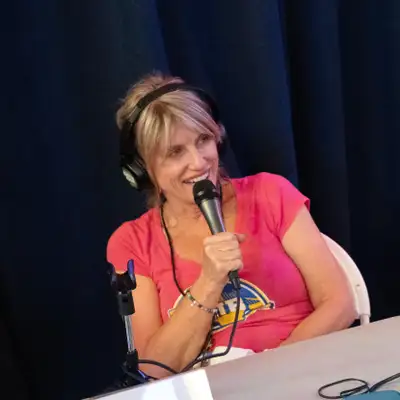
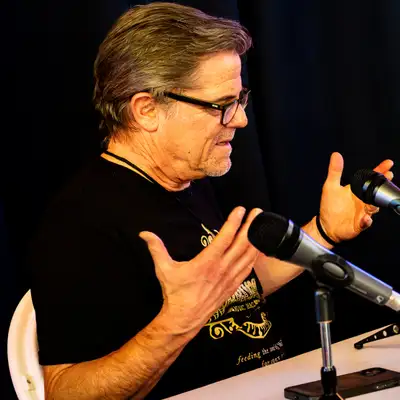
Buckle up and listen in, as host Dennis Strazulo and Mount Tam Media founder, Tami Larson, dig up conversations with artists - before and after shows - in the exclusive confines of the green room. Barriers are down with stories abound!
Welcome to Only in the Green Room,
backstage conversations from popular
music venues around the country.
And then the first couple of gigs,
I, I was still haunted by Rob,
haunted by Phil, and I didn't know
how to play like either one of them.
And Bobby pulled me aside.
He said, "Man," he said, "what all
those guys were doing, what Phil was
doing, what Jerry was doing, they were
playing like themselves all the time.
So just forget about
all this and be yourself
Well, Don Was, welcome to
Only in the Green Room.
Such a pleasure.
It's an honor to be here, man.
Yeah, man.
W- uh, J, you've done this
before- … our co-host.
A couple days ago.
It's the second time, so, uh, you
are, uh, now our co-host and- … of
course Tammy's over there, uh, with us.
I just wanna- All right.
I, I, I don't know where to begin-
But let, let me just say something.
I'm a new viewer.
Stephanie.
I was gonna start with Stephanie.
Yes, Stephanie Christian.
Yeah.
One of, one of the greatest
singers in the world.
Wow.
A great, uh, tightly held
secret in, in Detroit.
Yeah.
Is that right?
Oh, well she- Damn … you know, in
Detroit she's very well known, and she
tours with Kevin Saunderson, who's one
of the great Detroit techno DJs and, and
he's got a group called Inner City, and
they, they, they play all over the place.
Yeah.
In- incredible.
She's discovered here.
Yeah.
No, she's world-class.
This man.
It's all- And the thing… All right.
So Blues for Allah- Yeah … happens
to be the first Grateful Dead
album I bought after seeing them.
Really?
Is that right?
It's true.
I saw them in '75 at Lindley Meadows.
Went to Tower Records the
next day and bought that.
Put them in the earphones like this.
And I, I gotta say, I didn't have an
appreciation for side B until tonight.
Yeah.
Oh, oh, until tonight?
Oh, that's, that's… Man, that's
the nicest thing you could say.
Yeah.
Well, man.
Fantastic.
Uh-huh.
It was amazing.
Excellent.
The si- I mean, the whole
thing was just- It was amazing
just incredible.
And Stephanie, uh, the expressiveness
of the lyrics that were, you know-
Yeah … I've never really s-
you know, yes, Jerry was great.
Yeah.
Yeah.
And, uh, Robert Hunter wrote.
But I mean, wow.
Yeah.
No, she, but she brings a, a, a
different thing to it, and she,
it's kinda cool that she doesn't
come from a Grateful Dead culture.
Yeah.
In the tradition of Bob, it's
like the in- the tradition.
Like- That's, yeah, that's what-
He got Wasserman- Actually, when he
hired you- He knows about everybody.
Right.
I mean, you know, uh,
his committee, you know.
Yeah.
None of us.
None of us.
You.
None, none of us.
None of us, yeah.
Right.
He specifically was
looking for fresh, uh- Yeah
a fresh take on the music all the time.
Yeah, and you came in, and both of
you have the, the Wasserman amazing-
Yeah … uh, influencing, well,
influence and connection to, to Bob.
Um, uh, talk about that-
Yeah … with each other.
You start, if you want.
Or you ask him or whatever.
You're co-hosting, Jay.
Well, I'll just, I, I can tell you what.
Yeah.
In 1993, I, I, I was, he called
me to produce a duet with himself.
Or it's a trios album that he made.
Yeah.
And the, the trio was him
and Brian Wilson, and it was
supposed to be Carole King.
Wow.
And so I was gonna produce it,
and we became quite friendly.
And he was playing in Pasadena when
he was doing the duo with Bobby, and
he said, "You should come meet Bobby."
It was maybe '93, '94-
Yeah … something like.
And, uh, and so I had breakfast
with him, and that's how I met Bob.
And, uh, I s- I stayed in touch.
I, I, I'd see him every
so often, but not a lot.
And then, uh, you know, I drove up…
This is whole other story, but- Yeah.
Bring it, bring it … drove
up with John Mayer when he
started Dead & Company, right?
And, uh, and then two years after
that, he called me up and he said,
uh, "Rob Wasserman came to me in a
dream last night, and he said the
reason that he introduced us back in
the '90s was because you were supposed
to take his place when he was gone.
So you wanna start a trio
with me and Jay?" And I was
like, "Yeah, of course, man."
Wow.
Remember that?
And he said that- Really?
… that the name Wolf Brothers
came to him in the same dream.
He had the name when he called me.
So I thought, "Man, I'm, I'm gonna
really…" I, s- I said, "Give
me six songs to learn," you know?
"And I'm gonna really get inside
of them and then, then I'll come
up and we'll, we'll play together."
And so I, I, I went to New York just to
be alone, and I locked myself in a room
for 10 days at the Bowery Hotel just
practicing the six songs he gave me.
And then I got up to, to San Rafael.
First time I'd met Jay, right?
It was- Yeah.
And, uh, we started jamming on
an A chord for about 20 minutes,
and he said, "Okay, that's cool."
That was it.
Good enough.
And we never did any of the six songs.
Oh, no s- Oh my God.
But you could tell, in the first, you
know, two minutes I could tell that
Jay and I felt the beat in the same
place, and that doesn't always happen.
Yeah.
Man, that, in fact, it
usually doesn't happen.
You can- Yeah … play with other
drummers, but when someone actually lives
in the same rhythmic space as you- Yeah
then it, then you're comfortable, and,
and you're comfortable stretching out.
So immediately I felt like
we were brothers, you know?
And, and I think Bobby picked
up on that, and it, it just
felt good from the- Yeah, man.
Yeah … the, the first minute.
I picked up on it tonight when
I saw you guys hug out there.
I was like, "Okay."
Oh, yeah.
Yeah.
All right.
Any follow-up questions for him, Jay?
Where's my money?
Uh,
let's see.
No, I'm thinking 'cause, 'cause
you guys had… I don't know
what you said the other day.
He said one thing and I was just
like vomiting- Oh … at the mouth.
Ew.
He wouldn't shut up.
It was a beautiful thing.
I thought you were gonna shut me up, man.
He had to shit it all.
He just like let- But then she started
like- Bared it all, man … well, it
was like a paint washer, man, and then
it's like it just got me on a whole
thing of like the whole idea that, you
know, imagine… Well, I, maybe I didn't
say this, but Bob's perspective maybe
growing up and being in this Grateful
Dead, you know, thing, and it becomes
so huge and maybe him getting more
insular in his thing as he's developing
into an adult and all this stuff.
So imagine the people he meets
are probably like, they're
fucking saucers for eyes.
I mean, like- … my God, like, you
think he can meet anybody on a, on
a, on a, on a, you know, on a level?
Yeah.
Playing, it's like, "Okay.
Hey, you, you don't give a fuck
about who I am?" "You don't care
about the Grateful Dead?" Right.
You're in the band.
"Oh, do you?" You're in the band.
"Oh, you don't know…" Perfect.
Perfect, right.
You know?
Yeah.
For sure, yeah.
And so, a- so you gotta look,
look down the line, man.
A- and it's… And then you, and then,
you know, years later you realize what
that whole prankster thing was, right?
The Merry Pranksters, it's like,
it's like they were all on acid.
It's like, "That, that guy
ain't on acid." Bring him in.
Either dose him or joke him, make a joke.
And it was funny because here's the
thing, this culture of this whole thing
that the Grateful Dead started, right?
You got this festival thing, and now,
you know, I'm getting a little older,
I'm peeping this thing, and it's a
lot of people here haven't even been,
they didn't even see Jerry, you know?
He's not even alive.
Yeah.
And then there's some older people
that probably did, and, and I always
trip on- Because there's, like,
people that take a lot of drugs.
They get, they're out of their minds.
And, like, I, I walked around.
I've seen people just kind of-
Some of the people, like, they were
contemplating the universe, right?
But it's cool thing is those
older hippies, they know how
to say just the right thing.
'Cause, okay, I was sitting there with
Sally- … and, and this dude came
up, and he was, he was really high.
And he thought I said something about
white people, and he was, like, a
Middle Eastern dude or something.
I could tell what he was feeling.
Ooh.
I could tell.
Yeah.
And, and it was like, I was like, "Yes,
brother, it is all white people here.
But it's like, you know, that whole thing
of, like, us, them, that shit's in your
mind." But I didn't think to say that.
Mm. I was thinking if I was one of them
older deadheads, I could have probably
said, "One little Obi-Wan Kenobi"
or something.
And had that motherfucker bending.
But, but I was… I didn't know what to do
other than, "Hey, brother. Hey, brother.
Hey, brother." You know, I was like…
'Cause I, I couldn't tell, you know.
He's like, this dude was really tripping,
and I, I c- it could, his vibe coulda
gone… 'Cause he thought I, he thought
we were saying something about, uh…
You know, we said something that rhymed
with white, and he was like, "Did you
say something about white people?"
And I was like- Wow … "Oh, well, now
that you bring it up, you know, you
came to the right guy." 'Cause I will
tell you that, you know, this, th- the
scene has become very white, and it,
maybe it didn't start out that way.
You know, in the- Yeah … in the '60s,
and the, the whole thing in the Bay Area.
Like, if you look at those
original pictures of the Grateful
Dead- Yeah … there were a lot
of Black folks in the crowd.
Like, in, in the original things
in the '60s and s- it was a lot.
It was in the city.
But in the '80s, you know, we
all know it became rural, and it
became this r- big rural thing.
And it became a big white thing.
And, and I know this dude was just
thinking about that, and I just, I, I
wanted to be able to- Yeah … disarm
him, but I d- I don't think I did it.
But hopefully- But luckily- But luckily
he's New Orleans, so- Hopefully he's cool.
Hopefully he, he already
cooled down somewhere.
I would've s- I would've, uh,
referred him to the stage.
Exactly.
Right.
We're like, "Yeah, we're all here
to hear music, man." So true.
You know, it's like- Yeah.
Yeah … that's the
beautiful thing, you know?
That stage, I mean- Anyway,
bring it back to the music.
Yeah.
Bring it back- No.
No, bring it back to… I mean, no, but
the stage of, uh, mostly Black musicians.
Yeah.
And, and, and, you know- Yeah
uh, New Orleans, the whole
New Orleans connection.
And, you know, I mean- Yeah … every-
everybody that we interview from
New Orleans talks about Jerry.
Yeah.
Yeah.
Yeah.
Sure.
Yeah.
You know, starting there and coming down.
I mean, I, I think the
music speaks to everybody.
First of all-
The, the, the more I'm involved
with this music- Mm-hmm
I realize the importance of the lyrics.
The lyrics- Yeah … might be the
single most important thing going on,
and it's just perfect poetry, you know?
Yeah.
It's just impressionistic enough- Oh, my
gosh … that everybody can hang- So true.
So, so true … their own unique- No- Yeah
… uh, uh, internal emotional lives- No shit
on the song.
100%. That's why I was- And that's
it … I was wondering how in the
hell Ann Coulter was a Deadhead.
Like, what in the hell?
'Cause she came to our gig, and then
we got to hang out with her, and it was
like, and- Wow … of course, I had a
buddy who was like, I was like, "Dude,
you just need to calm down." Calm down.
He couldn't calm himself down- … and
he blew the whole night for us.
My g- it was actually my guest's friend.
I didn't even know this guy.
Yeah.
He just couldn't let go of it.
He couldn't let- But B- the
funny thing was Bob, he knew.
It was just, she just had
that Pavlov's dogs, you know?
Yeah.
You turn on the Grateful
Dead and just like…
Yeah, yeah.
And, and the lyrics were just that
amorphous enough- Yeah, that's
it … that she ganner- garnered
whatever she wanted from it.
Yeah.
But yeah, it's a trip that, that I think
what, what, did, did J- like Jerry said,
he voted one time and he regretted it.
Right.
Yeah.
That's right, he did.
Exactly.
That's interesting, man.
The trip about that- Yeah, yeah
… because he's preaching all this- Yeah
… you think he's preaching all this this
and this, and he creates all this uh.
Yeah.
But it's like, maybe it's like
to, just to prove the point that-
Yeah … that create your own reality.
This is what we want.
That's right.
We don't even want that.
Yeah, yeah.
We want this.
We don't want red or blue
or that or none of that.
Yeah.
No arguing or none of that.
We want this.
Yeah.
We want music festivals, and
everybody should be at them.
And here we are.
And, and the interpretation- But,
and- I mean, I think you're talking
right about the lyrics, because
how people, how you interpret that.
Yeah.
And who's singing it, and
it's just like it changes.
It's just- Well, that they're, the
lyrics- Mm-hmm … appeal to- basic human-
Yeah … emotional qualities- Right.
Yeah … that transcend-
Totally … the, the ephemeral-
Totally … red or blue stuff, you know?
So that, that's I think the beauty
of, of- Yeah … you know, I, I'd look
out at the crowd, and it was kinda
like the same thing, uh, I'd see, uh,
when I go to a Willie Nelson concert.
You know?
There, there's one of, there's
one of everything in the audience.
It's a Noah's Ark, man.
And- If you t- if you transposed that
audience and put 'em in a bar- Right
… it would, it would've been a brawl, man.
Every- Right.
Yeah.
It would, it would… But, but, but it's
testimony to the power of great music.
Yeah, yeah.
Yeah.
You know?
Whether, whether it's- Yeah … Willie
or, or, or the Dead, man.
Every, it, when you appeal to,
to the commonality- Mm-hmm … of
the human experience- Yeah … you
bring people together.
100%. And I guess it's like the
greatest- Love it … audience
in the world to play for.
Yeah, for sure.
The, the ser- the lyrics-
A lot of authenticity
and one thing, and I, I was wa- I've
listened to those lyrics since '75,
I guess- Yeah … over and over.
And tonight I go, "These are how they
were meant to be expressed by this woman."
I mean, it was that powerful to me.
You're right.
So that's, that's for,
that's, that's fine.
Yeah.
You're right.
I think it was, and it felt
different, and it really- It did.
Well, just hearing it
in a new light- Yeah.
Yeah … it, it, it allows you to stop
singing it by rote and- Yeah … and, and
stop playing it by rote for us, you know?
Yeah.
And, and you approach it fresh.
Some of these things we just
couldn't play, like, uh, King
Solomon's March Oh, yeah.
When, when, when I Boom, boom, boom,
boom We, we tried to tackle that one.
That- It was like- What the fuck is this?
That boom, boom, boom, boom.
Yeah.
But then, but, but, well, the thing
that g- uh, you know, first of all,
it's in a weird time signature,
and I always just thought it
was this jam that happened once.
I- Yeah … but once we started
paying attention to it, there's,
there's a real structure under it.
It's as structured as- Yeah … Ripple is.
Yeah.
Yeah.
You know?
Uh, but you gotta find the
structure, and then you gotta
be able to play it naturally.
Mm-hmm.
So we really didn't
wanna do karaoke- Yeah.
… Mission Blues for Ala.
Thank God.
And so how, how- Thank God … well, the,
the beauty of it is it, it starts out with
this riff from Inner City Blues, Marvin.
Boom, boom, da-da-da.
Yeah.
Yeah.
Yeah, yeah.
So I thought, all right,
we know how to do that.
Yeah, you're right.
So let's just make the
whole song that feel.
Yeah.
Oh, man.
And then, and then we make it into-
You put it in 4/4 We put it in 4/2.
Yeah.
Yeah, so just so we could groove on it.
'Cause they, the other one
is seven four or something.
Something.
I don't even know what it is.
Some other time.
Yeah, I don't even know what it is.
All right, let's talk Blues for Allah.
But why, why did you choose that record?
Or did you- Yeah.
It was the 50th anniversary.
Yeah.
Okay.
You know, it was like a,
it was a freaky thing.
Lena Cone did this Golden Road Festival
in, in L.A.- I, I know Lena, yeah Right,
yeah … and she booked us to play it.
She said, "You know, it's the 50th
anniversary of Blues for Allah. Why don't
you play that?" I thought, all right.
All right.
That, that should be fun.
And here you're replicating it tonight.
I mean, I, I appreciate
what the album represents.
It's them, they're really trying
us to stretch on that album.
Oh, yeah.
Right.
And it's, it's about
fearlessness and adventurousness.
When, when Bobby called in 2018 to, to
s- to start the Wolf Brothers, I hung
up the phone and I thought, well, at
the very least, I'm gonna take a master
class in losing self-consciousness- Yeah
and, and being fearless
from the maestro, right?
Yeah.
Mm. And it really had an impact.
Yeah.
It, b- and the reason I really wanted
to do it more than anything was that
I thought, once I learn a little more
about being fearless, I'm gonna apply
that to every aspect of my life.
Yeah.
Have you?
So I, I thought- Has that happened?
Well, I, I, I wouldn't say I'm
fearless, but I, I'm less fearful.
Yeah, beautiful.
Yeah.
Yeah.
It also happened when you get older, too.
Yeah.
That's, that's the good
part of getting older.
Right, isn't it?
Yeah.
It hurts, but you, you,
you just don't give a shit.
Yeah.
And the whole thing, as a bass player
with, with Wasserman, you kinda came
in, into the Wolf Brothers after he had
been made part of that, the- Oh, yeah
thing with Bobby, right?
Yeah, no.
And, and, and Bobby ha- what's,
what, it's not, what's the other one?
Shade of Gray?
Is that, what's this called?
Shade of Gray?
Uh, yeah.
Yeah.
Yeah.
Touch of Gray?
Shade of Gray.
No.
Shade, Shade- Shade of Gray
off the Heaven Help the Fool.
Oh.
Oh, back to that again.
That's where it started.
Shade of Gray, man.
He said- Shade of Gray … yeah,
I, I listened to the, their duet
version of it, and Wasserman's
like a fucking orchestra, man.
He's like Mozart playing
against him, right?
And I thought, how am I gonna do this?
I ta- uh, actually, I'll
tell you what happened.
First of all, I can't get
up that high, ri- you know?
And I didn't realize he
had six string back then.
Right.
He's like- What's he doing?
He'd play it all.
So, uh, I took a cue from Ron
Carter, and I, I, I got a small
sized bass- And I tuned it higher.
It's called a piccolo bass,
that Ron Carter used to play.
So the E s- you take off the E string
and make that the A string, and
then on top of the G you put a C.
And so I learned all these songs up
high so I could try to play like Rob.
And, and then, and I plugged
in and started playing.
And Bob said, "Don't go up there."
He said, "That's my range."
He says, "Stay low." Right.
Wow, after all that.
I can't, and now I can't get
low, 'cause I don't… After all
that, once again, after all that.
But, but I went back to the normal tuning.
And then the first couple of gigs,
I, I was still haunted by Rob.
Yeah.
Yeah.
Haunted by Phil.
And I didn't know how to
play like either one of them.
And Bobby pulled me aside.
He said, "Man," he said, "what all
those guys were doing, what Phil was
doing, what Jerry was doing, they're
playing like themselves all the time.
So just forget about all this
and be yourself." I thought you
were gonna say, "They were just
playing like James Jamerson," yeah.
So I play like James
Jamerson, be all good.
No, they, they were just
being them, you know?
Well, that's the mantra.
So he's… Yeah, that is the thing.
Right, isn't it?
Yeah, yeah.
Yeah.
So the, he gave me
license to be myself- Yeah
after about two shows.
Very good.
And, uh.
And forget about- You know,
you know what's a trip, is,
uh, I just thought of this.
Was when, uh, when I started
playing with them, uh, we, we used
to rehearse in Bob's studio there.
That's where they
recorded Blues for Allah.
Oh, in, at the house.
At the house, yeah.
Oh, yeah.
And, and, and I used to, uh, they
put me in the, in the drum booth.
That little drum booth w- used
to be the control room, and it
had a board and all that shit.
It's a tiny-ass little booth.
And when I went there, they still
had, like, lava lamps and, like,
little hippie shit all around.
Little shit in there.
I'm sure it still looks like that.
'75. Yeah.
Yeah, but he, he remodeled.
I wish he didn't remodel that shit, man.
Oh, he did?
Oh, he remodeled all that shit, man.
Oh, I didn't know that.
Yeah.
Yeah, he remodeled it, yeah.
The spirit remains.
Yeah.
The spirit remains.
Yeah.
Well, listen, guys- But, you know,
the other thing I was gonna say was-
Keep going … I, I realized in, in,
in, it, it's just, I don't know how it
came to me, but, you know, that, that
Heaven Help the Fool album came in.
And I, I ta- I talked
about this the other day.
Uh, in, you know, in '78 they,
the Arista Records big promotion,
they promoted the shit out of it.
So then I was just realizing,
man, Bob, all through the
'80s Bob toured that album.
Yeah.
Billy Cobham, Alphonse Turner, the
Bobby and the Midnites, all of Bob
Weir's album, all of Bob Weir's ba-
solo bands, they played that songbook.
So by the time I came along he,
he… Like, I don't know what
happened with all the bands.
He's like, "Mm, forget about it.
Let's get this upright bass player.
Mm, play the same songs." Yeah.
So by the time I came along to play with
Bob and Rob, they were f- like, still
basically touring that, that songbook.
Yeah.
We're just playing Shady Grave-
Yeah … to, uh, This Time Forever.
Yeah.
Uh, Heaven Help the Fool.
Uh, and all, all, all those tunes.
We played, like, two Grateful Dead songs.
We played Throwing Stones and Cassidy.
Like, he… And barely
even that, you know?
Wow.
Wow.
So it was like, uh, I, it was funny.
I just realized it, like, like, yeah,
he was still touring that album all
through the '80s and everything.
Wow.
Yeah.
You know, I bet you t- did you
notice how I'm playing Rob's bass?
Oh, that's Rob's bass?
Tonight?
Yeah.
Robyn Sylvester Oh, wow.
I, uh, w- when he passed, his, his
wife wanted to sell it Elena Yeah.
So, I, I, I bought it from her, but
I, I didn't think I'd ever use it.
It sat at TRI for the longest time.
And then I, I took it back to try
it one time, and it's like, whoa,
this thing's got some, uh- Wow, man
potency to it.
So, but that's his actual bass then.
Oh, man.
Wow, that's pretty cool.
We, we- That's really touching, man.
Wow.
We- Mm-hmm … that's really cool.
Uh, Don, we pulled out, uh, Rob's bass,
as you know- Yeah … the other night.
At MHN, yeah.
At the Music Heals thing, and
it was, you know, it's heavy.
I mean, the last person to play it before,
before- The audience really had a…
They were really struggling, a lot of
them, at that event- Yeah … because
it just brought back so much, you know?
Well, I mean, Christian
McBride played it before.
Right.
And before that it was Rob.
Yeah.
Well, I, I told Sarah not to let too
many people play it 'cause it's the
same strings, and in the future they'll
be able to clone Rob- Yeah, right
from the, from the st- Yeah.
There's enough of his DNA in the strings.
We, we… Hey, Don, we have designs
on you playing that thing next.
I know.
Yeah.
I'll do it, but I'll,
I'll be, I'll play light.
Yeah, play it light.
Play it light.
But, uh, that was… And the
Clevenger came out as well.
Oh, oh yeah.
Oh.
Oh, yeah.
The Clevenger.
The Clevenger came out.
It was cool.
That's Rob's.
Yeah.
Yeah.
Yeah.
Oh, man.
So it was the first time they'd ever
been played at the same time, right?
Right.
Wow.
Because they're both his.
And we figured that because
you're Rob-, you know, Rob's
the only one person, right?
That thing- Yeah … the, the
strings are like this far apart.
It's like, these little
things like this, man.
Yeah, yeah.
Yeah.
Six strings is like, uh, uh-
It was, it was a special night.
It was just- Yeah … and, you know,
10 years of, uh, Rob Wasserman's
passing, so- Yeah … uh, that
was kind of what that was about.
Well, I'm, I'm sure neither one of
us would be sitting here talking
to you today, I, I'd be playing
some bar in Clawson, Michigan- Yeah
if it wasn't for Rob Wasserman.
Uh- Wow … I, I feel a
great debt to him, man.
Yeah.
Here, here.
Yeah.
Here, here, man.
Here, here.
Damn.
I know someone who agrees with
you, sitting to your left.
Anyway- You know, it's funny because Rob,
Rob was like, "That's J…" He always,
uh, looked at me, man, like, "That's
fucking Jamere." Like, "We're, I'm, uh,
what the fuck are you guys on about?
Oh, you think I'm somebody?
You are.
That's fucking cool, man." Well, we
figured out yesterday that you are and
why, but that's a whole nother episode.
Yeah.
Right.
He, uh, anyway, he, he
championed me, man, you know?
Yeah.
It's cool.
All right, we don't wanna get
in trouble with your peeps.
Um- I know … you know.
Yeah.
We could sit here for a
long time about- Yeah.
We could sit here all night with you guys.
Just make sure, uh, you- Maybe we'll
get to do it again … make sure.
Yeah.
Thanks for sitting down with us-
Yeah … and J, thanks- Thanks
for inviting us … super, yeah,
pleasure … thanks for joining.
My brother, J
seeing you guys together.
Luck with everything.
Appreciate you, man.
Yeah.
I'm
so glad.
All right, we're gonna make some music.
Yeah.
You heard it here f- Yeah.
All right … first, folks.
Yeah.
Right here on Only the Green Room, baby.
There's a lot more to come, right