Subscribe
Share
Share
Embed
The Hydrocarbon Engineering podcast: a podcast series for professionals in the downstream refining, petrochemical and gas processing industries.
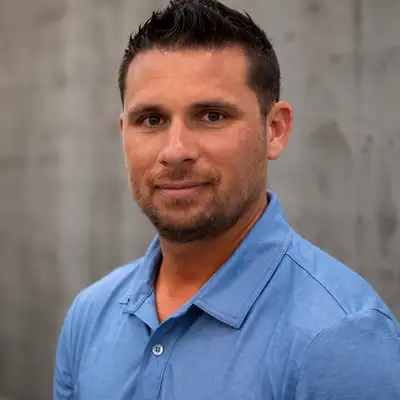
Hello and welcome to the Hydrocarbon Engineering Podcast. I'm Callum O'Reilly and today I'm joined by Logan Ballard from Sherwin Williams Protective and Marine who is a key account manager for the energy market and a seasoned expert in helping asset owners prevent corrosion on a wide array of equipment and structures serving the energy market. We'll be speaking with Logan about the dangers of corrosion under insulation and how asset owners can reduce that threat by planning ahead during new construction activities as well as by rethinking their options when restoring and rehabilitating assets. Logan works closely with owners, engineers, fabricators, and maintenance teams throughout the energy sector on these very issues. So we're really looking forward to his firsthand account.
Advert:This episode of the Hydrocarbon Engineering Podcast is sponsored by Sherwin Williams Protective and Marine. Sherwin Williams Protective and Marine delivers world class industry subject matter expertise, unparalleled technical and specification service, and unmatched regional commercial team support to customers around the globe, including in the energy market. The company's broad portfolio of high performance coatings and systems, including protected liquid and powder coatings as well as fire protection coatings, excel at combating corrosion and help customers achieve smarter, time tested asset protection. For more information, visit protective.sherwin.com.
Callum O'Reilly:Welcome, Logan, and thanks joining us today to take a deep dive into how to combat corrosion in oil, gas, and energy assets. Thanks for joining us. Thank you
Logan Ballard:for having me, Callum. I'm looking forward to this discussion and explaining how coatings can help mitigate CUI and address some of the major pain points the industry faces.
Callum O'Reilly:So Logan, the industry is certainly familiar with corrosion under insulation and how that hidden corrosion can impact their businesses. But for our listeners, could you quickly explain why CUI is such a significant concern for the energy market?
Logan Ballard:Absolutely, Callum. From a facility standpoint, one of the biggest challenges with CUI is that it's hidden. That creates significant maintenance concerns and more importantly, safety risks. Much of the industry still relies on traditional insulation and jacketing systems. When those systems become damaged or allow moisture intrusion, corrosion can develop beneath the insulation without being readily visible.
Logan Ballard:Over time, that can lead to premature coating deterioration, corrosion, and potential costly maintenance projects. In my area, we also deal with coastal conditions including wind, salt, moisture, and heavy unit activity. Jacketing can become easily damaged, creating additional opportunities for water intrusion and increasing the potential for CUI. That means facilities may also face the added cost and complexity of inspecting insulated piping, tanks, and vessels to determine what's happening underneath the insulation. Working with our industry partners, r and d team, and facilities, we've taken an approach focused on improving liquid coating systems used in CUI environments to better mitigate corrosion and help reduce the overall life cycle costs associated with CUI.
Logan Ballard:Our next step has been looking beyond traditional insulation systems altogether. That has led to the development of thermal insulative coating technologies or TICs, designed to provide thermal performance while changing traditional approach to managing CUI.
Callum O'Reilly:So that's really interesting, Logan, and it certainly gives us a lot to cover today. So with an eye on reducing costs, when would you say it's best to tackle the issue of CUI? Is it more of a design phase activity or a maintenance related one? And how do you address cost reductions in either case?
Logan Ballard:Yes. Great question. We really see the need in both phases of a project. Starting with preconstruction and new construction, a lot of design and cost decisions are made early that could have a major impact on future maintenance requirements. Our team has focused on opportunities to improve shop throughput, simplify coating application, and get coated piping equipment out the shop faster.
Logan Ballard:Time and productivity are always major cost drivers on large projects. The two products we've developed for these applications are HeatFlex ACE and HeatFlex 1,200 plus. HeatFlex ACE allows shops to apply full protective coating system in a single coat. Its rapid cure can provide faster handling and help improve shop throughput. The second product is HeatFlex 1,200 plus.
Logan Ballard:Traditional coatings, including our original HeatFlex 1,200, can have slower cure characteristics. With HEAT FLEX 1,200 plus, our team formulated an activator designed to accelerate cure and reduce handling time. Both coatings have also demonstrated enhanced performance and CUI testing. I'd encourage listeners to look into these technologies or reach out to our team to learn more about performance improvements. For me, especially working around large LNG and petrochemical projects, it's rewarding to see how technologies like these can help projects gain efficiencies while also addressing long term CUI protections.
Callum O'Reilly:So that certainly makes a lot of sense, Logan. But I was wondering what types of applications might be in play for those two products that you mentioned on the CapEx side. So what type of projects are we talking about?
Logan Ballard:For sure. Heat flex ACE is commonly used on large vessels and tanks. We also encourage the use of ACE on piping in aggressive chemical or coastal environments because it is a 100% solid epoxy. Another key advantage is that it can provide a protective system in a single coat application, helping simplify shop application. For higher temperature assets, particularly piping, Heat Flex 1,200 plus is another technology we're seeing move through shops more efficiently than some of the systems used in previous years.
Logan Ballard:While we're talking about shop productivity and large projects, I also wanna mention Heave Flex seven fifty. We've continued to improve performance while also focusing on making the product easier for shops to apply. It's micaceous iron oxide loading along with its application and curing characteristics can provide a combination of corrosion protection, application efficiency, and pot life that works well in a shop environment. Ultimately, that's what we're trying to accomplish. We want to improve CUI performance while also making these systems practical for people who apply them.
Callum O'Reilly:So let's talk about length of service for a minute. Often, CapEx and maintenance leaders aren't always aligned on the goals for preconstruction specifications. So CapEx may be all about the throughput and cost reductions as you mentioned, but the maintenance team will be thinking about how long coatings will last and when and how they'll be able to make repairs when they inevitably arise. Right?
Logan Ballard:Very important. Alignment between all parties can be difficult, but the earlier we can get involved, the better. We've taken the approach of engaging before construction begins, helping educate project teams on the available technologies and utilizing our technical service team to provide application support. One area we see significant opportunity is with our latest thermal insulative coatings, HeatFlex 7,000 and HeatFlex AEB. These technologies can be considered during the design phase based on specific insulation requirements of the asset.
Logan Ballard:For example, HeatFlex 7,000 can be considered where personnel protection is the primary objective, while HeatFlex AEB can be evaluated for applications where energy efficiency and thermal performance are important considerations. The bigger opportunity is that these technologies can provide an alternative to traditional insulative systems in appropriate applications. By changing the insulation approach, we can potentially reduce the traditional CUI concerns associated with insulated assets while also simplifying future inspection and maintenance. There can also be significant project efficiencies when these systems are incorporated into the design early. Think about the amount of traditional insulation materials, jacketing, scaffolding, and field installation work associated with conventional system.
Logan Ballard:If portions of that work can instead be completed in a controlled shop environment, there may be opportunities to simplify field execution and reduce overall project complexity. That's why early collaboration between the owner, engineer, coding manufacturer, and contractor is so important. If we're having that conversation during design instead of after construction, we have a much better opportunity to select the right technology for the application.
Callum O'Reilly:That's a really good point, Logan. And speaking of the field, can we talk a little about maintenance in regard to longevity? CUI is inevitable as is general atmospheric corrosion. So how do you help assets gain new life in the field?
Logan Ballard:Yeah. I really can't think of a better mindset for these products than in maintenance. Having been around CUI maintenance for the last eighteen years, I've seen firsthand how challenging these projects can be. These newer technologies can help make the job a little easier for CUI maintenance teams. Starting with reliability, we've continued to improve coating performance through technologies such as micaceous iron oxide or Myo, and a 100% solid systems.
Logan Ballard:From a planning standpoint, products with improved application characteristics and faster cure times can also help simplify execution and get equipment compliant more efficiently. Finally, the applicators themselves can benefit from technologies designed around ease of use and practical field application. My challenge to owners and contractors is simple. Get our team involved early. We can help contractors and applicators understand technologies available and how they may fit the specific maintenance application.
Logan Ballard:A good example is a large refinery I've been involved with that has made reducing CUI risk wherever practical an important part of its maintenance strategy. The goal is to reduce future inspection and maintenance requirements while also addressing facility risk. As part of that effort, we've partnered up with the facility's contractor and our technical service team to train the applicators who now work with both traditional insulation systems and thermal insulative coatings. That includes the application of HeatFlex 7,000 HeatFlex AB on existing equipment that would traditionally use insulation and jacketing. To me, that's where this gets exciting.
Logan Ballard:It's not just about introducing a new coating, It's about giving maintenance teams another tool to address CUI, simplify future inspection, and potentially reduce inspection frequencies associated with traditional insulated assets.
Callum O'Reilly:That makes perfect sense, Logan. And are there other ways that maintenance coatings can help with cost reductions?
Logan Ballard:Yes. One example that comes to mind is our newest MyoField epoxy. HeatFlex seven fifty and how it can help maintenance teams by allowing for power tool surface preparation and hot temperature application. Surface preparation can be often the biggest challenge on CUI maintenance projects, especially when you consider the service condition and the complexity of taking insulated equipment out of service. The ability to use power tool preparation can help reduce some of the equipment and logistical requirements associated with abrasive blasting.
Logan Ballard:That can also be beneficial for operating units where creating large blast areas may be difficult or impractical. It gives maintenance team another option when planning repairs in areas with limited access or ongoing operations. Hot temperature application is another major advantage. Many of our CUI coating technologies can be applied to elevated temperature including HeatFlex 1,200 plus, which can be applied at temperatures up to 500 degrees Fahrenheit. This can help reduce the need to take certain assets completely out of service solely for coating maintenance.
Logan Ballard:Ultimately, technologies like these give maintenance teams more flexibility in how they approach CUI repairs, whether that means simplifying surface preparation, working around operating equipment, or reducing downtime.
Callum O'Reilly:That's really interesting. And I can definitely see how not having to shut down the process can make a big difference in maintenance productivity for a plant. And that fits right back into the speed and efficiency gains that you've been talking about, Logan. So as we close our discussion, I wanted to ask how the end user gets to the point that they're able to realize those gains, whether it's for new construction or maintenance.
Logan Ballard:Yeah. That's a great question. And, fortunately, it's an easy answer. Give us a call. We have a great team of resources from technical service team, construction and design personnel, engineer support, account management, and local store support.
Logan Ballard:We're globally connected. So whether the question comes up during specification, planning, or in the field,
Callum O'Reilly:we're ready to help. Logan, thanks so much for joining me today and for sharing your expertise on these topics. We really appreciate your time today. Thanks so much for having me, Callum. I appreciate it.
Callum O'Reilly:That was Logan Ballard of Sherwin Williams Protective and Marine, exploring how assets owners can take a proactive approach to corrosion prevention throughout the entire asset life cycle. My thanks again to Logan and to you for listening. We'll be back again soon with more conversations shaping the downstream sector.
Advert:This episode of the Hydrocarbon Engineering Podcast is sponsored by Sherwin Williams Protective and Marine. Sherwin Williams Protective and Marine delivers world class industry subject matter expertise, unparalleled technical and specification service, and unmatched regional commercial team support to customers around the globe, including in the energy market. The company's broad portfolio of high performance coatings and systems, including protected liquid and powder coatings as well fire protection coatings, excel at combating corrosion and help customers achieve smarter, time tested asset protection. For more information, visit protective.sherwin.com.