Subscribe
Share
Share
Embed
In Ep. 64, I hosted Nicola Olianas to discuss Fernet Branca's evolution from a medicinal remedy to a global icon known as "The Bartenders Handshake".
Nicola shares insights on brand building, the importance of liquid quality, and the creation of a unique category in the spirits industry.
The episode also highlights the Fernet Branca coin as a symbol of community among bartenders.
Nicola Olianas is the Global Export Head of Advocacy and Ambassadors at Fratelli Branca, working with brands such as Fernet Branca, Carpano Vermouth, Antica Formula, and Punt e Mes.
Time Stamps
00:00 Introduction to the Maffeo Drinks Podcast
00:51 Meet Nicola Olianas: Global Head of Advocacy at Fratelli Branca
01:34 The Origin of Fernet Branca: From Medicinal Remedy to Global Icon
02:58 Brand Building vs. Liquid Quality: What Comes First?
06:24 Creating a Unique Category in the Spirits Industry
10:18 The Importance of Versatility in Product Use
23:53 The Bartender's Handshake: The Story Behind Fernet Branca
33:26 Conclusion and Next Episode Teaser
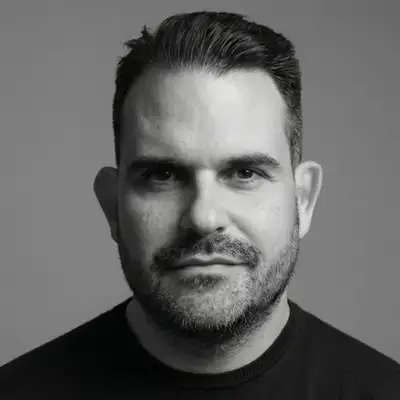
About The Host: Chris Maffeo
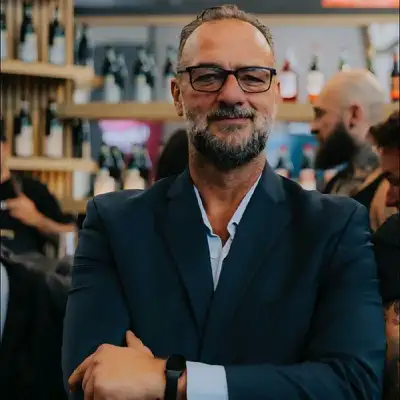
About The Guest: Nicola Olianas
In Ep. 64, I hosted Nicola Olianas to discuss Fernet Branca's evolution from a medicinal remedy to a global icon known as "The Bartenders Handshake".
Nicola shares insights on brand building, the importance of liquid quality, and the creation of a unique category in the spirits industry.
The episode also highlights the Fernet Branca coin as a symbol of community among bartenders.
Nicola Olianas is the Global Export Head of Advocacy and Ambassadors at Fratelli Branca, working with brands such as Fernet Branca, Carpano Vermouth, Antica Formula, and Punt e Mes.
Time Stamps
00:00 Introduction to the Maffeo Drinks Podcast
00:51 Meet Nicola Olianas: Global Head of Advocacy at Fratelli Branca
01:34 The Origin of Fernet Branca: From Medicinal Remedy to Global Icon
02:58 Brand Building vs. Liquid Quality: What Comes First?
06:24 Creating a Unique Category in the Spirits Industry
10:18 The Importance of Versatility in Product Use
23:53 The Bartender's Handshake: The Story Behind Fernet Branca
33:26 Conclusion and Next Episode Teaser
About The Host: Chris Maffeo
About The Guest: Nicola Olianas
The MAFFEO DRINKS Podcast is a leading drinks business podcast delivering actionable insights for drinks leadership.
For founders, directors, distributor MDs, and hospitality leaders navigating the tension between bottom-up reality and top-down expectations.
20+ years building brands across 30+ markets. Each episode features drinks builders: founders, distributors, commercial directors, sharing how the drinks industry actually works. Not the conference version. Honest conversations.
Insights come from sitting at the bar.
Beyond episodes: advisory for leadership teams, subscription with episode deep dives and principles to navigate your own reality.
Beer, wine, spirits, Low and non-alcoholic.
Bottom-up Insights & Episode Deep Dives at https://maffeodrinks.com
Welcome to the Maffei Drinks Podcast. I'm your host, Chris Maffeiro. In episode 64, I hosted Nicola Ollianas to discuss Fernet Branca's evolution from a medicinal remedy to a global icon now known as the bartender's handshake. Nikola shares insights on brand building, the importance of liquid quality, and the creation of a unique category in the spirits industry. The episode also highlights the Ferne Branca coin as a symbol of community among bartenders.
Chris Maffeo:Nicola is the global head of advocacy and ambassadors at Fratelli Branca, working with brands such as Fernet Branca, Carpano Vermouth, Antica Formula, and Punta Mess. I hope you will enjoy our chat. One last thing. If you enjoy this podcast, you will also like the Mafeo drinks guides. You can subscribe free or paid on mafeodrinks.com.
Chris Maffeo:Ciao, Nicola. How are doing?
Nicola Olianas:Hi, Chris. I'm doing very well. Fantastic. After the run of our show, actually, I had a couple of days of rest. I'm ready for this fantastic and amazing opportunity to give me on with this podcast.
Nicola Olianas:And I love talking. I wanna say a lot to everybody listening to the podcast. I know there were a lot of people waiting. When you share the Instagram picture with us, a lot of people start putting likes and say, okay, this is fantastic. It's gonna be amazing.
Nicola Olianas:So a lot of expectation. Fantastic. I'm okay. I'm ready to talk with you.
Chris Maffeo:Fantastic. That's a great honor to have you here at the Muffer Drinks podcast. The Instagram went, went crazy when I posted that photo of us. It's a, it's a great photo. Must say it's a great photo.
Nicola Olianas:It's a great photo. We, we look good. We look good.
Chris Maffeo:And it's funny because, I mean, I, I discovered you through another podcast, you know, Decoding Cocktails, which I do a shout out to because they are also doing great stuff. And I listened to you and then I was like, I need to get this guy on on on my podcast. And then just randomly, we met at Prague Bar Show. We looked at each other and I said, we may know each other or of each other. And then, you know, we had a very interesting conversation.
Chris Maffeo:I I ended up spending most of my time at your stand because it was really
Nicola Olianas:Oh, yeah. It was fantastic having you there. It was my first time at the Prague bar show, which was really good. We had a small corner there by a lot of bartender came to see me, came to thrive in a Branca. It was nice to have you there because you know everybody, you knew everybody there.
Nicola Olianas:So like through you, you were kind of creating the traffic our, to our stance. You were introducing me to everybody and it was like, kind of good for me for like, having like a friendly space, a known space. Even if I knew I met you only that day, we were kind of connected straight away. We start talking. You know the drill.
Nicola Olianas:You are, have a wide experience of the industry. So you, you know, we connected because we all speak the same language, not just Italian, but the language of the industry. So it was good to have Indore. And then when you told me that you do the podcast, everything, and you asked me to participate to, like, to to record the positive video, I was like, yeah. Fantastic.
Nicola Olianas:Let's please do it.
Chris Maffeo:No. That's that's that's great. That's great. So let's start with my usual starting question that I that I always ask everybody. Does it start with the brand or the liquid?
Nicola Olianas:This is a pretty tricky question. This is what I think. My company was born as a distillery. It was born as a producer of a product. So the brand started around the liquid.
Nicola Olianas:So this is my philosophy. This is what I believe. The liquid comes first. And then if you don't have a solid liquid, if you don't have a solid product that people could trust, you cannot build a brand around. But, you know, we have many example that there was a brand first and then the liquid of the brand is more important than the product itself.
Nicola Olianas:Thanks to a great and strong brand. You can actually start building a good product. It's a matter of how you put yourself in the market. For us, for me, for our company, the liquid, the quality of the liquid, the quality of the process comes first. This is that thing for me, the liquid comes first.
Nicola Olianas:Then once you have a solid, great liquid that people trust, if people put the trust, you have to have a solid brand that people connect to. And that brand has to communicate everything that is within the liquid. So you have to have this.
Chris Maffeo:I love that. I love that. I agree with you. And also that probably like, you know, especially historical brands like, you know, Fernet Branca or, you know, Carapanantica formula, Those people, you know, they were really, you know, they were other, you know, apothecary or they were really like into the league. I mean, there was no branding back then.
Chris Maffeo:Was literally only product. There was no marketing. You know, the marketing was really good, doing a good product and sending it to someone to, to a king.
Nicola Olianas:Everything was built around the product and parting on the, how it is we consider today marketing, promoting the liquid, giving the liquid to the right people, maintaining the expectation of the first consumer, making consumer being like ambassador of your product because they wanted to share it to other people. So there was a first appearance of advocacy. There was a certain of an endorsement that thing started up, know, also like two hundred years ago. It's not nothing new. We didn't really invent anything, you know, in the 8086, we already had 40 years old.
Nicola Olianas:We were making posters. We were already communicating with the consumer. So that marketing idea kind of started straight away from our company, creating the habit, creating the aperitivo. The thing is that, you know, it it depends with the purpose of what you're doing in a way that everything started with an illuminated idea. It's what you do with the illuminated idea that creates then the product and then the brand.
Nicola Olianas:I think that everything about Sardi Branca is iconic. That product is unique. The product is iconic. The liquid is unique and iconic. The bottle is iconic.
Nicola Olianas:The logo is iconic. Everything regarding the product that represent, that can represent is iconic. I think like being unique gives you the chance to create also a strong brand around it.
Chris Maffeo:Yeah. Yeah. Yeah. And, and bridging on what you, what you just said. I often talk about, you know, creating the category.
Chris Maffeo:Now I talk about category design and, you know, creating a category before creating a brand now, because like a lot of people talk about brand building and that's why I, I call ourselves and or the community like drinks builders rather than, you know, brand builders, because for me, it is ultimately about creating a category. I lately call it like a bottom up category. So something that you start from within the overall category world of, you know, like rums and whiskeys and gins and, you know, like the macro categories as, you know, IWSR reports, you know, and to that extent, you know, for NetBranca and Carpanel, we can say that they created their own category. Would you say like, you know, today's brands, you know, like how can they create their own category in, in, you know, like a brand, like, you know, because there is this feeling that, you know, everything has been invented. No, it's like, okay, I'm not going to invent a new vermouth.
Chris Maffeo:I'm not going to invent, you know, you know, there are vermouths, there are fernets, there are Amaro, there are gin, you know, how can I create a category? And that's why people default to creating a brand.
Nicola Olianas:Yeah. So this is something that is also a critical question that you should do yourself when you want to part the path into this industry as a company or as a sole producer. I always make a clear statement of this. Branca was the first bidder. Capra was the first verbose.
Nicola Olianas:We all know that everybody knows that being the first is an exercise that you have to do every day. It's not just once, but because you are the first, you have to be the first every day. You have to be the leader of the category every day. Rather than just do something innovative that was not there before, you have to be able to create something that is unique, that was not there before, but that also inspire other people to try to do the same, other company to do the same. That is when you create a category.
Nicola Olianas:You will leave the category at the same time, you inspire others to do exactly the same. That is when you create that strength around the product you create. Otherwise it's just like the league of explore over place one sport that only you are the team. At some point, nobody's gonna, you know, it's not gonna watch the game. Nobody's gonna be interested in it.
Nicola Olianas:It's not, this is the thing you create the sport, but you inspire other people to reach the level. So as a car panel, we are there to set the benchmark on how vermouth should taste like on how vermouth should be made every day. Every day we produce verbal with for Nebraska that first medicinal bitter that you could drink it only for pleasure and you can sip it and enjoy. That was Nebraska. There is what is for Nebraska today.
Nicola Olianas:We maintain that characteristic in alternatives. So we also maintain that availability. So we have managed to create these two products that we standardize in a way that everybody have access to it. And this is also the the the magical things. You can create something unique but unachievable.
Nicola Olianas:And that's it. Nobody can enjoy. So you are just there by yourself, just playing the game by yourself. Here we are on the field playing with everybody else, but also creating the possibility to everybody to achieve it and have it.
Chris Maffeo:Building on that, like how do you explain the categories, you know, like compared to other competitors that, you know, like through the, the, the two hundred years, you know, and through the sport.
Nicola Olianas:I always say, of course, there are many players out there. Many companies that are all amazing companies. Every company in the industry managed to achieve amazing goals, amazing results, being alive for some three years. We present some markets for so many years, to cross that border of their own territory, have been exported everywhere in the world, which is such an hard, hard exercise to do. I present my company, first of all, for who we are.
Nicola Olianas:I present the company that I represent for who they are. They are a family. We are a 100% privately owned by the Branca family. I present the product as it is, not how people should drink it enough. People tend to, categorize and classify, everything that they drink or they eat or they do.
Nicola Olianas:And I think that we should start, opening ourselves to a different way of approach, especially this product. There are no product that are strictly aperitivo or a product that are strictly Amaros or digest. Products are products in in the way they are. It's how we use them, when we drink it, and when we mix them that change that main characteristic because you are working with products that were not invented or created just for a specific reason. If you take today in a an ingredient for cocktail that was created specifically to make that cocktail as an ingredient, that the product itself just like stays there.
Nicola Olianas:It just like you you you give them you contain that product within the rule, you cannot move it. But if the product was created with an idea with a wider action of possibility, then the way you can move it, you can use it, can go from a predictable to digestive, to just like a entertainment, to a cocktail ingredient, to a modifier, to an aromatizer can really play alongside all the industry. And on top of that, the versatility is wider in the way that you use. And that brings the better economy in your bar because you won't have bottles that will stay there forever until you use it for a specific cocktail. And the product itself can go through time.
Nicola Olianas:And when maybe that trend or that momentum in the industry is fading down a little bit, or is that is you pick up again. The trend of aperitivo, for example, a bit to drink, like during the nineties and 2000 just start fading away. And now everybody's drinking bitter again. You see so many cocktails in the menu that have amaros as ingredients that have firm of these ingredients. In the '2 between nineties and 2000, there were no amaros.
Nicola Olianas:There were no picture present in the cocktail. It was just about whiskey and rum and tequila and acidity and lemon and sweet and sour. There was a trend. There's nothing wrong with that. Now it's that like eight cocktail out of 10 have a big turn aromatase big turn.
Nicola Olianas:I have a three different type of vermouth and Amaros. That's changing. Why I'm saying that is because if you have a strong product, build with an idea that rather than just a purpose, you can go through these changes and survive. I always make an example. How do you survive like crisis in time for a specific category, a specific trend of drinking or people's changing of habit and palate?
Nicola Olianas:Well, if you go in hibernation like a bear, okay. Let's say like a bear, like a black bear, like a grizzly, whatever. If you go in hibernation as a bear, you don't wake up as a sheep because you went asleep as a bear. And when you wake up, you still are a bear. You are strong.
Nicola Olianas:So if you were born the way that nothing happened to you that can make you change who you are, you just slow it down. You're framing in time and your time will come again. So I always say that if the path that professional is pursuing is the path of quality sooner or later, will meet for an EBRNCA and carbon sooner or later, you will meet high standard quality products like Carpanel and Frederbronka.
Chris Maffeo:I love that.
Nicola Olianas:Because we are there. We don't change that.
Chris Maffeo:There's a lot to, to, to unpack there. Know? One of the things that struck me was the fact about like, something that I talk about is the, you know, focusing on taste profile and bridging categories and also being flexible enough not to get stuck into something so that, you know, you don't fight Vermont against Vermont or Amaro against Amaro or Fernet or whatever. But, know, like you are playing in different kind of territories, you know? And, and I always talk about this, this thing that I called, I just made up this term, like the, the, the brand ring road, you know, like it's a little bit like when you entered Roma, you know, like, and there's, there's this ring road around the city and you don't know, it depends which way you're coming in from.
Chris Maffeo:You know, it depends what the navigation is telling you. There is traffic, you know, you have to kind of be silent also a little bit like, and be conscious of the quality and what you represent as a brand, but also then understand, okay, is he more into the botanical element of this, or is it more into the Amaro element of it? Or is it about the apothecary element or what I usually talk about now? Or is it about the aperitivo or is it about the digestive, you know, and being able to actually move along that conversation to understand, okay, how do I recruit this person into my, my products? You know, rather than just like going with the standard selling story.
Nicola Olianas:Well, I mean, communication is very important is when how you communicate to people. My strategy, which is, I don't know if it's the strategy or if it's just the way I do it. I do two things. I never stop thinking about my product. It's a kind of like a relationship.
Nicola Olianas:You know? It's not that I give it for granted. I always think what this product means to me, what the liquid means to me, what this, what company means, which is my relationship with this. Every time that I've tasted, I try to discover something new. I'm always really like try to build a new speech around and never stop really working only as this.
Nicola Olianas:One thing that I do is try to get the same connection with the people that I present for the bronca or carpenter. I always say that there is no way that you're gonna replicate the things that I say or my speech. Try to establish your personal relationship with the liquid. What the liquid means to you? What does it say to you?
Nicola Olianas:Describe that. Try to understand what is that. And then once you have that understood, once you have chosen the right wording for you to describe this product, that is the moment you become somebody that can understand why they like it or why they don't like the product. This is the moment that you can actually become somebody that can promote the product throughout. That's what I'm trying to.
Nicola Olianas:I'm never go to a presentation. I never approach a customer. I never approach a sales pitch by saying that this is the best you should like it, and this is why you should like it. No. This is what I do.
Nicola Olianas:This is why I do it. And this is what they mean to me. This is what I feel. And this is what I try to get into it. This is why I feel this because this is what we make with the product and there's still that these two are connected.
Nicola Olianas:So what do you think? Do you feel the same? Do you feel something different? Share with me. Because I, you know, I want to make somebody that's in front of me that is sharing my same passion.
Nicola Olianas:So that is the thing that I'm trying to do, whether it's a salesperson, whether it's a bartender, it's a consumer. Try to get them connected. I love that. You know? Because once I leave the room, once I'm not there, I wanna make sure there is a person that is self aware of what is going on.
Nicola Olianas:And that it has all the elements needed to understand or not or or to like or not like my product, but at least they know they have the last element to make that judgment correct and fair. You know, one of the most important thing for this company, Krish, is not the next fiscal year. I always say that. And don't take me wrong. We wanna sell bottle.
Nicola Olianas:We wanna do our objective. We wanna reach our sales or whatever. But that's not the main word. It's how we wanna do it that matters the most. The most important thing for this company is how do I deliver it?
Nicola Olianas:The company healthy enough to the next generation. It's a legacy here. It's not just it's not all about anymore just the brand. It's a legacy. There is the family name in the pot.
Nicola Olianas:So the only way that this family knows how to do that is by delivering quality. If you deliver quality, you get back respect. And from respect, you get longevity.
Chris Maffeo:I love what you're saying, and it it's very interesting for me. I mean, it it makes me think of when I when I was at university and one of my favorite professor was asking us, it was a room of like a thousand people in Rome University, like this kind of like jungle. And and he was like, what's the ultimate role of of a company? And we all said like, you know, profit, you know, like in revenue. Everybody started shouting all these these things.
Chris Maffeo:And he said, no, it's survival. You know? It it's survival is like it's bringing it to the next financial year. It's bringing it to the next generation. It's bringing it, you know, across the pond, so to say, you know?
Chris Maffeo:And I think that goes back to what we were saying at the beginning. People that founded these old brands and old historical brands, you know, like they were not doing it. Of course they were doing also for the money, but you know, they had a drive. They had an idea, as you said.
Nicola Olianas:There is nothing wrong of being a businessman. There is nothing wrong of being an interpreter. Nothing wrong. As long as you have a purpose, as long as you have like a clear and honest purpose, this call, this company is called Sartelli Branca and the founder was one guy. You know what it's called brothers, Branca brothers, and it was funded by one person.
Nicola Olianas:So it's kind of like, can you I was already thinking about the next generation. Yeah. And selling is important because this company is a family owned company, but it's a company made of families with 300 families based on their everyday life, all this company and everybody participate to the successful year of this company. Of course you need the leadership. You need like a solid leader, the Colobraca, the Count that make us, that is guiding us that so every choices that we make in a short term, are not going to affect the company negatively in the next twenty five years.
Nicola Olianas:And he's the only one that has the vision. I've been working fifteen years for the company. And honestly, my vision to that future is limited if you compare to the vision that the owner and the founder of this company have. So this is really important. Being an entrepreneur is nothing negative.
Nicola Olianas:Being a businessman is nothing negative because you are building something that people can survive with. They can live with. Can continue to do the things that they do every day. Of course, you have to do it with self awareness. Today, everybody's talking about sustainability.
Nicola Olianas:This is the big thing. Okay? How do you reach sustainability? Well, first of all, sustainability is not only that you don't use paper or you don't use plastic or glass, whatever. Okay?
Nicola Olianas:We all know that. You know, we already talk about everybody knows it's not about that. Sustainability also is how to out to work every day. Be able to work every day. Absolutely.
Nicola Olianas:How can you assess sustainability of your own body, of your own person, of the family? Are you taking too much time from your work and this, and then taking off of your family? You're not doing anything that's just sustainable.
Chris Maffeo:Absolutely. I always talk about building a brand that is like a sustainable growth, you know, like it's not only about sustainability from an environmental perspective, but it's like, how do I do it in a, in a proper way that doesn't hijack, you know, the, the future doesn't jeopardize the future. No. I love like how you explain, like, you know, how you bring that message to other people and know that, you know, they cannot replicate exactly what you're saying, but, know, you push it into a different angle, like what's in it for you. It's connected for me, like, because I mean, net Branca for me, it's, I mean, apart from being Italian, it's like, you know, I've been knowing their brand since I was a child, like watching, you know, ads on TV and it's also known as the bartender handshake.
Chris Maffeo:No, I think what everybody is probably waiting for, like, in this episode is, to really understand how does it get to to being a bartender handshake? Because for me, it's also related. I I I heard you speaking, like, you know, like about bitterness as an acquired taste. Like, fight to to like bitter, you know, like, it's not like something that is in, you know, it's like with coffee or with with any with bitters and so on. But is it also about that?
Chris Maffeo:Is it also about like the fact that, you know, you are in a kind of like community? You know, is it related to the liquid? Is it related to the taste profile?
Nicola Olianas:There's a whole claim that says that's for MediBanno for all. And then they change into the Fernebrocco. If you know, you know. Alright. So this is where it really is like what is Fernebrocco and the passage is even wider.
Nicola Olianas:How you start to be like an Apanacea remedy for everything in Milano, in Diablo 35 to be the ritual of top bartenders globally in San Francisco and everywhere else has the main shocks to make a clear statement that you are part of the industry. Click. How do you really reach these two extreme points? Well, the secret is the liquid. But no matter what, no matter the situation, no matter whatever is the time, the liquid won't let you down.
Nicola Olianas:And every time you try, every time you drink, it's gonna be always the same. Like, you're always the same. Nice. Ferreira alcohol became the bartender secret handshake. Thanks to the push of few people back in the day in San Francisco.
Nicola Olianas:They kind of saw the opportunity of this fantastic bitter to rediscover the pleasure of drinking big turd. Branca has been in The US since ever, you know, since, like, late eighteen hundreds, Branca was imported in The US and New York and everywhere in The US. So, like, nineteen nineteen eleven, I believe the ferobranca was in other six different countries. It's not that we appear now as a part of the H and A. We were there before.
Nicola Olianas:There is a there are a few theories. I have mine. They are not official, but they are pretty official. If you want to say that because they are mine. I believe that like all Amaris and Vermouth, there are sort of bronca between all those is that one that having no sugar be a 100% natural, be made of only herb and spices that are kind of bacteriostatic.
Nicola Olianas:Even feel the bottle stays there for a long time, doesn't change. It doesn't go off. It doesn't change the system for five. Whether you keep it in the fridge, whether it's out of the fridge, whether it's like exposed to heat or in the, being in the stockroom for a long time, doesn't make sediment. So the purpose of the broccoli is kind of like surf.
Nicola Olianas:And my theory is that there was a moment of history that Amaros and Vermouth were kind of forgotten by this, but the premise were there, you know, especially in this in that second generation Italian restaurant or a cocktail bar, a very old cocktail bar that they already had for a branca and vermouth, but then due to the next trend, we're not using them. So the person where they're sitting and, of course, you know you know, all bartenders knows that. I know that too. That when you are a bartender and you're working every day, when you see another bartender coming to your bar, you just give them something else. Is there either, like, an extra cocktail because you make two instead of one, or is it like a shop, whatever?
Nicola Olianas:You give them something for free. You don't make them pay for the same purpose because when you go to their bar, you are poor and then you don't have money. I mean, talking about me when I was young. So you kind of like, when I have some free shot, she'll kind of like, it's a silent thing. It's an untold thing, you know, let's help each other.
Nicola Olianas:I come to your bar. You pass me the one shot for free. And I'll come you, when you come to my bar, I'll give you some. Of course, I know that one of the thing you have to do is I'll be able to do so, but without without being caught by your manager or the owner, of course, you know, because they wanna make money. Then when I was working back in the day in the bar, we were actually controlling the stock every week.
Nicola Olianas:Every weekend, we were stopping and controlling the level of alcohol we had in the stock, how much vodka tequila we were putting everything together. And the only things we were not controlling were the amaros because nobody was drinking it. So, you know, the only thing we could offer and bartenders could offer and drink in between shift or when do I, I mean, also when you were working, you wanna have a shot of something, but you cannot touch the rum or the tequila, the whiskey. So you have to drink something that is alcoholic, but nobody's caring about. So the only thing we could offer in drink were shots of Amaro and the specific shot of front of Branca.
Nicola Olianas:So, like, that became a a thing. You know? I drink from the Branca and at the same time, I'm drinking something that is not everybody can drink in. This is something that only allows because we are bartender, because we understand, we know it, and it's our thing. You know?
Nicola Olianas:So offering or having a shot of the branca together was kind of like a ritual of that, any of a category of people of a need of a group of people that had that thing in common.
Chris Maffeo:I love that.
Nicola Olianas:What was making you feel part of that. And then became like a, a, a ritual of initiating people into the group, into that, this path, you know? So every time somebody was joining the bar or joining the staff, they had to go through this ritual passage and say, we are telling you something. Right? Nobody has to know.
Nicola Olianas:We are drinking here. We are working. We are drinking. You can drink for free. You don't need to steal.
Nicola Olianas:You don't need to do, but this is the the thing you have to drink. And it's for a brand. This is the thing we drink. So you either accept it or you are you are not part of this. So that also was like a, you know, of years of sampling and people introducing.
Nicola Olianas:So once you go as a new bartender to another bar and ask for a shot of for that, were immediately recognized as a colleague. So you go there as a young bartender, as a young barbec, going out, asking a chef for that that makes you feel cool, make you look cool. And the bartender says, are you a colleague? Where do you work? And that was the connection.
Nicola Olianas:So Ferro Branca not only be a liquid, a product that connect flavor into a cocktail. So like an aromatic bitter that creates an extra dimension in the cocktail because that's why you use bitter. Bitters are using cocktail to give that dimension, the extra dimension to the cop itself. Otherwise it would be flat. But for the Bronco, it means also that thing that connect people so different from each other.
Nicola Olianas:It's a demographic difference that you would not even imagine people would connect to without being connected through front of Branca. I love that. They connect people. They don't know each other. When you come to front of Branca parties and events, you can tell it's front of bronca because of course everybody's there with front of bronca, but you cannot identify the product by looking at the people because that's so different.
Nicola Olianas:That's so different because we are an inclusive brand because we make things connect with each other in a very natural way. And this is what the further Bronco is doing into the cocktail. And this is what sort of Bronco is doing to the bartender community. We were at the Rumble Bar show and we were doing like a Freddie Branca parties. We're not only bartender at our event, there were also other companies.
Nicola Olianas:Other brands competitor came to the Freddie Branca party and celebrate with us that without seeing for Branca as a competitor, but being front of Branca as a symbol of community that connect everybody. Whether you do another, you do a gin or a whiskey or a vermouth or whatever products you're representing, doesn't matter. Everybody was having a shot of her and a bronco as a symbol. And then the product scores is there to sustain that because you're doing that with a product that is a great product that has so much quality and, and, and inside that, that, you know, people recognize. That is the true thing.
Nicola Olianas:You know, you have both things at the same time. You have this truth, this reality, this authenticity of who we are and what people are, what present to people and then quality at the same time.
Chris Maffeo:That's all for today. Remember that this is a two part episode, sixty four and sixty five. So feel free to listen to that as well. One last thing, if you enjoy this podcast, you will also like the Maffeiro drinks guides. You can subscribe free or paid on maffeirodrinks.com.