Subscribe
Share
Share
Embed
The Honest Take is HonestReporting's long-form interview series bringing together leading voices to examine how Israel and the Middle East are covered — and what goes into creating and feeding the narratives that target Israel.
Each episode features leading experts, analysts, researchers, and journalists who work on media bias, terrorism, NGO accountability, foreign influence, antisemitism, and international institutions. These are professionals directly involved in investigating how narratives are shaped, amplified, and protected across global newsrooms.
The conversations go beyond breaking news to unpack:
• Media bias and misinformation about Israel
• How terrorist organizations exploit humanitarian and civil society frameworks
• The role of NGOs and international bodies in shaping public perception
• Foreign state influence on Western media and education
• Why context disappears in reporting on Israel and the Palestinians
This series is for listeners seeking in-depth analysis, evidence-based discussion, and accountability in journalism on Israel and the Middle East.
THT Charles Asher Small XAUDIO.txt
English (US)
00:00:00.080 — 00:00:31.360 · Speaker 1
Imagine for a moment, a white supremacist regime gave $10 billion to Cornell instead of Kafirs. Young people were having encampments with white sheets to hide their identity. We wouldn't tolerate the white sheets. But when it comes to Kafirs and Covid masks articulating the same ideas rooted in the same ideology, the Muslim Brotherhood is connected to fascism and Nazism and the protocols.
This is normalized. So this is not only anti-Semitism, it's really it's a threat to our democratic principles.
00:00:33.440 — 00:01:00.010 · Speaker 2
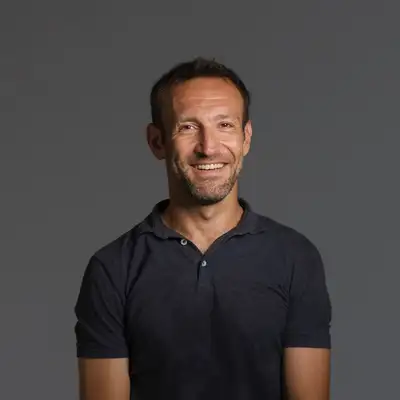
Welcome to the honest. Take the show that goes past the headlines to find out what's actually true about Israel and the people covering it. I'm Ben Chertoff, and my guest today is Doctor Charles Asher Small, the founding director of Escap, who has spent 23 years tracing how Qatar's money entered American universities, rewired academic discourse, and helped produce the antisemitism crisis we're living through right now.
00:01:02.450 — 00:03:09.980 · Speaker 2
In 2012, Doctor Charles Asher Small was pulling an all nighter in Palo Alto when he stumbled across something a Yale administrator with suspicious ties to a pharmaceutical company in Cambridge, a family linked to weapons given to terrorists. He started pulling the thread. What he found became. Follow the money.
One of the most consequential anti-Semitism research projects in the Western world. And the numbers are staggering. An estimated $100 billion in undocumented foreign funding flowing into American universities, $10 billion to Cornell, over a billion to Georgetown, $1.3 billion to Texas A&M, with 13 research projects carrying potential dual use for nuclear purposes.
Qatar, a country of 350,000 people, has a spiritual oath to the Muslim Brotherhood. Its money has quietly reshaped how an entire generation of Americans thinks about Jews, Israel and the Middle East. And it isn't only higher education. There's the Brown University K through 12 curriculum used in over 8000 American schools that erased Israel from the map and rewrote Middle East history for children.
There are the professors who argued ten days after October 7th that the massacres were morally justified. And then there's the new mayor of New York, who founded students for Justice in Palestine at Bowdoin College. The ideology filters down. It always has. Doctor Charles Asher Small explains how and what we can do about it.
He co-founded Escap, the Institute for the Study of Global anti-Semitism and policy in 2003 alongside Elie Wiesel. Last year is gap played a direct role in getting the Muslim Brotherhood designated as a terror organization by the United States government. Doctor Charles Asher Small, welcome to the honest take.
00:03:10.100 — 00:03:12.140 · Speaker 1
I'm honored to be here. Thanks for having me.
00:03:12.340 — 00:03:29.500 · Speaker 2
So you co-founded escape in 2003 with Elie Wiesel, right. At a at a UN conference. What what was the environment in 2003 that that was the impetus for this? It seems like such a pleasant time compared to today.
00:03:30.140 — 00:05:00.390 · Speaker 1
Correct. So I think some of us began to see the the rumblings of global anti-Semitism. And Professor Elie Wiesel, with Kofi Annan, hosted a major conference at the UN in 2002 on the reemergence of anti-Semitism. I remember being with Professor Wiesel and the Canadian Parliament in And three. And he said in 2003 that he was never so concerned about the rise of anti-Semitism in 2003, as he was since the end at the end of the Holocaust.
And he said that we were living in a time of great urgency, and he stopped and he corrected himself and he said, we're not living in a time of great urgency. We're living in a time of a great emergency. And this is Professor Elie Wiesel. Nobel Prize winner, professor, scholar, philosopher, survivor who witnessed the Shoah.
And he was saying in 2003, we are living in a time of an emergency. And we know now from 2003 to 2026, that this is really a time when we really need to understand what's hitting us, to understand what's causing this problem, and to develop strategies on the cause, not simply the symptoms. And I think it's incumbent on all your listeners for our community, for people of goodwill who believe in democratic principles, to really understand the source of the problem and fight against it effectively.
00:05:00.910 — 00:05:05.790 · Speaker 2
What do you think he would think about Monday's New York City these days?
00:05:07.390 — 00:05:18.749 · Speaker 1
You know, I don't I don't want to speak for Professor Elie Wiesel, the great Elie Wiesel. But Elie Wiesel was a, you know, a man of profound wisdom and, and
00:05:19.750 — 00:08:11.770 · Speaker 1
dignity. And I think he would call it for what it is. And I think we, we as a community really need to understand who Mayor Mamdani is. And the tragedy is that so many young Jewish people voted for him, not just young, but many people in our community voted for him. And I think we don't understand what's happening to us.
We don't understand what is threatening our community or our democratic principles. Mr. Mamdani established SJP students for Justice in Palestine at Bowdoin College. For years, Jewish organizations on campus were imploring Jewish kids to go and have Shabbat dinners with SJP to make rapprochement with the SJP students.
But we didn't take this time to understand who SJP is. We don't take the time to understand who our enemies are. SJP comes out of AMP. AMP are American Muslims for Palestine, which is a muslim Brotherhood entity. SJP has the same ideology as the Muslim Brotherhood. What is the Muslim Brotherhood? Our community needs to be fluent in understanding the minds of our enemy.
The Muslim Brotherhood started about 100 years ago in Egypt. It's a fusion of the perversion of the great religion of Islam with an amalgamation, a fusion with genocidal European anti-Semitism. The Muslim Brotherhood takes the Protocols of the Elders of Zion. As professor. Elie Wiesel said, the Holocaust did not begin with the crematoriums and the railroad tracks.
It began with words and ideas, the very words and ideas. And I'm not. I'm saying this very deliberately, the very words and ideas that led to the Shoah, to the systematic extermination of the Jewish people. The protocols of the Elders of Zion is the core element of the ideology of the Muslim Brotherhood.
It's their raison d'etre. They take European anti-Semitism and even Nazism and infuses it with this perversion of Islam. And this is a core element of their ideology. It's not the military wing or the radical wing. If you look at the Hamas charter, for example, which is the Palestinian chapter of the Muslim Brotherhood, they basically plagiarize the protocols of the Elders of Zion as their constitution.
So this is what we're up against. And in this moment of sort of a red green alliance of the radical left and the radical Islamist fighting Western American hegemony or your, you know, European hegemony, there's this bizarre coalition of the radical left and radical Islam, diametrically opposed on so many issues when it comes to Israel and their hatred of Jews.
00:08:12.210 — 00:08:35.210 · Speaker 2
Why do you think this is that so many in the West don't understand? I mean, they can see they can recognize a Nazi as as bad. But when that same ideology is transmuted into the Muslim Brotherhood, into an Islamic shell, it seems to get missed. Why do you think that is? Is that intentional?
00:08:35.810 — 00:08:48.890 · Speaker 1
I don't think it's intentional. As my colleague David Harris, who's the vice president of is God for Global Affairs, the former head of the American Jewish Committee and one of the most distinguished Jewish diplomats in the world.
00:08:49.930 — 00:11:03.140 · Speaker 1
You know, he argues that we have a failure of imagination and we we can't fight the wars of 80 years ago. We have to fight the war against the Jewish people today, and the war against the Jewish people today of radical political Islam is basically a war against democratic principles. It's not just anti-Semitism.
They're using anti-Semitism as a vehicle to destroy the West, to destroy the United States, and to destroy democracy. So, for example, we, you know, we we have to know the minds of our enemy. This is the key strategy in this war against the Jewish people. And we are in a war against there is a war against the Jewish people.
50 years ago, the strategic goals of the Muslim Brotherhood was to make Israel create distance between Israel and the United States. To alienate, weaken and destroy Israel. That's the little Satan. And this is 50 years ago. The Muslim Brotherhood stated as a strategic goal is to then use anti-Semitism as a way to fragment and weaken and destroy the Great Satan, the United States of America.
And for 50 years, the Muslim Brotherhood and their proxies and their foundations and their institutions have mastered and understand our language, our culture, our systems of governance, our education system. They've mastered their enemies. And we in the West. I think maybe because of our arrogance or even our racism, perceive people like the Muslim Brotherhood, people in the Middle East as sort of backwards and primitive.
And we don't speak their language, but we know that if we're nice to them or if we do this, if we do that, everything will be okay. So I think one of the messages we have to do, especially to young people, is. Know the mind of your enemy. Read their literature, understand their philosophy, understand their worldview, and understand their strategic goals.
Understand their perception of us, not just our perception of them. We have to be fluent in their language and their culture and in their worldview in order to to fight back effectively and efficiently.
00:11:03.500 — 00:11:21.780 · Speaker 2
You focused a lot of your attention on the Muslim Brotherhood influence in higher US higher education. What when you started to follow the money project in 2012, what what were you setting out to prove? What was your hunch and then what did you actually find?
00:11:22.020 — 00:16:44.380 · Speaker 1
So I it's a good question. I fell into this by mistake in 2012. I'm usually late for deadlines. It's sort of the way I operate. Um, I was late for finishing a book project, and for the last month, I was pulling all nighters. I wasn't sleeping or eating properly and just writing and finishing the manuscript.
And I sent off the manuscript. And, you know, when you're wired, you can't sleep. So I was sitting in Palo Alto. I was at Stanford at the time, and I was surfing the internet looking at hockey sports stores, a store of scores and reading newspapers on the internet. And I came across an email of a professor, a vice president at Yale University, who was very antagonistic and I would consider anti-Semitic.
And I and I googled him. I came across an old email and googled him, and I found out he worked for a pharmaceutical company in Cambridge, Massachusetts. So I googled the pharmacy. The pharmaceutical company in Cambridge realized it was owned by the Ben Mahfouz family, googled the Ben Mahfouz family, and I saw that President Clinton ordered a strike in one of their chemical factories in Sudan, because that factory was giving weapons to radical Muslims and terrorists.
And I started googling, I found foundations and banks giving money to Yale and to Harvard. And in about an hour I found this whole network and I do social theory and philosophy. I had no idea of what I was finding was real or the tip of an iceberg, and I gave it to scholars who were experts on the Middle East and terror financing.
And sure enough, this was the tip of an iceberg. So this led led me on an odyssey that started in 2012. And now in 2026. Our project has grown. From 2012 to 2019, I was working with a colleague who was a retired forensic accountant, and we found $3 billion in undocumented money coming from the Muslim Brotherhood to American universities.
In 2019, we presented our report to there was a summit on anti-Semitism in Washington, and we presented our research in front, of in front of the Attorney General. That of the FBI, Homeland Security. It was sort of a top tier. 100 civil servants in Washington met at the summit. And after our presentation, the first Trump administration launched the federal investigation into illegal foreign funding of American higher education.
Within months, they found $18 billion in undocumented money. And when the Biden administration was brought to power, they called off the investigation. But because of our, I guess, minor success is a minor success, we were able to start to grow a research project, and now we have an incredible team of scholars who are experts on anti-Semitism, radical Islam and forensic accounting.
And we have an incredible strategic public relations team. They don't promote escape or Charles Small. They promoted the idea of Qatar and the Muslim Brotherhood and foreign funding, which is now a topic of conversation, thankfully within our community. So up until now, we estimate that we've uncovered tens of billions of dollars, about $100 billion in undocumented money coming to American universities.
Uh, we we estimate that the Qataris are playing with up to $1 trillion in assets, using soft power to promote the ideology of the Muslim Brotherhood. So the question is, why would Qatar support the Muslim Brotherhood? So Qatar is a tiny country of about 350,000 citizens. That's one of the wealthiest countries in the world per capita.
And the the the emir, the leadership of um, the royal family of Qatar has a bias. It has a spiritual oath to the Muslim Brotherhood. And the royal family follows the religious edicts, rulings and fatwas of the Muslim Brotherhood. And as we know, the Muslim Brotherhood wants to destroy Israel and destroy democratic countries.
The spiritual leader, Joseph Cowdery preached his entire life that the true believer, the true Moslem, is obligated to complete the work of Hitler. This goes back to their ideology, and they have used soft power to enter into Western education, into our media, and to our legal culture, public relations.
And they've mastered our culture, and they're very sophisticated and effective and using soft power to promote their ideology. And Joseph Cowdery, by the way, who preached his entire life that the true believer must complete the work of Hitler. This is the character that helped started Islamic studies at Oxford University, my alma mater.
So welcomed by the British establishment, by by Corbyn, by Ken Livingstone, the former mayor of London by George Galloway, and the really the establishment of Oxbridge taking money from before the nine over 11 the Saudis and after nine over 11 the Qataris to promote the ideology of the Muslim Brotherhood.
00:16:45.540 — 00:16:58.740 · Speaker 2
When you say follow the money, what does that actually look like in a practical research sense? What what sort of documents are you pulling? What databases? What is the actual reconstruction look like?
00:16:58.900 — 00:17:18.699 · Speaker 1
So it's a good question. So are experts on, uh, radical Islam in the West and anti-Semitism, for example? Uh, we've done about 23, 24 reports since October the 7th. Uh, one report that we did was, for example, on Texas A&M. So after, you know,
00:17:20.140 — 00:19:13.550 · Speaker 1
many searches and going up, uh, dead ends, we finally discovered found the contract between the Qatari regime and Texas A&M. In the contract, we found that Qatar gave $1.3 billion with a B to Texas A&M. That was not disclosed as required by law in the United States and in the contract, there were 504 research projects on an array of academic issues, and Texas A&M gave, which is very unusual.
All of the intellectual property rights to Qatar and the 504 research projects we found 58 project had dual use for military purposes and 13 dual use for nuclear purposes. After our report was published within a few weeks, Texas A&M decided to close their campus in Qatar. So we use open source material.
Everything we find is, you know, presentable in a court of law. It's all legally obtained. And we, through our sophisticated capacity, our forensic accountant and terror finance experts and our experts on antisemitism and radical Islam were able to sort of stitch together our reports. We found over $1 billion in unreported money from Georgetown, um, from Qatar.
Georgetown is the most important intellectual hub of Muslim Brotherhood academic activity, and it also contributes to the most important diplomatic training program at Georgetown, the most important in the United States, if not the Western world, funded by the Qataris, by basically the worldview of the Muslim Brotherhood.
So and these are all open source. We found $10 billion going to Cornell University, uh, for example. So our reports use open source, and we're creative in our ways to get this material.
00:19:15.310 — 00:19:37.550 · Speaker 2
Columbia University, an epicenter of the campus protests and encampments after October 7th, they reported $0 from Qatar to the Department of Education, yet they received a big chunk. I mean, is that an accounting mistake? Did they forget that, or is that is that an intentional obfuscation?
00:19:37.710 — 00:21:01.480 · Speaker 1
So it's a great question. So there's a law. There's laws in the United States dating back to the Second World War, where the Americans were afraid of infiltration by Nazis and communists. So there's laws governing foreign investment and foreign contributions to nonprofit organizations and education institutions.
So the laws have been on the books for decades, but the laws are really not being implemented and adhered to or policed. Um, so Columbia, Harvard, Yale and many other universities, uh, forgot to file their annual audits to and give them to the to the Department of Education as required by law. Uh, Harvard insisted for years, In any contribution, over $250,000 from a foreign entity has to be documented.
The university has to show the exact amount of money and the source of the contribution. Harvard would only give a total with no sources, no individual breakdown or source of country that would just give the total and not adhering to the law. Yale didn't file for many, many years and they said it was a clerical error.
The same with Columbia. But of course, these were universities that were receiving billions of dollars. And I'm choosing my words carefully and accurately. But the universities were not disclosing it as required by law.
00:21:01.920 — 00:21:09.680 · Speaker 2
Do you know if that is specific to Qatari money, or if that is all, you know, the bucket of foreign money?
00:21:09.800 — 00:22:12.570 · Speaker 1
I think it's I would say it's a it's a bucket of foreign money, I think universities. Um, by the way, one of the most powerful lobbies in Washington are in higher education. The universities have a strong presence in D.C. and lobby for their agenda. And I think their agenda is basically the free flow of funds, of money, of students and of their faculty to operate unimpeded by government regulations.
So they want to receive as much money as possible from any entity without any oversight. And they want their scholars to travel anywhere in the world and do their research. And they want foreign students to come because foreign students pay higher levels of tuition. And it's a wonderful it's an important source of income for many universities.
So they they don't want to be regulated. And higher education is really, in many ways, the last part of the American economy that's highly unregulated and obviously needs oversight.
00:22:12.810 — 00:22:49.050 · Speaker 2
In some of these cases, it seems like if I'm reading the reports correctly, that the money that came in from Qatar actually balanced their books that it it filled some serious budget gaps. Of course, your headline finding that receipt of foreign funding from the Middle East from authoritarian regimes is statistically associated with a 300% increase in antisemitic incidents on campus.
Critics will say correlation isn't causation, but you've gone deeper to find, uh, make the case.
00:22:49.250 — 00:22:50.370 · Speaker 3
Sure. So in one of our.
00:22:50.370 — 00:26:07.670 · Speaker 1
Reports, we showed you, as you just said, that American universities receiving funding from Qatar have up to 300% more instances of anti-Semitism on their campus compared to American universities not taking money from Qatar. So there's an issue there. Another issue, for example, and I use this issue often, we have a small research center at Cambridge University in the UK.
And our total budget there is probably it's a small center. It's about 400 to $500,000 a year. Relatively small, though we have very good relations with Cambridge, and they've been supportive and open to what we're doing. We have a postdoctoral training program. We have wonderful scholars looking at contemporary anti-Semitism from a very high level scholarly perspective, as demanded by a university like Cambridge.
I know and my colleagues at Cambridge know if they would insist, for example, that we'd take a scholar who calls for the destruction of Israel, or a scholar that says, you know, that it's a fabrication, that Jewish people or Jewish culture has any connection to Jerusalem. We wouldn't accept it. And if we were, if it wasn't, it was forced upon us.
We would leave and we would leave with our money, though we're a small center, so so we have a little bit of soft power, I'd say. You imagine, Ben, if I came to Cambridge with 10 billion, with $1 billion and sent to Cambridge. I want to open a hospital. I want to open environmental studies programs. I want to hire 100 professors and scholars.
Can you imagine how much soft power I would have and how the red carpet would be laid out for me? This is what happened at Cornell University. We discovered $10 billion that the Qataris were giving to Cornell. Unreported. So so you know, so and when I think when universities in American universities and other universities in the Western world are taking money from countries or foundations or entities that are calling for the destruction of Israel and the murder of Jews, or the subjugation of women, or the murder of gay people or the destruction of democracy.
The question to me is, how can an institution of higher education, which I would argue has a profound, sacred responsibility of providing young people, young people go to universities, ultimately to learn how to be citizens. This is where they learn many of their integral values as they become adults and go into our world and to our society as future professors or journalists or captains of industry or political leaders.
How is it possible that that institution that has to instill in young citizens critical thinking the value of a liberal education, the value of what it means to be a citizen in a democracy? How can that institution take money from from actors that want to murder people, that want to exterminate people that want to destroy the very fabric that are the foundational elements of our democratic society.
It's it's irresponsible and, I would argue, criminal.
00:26:09.270 — 00:26:20.110 · Speaker 2
What is the status of the federal investigations into this. Have they been picked back up? With a new administration, is this something that you're still pushing for?
00:26:20.590 — 00:26:21.470 · Speaker 1
Yeah. So we're.
00:26:21.470 — 00:26:23.350 · Speaker 3
We're trying to help.
00:26:23.350 — 00:26:53.430 · Speaker 1
Get the deterrent Act passed. The deterrent Act passed Congress last year, and it's before the Senate. The deterrent Act basically strengthens the oversight of foreign investment into higher education. So the threshold now, the university must declare anything more than 250,000 and over under this new legislation, any contribution of $50,000 or more would have to be reported to the government.
And also countries that are
00:26:54.870 — 00:27:15.120 · Speaker 1
at war are hostile to democracy, to the United States would also be this. The the guidelines would be much more stringent of where universities can take money. So this is before the Senate and we hope it will pass in the coming months. Um, so that's one, one area that we're, we're focusing on. Um, and of.
00:27:15.120 — 00:27:15.520 · Speaker 3
Course.
00:27:15.520 — 00:28:01.520 · Speaker 1
This country, the United States and other countries, this country has the Civil Rights Act. It's it's illegal for institutions, for for businesses, for certainly for universities and companies to discriminate against citizens, be it's for sexual bias, for gendered bias, for racial bias, and for for anti-Semitism.
And clearly, it's unfortunately how clear it is that the environment in many, in many universities these days are hostile to Jewish students, faculty and staff. And the Trump administration, in many instances, are calling out the universities for this problem that they have, which contravenes laws in this country.
00:28:02.120 — 00:28:13.650 · Speaker 2
What I find really scary is that this isn't only higher education that you found influence. Can you talk us through what you found at Brown?
00:28:13.690 — 00:30:10.820 · Speaker 1
So yeah. So I think this is a very important point. And I think one of the most, I don't know, troubling, repugnant projects that we've worked on is looking at foreign influence in K-12 education. So this is these are we've discovered programs supported by Qatar and the Muslim Brotherhood that are creating curriculum for American children.
So there was a program called the Choices Program at a Brown University out of the history department with Professor Bator is connected to, by the way, who's a controversial figure, and he was involved in the choices program. So the Choices program, funded by the Qataris, funded by the Muslim Brotherhood, is an entity that created curriculum for over 8000 schools across the United States of America for K through 12 for children.
And in these courses, we discovered Israel was erased from the map. The history and presence of Jews and Christians in the Middle East erased from the curriculum. So this is the manipulation of American kids. And when we published our report and we, you know, it's got a modest following. We're not you know, we're not a huge organization.
But it was amazing how many parents across the United States, from California to Maine to Rhode Island to Vermont, were contacting God, saying that their children, you know, 4 or 5, six year old kids were learning anti-Semitic or taking anti-Semitic teaching or curriculum in their schools. So this is really it's manipulating children.
It's building, you know, another generation of of Americans to dislike Jews, to not understand the presence of Judaism and Christianity and the complexity of Middle Eastern societies. And it's really it was repugnant to form of soft power and manipulation.
00:30:10.940 — 00:30:21.260 · Speaker 2
Have you been able to look into any other programs for K through 12 education? I mean, I have to imagine that that's not the only one.
00:30:21.300 — 00:31:05.900 · Speaker 1
Correct. So by the way, the positive we had a minor victory when our report was published. Brown University, you know, closed the the the program, the choices program and distanced themselves from from choices, which is a small victory. There's other organizations in the United States looking at how the publications of textbooks and textbooks are being manipulated and influenced.
Um, so, yeah, there's other programs, uh, you know, in publishing and publishing schools, school textbooks and children's books in the United States that are being funded by these nefarious actors. And there's other organizations also doing research on this. So it's very important topic.
00:31:05.980 — 00:31:20.500 · Speaker 2
And it doesn't just require direct funding. Right. I mean, I think some of your research has shown that, uh, the funding in higher education echoes outward to society at large. Can you talk a little bit about that?
00:31:20.940 — 00:31:40.860 · Speaker 1
I think ideas matter and ideas and universities really the discourse in universities, the ideas that are discussed at universities filtered down into society. And if we look at just look at the history of anti-Semitism, if we look at the Holocaust and the Shoah and we think about this,
00:31:42.300 — 00:33:36.230 · Speaker 1
the great universities in the 19th century in Europe were teaching that there was a racial hierarchy. White people were superior, black people were inferior, and that Jews were racialized. This is you know, this is the best theologians and scholars of biology and eugenics And so forth. They defined the Jew as a race, and that the Jews were poisoning the purity of the white Aryan race.
And these ideas that were circulating in universities filtered down into society and were sort of the foundational elements to the Shoah. Racial purity, white purity, Jews were poisoning the race. And this filters down into society and in the right social, economic and political conditions is a rise of of this philosophy that comes to power.
And this ends up in the final solution two generations later in the 1970s, 1980s, 1990s, at the best universities in the United States and in the Western world, the notion of the Jew shifted. So in less than two generations, Jews were defined as not white. And the problem. And today, at the best universities like Columbia and Oxford and Cambridge and Harvard and Yale.
Jews are perceived and constructed as white, as white colonialists, as supporters of apartheid. Of occupation. And this has been drummed. These ideas have been going on for decades, Edward Said, who was at the forefront of this new emerging ideology. I remember in 1983, he said that he was the last remaining Jewish intellectual and that Jews, Jewish scholars in the United States became scribes in the suburbs, and that the Palestinians were the Jews, and the Israelis and the Jews were the Nazis.
00:33:37.150 — 00:33:41.270 · Speaker 2
This is Edward Said, who helped write the Palestinian Charter.
00:33:41.310 — 00:33:43.990 · Speaker 1
Correct. And this is the essay, 1983.
00:33:44.670 — 00:33:45.350 · Speaker 2
At Columbia.
00:33:45.390 — 00:36:23.850 · Speaker 1
At Columbia University, downtown, central, Upper West Side, New York City. And people dismissed them. Maybe at a bad day, maybe he's a bit disconnected from reality. But those ideas 40 years later, are the zeitgeist. Those ideas are the dominant way that Israel and Jews are perceived. Not at the encampments, not on the marches, through the streets of Brooklyn, but in the classrooms of our best universities.
And these ideas, the demonization of Jews, the demonization of Israel, we perceive them as our liberalism. We allow these professors to say this. We allowed them, you know, these radical scholars to say what they say because, you know, this is a liberal society and there's academic freedom, and these ideas are tolerated, but these ideas filter into society.
And if you think about it, if Israel is a apartheid, racist, colonial, occupying genocidal entity from a liberal human rights perspective, we are morally obligated to dismantle it. and anybody who supports this enemy is part of the problem. And I remember and I was just telling a colleague earlier today, you know, about ten days after October the 7th, 2023, after the pogrom, I went to a teach in with a colleague at Columbia University in the School of Social Work, and there were professors of literary criticism, philosophy and gender studies.
And their doctoral students at this teach in on the occupation. Right. And these are Columbia's one of the best universities in the world. The professors there and the doctoral students are masters of the literature. These are very smart, highly educated people. And they were arguing that the occupation must end by any means necessary, including violence, and that what happened on October the 7th was part of the resistance and was morally justified.
and that the resistance must continue until the occupation ends from the river to the sea, and professors of gender studies, women who purport to be feminists were saying that the resistance was justified, that the rape and the torture of what I would call Israeli Jewish women they were calling occupiers, was justified, and that the violence will only end when the occupation ends.
00:36:25.010 — 00:38:03.700 · Speaker 1
But they were arguing this at the highest levels of scholarship and intellectual discourse, and they went on to say that anybody that supports the occupation must also be resisted by any means. They were calling an intellectual terms for the violence against their fellow colleagues at Columbia, students, faculty and professors who support the occupation.
Extraordinary. So ideas filtered down into society, just like the ideas of the best universities in Central and Europe, European universities filtered down to justify and legitimize the Shoah. This discourse is my colleague at the University of Texas, David Patterson, a scholar of the Holocaust, refers to the moral how this is morally required today.
You know, at an intellectual level, these ideas are dangerous. And they filter down from the classroom to the encampment. And now they're marching through our streets. They're marching to our synagogues. In Montreal, where I was born. They're burning effigies of Jews. I saw that, uh, they're tearing down.
There's a young Jewish girl who went missing in Toronto, a young Jewish kid. They put up posters, you know, for information leading to her discovery. They're being torn down. Jewish girl from Toronto. So the rhetoric. These ideas are important. So we need to understand how ideas filter into society and how and what they mean and how they're translated and how people act upon them.
00:38:04.420 — 00:38:44.700 · Speaker 2
You made the point about gender studies and and and professors who would purport to be feminists. Very leftist spaces. You know, we've spent a lot of time focusing on right wing anti-Semitism and the danger that is absolutely there. Uh, you talked about the Red green coalition, the the leftists and Islamists.
They are, as you also said, so diametrically opposed in every other way besides their hatred of Jews. Is that the only glue that's there?
00:38:44.700 — 00:40:08.279 · Speaker 1
So here, I think, is a clear example. Judith Butler was a very famous philosopher at Berkeley, California. Formerly she was at Columbia for a while. She argues that Hamas and Hezbollah must be perceived as part of the global political left. Progressive political left. Judith Butler is Jewish. She's a woman.
She's a queer feminist, and she has an illustrious career as an independent woman. If a queer Jewish, independent woman would leave her home in Gaza unaccompanied by a male member of her family, she'd be punished. I sarcastically say, if the two of us were walking down the street, I'd probably get one bullet in the head because I'm a Zionist.
She kept for because, you know, feminist, queer, you know, profession, etc.. So why would a woman, an intelligent woman, a highly educated woman, want to be associated with social movements that want to subjugate women. Murder. Gay people killed Jewish people and destroy democracy, a system in which a liberated woman could function and have a career and be independent.
And I think it's rooted in this sort of postmodern philosophy in which Foucault and Saeed are leading intellectual
00:40:09.280 — 00:43:10.170 · Speaker 1
members of said, and Foucault perceived the Iranian revolution as something progressive and positive, and they thought the Iranian Revolution would be akin to what the French Revolution was to Europe. The Iranian Revolution would be to the Middle East and the and the region, never looking at the cleavages and the reactionary ideology of these movements.
But it's something progressive, and it's perceived as progressive, because the radical left wants to free the spaces of the world that were once colonized by Europe and the West and the United States to liberate the, you know, the the world from Western American hegemony. This is part of the decolonization process.
And the Islamists on democratic, sexist, homophobic and anti-Semitic. They also want to rid the world, the region of Western and Christian and European influence. So this anti-Western hegemonic worldview kind of brings these two very different ideologies together. And I think the anti-Semitism, the irrationality of the anti-Semitism, uh, blinds them.
And I think in a way I would recommend that people look at the the work, for example, of David Nirenberg and David Nirenberg just gave an amazing lecture. It's called the Tanner Lecture at Cambridge University. It's on YouTube and recommend people to look at it. And, you know, if you get a good liberal education, we understand how racism and sexism is deeply rooted in our society and our language and our culture in our cities, how cities are segregated, how men and women get different, pay for, you know, the same work we.
If you get a good liberal education, you're aware of it. But we don't get the same critical education and understanding how like racism and sexism and anti-Semitism is deeply rooted in our civilization and our society, and all views rooted in some Christian thought and Muslim thought influenced, as David Nerval say, enlightenment thought, enlightenment philosophy, and the perception of the Jew and their connection to the land or to their connection to the Messiah are deeply problematic in some ways in Christian teachings and Islamic teaching, and those ideas run deep.
So, you know, sometimes certain ideas are more easily conveyed or accepted in society because we've been exposed to them for, for generations, for many centuries. So these ideas can about the Jew could resonate. So and, you know, it's the contemporary context is reactivating old perceptions and in a very powerful way.
So the anti-Semitism is old and it's reemerging in the contemporary context in new forms with old underpinnings.
00:43:10.570 — 00:43:21.290 · Speaker 2
It's really amazing. You'd think that they'd be able to look at the Iranian revolution and see how that turned out and, and make some, uh, you know, adjustments to their ideas based on that.
00:43:21.330 — 00:44:05.380 · Speaker 1
You know, if you think about it, you know, you make an important point. Imagine after October the 7th, after there was a, you know, a really a pogrom, a massacre of innocent people. You have students and faculty coming out of some of the best Western universities in support of this anti-democratic, reactionary, fascistic, anti-Jewish, sexist, homophobic social movement.
And, you know, there's been this explosion of support for Hamas and anti-Semitism. You know, tens of thousands of people were gunned down and murdered by this reactionary regime in Iran.
00:44:06.500 — 00:44:44.459 · Speaker 1
Where are the students? Where's the faculty? It's extraordinary. And if people question the impact of soft power, of taking money from the Muslim Brotherhood, Qatar, and before that, Saudi Arabia before nine over 11, if we don't understand the impact of soft power, just look at how young, highly educated, highly intelligent people, young Americans and Canadians and Europeans have reacted to a pogrom and have remained silence when one of the most repugnant reactionary
00:44:45.500 — 00:45:08.420 · Speaker 1
regimes that supports terror and suppresses its people murders tens of thousands of people. And we're silent. We are largely silent, and our political leaders only talk about the the cost of the gallon of gas. When, you know the region is really being threatened by this tyrannical ideology.
00:45:09.060 — 00:45:29.300 · Speaker 2
I keep on thinking and wondering, you know, if if October 7th had been perpetrated by people with instead of a crescent across, the reaction in the US, universities would have been diametrically opposite same exact philosophies as as the radical right Christians.
00:45:30.340 — 00:46:52.400 · Speaker 1
Yeah. Yes, I really agree. Think about it for a second. So we have soft power. We have billions and billions of dollars coming from Qatar that has a spiritual oath to the Muslim Brotherhood coming into our best universities. And after I told the seventh, we have people in Kafirs wearing Covid masks, hiding their identity, threatening, physically threatening Jewish members of their university community and articulating some of the most repugnant, anti-democratic, hateful ideology.
This is acceptable. Imagine for a moment if a country like Nazi Germany or apartheid South Africa, that believed in a racialized hierarchy of white supremacy were giving billions of dollars, let's say ten billions of dollars like the Qataris gave to Cornell, a white supremacist regime gave $10 billion to Cornell.
And instead of Middle East studies, they supported a center of eugenics. A center of biology. A center of reactionary theology. Instead of Kafirs. Young people are having encampments with white sheets to hide their identity, and professors of eugenics and biology and theology were doing workshops in the encampments to support the white sheeted
00:46:53.520 — 00:46:59.120 · Speaker 1
students that were calling for the removal of African Americans and Jewish Americans from their midst.
00:47:00.680 — 00:47:27.280 · Speaker 1
You know, with our lens of 2026, we put on these glasses. We wouldn't tolerate the white supremacy, the white sheets. But when it comes to Kafirs and Covid masks articulating the same ideas rooted in the same ideology, the Muslim Brotherhood is connected to fascism and Nazism and the protocols. This is normalized.
So this is not only anti-Semitism, it's really it's a threat to our democratic principles.
00:47:28.080 — 00:47:39.720 · Speaker 2
Beyond higher ed in the US and beyond. Education in general. Where else is this money landing? Think tanks, NGOs, Tucker Carlson's bank account.
00:47:40.440 — 00:47:45.120 · Speaker 1
Yeah, so? So definitely the media. Um, you know, Qatar
00:47:46.280 — 00:48:11.439 · Speaker 1
supports Al Jazeera, which in some countries has been labeled as a terror organization and supporting directly supporting the Muslim Brotherhood. It's operating freely in in many Western countries, including the United States. That should be, I think, banned because it's, uh, you know, it's a muslim Brotherhood mouthpiece.
Um, Qatar is also, you know, they had they had a program training school
00:48:12.680 — 00:48:59.730 · Speaker 1
students of journalism at Northwestern University. They just signed Qatar to sign an agreement with CNN. So they're investing heavily in the media, media of record, which is having an influence. They're heavily involved in social media. And, you know, that's a whole other realm of misinformation and danger to dangerous ideas that are being peddled as, uh, truth.
Um, they're invested in, uh, hedge funds and banks. They're buying, you know, they're in the private sector. They're really using soft power as a way to influence, uh, Western democratic societies. And they know higher education in particular. If you influence higher education, you know, in a generation, you've influenced the society as a whole.
00:48:59.970 — 00:49:19.770 · Speaker 2
Ideological capture. JVP uh, I've heard you talk on, on another, uh, program about, uh, JVP funding and where it comes from. That group has, for me always been the most perplexing group of of people. Um,
00:49:21.170 — 00:49:22.930 · Speaker 2
where does their money come from?
00:49:22.930 — 00:50:21.090 · Speaker 1
So it took a long time to find the sources of their funding. It's still difficult to uncover. But we now know that SJP, students for Justice and Palestine, which comes out of AMP American Muslims for Palestine, is a front for the Muslim Brotherhood. They have the Muslim Brotherhood ideology. They basically created and supported Jewish voices for peace.
They, you know, uh, there's a professor of Bosnian who was one of the founders of SJP. He was directly related in developing Jewish Voices for peace. And there was a moment where he he was sending emails on behalf of Jewish Voices for peace, and he made a mistake, and he sent it from his email, rather from the JVP email address.
So they're directly connected. And we now know that Singam was out of China, who was connected to the radical left and CodePink and.
00:50:21.090 — 00:50:24.210 · Speaker 2
The Neville Singam right is what we're talking about. Yeah.
00:50:24.370 — 00:51:07.940 · Speaker 1
That they're also involved in supporting SJP and JVP. So it's a network of the radical left and the radical Islamists working together to delegitimize the Jewish connection to the land of Israel. And, you know, they also use the technique. Saul Alinsky, who was a great community organizer, argued that you take your enemy and you bring 20% close to you and you push the 80% away to delegitimize them.
And this is what they're doing very masterfully. They're taking, you know, kind of unsuspecting, uneducated young people, and they're manipulating them and manipulating them effectively. It's extraordinary.
00:51:07.980 — 00:51:14.620 · Speaker 2
JVP. A lot of them are not uneducated in the general sense. I mean, these are very smart people. What what
00:51:16.060 — 00:51:28.260 · Speaker 2
I mean is the ideological capture that complete or do you think a lot of the JVP people, at least at the higher ranks. No, no. What's going on under the. You know, under the hood?
00:51:28.420 — 00:53:04.270 · Speaker 1
No. I think that maybe the organizers of the SJP and JVP know exactly what they're doing. And if you look at Mamdani, who comes out of SJP, you know, he's doing this masterfully. He had a beautiful, uh, Shavuot celebration where he brings the radical left and a few anti-Zionist religious people, and he has a shift party.
He looks like a nice guy. But, you know, he's delegitimizing and demonizing, uh, Israel, uh, at every opportunity that he can. And, and, and in doing so, you know, really, I would say increasing anti-Semitism in New York and across the United States in a very dangerous way. Um, and this is the this is the goal.
This is the objective of SJP. It's not to do rapprochement of a two state solution. It's the destruction and the dismantling of Israel and from an Islamist perspective, the self-determination of the Jewish people is is not acceptable from a radical Islamist perspective. A muslim has to be higher than a Jew or anybody else.
And the Jews are the only other with self-determination in the region. And, you know, even if Israel was the nation state of Tel Aviv was all of Israel and all the other land was ceded. The fact that in Tel Aviv, men and women, straight and gay people, Jews, Christians and Muslims would be equal is not acceptable to political Islam, to radical Islam.
And this is the ideology at work here.
00:53:04.310 — 00:53:20.070 · Speaker 2
I've also heard you say elsewhere. You know, they're not every Muslim is Muslim Brotherhood adjacent or influenced. Um. Mamdani. Where is. Does he know what's going on?
00:53:21.000 — 00:54:12.560 · Speaker 1
I absolutely knows what's going on. This is a very smart, sophisticated, highly educated young man. His father is a serious professor at Columbia University. His mother is one of the most acclaimed filmmakers in the Western world. Very. You know, this is the creme de la creme of the Upper West Side, the intellectual environment.
Of course, he knows what he's doing. He's out to, uh, delegitimize and dismantle Israel. And anybody that supports that entity is his enemy. And he's clear he understands what we're doing. The tragedy is our community doesn't understand. Our community doesn't understand the causes of anti-Semitism or who our enemies are and what their agenda is.
And
00:54:13.600 — 00:54:43.919 · Speaker 1
in a in a way, we have to commend Qatar and the Muslim Brotherhood. Because they master European languages, they master our political system, they go to our universities, they understand our culture, they understand our way of life. They have mastered it. We in the West, we in our community don't speak Arabic.
We don't understand the difference between, as you say, the Muslim Brotherhood and other manifestations are forms of Islam
00:54:45.200 — 00:56:58.050 · Speaker 1
to us. There are people out in the Middle East, maybe in the desert, and if we're nice to them, of course they'll be nice to us. We have to respect our enemy. We have to understand their their language, their worldview, their ideology, and their strategic goals. This is the basic element of either coexistence or fighting back and fighting against the anti-Semitism and the delegitimization, not just of Israel, the delegitimization of American Jews in America.
This is what's at stake as we speak. They're marching in our communities. We have to wake up. And you also said something extraordinarily important. We have allies in the Middle East, the Muslim Brotherhood. In many countries, Al Jazeera and many countries are banned. Moderate Muslims understand the danger, the catastrophe of the Muslim Brotherhood and radical Islam in Saudi Arabia and the United Arab Emirates, in Jordan, in Bahrain, there's other countries where they understand what's at risk.
They understand the damage that this ideology does to their community, to their mosques, to their institutions, to their general society. Recently, I was speaking to an ambassador from a middle East country, and I was saying, you know, we should have a big conference about radical Islam, and I would love to do it in your country.
He laughed. He said, why would you do it in our country? We understand the problem. We deal with the problem. We should have it in Europe or in the United States, because they still don't understand the threat that it poses to democratic countries. And so, in a sense, and this is what we've done in our research, there's three centers of the Muslim Brotherhood.
Qatar is the money. Turkey is command and control. This is where the terrorist the flotilla comes out of, etc., the military operations and London for money laundering. These are the three centers of the Brotherhood. And the money is coming into Western countries, into Canada. Canada is changing rapidly and from Canada and the United Kingdom into the United States.
00:56:58.330 — 00:56:59.090 · Speaker 2
So
00:57:00.210 — 00:57:07.530 · Speaker 2
you talked earlier about the power of ideas. Radical Islam is an idea. How do we how do we combat this?
00:57:09.050 — 00:57:48.180 · Speaker 1
It's a great it's a great question. I think we've Combated successfully ideas and ideologies that were ultimately anti-human. We fought against communist totalitarianism with success. There's still communists in the world, but the Soviet Union and many Soviet communist countries have collapsed.
Fascism, uh, you know, at its height was a very powerful global movement. Nazism and fascism had great success. It was defeated. Yes. They're still fascists around, but they're they're weak. Um,
00:57:49.540 — 00:58:16.980 · Speaker 1
the ideology of radical political Islam, of the Muslim Brotherhood. It's a powerful ideology. We have to understand the ideology and and fight it, fight it intellectually and fight it kinetically. And also, Israel is doing an amazing job of fighting these entities in the kinetic warfare. It's extraordinary that what Israel has done in the last 2 or 3 years, you know, with Hezbollah and Iran,
00:58:18.020 — 01:00:28.760 · Speaker 1
the amount of ingenuity, creativity, patience. I don't I don't understand kinetic warfare. I just read what I see in the newspapers. It's extraordinary when the Jewish people are focused and driven, what we can accomplish. The eighth front, in this existential war against the Jewish people we have ignored, we've turned a blind eye for 4 or 5 decades.
Only now I think we're beginning to show up on the battlefield. You know, groups like Honest Reporting, and there's a small ecosystem of groups in the United States and around the world fighting anti-Semitism, fighting radical Islam, fighting for democracy. I think there's an awakening. And yes, we have to fight on the kinetic battlefield like the United States and Israel and its allies in the region have done with Iran and other nefarious actors.
But we have to take the battle of ideas also very seriously, because ideas matter and they filter into society. And there it's a powerful enemy. But I think if we focus and we understand the threat and understand the enemy, understand the ideas of the enemy, understand what's hitting us. Understand when we take a course at Columbia University or at Harvard University and a professor's espousing certain ideas, we should understand how to confront them, how to understand where it's coming from, what the roots of these ideas are.
So understand it intellectually. Understand how these ideas are permeating education, social media, and other sectors of our society. And as we become aware, we'll find ways to really address the Problem, not the symptoms of the problem. So you're right. Ideology is not easy to fight. We have successfully fought ideologies that are anti-democratic and anti-human.
And I know if we focus and we're creative, like our little ecosystem, we can do, we can be successful. We have we have no choice but to be successful.
01:00:29.680 — 01:00:35.640 · Speaker 2
What's next for is gap. Where are you looking? What is your next area of concern?
01:00:35.800 — 01:03:23.610 · Speaker 1
So, uh, there's a lot of areas of concern. As you know, it's your colleagues at Honest Reporting, though. Um, we have two major reports coming out on Canada on the entry of the Muslim Brotherhood in Canada and also Hezbollah and the IRGC in Canada, two separate reports which are going to be powerful. We have a major report coming out on the UK and the entry ism, uh, of the Muslim Brotherhood in the UK and some reports on South Africa, And I should say, you know, we did a major report in November 2025, and we launched it, um, in November.
And it was looking at the entry of the Muslim Brotherhood in the United States, two weeks after our big event in Washington and the launch of this groundbreaking report, um, the American government signed an executive order designating the Muslim Brotherhood as a terror organization. So. So how do you defeat an ideology?
18 months ago, several colleagues, that is, groups that were going to ban the Brotherhood, many people within within this gap and many more people beyond this gap thought it was ridiculous. How do you ban an entity with no address? How do you ban an entity in a country where you have the First Amendment rights and freedom of speech and, you know, political freedom?
It's impossible. And we decided we were going to try to do it. And we decided even if we fail, we'll create awareness of who the Brotherhood is and what their ideology is and the dangers of the Brotherhood. We worked hard for 18 months pushing this, doing research, launching the report, lobbying in Washington and through hard work and a little bit of luck being at the right place at the right time.
We played a significant role in getting the Brotherhood designated as a terror organization by the US government, which has all sorts of major international ramifications. And now suddenly, Canada and Western European countries and other countries are paying attention to what the Americans think, because if they're harboring terrorists, they're going to get in trouble with, you know, with the United States.
So here is a small example. Escap is a small entity. We have a small budget, like many other groups in our in our ecosystem. And we managed to do something that was really outside the box and many people perceived as impossible. We've taken a big step forward, and I think with hard work and dedication and creativity and perhaps more luck, our ecosystem will succeed.
But we must be bold. We must think outside the box, and we must be tireless.
01:03:23.650 — 01:03:25.490 · Speaker 2
Where can people find out more?
01:03:25.730 — 01:03:27.810 · Speaker 1
Please come to our website at.
01:03:29.690 — 01:03:30.130 · Speaker 1
I.
01:03:32.610 — 01:03:50.450 · Speaker 1
Have a website. All our publications are available for free. And also we're developing a small social media presence as well on Twitter and Instagram, not Twitter X and Instagram and Facebook. And now on your podcast at Honest Reporting.
01:03:51.330 — 01:03:55.250 · Speaker 2
Outstanding doctor Charles Asher Small, thank you so much for joining me.
01:03:55.250 — 01:03:57.050 · Speaker 1
Thank you as an honor. Thanks.
01:03:57.090 — 01:05:43.300 · Speaker 2
When Elie Wiesel helped found his gap in 2003. He said we were living in a time of great emergency. That was 23 years ago, before the encampments, before October 7th, before the mayor of New York was a kid at Bowdoin starting a chapter of SJP. Wiesel saw it coming because he'd seen it before. What doctor Charles Asher's small has spent the last two decades proving is that the emergency didn't arrive by accident.
It was paid for $100 billion in undocumented foreign money, 18 billion recovered by a single federal investigation, a curriculum in 8000 American classrooms that wipes Israel off the map before a child can find it. The ideology doesn't stay in the faculty lounge. It filters down into the streets, into city hall, into the comment sections, and into the minds of kids who have never met a Jew.
That's what Charles Small has been trying to tell us. And the numbers finally are starting to make people listen. Doctor Charles Ascher Small is the founding director of Escap, the Institute for the Study of Global Antisemitism and Policy. Links to his work, the Follow the Money Project and his gaps federal filings are in the description.
If you're getting something out of this show and you want to help. Do me a favor. Leave us a review on Spotify or Apple Podcasts. It takes 30s and it helps more people find us getting this message out farther. If you're not already, subscribe and hit the notification bell so you never miss an episode and follow Honest reporting on Instagram x TikTok and Facebook.
I'm Ben Chertoff. This is the honest take and we'll see you next time.