Subscribe
Share
Share
Embed
Welcome to Defining Hospitality, the podcast focused on highlighting the most influential figures in the hospitality industry. In each episode we provide 1 on 1, in depth interviews with experts in the industry to learn what hospitality means to them. We feature expert advice on working in the industry, behind the scenes looks at some of your favorite brands, and in depth explorations of unique hospitality projects.
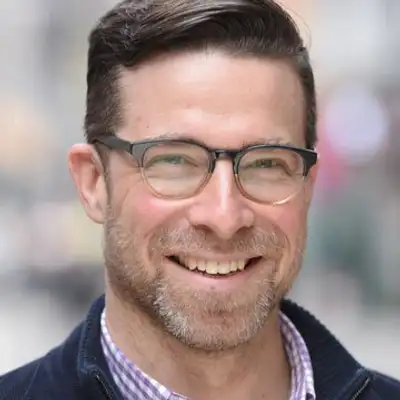
Defining Hospitality is hosted by Founder and CEO of Agency 967, Dan Ryan. With over 30 years of experience in hospitality, Dan brings his expertise and passion to each episode as he delves into the latest trends and challenges facing the industry.
Episodes are released every week on Wednesday mornings.
To listen to episodes, visit https://www.defininghospitality.live/ or subscribe to Defining Hospitality wherever you get your podcasts.
DH - Gary Brandeis
===
[00:00:00] Today's guest is a hotel executive, real estate investor, and hospitality entrepreneur. He's worked with major hospitality brands including Marriott, Hyatt, and IHG while also redeveloping independent hotel properties. He's also launched award-winning real estate technology companies focused on innovation, property value, and tenant experience.
He's the CEO of Scholar Hotels. Ladies and gentlemen, welcome Gary Brandeis. Welcome, Gary. Thanks, Dan. Thank you for having me. I want everyone to understand that I met Gary through our mutual friend, client of mine, architect/designer of yours, uh, Craig Kolatian, who is just... Well, he's not just a client, he's just a really awesome dude and a great friend.
Um- And we did the Nittany Lion together at c- in College Station. And- C- c- State College ... uh, oh, not College Station. I'm sorry. It's okay. State College. It's okay. It's okay. I get confused. College Station is, what state, what is at College Station? That's like- [00:01:00] Texas A&... Texas A&M is in College Station. Texas A&M.
Yeah. Yeah, we don't like them. I'm not a huge fan of the Nittany Lions either, just because they beat up on USC so badly a couple times. But what I can say is they have one, in the northeast anyway, and I'm sure beyond, but just having lived in New York City for a long time, they have a very rabid fan base.
Probably one of the most rabid, I would say, in the northeastern United States. Is that safe to say? I, I would go further than that, Dan. I think if you look at the Penn State community, and you can ask Craig this, and I, I challenged him when we started our project, 'cause he had never been to State College, didn't really know much about the university, and I said, "Dan," I said, "Craig, when we're done, you're gonna realize the reach that this university has."
And, and I think, I think he would hold me to this, that, that he felt like he didn't realize the reach the university had. He, in fact, Craig's in the, uh, i- is an owner of a restaurant, and he said, "I didn't realize, like, half my dishwashers were students at Penn State that worked for me in the summer," and things like that.
So [00:02:00] I, I think if you look across the country, we have the largest alumni network in the country, uh, and things like that. No way. But I think, I, I'm in South Carolina right now. I see Penn State's shirts and hats on people walking around. I've been to California. I was in Mexico, uh, earlier this year, and I saw a guy walking down the street in Mexico City with a Penn State shirt on.
So I, I think we're, we're pretty popular across the nation, but- Okay, but refresh my memory ... I'm, I'm very bi- I'm biased. I'm biased. Yeah, of course you are, and, and I'll forgive you for that, for being so biased towards the Nittany Lions. But, um, just refresh my mind. How many rooms is the Nittany Lion? So 230 guest rooms.
Okay. Around State College, Pennsylvania, how many rooms do you have total? So right now we have 930 hotel rooms in, in, in the State College market- Wow ... the Penn State market. Okay. We have another 70 under construction right now, so we'll be, actually be at an even thousand come the end of next year. So that's [00:03:00] incredibly remarkable for any one ownership group to have in any area, I would say.
Yeah? Yeah. I think if you talk to other investors, so I'm a real estate investor too. We're, we're an investment company and an o- owner/operator, but, you know, people would say, "Well, that's not a very good investment strategy." You know, the, some of the things you want i- in an investment strategy is diversification, right?
Of property type, of location, of, of lots of different things. So we're definitely heavily concentrated, you know, from our portfolio in that market. I think what makes me sleep at night is that the market's basically supported by a $10 billion public university, um, that, you know, is a You know, an ec- a, a significant economic development engine and provides- Mm
very consistent and reliable demand for our assets. And I would also make the comment that if you ask me, again, very biased comment, we have the greatest, we have the best assets in the market and the best location. And so, so long as the university continues to grow, [00:04:00] so long as the university continues to, to have events and, and, and need for hospitality services and products, et cetera, then we feel pretty good about our business model there.
But, but I think that's consistent across a lot of college markets. And you also have, not only with the university, but the, the consistent fall draw of Happy Valley and all the shenanigans that go on there with the football team. Yeah. Not to mention, I will s- I will say One of the greatest ice cream experiences I've had- Mm
as well there, because you ha- there's a big ag school and, and Penn State has a, a big dairy operation. Is that correct to say? We do. Ag sciences department and, and, and the education around agriculture is significant. Uh, and, you know, Penn State started as a land grant university. It was essentially to, to teach Pennsylvanians back in the 1800s how to farm and, and, and, and things like that.
So yeah, big ag sciences. Uh, we have the creamery, which is well-known ice cream. Ben & Jerry's took their ice cream class there [00:05:00] back in the early '70s, I believe. that's a little bit of a claim to fame for the creamery. But I think also with college markets, people, people think, "Well, you, you, you make all this money during football games or graduation," but most college markets, if you look at the 10 or 12 legitimate college markets in the country where you have a small town with a big university, uh, we're busy 11 months a year in State College as an example.
Mm. Um, and we're also in, in, in Radford, Blacksburg, in Morgantown, in Syracuse, and other college markets, and there's a little bit of a, a, a misnomer with college markets. You know, we do great on those special event weekends, but as you know, Dan, I can't make a living and we can't support our business with just special event weekends.
We have to be busy Sunday through Thursday, and these college markets really generate significant business during that, during that timeframe as well, so. I'll also share as we transition to get to the hospitality question, that Craig and I were asked to speak at the [00:06:00] hospitality school at Penn State. So I think was it last year or a year and a half ago- Yeah, last-
that I first met you? Yes. I think I might have met you way before, but that was like we had dinner after we spoke at the, at, at the event. That was really cool. Yeah. And just I love it when I get asked to speak in front of the young folks, right? The, the people who are just entering the hospitality career, 'cause many of them think that they're, they're gonna go into revenue management or they're gonna go into sales and marketing or whatever.
But invariably when I sit down and talk to them and tell them the entire ecosystem of business and entrepreneurial opportunity that exists within properties, most of their minds are blown. 'Cause they, you know, they go in with this kind of single track, "Oh, I really want to do this and I like that. Oh, I didn't know hospitality had so much else to do."
And with that- It really does ... like what drew you to hospitality? Why- what does hospitality mean to you? I, hospitality is about, you know, like any business, serving your customers, right? Making sure your guests and customers have a great [00:07:00] experience so that they tell their friends and family, they come back again.
But the other thing I'd put on that, and this goes back to my, my background, is ultimately we're in business to make a profit. And so how do we provide a great guest experience but also make a profit at the same time? And those two things are not mutually exclusive, right? You hear a lot from hospitality about providing a great experience and, and memory, memories and, and, and things like that, but you don't necessarily hear a lot of times about hoteliers or, or people that run hotels or certainly don't hear it from the brands, uh, about profitability.
Ultimately, we're in business to make a profit. Mm. I've got investors that wanna make a return on their investment. I've got banks that loan me money that I have to pay the mortgage every month. And ultimately, if we can Have a profitable hotel, a profitable investment, and I can give a good return to my investors and pay my mortgage, then guess what I can do?
I can attract and retain great people, I can pay competitive salaries [00:08:00] and provide great benefits. You know, I can ... The second thing I can do is I can maintain my property. If I have profitability, I can reinvest that money, part of it, back into the hotel to make sure that, you know, the, the mechanical systems are working well.
There's hot water, the water pressure's great. You know, if a, a piece of furniture breaks, I can fix it. Mm. And, and, and ultim- And then the third thing- But our furniture doesn't break. Your furniture doesn't break. Right. But some does, right? Especially over time. But, uh, and then the third thing we can do is be a great community partner, right?
Mm. We can, we can be part ... Hotels are such a big fabric of any community, especially a college market like we're in, and so we wanna be a great community partner. We wanna sponsor events, invest in charitables, non-profits, uh, provide, you know, hotel rooms. One of the things we try to do is on football games, a lot of the parents of football players and basketball players wanna come see their, their son or daughter play a sport, and may not, they may not necessarily be able to afford a room on a very expensive weekend.
So we try to do, do things [00:09:00] like that. So I think what's lost sometimes in hospitality is the fact that ultimately we are a business. We're in business to make a profit, and if we don't make a profit and, and we don't invest well, we don't make a good investment, then our ability to provide a good experience for our guests and maintain our property and attract and retain great talent is significantly, uh, hindered by the fact that we didn't make the right investment or we didn't capitalize it correctly.
We over-leveraged that asset on the acquisition. And so a lot of people think, oh, you know, you know, make sure the room's clean, make sure the front desk person smiles at you, which, which is obviously really, really important, but if you don't go into that ho- hospitality investment with the right structure, the right capital, um, you know, a good capital partner that understands the highs and lows of hospitality, then everything I do after that investment, you know, I'm kinda
You know, if I don't do it [00:10:00] right, then I've got one hand tied behind my back- Yeah ... as I try to execute on the hospitality side. So, so we're w- we consider ourselves, and, and, and a lot of people frown when I say this, is that we're a real estate investment company first and a hospitality company second.
Like, in, in the Danny Meyer lexicon, if you take care of Your team, you take care of your vendors, you take care- or your community, your vendors, um, I forget all, there's five of them. And then the last one in order of importance are the investors, right? Which is, which is really interesting 'cause his whole take is, look, if you can take, do the other four without thinking about the investors, your, the, your investors are gonna benefit from a profitable company.
Because I really get the sense that you love... Oh, okay, yes, you like the returns, you like the profitability, but you really love being a pillar in and around Penn State University, right? And, and, and to [00:11:00] me, that's, that's really exciting. It's, it's... When people ask me what I do, I was like, "Oh, I, I furnish hotels."
But that doesn't really excite me. I love it. It's what I do, it's my vocation. But more than anything, I get to have these conversations or just not even the, the public ones, just the impact that I can have just with people who hadn't considered thinking about something a different way. I call that, like, oh, I love shortening people's journeys, because I, I'm, I love reading, I love learning, and I love sharing everything that I've learned with others from my experience.
Not so much in advice giving, but in sharing with others. And, uh, in this, and speaking from experience here, I wanna go out on a limb and I'm gonna make a... I don't know. What's that SAT question? Is something is to something as something is to something. There's a certain type of question that that is. I can't remember what it's called.
But Apple did not invent the mobile phone, right? They just did it better, right? And what I wanna say is, one of the things I've talked about a lot [00:12:00] I don't know how, a lot is relative. So I don't know. It's probably come up 15 or 20 times on these conversations. When someone asks me what I think one of the most exciting brands in hospitality that have come up, and you can argue whether it's good or bad or, or whatever, but Graduate Hotels to me was really cool because they took a very tight thesis of college towns and really went hog wild and built a cool brand that they wound up exiting for a lo- I don't know how much or what the deal was, but I think it was a lot.
It was multiples on revenue, not necessarily on profit, for the brand, not necessarily the properties. But that's a whole different- Yeah. Bra- brand, brand only, Dan. $210 million Hilton bought them for. Right. And do you know what, what was the... Was that on earnings or revenue? I, I think it's, you know, obviously the brands operate on revenue.
You know? Okay. That, that, th- th- one of the downside of brands is generally they have no profitability. I heard something crazy like 12 or 13 times revenue. Yeah, I mean, I mean, there's o- they only had [00:13:00] I think at the time when Hilton acquired the brand, they had 26 hotels. So small acquisition for, for Hilton- Mm
typically. But I, you know, in talking with folks at Hilton, they, they, they saw it as a, a, a bigger opportunity. And in fact they just launched the Undergraduate brand, which- Yes ... I guess is a lower level. I'm not sure I understand it. Um, I, I think what go- But just go... Yeah. Yeah. I, I don't get it. But- But- ... but I'm not that smart, so I don't, I mean- But to me, as a, as an entrepreneur, for all the classes and the, and the, the books I've read, it always says if you can own 7% of a specific market, that's a great business, right?
So to go and be so niche and niche down to just colleges is really cool. But they weren't the first, was the point why I brought up Apple, right? There was Paul McGowan and Study Hotels. You, I don't know when you started yours, but there were other ones that were trying to do this or doing this. But then Graduate came in, I guess they raised a bunch of money, and they were just able to kind of expand and scale really [00:14:00] quick.
Sometimes scaling for the sake of scale is not always the best, right? I wish I read this book by Bo Burlingham called Small Giants where it's, they use like Zingerman's up at University of Michigan. Yeah. Yeah. I interviewed someone from there once. And Zingerman's made a decision after trying to scale for the sake of scale to just go deep into Ann Arbor, and just own that experience in Ann Arbor and just be the best that they can be, and be a pillar in their community.
Yeah. So what do you think has taken so long for people to realize that- College towns, if done well, can be a really profitable endeavor, and also really fun because you're able to get so specific in what you're bringing to the market. Yeah. I, I, I think it's a really good idea. I think Graduate certainly brought the, the idea that this mar- these markets are different than traditional hotel markets, whether it's a big city, a small town, at an airport, or along a highway, [00:15:00] right?
It's a very different standpoint, and we've chosen to go deep and make, make sure that we're experts in how we operate, sell, and run hotels in college markets, 'cause there is a lot of ... There's a lot of intri- intricacies to it, and differences to other hotel markets and models. Our staffing models are different.
Our revenue strategies are different. Our sales strategies are different. So it's very, very different. The ... It's almost like I equated it to, you know, apartments, right? About 25 or 30 years ago, student ap- student apartments became sort of a niche of the apartment business. People didn't, didn't really look at student housing, students on c- near college campuses different than regular apartments.
But a few folks started to make it, make it known that, listen, it's different running and selling apartments to students than it is to non-students. And so now, if you look at student housing 25, 30 years later from when it really became sort of a different subset of multifamily, [00:16:00] it's now its own industry unto itself.
Yeah. It's a asset class. It's institutional. It's some of the most valuable apartment multifamily buildings anywhere, right? You, you build student apartments across the street from a major public university, it's like gold in a way. Mm. And so Graduate showed that there is differences in this market. You can hit the heartstrings of your guest more so than you can in another market.
I think where ... What happened with, with, with Graduate, and this is just my opinion, they expanded so rapidly, Dan, and they, they, they didn't focus as much on the real estate deal as maybe they should have. Mm. And so in my opinion, and I think if you ... And I've tried to buy assets in markets where they've bought other assets, and I couldn't come close to the numbers that they were paying.
In fact, you know, when, when I made a couple of offers in markets where they were, the response was, "Well, Graduate just paid a lot more for this other asset in the market. Why can't you pay me the same?" And I'm like, [00:17:00] "Well, 'cause I'm a real estate investor first. I make a good real estate deal, and then I can execute.
If I can make a good real estate deal, I can execute significantly better When I'm hiring people and designing and building and everything else. And so I think what happened was, is they built this brand very quickly. It got the attention of Hilton, and Hilton said, "Hey, we want to, we want to be in that market."
And so Hilton bought the brand. They didn't buy the real estate. And right now we've looked at four or five graduate hotels that are either in foreclosure or the, or, or the, um, the lender, uh, either in foreclosure or they've already foreclosed and the lenders are trying to sell notes. And I think that's a, a s- uh, that's not a symptom, it's the result of potentially that really quick expansion, trying to buy as many doors as they could, uh, to sort of get that brand out there.
So not, not mistakes that we want to make in a sense of- Yeah ... making sure we make a really good real estate investment first and then we execute on the hospitality side. So they, they [00:18:00] were able to sort of bring the idea to the market in a big way. Um, and now we're starting to see some others. Us, you're right, the Study Hotel, I think in New Haven at Yale was really the first- Yeah, I did that for-
post-north ... sure when it first opened. It's, and so that- Yeah ... was really what opened my mind to it. I don't remember what year that was, 2004, '05, '06, somewhere in there. Yeah, I think, I think some- somewhere around there. And, and that was an old Holiday Inn, I think it was, that they- Yeah ... that they renovated it.
And right on, right in the, right next to Ya- It was great. It's awesome. Yeah. And they built it in a way where it was almost as if it was a fancy dorm room but, like, research library at the same time. Yeah. And it, it had a really good feel. And, and I give Paul a lot of credit for that vi- I mean, not that I have to give him credit for anything.
He, he did it on his own. Yeah. But it was like just taking that, and I think he was one of those guys, I think he also worked at Starwood originally. And Starwood back then was really launching W and, I don't know, just being very innovative in respect to what, [00:19:00] how things were done up until that point. Um, and it, and it's a great product, and it's still awesome.
I stayed there a couple, um, uh, maybe about a year ago. Yeah. I stayed there because my son was doing some football camps up there. But- A- a- and there's a Graduate right next door Yes. Actually, I don't know if it is a Graduate anymore. Oh, it's not anymore. I could be wrong. Yeah, I could be wrong too. I stayed, I went to go see my favorite band, Goose, and I rented a room up there. Oh, there you go. Well, not my favorite, one of my favorite bands. But one of the things in going to profitability, and also I want to tie this back to a past guest, my, a r- another good friend of mine, Dave Kaplan, um, and his business partner Alex Day.
They have this company, um, Death & Co., and they've been expanding. It's like cocktail forward bars, just awesome. But I don't, a couple years ago they started this model where they would sell shares in their businesses to their biggest fans, right? Mm-hmm. And they have all this merch and, and they have cocktail [00:20:00] codexes and cocktail menus and cookbooks for cocktails, and they've really s- created, carved out this p- really big niche, or small niche, but scaled it.
But they used investment from their rabid fans, right? And then when I was talking to you a couple months ago, you mentioned this thing, I thought you were talking about Bob Marley for a second- ... speaking of music. But it's, it's this Reg A, not Reggae Mon, but like- Right ... Reg A, like Regulation A or something like that.
Correct. Correct. you mentioned your capital partners in the thousand rooms that you have in and around, um, State College, but it seems like an interesting way, especially if there's a rabid fan base, to democratize, um, hotel investment. So I'm not a finance guy. I appreciate innovation and the, the risks that entrepreneurs take.
But can you just tell us a little bit about, like, how this is t- teed up and what makes this different and what your plan is [00:21:00] for either all the rooms or some of the rooms or s- all of the hotels or some of the hotels as far as democratizing- investment in hotels in State College from the rabid fan base.
And, and I think this could resonate in any college market, uh, where you have a large base of people that really are su- are connected to the community in lots of different ways. And so, so we're, we're fortunate to have sort of a large base in State College, which is supported by Penn State University, which is one of the largest public universities in the country, 50,000 students, 1,000 clubs and organizations, 880,000, uh, uh, alumni that are alive and living across the globe, and probably another million more that we don't even know about.
And so w- we've built our portfolio over the years, like most real estate companies. We, we raise capital through either a commingled real estate fund, and we've done four commingled real estate funds. Uh, we also do one-off deals where we raise capital on a project-by-project basis. Can you, uh, just pausing one second.
Yeah. What's a [00:22:00] commingled real estate fund? So a commingled real estate fund is just a pool of investors that you bring together, and then the, you use those collective dollars to make investments. Oh, so you're not doing each property as its own entity. You're raising a fund, and then a- It's a fund ... and then allocating that capital a- Correct
as it makes sense for the fund. Correct. Okay. So we have 100 investors, we've got $50 million of capital, and then we as the general partner have discretion to invest that capital. Versus, "Hey, I've got a building, I've got a hotel I wanna buy, I need, I need to raise, I don't know, $10 million. I get 10 guys or 10 gals to give me a million dollars each, and I'm off, I'm off running and getting my deal done."
And so our investors to date have been high net worth individuals, family offices, estates and trusts, and some institutional capital as well, all f- sort of fitting into the high net worth folks. So minimum investment's typically $250,000, but most of our investors come in for more. And you have to be an accredited investor- Yeah, so the-
as well, right? We w- And what's the threshold for accredited investor as well? Yeah, so we used to [00:23:00] work in the, what's called the Reg D world, which is a- accredited investors only. So we would have offerings that were only available to accredited investors. And accredited investors, the government defines an accredited investor as someone that has a certain level of net worth outside their primary home and has a certain amount of annual income for the last two or three years.
So r- I think right now it's $300,000, uh, uh, or more of annual income, and then a, a million dollars of net worth outside your primary home- Ex- so, you know, just- ... as an accredited investor I don't know what the average income is. I think I saw it or read it in the news the other day. It's probably 80 or $100,000 per family, average or median, I don't remember- Mm-hmm
in the United States. But, but just that threshold of $300,000 eliminates everyone from inv- so many people from inv- Yeah ... now granted, it might be riskier or not, and maybe riskier, but maybe not, it's not liquid typically, right? Yes. Because you're invested in this fund and a real asset, but [00:24:00] it also seems unfair that the average American can't invest in real estate, number one, and number two, it seems like Wall Street maybe lobbied to get that rule there to keep all the money going into the stock market.
I don't know if that's true or not, but- ... but that's... I just think that accredited investor thing seems to be I, I, I think it has a good intention, but I think it, it's not- Yeah ... it's not great. It's not the best intention. It, it's a great intention- Well- ... but it's not, I don't think it serves everyone the best way.
Well, the intention is to, the government and the SEC and the IRS wanna protect investors that may not be as sophisticated at looking at investments, versus someone who potentially has that level of net worth and success per se, that they're more sophisticated and can understand investments and look at the risks and rewards and, and manage that to, to their comfort zone, right?
And so what the government has done, I think four or five years ago, [00:25:00] created a Regulation A opportunity that you can raise capital from non-accredited investors. Now, accredited can invest too, right? It's not like we're excluding them, but it allows us to market an offering or an investment to non-accredited investors so long as we submit our regu- our offering documents to the SEC, they have a chance to review them and approve them, and then we also have much...
So if you, if you do a Reg D, which is an accredited investor model, you have no reporting requirements. You don't have to do anything for the government. You don't have to send any financial statements in or anything like that, and you just file your tax return just like anybody does and you're, and you're done.
A non-accredited investor model, or a Reg A model, you have to submit your financial statements twice a year to the SEC for review. You have to be, you have to have a full audit review of your inve- of your investment fund, and then you have to file your tax returns as well. So under a Reg A model, we're submitting [00:26:00] semi-annually our financial statements, and then a third with, with the audit.
And so a little bit more regulated. The government looks at us a little bit differently than a, than a Reg D because they wanna make sure that we're not doing anything nefarious with, with, with the numbers and everything else. So it's, it's up to us, up to me and, and my partners on the GP side or the management side of the investment to make sure that we're managing the investments well, we're maintain good internal controls and doing the right accounting and reporting, and then, you know, putting those financial statements into the government for their review and making sure that, that we're looking out for our investor partners.
We have a, we have a fiduciary responsibility to our investors, uh, to make sure that we're, we're doing right by them and right by the properties and right by everything that goes along with the business. So it, it's an interesting model. I think, just as this other Death & Co. company that you talked about is, the benefit that we have in college markets, which is different than any other market, is that [00:27:00] we have this group of people that have such a personal and passionate comm- connection to that community that we think it works really well in hospitality.
So for example, at Penn State University where we have six assets, soon to be seven, we've taken five of those assets- and put them into this investment pool, and we are now offering shares to be bought. So w- we're gonna exit our Reg D investors, our high net worth investors, assuming we raise this capital.
So you're cycling their capital out, in a sense. You're saying- Right ... "Hey, I'm raising this separate pool from these Reg A investors of a minimum-" Mm-hmm ... $5,000 check at whatever value, and you guys are gonna make whatever rate of return you make from the investment the whole time. They're gonna be happy, and then this whole new pool is gonna be happy because they're gonna be able to own a piece of something that they're passionate about, and also make money.
that's the plan, right? So the idea is that typically with a, a Reg D offering, [00:28:00] high net worth, accredited investors, there's, there's a limited life to those investments. Could be as short as 7 years, 10 years, 15 years, whatever it may be, whatever the, the GPs decide to do. So for us, it's time to move.
Those investors are wanting, wanting their capital back, and to recycle it into new investments. And so the idea is that we're gonna raise what we call evergreen capital or long-term capital from folks that are connected to the community. They could have gone to school there, their kids could be at school there.
They may just be passionate about the university for other reasons, whether it's sports or arts or culture or other things. And so with university hospitality, we're very fortunate 'cause we've got this built-in pool of people that, that, that love the community, love the university, and are very passionate about it.
And so, but they also return multiple times a year to come back to the, to the place- Mm ... that they're very connected to. So we think that if we can get in front of those folks and say, "Listen, you know, you come back to State College, Happy Valley five or six times a [00:29:00] year. Why not own a piece of it? You can be a real estate investor in these five hospitality assets.
Um, you'll, you'll get the benefit of that ownership through real estate, with divid- dividends, depreciation shelter from t- from taxation for the first few years. And by the way, we've also created a hospitality program around the investment. So when you come back, you'll be part of this investor hospitality community.
We're calling it the Scholar Owners Club. And with, if you're a member of the club, that means you made an investment, so you'll have, you'll have certain hospitality benefits, right?" Typical hospitality benefits such as, you know, could be early check-in, late check-out. It could be d- it's dining discounts at the, the bars and restaurants that are in our hotels.
Um, special, uh, ac- early access to special events. So for example, you know, home football games, those rooms sell pretty quickly. Mm. If you're an investor or part of the club, you'll get early access to those rooms so that you know you can get the rooms you want for whether it's football or other events and things like that.[00:30:00]
And then we'll have special events. So the Friday night before each home football game, we'll have an investor event at one of the hotels that's exclusive to those investors. Uh, one of the challenges in a, in a small college town on a Friday night before a home football game, where you have 100, hundreds of thousands of people coming to the community, is you can't get into bars and restaurants.
Yeah. The lines are really long. You can't get reservations. And so we'll have special events- Just for our investor partners that is part of this scholars club where they'll be able to get into a restaurant and, and have- Mm ... something to eat, a drink, and things like that. So, so it's, it's combining this passionate community with assets they already know.
Most of these people have stayed in one of our hotels already. Um, and connecting with them both from an investment perspective, say, "Hey, this is... Do you think this is a good investment? You have to decide for yourself." But, but potentially more than that, do you wanna be part of this really s- uh, you know, special community or exclusive community of investors that now all own a piece of these hotels that [00:31:00] they stay in?
And, and I often use the analogy, Dan, of could you do this with other assets in a college town? And you probably could, right? If I owned 3,000 student apartments at the University of Georgia, as an example, another big tow- big school in a small town in Athens, could I sell interest to Georgia grads? Maybe, 'cause they would probably understand the fact that student apartments in, in, in downtown Athens are always gonna do financially...
They're gonna be financially successful, right? They're gonna be well occupied with good rents. But those leases turn over once a year, once every nine months, so they... It's not like they can go breathe the air and stay in there and, and experience it- Well, that's the point, right? So, so if you c- y- you know, y- you're invested in these student apartments and you can walk by them, right?
When you're visiting University of Georgia. You can, you can marvel at your, your building. But in the hospitality space, you can sleep in the building, you can eat and drink in the building, you can meet your friends in the lobby and hang out with them. And so this reggae community-based capital [00:32:00] raising program works s- especially well with hospitality.
And it probably works the best, and I'm not even sure the other four real estate asset classes can even come close to it. So I have a question about just communication because when you cycle out the capital of those five hotels for, that you have currently, right? And it's time for them to... It, it's a five-year or seven-year hold or whatever the plan was originally.
When you cycle those out, I don't know how much you're raising, but it would seem to me like you're going from a small investor pool to a much bigger investor pool. Mm-hmm. And then that much bigger investor pool, I don't know, i- i- it's, it's chatter, it's communication. I know that you'll, you'll give reports and, and be proactive at that, but I'm sure there's so many questions.
How do you handle that, turning the volume from, you know, five to 11 plus, [00:33:00] um- From just all, all the other $5,000 checks versus much bigger checks Yeah, so, so we're gonna be moving to what I call a high-touch investor model to a low-touch investor model, right? Mm. So I probably got a... I probably, within our different funds, some are closed, some are still active, probably have 100 investors that are in our, our universe of, of capital.
Mm. It's easy for me, relatively easy for me, to communicate with those 100 people. Some of them call me on my cellphone at, at r- various times of the day, at night and weekends. And, and some, when we get, when we send out our, our reports, they can call me or text me or send the email back with questions. And we're, and we're, we're good at communicating that way.
But we potentially, if w- we're trying to raise $75 million, which is the cap on a Reg A. You can't raise more than that. That's by the government's definition. If we have... We, we essentially could get 15,000 people to write us a check for $5,000. Yeah. That's the max, right? 'Cause we have a minimum [00:34:00] investment of $5,000.
15,000 times $5,000 is $75 million. Now, we, I w- I've been s- relatively surprised, a lot of the investors that have made commitments so far, we've only been doing it for about two weeks, are investing more than $5,000. So if we continue down that trend, maybe we end up having 10,000 investors. And so how do you communicate with 10,000 investors?
How do you do it, right? I mean, obviously public companies are doing it all the time, right? You know, Apple has millions, hundreds of millions of shareholders, potentially, right? Hmm. So, so it's, so it's a matter of using technology. It's a matter of, of getting information to the investors so that they can read it, having the ability to answer questions through public forums and things like that.
So the way we're gonna do it is we're gonna, we're gonna issue a quarterly report to our annual, to our investors. Potentially a dividend along with that report will, will show up in their bank account, which also is heavily automated. And then probably twice a year we'll [00:35:00] do, I'll do a, a video call like this with our investors where they can log on and, and hear me talk about the results of our last six months, how the hotels are doing, what's happening in the market, et cetera.
So, so we're gonna sort of act like a public company in a way. Like we're gonna, we're gonna disclose everything. We have to disclose to the SEC, and we're gonna disclose to our investors. Transparency is really important. And, and what I would tell you, Dan, is over my 35-year real estate career as a devel- developer and investor, I, I'd love to tell you that all of my deals have been great, right?
Every one's been a home run. We've made tons of money for all of our investors. But, but it's not the case. No. And I think, I think that- It's an investment. It's an investment. Things could go right, things could go wrong. And we've had deals that haven't gone very well. And, and I think we've always tried to take the approach of transparency.
You know, we went into the deal thinking this, but, but other things happened that changed the course of our strategy. We had to pivot. Things aren't going as well as we'd like. Here's a couple of ideas on how we're gonna [00:36:00] fix the problem or get out of the challenge that we have. And so w- we'll, we're gonna be transparent w- with the investors.
I think in a college town, a small town with a big university, again, this same s- model over and over again, is that we're, we're a little bit insulated from the traditional ups and downs of the general economy because we are supported by one significant demand driver, right? Mm. Which is a b- large public university.
Now, the great thing about a large public university is it's, it's a dynamic Demand generators, just not one thing, right? I, I told ... I gave an example earlier. Between, between, after, right after Labor Day and before July 4th, State College, Penn State University gets about 120,000 applications a year from high school students.
About 40,000 of those people will visit State College for one night after Memorial Day and before July 4th. These are high school juniors who are thinking about where they want to apply to college when they start their senior year of high school. And so in [00:37:00] this little town in central Pennsylvania, we get 40,000 room nights over six weeks.
Wow. We're really busy from after Memorial, after L- after Memorial Day up until July 4th. And so when I talked about being busy 11 months a year, that's part of that, that cycle that we go through every year, right? And so I can tell you pretty, pretty confidently that every year after Memorial Day and before July 4th, we're gonna get thousands and thousands of high school juniors coming to town with their mom or dad or both, or whoever they hang out with, right?
To come and stay over one night, tour the campus. The university has three tours a day, seven days a week during that time. And, and it's a really busy time for us, and it's actually a fun time because, uh, people are really excited to be there. They're excited to be there with their child, uh, to see the campus and think about, "Hey, do I want to apply to school here or not?"
Right? And then, then they go away, and from July f- after July 4th to the middle of August, there's other tourism. There's big events in the [00:38:00] market, arts festival, and other things that are happening that bring people there. And then by the middle of August, we're in the football season. So I, I have a question.
I've heard ... This is, this type of Reg A investment is, is referred to as crowdfunding, correct? Yes. Crowdsourced crowdfunding. I, I think, I think you could certainly give it that nomenclature. I think there are companies that have sort of formed the crowdfunding industry. Mm. But a lot of the crowdfunding, Dan, are accredited investor funds.
Really? Yeah. So- So is this ... Is there a, uh, a superlative associated with this with respect to what you're doing in State College as far as being the first in hotels or the first in college towns or ... The reason why I'm asking is I, I haven't heard of this type of investment very much for hotels, and I think it's only been around five years.
So I, I'm just curious if there's a, a superlative, number one. And number two, when this is successful, what do you think [00:39:00] conventional ... How do you think that'll change what the conventional thinking in hotel development or investment might have been, right? And wh- like basically what do you think conventional hotel investment or development might learn soon?
might be wrong and what, or, you know, everything you know is wrong. You know, there's always those paradigm shifts where things change. Or does this really, in your estimation, only work in super tight niche down markets? No, I, I, I think, I think it works extremely, I think it can. Now, we haven't done it yet, so we're still, we're still in the early stages of doing it.
I think if we're successful in doing it, it's gonna be c- it's, it's going to be because we were able to get in front of those thousands and thousands of people that love the community, that wanna be part of it in a deeper way. Mm. Pe- people ask me all the time, "How can I invest in your deals?" You know. And, and, and there's, you know, if they're not an accredited investor or don't have a certain amount of capital, then it's hard for them to be in the deal [00:40:00] with us.
So I think this does a couple of things. One, it works really, really well in, in a community where there's these sup- you know, s- call them what you want, super fan, passionate people that, that love the community. They come back over and over and over again, right? Um, ultimately, if we're successful in State College, I'd like to do this in other, other, the other markets that have similar demographics and similar structures.
Um, I think it works really well. I think if you think about, l- let's say you and I were developing, uh, a Marriott Courtyard in You know, Johnstown, Pennsylvania, could we execute on this reggae concept to raise money around a branded hotel in a small town in Pennsylvania that has no significant- Yes
demographic. You can, you can, you can market to all of the relatives of John Murtha. Isn't he from there? He is the from there, Yeah. So, so- My mother-in-law is from there too. Oh, okay. There you go. But my, my point is, is that, you know, with a college commun- ... So in a coll- ... If you look at social media right now.
Mm. If you look at, on social media, there's like, I think, [00:41:00] 770,000 people that follow Penn State University on LinkedIn. There's, there's, I don't know, m- if you, if you total up all the people that follow Penn State related Facebook pages on Facebook, millions of people. We- we're, we're doing a paid social campaign right now on, on Meta and on LinkedIn to try to get this reggae offering in front of those people.
Oh. And so we're able to do that, right? When, when, when we have a paid social campaign on, on, on LinkedIn, the 770,000 people that have Penn State in their, their description- Oh my God, it's like shooting fish in a barrel. I- in a way, right? Because where, where else could you do that, right? If you owned a hotel in, in downtown Boston-
and you wanted to advertise on Meta or, or LinkedIn- You can pick. How do you slice and dice it? You can't. Oh, that's super interesting. But, but we can in University Hotels because social media is where all these rabid, crazy Kool-Aid drinking people live for communication about the school. [00:42:00] Just the, just the pa- the parents page at Penn State University alone has 30,000 people in it.
They're all moms and dads of students that are going there right now. So not only can I- You can just go onto my daughter Vivian's graduating class college acceptance Or where they're going, I forget what it is. There's like, you could, there's a handful that are just going there, and if you multiply that by all the high schools and the par- wow, that's pretty cool.
So, so think about it. Mm. Think, let's put the Reg A aside for a second. Think about me marketing my hotels to my potential audience. I know exactly who my customers are in a university market. So did what did this Reg A launch and marketing to that, h- how did that change your marketing strategy with your marketing teams? Yeah. Well, we just got started, so we're, we're only a couple of weeks into the paid social campaign to get the Reg A out into the world. Um, but I think it's showing us how powerful the connection to these college communities are.
And if you've got a great [00:43:00] hospitality asset in that college market where you want to get eyeballs on your property, y- you know exactly who your customers are. Mm. And, and so it's a significant advantage in the university hotel space. Uh, and it's one that we try to take advantage of. We, we have two full-time social media people that work in our little company.
You know, we don't have a huge portfolio, so, so, so a, a, a, a prime focus on social media related to getting, making sure our properties are seen by those people on Facebook and Link- LinkedIn and Instagram and, and, and things like that is a big part of our sales and marketing push. You know, outside of some of the branded hotels and independent brand, independent hotels we have as well.
Mm. And so it, it, it's always gonna be a part of it. We're, we're continuing to invest more and more money in the so- in the, in, in paid social as well, but also organic social. Uh, you talked about the Nittany Lion Inn. Uh, we acquired that from the university in '23. Um, one of the most iconic [00:44:00] buildings on campus, one of the most important buildings on campus.
Uh, we did a, a significant renovation in 16 months, and now- Yeah ... you know, the property's performing really, really well. We're, we're obviously very happy with it. I think the university's happy with what we've done, and we're getting really good feedback from the community on, and that they, they love what that we did.
They, they feel like we preserved the history of the building, but we modernized it at the same time. And, and so the organic volume of, through social media, just for that asset alone is, is, is, is significantly more than we ever thought. I have, I have a, actually, I have a specific question about that. Um- I didn't realize that you bought that from the university.
So I would assume the university ... Look, it's an amazing university, but I would think when it comes to design and experience, even though they have a hospitality school, I feel like, I, I don't know what the before was like, but I've seen the after. I, I just, I think that they must've been unbef- [00:45:00] unper- underperforming in that experiential aspect of what that hotel is that I've experienced staying there and having worked on it with Bermanfolk.
But I wanna, as an owner of five properties in and around there, what strength did the designer, like if you look at Craig and his team, like how ... You've known Craig for a long time, but what did, what's so important about hiring the right design team to really change or reposition a hotel, and what was your experience specifically on that property with respect to Craig and his team?
So this was the first time our company sort of went into the RFP business, right? Where we, we had to put a real team together to get the business. Most of the deals we were doing prior to that, we, we just put together ourselves. We found an asset, a willing, a willing seller, or we found a site to build and, and we just sort of put, put the deal together organically.
In this case, we had to put a team together that would be impressive to the university, 'cause they were gonna select a preferred [00:46:00] partner to acquire the assets. Oh, you had to, you had to acquire it with your team in tow. Correct. So, so- Oh, wow. Okay ... so w- we had done a few other projects in the market, so the university knew us.
They, they had s- they were using our hotels for, for various reasons. So we had a, a general, a local general contractor that we had done a bunch of work with. We had a, a production architect that knew the local community, knew the code officers, knew how to get plans approved through the code office. But the missing piece of our deal was a, a, a design architect, because w- we had some local folks help us, but we needed someone with a great resume, a great book of business.
And so we interviewed, I don't know, 10 different design firms, including Craig's firm. And, you know, again, as an owner/investor, we're in the weeds for pretty much everything, and so we ended up selecting Craig's firm for a bunch of reasons. Uh, one of the reasons was I liked dealing with the owner of the company.
Mm. And, and so I'm the owner, he's the owner, and he could hold me [00:47:00] accountable for things I was doing and saying, and I could hold him accountable for the things that he was doing. And so what I, what, what drew me to Craig's firm was the fact that he had done amazing work across the country, historic renovations a- and, and pretty much everything you can do in hospitality.
But he had sort of a blue collar mentality toward his job, and I mean that as a compliment, not as a, not as a negative. And- And so he, he, he knew-- He said to me, "Gary, I will design to your budget." And so to me, as an accountant, uh, I'm a CPA. I, I started out as an accountant and was a CPA for a while. So that was music to my ears.
He was the-- Of the 10 or 12 people we interviewed, he was the only person that told me that. Wow. Number one. And, and, and so that... And, and he also has procurement inside his firm, so he was designing and procuring at the same time. And so I liked that as well. And so we brought Craig on, and, uh, and he works hand-in-hand with our production architect.
And, and we, we, we, we got this project done in 16 months. I [00:48:00] mean, we worked really, really fast. And, and, and we wanted to be open for the first home football game of, of- Wow ... 2024. So that's what we did. We have to have a, a offline conversation, 'cause I didn't realize that was 16 months start to finish. Yeah.
Um, we've implemented a new way of doing things that is doing things in 11 months start to finish. Wow. So, but that's a whole separate conversation. One more question- Yeah
about Craig. Like, and I love the owner to owner reference, but I think more than, more than all the other accolades you gave him- Ha- knowing you, not as well as I know Craig, and just seeing all the innovative things that you've done over your career and kind of your his- your career arc, was it also that Craig is a developer, an architect, a restaurateur, he has a purchasing, uh, function in his company, he does the desi- like, I just...
He's a musician. Like, I just feel like- ... he's so, you both [00:49:00] are so, I don't know, forward-thinking and act- and not just talking about doing stuff, but actually doing really cool shit. You know what? I, I, I marvel... I, I have, I have zero artistic talent and zero musical talent, so whenever I meet someone who c- is artistic, both whether you can paint, draw, what- whatever that artistic, uh- Mm
talent is, or if you're, if you can play a musical instrument, you've, you've won, you've won it in my book from that perspective, 'cause I can't do any of that. Uh, like I said, I, I was an accounting major in college. I started out as a CPA, so I, I'm, I'm more numbers driven. But- Mm ... you know, uh, uh, Craig and I just hit it off.
And I will tell you, Craig did something that really won my, won my allegiance to him in a way. We, we, we were, we were getting, we were finishing the project. We were literally getting to the end of the project, and we were having some challenges with interior signage, right? Something you think is simple, but this building was very old.
It was an old building. It was put together weird, and- [00:50:00] complicated. Yeah. So the the interior- It's a labyrinth ... signage, just the directional, rooms this way, rooms that way, had to be very, very thought out. And we had some challenges. We ordered stuff. It wasn't right.
We had to reorder it, and I was getting frustrated, a little bit grumpy, which I can be, if you ask anyone that knows me. Did you yell at him? I, I don't think I yelled. Uh, Craig might tell you I did, but I don't- Hopefully I didn't. Hopefully I didn't. But here's, here's what happened. Craig recognized that it was a problem.
I recognized it as a problem. We needed to get it done, and I, and Craig lives, Craig lives in New Jersey. This h- this property is in Central Pennsylvania. On a Saturday, Craig drove by himself from New Jersey to Central P- to State College, Pennsylvania, and literally installed the signage himself. How many guys in Craig's position would do that?
I, I, I think- I would say a few. Not many. And so, so- You'd probably have to wait... Do you know the, the really frustrating thing about signage? To be, if I... Look, I make things. I- [00:51:00] You only notice signage when it's not working the right way. Right? So if you think about the person who does the signage, when it's all functioning in an airport, in a hotel or anywhere, you're like, you just don't notice it.
You just wind up where you're supposed to be somehow magically, right? Yeah. Yeah. But when it's not working, it is so annoying, and then you're only dealing with the problems. It's, it's really- Exactly ... an unusual- Exactly ... vocation. Yeah. Yeah. But Craig said to me, "Don't worry, I'm gonna take care of it." And I wasn't there that day, but I heard that he was on his way.
Got there, spent I don't know how many hours and hours and hours in there fixing it, putting new ones up, taking old ones down. And, and to me, that just, you know, that, that's the way I work. You know, I, I will tell you, Dan, that I've been in our buildings on a Friday before a home football game, and one of our bars is packed, and I see the bartenders don't have any glassware.
Mm. You know, I bus the tables. I'll, I'll wash the dishes and, and things like that. And I'm not telling you that to make myself feel better, but [00:52:00] ultimately, you know, as a small owner/operator, we will literally, I will literally do anything that's moral and legal to help my company be successful. And if that means I have to wash dishes or shovel snow, I'll do it.
Um, I started, when I was a teenager, my grandparents, uh, owned a, an apartment in Atlantic City, New Jersey, and, um, because of the way I... Some of the r- lack of resources I had as a young person, I worked every summer. I lived with them in Atlantic City from the time I was 14 up until I graduated from high school, and I worked at, at various jobs on the boardwalk.
Uh, I was a pot washer, a dishwasher, a prep cook, a fruit cutter, a short order cook. And so I sort of got hospitality a little bit in my blood I guess from as a, a young teenager. Um, and then, you know, ended up back in this business, you know, now, which is, which is a really interesting part of the story I think.
Um, but you know, I, I think Craig's [00:53:00] mentality, I think my mentality is we want to do really great work. Mm. We want to do innovative things. We... I want to do things... What, what's important to me is I'd like to do things that other people haven't done. Yeah. You typically won't see us buying a traditionally branded hotel somewhere traditional, uh, and just sort of doing the blocking and tackling around.
That's, it, it's fine. It can be a great business, and it's a great business for some, but it's not our business. Uh, give me an ugly, tired, complicated deal. That's what we gravitate to, 'cause frankly that's where we can make more money. Um- Mm. That's where, that's where the upside is, right? We're looking for that upside.
And so when we took on the Penn State University deal, we spent 743 days from the time I heard the rumor in the market that they wanted to sell to the time we closed. Wow. We spent, we spent over a year just going through an RFQ and RFP, RFP fray- phase Trying to convince the university that we were their right [00:54:00] partner.
And so that was really challenging. And then I went, I went to Penn State. So, so for me, when we were awarded the project, I had the normal stresses of trying to raise capital. We brought in a great capital partner, third-party capital, uh, equity capital partner. We, we borrowed a lot of money from s- a bank.
Um, so we had the normal stresses of a real estate investment and hospitality execution. But on the flip side, I probably had millions of eyeballs around the world saying to me, "Don't screw it up." Right? Yeah. "This asset's really important to the community. It's important ... It's a, it's an important brand as well."
And so certainly the Nittany Lion Inn project, which you and I worked on together, uh, was the most challenging project I've ever done, both from a standpoint of the time it took us to actually acquire the asset, to doing the construction and development, and then executing on the hospitality side as well.
We opened- Oh ... on the Tuesday before the first home football game. Ugh. You can [00:55:00] imagine we just rebuilt this old building. We had 120 employees that just started with us that didn't really know what the heck was going on, and we were sl- sold out for, like, three months straight. So then the One of the th- the demand drivers to, you know, to get to stabilization for many markets is, like, summer or ski season.
I always find projects that I work on me- in and around a college football team, and it, it, it's not like ... It could just be a regular hotel near a college football team, not a graduate or scholar or, um, or, uh, or an- anything else. It's just any property near a college football team. Invariably, they drag their feet in the beginning, like making decisions or there's some entitlement things or something, and there's always a crazy mad rush for opening day of football.
And the other surprising thing, I've only real- I've been doing what I do for, I don't know, 25, 30 years, and it's only [00:56:00] recently that I've realized, oh, it's college football because ... And I don't know why they don't say that at the beginning. We are opening for uh, college football season because then it changes the way people ask for conversations and ask for information that they need so that they can get it done by that hard opening.
Yeah. With summer and ski season, it's assumed, but I just, I didn't realize college football was such a- Yeah ... a crazy thing. And, you know, your rates must quadruple at those times too. So it's really important for you as a, as an owner, or more, quintuple. More. Sextuple. Yeah. They, they really do, and I think there's this whole ecosystem around football as well.
So it's just not Friday and Saturday night before the home game. Hmm. It's the week leading up to it. So a lot of the, lot of the games are on TV, so we have TV crews that come in four or five days early to set the, the stage. S- sometimes we get ESPN GameDay, right? Yeah. Sometimes we're Fox New- Fox Sports Big Noon Kickoff, right?
So there's this whole infrastructure that moves into the community [00:57:00] and then ultimately moves back out a- after the game is over. Um, but, you know, ultimately, when you have a large public university, when the students are on campus, which is typically 32 weeks a year, uh, two 15 week semesters, you know, we're busy during those 32 weeks because there's so much else going on on the campus besides football per se, right?
But the re- but the real time at, near a large public un- university when you're trying to, when you get through that stabilization period, like the high... You have to get through the high season. You can estimate low season, but really investors and banks wanna see the stabilized, uh, revenue of the property- Yeah
and profit of the property. Yeah. But what's interesting, that is college football season. It's insane. It really is. And, and I think, so the bigger th- the biggest, the bigger thesis, let's say, around university hotels is my, my, my sh- my pitch, if you will, to the investment community is that if I own Let, let's compare a portfolio of 10 hotels, right?
If I have 10 hotels that are all supported by large public [00:58:00] universities, and then I have another portfolio of 10 hotels that aren't supported by that, they're supported by typical hospitality demand drivers, whether they're city, urban hotels, resort hotels, um, you know, highway hotels, airport hotels, whatever it might be, a mixed bag of different hotels.
My theory, and, and let's say we have the same exact net operating income that falls to the bottom line for the 10 hotels. Let's just call it $5 million of, of NOI from the 10 hotels. My, my thesis, my pitch to the investment community is my $5 million is worth more than the other $5 million. And so this is equivalent to credited, uh, you know, if you're in the o- I was in the office building business for a long time.
There's a difference between having a cr- you know, creditworthy tenants in my office building versus non-creditworthy tenants. So if my office building is, my tenants are Morgan Stanley, Microsoft, IBM, and, and Amazon in one building, [00:59:00] or my other building, my tenants are Dan Incorporated, Gary Incorporated, Scholar Hotels, a, a group of small businesses, and they generate the same amount of income, which income's worth more?
Yeah. Well, you're gonna say, "Well, the, the, the guarantee of income from big corporate creditworthy tenants, that, that $2 million of, of income from this office building is worth more than this $2 million because the chances- Yeah ... of those companies paying the rent, not going out of business, and things like that is guaranteed.
So that income deserves a lower cap rate assigned to it- Totally ... or more value, right? So, so the same thing would be with my 10 university hotels, right? My income is coming from these large public universities that are stable, they're growing, they're not relocating, and they're not going out of business, right?
And, but the income from the other 10 hotels are coming from the ups, the t- typical ups and downs of the economy per se, and of various groups and people, et cetera. So what I would say is my [01:00:00] $5 million of NOI deserves a six-and-a-half cap, and the other $5 million deserves an eight-and-a-half cap. So I'm getting a 200 basis point value enhancement because the revenue from my revenue streams are more secure, more reliable, more consistent.
Until The Big 10 or Big 50, whatever it is now, until Penn State keeps going down and down and down, and gets below USC in the Big 10 rankings. even if that happens, Dan, my- That's not gonna happen ... so here's the beauty of it, right? Even if my football team's not playing so well- Yeah
people are still coming. Yeah. We're still selling out 106,000 people in the stadium, you know, for the most part. So- Wow ... we also have a great wrestling team. We have great women's volleyball team. We have the, some of the best theater and cultural events that happen on our campus. So we have, we, we have the largest student fundraiser in, in the country.
Wow. Penn State's Dance Marathon, they raised, I think they raised, like, $20 million last year through [01:01:00] this, through this thing. So there's always, when you have a large public university, there's always something happening on campus, and there's, my hotels are filled every weekend. And, and let's not forget the great ice cream that everyone just has to try.
It's awesome, and it's m- and the cows are, like, right there. You can see- Right there, yeah ... the cows. It's unbelievable. Um- One of our, one of our desserts at The Dine and Inn, we always have it, is a trio of ice cream. You get to pick three flavors, and it comes right from the creamery. Mm. That's awesome. Um, Gary, if people wanted to learn more about- you, the Reg A, uh, and what you have going on with Scholar, what's a good way for them to connect, learn more?
Yeah. Uh, I'm sure you'll be advertising, um, this raise in all the channels and LinkedIn, but aside from that, what's a good way for them to get in touch to learn more? So I think the best way would be through LinkedIn. That's the way a lot of people reach out to me, so if you just put my name into the search bar you'll find me.
Send me a connection. I'd love to connect with as many people as I can. Uh, our, our Reg A i- i- [01:02:00] initiative and offering has its own website. It's scholarhh.com. So the legal name of our investment offering is Scholar Hospitality Holdings. Okay. So there's a web called Scholar with an eight, two Hs. So scholarhh.com, and our website is scholarhotels.com.
Cool. Uh, so you can go to any of those lo- locations. But, you know, our, our goal, our goal as a company and my goal personally is to try to push the envelope and do things that other folks aren't doing. Um, take on complicated projects where we can create value, uh, and create a great experience. Ultimately, if we're profitable, getting back to what we talked about before, i- if I can create profitable investments on the real estate side, then man, I've got so many tools and resources to provide a great experience for my guests.
I wanna finish with a- an image, and I guess you said you weren't there, but when Craig was hanging all those signs , did he have a tool belt and a guitar, or just a tool belt? I, I don't think he had a guitar, 'cause I think I would've heard about that. Okay.[01:03:00]
But, um, that's one of the things that I, I have to reconnect with Craig on, is his music career, um, 'cause I wanna know more about that. Oh, he's, he's so awesome. Yeah. We gotta start a Craig Kalashian fan club. Yeah. I mean, I mean, I, you know, Craig, Craig's a renaissance man. Let's just call him what he is, right?
Yeah. And, and, um, you know, I'm just a, a, an accountant that's in the hospitality business, basically. That's sort of the way I frame it. Well, well when he, when he went out there to go change all those, all those signs, it was sad to hear that he drove by himself. 'Cause when we were speaking at Penn State, I swung from Connecticut down to him in Jersey and we road tripped together there- Oh, you did?
Okay and it was awesome. I'd love a... I- I need a road trip with Craig. Yeah. I'm gonna... I, I- Yeah. Yeah. I said that. And, and you know, it, it, it was funny, when we first started the project, they had direct flights from Newark right to State College. Oh, wow. So I think, I think Craig was hopping the flights, you know, 20 or 30-minute flight and you were there, and then they canceled them, so there were no more.
Ah. So he had to drive. But- Yeah, that's a nice drive ... but, um, yeah. It was, it was... I will tell you, just, just a s- Sum it up. That project, acquiring those hotels from the [01:04:00] university, doing the renovate, there was another one too that, that was another hotel that we acquired with the Nittany Lion Inn- Mm ... was the most challenging, difficult project I've ever done in my 35-year career.
Um, and when you do something really, really hard and challenging, you hope it's your best outcome, and I'm... I think we're on track for that to happen here, which is really great. Awesome. Which is really great. Well, I wish you incredible amounts of success. Um, I, I l- I, I can't wait to hear how this raise is going, and I know so many parents and kids that are going to Penn State.
A lot of my fr- old friends, well, th- they're not old, but they're fr- ... friends of mine went there, and I think that it's, it's really cool, and I hope it catches fire, and I hope it's a model that's, um, replicable and that it brings you lots of success and all of your investors lots of success. So thank you very much for sharing this- Thank you
and being innovative and just being a great guy, and I appreciate you. Thanks, Dan. Appreciate it as well. Great working with you. I hope we have the chance to do it again. Yes, we, I'm sure we will. And to all our listeners, if you know someone who went to Penn State, send this to them. [01:05:00] Who knows? Maybe they'll be really excited.
If this changed your way of thinking about how to be innovative in our multifaceted hospitality industry, uh, please don't forget to like and subscribe and pass it on to anyone else who you think might benefit from learning from here. Thank you all very much. We'll catch you next time.