Subscribe
Share
Share
Embed
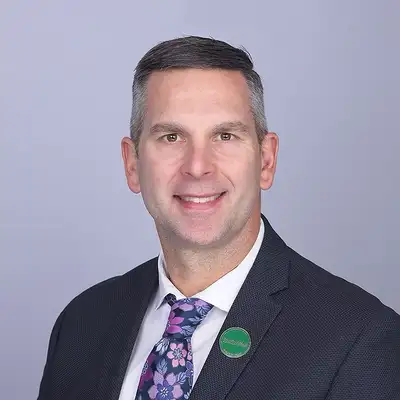
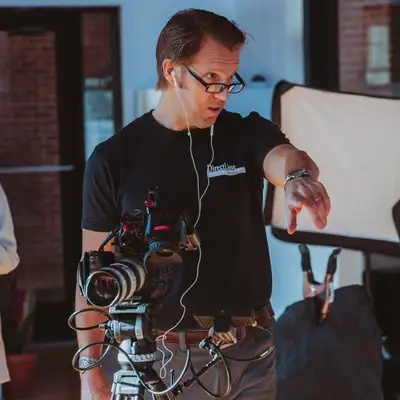

Eric Feeney talks with #friends! Eric is the founder of the nonprofit organization Friends of Feeney. Their mission is to help children and families who need assistance after heartbreak and tragedy. www.friendsoffeeney.com
All right, all right.
Feeney talks with friends.
Episode 139 with my good friend Susan.
How are you doing, Susan?
I'm great.
Thank you for having me. Doctor.
Ivana. Yeah. Doc?
What's up doc?
All kinds of things.
I can't wait to talk about it. Yeah.
Susan, I'm so happy to talk with you.
I've known you for so long.
You're an author. You're a psychologist.
You're, coach, you're a mom, a wife.
You are a school counselor.
I mean, we have so much to talk about.
Where do you want to start?
And a college professor.
And a college professor. Yeah,
I missed one.
That's all right, then.
A lot of things.
Yeah, we can start wherever you like.
No. It's just so great for you to be here.
It's. We're filming in May.
May is mental health month.
So it's very important
to talk about mental health.
As my last podcast guest, if you were to
explain mental health to a third grader,
how would you go about explaining mental
health to a third grader?
I think about mental health
as being able to enjoy your life,
and so having the skills
to be able to respond to
whatever's happening around you and adapt
to whatever's happening around you.
And we could talk about this,
but in the books that I've written
and in the work that I do with young kids
as well as adolescents, young adults,
that's pretty much the crux of it, is
helping to provide them with those skills
so that they can meet
whatever challenges they meet, and that is
that is what good mental health
looks like. Good, a good life.
I find it, circumstantial.
I'm thinking about what just happened.
I drop off,
I drop off my daughters every day.
Economy. It goes smooth. We talk.
It's like, our bond time.
But there was a food truck back then.
So we were paused here
where we usually drop off over here.
Okay, so they're like rush now.
So now it's like,
all right, let's get out here.
Yeah. So they rush to get out.
Our line starts to form,
and when my daughter's golf bag falls out.
So now it's like,
so how would someone help us?
Circumstantial. Like,
everything was great.
Yeah, but that already. Now
word is dysregulated. Yes.
We just read you last Thursday.
What would be some advice?
I'm like, just get on the sidewalk.
Everything will be fine. Yeah.
Or should I have paused and just waited
for the truck to do its thing
and then park in our usual spot
or letting them out?
So I had so much reflection on my way back
after dropping them off.
I mean, we talked about it.
It's like we rushed the decision right?
So what what are your thoughts on that?
First of all,
I love that you reflected on that.
Okay. That's that's so key.
There's no one right decision there.
And it's such a split second decision
anyway.
Like, how could you know
what of what could have come from
any given, you know, route you took there.
But, you staying calm is key.
So for me, the adult in the situation
where that's a parent,
the teacher,
the coach, you can only control you.
Yeah. So you could say,
what should I have done for them?
But really you.
If you're staying regulated,
that's going to go so far
toward keeping them regulated
or at least modeling what it could be
if they're not able to do it
in that moment.
And so, yeah, I mean, you could have
waited, you could have done what you did,
but ultimately
you're also helping them to reflect.
So maybe even talking about it
later is is kind of normalizing
this idea that, hey, you know what?
Like things happen, we react.
Sometimes it works out,
sometimes it doesn't.
And we can think about
maybe how to do it differently next time.
Yeah.
But it's all about becoming more
responsive to what's happening
rather than reactive. Yep.
But also recognizing our humanity.
And we're going to react,
you know, we're just going to
we're going to have those moments
and that's okay. Okay.
All right. All right. Thanks.
So you handled that well.
And I know love the reflection.
Now the whole time I'm like,
maybe I should have just waited.
I did kind of say get on the sidewalk
like, well, you know,
we went on the other side of the car
because the truck was
there, but then the cars
that were behind us were trying to go.
So then it got a little.
And sometimes you need to do that.
And it was a safety thing, like really
give them that direction because who knows
if they had stepped a different way,
maybe a car would have come around.
So but you know, at afterwards
when everything's calmed down
and everyone's
kind of gotten back into regular,
you can say, yeah, oh, sorry,
I yelled there.
I, you know, I was nervous
that, yeah, you were going to get hurt.
Okay.
I want you to acknowledge that. Yeah.
That it's great.
See? Well, counseling. So.
Yes. Exactly how much do I owe you?
Oh, this one's pro bono.
Deal? Deal. So how long?
What what inspired
you to get into psychology?
Because you have so many degrees
and went to so many schools.
And so what was the inspiration?
I don't want to speak
for every psychologist out there,
but I think that a lot of us get into it
to try to figure ourselves out bigger.
Our families out.
I mean, everybody has their stuff.
Nobody goes through this life without
some, you know, challenges, craziness.
And for me, you know,
I also just loved it.
I went to I went to my undergrad thinking
I was going to be a math
major, really having no idea
what I was going to do with that.
But I just loved math
and I was good at it.
And so that's how I
that was the mindset I had going in.
Didn't know a thing about psychology,
had never had any kind of intro course
or anything.
And then I took an intro course just to
fulfill a requirement, and I was hooked.
I loved it and immediately declared
the major and but again, it was for me.
And we can talk about this if you like.
Because I'm a big fan of first generation
college students, I am one,
I support them, I am on the board
where I went to college to support them,
and I actually have just recently,
joined a work group at Trinity too.
But I had no idea.
I didn't have this sort of long term plan.
It was sort of get the degree now what?
And, so I did finish the degree.
And one thing I knew,
I thought I wanted to be a teacher.
Yeah.
Just because I
had always admired my teachers and was so
they were so impactful for me.
And I also loved coaching
because I had coached,
as a high school student.
I'd coached little rec teams.
And so I thought, I want to teach
and I want to coach,
and that's going to be great life.
I did do an internship in teaching.
I think it was fourth
grade students that I think. Nope.
And that for me, it was the chaos of it.
And I thought, okay.
At the same time, I was diving deeper
into more of the therapeutic side of,
of psychology.
And I thought I would like
to be a counselor or a therapist.
Nice.
And so I went the school counselor route.
Okay. But that was the next degree.
And you can.
We can I can tell you how
I kept going to connections.
First generation college.
And I at southern studied sociology major.
Psychology minor.
So high, was my favorite class,
and my daughters are taking it.
O'Connor. And we always talk about it.
It's a it's a very interesting, subject
how the brain works.
And decisions that are made.
And,
they just came home
and taught me something, too.
It's like she did it to me, too.
Like she's sitting on the couch.
She asked a really nice question, like,
oh, can you give me a hug?
Yeah.
Then can you go get me my backpack
in the front in the in the library?
Yeah. So she didn't have to get up
the couch. Yep.
And that's a trick you asked too. Yes.
You ask a easy yes question.
There are more likely to say yes the next.
That's fascinating. Yeah.
And then they pulled it on me
and it worked. Yeah.
And there's so much neuroscience now
worked into the the major to even their
separate degrees.
But and I've taught a lot of it's,
it's really fun stuff.
Yeah. Yeah.
So now I'm so excited.
Yeah. Mental health month.
We're happy to talk with my friend Susan.
She's an author.
This is episode 139 I fabric.
I was very interested in this one.
You said it's good for coaches.
I wrote it for coaches.
But it's really about leadership
and and team culture.
So, I wrote it.
I had an idea to write this book about 15
years ago, and I didn't for a very well.
I had a newborn and a toddler
and other things going on multiple jobs,
so I didn't do it at that point.
I ended up writing the other one first,
but I came back around to it last year,
and I, I really thought there was a need
for some support for coach development
because it's like just like teaching
and sometimes
even more
so you have those deep relationships.
You have so much of an impact
and an influence positively or negatively.
Right. And there's very little
support.
I mean, you could have great mentors,
but in sort of like a,
you know, training for coaches, it's
not there.
It is the the athleticism of the sport,
but not in more of the relational aspects.
And so that's what I wanted to do.
And I pulled
from a variety of disciplines.
So I pulled from developmental psychology,
clinical psychology,
health psychology, sports
psychology and neuroscience.
And I wanted to take all of that
and just boil it down
like what are the core elements.
So does it need to be complicated?
What are the key pieces that need
to be there and what do they look like?
And most importantly, how is it applied?
Like what does this look like in practice?
What does this look like day to day,
moment to moment, as you're relating
to these kids or or adults
if you're coaching adults.
And so that's what it is.
I fabric is an acronym.
So the core, the six core elements.
First thing I thought about I'm. Like,
wow, I was like average.
So I don't know if that's a great title
because
now people search for it, they get things
on, you know, sewing or whatever.
But it's an acronym and it's
because the six core elements were are,
focus, awareness, belonging, repair
for intentionality
and curiosity and compassion.
Those are sort of the key
things that every good leader,
teacher, coach and parent,
if you keep those things at the forefront,
you can kind of make your way through
any challenge that comes up.
It's the bedrock,
I think, for, optimal development
and wellbeing and mental health.
But it's also the same core pieces
that underlie peak performance.
So you're not
you're not giving up one for the other.
And I think there's a,
much more of an awareness
now that you can have great athletes
who perform at a high level without
harm, you know, without,
eroding their physical or mental
well-being.
Now, is this a, it really reminds me of,
like, a college.
It's. It's
meant to be sort of a workbook.
Okay.
In the sense that I took
some is really. Yes.
It's really nice to read. Yeah.
And then you have reflection questions
after each chapter,
which really stood out to me.
So I'm like, is this for a college course
or is it just the reflection I.
Might use it in a course that I'm
teaching, but it wasn't intended for that.
But it could be.
What I wanted to do is take again, like,
there's some really complex
topics up there.
You could pick up a sports psych book
and it's going to be dense,
and they'll be theories
and they'll be models,
and that's all great stuff.
But what does that look like
for the average coach to
then go into their practice and use it?
And so what I wanted to do is say, okay,
it's very much steeped in research.
In theory,
there's none of this is just my thoughts.
It's it's, you know, tried and true.
But then I take stories,
you know, anecdotes.
Some are personal
to me and some are made up.
Oh. I also interviewed college athletes.
That was one of my favorite pieces,
actually.
I, a bunch of athletes across sports,
reflecting on their current athleticism,
but also like their youth experiences.
And so I integrated
some of the quotes from that.
But the reflection and the exercises
are meant to prompt the coach
to just think about, like, yeah,
how is this working for you or not
working for you?
And just it's not prescriptive.
It's not in it's not intended
to tell someone how to coach
because everybody brings
their own personality and style to it.
But it helps them to think through
the most common challenges
that we see as coaches.
And again, a teacher could read this and,
I probably get a lot of it,
a lot out of it as well.
I did notice
I have it right here to the exercise page.
I love that the reflection page, you know,
I get that
you always answering questions
at the end of the chapter.
But yeah, to to to actually do something
like consider
a belief of a negative expectation
that you have about an athlete.
So well that's a bit
I talked a lot about expectations.
And this is so true for teachers.
And you could
you probably read the Rosenthal
and Jacobsen study from the 1960.
You know, that's like a classic right.
Is is kids rise to the expectation
you have or fall to the expectation
you have a and
so we don't want to have our expectations
so high that they can't meet them.
And that's a different problem.
But we do want to keep them high.
And so sometimes
when you get into a dynamic
with a kid in the classroom
or on the field or wherever,
you know, you can start to expect them
to behave badly,
you can start to expect them
not to listen or perform or whatever.
And then it becomes a self-fulfilling
prophecy.
So what do you have control
over as a coach?
Only you.
Only what you think, only what you say,
only what you do.
We really don't control other people
as much as we may try to.
We have a lot of influence though, so.
But we do that by controlling ourselves.
So you keep the expectations high.
So this is a reflection to say okay,
what are you expecting out of this kid.
And and if it's not matching
to what you would want maybe try
try to shift that a little bit,
give them the benefit of the doubt
that they can do it
and that will come through.
Even if you don't verbalize that
it'll come through in your body language.
It'll come through in the ways
in which you're interacting
in those moment to moments,
and they'll show up differently.
And then maybe you will show up
differently.
And it's it's that bidirectional language.
Well, that's in this book.
Both of them.
Body language I it stood out.
Yeah. So,
your posture, your icon, your breathing.
And so it's oh, this an this
I definitely noticed in this book.
So now there's witness and wonder.
There's a lot of connection
and correlation.
Yeah.
There's certain themes that that cross
both books.
I get into them in different ways
and I apply them differently.
But I was it writing
a nonfiction is is it?
I find it challenging.
It's challenging.
Bibliography here is pretty,
pretty serious.
Well, you know, I am an academic at heart.
And so and I'm very it's very important
to me to give credit where credit's due.
So, you know,
it's a lot of it is my original thought
in the way I put it together.
But if I'm going to,
you know, cite research, I'm
going to show you where that came from.
I'm not just going to say studies show
which studies show.
I noticed that right away. Yeah.
That's obviously very good.
Yeah.
So you can you could go further
if you're interested
in any particular topic,
you could take it further by
just checking out where I got that from.
But I'm a big fan of learning
how to become more aware of
and control our nonverbals
and how because we communicate so much
more non-verbally than we do verbally.
And you got to know this as a teacher.
Yeah.
They're not hearing you as much as they're
they're they're taking in all of you.
So if you come in with a with a presence,
you're going to get their attention
much faster. They're just yelling.
So my loud my quiet voice
is more effective than my loud.
That's the strategy.
Yeah.
Or I do I rank I do a singing bell.
Ding ding. Stop one. Stop
what you're doing.
Two eyes on me three.
We take a big breath together.
I love that. Breath.
And that gets everyone
back on the same page.
And then sometimes we'll take five
deep ones together.
Different strategies are do the one, two,
three eyes on me.
Yeah.
So you're regulating them.
Come in with a story they love stories,
personal connections so that they'll never
I try to teach them something.
They're not listening.
But if I tell them about my dog Barkley
or me playing basketball, the J.
They're like,
yeah, quiet and listen. Yes.
And they're going to get so much
from that. Yeah.
And that's the the belonging part of the,
of the coaching book is
and I talk I mean the whole other book
is about relationships as well.
But teaching is a relationship.
Coaching is a relationship.
And you you got to start there.
But yeah that, that connection.
Now you also have a business
or a company called witness and one.
Well,
when I was doing professional division.
So this book was a culmination
of the professional development.
And the, I was working as a school mental
health consultant for many years.
I was doing trauma informed stuff
before it was a thing.
You know, I got trained up in Boston.
I don't know if you know the name Bessel
van der Kolk,
but he wrote the book,
The Body Keeps the Score.
People know it now in the trauma field.
But I was training with his group in the
early 2000 before he wrote that book.
It was a paper.
And I was very inspired by that
because it was a
it was a fairly new way
of looking at a lot of the behaviors
we see in people that we would jump
and give a diagnosis to
without really understanding the etiology
or what what
what was the point, what what was
what is the behavior serving?
How is that serving the person?
And so that sort of shift
into understanding
early
trauma was really eye opening for me,
because that wasn't the way
it was thought of before that.
And so I took a lot of that information
and it was being applied clinically,
but it wasn't in schools yet.
Not, you know, everywhere.
And probably
somebody was doing it somewhere,
but it wasn't kind of the thing.
And then when I moved here,
I was doing some work with that,
and I don't really promote myself.
I don't, I don't have like a website.
I don't say, hey, I do this, hire me.
It's more like I give a talk or workshop
and then I get a referral.
And so for for many years,
I was all over the state doing this
kind of work,
and sometimes just going in and observing
kids like, oh, you know, this, this,
this child's having a hard time.
Would you come into the classroom?
Just give us your thoughts on
maybe how the teacher could,
you know, manage this differently or,
and so that
this book was a culmination of that,
because what I found out
through pretty early on, actually, is
when I would do these professional.
And you've sat through a number
of professional development,
I'm sure some are better than others.
And I tried to be engaging
by a lot of times
they'll put you in a big auditorium.
And I would say to them,
please don't do that.
You're not going to get
anything out of this.
This is a small group, deep,
intimate conversation.
It should not be me
speaking at 200 people, but whatever.
They would put me in auditoriums a lot
and occasionally it would break out after.
But one thing I realized,
I went in with the intent to help to
get the adults,
meaning the teachers, the counselors
and other staff
to better understand the behavior of kids.
Maybe
look at it from a different perspective,
which would give them some insight
on where to go from here.
And what I realized is that it
didn't really matter
how well they understood it,
because they did understand it.
They would get it.
These concepts aren't hard to get.
They would get it.
Light bulb moments. I'd see it.
They'd excitedly talk about it. I got it.
But then I would go in and observe
and nothing would change.
And that makes sense because
we, as the adults in the room are human
and we are reactive.
And so when that child starts to act
in the way that they act,
we react
even if we have all that knowledge.
And I'm glad you're doing
the sort of proactive approach
of regulating them first, not that,
but you could probably think of instances
where like, you're going, you're going to
just snap, you're going to you're going
to go back to that habitual reactivity.
And I thought, okay,
I need to work with the adult in the room.
I need to help them to find ways
for their own well-being, actually,
and to reduce their burnout,
whether that's a teacher
or a parent or coach,
because they can only control them.
So I kind of I switched it
I it's still talking about what kids need,
but it's like what can we do as the adult?
So that's what that book is about.
That's why there's so many practices
at the end on how to regulate yourself
from a notice, from a top.
Down changes at the end. Or bottom up.
So I think of it in terms of top down
and bottom up, top down being
those cognitive strategies
and things that you do with
how you think and your mindset
and your expectations and all that.
And then bottom up
is working with the body.
So working with the breath,
working with your posture, your energy,
things like that.
This is really important all the time.
But it's particularly important in sports
when I work with athletes.
You're not going to change your mind
with the mind in a stressful moment.
So you're in a game situation, let's say,
right, and it's not going your way.
You just missed a really important
fall shot.
I know you're your basketball player.
What happens if you get in your head?
You're not getting out of your head
with your head.
You're not going to use self-talk
in that moment, most likely.
Okay, okay.
Maybe if you've practiced it
and you have a ritual around it
or something like that,
you might be able to,
but you can shift your physiology
really fast with the breath,
with changing your posture,
with sort of things
that are more physical physically,
even the way where your your gaze is going
wide or narrow.
These are things that are going
to change your nervous system
that might get
you back in a regulated state.
So the second one you make okay, okay.
So that's that's why I come at it
from both, perspectives.
I think that all of us
are trying our best,
to make it through our days
and to be great in our relationships.
And all of us have the same challenges
of being reactive,
having our habits and tendencies.
And it's more about,
can you become aware of what those are
in the most compassionate,
non-judgmental way?
Right.
Because it doesn't serve anybody
to be really harsh on yourself.
You want to just look with curiosity,
like like you did that the morning
you dropped off your daughters.
It's like, you know, what did I do?
Could I have done something differently?
Yeah, it's a good question to ask.
And maybe you have.
Okay. So,
Some good mental health going on yourself.
Yeah.
You do, I try.
I do, well, stuck out.
So. Yeah.
Yes. That was an acronym.
We deal every day.
Social emotional learning. Everything.
So I have I have thoughts on that
and you can read about it.
Well I saw.
That.
Well, I think that there are some programs
that are better than others.
I guess I can step.
You ever heard of that one?
I have,
I don't know, I couldn't tell you, like I,
my kids went through it
because they were at Wolcott.
And I've heard good things about it.
I don't think that they're not
they don't have any worth.
What I'm saying in the book is
you're going to get more
from the relationship
and the moment to moment interactions.
You see these kids day in and day out.
It's how you're relating to them. It's
how you're responding to them.
It's what you're modeling for them.
So you can have a formal curriculum where
maybe they're role playing
or they're learning about their feelings.
But the way we learn about feelings
as people is not to look at like
a smiley chart of and and pick out,
that's what I'm feeling.
It's that I have a sensation in my body
and you're reflecting it
through your own body language.
Maybe you're giving me language for it.
If I'm really little,
you know, if I don't really understand
the difference between frustration
and anger yet,
maybe you're helping me put words to that.
Yeah, but it's it's a moment
to moment interaction.
And it happens primarily
with parents and children.
But it also is going to happen
with more advanced peers
or with teachers or coaches.
So my take is I'm not saying
you have to get rid of all the ACL,
but it's more about what is happening day
to day, moment to moment.
That's where they're
really getting these skills.
And it's not that
you have to teach it,
it's just how do you show up
so that they're getting the experience
that helps it to develop?
I really push gross
growth mindset, perseverance.
You can do hard things.
I say a lot because
a lot of kids are like, this is hard.
Or going through aspect testing and
all these different end of the year tests.
Yeah.
So a lot of challenges for kids
and they're like, this is hard.
I don't know this. I'm like, try
your best show.
You work is another one show
you work. Draw a picture. Yep.
Use words numbers and and pictures.
Yeah.
Another one stood up PBIs I'm like,
you hit them all on.
How do you know PBIs? That was impressive.
Yeah.
And I this one really got me
I highlighted right here this was great
because this happened
we used to old school style of teaching.
Well for behavior management.
We used to do the clips. Yes.
On a color kids name on a clip.
If you had to talk.
What's your take on that?
I think that it doesn't.
Your posture in your your are you.
Just saw I saw me ten year old.
Me so I already. Know.
Here's the thing for the kids
that are going to be able to learn this,
it's going to be probably okay.
But if you think about the leaderboard
thing where like you're here, you're down
here, you're ranking their behavior,
is that what you're talking about?
And everyone starts on blue okay.
It's the good color okay.
If you shout out
you get a verbal reminder.
You go to yellow. Yeah.
And then I say it happens again.
I forgot what it was.
It was like verbal reminder.
One of them's.
There's one there.
Then it's call home.
That all.
Okay. So it's it's sort of a visual
but anyway.
But everyone sees it right.
The whole class okay. So.
Oh no. They're gone. Okay. Go.
I'm glad to hear that. Okay.
Because I knew you were going to be glad
they're gone.
Because I saw your posture
and your breathing.
You saw you start breathing.
Here's the reason
for some kids.
They're going to be okay with that.
And especially the ones who can do
well anyway.
They're going to actually feel good.
I'm in the blue.
Yeah.
The kids who tend to not be in the blue.
This is not that they don't
want to be in the blue like something.
And I'm not giving them a pass.
Like it's okay not to be in the blue.
They need support
so that they can be there.
But when they have a visual representation
that everyone else can see.
Yeah, that I mean, they're
either going to be anxious about it,
they might be angry about it,
they might shut down and be like,
I don't care, but they care.
You know,
everybody wants to do well, know.
And it's probably going to dysregulated
those kids
more then then, you know,
you have seen it.
So seeing it.
You know, but it's okay
for you to privately have some idea of
where they're at and maybe go to the kid
that's in the lower color saying,
what's going on, you know, and really have
that, that genuine again, the genuine
curiosity, not the what's going on,
not the harsh what's heck's going on here?
It's it's happening,
you know, that genuine.
And that's where the relationship
is going to carry you.
And I know you have these
great relationship with your students.
They love you.
And so you have that basis
to ask that question.
Yeah.
You know always what about this one two.
The absence of a reward is punishment.
Well, that's stuck up is it not?
Because the tickets you're doing
a good job.
Here's a ticket.
You're walking quietly in line.
Here's a ticket.
You were picking up.
Trash is not yours. Here's a ticket.
But now the.
Without the ticket, will they do it right
or are they being punished
because there's no reward?
That one was like.
Yeah, I mean things I guess
the schools,
behavior management schools, I mean, going
back to the 70s and probably before
that, it was always very behaviorist
based, reward punishment based.
And then we kind of dropped
the punishment stuff. Yeah.
But did we because like,
this is what I'm saying.
The absence of the reward
is, yeah, the sense of punishment.
And so we can affect behavior
through rewards and punishment.
The question is what's your end game
if you're just looking to get them
to comply in the moment.
And sometimes you need to listen,
I get it.
There are times when it's a useful tool,
but if if you're a real bigger goal
is to help them to self manage
to take responsibility,
to be accountable, to choose
better rewards and punishments
aren't the way to go.
And so much of what I say in the
the athlete book
or the coaching book
is about the importance of autonomy.
Like and building
competence and confidence.
So competence and confidence
come from trying something hard,
maybe failing,
trying again, succeeding. And
so we need to kind of set kids up.
This is the Vygotsky stuff right.
You know the scaffolding.
We want them to be able
we want them challenged not so far up here
that they're going to fail
and never get there.
That's just demoralizing.
But we don't want to just be handing out
awards just because you showed up
like they used to be.
Some challenge that they can master
and feel great about themselves,
that builds the confidence.
So these are the things that I'm seeing
in the teens and young adults
now that I think is underlying
what if people talk about
a mental health crisis right now?
I have some thoughts on
what's happened over the last decade,
and it's multifactorial, but some of it is
they've lost the opportunity
to take those risks, fail
or succeed and build the competence,
particularly around,
social socializing and social skills
and things like that.
And I think that's
why we're seeing a lot of the anxiety.
I had a couple kids
hand me a paper and they're like,
I'm like,
that one's wrong, Derek, don't put the ax.
And I was like, whoa,
that stood out to happen recently.
Years. Don't put the ax, don't put the ax.
I'm like, well,
you're going to go back and change it.
And then I could get this though.
They didn't want the ax anywhere
that's vile.
Or they don't use red pens
because that's a bad color.
Or like, they,
it impacts them a little more.
But no, we teach children
that to fail is to learn,
and that perfection is not expected
or possible.
Yet our reward practice sends
a contradictory message.
Another highlight.
I talk about failure.
I put on the board, fail, first
attempt and learning.
I love that. Yeah, and then I write.
Mistakes are expected, respected.
Inspected. Right.
You're going to make the mistake.
We're going to respect
because people make them,
and then we're going to look into it
to see what you did wrong.
So we don't yeah. Do it again.
Expected respected.
But I love that.
And some kids just have
perfectionistic tendencies.
And it didn't come from the parents.
It didn't come from the teacher.
It's sort of the way their brain is wired.
But the more we can send the the message
just generally that like this
is part of growth, you cannot grow
without some failure along the way
because that means you didn't take a risk.
I know I just said that today was like,
if you go through life
and all your questions are easy,
you know, learning anything,
there's no struggle.
It's like lifting up weights
that are free light.
You're never going to get a muscle.
That's right.
You need that challenge to,
you know, that's when the learning
takes place and they're like
oh I'm giving them that pump up.
Before the CNT or not
the CMT the aspect testing.
Yeah I'm giving them
like the Vince Lombardi.
This is our Super Bowl.
We've been practicing all year.
We're going to show the world
how smart we are.
And they're like yeah you can do it.
That's that. Coaching
does that good. It is coaching.
And then that's
the high expectation to you.
You're showing them your belief in them.
So you're you know you got the bar
and you're saying I know you can meet this
and we've done
this. We've put in the work.
Now let's do it. Yeah.
No, that's so interesting.
I'm really excited.
Witness and wonder
about sourcing an educator and fabric
author.
Do do you read another book too? Right.
Don't you have a couple more?
I don't know, I'm working on one for it
specifically for athletes now.
Okay.
It's going to be sort of an offshoot.
Why are you out of book?
I mean, I know that was written.
This is a magazine.
I've written.
Yeah, I have journal, peer reviewed
journals and things like that.
And then trauma is a goes.
Yeah, I don't read it, fit into it.
And either book. 32 and 38.
Trauma is an interesting thing.
So like I said, I've been I've been
teaching about that for 20 plus years.
And I have my take on it has changed.
So I could tell you about that
if you like.
I think it's it was a great thing
that we recognized that there's trauma
underlying people's sometimes maladaptive
behaviors, addiction, things like that.
That is amazing that we can get that
because our our experiences
always change who we are.
They change our mindset,
our worldview, our nervous system.
They shape us. Right?
So it's good to know that
where I think we've gone
a little too far off the rails at this
point is everybody is identifying
with their trauma story,
and that's not a good place to be.
So it's good to understand
what's happened to you and how it's shaped
you and how it's formed. You.
But the question
I like to say is, now what?
Because if all you do
is repeat your trauma story over and over
and use it as a reason
for why I am the way I am, especially
if you don't want to be that way,
then it's just a story
that's that's actually limiting you.
Gotcha.
So it's not about ignoring diminishing
someone's suffering or anything like that.
Like totally not acknowledge
that and understand how it's maybe shaped
your beliefs or even your nervous system
because it does.
But it's more like,
okay, now what do I want?
Who do I want to be?
How might I want to be different?
And so much of what I write about,
especially in the second book
in Fabric Book, is about habit formation
and procedural learning.
And like
you are, what you repeatedly do.
I think that's been attributed
to Aristotle, though.
Someone told me he didn't actually said,
I don't know who said it originally,
but you are what you repeatedly do.
So if you don't like who you are,
you're not stuck.
It is not determined,
but it is going to take some intentional,
deliberate practice
of something different.
And that's what I try to get across to the
especially
the young adults that I work with,
whether that's around their mental health.
It might be around their athletic
performance, their well-being in general.
It's what are you going to do differently?
I have a story
I could share, if you'd like, in there.
One of my, it's it's in this one,
but I have a friend from, you.
Know, a page. Chapter. 15.
It would be in the intentionality
chapter, and that is chapter.
I don't know,
I think that's chapter five.
So I have a
story that I've been sharing in my class
in my college classes for a while now.
Whenever I talk about procedural learning,
procedural memory,
and just habit formation in general.
And I wanted to put it in the book
and I was like, well, I need to ask
permission before I write this,
because this is a true story.
And one of my childhood friends.
So I, I messaged her through Facebook.
So Roseanne, it's Roseanne.
And I said, one, do you remember this?
Tell me if it's accurate.
Because, you know, we're talking about 35,
40 years ago.
She says. I do remember that.
I love that you remember that.
And I said, okay, I would really love
to use this in my book.
Do I, you know,
do I have your permission to. Yes.
And I said,
would you like to be named because I can
I cannot use a name
or I could use a pseudonym.
She said, no, I want you to use my name.
So her real name is Roseanne.
Shout out to Roseanne.
Shout out to Roseanne.
And so this is what happened when I was
in elementary school with Roseanne.
She was a fantastic gymnast,
and whenever we were in PE class,
we would do the,
you know, the floor tumbling exercises.
And most of us are doing forward
rolls backward rolls, cartwheels.
And she'd be doing, you know,
multiple back handsprings that things.
And we would all sit around
and watch her perform,
and I would sit there
and little all of her strength
and her fearlessness
and her skill and talent
and a little envy, just like, oh,
I wish I could do that, you know?
And then a few years later,
we're in junior high.
She was always a great athlete,
very strong, very fast.
And I don't know why we're doing this.
Maybe you could tell me we were.
We'd go out for P.E.
and every student would get timed how fast
they could run the short distance.
I don't remember what it was,
but we had to sprint over at a time,
and it was known
that Roseanne would be the top female,
maybe even the top across everyone
because she was so fast.
But the funniest part of the story to me
is that my junior high didn't have fields.
It didn't have a track.
It didn't even really have.
Much like grassy area.
It was right on the road with a sidewalk.
And so this test took place
on a sandy, uneven sidewalk.
Okay, that we had to sprint down to
to the timing.
Okay. So we're going along.
And well. It's not going to end well.
So we're watching one by one.
Roseanne takes her mark
and we're all expecting her to win.
So we're all watching from the grass
and she takes off like a shot.
And she's like 4 or 5 strides
in, just really going.
And the tip of her sneaker
catches on the uneven sidewalk,
and she starts heading headfirst
toward the sandy cement sidewalk.
And it's one of those moments where you're
kind of looking through your fingers.
You know it's coming, and I swear to you,
like time just slowed down.
It went in slow motion for me.
I'm expecting
just blood and skin everywhere,
and, And so.
Oh, and now the other thing is,
what happens, I ask you, what do
most of us do in that situation
if we unexpectedly fall?
Our habitual sort of default
mode is exactly hands out tight brace.
Try to try to minimize the impact. Right.
And that's why so many people break
their wrists are their ulna radius.
So that's what I'm expecting.
Instead, Roseanne tucks her chin
round her back
rolls, barely
even touches the ground, pops right back
up, and just keeps running and like,
it was like nothing happened.
She it was almost.
And we're all standing there
with our mouths agape,
because what just happened here
and that memory has never left my brain.
So when I started studying psychology
and I was reading about
procedural learning and procedural memory
and embodying a skill, I was like,
that's what happened there
for for 99% of the population,
the default would be to to contract
and put your arms out and try to brace.
And it would not end well.
Yeah, but she was used to.
Flipping it.
Flipping and rolling,
you know, flying toward a mat,
rolling, coming right back up.
So for her it was instinctual.
Yeah. And natural.
She didn't. She.
No time to think about that.
That just it just happened.
And so I always use that as an example of,
you know,
when we talk about procedural memory
or procedural learning,
but it's essentially
it's like you embody a skill.
The more you do something, it's
who you are.
Okay.
So if you don't like who you are,
first become aware of what it is
that you don't like.
Is it the way you think about something?
Is it
how you show up? Is it how you react?
Is it some behavior you have?
Okay, let's be honest with yourself there
and then
what can you do differently
and start practicing that.
And just like you would,
you know you get the advice to your kids,
you're not going to do it well at first.
You're going to react the other way
for a while until you don't,
until this becomes your new default mode,
just like Roseanne.
And you will roll really good.
Yeah, she put that in there and let's see.
Never losing stride.
Yeah. Did she still win?
She did. She did. Yeah.
And it's funny that she remembers that.
I mean, I think anyone in my junior high
would remember that story.
So. Sure.
Like because we were just.
Yeah, she's about to get dusted. Yeah.
And then all of a sudden ugly.
Yeah. Wow. Roseanne. That's talent.
Yeah.
It's impressive.
That's like. Reminds me of some guy.
He joined the JC League and he just keeps
getting better and better.
He should be practicing really hard.
He practices day and night.
He's always on the clock. In the book
for that.
I don't listen.
Used to not be able
to make the playoffs to me.
And now he's hitting three pointers.
What chapter is that? Yeah.
He hit a reverse
layup on me the other day.
I was like, he's going to miss.
And all of a sudden
he finished and I'm like, oh my God.
See he got me.
Yeah Jason no that's awesome.
Before we move on
these are fantastic books.
They can be found out I.
Amazon. Amazon. Yep.
Barnes and Nobles to.
Not right now, but
yeah you can search online.
Name is probably the easiest way
to find out about
you can find by the title if.
You and you really don't have a website.
I don't I should put one together.
I have a Facebook. Business
with this podcast.
I know I have a Facebook business page.
Okay.
We can put it there.
I should get a website.
I have an Instagram,
but it's barely population.
So I know someone that does websites.
Well, I think I need to.
I was like, I need to ask.
Podcast guest blue Jean creative.
Okay. Ali Bell Ali Baluchi.
All right, check it out.
She was episode I'm going to look her up.
Ali Baluchi blue jeans.
Tell her I sent you.
I will check out
friends of e-commerce website.
She just did ours.
Okay. Really nice. Okay.
Interactive. It pops.
There's bouncing and movements and flows.
There's bars going across.
I really I do need
I do need something I said,
but one of my favorite things to do
is to consult.
And, you know, like I said,
I usually get through word of mouth, but,
it would be nice for people
to know that it's available.
Can you pick your baby?
Which one do you like?
I mean, I'm loving the coaching one
right now because that's where my mind is.
I am coaching, I,
I just, just did, some consultation with,
all the head coaches at Holy Cross
that that's a Division one school.
That was pretty remarkable.
The former.
Alma mater.
My. Yes, and I was
I met the ad a year ago.
We were talking about it.
He said, you know,
I'd love to see the book.
He read it.
Yeah.
To see all those sticky notes
you have in there.
He had like 20 times that amount.
And he said, I really want to order this
for all the head coaches
and their assistants.
And would you come in and talk?
And that's my favorite thing to do
because it's more about just hearing
what they want some feedback on
and kind of going from there.
And so I was able to talk to many of them.
I don't know if you saw,
but the baseball team
just won the Patriot League last night.
They beat Army. Wow.
So all because they.
Don't know
that I'm not going to take credit card on
just saying I'm very proud of them.
But but we talked about it. It was funny.
We talked about some things
in that meeting and that were, you know,
that were he was wondering how to approach
and kind of cool off.
Well, congratulations. Holy Cross.
And these are wonderful books.
I find them really engaging
and educational.
Demand personalizing autograph.
I don't mind at all. Let's do it.
Take.
Yeah.
We'll get into your coaching.
So you coach, cheerleader.
I coached Trinity. A Trinity College
cheerleading team. Yeah.
And I've been coaching
cheerleading on and off since the 80s.
Like.
Like I said, I started when I was.
When did I get a little Fenian here?
Oh. Two. Feeney.
Keep up the good work.
You're a great teacher.
Well, you. Put too much pressure.
All right,
we'll do that after I got my autograph.
I love it. Okay.
Yeah, I coached in the same rec program
that I started in.
My family's a big football family.
My uncle was the coach of the high school,
so we all did the
the rec football and cheerleading.
I was the only girl. Yep.
So it was it was a given that I was going
to cheer for the football.
But I loved it.
I met a lot of friends doing it,
and I ended up
cheering in high school and college.
And then you're like a base or a flier or.
What do you.
I started as a flier
because I used to be very short.
I was only 411 when I was a freshman
in high school, and then I grew
eight inches, and I became a base. So.
We Trinity, who just won the championship,
they did.
Your girls cheerleader.
Yes. For that, that it was.
Is it a ring or trophy arena.
Not going to ring.
No. But it's
we had. The championship game. We didn't.
They didn't fly us out to Indiana.
No okay I didn't, but.
Congrats to the team.
Yeah. It's just so fun to be right there.
You know they're there at the base line.
I'm right behind the table basically.
You know and I know all the the boys
I've gotten to know them over the years
and it's really fun to watch them.
But I know I was practicing with Jason
one time in the driveway
and you had like a team meeting
or so I saw.
It was showing up. Was it the preseason?
Yeah, I think that was our
that was probably our beginning of season.
Just team bonding.
Yeah, yeah.
But, I yeah, I have the overall.
Building rapport and relationships.
For sure.
We do a lot of that.
Yeah, I talk about that in the book.
It's great
when you do things with your athletes
or they do things together
that are not sport related.
Just just have some fun, you know,
get to know each other.
Different in a different way.
I'm always amazed
how much talent my girls have that are.
That is different from cheer.
I mean, they're great in their athleticism
and their dance, but a lot of them sing
and they do theater and they they're
in all these different clubs and things.
And I try as much as I can
to show up for them when they have
their performances that are,
you know, there's so many of them. But
I, I that's ki I, I just attended
Kids Ninja Warrior competition.
I've been to plays soccer games.
Yeah.
You I mean, you have all your kids
that go on and then you're going park.
If I walk the dog or someone's
playing a baseball game there.
Yeah. So it's great.
I just saw someone
we podcast at Luna Pizza recently.
I saw a former student,
and I went to her gymnastics,
and I'm like, you still doing gymnastics?
She's like, no,
but I'm doing track and field. Yeah.
So it was great to catch up.
It's good to it's good to have us to try
to be a scholar athlete in your life.
Yeah, right. Like I'm
still trying to be a scholar athlete.
I just want
to exercise and also hit the academics,
you know, read, teach, learn,
learn something new every day.
I tell all my students,
I say it on the podcast.
I'm a lifelong learner,
so I'm really enjoying this conversation.
I'm learning something new.
And, and,
you know, I work at work at the gym,
work out at the JCC and play hoop, swim,
swim a mile this morning.
That's impressive.
Oh, yeah.
Yeah.
5 a.m. club new member.
No, just oh, at the JCC.
Now she he's he's a member,
but I'm not. Oh.
Have you ever tried.
No, I'm not a swimmer, but I membership.
But not at 5 a.m..
I do workout. Yeah.
Like I have that at the J. Yeah, yeah.
Racquetball work.
I am the strength
and conditioning coach for my team.
We don't have one, so.
Oh, I have to, keep abreast of the
the latest,
you know, ways to train them for safety.
You know.
Is there a a competition
or a winning for cheerleading.
There?
I mean, there's not a lot in New England
for colleges in terms of camps.
There's one called the New England
Cheerleading Association that we go to.
I think there's a couple in Boston
that are open.
There's it's we'd have to get into cheer
in more depth for you to get this,
but there's a lot of all star
competitions that will invite colleges
if you want to go.
But the big ones, the nationals
that are in Daytona, we're not there yet.
We don't have that kind of money.
First of all, and we could get there
because there are
other teams at the same level
that we're at that go.
But I would want to be a notch higher
before
we were going to make that commitment
to get there.
It's just a really big undertaking.
We're a Nescac team,
so, there's not a lot of cheerleading
in Nescac.
There's only, I think Wesleyan and Tufts,
out of all the teams, even have programs.
Oh, wow.
So, it's and it's a new program.
It's only three years old.
Oh, you're the originator.
Well, I didn't start it because some kids
started it as a club in 2021.
It was a club at that point.
And then in 2022 it became a club sport
and they hired a coach. So.
And I heard about it
and I'd wanted to get in.
I had coached at Conard for many years.
Oh yeah, I remember. That. Yeah.
I'm still in touch with all those kids.
Yep. Remember things.
And I taken some time off
and I'd been itching to get back into it.
I even thought
about going back to high school
coaching, which is that's an undertaking
because there's a lot of time,
you know, in college.
Yeah, I
would say it is, depends on the college.
This was, you know, but,
you know, we have breaks and,
we don't travel with the team,
so we reach our home
games, home football games
or on travel of the way games.
We do.
We do cheer for, men's and women's
basketball.
Says a lot of those games.
But, yeah, at the high school level,
it's even more because you're doing
you're doing
probably traveling for football.
You're doing all the boys and girls games
and there's multiple competitions.
So it's a lot.
But I was really grateful to get into it
at Trinity because,
you know,
I know these kids as students, but
to know them as a coach, you just
you get to know them even more deeply.
You know, I'm spending ten, 12 hours
a week with them,
but intensely, and it's just,
you know, they're like my daughters, like,
see what might be going coed next year.
I found out we have some men
that are interested, so we'll see.
You might have a coed team.
Nice desert jacket. They are.
They are on hand.
Tossing and catching them. Yeah.
It's just it's just such a fun sport.
I you know there is a lot of athleticism.
It's not always appreciated
of how much there is
but it also has especially for game day.
I love football and basketball so I love
just being in in the thick of it.
And then we get to I also love music,
so I get to choreograph.
Yeah, routines
and then put out half times or sidelines.
So it's, it's, it sort of touches on
all the things that bring me joy.
Yeah. And,
and I get to teach all those life skills
like you're doing with your students.
But I'm doing it through. This yes. Way.
I coached the Boys and Girls clubs
high school basketball team in Waterbury.
Made it to the state championship.
Oh, Preston.
Lost to Hartford's Boys and Girls Club.
It was supposed to be 18 and under.
They had a 20 year old on the team.
Yeah, I'm not bitter.
They got a. Ringer.
It was like 17 years ago.
I'm not bitter. It's
now coaching
and teaching is off and fantastic.
I coached all my daughters.
I coached girls soccer.
I was the best kindergarten soccer coach.
Motivated? Yeah.
Then you got to second grade.
You had to know positions and stuff.
I was like, oh,
I don't know soccer that well.
Basketball up until eighth grade. Yup.
Softball up until.
Now. What sports did you play?
I played college.
I played baseball and football in.
In basketball?
Yeah, in high school.
Nothing in college. Intramurals.
My wife played basketball for southern.
That's great.
That's why I married her. Yeah.
So she
she has a thousand more points than me.
I was great, so no.
And I. Yeah.
Jason, shout out to your guy Jason.
Great great guy for future Future
podcast guest.
I met him.
We both had the kids at the Sandbox
at Oak Park, remember?
So this is what I remember.
First time ever heard your name.
Yeah. Go ahead. No,
I remember he came home.
He had taken Luke. Might have taken al.
I can't remember how old they were,
but Luke was still a toddler.
Yeah.
Went over to Wolcott and he came back.
Seimetz.
Great guy,
really down to earth, great guy.
I was like, right,
because we'd only been at West Hartford.
Yeah. He was. Yeah.
So the guy. Chadwick at the. Park. Yeah.
And that was the beginning of it.
Then I saw him,
so I saw him at the park with our kids.
I would, I lived across the street.
So I'd bring my girls
seven in the morning.
Twin girls like what am I going to do.
That's why we moved there for get park,
get the babies.
My wife was pregnant.
Yeah.
There was like the school,
there was like, oh, we can go to the mall.
We can go over here, walk it.
Park was the huge. So I was there a lot.
And Jason, then I saw him at Sedgwick
Middle School and an open run.
Right.
We both didn't belong there
because the talent was way too good.
And then fast forward eyes.
Were like 20, oh, 20. Yeah.
I said, you need to find over 50 plus.
Okay.
So now we're in the same league at the JC.
Had a couple former guests, son
Billy Markowitz, Ben Few club.
Scott.
Andy, Jason's got to come.
Now, he's a good guy, so he's all right.
He's all right. He's
all right. Well, he's a keeper.
Yeah, yeah. Keep him around. Yep.
We talked all this teacher talk.
Do you have a favorite teacher,
a teacher that inspired you, or.
I have so many favorites.
But I was thinking about that, and I had
one particular memory pop into my mind,
because when I was in junior high,
there was a social studies teacher, Mr.
Winslow.
And what I remember about him,
and I think probably all the kids felt
this way, is he
not only was he kind and safe,
he was funny
and he just kept things light.
And he was a serious teacher.
We learned,
but he was just always having fun.
And we had these,
like, progress notes,
but they were really.
You got them if you were in trouble.
They, they call them progress notes, but
it was more of like, you know, your child
has been doing X, Y, and Z, and here's
what needs to happen, blah, blah, blah.
And me being like the rule
following perfect student.
I never got one, a real one.
But he one time wrote me a funny joke one,
and I found it a couple of years ago
when I was moving, that I kept it
because I loved it so much.
And I just thought about today
he he wrote, you know,
something about me throwing darts at him
and him having to keep ducking.
And he signed it.
Frank and Stein and he dated it 1849.
And then I looked at it,
and now this is, you know, early 80s.
Okay.
So do you remember the show
Welcome Back, Kotter?
Yeah. Okay.
With the sweat hogs and Epstein.
So I showed my mom because I thought
it was hilarious, but then I signed it.
Susan's mother,
the way Epstein used to sign the notes.
Epstein's mother. Gotcha.
So I kept that. And I still think of him.
But I had so many. Great.
I mean, I remember my kindergarten teacher
who is just so warm
and nurturing my, a math teacher
I had in high school.
Ms.. Peterson.
I'm still in touch with her now.
She's still teaching.
I think she's retired, but gone back in
some other role as a teacher.
Had her multiple times.
Loved math. So, yeah, I mean,
I could go on, but.
And then you're ABC Eagle.
I am ABC Eagle.
That's where I did my grad school.
So I did my master's in counseling there,
and then a doctorate in developmental.
And I taught there for several years.
So we got to go to Notre
Dame's coming to that.
Okay. I
they come in here this year. Okay, fine.
I could probably get us a box. Let's go.
We'll say, let's go.
Let's do it. Be a good friend. Come.
That'd be great.
Huge Notre Dame fan.
And I know they're coming.
And I went already once before.
I'm going to go on.
I'm going to look at the.
Did you know the day of hand?
I'll look it out. I'll look it up. Okay.
But I went there.
I got a picture of the Doug Flutie statue.
Yeah.
And then I went over to the Boston fans.
They were kids.
I was younger, yeah, on my guys.
I had Notre Dame helmet, shirt.
I'm going to lean into you.
I want you to do whatever you want.
Yeah, yeah, yeah.
So there's a lot of fingers
and but it's a great picture.
And I'm like,
this big 50 kids behind me. Give me.
I got to introduce you to my cousin Phil.
Yeah.
Who went to Notre Dame
and is a huge diehard.
Hey, let's go. So.
We can make the drive. I'm.
He'll. Come on. He lives in Florida.
But he would come up for that.
Okay, I know he. Would make it.
It might make it a group effort. Yeah.
I, drove out there three times.
I saw them play.
Did I see? Yeah. Matty ice.
Matt Ryan was a quarter he see.
So I saw him in Notre
Dame as well okay I saw Stanford out there
Notre BC out there UConn
when UConn one. Yep.
So no BC let's do it.
All right. Wonderful chatting with you.
Did I miss anything?
Do you have any recommendations
TV shows, podcasts?
Any questions for the best?
The trial? No.
Because I love all things Boston.
No. I'm just, you know, I'm
really thankful for you for doing this.
And, and just being who you are.
I mean, you really show up for these kids
in so many different ways,
and they're lucky to have you.
Thank you. So much. Yeah.
So, a big shout out to to you
and all the teachers and coaches.
It's not an easy job.
Some of the most important work out there.
So yeah. Yeah.
But even you mentioned at the beginning
my name is Eric Feeney, founder
and president of Friends of Feeney.
Our mission is to help
children and families in need assistance
after heartbreak or tragedy.
I use this podcast.
Feeney talks with friends,
and I talk to wonderful people
in the community
that are doing great things.
And Susan, you do great things again.
Author, coach, professor,
mom, wife, psychologist.
And do it all.
And you can see what the color of my shirt
before we go.
All right.
Are you next, man. Before we go. Oh, boy.
Before we go.
Oh, gosh. Okay.
All right. Jason Ryan. This boy.
Yeah, that was heartbreaking for us,
but it's all right.
Next year. As always. Next year.
Well, again, you're a good friend.
Our motto is be a good friend.
Pick up trash, hold the door.
And you're doing great things.
So thank you again for chatting.
I learned so much.
Thank you.
Sarah, we got a witness in Wonder fabric.
Go out and check it out on Amazon.
Wonderful author. Great person.
Three will say be a good friend.
123 be a good friend.