Subscribe
Share
Share
Embed
Since 1986, Convene has been delivering award-winning content that helps event professionals plan and execute innovative and successful events. Join the Convene editors as we dive into the latest topics of interest to — and some flying under the radar of — the business events community.
Convene Podcast Transcript
Convene Interview, ep. 34
*Note: the transcript is AI generated, excuse typos and inaccuracies
Magdalina Atanassova: This is the Convene Podcast.
Today, we're exploring what it actually takes to earn a seat at the leadership table — and keep it — when marketing's value is constantly under scrutiny.
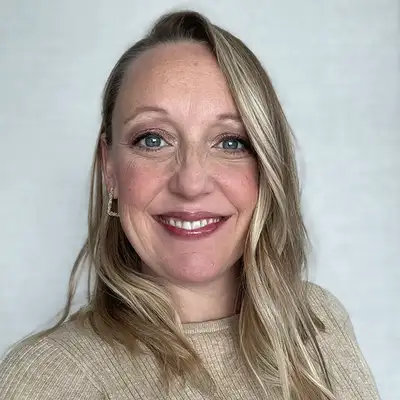
My guest is CEMA Summit speaker Elizabeth Maxson, fondly known as Emax, Chief Marketing Officer at Contentful, where she leads marketing strategies that use AI and personalization to help brands deliver content at scale. She previously served as CMO at Quip and Tableau, both Salesforce companies.
In this conversation, we talk about how Elizabeth builds credibility for marketing inside a leadership team, what it takes to turn a pipeline problem into a business case a CMO can't ignore, and why executive presence is less about polish and more about reading the room. We also explore the AI experimentation reshaping her marketing stack, and how her early years in event management gave her an edge most marketers never develop.
We start now.
Hi Emax and welcome to the Convene Podcast.
Elizabeth Maxson: Awesome. Thanks for having me.
Magdalina Atanassova: It's my pleasure.
And tell me, you've been Chief Marketing officer at three different companies, Quip, Tableau and now at Contentful,
each tied to a very different wave of technology.
So what's the first thing you look for to gauge whether marketing already has a seat at the table or whether you have to build one from scratch?
Elizabeth Maxson: I mean honestly, it starts with the CEO.
Does the CEO actually value marketing, understand marketing? And I think a lot of that also expands out to the rest of the leadership team.
What is our partnership with product as well as sales?
I really believe that marketing sits at the intersection of both of those. We really understand the market, do a lot of the research we're really driving, go to market understanding where our product is, that market fit or not, and how we need to evolve and then translating that to the impact of conversions and supporting our sales teams.
So to be honest, I think it really starts at this leadership team and really understanding what is supported by a CEO and then looking at your peers and your partners and how are you going to work together and really have that mutual respect and understand that this is a three legged stool and not something that marketing is doing it alone.
Magdalina Atanassova: I love it. As someone who sat on that side of the business and marketing then in events I can definitely see how the these two have very similar issues and we'll address them a bit later in our conversation because I think it's insightful for both sides for marketing and for events people to just understand each other better.
But before that, how do you tell the difference between a room that doesn't value marketing and A room that just hasn't been shown the right business case yet.
Elizabeth Maxson: You know, it's really funny because I was thinking about this experience I had. I had joined Contentful in my background third trimester of my fourth kid.
So I was there for a quarter and then I took four months off. And the first week I came back was actually really unique timing because it was when we were hosting an ELT off site in Berlin at our headquarters and I was there and I had a two hour presentation prepared for day two.
But during day one I realized we were not speaking the same language and and my peers were using marketing jargon or saying marketing words. But I was realizing their definition was different than my definition.
And that night I scrapped my entire presentation. And I decided I needed to use my next day as not a planning meeting, I needed to use it as an education meeting.
And it was great cause I was so many hours ahead of my US team. So I was like pinging everybody, like hey, we pull me like I need an overview slide of what is integrated campaigns and like how does that work?
And let's talk about how many campaigns we can do in market and what is our strategic point of view on that. What should be a competitive play versus you know, something that's more focused on our brand.
And so it was this complete pivot and I'm telling you that was like a huge shift in our leadership team to just really level set.
But it started with education of what marketing actually does and what we're capable of.
Really the timeline it takes to accomplish things. I think that's the other thing right is you know, if, if, if I get a request from sales of oh, we want another bottom of funnel asset like an ebook.
Well, an ebook sometimes takes us six weeks to create. That's not something I can just turn over, you know, quickly.
So a lot of it is education and then to me it's anchoring in that common language and really focus that when you say integrated campaign and I say integrated campaign, you know those two mean the same thing.
Another outcome of that was deciding we then also needed a new weekly meeting cadence to focus on go to market. And this meeting's been amazing. We have committed to it every Thursday at 9am and it has grown.
It originally was just, you know, myself, our couple product leaders, a couple sales leaders.
And now this meeting has gotten so big and it's a place where we make decisions together,
where we review data and really understand how the business is performing alignment with sales when they have asked for us. And we need to take something off the plate and really understand what are those true trade offs.
So it's actually been kind of beautiful. Like all of that came out of, you know, that, that new two hour, like reset session.
But I'm glad we experienced that at that time because that common language is really important.
Magdalina Atanassova: So good that you were on the lookout for those details because like you say, the language is the same, the words are the same, but the meaning behind completely different.
And speaking about that, I wonder,
because you move from Tableau, which is data and analytics,
into Contentful, which is AI and content,
did the industry that the company serves, did it matter, you think? Did you have to also adjust to that?
Elizabeth Maxson: I mean, honestly, I don't think so. Like, if I think about it fundamentally, like, nothing changes, right? The technology changes. Right. Like, before I started on the Tableau team, I wasn't in the data space and I had to learn how to be in the data space.
But I think another part of that was I never assumed then I was an expert, you know, and so it was the one thing that I really gained, true,
I would say relationships with the customers, especially our practitioners of really understanding, hey, you're the expert here. You're a data analyst, right? Like, that's not me. However,
you know, I appreciate data. I understand the importance of data, I understand the importance of having a data culture.
And so for me, that was just fundamental with Tableau.
And then honestly the same thing with Contentful. I mean, it's, it's, it's just the fundamentals. I don't think it matters. I think it's more adopting the technology and really understanding the deeper level, understanding who your buyers are as well as your practitioners and having those fundamentals across both.
Magdalina Atanassova: I love it. And you have all these very interesting pairings in your background.
Elizabeth Maxson: I mean, honestly, I'm so grateful for my opportunities. I mean, if I like, look, look back on it, every single role had a job to be done.
And you know, and I'm not afraid of taking on those jobs and leaning into it. So I'm very grateful because I've learned something new, including Contentful, similar. I'm a marketer, obviously, but I wasn't in the CMS or DXP space before.
Right. So there's a lot I had to learn in that technology space as well. So it's all, it's all good learnings.
Magdalina Atanassova: Yeah. And I think it started even earlier for you, right, with your education because you studied facility management alongside marketing, which again is not very.
Elizabeth Maxson: Oh my gosh, I laugh about this all the time. I feel like I have to explain my degree because I think like as you're thinking about like how this influences the things I do today or like thinking about what I might have wanted to learn.
So to give you the background, I actually went originally went to school for photojournalism and I wanted to be a photographer. I worked for our newspaper and I was, I, you know, I've had jobs since I was 14 so at, in college I worked at a restaurant, I worked at a golf course,
I was in a sorority, I was doing a million things and one of my sorority sisters was gone on a half year long internship working at Disney World. And I went to school in Michigan and,
and she came back and I was like, how did you do this crazy internship? Like what is this whole thing? And it was this program that was tied to facility management,
but it was actually commercial recreation, which is anything leisure related to make a profit. And I kind of took a step back and was thinking, I don't think I'm going to make any money being at a newspaper.
Like I just don't think this is going to be long term as much as this was a passion for me at the time.
But what I was thinking was that everyone is always going to be, want to take a vacation. Everyone's always going to want to find time for themselves. So if I was going to really focus on one industry, why not focus on the leisure industry?
You know, leisure even that sounds kind of fluffy now that I say that out loud. But so that's really what my degree was, was anything leisure related to make a profit.
So most people graduated from that program,
you know, working at resorts, going into hospitality.
And what was unique for me is I took an event management class, like very specific on event management. It was like a year long, I think it was over two semesters where we had to develop our own company, we had to create our own event and like budgeting was a huge aspect that I feel I'm shocked how many leaders are not see themselves as CFOs.
I pride myself on my budgets and spreadsheets and so those are all things that I took from my learning in college was,
you know, really that diligence and detail and attention to detail, especially when it comes to budget and spending and then proving your impact in the end I think is really important to really tie that back together.
Magdalina Atanassova: Well, I'm glad we set the record
Elizabeth Maxson: straight with what your degree is all about. It's always like I, I, I laugh because on LinkedIn I'm like, do I need to take this off? I think this is confusing what I actually went to school for,
Magdalina Atanassova: but it's good. And I think you're touching all of our PCMA audiences very well,
saying you had,
you've done event management, you know,
the struggle of that audience. So that's perfect.
Elizabeth Maxson: Yeah, exactly.
Magdalina Atanassova: So pivoting a little bit.
Executive presence,
it's not something that's very well defined. Let's put it this way.
So I wonder, because you're sitting at the C level, can you describe a moment when you watch someone lose a room, but not because their idea was wrong, but because of how they showed up?
Yeah.
Elizabeth Maxson: I think executive presence is a soft skill that isn't talked about enough and really focused on the tips and tricks of how to really gain that as a strong skill.
So examples of when I see people lose the room tend to be not knowing how to read the room when they get get so focused on the content they're trying to deliver the point they want to get across or decision they want made without actually listening to the questions or,
you know, getting flustered. If, let's say you come in and you have a 30 slide deck and you can't get past the second slide, you know that that happens so often.
And so they often lose the room by,
you know, reacting in a defensive manner, trying really hard to push along,
getting through their content and not reading body language.
And body language, I think is really hard, especially ever since COVID and how much we do virtually.
But I do think there's a lot of body language that's still very telling of how,
you know, it's, it's, you know, age old. Like if someone's leaning in, that means they're interested. Right. If they're leaning back and they have their arms folded, you know, that means they're not interested.
Like there's just some very basic psychology of human behavior and that body language that I think if people start paying attention to that, they start paying attention to the questions that are actually being asked.
If they look at feedback as a gift and not defensive and their reactions,
you can be successful and you can be confident and you can have that executive presence.
But it takes getting out of your head and it takes actually paying attention and almost multitasking your brain. Right. It's like knowing your content inside and out so you can focus on these other details to have the most productive meeting.
I know that might be a little bit too psychology based, but I do think a lot of this,
having emotional intelligence in the room can Help you read the room to help do better in the room.
Magdalina Atanassova: I a hundred percent agree. And I've been stuck in those meetings with we can't move past the second slide way too many times.
We don't want to be stuck there.
I agree with you 100%. And speaking of that presence and emotional intelligence and reading the room because you've had some strategic partnerships with amazing companies throughout your career like AWS and Alibaba and Apple, just to name a few.
So what do you think are the biggest misconceptions which some marketing leaders may have about how they actually make those partnerships be valuable?
Not just, you know, giving the logo to be stuck on a slide, but really doing something together?
Elizabeth Maxson: Yeah, I mean,
listen, I think at first blush it's very easy to say two logos together, that's going to give you both a brand lift and attention in the market, which is true.
But I think the misconception here is taking a step back and really understand what is the partnership trying to solve.
So for us at Salesforce, when I worked on those partnerships, it was all about putting the customer at the center of everything that we were doing.
What could we be solving for our joint customers by bringing and integrating our technology together?
And so with every single partnership, it was all about product integration. So again, going back to product,
focusing on what is the market need a market fit. We also like introduce white space on both sides, right? Like maybe one company is stronger in one area and the other company needs to be brought along and vice versa.
But the company that's stronger needs the technology from the other company to make that work.
And so a lot of these partnerships, they're highly intentional. They're not created overnight, it's months, sometimes years of really understanding, you know, each other's platforms and what this means, driving a go to market motion, sometimes a reselling motion.
It's very robust, especially as you can imagine with massive companies like Google, aws, you know, Apple, et cetera. So yeah, I think the misconception is understanding, you know, the why behind it and you know, the more that you understand what that mutual benefit is to customers, you realize how valuable those partnerships actually are.
Magdalina Atanassova: What I hear you say is mostly don't go into those meetings, especially the very first iterations of those trying to get for yourself, but also to give to that partnership.
Elizabeth Maxson: Exactly. Yes. Yes, 100%.
Magdalina Atanassova: So you led marketing through different Salesforce acquisitions,
first at Quip and then at Tableau.
What did that teach you about protecting a brand's identity and credibility once it becomes part of something so much bigger.
Elizabeth Maxson: So it's interesting. I've learned a lot of lessons with every single marketing team I've been a part of. And going back to the roles I've had had very specific jobs to be done.
So take quip, for example. When I joined Quip,
it actually had been rebranded as Salesforce anywhere. And this was during COVID and it completely confused the market because people were interpreting this as all of Salesforce being like Salesforce anywhere.
You could be anywhere, right? Which was awesome for Salesforce. It was almost, you know, a joke of is this Salesforce's new tagline? You know, like, how do we get to this place?
And what was interesting is our core customers who use quip still called it quip.
And so about a quarter into the role, we rebranded back to Quip. It was just like, this is not working. No one is taking this on.
We had to do it in a very creative way because in some sense, it was a little, you know, awkward to be going back to the name that you just changed from.
There was so much effort, obviously, that goes into a rebrand.
So to have to undo all that and go back to where you started,
you know, it took a lot of thinking both in how to approach our customers, how to approach our prospects, but also how to keep our team motivated, right, to be able to want to do that.
But it all stemmed from listening to our customers.
The same with Tableau. With Tableau, you know, there was a large percentage of the install base that were true tableau customers. And Tableau had a very specific customer culture.
Millions of analysts and practitioners that are this tableau community.
And I think often we in the beginning, didn't spend enough time really listening to that community. And so that was another big part of my job. When I was CMO, Tableau was.
Was really going on a listening tour and not just listening, but taking action on the feedback that they gave.
And we had amazing results from that. It was all about regaining trust back in our end users, which really were the power.
So if I think about that in both regards, it really comes back to, again, putting a customer at the center of everything that you're doing,
listening to them, and actually actioning on what you're listening. If something's not working,
what could you be changing?
How do you communicate that change? I even think about from a content perspective, every time we presented a keynote or we were in keynote planning and we were deciding what our content was going to be, some of our announcements, how to position things a certain way, we would go to our tableau community and give a preview to them and be like,
hey, here's content we're going to present.
Would this resonate with you when we do this? You know, at a Dreamforce, for example? So,
again,
really valuing these listening sessions and building that trust, I think is really important.
Magdalina Atanassova: But that was so vulnerable. I don't see many companies being so open with their customers and being like, well, here's what we plan to give you.
What do you think? Like, give us? Yeah.
Elizabeth Maxson: Well, why not, though? I mean, if you think about it,
if you do it up front, and I've had meetings where, you know, we came in thinking this is the best keynote ever and,
you know, gotten the worst feedback and. But we took it and turned it around and that's what got us higher engagement scores. That's what increased our,
you know, meetings. And things go again, going back to the business impact in sales. And so I would argue, why not do that? Why wait and just make assumptions that the content you're creating is the right content without actually you have the opportunity to create focus groups and bring in a trusted,
you know, mini set of advisors along the way is a litmus test, like, why not do that? I think it's well worth the time. It's something that I actually admire that Marc Benioff does do at Salesforce, especially leading up to Dreamforce.
I mean, he spends a lot of time with customers and prospects and, you know, sharing and understanding focus groups of how this content is going to resonate. And I think it's.
It's something pretty unique that Salesforce empowers, you know, marketing leaders to do as well.
Magdalina Atanassova: I think that's a very powerful lesson here, and I think it would translate very well to event professionals because they also often struggle to convince their own leadership that events are a business driver, not the cost center.
And again, putting the customer, the attendee, in this case in the center can help shift the conversation.
But I wonder,
based on what's worked for you,
making that same argument for marketing, where do event leaders usually go wrong when they try to make that case, you think?
Elizabeth Maxson: To be honest, I think there's not enough time spent in with the events team on education, on pipeline and how to drive pipeline,
and it's almost talk about being vulnerable. I remember being senior manager in events and not really understanding it, but also being too afraid to ask because I felt like it was something I was supposed to know.
And I think there just needs to be a level set of maybe we don't, you know, like early in your career, you don't really understand how pipeline works, how it's driven.
Pipeline attribution, it can be very complicated. What gets credit, you know, for to marketing, to sales, to partners. I mean there's so many different ways that pipeline can be attributed.
So really understanding that and that also varies by company of, you know, how they do it.
And so I think that's step one is understanding Pipeline. I think step two is really then focusing on the audience and what is that outcome? And so an example is I rolled out at our company kickoff to my marketing organization this idea of a strategic fit check.
And we actually printed them on these five by seven double sided cards.
And the front of the card was all these questions I wanted everyone to ask themselves, not just before any event, but before any project, any campaign, any piece of asset, but events specifically.
Who is the audience at the event? What is the size of event?
How are they engaging with us? Is this primarily our customers? Are they prospects? Are they both?
Have we ever been to this event before? Is this his first time? And we really need to show up as from a brand awareness or have we been every year so then we can go a little bit deeper.
I like to really get into the weeds on the audience first,
before I understand the sponsorship, before I understand the space, before we understand design, before we understand the experience.
Because if you don't have that foundation of understanding, then you're not going to create those experiences in the right way.
And so also on the strategic fit check is understanding by segment, by region,
right? Events in Germany are very different than events in the U.S. right.
And I've learned that more than anything, our Contentful is so global in our event execution. We do experiences all over the world.
So I think it's important to take a step back and answer some core fundamental questions about the audience.
And then similarly, we do the same on the backside of the strategic fit check card is all about pipeline. And what is the goal? Are we trying to focus on brand awareness?
And top of funnel, is this an event we've been to many times and we can go a little bit deeper and funnel, is it actually more of a practitioner event?
Is it a technical audience or some marketing audience? Is it more getting hands on with our product versus, you know, a selling motion? Where do we have meetings? Are they in our booth?
Are there meetings spaces we bought? There's so many different aspects of event experiences that can solve for all aspects of the funnel, all aspects of audience engagement.
And I think that is really core to understanding a strategy and before then applying a budget and you know, then a big shiny object to get you into the booth.
Magdalina Atanassova: Well said. I have a quick question here. If I'm an event leader walking into my CMO's office tomorrow, what should I lead with?
Elizabeth Maxson: I mean lead with business impact. What do you, what's your goal of you're trying to do? It could be,
you know, hey, pipeline is, you know, maybe data baseline of where we're at today. Like, hey, we're really struggling in pipeline this quarter, specifically in this region.
You know, I've been partnering with sales, you know, and EMEA and they could really use some help. So here's some of my ideas of how we're going to show up.
Maybe that's more field marketing based versus a third party that we always show up.
So I think the more that. And it's not just event leaders, it's every marketer grounding in data first. What is the data telling you?
What is the data showing as opportunities? It also could be good. It could be like, hey, we're, we're doing amazing in this area, let's double down on that and even carry that further.
It doesn't always have to be a gap,
but unless you start with data and understand that data upfront, I don't think you can build a good case on a strategic.
Magdalina Atanassova: Ask back to a CMO and understanding the data from the point of view of a CMO. Right, because every,
every seed in the C suite has a different point of view.
Elizabeth Maxson: Exactly.
Magdalina Atanassova: AI is reshaping content and marketing in real time. It's reshaping the world pretty much as we know it. But what's the decision you made in the last year that you wouldn't have made two years ago?
And what changed your mind?
Elizabeth Maxson: I mean, I think everything is rapidly changing so fast that,
you know, a few years ago,
if I looked at my tech stack, it was very intentional, very specific,
not a lot of movement.
Whereas with AI there was so much unknown. And so a big part of was letting our teams experiment,
letting them try multiple tools before we choose one.
It's a different process. It's not going to RFP and getting,
you know, three different responses. It's no actually getting hands on with technology and understanding. Can we commit to this? Does this better integrate into our workflows to help us move faster?
Or how does this overall handle mundane tasks so that we, we can bring our human creativity into everything that we're doing? So I think that experimentation phase was rare, but also very awesome.
Now the risk in that is a lot of companies did that. So that's not unique to me and my decision.
But now I think the risk is companies never getting out of experimentation and they stay stuck in that phase and they never move on. And that is one thing that I'm proud of.
Our team, we hired an AI engineer,
we have an amazing marops leader and bringing those things together to really understand what the team needs to do to go back to having a legit, stable tech stack is now the next motion.
Magdalina Atanassova: Love it. I don't hear that very often, so thank you for sharing.
You had a Fireside chat at CEMA Summit and I wonder what was one thing you hope an event marketer in the room would do differently the week after they got home?
Elizabeth Maxson: I think the biggest thing is finding your voice and owning your voice. I can't tell you how many times this goes back to the executive presence and reading the room. It's when you are pitching new ideas, when you are wanting to like you have a new.
Doesn't have to be new ideas, just like anything that you're working on,
have a point of view, have a recommendation,
own your voice,
show up with that confidence.
And I think that gets you more than visibility.
It helps you be seen as a strategic leader,
understand your impact, own that impact, but then also own failures too.
And what did you learn from it and how do you pivot quickly to move on?
The more I think people can embrace change, embrace failure, understand feedback is a gift, I think the faster that they will move in their career and that's not an easy thing to learn.
You know, like it's taken me years, I am still growing in areas in that way.
But I think if it was one thing, it's. It's have a voice and own your voice.
Magdalina Atanassova: Love it. EMAX has been a very rich conversation and as we are wrapping up, was there anything we didn't mention, but we definitely should?
Elizabeth Maxson: Gosh, I don't know. I don't think so. I feel like we covered so many different topics. I mean, I think for me, you know, it's so interesting coming from events to the path that I have today.
I never thought I would be a CMO ever, ever again. I go back to my senior manager days working in events. I never thought that was a possibility.
And it's so funny because often I'm in conversations and this is a unique path. Right.
However, I would argue that event professionals truly understand a customer journey,
start to finish.
Truly understand how to deliver the best customer experiences, both physical and digital.
And so don't lose sight of that, right? Like there's if someone wants out there, wants to go be a CMO in your events, I think you were the best person to bring that to life and make that happen for yourself.
And I think there should be more attention on the value that event leaders bring to the overall marketing machine,
driving impact, driving sales and finding different ways to position your knowledge.
Because I think it's an awesome path to take. It doesn't have to be product marketing or demand gen. Those seem to be like the two. Like help us all carve a new path to CMO.
Magdalina Atanassova: I love it. Like you said, use your voice, own your voice. It can get really far.
Elizabeth Maxson: Yes.
Magdalina Atanassova: Emax. Thank you for this lovely discussion I took away for myself and I hope our audience did too. So huge. Huge. Thanks. Awesome.
Elizabeth Maxson: Thank you so much. I really appreciate it.
Magdalina Atanassova: Remember to subscribe to the Convene Podcast on your favorite listening platform to stay updated with our latest episodes. For further industry insights from the Convene team, head over to PCMA.org/convene. My name is Maggie. Stay inspired. Keep inspiring. And until next time.