Subscribe
Share
Share
Embed
Killer Quote: "You as a leader, are you able to take the blows? Because in the 10 to 15 years to market, the world is going to go through at least 3 radical changes… That ability, that agility is crucial.” - Eric Appelman
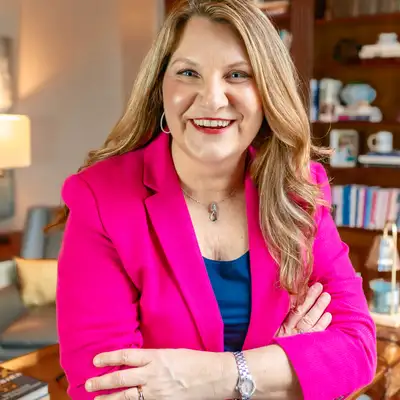
Looking to lead, grow, and stay ahead in the global chemical industry?
The Chemical Show is the #1 business podcast for the chemical industry, bringing you leadership insights, business strategies, industry trends, and real-world lessons from the executives shaping the business of chemicals.
Each week, host Victoria King Meyer sits down with leaders from across the chemical industry, from Fortune 50 companies to mid-sized businesses and innovative startups. You’ll hear how they’re navigating today’s challenges and opportunities, the experiences that shaped their leadership, and the insights you can apply to your own business and career.
Conversations explore the issues that matter to chemical industry leaders, including:
• Business strategy and growth
• Leadership and talent
• Innovation and technology
• AI and digital transformation
• Supply chain and operational resilience
• Markets, customers, and industry trends
Victoria brings more than 25 years of chemical industry experience from companies including Shell, LyondellBasell, and Clariant. Today, she is an executive advisor and coach, founder of The Chemical Summit, and host of The Chemical Show.
Whether you’re an executive, business leader, or rising leader in chemicals and materials, The Chemical Show helps you stay informed, think differently, and lead with greater impact.
Follow The Chemical Show on LinkedIn and join the conversation. (https://www.linkedin.com/company/the-chemical-show/)
The Chemical Show: https://www.thechemicalshow.com
The Chemical Summit: https://www.thechemicalsummit.com
Progressio Global: https://www.progressioglobal.com
Victoria Meyer:
Welcome to the Chemical show, the podcast where chemical means business. I'm your host, Victoria Meyer, bringing you stories and insights from leaders driving innovation and growth across the chemical industry. Each week we explore key trends, real world challenges and the strategies that make an impact. Let's get started. Welcome back to the Chemical show, where leaders talk business. Today I am speaking with Eric Appleman, who is the Chief Revenue Revenue Officer of Aduro Clean technologies. Eric has 35 years of experience in the chemical industry in a wide variety of disciplines and companies including Unilever, Sigma Coatings and Perstorp, and really has spent the last probably decade, it looks like, Eric, focusing on innovation and growth and scaling. Eric, you may recall, was featured on episode 188, which is around how to scale sustainable technology, talking about Aduro and its journey.
Victoria Meyer:
And this is really an update in terms of what's been happening over the last couple of years and how they continue to grow and scale. So Eric, welcome back to the Chemical show, my honor, thanks for being here. So let's just start with a brief introduction to you and how you got into this space.
Eric Appelman:
Yeah, well you actually summed it up already quite nice. And after I left this company, Pursedor, this was in 2016, I landed at an innovation campus in the south of the Netherlands where with help of regional government, we were trying to create an ecosystem with all sorts of innovative companies that would help the chemical industry in that part thrive. And part of that, and I'm still very proud of that, was our effort to attract startups to Brightland's Camelot campus, as it was called. We were extremely successful. We had in three years time we got 60 and one was more exciting than the other. And then after six years, when I felt it was time to add another episode to my journey, I said, why do not I start at my mature age of 59 to talk to the startups that I find most exciting? So that was the plan. I didn't get past the first one, which was the Duroclean technologies and which I had picked because I had identified already when they came in that this was really a game changing technology that I would like to see come forward. Then I found that the team was all right and the people were nice and yeah, rest is history.
Eric Appelman:
Here I am.
Victoria Meyer:
I love it, I love it. So tell us a little bit about Aduro and what technology guys are bringing to market.
Eric Appelman:
Yeah, there is sort of a platform technology which is all about chopping big hydrocarbon pieces to smaller pieces. And the first 10 years, the companies from 2012 that was mainly about chopping down bitumen molecules from the famous tar sands of Alberta, trying to make them transportable and trying to make them useful for any other chemistry. But around 2020, we realized that there was also a very urgent desire to chop very old big polymer molecules into smaller bits and pieces in order to recycle them. And that is why we pivoted at that moment in time, although we are still very much working on bitumen and heavy oils. But the lion's share of the effort shifted to polymer recycling. That's what we do. And there are other technologies and they are typically a variation on one set of brutal thermal chemistry. We do it a little bit more civilized and as a consequence we have a number of advantages in the area of yield, input quality, output quality.
Eric Appelman:
And that we believe is sufficiently differentiating. And that is what we trying to move forward, scaling it up. And that is that.
Victoria Meyer:
I think that's great. And of course, as you say, as you focus on plastic circularity and taking existing plastics and breaking it down for repurposing, et cetera, it's certainly a problem that people recognize that we need to solve. So we're going to come a little bit later to talk more about that because the world is different today than it was when we spoke two years ago. And then it was probably when Enduro first started and you guys got on this path. But last time we spoke, Aduro was readying for an ipo and that appears to have gone successfully. And today you're really focused on scaling and making some critical investments. Can you talk about that?
Eric Appelman:
Yeah, I'll start with the IPO. And we had been listed since I believe 2021 by reverse takeover. But what was really very exciting and I was able to join the bandwagon for that is that by the end of 20, before we IPO'd on the NASDAQ and that gives us of course, access to a fantastic pool of risk taking capital which is needed. And you need people with guts and people with money to add to, people with ideas. And that has gone very, very well. It is an amazing thing for me to see, having always worked in established companies, to see what it takes to always inform and convince your investors, which is a very cleaning experiments almost. It is. You have to always explain what you're doing.
Eric Appelman:
And I do not dislike it. I think it is actually very, very healthy and very good thing to do. So that is the IPO part of the thing.
Victoria Meyer:
Well, and for full disclosure, I actually own a little teeny tiny piece of a durable Clean technology. And I watch that price bump up and down and up and down and up and down. And eventually I'm like, someday, someday that little micro investment I made will turn into something I, I can't wait to see where that. But I think it's also an interesting approach and I've seen a few different companies do this because instead of relying solely on venture capital, you spread it around, right. And you take it to a public market where I guess it's its own form of crowdsourcing.
Eric Appelman:
Call it that. Yeah. But it's a very regulated way, as
Victoria Meyer:
you probably know as well, in a very regulated way. Obviously it's been critical to funding the next steps of where you are.
Eric Appelman:
Yeah. And it has been doing well. The very early investors are enjoying life at the moment and hopefully a bit longer. And so it is really, you start to watching it every day and see what you're doing, but very exciting. And call that economic scaling, financial scaling, and that next comes next to technical scaling. And I think the last time that we spoke we had wonderful patterns. We had done some really good laboratory work. I was very impressed at the time.
Eric Appelman:
Already what we have now done, we have moved towards first a smaller pilot unit. I think that is what we talked about at the time. We've now installed a serious pilot plant, fully continuous, on our premises in Ontario, in London. And that works. And we are collecting product from it. We can play, we can toss all sorts of raw materials in there, we can collect what comes out of there. Not only good product, but also side streams. Fantastic learning experience.
Eric Appelman:
And we have of course announced that we are also taking the big step of building the first commercial scale unit, which will be in the Netherlands.
Victoria Meyer:
That's exciting. So when you talk size of pilot versus the size of your commercial demonstration plant, what sizes are we talking about? What kind of outputs or inputs do we get?
Eric Appelman:
The commercial plant is designed for about 10,000 tonnes of input, give or take. So that is commercial scale. It is not 1 million ton like the giant machines that you see when you drive through Houston, because that is from a very mature and hyper skilled industry and also from an industry that can actually bring in millions of barrels of raw material to one location. As you may imagine, waste is a lot less concentrated, so the scale of the industry is likely to be smaller. So 10,000 tonnes we believe is relevant. And it's especially relevant because from there it is not by any means complicated to go bigger. So if you want to have 20,000 or 50,000, it's basically a matter of scaling according to well established scaling rules. And to an extent we can also say that from our pilot plant because an interesting thing, and I'm a chemical engineer by training, so I still have a passion for that.
Eric Appelman:
So when we did all our good kinetic research and our thermodynamic data and all the other things, we arrived at a process design that I'm actually very. It's very elegant. It is also remarkably straightforward and essentially using equipment that we know, that industry has known for decades and decades, and that is very well known also in terms of scaling factors.
Victoria Meyer:
Yeah.
Eric Appelman:
And that is interesting because it means that you do not have to build a pilot plant too big. As long as you know how to scale it and which multiplications to do and which square roots to draw and all that sort of thing, then you can build it preferably as small as you like. So we build something that's a couple of hundred tons a year, but with 100% confidence that that one will scale easily to a commercial scale.
Victoria Meyer:
Yeah, I think that's interesting. I think part of this to me, Eric, is a bit about like the whole risk management aspect of it. Right. So one of the reasons that you, you know, you, you build the pilot plant and then you build the demonstration plant and you is to de risk it. It's, it's proof of concept, but it's also de risking. And I suppose that incorporating standard equipment and standard process technology, ish, to the extent that you can, is also a form of risk mitigation.
Eric Appelman:
Well, it is a very good luck. Let's say that if we had arrived at some equipment that you can have to have tailor made on the other side of the globe and as some chemical recycling equipment is, then you have risks in the operation, you have risks in the manufacturing, you have risk in the supply chain, risks in the growth. If on the other hand, you can actually combine pieces of kit that you can buy and that people know to make, which preferably have multiple suppliers, you can take out a lot of risk on the design side, on the operation side, on the supply chain side, under the supplier and cost side. That is, that is important. And of course, when you do a certain process, you cannot perfectly choose it. But we were happy enough to actually arrive at a piece of chemistry that could be handled with equipment that we all know. And I'm very proud of that. And it is.
Victoria Meyer:
That's great. So what's the timing of your plant in the Netherlands? So obviously the one in Canada is up and is kind of in quote unquote, commercial operations. If you Will for a pilot plant. What are we talking about when we look at that industrial demonstration plant in the Netherlands? What's your timeline on that now?
Eric Appelman:
We are now starting the design phase. We've selected the place which typically is very important and especially when you are doing waste recycling because you have also local circumstances. So now that we have selected the location, you start with the whole engagement with local authorities to get your permits, with suppliers to get your long lead items. And those things take their time. The interesting thing is actually if you talk about it, it's the same way you do it in Canada or in Europe. It's very, very comparable. As I said, the suppliers of equipment are well known international companies that supply all the time. So Canada or Europe doesn't make sense.
Eric Appelman:
I think in terms of permitting, we all want to live safely and that is why we have all actually remarkably similar procedures now without going into every possible detail also because that is more for our VP of engineering and I think we, we are looking to of course well into 27 before we will have the stuff on the ground and then we have to commission and everything else.
Victoria Meyer:
Yeah, yeah. I mean it takes time. That's the, that's.
Eric Appelman:
Yeah.
Victoria Meyer:
But nothing reality, nothing unusual. So potentially within the next couple of years we should see.
Eric Appelman:
Yes, absolutely.
Victoria Meyer:
Operation from that. That's nice. So, you know, it's interesting Eric, that if I think about where we've been over the past six years, right, so this decade of a focus on circularity and sustainability and carbon reduction and everybody was go, go, go for a while on, in terms of scaling up and making big promises and, and jumping into this place of creating, you know, circularity around plastics, breaking down, what's been there, et cetera. And yet what we're also seeing right now is a lot of scaling back. Right. So site shutting down, investment slowing down. And yet you're, you and Enduro are really focusing still on scale up. What do you see happening is, is do you still see this nature of demand in, in what you're doing in sustainable products and circular products and creating these solutions?
Eric Appelman:
I think. Well, this morning I was on a meeting of Chemical Recycling Europe. That's an association of the companies that work on chemical recycling. And it actually struck me how many of us are actually pushing ahead and who have plans that may be a little bit ahead of us or a little bit behind it. But so the momentum is still very much there with those companies. But I think you are right, especially on consumer goods companies, but also on petrochemical companies who have to take our materials and turn it into neoplastics. You do see a scaling back now if you were to ask me why is that one of the reasons I think that everybody there was a bit of a collective feeling like we're going to do this and we're going to do this quickly and everything else. And then it turned out to be not so easy.
Eric Appelman:
There was also challenging. Yeah. Don't underestimate the factor that global base chemical industry has an over capacity estimated by reputable institutions of 50%. So there is not much money made in that industry. So people are cautious. So you see that people do scale back. Regulation is also taking its time. Although in Europe we are now blessed with some powerful regulation.
Eric Appelman:
And these are all forces that especially large companies will find important enough to sort of moderate their approach. Having settled that, I do not know many companies who have completely jumped off. So all the consumer good companies do realize that this is coming. All the chemical petrochemical companies, they may not always develop their own technology but they still want to talk to us to buy the products that we will make. At this moment the market might be a bit slow but nobody is shutting doors. So I think we are finding now a good and realistic scale. And you have of course heard of the PPWR and plastic packaging waste regulation in Europe. That's going to be very strong.
Eric Appelman:
20, 30. There are percentages to be done. You can do some of that with mechanical recycling. We are going to need chemical recycling. It does actually authorize chemical recycling. It instates the mass balance principle. So all the important tools. That is going to be an export band for waste and probably the most important and undeniable driver.
Eric Appelman:
Waste is not going to go away. Every year mankind produces its own weight, your mine in plastics and more than half of that is in short lived applications. That is just accumulating. That doesn't go anywhere. Also from that side. What you do see and that is also very encouraging across the globe also in countries where you wouldn't expect the extended producer responsibility regulations kick in and those EPR schemes, they generate mountains of collected plastics. They have to go somewhere. So this is a unique thing in a sense that it is both pushed from that raw material that has to go somewhere and pulled by industries that want to be circular.
Victoria Meyer:
Yeah. And another one there is, there is an abundance of feedstock because we all consume lots of plastic goods getting that that to the right place and the right compositions of what you need. And frankly this whole aspect of making the entire, not just the value chain, the whole life cycle Value chain, right from production to consumption to the end use has to work together to make it, make it work. But I appreciate your point on that, Eric, because I also think that I do think companies continue to move forward. I've talked before about sustainability, moving from the big S. Like we've got sustainability with the big S and to sustainability with a little S, which is really how do we develop long term sustainable businesses. And you know, plenty of experts across the industry have said that the technology wasn't ready for their super big ambitious goals that everybody set out with this big bold statement that they did in 2020 and 2021 and 2022. And now we're in the grind where the real work happens and where technology continues to develop, such as what you guys are producing and getting to that scale to where ultimately it starts.
Victoria Meyer:
Having an impact just takes time.
Eric Appelman:
Absolutely. I think many people thought like, okay, I have my plastic and I melt it and I have a new article which would make perfect sense, by the way, and should do it whenever possible. But I think we also learned the hard way that that is not always working. There are limitations on using food contact applications because whatever has been in the bin might have anything on it. And so all those things made it a little bit more difficult, a little bit more costly, requiring a little bit more time to make it happen. And that's what we see.
Victoria Meyer:
Yeah, you referenced a little bit about the brands and I know the brands, you know, the big consumer brands are continue to stay focused on this. But when you think about your customers, and I know you're chief revenue officer, so you are thinking about customers and how that all comes together. What are your, tell me about your customers. What do your customers look like? What's their value proposition proposition? What are they interested in?
Eric Appelman:
This is very interesting. As a technology company, of course, the initial dream is, oh, I do a big invention and now everybody will buy my technology in a license and they will build. Yeah, that is, it is a hope and. But it is not always easy as you might think, because when would you buy a car or whatever else? Well, from somebody that has probably been building cars that have been driving around for five years. And you see the same thing in licensed businesses. And I saw a lot of those companies that came into my campus said, yeah, we're going to license. And they do not realize that. Well, one, as a customer, I would like to see a plan that has functioned for five years without going bank.
Eric Appelman:
And that's. That is the first thing. And by the way, if you license me Something I want you to guarantee the performance. So you better come with big and deep pockets. So not that easy. Having said that, and it was announced just today, we have just engaged with the major EPC and licensing company today to continue on that track, recognizing full well that this is not a journey that you can easily do with 10 people or 20 people start on its own. So, major announcement of today.
Victoria Meyer:
Congratulations.
Eric Appelman:
Thank you so much. The other thing that is of course important, you will have to build that first plant. So you're going to own a plant and you will do a business. And if you do see that your customers, which are presumably petrochemical companies, hesitate a little bit to step forward and build those plants for themselves, partly by the way, because they're a bit different because they're used to these million ton per annum things and we are doing 10,000 and we're using solid waste and that's a bit messy, it doesn't completely fit. So you do see on one hand that there are now new companies emerging that say we are going to be the king of chemical recycling and we're going to build the plants that the big petrochemical houses won't build. And we might even be one of them, because that is another thing. We have a very strong belief that our technology is profitable. So why then not take advantage of that and become a producer yourself? Especially since we are not talking about 1 billion euro plants.
Eric Appelman:
So we will pursue both strategies towards commercialization and how the split will be anybody's guess. But we will go on that licensing pathway and we have signed a key agreement about it today and we will in the end of the day also have at least one plant of our own and possibly a few more.
Victoria Meyer:
Yeah, I think that's smart. And I think, and I've talked with and worked with a variety of startups that have, with different technologies that are in this space and there's been a couple that have assumed I don't need to have my own plant. That's really hard to do because people want to see it demonstrated. Right. And that level of confidence. So I think, I think that's really critical. Let's talk about regions. So you guys are a Canadian? Well, you've got a big part of your company's in Canada, you're obviously in the Netherlands and the new demonstration plant's going to be in the Netherlands.
Victoria Meyer:
What markets are you targeting? What markets do you see as being really important and viable for your business?
Eric Appelman:
There's a couple of dimensions to that. If you talk about chemical feedstock It's a global market. And as a matter of fact I talk to colleagues who are competitors, or how we call it competitors that struggle with us. But they also say, yeah, it's global market, there are traders active. If it is needed in Europe, then we will ship it there. If it's needed in America, we'll ship it there. So our market as such would be the world. But of course it is not for nothing that we chose for Europe and very simply the reasons to settle down in this case in the Netherlands is in Europe we do have an infrastructure to collect waste but also sort it further to suitable qualities.
Eric Appelman:
We have customers because we make a liquid product. So you would like to ship it to a so called liquid cracker. And of those we have a lot in Europe. They are also in Japan, in Southeast Asia and China. They are less in the Middle east and in North America.
Victoria Meyer:
Okay.
Eric Appelman:
And the third thing, in Europe we do have regulation and even though it is still sort of adjusted and tuned, there is this PPWR that is going to demand that there is a recycled content in 2030. There is in the course of this year going to be a plan on exporting plastic waste to countries where it is not that well managed. There are EPR schemes that oblige the marketeers to collect what they put in the market. And that is well developed. I see it following an identical pathway in Canada, I see it coming in other places. I see it in some states in the United States and others will follow most likely. But that is the order of things that we have a little extra dimension for some countries or geographies. I do see the argument of strategic autonomy come up.
Eric Appelman:
This is one way to maybe keep alive certain chemical infrastructure that may not be top notch competitive in the classical fossil world, but may be very crucial in order to establish a circular economy world and as such could as a mirror image sustain those capabilities to an extent in certain geographies.
Victoria Meyer:
Yeah. Which if I was guessing is Europe, Western Europe and maybe Korea. Right.
Eric Appelman:
Both of which are Korea.
Victoria Meyer:
I'm actually not doing great so far right now.
Eric Appelman:
Yeah, I'm actually, I'm going to be in Korea this weekend because the government of Ontario is actually helping us to meet companies. But I studied and you see there is a massive restructuring in the cracker scene. Similar things happen in Japan. You see it also in places like Singapore, Southeast Asia. Europe is a good example. So yeah, those are regions where on one hand we want to keep a core of base chemical industry. On the other hand we tend to have a lot of People in all those regions. So there's a lot of waste and there is this whole argument of some strategic autonomy that is playing ball there.
Victoria Meyer:
Nice. Yeah. So I think that's, I think it's interesting. I think it's going to be great to see how that plays out. So Eric, you have been in the startup game and scale up of technology for a while. What advice do you have for leaders that are trying to start up new businesses and scale up new technology? If you had just a couple pieces of advice for them, what would it be?
Eric Appelman:
I've seen many startups and they all had good ideas. Now you have to be brutally honest to yourselves and say is this really good idea? And the most being a customer facing person, I would say who is waiting for this, who is going to pay me some money for this. So that's the quality of your idea then. And I have learned that in this company especially, especially if you are in something like chemistry, which is very fast moving. Sorry, not very fast moving. My mind was somewhere else which takes 10 to 15 years time to market is you as a leader, are you able to take the blows? Because in the 10 to 15 years to market the world is going to go through at least three radical changes. And whether it is a financial crisis or a war, or maybe it is a new invention from, from a competitive side, mind you, here is an example. The first people who went into plastic paralysis were triggered by the fear around the year 2005 that we would run out of fossil carbon.
Eric Appelman:
That sounds like something of a distant past because first we discovered a lot of additional fossil carbon, shale gas and whatever else. But also we learned that we actually do not want fossil carbon in the first place. And then we started to think of it from a climate perspective then there have been periods, ups and downs that those things were there. And as a leader and as a team, by the way, you do have to adjust and I think that is super crucial. When I talked today with my former colleague who supervised the startup scene, he says on Brightlands, he says the first thing I actually look to is the team and the entrepreneur. How can you do it? That is just very, very important. Then there is of course all sorts of things. Make sure that you can finance it and the typical startup, and I've also been non exec in a few.
Eric Appelman:
You are finding that half of the energy is spent on beautiful inventions and developing your content. The other half is on securing money. But I don't think I'm saying anything strange there, but I think especially that character, the ability to take the blows and adjust and then set sail to where the opportunity is. And that is actually radical. I've seen quite a few companies in that recycling scene that have started with entirely different things. They started with doing biomass and they suddenly ended up in waste, plastics or that sort of thing. That ability, that agility is crucial.
Victoria Meyer:
Absolutely makes sense. Well, Eric, thank you for this. I'm so glad we got a chance to get reconnected to share your updates about Aduro. And I guess we're going to keep watching this space because you guys have a lot of great things happening.
Eric Appelman:
Yes, it won't stop, I promise you.
Victoria Meyer:
Well, thank you for joining me today. Thanks everyone for listening. Keep listening, keep following, keep sharing, and we will talk with you again soon. Thanks for joining us today on the Chemical Show. If you enjoyed this episode, be sure to subscribe, leave a review and most importantly, share it with your friends and colleagues. For more insights, visit thechemicalshow.com and connect with us on LinkedIn. You can find me at Victoria King Meyer on LinkedIn and you can also find us at the Chemical show podcast. Join us next time for more conversations and strategies shaping the future of the industry.
Victoria Meyer:
We'll see you soon.