Subscribe
Share
Share
Embed
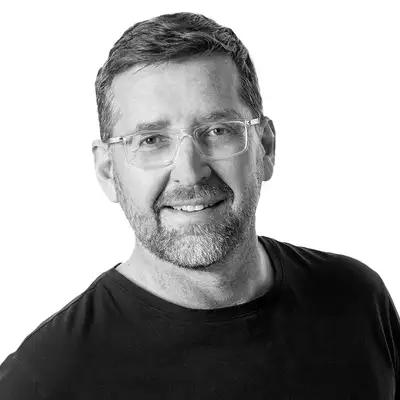

Hosted by Heath Fletcher, The Healthy Enterprise explores how innovation, technology, and leadership are reshaping the life sciences industry—from discovery and development to commercialization and care delivery. Each episode features candid, heart-centered conversations with founders, scientists, executives, and investors, sharing real-world experiences and insights for building resilient, future-ready organizations.
Created and Produced by Bullzeye Global Growth Partners — Let’s build it together!
Hi there. Welcome to the Healthy Enterprise Podcast. If you're a return listener, thank you for joining me once again. And if it's your first time, I hope you enjoy this episode. I'm gonna be speaking with Lawrence Bauer.
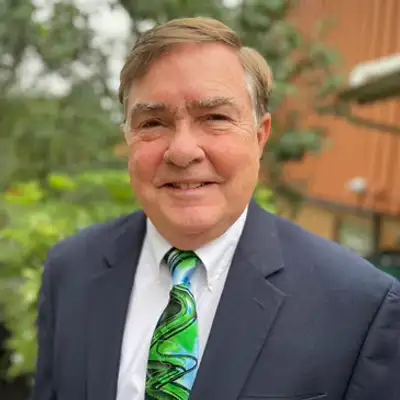
Heath Fletcher:He is a veteran leader in family medicine education and primary care workforce development. He served as CEO of the family medicine education consortium, promoting collaboration among academic and primary care communities. Now he's working as an independent consultant and remains committed to advancing primary care driven system in The US. Please welcome Lawrence Bauer. Larry, welcome.
Heath Fletcher:Nice to have you on this episode, and I'm looking forward to hearing about your professional career in in your field. And so maybe that's a good place to start. Why don't you do a little bit of introduction of yourself Sure. To to listeners? And, yeah, let's start with that.
Laurence Bauer:Okay. Well, I'm a social worker by training and, a weird social worker at that. So I started off many, many years ago, and I did traditional social work things. I did family therapy. I did some community organizing.
Laurence Bauer:I actually worked in prisons for a while until I stumbled into a job at Penn State Medical Center in their department of family and community medicine. And, I discovered that I really enjoyed working with physicians, and I enjoyed working in health care. And my skill set actually is, well aligned with the work of a an effective primary care physician. So I spent a lot of time teaching mostly family practice residents, but also other residents, basic interpersonal skills, office counseling skills. And then over time, I got involved in in, what you might call organized medical education.
Laurence Bauer:And, let's see. I went from Penn State to Ohio State to Wright State University in Dayton, Ohio. And then, after getting fired a second time, and deciding that I did not like that experience, I decided to focus my attention on growing something called the Family Medicine Education Consortium, which is a not for profit that focused on supporting family docs in the Northeast region of the country from Ohio to Maine to Virginia to West Virginia. And, I I really enjoyed we we ran an annual meeting, three day meeting of about a thousand participants, 300 medical students, 200 family practice residents, and another 300 family physician faculty. And along the way in 2008, I created something called the Innovators Network.
Laurence Bauer:I noticed that there was a lot of innovation going on in primary care, mostly below the radar. It was all local people coming up with solutions because they were frustrated with the, the care delivery system. And so I began inviting those innovators to come to a meeting that was held the day before our big annual meeting, and we showcased, the work that they did. And all all these years, I I still continue even though I'm no longer running the FMEC, I am still running the innovators network for them. And it is one of the blessings of my career to get to hang out with these brilliant people who are doing things to improve the health of people in their communities.
Laurence Bauer:And so that opened up a whole series of opportunities. So if you heard about direct primary care, I found direct primary care during our first Innovators Network, meeting in 2008. We invited some of the innovators to come and share what they were doing, and that was, so well received that led to the first direct primary care national summit, which was held in 2013 in St. Louis. And, we had a 176 family mostly family physicians come to the event.
Laurence Bauer:And each of them had thought they'd come up with this brilliant idea on their own, But it turns out they were part of a movement that was in reaction to the, third party control of of primary care, the insurance industry, and the hospital industry. So, just this past weekend, I was in, New Orleans for the, Direct Primary Care National Summit, which has continued on, and there were 560, mostly family physicians. And it was just a joy to see how that grew. So, you know, I've had a chance to be involved in all kinds of projects that you wouldn't expect, a social worker to be involved in, but I'm just a curious guy, and I love adventures. So, I I stick my nose in, and I I look for innovation.
Laurence Bauer:And I and I'm a connector if you appreciate what Malcolm Gladwell wrote about in Tipping Point. And
Heath Fletcher:Yes. Absolutely. Very familiar.
Laurence Bauer:I've gotten to know a lot of people, and, it's really, as I say, been a blessing for me to hang out with these folks. They're they're just a a really, great, gang of people to hang with.
Heath Fletcher:It's funny, and and you wouldn't you wouldn't normally associate innovation with this group of people either, but it's it's interesting what you're saying is that what are some other examples of some of this innovation that you've you've witnessed?
Laurence Bauer:So in addition to direct primary care, the latest growth in that particular area is something called a community owned health plan, which is a direct primary care practice plus a patient navigator plus a community owned pharmacy plus a health care architect who is putting the program together. It's a community based program. It helps small to medium sized employers, have coverage, for their employees, and it's, delivering reducing the the cost of health insurance 20 to 30% in the first year. It's it's dramatically effective. Let's see.
Laurence Bauer:Other innovations that I've been associated with, there's family docs who've developed their own electronic medical records, some of which have gone on to, to great things in the marketplace. We had family physicians who, have launched there's an organization called Primary Care for All Americans, and I'm on the board of that, one of the founding board members. It is helping people in cities, towns, and at the state level to form chapters of people who are interested in advocating, for strengthening primary care. That's been a very interesting project. They now have about 1,500 members across The United States.
Laurence Bauer:There's another project called Pulse stories from the heart of medicine, which is a family doc and and his wife. They are the editors of Pulse. And if you subscribe to Pulse every Friday, you get a well written piece of prose or poetry, that shows up in your inbox. These are all stories from physicians, nurses, patients about the experience of giving and receiving care. Let's see what else.
Heath Fletcher:Very interesting. Wow. That's a that is quite a collection. I mean, just in just in that short few minutes, you've defined, quite a few very innovative approaches to to solve resolving some some key problems. I mean, these are the people that are are are are they're in the trenches.
Heath Fletcher:I mean, they're the ones that identify where where the hiccups are and where the gaps are, aren't they?
Laurence Bauer:Exactly right. So family docs, and the people who work with family docs are really focused at the community level. And, it's the entry point into the health care system for people who are smart enough to have a family physician for their personal care. And they see things that, clinical issues, ethical issues, health system delivery issues that the people at the policy level really don't see because they're too far away from where things begin. So for example, you take the issue of of waste in health care.
Laurence Bauer:And, about according to most estimates, anywhere from 30 to 50% of the money spent on health care in The United States is wasted. And the question is, where does that waste come from? What exactly does that mean it's wasted? Well, it turns out if you move away from those big numbers, which are in the multiple hundreds of billions of dollars, and you go back to the leading indicators and identify the things that create the conditions that lead to the waste, you will find out that one of the biggest things is people not having a primary care clinician for their health care. So they end up with uncoordinated care.
Laurence Bauer:They bounce through the system. They get a lot of unnecessary tests. And some of those unnecessary tests lead to some bad outcomes that all could have been prevented had they had somebody who could quarterback their care, somebody where there was a trusted relationship with that person.
Heath Fletcher:So What are some of what are some of the reasons why someone wouldn't have a primary care?
Laurence Bauer:Well, there's actually a lot of reasons. The biggest reason is they don't really appreciate or understand how the health care system works. So for many people, they think that more care is better care. So if I have an ankle sprain, I need an MRI. Well, probably you actually don't need an MRI.
Laurence Bauer:And so that, you know, gets into some very expensive things. Sometimes it's what I call a cultural issue. People just believe you know, they believe that that, prime family physicians are sore throats and runny noses. And, you know, I have a serious problem, and they think they need, quote, the best doctor. And they don't understand that the generalist at the front door is actually the bet best doctor until someone figures out what the nature of your problem is.
Laurence Bauer:And when you go into an uncoordinated system, very likely you're going to bounce from one, what I call, ologist to another ologist to another ologist. And along the way, one of them is going to do a test. And one out of every five tests that are done finds something that's a problem. Now Right. It might be a real problem, or it might be a false positive.
Laurence Bauer:And if it's a false positive, they're gonna do some more tests. And Mhmm. Sometimes those tests lead to procedures. And I hate to say this, but sometimes those procedures aren't good for you. And they produce, iatrogenic what's called iatrogenic illness or illness caused by the medical intervention.
Laurence Bauer:And now you're you're gonna be treating that. So that whole cascade, it's called
Heath Fletcher:Right. Just a waterfall.
Laurence Bauer:Yeah. Exactly. And so what's the best antidote to that? To have somebody you know who you trust, who you can say, look, doc. This is what's going on with me.
Laurence Bauer:And they're skilled not only to look at what you might think of as the physical symptoms. But, also, sometimes, our symptoms are caused by what's going on in our brain. Our anxiousness, for example, may cause the symptoms. And you really want somebody who's trained to think what we call the biopsychosocial model, looking at the big picture. So those are some of the things that that could be going on.
Heath Fletcher:Whereas, you know, when you talk about a primary care doctor, somebody that you have as your doctor, who may, in some scenarios, has known you all your life. You know, if you have a family doctor who has been a part of a family unit, knows the family, knows the parents, knows the kids, is familiar with their environment, and and can and has some an insight into their lifestyle and and and all those things that you mentioned, the the the the triple threat or the triple connection between your your mental state, your emotional state, your physical state, your environment. You know, is that what at what point did we start to detach from from having the family doctor?
Laurence Bauer:You know, that's a very interesting question. So, I'm knowledgeable about the history of medicine. And it actually started back in about 1915 when a guy by the name of Abraham Flexner wrote a report, that, argued that doctors are really should be scientists. We don't want doctors, who aren't scientific in their orientation. And so they the generalist, he thought the generalist, was somebody who needed to go away.
Laurence Bauer:So beginning with his report and the reengineering of our medical schools back in that day, it continued for, you know, for decades. We got into the post World War two era and the growth of the medical specialties. Every time somebody develop a new procedure, they develop a new medical specialty. So when they learned how to put a scope into various parts of your bodies, they invented new specialties to do that. And, of course, those new specialties argued that their particular expertise was much more complex than that of the general practitioner, so they should be paid more.
Laurence Bauer:So when they got that built into, the the codes that, govern Medicare, for example, all of a sudden, the medical specialty started making a lot more money than the generalist, both the family physicians, the general internists, and general pediatricians. And over the decades, the last fifty years, that, divergence in income has grown dramatically. So Mhmm. There is a great deal currently in our health care system that argues against what you might call generalist careers in medicine. Even though there's some very good research that shows the the generalist for somebody with no symptoms coming in the door, you really want the generalist first so you can sort out what needs to be done and then get you to the right specialist down the road as opposed to the random specialist that you might pick as a patient.
Heath Fletcher:And then, you know, that there's a continuous collaboration after that point. Your general will communicate with the specialist, and then the specialist will communicate with the general. And even now you've got two people kinda looking out for your interest. Right?
Laurence Bauer:Is Well, that would be ideal. Our payment system doesn't support that very well at all.
Heath Fletcher:Right. Yes. And and another another layer to this, Onion, is maybe accessibility too to Yes. You know, whether it's remote, you know, less less access to general practitioners in rural communities, things like that, or just a lack of general practitioners?
Laurence Bauer:Well, yeah, it's more the lack of. So, rural America is about 25% of our population. And currently, and for quite some time, family physicians are, overwhelmingly the predominant medical specialty that's serving the rural population. But our medical schools for quite some time have been underperforming in terms not only in terms of graduating people to generalist careers, but also Mhmm. People who are going to go and serve in rural communities.
Laurence Bauer:So there is a a currently, an underwhelming number in the rural communities, and, of course, in our urban areas. So within the woman by the pediatric epidemiologist by the name of Barbara Starfield back in the nineties did some research, she found out that any community that has that adds family physicians in particular or primary care clinicians to their practitioner group, there's an increase in health in the population and a decrease in cost.
Heath Fletcher:Isn't that right?
Laurence Bauer:The more subspecialists that you add, the more expensive, and the death rate increases.
Heath Fletcher:So Is that right?
Laurence Bauer:Those are the kind of things that people generally don't know, so they don't appreciate Yeah. What I call the promise of primary care.
Heath Fletcher:And so we have now so now we have this shortage of of family physicians. And and, you know, it it maybe there's a a a more of a draw to the specialties because it's it's shinier, it makes more money, higher status, those kinds of those kinds of carrots.
Laurence Bauer:Those are the big three. Yep.
Heath Fletcher:Yeah. So
Laurence Bauer:There is one other. Piece. There's one other issue that factors into this that people don't think about.
Heath Fletcher:Okay.
Laurence Bauer:So currently, if you look at medical students who's getting into our medical schools, The overwhelming and I'm talking, like, 75% of the kids getting into medical schools today are from families of wealth.
Heath Fletcher:Ah.
Laurence Bauer:Okay? They get to go to the right kind of school. They get the right kind of education. They get the right kind of life experiences, so they are far more competitive. And the schools are looking for kids who are really good test takers.
Laurence Bauer:Even though they say they no longer use those, they still, in their interviewing process, have a bias towards, towards that. So in the kids getting in who are likely to choose a primary care, be that internal general internal medicine or general pediatrics, there's just not enough of them getting in. And, people think it's about the money, and in part, it is about the money. But, you know, if you didn't have the wealthy kids getting in, they are very oriented towards making more money than mommy and daddy. The kids who were first generation to college, the kids who are from rural areas, the kids who have been out of college for a year or two who get a little life experience and figure out what's really important in life.
Laurence Bauer:Overwhelmingly, they choose careers in primary care, but they're not able to get into the medical schools.
Heath Fletcher:Interesting. Wow. That's a that's a situation for sure.
Laurence Bauer:Yep. We've got a How a real situation.
Heath Fletcher:Wow. So now now we have some there's some other innovation coming, that's been growing. It's been around for a long time, but, you know, telehealth, telemedicine Yep. Where you have you do you can get access to family physicians, generalists through that through that technology now too. Is that helping this a bit of this problem of accessibility at the very least?
Laurence Bauer:So I think it yes. It is helping with the accessibility issue. It's it it makes it easier for people, to get ahold of somebody. Now it's oftentimes, it's not somebody the last time that you called into this service, you're not getting the same person. You're getting a different person.
Heath Fletcher:Probably not. No.
Laurence Bauer:Which sort of undermines, the continuity, which is really important because through the continuity, somebody gets to know you. They get to know your style. They get to know your Mhmm. Your your biases and your issues, so to speak. And they can put things in perspective, about a problem, so they may not need to do testing to answer a diagnostic question because they they know that you're the kind of person you know, you're you're hypochondriacal.
Laurence Bauer:You're somebody who gets anxious easily, and you've got a symptom that could very well be, because of of a fear, call it, that that you may have, that you may not even know that you have. But Mhmm. So at any rate, I think it's a good thing. You know, I think what's even best is if the doctor that you see regularly, you're able to reach on the phone or via Mhmm. Secure Zoom or or whatever.
Laurence Bauer:That would be Mhmm. Ideal. But quite honestly, we we don't have enough people in primary care right now to Right. To be able to pull that off.
Heath Fletcher:Right. That's that's the main that's the main thing is the shortage
Laurence Bauer:of Yes. Absolutely.
Heath Fletcher:Caregivers. Yeah. Yeah. Interesting.
Laurence Bauer:I think you have some of that going on in Canada as well.
Heath Fletcher:Absolutely. Yeah. 100. Same thing same problem here. It's difficult to find a family physician, but it's also the although the the importance of having a and the importance of having a family physician here is very that's still quite high.
Heath Fletcher:It's like it's very important issue in a lot of people's lives. Like, I need to get a family physician. I don't have access to one. And, you know, it's not for lack of wanting it. It's like they want family physician.
Heath Fletcher:We just don't have enough either. We're we're recruiting all over the world to bring them in to to supply that, to supply the demand.
Laurence Bauer:Right. Exactly.
Heath Fletcher:But you can't get you you and I ours I guess our system holds is a little different too is that you can't get anything done without without a referral from your family physician. Well, that's one of emergency. If Yeah. If you go to emergency, sure. Yeah.
Heath Fletcher:They'll say, okay. Yeah. You got a problem. We're gonna we're gonna connect you with the hematologist, or we're gonna connect you with the oncologist or whatever it is. But for the most part, you can't get it if you got even a skin issue or a rash or something, you need to see a dermatologist or you you gotta get a referral from a doctor.
Laurence Bauer:Right. Right.
Heath Fletcher:So that causes that that problem is that that's why we need family physicians all the time because they're the ones they're the they're the they provide the the the distribution channel with with the referrals.
Laurence Bauer:Well, yes. And they're doing that because so there was a company in Dayton, Ohio, Mead Data Central, it was called. And they put a health plan in, and they incentivized their employees to choose this health plan for their health insurance. And the way the plan worked is you could go to any subspecialist you wanted to. But before you went to the subspecialist, you had to go to your primary care clinician, be that a family physician or general internist.
Laurence Bauer:And once you went to them, you without a referral, you could go to wherever you wanted to go. And what they found is that for most people, for most of the problems, the family physician was able to clarify the problem, deal with the problem, and the patient was satisfied. And they thought they needed a subspecialist, but actually they didn't. It's simply a matter of them not understanding how medical problem solving works and the power of a generalist.
Heath Fletcher:Yeah. Yeah. I think it's, yeah, very important. I guess there's a there's a we're also looking at, from my understanding is looking at other, levels of care either, you know, from from pharmacists, for example, who are now starting to be able to prescribe certain medicines and and drugs for certain certain conditions or issues. Registered nurses who are able to actually treat people for certain, levels of care and that as well, which is, I guess, sort of serving this same concept is that they're generalists in in that sense.
Laurence Bauer:So I wouldn't use the term generalist. They are certainly, you know, skilled within their
Heath Fletcher:Sure.
Laurence Bauer:Their their training, their scope of practice, so to speak. You know, the the the best care is what I would call team care. And so if you have a pharmacist, if you have a, a nurse practitioner, physician assistant working with a physician, the outcomes are are much better. If you have those folks practicing independently, and I know people will get upset with me for saying this, but when they're practicing independently, the referral rates are so much higher. And going back to what I said earlier, if somebody ends up going to what I call an ologist unnecessarily, the rate of things happening that aren't in the patient's best interest goes up.
Laurence Bauer:People don't wanna report that, but, I mean, that that is the way it works. You can't learn how to deliver effective broad based primary care with the the amount of training, that a nurse practitioner or a PA working together with the doc, that's a powerful team.
Heath Fletcher:Mhmm. Yeah. That would be ideal, yeah, to have that network all working on the same issues and yeah. But we just need more people. Okay.
Heath Fletcher:Let's talk about primary care innovators network now. Let's and your role with that. You're the CEO.
Laurence Bauer:Yep. I am. And
Heath Fletcher:so so tell me tell me a bit about, you know, when you now that you're doing that, the shift for you from when you're working in in social work to that, what was that change like for you, and what motivated you to do that?
Laurence Bauer:So, I realized now a long time ago, that my goal really was to change The US health care system. Our system is ineffective. In many cases, it's corrupt. And I'm speaking about The US health care system. And Of course.
Laurence Bauer:It is, tearing down our society. So if you were to ask the question, what is at the the core issue for people in The United States who are working class and middle class that they feel hopeless and frustrated and believe that there's no future for them, that they can't afford a home, that they can't afford a good education. What what's at the core of that? At the core of that is the high cost of medical insurance. So it's been going up in The US by an average of 8% a year for decades.
Laurence Bauer:All of that money that's going in, it's ridiculous, really, how much money goes into employer sponsored health care. And if you could take 20 to 30% of that money today, this first year that you worked on an innovation or implemented an innovation, you could take that money out. What could you do with that? Now that's a big number, 20 to 30% of 12 to $14,000 per year. So if you could take that money out, what could you do with it?
Laurence Bauer:Well, you could put it into wage increases so that people would have more disposable income and they could afford housing, food, education, etcetera. You could take some of that money because it's so much, and you could invest it in housing so we would truly have more affordable housing for the work, working class and the middle class. You could invest it in our educational systems so that, for example, pre k education was free across the country. You could invest it in what everyone talks about as a social determinants of health. So the reason, in my opinion, in The US that employers do not wanna support a living, wage increase, a reasonable salary is because they have to keep investing money in the health insurance.
Laurence Bauer:And they means that
Heath Fletcher:have line. It's a
Laurence Bauer:Yeah.
Heath Fletcher:It's a huge line item on on on their Absolutely. On in in their financial department. Yeah. It's just a it's a huge item. Yeah.
Laurence Bauer:So they can't put it into wages, so the wages don't go up. So if we're able to tame the beast, so to speak, then good things can happen in this country, and we can move away from a lot of the the frustration and the hopelessness that some parts of our society are experiencing. And I decided that I wanted to be a part of that, and and I was seeing these innovations out there that had such great promise. So I decided to focus my attention on finding the innovators. So there's something called the social diffusion curve, and people have heard these terms before.
Laurence Bauer:But you start off with the innovators. And within any group, I don't care if it's agriculture, manufacturing, technology, whatever, there's about 1.2% of the people who are involved in that domain who are the innovators. Those are the people who just they see solutions, and they can't take it anymore. They gotta go for it no matter what the risk is. These are the people who create the change.
Laurence Bauer:The next group are what are called early adopters. They're about 12.5% of a population. The early adopters are people who are looking for new ideas, but they're risk excuse me. They're a little risk averse. So when they look over and they see the innovator doing something, they say, oh my god.
Laurence Bauer:Look what that's look what we could be doing here. And they, together with the innovators, begin the transformation process. And then you have the, early majority who are people who are not risk averse. They want then they're not gonna change until something's proven, and and they can just, you know, apply it and do it. They're about, 15% of the population.
Laurence Bauer:When a a a new innovation gets adopted by those three groups, it creates a tipping point. And the late majority people go, oh, okay. Yeah. I guess I have to change. I'm not really crazy about change, but, you know, I I I need to move.
Laurence Bauer:And then, you know, the system changes, and then the laggards who are on the other side, the ones who say, I'll never change. We don't need any of that change. They change because the whole thing changes around them, and they have no choice. So what I focused on is finding the innovators and creating opportunities for the innovators and the early adopters to meet and get connected and share ideas and begin to, call it, make deals so that the the free market forces, or, you know, the other ways of financing things can, support the change process. So that's what the primary care innovators network does.
Laurence Bauer:And it it's just so cool to, see what people the solutions people come up with and watch Yeah. How that transformation process happens. And I wanna be right at the middle of that.
Heath Fletcher:That's great. You have a real, passion and, enthusiasm for this, and I think you called yourself you're very curious, you said I am. Beginning. And that curiosity is what kinda drives you. And then, from your background, so how how does your background and your education tie into this for you?
Heath Fletcher:Like, what is it about you and your character that is suits you for this role?
Laurence Bauer:Well, because I am a curious person and I love adventure. You know? I I love going off on a trip. I love coming home even more, but I love going off on a on a trip. And each one of these innovations that I find is is kind of a trip, and and I enjoy doing this.
Laurence Bauer:You know, in terms of my training, so as a social worker, there there are sort of three groups or three domains within the world of social work. One is the clinical one, which tends to be working with individuals and small groups and families, but, doing therapeutic interventions, and I I did that for a while. The next level is the the community level and community organizing, and I did that, for a little while in my career. And the third level is what people call policy, looking at the big picture and and thinking about the, call them, the rules and the principles that need to put in place to create healthy systems. And I evolved through my career.
Laurence Bauer:I started off on more on the clinical side and then on the community organizing side. And then when I got involved in medicine, I saw kind of a chance to put it all together because the family docs, you know, they take great care of people and communities. And by helping them be more effective with their work and their careers, I was multiplying my effects. So, you know, a family doc might take care of a couple thousand patients. If I can help them learn some skills that make them better at delivering primary care, that multiplies the number of people that I'm able to touch.
Laurence Bauer:And every now and then, I think about all the family docs in particular that I've worked with over the years. And and I I don't actually do the math, but I I just have to imagine, you know, that the impact that I've that I've had, you know, is is so much, larger than had I chosen to stay in my my clinical practice, you know, seeing a patient an hour or working with an individual family at a time. So, as I say, I I've just come to believe we have to create healthy systems. And and that means the big picture, but it also means getting down to the delivery level to, find the models that make for better care delivery, people person by person and and within each community.
Heath Fletcher:When you're talking about the skills that you were you were teaching these docs, give me an example of something that would would would that you would teach them.
Laurence Bauer:Sure. So one of the things I taught them was interpersonal skills. I was a trainee.
Heath Fletcher:Bedside manner?
Laurence Bauer:You could call it bedside manner. Yeah. A lot of people do. But, you know, having
Heath Fletcher:That's a common phrase. Yeah.
Laurence Bauer:Yeah. Having effective skills and being able to communicate with with a patient and with the family. How to hold a family meeting. I used to Yeah. Teach them how to do a home visit where you could go out into someone's home and and work with usually the family who was present there.
Laurence Bauer:I also taught them, problem solving skills in the, you know, in the behavioral health area, how to think about family systems. So all of us grew up in families. Well, not all of us, but most of us grew up in families. And those families had what you might call a culture. And that culture influenced how we think.
Laurence Bauer:It influenced how we felt. It influenced the choices that we make in terms of a life partner, etcetera, etcetera.
Heath Fletcher:So true.
Laurence Bauer:So how do you So true. Understand that as a as a family physician? So there there was a a lot of, things. You know, one of the things that I did that I was very proud of is in family medicine. We started right at the beginning of the family medicine movement, in residency training, something called the a Belint group.
Laurence Bauer:So the residents, in the case that I worked with, the residents would get together once a week, and I would facilitate a discussion. And they would talk about being a doctor. They talk about their fears. They talk about their, their, joys, their, and their sorrows. And, you know, becoming a a physician is very hard work.
Laurence Bauer:It's hard physically. It's hard emotionally. And I just love these TV shows, like ER and, what's the other one I was watching?
Heath Fletcher:Grey's Anatomy. Yeah.
Laurence Bauer:Well, never wanna
Heath Fletcher:They're so true to life, aren't they?
Laurence Bauer:Well, except for the sex part. You know, they they just throw in a lot of gratuitous sex. I'm telling you, I've worked in three medical schools. And, yeah, there was times when people got into things. Let's put it that way.
Laurence Bauer:But mostly, it it wasn't. And they they were working very hard. They were tired. But it it was so this this resident support group process, you know, they should have that in the middle of ER. They should have that in the middle of any of these intense resident training programs.
Laurence Bauer:So it's
Heath Fletcher:It's it's just it probably creates an ability for them to be well, there's the compassionate edge, which they probably already have, but also just an understanding of all the you know, the people come from different places. And and where would they fit that into to medical school anyways? Right? So Yes. This would be very valuable very valuable insight for them.
Heath Fletcher:I can just imagine that they probably had a lot of moments during their, consulting with you.
Laurence Bauer:Well, and the other thing is if you think about the age of most, first, second, and third year residents, they're relatively young people. They haven't had that much life experience, quite honestly.
Heath Fletcher:No. Exact you're right. They don't spend most of their time in in in in school.
Laurence Bauer:Exactly. So they're starting to, sort through some issues in their life, And, sometimes that can create tension points in in their ability to take care of patients or their ability to deal with authority figures like faculty. So it was that that was one of the most satisfying things I I did was for a whole year, I would have the first year residents. And every Wednesday, we would get together for an hour and a half, And, they had to turn their pagers in. It was covered by a secretary, and the chief resident and I would lead this discussion group.
Laurence Bauer:And, it it just we covered everything that you can possibly think of.
Heath Fletcher:Very, very interesting. Wow. What what an yeah. What an what a cool niche you found. And
Laurence Bauer:I just stumbled into it.
Heath Fletcher:Too. Sure. Oh, I don't know. I think you probably were drawn into it. Yeah.
Laurence Bauer:Yeah. I I think so. Yeah. Yeah. It aligned very well with my curiosity and my need for adventure.
Heath Fletcher:Absolutely. Absolutely. Well and this has been very interesting, Larry, to share, this with me. I I I didn't I wasn't sure what I was gonna learn, but this has been very cool. I really appreciated you sharing and spending this time with me.
Heath Fletcher:So with with with innovators, people who are out there who are working in the industry are like you said, people are coming up with ideas or finding, you know, cracks in the in in in their work or in their environments. And so if they have these innovative ideas, the best thing for them to do is sort of reach out to someone like yourself or to the organization so that they can find out that, yay, maybe someone else has already come up with an idea, and they're already starting to work on it, and they can contribute to that. Or at least understand that they're not the only one that has this problem and that there are ways to work together to to come up with solutions. So Yes. Is that who needs to reach out to you if that's if that's where they're at?
Laurence Bauer:Absolutely. The the other group of people are the ones who know about an innovation. I I get referrals, if you like, where somebody will contact me and say, Larry, I think you need to meet so and so, because this is what they're doing that's that's different. And, you know, I I, you know, I'm just one person, and, I try my best to do a lot of reading and a lot of meeting. I like to, go to conferences and, you know, hear new ideas and walk through the exhibit hall looking for new ideas.
Laurence Bauer:But I'm just one person. So having, call it a referral I don't have a formal process, but, you know, having somebody contact me like that, it is very it it's just a great opportunity.
Heath Fletcher:Well, if someone wants to reach out to you, what's the best way to track you down?
Laurence Bauer:So my email address is the simplest. It's laurence, laurence,dot,basinbrother,auer,@gmail.com. And, I'm pretty good at keeping up with my email.
Heath Fletcher:K. And you're on LinkedIn so they can find you there
Laurence Bauer:as well? And Facebook. Yeah. And Facebook.
Heath Fletcher:Okay. Alright. Well, what a wonderful conversation. Thank you for sharing your time with me. Is there any last thoughts or comments you'd like to close with?
Laurence Bauer:I don't think so. I think I've probably said enough already.
Heath Fletcher:Well, thank you so much for sharing your time with me. I appreciate it immensely. Okay. Well, that wraps up this episode, and I really appreciate Larry for joining me today and sharing such a rich and thoughtful perspective on the state and future of primary care. There's a lot there that I didn't know about, and what really stood out to me about this conversation was just how foundational family physicians are to the health of communities.
Heath Fletcher:I was also struck by Lawrence's reminder that innovation in health care isn't always about technology. It's sometimes about trust and relationships and and just meeting people where they're at. Lawrence spoke about this need to teach interpersonal skills to physician, which was also really interesting and a powerful takeaway. It's a reminder that health care at its core is human work. And if the system is going to improve, it's gonna have to start with connection.
Heath Fletcher:Thank you for tuning in. And if you found this end episode interesting or insightful, then please share it with someone and subscribe for future episodes. Until next time. Take care, and stay healthy.