Subscribe
Share
Share
Embed
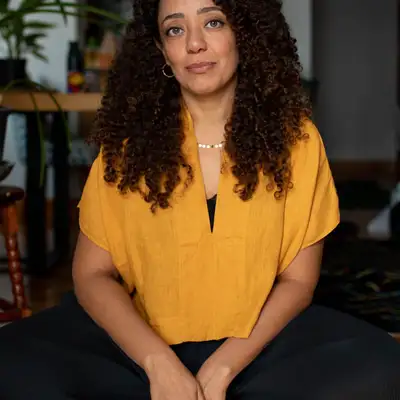
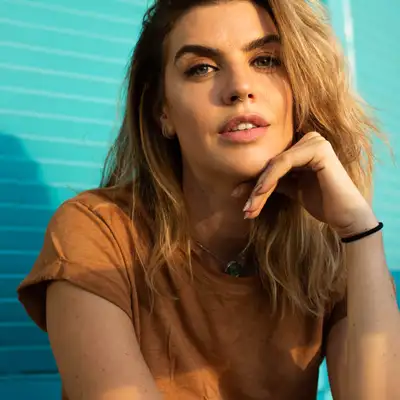
This is not a cooking show, but it will nourish your soul (maybe). Womena’s founders open a new dialogue with their community and give their perspectives on relevant, topical issues that affect women in and from the Arab world. This podcast will serve as a space for genuine exploration of the authentic experience of two women in search of belonging and balance, using storytelling to reclaim and redefine the distorted narratives that surround them.
People will have you believe that once
you reach a certain age, you're done.
Like you figured it out or you should have it
figured out and then that's just how you are and
who you are for the rest of your life.
That's definitely not true.
The fact that your identity develops and
evolves over time doesn't ever really stop.
And so at this age, I still feel like I
have a lot of room to become different things, to
explore different sides of myself and to evolve.
Although the younger me, 25 year old me, was
like, oh, I know exactly who I am. I'm done.
I know my values, I know what I want.
And that quickly gets upended.
Welcome to another episode of Sage Takes Thyme.
What are we talking about today?
Ourselves.
I'm Elissa.
I'm Amira. And. And that's the episode.
That's who we are.
That's who we are.
Thanks for tuning in.
Tune in next week when we ask
each other how old we are.
Very short episodes.
That's it for the attention span of Gen Z.
This episode is about identity, which
is like a multi, layered, complex,
vague, sometimes multicultural, multidimensional notion.
Is it like identity?
It's intangible.
What is it? Yeah.
So in that context, who are you?
Who am I?
You know what, who I am is constantly evolving.
I'm learning.
I'm also learning that I thought I know who
I was and I'm totally still like learning who
I am actually with every layer and every, like,
therapy session and every book I read.
And every day I'm figuring out more and more who I am.
The top line bullet points are I'm a
Emirati of Lebanese and American descent who was
born and raised in Paris, France, and educated
in the French, British and American systems.
Wow, you took all the. All the things, yeah.
I'm also a multilingual founder of a feminist media platform
and I have lived in many, many places also.
So I'm someone who constantly seeks more and
is curious about the world and how it
can relate to me and my curiosity.
Who are you?
Well, yours is so interesting.
I feel like, who am I?
I agree that it's like a constant dynamic process and
I feel like the people will have you believe that
once you reach a certain age, you're done.
Like you figured it out or you should have it
figured out and then that's just how you are and
who you are for the rest of your life.
That's definitely not true.
I'll start with my age because I'm very proud of it.
So I'm 41. Yeah.
And I'll be closer to 42 when this actually
gets online, which is, I think is really beautiful.
And I'm learning to embrace it more and more.
And yeah, that's to my point of like,
the fact that your identity develops and evolves
over time, doesn't ever really stop.
And so at this age, I still feel like I
have a lot of room to become different things, to
explore different sides of myself and to evolve.
Although the younger me would have thought like
25 year old me was like, oh, I
know exactly who I am, I'm done.
I know my values, I know what I want, I know who I.
And that quickly gets upended.
But my bullet points are that I'm Egyptian,
I'm Arab, I guess a third culture kid.
I was born and lived for 8 years
in Alexandria, Egypt, and then I moved to
the US and lived there for 10 years.
So I was raised in America, but with
very Egyptian parents that really cared about making
sure we're connected to our roots.
And so I always had both sides.
I never assimilated overly to
the American society and culture.
They wouldn't have allowed that.
And I actually appreciate, appreciate them for that.
I didn't at the time, but now I think it was great.
Okay, interesting take. Yeah.
And then moved back to Egypt when I
was entering university and I just stayed and
have worked here for a long time.
And so I've been in media for a long time.
I've done journalism.
Now I do storytelling, directing, producing.
So I obviously really love stories. I always have.
I just have always found a lot of
passion behind talking to people, learning who they
are, and then somehow like telling their stories
to the world in different forms.
So I'm also like a sister, a wife,
a cat, mom, a daughter, a friend.
Yeah, yeah.
You and I are both also advocates and activists
in our own way, and that's where we click.
But what I think is really funny is how
similar are backgrounds are without actually being copy pasted.
Similarly, I'm also Arab American, but
I'm Lebanese with an American mom.
You're like Arab American because you're Egyptian. Yeah.
Who grew up after eight years old in the United States.
Yeah.
And we both returned to the Middle east in our 20s.
Well, no, you returned in your teens. I was 18. Yeah.
We both sought a reconnection and a belonging with
the Arab side of our identity after our adoptive
homes didn't allow us to fully assimilate and integrate.
Like, France did not want me at the
time growing up, like, I was very Much.
You felt that way? Yeah, totally.
And I felt like I'm Parisian, I'm
not French because I grew up. What's the difference?
Well, the French people will tell you
the Parisians are like city people. They're.
For me, my world of France was Paris was
all the neighborhoods of Paris, all the little corners
in the pockets that I got to discover.
Like every different Arrondissement neighborhood
has memories for me.
And I know the city like the back of my hand.
It helped forge my identity and each place
at a different stage in my life.
But I couldn't tell you what was on French
TV at the time that I was growing up.
I couldn't tell you who the popular French singers were
for the those 23 years that I lived in France.
Is that because you didn't, did you not have access
to that or were you just not interested or because
you were from like a half Arab household?
It was dominated. Like, what's the reason?
It was that it was the fact
that I was in an Arab household.
Even though my mom's American and there was a lot of
American culture kind of sprinkled in there and we'd go to
the States once a year and things like that.
It was still a very predominantly
Arabic household, Lebanese household, surrounded by
Lebanese people and Lebanese community.
And if there was content or TV shows or
music that was being played, it was all Western
and it was all British or American or some
vague Lebanese LBC or like ancestral type music.
Like, I also am not Lebanese enough to be able
to tell you like, who the most popular actors were
or what were the big TV shows at the time.
So in that way I wasn't
integrated into France or into Lebanon.
But I, I think it's definitely.
There's a lot of similarities in our experiences, but I
think it's more difficult or more challenging, I guess, to
figure out who you are and what your identity is.
If you're like, your parents are of
different nationalities and you're a mixed race.
Yeah, like, and you come
from all these different places.
While I think it's a little bit easier
maybe to like, yeah, my parents are Egyptian,
I'm from Egypt, my family is here.
Like, this is what I know and everything.
I lived in the States for a while, so I Arab American,
but then I don't really call myself that, to be honest.
And I don't identify that way.
I do maybe when I'm there, but once I'm
outside of America, I feel like it's so irrelevant.
I'm Egyptian, you know, So I
feel like maybe I don't know. Like, that's.
It's still difficult also to, like.
I also don't have that sense of belonging because a lot
of places are home, and then so nowhere is home.
And at different times that,
like, changes and fluctuates.
Do you feel like it was.
It's a lot harder when you're.
Even your family is very mixed, or was it, like, was
it more enriching or did it make it more challenging?
Well, it's not that it's harder.
It's just that each one of my parents battled
for us to recognize their cultural effect on us.
So my mom will always
say, don't forget you're American.
You're an American kid. You're from America.
America is your country.
And my dad will also, like,
very clearly be like, so instilling.
Like, my dad made sure I had Arabic lessons, and
then my English was really busted when I was a
kid, so my mom put me in a British school
to learn English because she wanted to make sure that
I was going to connect with it.
She made sure that I had
Halloween when France didn't celebrate Halloween.
So she would, like, figure it out and make
a fake Halloween trick or treat thing around Paris
with the American community there to make sure that
I could have some semblance of bits of culture.
But I also am very fluid with how I
define my identity, depending on who I'm talking to.
Yeah, you know, like.
Yeah, that's a big part of it.
When I'm in the Arab world, I'm Lebanese,
you know, that's how I'm going to define
myself, and that's how people expect to define
me, because how do I relate to them?
And in the Arab world, I
am Arab, therefore I'm Lebanese. Primarily.
The fact that I was born in France, only in
Lebanon makes it like Frenchie type, you know, thing.
And the fact that I'm American is kind of
more like a cultural, like, sprinkling, you know.
But when I'm in France, I'm the American one.
Oh, wow.
I thought you were gonna say that.
Then you're French or.
No, because you were raised there.
Because if I'm raised in France, I present more
American to them what they expect an American to
look like, act like, speak like, than I do
a Lebanese person or a French person. Okay.
You know, and in America.
In America, I'm like, exotic.
You're like, what are you? Why are you here?
They look at me and they're
like, your accent sounds weird.
Like, what are you, like, from the Midwest?
Where are you really from. Yeah.
And then I'll say something like, I'm
Lebanese, but I grew up in France. Wow.
France, Lebanon.
Like, oh, my God.
Like, she's so exotic.
It's like this, this thing.
So it completely.
Each one will adopt a different thing.
Yeah, I feel like language.
You mentioned language and being
multilingual and learning different languages.
I think that's a really big
part of what our identities become.
Also because that was something my parents were
careful about because I did speak Arabic because
I lived in Egypt for eight years.
So that had like a really good foundation.
So I spoke Egyptian Arabic.
I didn't really learn the Arabic language as
far as, like, written Arabic and classic Arabic.
I knew Arabic and I spoke Arabic
well enough and I had that foundation.
That was my first.
My mother tongue, I guess, my first language.
But I didn't.
Wasn't in school in Egypt until.
Only until first grade.
So I didn't write Arabic well.
I couldn't like, communicate in Arabic written and I couldn't
read Arabic as well as I could speak it.
So I had a lot of challenges there.
And then when we went to the us we obviously
had to learn English like, or become fluent in English.
There was always a struggle between, like, speak English
all the time so you can become fluent and
you sound normal in your school and whatever.
But also they didn't want us to forget
Arabic because they saw other, like, Egyptian families.
Their kids were born there and didn't speak
any Arabic and they were very, like, Americanized.
So they were very afraid of that on a
language level, but also on what that meant.
Like, maybe culturally and socially, you know,
like, if you're so American that you
don't even speak Arabic, then you're gonna
do things that, like, are unacceptable in.
Like, you're going to start dating early or
you're going to be like, you're going to
rebel against the culture more because you're not
going to identify with it as much.
So language was very important for
them on all those levels.
But then coming back to Egypt, I would
trip up on the language elements because if
I'm in America, I'm speaking English fluently and
I sound like an American, whatever.
But then when I get to Egypt,
I have to start speaking Arabic.
And when I was growing up, I would come visit
in the summers and at first I would trip up
on my Arabic and by like the third month I
would be like, I don't know their English word.
Like, I speak very fluently.
What's that?
It's like very Egyptian Very Alexandrian way
of speaking, you know, so there was
always this, like, language battle.
But now, as storytellers, when we communicate in
English to an Arabic speaking audience or in
the Arab world, we get judged for it.
We're like, who are you talking to?
And it's like, this is just how we speak.
Because this is just how we speak.
People got upset when I was telling them, I'm
gonna do a podcast and it's gonna be in
English because Arabic, Arabic's the way to go.
And you'll get the audience in Arabic,
and that's where the money is publicly.
And I'm not funny in Arabic.
Like, I don't know if you get that,
but there's different sides of your personality that
come out in different languages for sure.
And I mean, maybe you guys think I'm
not funny in English, but I'm not.
We think you're like, I think I'm funny in English.
And like, being funny in French only came later
when I surrounded myself with more French speakers and
became more confident in making my little mess ups.
But I'm not funny in half the languages that I speak.
So it's a different side of me.
I'm more serious in Arabic.
I'm calmer, quieter.
So you look white.
I do, Yeah.
I was gonna try to say it, like, in a different way.
You look white.
I have my mama's genes. Yeah.
I definitely got the more American, Scandinavian,
Irish genetics from my mom's side.
And so I'm what people would call white appearing. Yeah.
Because I don't necessarily identify as,
like, white as the label.
I identify as Lebanese and American and French and
Emirati, and I identify as this mix proudly. Yeah.
But I look white af.
And that means that very often people assume I
don't speak Arabic, so they'll talk shit about me
or they'll talk about me in spaces.
But it also means that I benefit from
a lot of the privileges of white, you
know, your white passing identity, your white passing.
But white passing tends to be, I think
the technical, like, definition of white passing are
people who choose themselves to pass as white
because it works in their benefit.
Because of the privileges of looking white and
being white, you being racialized as white, you
benefit from all of these things.
And so they're choosing to pass as white.
But white appearing means that
I appear white to others.
They might racialize me as white even if
I at no point identify myself that way.
Oh, I didn't actually realize that that was the nuance.
Yeah, yeah. It's something. It took me A while.
Because I used to say that until I
learned more about it and until actually I
spent, you know, in America, it's so reductive.
So in the summers when I'd go back home, it's
like, you're either white, you're black, or you're Mexican.
Brown was not even that popular at the time in America.
It literally wasn't a thing yet. It wasn't a thing.
Like the color brown wasn't a
color that was actively like discussed.
It was literally white or black or Mexican.
Like they reduced everyone else to Mexico. Yeah.
So I actually in on my side,
I got, I guess, Mexican appearing.
I don't know, like people thought when in the
States, because I grew up there in the 90s. Yeah.
And so there was an influx of immigrants of all types.
Especially where I was like in different areas of
New York, there was an influx of Mexican immigrants
or Dominican, Latin, Puerto Rican, like, things like that.
Right.
And so because of the way my hair and
my color or whatever, they're like, oh, you're not
white, you're not black, you must be Mexican. Right.
And it's like, what?
And so I was so confused.
I remember being in, I think, fourth grade. Yeah.
So that it was like my second year in America.
Did people just speak Spanish to you? No, that.
That happened all the time.
My dad loved it, by the way.
He looks very Latino, especially when he likes, when he
was younger and had like jet black hair, slicked it
back and he wanted to be like Ricky Ricardo.
So he go around like speaking the two
sentences of Spanish that knew like, com. Whatever.
Like after the third sentence he's
like, yeah, no, I'm not Mexican. But I.
It was weird because I didn't.
Obviously I had friends and stuff, but I
wasn't any surrounded by Mexican culture because I
felt like I didn't have any other choices.
And Arab wasn't a thing.
We had Arab American friends and Egyptian families
around us, but not in the same town.
So I wasn't in school with people that were like me
or had spoken Arabic at all or even with any Muslim
kids in school in the different schools I went to.
I feel like I'm afraid to say this.
I'm just going to say it. Say it.
It was easier for me to like,
appreciate and kind of link myself more
to like, black culture with like, appropriation.
But I was.
No, it's not necessarily to cope, to defend.
And I also think, like, what's funny is
that there's a difference in America between the
term black and the term African American. Yes.
And you are literally African and American
because you're Egyptian, but you're Arab.
But then there's this whole, like, regional
debate of, like, the Africa v. The Arab thing.
But, like, you literally come from a country that
is on the continent of Africa and have a
nationality that is in America, Mid Eastern or Arab,
which in the 90s wasn't a checkbox.
It wasn't a category in the census.
So I remember being in, like, fourth grade and everyone
had to fill out the census form and one of
the things was like, what race are you?
Which I think is very weird to do.
People that age anyway, like, ask their
parents or on the SATs or.
Yeah, but I mean, the SATs, you're y.
Like in a teenager at that point, I was 8 or 9. Yeah.
I saw, like, Caucasian, black, Asian, whatever.
Like, maybe I don't remember
what other things there were.
I didn't see Arab or Egyptian
or North African or Middle Eastern.
So I raised my hand to the teacher and I was
like, excuse me, I don't know, like, what to check off.
And she's like, oh, well, what are you?
You know, she knew I was Egyptian.
She's like, maybe write other. Yeah.
Literally, like, the idea of being othered.
And I didn't realize at the time what was happening to
me until I was much, much older and looked back at
things I had experienced as an immigrant child in America.
I also would switch.
I would switch with whatever box I had to tick.
But, like, I remember at one point I was like, well,
I guess Lebanon is technically in Asia, so I'll be Asian.
Yeah.
And then I'd write, okay, I'm going to other,
and I'm going to literally list out what I
am underneath, or today I'm going to be white.
Like, there was no space for it.
But I remember being othered very, very early.
Like, I had a very mixed multicultural
group of kids in my primary school.
But when I went to school, school, like,
I went to a British school, and it
was a very predominantly white British school.
And white, Anglo, British
Commonwealth country representation.
Like, it was like Irish people, Scottish people,
Welsh, British, Australian, you know, like that genre.
A couple Canadians and American.
But there was maybe in my class one
person who was from Africa and me.
Yeah, like, that was. That was it.
And already I went from this crazy multicultural
plate where we sang Happy Birthday in like
six languages because we would learn each other's
Japanese and Spanish and whatever. And then we.
I went to this school where it was just
me and I remember her name, Sarah And I
was like, so it's gonna be just us, girl.
I guess it's us against it. And my brother also.
My brother had that experience where he ended up
being into music and all his friends were any
other person of color, which was about four to
five other people in his grade at that time. And that.
That's just who we associated with, was the others.
Yeah.
So within.
But within this other.
Even though things are evolving and there's new
boxes that are being checked, I think now
Arab is a box that you can check.
But I wonder about the
label of, like, Middle Easterner.
The Middle east is a super problematic term. Why?
Because Arabs don't know what to
define as the Middle Eastern?
No, because it's like, what are you east of?
Like, middle of, where it's very.
Like, you're just.
It's very much from the perspective as
if, like, America, is this the.
Or Britain actually, or the uk. Yeah.
Like, there's a side of the world that
is the center of everything, and then everything
else is in reference to also. So you're here.
So you're like, not so east, but you're
like the Middle, and you're the Middle East.
We can also be the far left.
If Australia is the center of the world, or if Russia
was the center of those maps that we all had up
in schools, we would be east or north or separate, too.
Or if this sphere was tilted
slightly differently and opened up. I get your point.
Totally.
So what's a better term then if we're not Middle
east because we're east of something or west of whatever?
For me, like in the Womina context, for example, I prefer
to say the Arab world, Arab women, things like that.
Although a lot of people will have issues with, like,
what is Arab, where is Arab or Egyptians Arab?
It's also problematic, but for me, it's
a little bit better than Middle East.
I also would ideally prefer not to say anything
because Americans don't feel the need to do that. Right.
They don't say, like,
stories from American perspectives. From the Northwest.
Yeah.
From North America, like, South of Canada, north of.
I mean, they don't feel the
need to geographically associate themselves. Exactly.
While we feel the need to always, like, place
ourselves in the world to validate whatever it is,
like our voices, our perspectives, our stories, our very
existence, even as humans, you know, so that's.
That is very colonial in its perspective of the world.
When we can just say, like, for a media company like
Womina, we can just say we're a feminist media company.
Yeah.
I Get why?
Saying that we focus on Arab
women in and from the region.
I get why, but would we feel the need
to say that if we're British or American?
No, no.
And people don't, by the way, like in
general, they don't isolate the fact that they're
a media company aimed at Western women. Yeah.
Northwestern English speaking women, like they
don't have to specify that.
But especially with communities and cultures that are disenfranchised
and that are not the mainstream, I think it
is important to kind of highlight that you're bringing
a different perspective to the table and that that
perspective comes from a culture or a mix of
cultures or a type of experience that's collectively part
of a community that shares certain things.
Because it's important.
It's important, I guess, indicates that there's a gap.
And there's a gap because other
people are dominating the space.
Yeah, that's why it's cool.
Because like the dominant narrative or media or
mainstream is coming at us from elsewh. Yeah.
So we feel the need to like identify that way.
I think when we talk about our identities,
we also need to acknowledge our privileges that
we either realize or don't realize.
So for me, for example, I feel like a lot
of the things that I learned from the experience of
being an immigrant child of an immigrant family in the
90s in America, a lot of the challenges that that
came with and the struggles and the obstacles or whatever,
I look back at them now.
But I also cannot do that without recognizing all the advantages
it gave me, like just purely being back in Egypt and
having like being fluent in English at the time as a
writer gave me like a huge leg up and gave me
opportunities that I would not have had if my just purely
just language skills were not as good.
And I'm sure there are a million other ways
that that gave me privileges and still does to
this day and advantages that other people don't have.
So like, that's one thing.
My extended family and my family when
I was younger were okay financially.
But one of the things that one of the
reasons why we went to the US was because
my father was seeking financial security and needed to
leave the country to find better opportunities.
And so financial security for me has been an issue that
we struggled with as a family and as an individual.
But then over time, because they made that move and
sacrificed a lot to give us a better life, now
we're able to reap the benefits of that.
And so now I feel financially compared to a lot
of people, especially living in Egypt, especially these years.
I'm a lot more comfortable now.
I feel like I'm privileged in that way.
When I was younger, no, I
didn't come from like wealth privilege.
It wasn't a dialogue when we were younger.
Like the concept of privilege being addressed, identified, like
recognizing your privilege, that's only something that's really come
out in the last like five to 10 years,
maybe big max with Instagram's popularity and people calling
others out for the privileges that they hold and
acting in solidarity with those who do not carry
those same privileges.
If you have the privilege of a platform, speak up.
If you have the privilege of not being
excluded from spaces where others aren't allowed, advocate
for their inclusion in that space.
Make space for those other people.
I've benefited from so many privileges that I never
was necessarily aware of because I wasn't French.
I didn't have the privileges of being French.
I didn't get to benefit from the governmental
privileges that French citizens and residents get to
benefit from healthcare and things like that.
But I didn't understand until later in my
20s, the concept of like white appearing privilege
or pretty privilege, right, or wealth privilege.
That's very uncomfortable to bring up and to address.
But in my path of activism and change making,
I started recognizing more how my privilege could contribute
to the inclusion and the space making for those
who otherwise wouldn't have the chance.
You know, a lot of like, the privilege of
wealth has been used to finance a platform like
Womena, to create a space for alternative perspectives and
voices and people to be recognized, to contribute to
the historical archive of the world.
And for me, I rest easy knowing that my
pretty privilege means that I can take advantage of
the initial need of people to look and want
to be like, wow, you're so pretty.
For me to actually say something of value to them
that might hit at the heart of that issue.
The white appearing means that I very often won't be othered
first and foremost and I'll be included and in that, make
sure that the door has been opened for me.
I'm now keeping the door open for other people to
come in who don't necessarily have the same chances.
You know, it's great to recognize our privilege
and to acknowledge it and walk around understanding
that and the responsibility that comes with it.
On the flip side, I feel like sometimes
it's like people abuse it, as in
You can't feel this way about this
thing because you're privileged in this way.
And I feel like that's the drawback of it.
For example, for me, like I was saying, the idea of
being like an immigrant child, really, when I am trying now
as an adult to like, go through therapy and figure out
the source of a lot of issues that I want to
like, improve in or understand, I can draw a lot of
those things back to that experience. So.
But I've spent years being back here recognizing
the privileges that come with someone that has,
like, been raised abroad and has like a
foreign education and speaks English and has like
a passport and they can travel freely.
I spend so much time doing that, which is good.
I should still do it in many ways, but
I was not paying enough attention to the things
that that also caused as a consequence and that
I should also acknowledge and deal with.
And you can be privileged and you can struggle
in different ways and both need to be acknowledged.
But I feel sometimes the focus is so
much on recognizing your privilege that you're expected
to like, ignore or sideline anything that came
as a result of that that was negative.
Oh, my God. Yeah. Yeah.
What does that mean?
Well, let's say like just you have the
privilege of looking like the dominant white class.
Sure.
But that also means that you then lack belonging
with a part of your culture, let's say, and
you're kind of like tossed up or.
Which I think very often people forget about.
If you grow up in wealth, you have a very
specific set of really messed up things that can contribute
to mental health that, that contribute to a lot of,
like, issues between yourself, your identity, your culture.
Like, I can't empathize with poverty, but I can be
very compassionate and hate it and fight against it.
But there's within that there's like a conflict.
Do I have a right to even talk about
the subject if I'm not part of that group?
And if I do, am I doing enough?
Is it what is enough?
You're always going to be called out because in a
world of like, capitalism where money is king, people think
that if you have money, you have no problems.
But like as our boy Biggie
said, more money, more problems. And that's true.
And it's not just problems.
It's like a really intricate, twisted series
of things that hinder your freedom.
It can hinder your choices.
You think that finances make you freer
to make choices, but they can't just
take Arab society and marital expectations.
If you as a woman want to marry,
you cannot have the freedom of choice to
marry for multiple reasons, including financial.
And in places that still have some types
of, like, caste systems and socioeconomic levels, there
Are cultural expectations where they'll say, oh, this
person, you're in love with them.
They might be the best partner out there
for you, but you can't be with them
because they're not at that level.
Or your partner feels like they can't be with you
because they're not at the level that your family was.
And then you're kind of judged and you're stuck.
Or there's decisions that you have to make as to
like where you want to live or what you can
or can't do because what is tied to that wealth
and what are the restrictions that are then placed upon
you, family wise or cultural wise?
And also like on the dark side
of like pretty privilege, you know?
Yeah, you.
There's a lot of things
that happen subconsciously where.
I don't know, even entrepreneurs who pitch that
have like a great aura around them.
It's called the halo effect.
They're more likely to get funded
even if their business looks terrible. Right.
Or is actually terrible.
But they're judged on how they appear.
The dark side of that is that sometimes people don't pay
attention to what you say because of how you look.
Or they'll say, like, you look pretty, therefore
you must be dumb, or you look pretty.
And I didn't pay attention to what you said.
I just looked at your lips
moving and your eyebrows moving.
And that's entertaining enough for me.
That's your place in my world, you know? Yeah.
Same for like this idea of like leaving and
coming back and being like a global citizen versus
always having or not having had the privilege of
traveling or living abroad or going and coming freely.
The flip side of that is that there's a lot to
be said for like, rootedness and having like grown up with
the same people and having them as a support and network
for your entire life versus all of your friends being scattered
all over the world and the person that you went to
like third grade with is in like 5,000 miles away.
You know, it's.
There's a lot to be said for.
The flip side of being able to roam freely
is that you don't have a sense of belonging.
It's much, much more difficult.
And you don't have that rootedness and you have
to actively seek it out and build it yourself.
Whereas for other people it might come naturally. Yeah.
The idea of like nationalism, national identity,
that rootedness and belonging in your culture.
If I was 100% Lebanese, having grown up
in Lebanon, having consumed Lebanese content, right.
Having a Lebanese passport, I would, in theory, right.
Have A solidified form of identity much earlier. Yeah.
That's defined.
And I wouldn't have struggled the way I struggle until this
day to define my identity or to understand myself because the
things that define me are kind of like in the ether
and it's like a bit of this and a bit of
this and trying to explain it to people.
You have to have them understand all of these different
cultures and all of these different elements at play rather
than, yeah, this person, this, this is who I am.
This country, the rights of this country, the culture of
this country, the history of family in this country and
all of that being kind of like tied together. Yeah.
I always admired, like, not always admired, but I was
very envious of people who early on could be so
self assured in who they were and who carried around
their identity proudly because whenever I participated in like the
Lebanese, but even when I was 14 years old and
we were doing like protests in France against the Syrian
occupation, like I felt belonging for the first time because
we were all united, but I still was othered in
that space because there's like, why are you like, yeah,
why are you here?
Like who, who are you like.
But these, these issues don't directly affect you.
Why would you argue, why would you fight for us?
Why are you speaking this way?
You're not meant to be here.
This isn't even a space for you. Yeah.
To speak in.
I mean this all wouldn't be a problem
if the world was a better place. Yeah.
And I think it was like more equal.
If boundaries are man made, they're completely like
if, you know, the freedom of movement, freedom
to social mobility, all these things are part
of the patriarchal, capitalistic, misogynist system that we're
trying to fight against.
And so a lot of these issues that
we're talking about would not be so entrenched
in the way people's lives are affected.
If I was like, if it was a better place, if
it was a more equal place to live this world.
But it's intentionally not.
And I actually struggle a lot with these
labels and boundaries that have been created specifically
around race, the construction of race as a
concept and racializing others with their differences.
Like in this day and age
it's more irrelevant than ever.
Like people are more mixed than ever.
People are traveling and changing and immigrating more than ever
and racializing others to put them in a box that's
convenient for the system, the way it's run is so
archaic it shouldn't even exist in the first place.
But there's this aspect of wanting to
almost adopt the terms in order to.
I'm happy to say that I'm Arab.
I'm happy to say that I'm also American.
I don't need to fit into just the
American box because it's safer for me to
be racialized as white, European American.
And I'm almost like taking back those labels,
but I wish they didn't even exist.
But what you're describing is why there is
a rise in right wing political parties and
regimes and nationalist identities and things like that,
especially in the Middle west.
In, like in America, in Europe, I mean, that's exact.
Because of what you said.
Like the people are moving more, immigrating
more out of need and like dire
need or, or privileged because their choice.
But that's exactly why there's a huge
now swing back and backlash against that.
And there's, you know, Trump is coming back and
we're going to talk about that in another episode.
That's like a whole other conversation also.
I mean, there's this, what I find
very interesting, I wrote a paper on
this in college about the hyper cosmopolitanism.
You know, these people that immigrate, first of
all, they immigrate from rural areas to cities.
They become cosmopolitan.
And how cosmopolitan cities around the world
mirror each other more than they do
with the rest of their immediate surroundings.
So someone who lives in New York, can live in
London, can live in Tokyo, can live in Cairo, can
live in Dubai, and it's more or less the same
than if they go to like a rural.
Then if they went to Yonkers. Yeah. Or Buffalo.
You know what I mean?
Like, it might be a harder integration for them. Yeah.
But then the more that people move to the
city, the more they meet other people who move
to cities, the more they make babies that are
used to being in these cosmopolitan places.
And then for some reason, it's like generationally
now I know I'll get along with someone
who's like, I don't know, Swedish, Brazilian. Yeah.
Who grew up in Russia, even though I
am not part of any of those cultures.
But I know that we link on the multicultural lost
identity, mixed salad of an existence more than I connect
with someone who's 100% Lebanese born and raised in Lebanon,
or 100% American born and raised in America, or 100%
French born and raised in France.
And I think that's really fascinating because it leaves
room for a much wider form of connection.
So this conversation can go on forever. Yeah.
And we'll probably pick it up again in other
episodes in different ways because it's who we are.
And who we are changes.
And therefore what we have to say and what
we know will change as the world also changes.
We hope you enjoyed that episode.
Sage Takes Thyme.
Where are you from? Who are you?
Who are you?
What defines you?
Yeah, who defines you?
Vote no matter who you are,
you should, like, subscribe, comment, share. Yeah.
Join as a member on YouTube.
Support Us subscribe to wherever you get your podcasts.
Yeah, every little bit helps us stick together
in our otherness and bring change and dominate.
The secret plot is exposed.