Subscribe
Share
Share
Embed
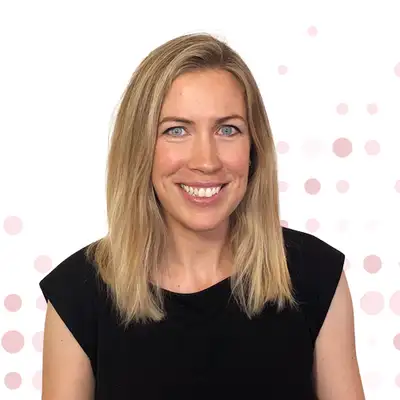
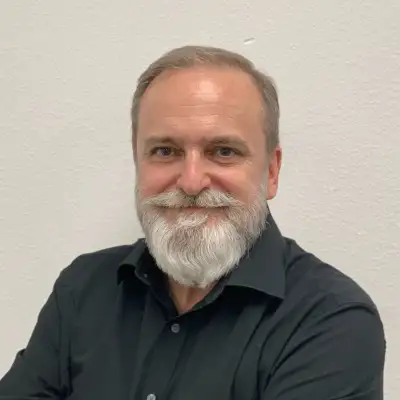
The World Pipelines podcast, with Elizabeth Corner, is a podcast that connects and unites pipeline professionals to learn about issues affecting the midstream oil and gas industry.
Hello, and welcome back to the World Pipelines Podcast. I'm joined by three representatives from the Pigging Products and Services Association, the PPSA. And I'm happy to welcome to the podcast Diane Cordell, Mark Elliott, and Neil MacKay. World Pipelines helps oil and gas pipeline professionals stay informed about the midstream oil and gas sector, offering technical articles, regional briefings, project and contract news, and think pieces on pipelines all over the world. A print or digital copy at worldpipelines.com and search World Pipelines on LinkedIn to join our community.
Elizabeth Corner:Hello, everyone. Welcome.
Neil MacKay:Hi, Elizabeth.
Diane Cordell:Hello, Elizabeth. Thanks for having us here today.
Elizabeth Corner:I'm gonna give you some background for our esteemed guest today. So Diane is the executive secretary for the PPSA, a role that she has held for sixteen years, and her role is a permanent one, which means that she can be a constant point of contact for anyone with an interest in pipeline picking. Neil, the current president of the PPSA, has recently relocated from Scotland to New South Wales as head of sales and business development for Asia Pacific or Stats Group. Neil learned the pipeline trade as a project engineer with Halliburton in Aberdeen and Stavanger. Mark is currently with Novitech and has been in the pipeline services industry for thirty six years in technical and commercial roles.
Elizabeth Corner:He has worked in over 100 countries and has been a volunteer for PPSA for nine years as a director and technical adviser. Mark is the current PPSA vice president and will take over from Neil as president in 2027. The PPSA itself is a not for profit trade association founded in 1990. 2025 marked the thirty fifth anniversary of the association. Back in 1990, founder Jim Cordell wanted to create an organization that would foster collaboration and facilitate knowledge sharing amongst pipeline operators and pigging vendors.
Elizabeth Corner:Today, the association has over 112 members coming from every continent. A warm welcome to my guests. And to start us off, for listeners who may not be familiar, can you give us a little more backstory on the PPSA and perhaps about its mission?
Diane Cordell:Yes, certainly. So PPSA's goal is to create a lively marketplace where the buyers and sellers can connect to find the best technical solution. This might be for a new pipeline or it might be for an existing pipeline where an operator has a maintenance program. We do this by showcasing our suppliers via our website, where we have a sort of clickable, usable, easy to evaluate format. We also have a free bespoke technical inquiry service.
Diane Cordell:We also promote the safety of pigging products and operations, and we encourage pipeline operators to send us safety advisory notices.
Elizabeth Corner:Now the PPSA offers a free pigging information inquiry service, as you mentioned. What does that look like? I wonder who uses it and what kind of things are people inquiring about?
Neil MacKay:I'll take this one. So predominantly an organisation made up of pigging products and services suppliers. So it's mostly operators which reach out to us, mostly from the oil and gas industry, and they're looking for a swath of things, really. It could be anything from regular pigs for cleaning cleaning of all sorts of things at the beginning of a pipeline's life cycle all the way through to its decommissioning. Inspection technologies, of course, that's a huge part of our organisation but also pig tracking devices in various forms, pig launching and receiving facilities and also more niche things like I'm working with day to day which is isolation pigging I guess we're kind of like pipeline therapists you tell us what your problems are, we're good listeners, we reach out to our members, we provide solutions and you'll certainly feel better after engaging with PPSA We have, as Diane mentioned, we have a general inquiry service simply send an email to ppsappsa online dot com give us as much detail as you want about your issues, your needs and then we send that out to over a 100 of our members, all of whom have a massive amount of expertise in picking products and services.
Neil MacKay:I don't think we're there yet, where you can just go on to AI or go on to Google and find solutions to the problems that occur in our industry. You need to still be engaging with the experts.
Elizabeth Corner:So you're often the first port of call for somebody with a question?
Neil MacKay:Absolutely, I think there's operators out there who've inherited a pipeline, who know nothing about pigging. There's people who've had a pipeline for a very long period of time and never pigged it and they don't know where to start so the best place to start is by engaging with our organization and taking advantage of this one stop shop portal really to the whole industry because we're international and our members are experts in their specific fields.
Elizabeth Corner:And do members also put in tenders for things? Are they looking to buy services specifically?
Neil MacKay:Yeah absolutely, so sometimes it's purchase of things like pigs and purchase of tracking technologies and other times it's rental of services, inspection technologies, isolation plugs and things like that. We would encourage procurement teams from client operators to engage with us and ensure that they're getting the best prices, they're getting the best solutions. So they may be interfaced with one or two companies that they know but the industry is evolving, it's changing, we see that in the seminar every year. There's papers for stuff that's emerged over the last twelve months and you can't be expected if you're working in a big organisation to be on top of all of those changes. So reach out to us and yeah, we're here to help.
Elizabeth Corner:Absolutely. And as we know, staff turnover sometimes means or often means that really important corporate memory gets lost. It dissipates. In fact, sometimes it disappears. What are operators commonly unaware of today that perhaps they would have known ten or fifteen years ago?
Elizabeth Corner:And is that something that the PPSA can help with?
Mark Elliott:Yeah, I'll take that one. Following on from Neil's excellent point about inheritance, I've never thought about inheriting a pipeline before, but it's exactly what happens to a lot of people. So what we've observed, Elizabeth, in certain markets, particularly North America, is the staff turnover has been about 30%, incredibly high. Now that happens from a natural attrition point of People retire out and people move on with their careers. But also in North America, particularly Canada, US, there's an awful lot of acquisitions that take place.
Mark Elliott:And that's what Neil's referring to. I think by inheritance, all of a sudden a new team gets a new pipeline that's already thirty or forty years old and it's in the ground. And so that's one problem that people can move on and cycle out between pigging operations. And that's really the key point I wanted to make here with this one, is it's the frequency of the pigging operations. Now, if you're a big pipeline operator with a lot of pipelines, you have a team dedicated to doing nothing but cleaning pipelines, inspecting pipelines and assessing their integrity.
Mark Elliott:But let's say you're a small player. And again, in North America, where I'm based, there are an awful lot of really small pipeline operators who only would do an inspection, for example, every seven to ten years. And if you're cycling through and people are moving on at a rate of 30%, it's quite possible that people could have a ten to fifteen year career in small pipeline operations and never do a pigging operation. And the reason I bring up inspection is because it does drive an awful lot of the routine pigging sales that we have the cleaning and gauging, particularly two of the most common pigs that are out. That's what we'd observed if you've got 30% turnover and a very infrequent pigging operation amongst smaller operators, then that corporate memory loss can kick in.
Mark Elliott:And that's why we've seen a drop off in some of the levels and the numbers of inquiries coming from North America.
Elizabeth Corner:That's really interesting. I like the way that you can provide a continuity that perhaps doesn't exist in the industry itself.
Mark Elliott:Yeah. And also, back to Neil's point earlier on about procurement. If you're in procurement, your job is to hunt down information. This is a one call to get hundreds of touch points in the industry with the experts. So I don't know anyone in procurement that wouldn't want to use this service, quite honestly.
Elizabeth Corner:Absolutely. Now, one of the more unusual aspects of the PPSA is that competing inspection companies sit on the same board. Well, firstly, how does that work? And also, why does that collaboration matter? Where do you draw the line between healthy competition and then a shared responsibility to safety and so on?
Diane Cordell:Yes, think the competitors working together is something which surprises a lot of people. And the board of directors, I have to say what a fantastic job they do, first of all. Mean, we couldn't function without them. They really do provide a strong leadership and good advice. But it's something which goes across the whole organization, not just the inspection companies.
Diane Cordell:It's also for the manufactured pigging products and other services like critical isolations. So the organization is run, or the board of directors, they're all volunteers, they've all got their own jobs as well. And we hold elections every year to elect the directors. We have very strict terms that limit how long they're on the board. So typically it could be for two years, and then that rotates around.
Diane Cordell:But the president is actually with us for four years, so it's nice that we have that point of continuity. It's very important, the role they bring, because they bring a talented leadership from all the other member companies. Having that board of directors from different companies, it means that we don't have the we have no anti competitive behavior that takes place. And the way our inquiries are handled comes in via a central person, who happens to be me, who has no connection with any of the vendor companies. So it means that we can reliably be trusted and we can ensure that all the vendors get to see those inquiries as they come in.
Diane Cordell:But I think the collaboration can only be a good thing for the industry. Our collaboration with the pipeline operators coming together organizations like the Pipeline Operator Forum and PRCI. They can share opinions and resources in a very collaborative manner, and that means that we can share safety information with our members and the rest of the industry, which means that we can work together for better solutions and make the pipelines safer going forward. So we encourage the pipeline operators to send us through the safety bulletins, which we can then circulate. So another way that we support the industry collaboration is by supporting the young pipeline professionals.
Diane Cordell:And this means a sort of future security of the pipelines itself and the safety of that going forward by sharing knowledge with those and making sure that knowledge passes on to the next generations. So recruitment, retention, and training are critical to the future, the safe operation of the worldwide pipeline network. PPSA raises money at our annual golf tournament, and then we use that money to sponsor events and conferences run by the young pipeline professionals around the world, such as the USA Symposium, the YPPE mini conference, the YPP conference which they run-in Malaysia. We've also run some hands on introduction to picking courses, again, all around the world. We've done that at PRCI in Houston, the CT DUT Pipeline Technology Center in Rio De Janeiro, and at the Montrose Test Loop when it was there in Aberdeen.
Diane Cordell:And what we really find encouraging from that is the number of university students who come along to those Introduction to Pigging events. We hope that we can encourage people that pigging is very important, that it's an interesting career for them to have. And obviously that then, as I said, feeds into the safety of pipelines in the future.
Elizabeth Corner:Thank you very much. Now, you mentioned safety a lot there. Is safety sort of top of the tree for the PPSA? Is that the number one thing that you're aiming for?
Diane Cordell:Yeah, it's very important. I think there's a lot that can go wrong with a pipeline with high pressure and that sort of thing. So, yeah, it's very important that we're able to share instances, learn from it, improve understanding and knowledge and work for better solutions.
Elizabeth Corner:Lovely. I wonder what are the most common mis conceptions about pigging or in line inspection that you still see in the industry?
Mark Elliott:That's a great question. The industry is constantly innovating. I've been in it for thirty six years, and every member that I've ever spoken to, every company I've ever interacted with, has this innovate or disappear, innovate or die approach to what they're doing. And so the first big misconception for pipeline operators is the product they buy today probably won't be the best product in three to five years' time the next time they buy it. So if they're only on a three to five year cycle of doing something on a pipeline, chances are that product may have the same brand name, but the product itself is going to have changed and evolved over time.
Mark Elliott:So that's the first misconception. I bet they don't buy the same thing twice in many occasions. It's constantly innovating. You mentioned from an inspection perspective, if I just focus in on that, if you go back six or seven years, there was only one technology, one baseline physics technology that you could use in large diameter gas pipelines, for example. It had its challenges and its accuracy was a little bit questionable for a while.
Mark Elliott:But it has leapt forward, and that has brought with it another two brand new technologies in the last six to seven years for inspecting and finding cracks in large diameter gas pipelines. It's all very exciting stuff. Biggest misconception, I think, also could be that not every pipeline is the same, and not every pigging system is the same. Many of our members innovate their mechanical systems to allow them to run-in almost any pipeline. So we used to have this term 'unpiggable', which is a clunky word, and that got changed to 'challenging pipelines' over the years.
Mark Elliott:So lots and lots of our members have changed their inspection systems so they can run-in every pipeline. That's been a big innovation over the last ten to fifteen years. It's almost like the Volkswagen Beetle running through every single different terrain and every single pipeline infrastructure that it meets. But you can't have one system that does everything perfectly. If we're thinking about an automotive comparison, the Volkswagen Beetle is out there a lot, but you also need the F1 car, a scenario that's set up for every single pipeline you encounter, something where it's modified to go through there to take on something very specific or very challenging.
Mark Elliott:It's a very complex world, and how do you cut through all of that complexity? If you're a pipeline operator, as I keep saying, three to five years or seven to ten years for an inspection, how do you cut through all that complexity? Send the PPSA an inquiry, or become a member and help support in her.
Elizabeth Corner:I do like that analogy. And of course, we all know how often the Formula One cars change their specs.
Mark Elliott:Exactly.
Elizabeth Corner:So it's a moving target, isn't it? Yep. Now, you must know everyone, Let's say you two, you must see everyone. I see you at lots of different events all over the world. What do events mean for the PPSA?
Elizabeth Corner:What do you get from events? How important are they in terms of your membership or the way that you operate?
Diane Cordell:I see events from a couple of different aspects. I mean, there's the events which we run ourselves, and then there's the events which we attend. So firstly, the events which we run ourselves, we run a conference every year. It's not as large as some of the pipeline conferences by any means, but it's just focused on picking every conversation, every the buzz of the marketplace, finding out new things about picking, being able to talk, vendors being able to talk to the operators. And it also gives us a huge wealth of knowledge through the papers, which can then be looked at on our website and that sort of thing.
Diane Cordell:So I find that really important. We also are able to showcase the members and the good work that they do through an exhibition that we have. So that's completely international. Our next one's going to actually be in Amsterdam. It's the first time we've held it there, but we thought it would give easier access to people all over the world to be able to fly into Amsterdam.
Diane Cordell:So that's in November 17 to the nineteenth, give a little plug there. So we're really looking forward to that. The other events which we are on are slightly smaller ones, as I mentioned, like sort of the hands on, going to test loops, helping to train people, things like that. Something else we've started doing is a little bit of extra training on sort of presentation skills. So obviously that's a tiny event, but it's also very important to be able to sort of help train some of the younger people in very important communication areas, which will then help them in their careers.
Diane Cordell:The other events which we go to are things like PPIM, PTC, IPC around the world, and it's a good chance for us to meet up with our members, to tell the operators about the good work which our members do, and to perhaps be able to get new membership and grow our membership base, which is something obviously which we're very pleased to be able to do, to be able to share information. We're totally international, so it's great that we can go to these international events.
Elizabeth Corner:Great. Now, as Mark mentioned earlier, pipelines are changing. They're moving into new service with thinking about CO2, about hydrogen. Does the PPSA change along with that? Are there new inspection or new integrity questions emerging?
Elizabeth Corner:Can you answer them all?
Mark Elliott:Yeah, of course, we've had to react to those two changes in the market, CO2 and hydrogen, two massive subjects, particularly in Europe. And they're obviously very important as part of the energy transition. Lots of our members have engaged with pipeline operators. Probably every single member would say, Yes, we've been asked this question: Are our products compatible with hydrogen, and are they compatible CO2? A great many of our members joined up with pipeline operators to do something called POF520 to address the industry readiness in general.
Mark Elliott:In North America, the regulator is PHMSA as part of the Department of Transport. They're doing some very similar work on the likely effects of hydrogen and CO2 within pipelines in general. Certainly, through the events that we all go to and the conversations that we have every day, many people in the pigging industry feel exactly the same way that I do. And that is that we're ready. We absolutely can't find any issues that either of these products will cause us long term in terms of the inspection.
Mark Elliott:But we don't have a product on the shelf today because there isn't the demand for it. It's a classic old economic supply and demand curve. As the demand increases, along will come the supply. I've never met anyone that feels there's a big challenge. I've obviously read off five twenty.
Mark Elliott:So we haven't heard of those challenges, but particularly with hydrogen. Hydrogen's going to be the one that causes some significant issues to a pipeline. And it's not crystal clear today what the effect on older pipeline systems are going to be. It's quite clear what would happen if you built a brand new pipeline for hydrogen, but it's not crystal clear yet what the effect is on an old system if you introduce hydrogen. And so the only thing that we can say in the short term is it's going to increase the frequency of inspection.
Mark Elliott:It's not going to decrease it. Old pipelines aren't going to say, Yay, here's hydrogen. We're going to be great now. We're only going to increase the frequency of it. And most pipeline inspection companies, most of the pigging support companies are all ready with their ideas, I would say, to come to this market.
Mark Elliott:But that fostering of the collaboration between everybody happens at our events, as Diane mentioned in Amsterdam and at every other industry event across the planet. We all talk to each other and we talk about these common problems that a general theme, I think, within the pipeline picking industry that the PPSA has tapped into.
Elizabeth Corner:And you can take the temperature of the industry, presumably. That's something that you can sort of check-in with month by month, year by year.
Mark Elliott:Yeah, well, you mentioned earlier on that you see us at a lot of events. We all go to events. I go to networking events virtually every week, sometimes seeing the same people. But, yeah, checking in on the room and feeling the temperature of the room is something that we do regularly, especially when it's a common issue like CO2 or hydrogen. It's dominated the conversation.
Mark Elliott:It's now in this podcast. Every written publication for the last ten years probably has had hydrogen in right?
Elizabeth Corner:That's right, yes. So we're in a state of readiness, but we're being a bit circumspect when it comes to putting out a tool that is specifically for that one thing. And to finish us up, I wonder if you could ask pipeline operators all over the world to perhaps do one thing differently tomorrow. Just one.
Neil MacKay:Can I take that one? Yeah. Yeah. Give me even more purchase orders. Can I say that?
Neil MacKay:No. Like I'd I'd probably ask them to ask themselves, are we getting the best absolute optimum product service or solution for the problem that we've got or the problem that we foresee may happen? Mark spoke about how quickly technology is changing I think it's important to mention that pipelines also change, they age, and we've touched on hydrogen CO2, they change service as well issues creep up honestly that were like never envisaged when the pipelines were designed or commissioned. And I've spoken to operators as well who've said 'Look we don't need X or Y because everything's fine and our pipeline's been designed in such a way that that's just not an issue and then the phone rings a year or two later and those issues or other issues have occurred so I'd encourage them to engage with PPSA in a few ways, and it's huge value. I mean, they can attend the seminar, which this year is in Amsterdam, and we've moved it to Amsterdam, We listened to our members.
Neil MacKay:We're trying to make it more accessible for international travel and attract more people, make it easier for them to attend. And I think, I'm sure it's gonna be the biggest and best yet. Use our free inquiry service, we're banging the drum on that of course, and every year at the seminar we have to choose which papers are going to be presented and it's a good problem to have but the quality is so high that we can't include everything, but the quality of these papers and the right at the sharp end of the spear of the pigging industry and there's no other organisation which focuses so heavily in the pipeline world on pigging and product services, so that's unique to us and we're very proud of it. I think something else I just love to see is if organisations could be a little more forthcoming with safety circulars, you know, they've had with them or their suppliers, you can dress these things up so that there's no names mentioned, but look, here's an issue that occurred, please everyone in the industry be aware of it, or even just a problem and how it was solved. I'd like to see more of that because that's something we could distribute to everyone in our newsletters, at our events, etc.
Neil MacKay:And I think finally, just closing off this point is I don't want people to reinvent the wheel. I think if you have issues, yes, we've talked about all the change in technology and pipelines, but look, a lot of problems occur and they occur whether you're onshore, offshore, on platforms in North America, South Africa, whatever. A lot of these problems have been solved before, and there's a wealth of case histories and knowledge, and that's all located in our free past papers library on our website. So delve in there, some light bedtime reading, just get in there The good thing with the papers is there's a lot of graphics and information because they always accompany the presentations so you're not reading through something trying to figure it out in your mind there's always a nice graphic to explain it to you. Yeah, I would encourage them to engage with PPSA for all those reasons.
Elizabeth Corner:Very well said, thank you. Thank you so much Neil, Diane and Mark.
Mark Elliott:You. Thanks very much.
Neil MacKay:Thanks for having us.
Diane Cordell:Yeah, thank you Elizabeth. Yeah, thank you very much.
Elizabeth Corner:My thanks to Diane, Neil and Mark for joining me from three vastly different time zones to talk about the abundance of information that the PPSA has to offer. Thank you for listening to the World Pipelines Podcast. Subscribe for free. And if you have enjoyed this episode, please do rate it, review it, and forward to a colleague or friend. World Pipelines helps oil and gas pipeline professionals stay informed about the midstream oil and gas sector, offering technical articles, regional briefings, project and contract news, and think pieces on pipelines all over the world.
Elizabeth Corner:Register to receive a print or digital copy at worldpipelines.com and search World Pipelines on LinkedIn to join our community.