Subscribe
Share
Share
Embed
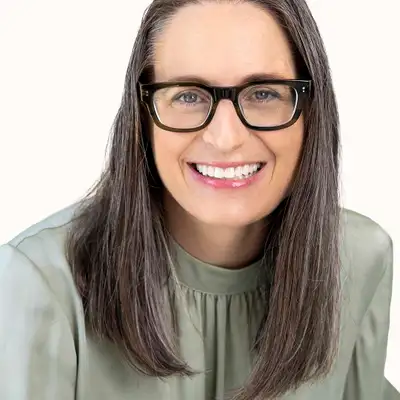

Born from 20 years of friendship, during which they navigated the trenches of autism parenting and advocacy, the Refrigerator Moms is Kelley Jensen and Julianna Scott’s way of reaching out to parents waging the same battles they were. Their purpose with this podcast is to clear the fog, silence the noise, and find a path through neurodivergence for parents that are stuck between bad choices. They tackle parenting topics such as mom guilt, tantrums, pathological demand avoidance, siblings, medication, comorbidities, social media, and much more.
[Julianna Scott] (0:09 - 0:27)
Today we are talking about siblings and we have some very special guests with us because we can't speak for them. Meet Ethan and Rosalie. And this is the Refrigerator Moms podcast.
This episode is entitled, Oh Brother, Oh Sister, Siblings versus Neurodivergence.
[Kelley Jensen] (0:29 - 0:55)
So Kelly, something we used to do is go up to the city and have some like food adventures. We're kind of foodies and we like to go try out new restaurants. And one time we took you guys up there and for one of our food adventures and we went to a fantastic, went to this bakery that was amazing.
And do you guys have any memory of that?
[Rosalie Jensen] (0:55 - 0:58)
Yeah, I remember that exact pizza place. I remember the pizza.
[Kelley Jensen] (0:59 - 1:00)
Pizza Ragaza.
[Julianna Scott] (1:01 - 1:05)
We looked it up, it's now closed. It's a R.A.P. Ragaza. But it was a good time.
[Rosalie Jensen] (1:05 - 1:06)
It was really good.
[Julianna Scott] (1:06 - 1:43)
And it was just as much fun for us because it was a time we could be with you guys and just have fun and forget about autism for a minute. Yeah. Do you remember it?
You remember the bakery. The very long line. And do you remember that we were sitting in the car, it was raining and we were eating, we couldn't wait.
So we were eating the cookies in the car. I do remember that. Snorting powdered sugar.
Yes, it was delicious. It was wonderful. Yeah.
Those are very important memories because being the sibling of an autistic child is not an easy lot in life, not particularly.
[Kelley Jensen] (1:46 - 2:46)
So one thing, so we've written a paper, you guys have read it. People listening can go to our website, refrigeratormoms.com and read about it because we've done some, there's been a lot of research done on the effects of siblings who live with someone on the spectrum. And you can go there, listeners can go there to get the details.
But one of the things that we talk about is this glass child syndrome that can occur. And glass child syndrome, I'm reading from the paper, the definition of it is, it's a colloquial term used to describe the sibling of a high needs child. And the sibling may feel invisible or overlooked as parents focus attention on the high needs child and therefore neglect the sibling as a result.
And this is especially common in families with one child who has a disability or neurodivergence. So does that resonate with you guys? Did you feel like a glass child at any point?
[Ethan Scott] (2:47 - 3:24)
I never felt like a glass child. I never felt invisible. I mean, I definitely recognize that your attention was split and probably a little heavier with my brother.
And I think a lot of that I kind of took myself kind of out of the eye line just to kind of take some pressure off because I knew it was a lot. But I also knew that you guys were trying very hard to make sure that like you spent time with me and that I got plenty of attention. So I didn't, I don't think I felt like a glass child.
[Kelley Jensen] (3:24 - 3:26)
A little bit of an invisibility cloak.
[Ethan Scott] (3:28 - 3:29)
Maybe a little bit.
[Julianna Scott] (3:30 - 3:30)
What about you, Rose?
[Rosalie Jensen] (3:31 - 3:55)
I think I definitely have like the emotional consequences of being a glass child that I've like come to realize as an adult. Like when I was a kid, if you asked me that, I'd probably be like, no, like I feel very seen and stuff. But then I like look at how I act in certain situations in my adult life.
And the way I behave is very much mirroring what you would expect from like someone who is the glass child.
[Kelley Jensen] (3:56 - 3:58)
Interesting. Like, can you give me an example?
[Rosalie Jensen] (3:58 - 4:13)
Yeah, like I can definitely like suppress what I want to do if I think it'll make other people happy. Like if I'm going out with my friends and they're like, we all want to do this, and I don't want to do that. Also go along with it, you know, and like that happens in many situations for me.
[Julianna Scott] (4:13 - 4:39)
Yeah. Well, you know, it is some estimates 71% of the siblings of a neurodivergent child experience, depression, anxiety, stress in their childhood, childhood trauma. So this is an important topic.
It's a topic that comes up a lot in Facebook groups and throughout social media. And you are doing well by telling other parents what worked and what did not work for you. So that's 71%.
[Kelley Jensen] (4:39 - 4:48)
Did that surprise you? You heard read that that was I mean, that huge majority of kids are feeling that as a result.
[Rosalie Jensen] (4:49 - 4:53)
I think you were there when I read that part of the paper. And I was just like, I feel so validated.
[Kelley Jensen] (4:54 - 5:03)
It was a little bit of a leading question. I know that was the one thing you would jumped up and you're like, that was me. Wow.
Yeah, it's like, that makes sense. Yeah.
[Ethan Scott] (5:03 - 5:05)
No, it does not surprise me.
[Kelley Jensen] (5:06 - 6:31)
No, no. And I think I was aware as a parent that this was going to have an effect. I mean, how could you not, you know, like it was having an effect on me, you know, for sure.
So of course, it's going to have an effect on you. And I'm not being defensive in any way. I mean, I think that it's just like, I tried to protect you, but I think there's just no way.
And I and we've talked about this, Ethan, that, you know, my way of kind of protect trying to protect you is kind of to separate you, you know, and like when your brother was having, you know, a lot of tantrums and things like that, like, you know, telling you to go to your room and just like you wouldn't have to be part of those tantrums and see and hear even though inevitably, of course, you would see and hear those things. And I couldn't protect you from all of that.
I think that's what parents struggle with, with siblings is like, how do I minimize that or try to mitigate that, knowing that it's impossible to keep you in a bubble from it? I mean, we're all in this these houses together, you know, and, you know, do you want to talk a little bit about the anxiety that you felt? I mean, I know that there was definitely periods of time that it was, you know, higher, maybe maybe it was always high.
I don't know. Like, what do you I mean?
[Ethan Scott] (6:31 - 6:39)
Yeah, I definitely had the anxiety really until summer 2023. Yeah. Like, what do you what kind of?
[Kelley Jensen] (6:41 - 6:42)
Yeah, yeah.
[Ethan Scott] (6:43 - 7:22)
Well, I mean, there was like in fourth grade, that was like when the PTSD, that was when like, that was at its peak. For that, I always felt like I was going to go pee my pants. Yeah, that was how anxiety manifested, like, at least for that year.
And then, like, up until I really got a hold on it a couple years ago, it was just whenever I was in the room with my brother, like my heart rate would go up. And I would just be really anxious, I'd be looking for ways out of the conversation. I just be trying to get out as fast as I possibly could.
One word answers, like, it was just very avoidant.
[Kelley Jensen] (7:22 - 8:38)
Yeah. So back to the fourth grade thing in the PTSD. You know, I remember, yeah, like, we and I was looking for a physical explanation for those things.
I really was hoping for one, you know, we took you to for every test about that, like, and unfortunately, I get the sinking feeling that I knew it was anxiety produced. And I'm like, okay. And that's, that's when I think that's the first time I started taking you to a therapist.
And we took you to a couple different therapists for that. And you I don't know if you're right that you were on medication for a little bit for anxiety, which you went off of about after about a year or so. But yeah, that's when I'm just like, okay, that the household like had calmed down a little bit because his brother had been very physical and verbally abusive.
And then when he started to kind of calm down a bit, everyone in the house kind of had like, okay, we've been in this fight or flight mode for so long, and then we all started to relax a little bit, but then the anxiety peaked. And that's what really happened for you. But, you know, what happened in 23, that kind of helped you?
[Ethan Scott] (8:39 - 10:50)
That was when, that's when I went back to therapy. I mean, like when I found out it was PTSD, like I was a senior in high school. And I went back to therapy then, just because I felt like that was what you and dad wanted me to do.
Because I felt a lot of pressure to like have a better relationship with my brother. And so I definitely wasn't, I mean, it was EMDR, which didn't help me that I'm more of a talk therapy kind of guy. So that wasn't helpful for me.
But I just did it to check a box. And that I think 2023 was when I was really ready to go back. And that was talk therapy.
And that helped a lot. And what helped was realizing that he was like a different person now. And I mean, we had just grown up so separately that we really didn't have much relationship.
And so a big, the biggest thing that helped in lowering the anxiety was you and dad taking a step back. Because like, when my therapist helped me realize this like, he and I have our own relationship. And that's something that like, and I'm also like very big on like authenticity.
And so like, when he got his driver's license, like dad texted me like right after he was like, make sure you like text him congratulations. And I'm like, well, now it's not authentic. And it's like, you're just telling me to do it.
And so I built up some resentment towards you guys and him. Because I felt like you guys were on his side and all the pressure was on me to like rebuild this relationship. That wasn't my fault for like creating.
And so you guys stepping back and just letting me work through it on my own. I think, I mean, he and I have a better relationship now than we ever have like in DC, like going to lunch and like spending like a 45 minute period of time together where we can talk the whole time is like unheard of. Yeah, five years ago.
[Julianna Scott] (10:50 - 10:57)
That's I know. I know. So even you mentioned that you stopped therapy at the fourth grade, you said.
[Ethan Scott] (10:59 - 11:18)
So after fourth grade was that was when I stopped like the specific therapy about like the manifestations of anxiety from the PTSD. And then I also stopped again, in high school, like halfway through my senior year after I tried EMDR for a few months.
[Julianna Scott] (11:19 - 11:43)
And so you feel like you had to be ready for the for the therapy because one of the things that we recommend in the paper is we recommend trying different therapies with siblings throughout their life and seeing if something sticks. So it's okay to stop and start. Just keep going back to the table and what intervention might work for you.
Sort of the idea that we put in the paper, would you say that's true?
[Ethan Scott] (11:43 - 12:04)
Yeah, I mean, when I started going to EMDR, that was when I felt like the pressure from my parents was the highest to rebuild their relationship with my brother. And so I really did it to get them off my back. It wasn't for me necessarily.
Yeah, I was like, I need that was my way of showing them that I was trying without actually having to really try.
[Julianna Scott] (12:05 - 12:28)
I understand. So Rosalie, you touched on the glass child syndrome and how you felt about glass child syndrome. And I know that you didn't have any therapy other than therapies that we did in interventions that we did with your brother that you were looped into.
So some of the therapists that worked with him worked on skills for you to help you interact with him a little bit more. But you didn't actually start therapy until you were much older. You want to talk about that?
[Rosalie Jensen] (12:29 - 13:03)
Yeah, so sort of like similar to Ethan's experience. At one point, when I did start therapy, right after I got diagnosed with depression, I was like 19 or 20. So I was in college and I was like away from home.
And part of that resentment definitely was like, why did I not start therapy before? Like, why did my diagnosis like take so long for me to like get and that was definitely related to being the glass child because I was suppressing my own emotions. So like, you weren't seeing that I was showing symptoms of depression when I was younger, right?
[Julianna Scott] (13:03 - 13:33)
I guess the overall advice to parents and kids is that even if the sibling of an autistic child needs therapy, they might not be ready for it to keep the conversation open and to keep trying it. And if it doesn't stick, or if you feel like you're doing it for the wrong reasons, you can stop and start again, try a different therapy, a different therapist. Just because you need it doesn't mean you're ready for it kind of a thing.
I think that's the thing with all therapy, really.
[Kelley Jensen] (13:33 - 13:49)
When they were a lot younger, there were like sib shops and things like that, like group therapy, or you you could meet other kids with siblings who were on the spectrum. Did you ever do those Rosalie? Did you ever participate in those?
[Julianna Scott] (13:49 - 14:12)
A little bit you did in some of but it was in some of the his therapies, they would have siblings stay or they would have, you know, an attempt to for you to have a support group. I think that those kind of things are important. I guess the question comes back to you guys.
Would you rather go to a sibling support group or would you rather have the food adventure? What sticks out more? Or are they both important?
Should you do it all?
[Rosalie Jensen] (14:13 - 14:33)
I think for me as a kid, I would have just preferred one on one talk therapy, where the therapist just sort of got to know the situation. And I think I just needed guidance into your suppressing your emotions a little bit. Let's unpack that.
I think that would have like helped me a lot. Okay, growing up.
[Kelley Jensen] (14:33 - 15:11)
Yeah, I know I offered those sibling, sib shops and things like that, like kind of groups. I don't know if you remember that. And you were going to shut that down.
Like you were not interested in doing that. I know we did a few things like we did, like the special needs gate and some other kinds of activities where there were siblings along with the kids on the spectrum. But I don't know if you necessarily interacted with the siblings in those situations.
I mean, was that, I mean, clearly that wasn't something that you were necessarily seeking. Is that right?
[Ethan Scott] (15:12 - 15:27)
Yeah, well, I think it's interesting because now, like a lot of my closest friends and a lot of people like I am close with, they have siblings who are like neurodivergent, but it was just kind of like a natural gravitation.
[Kelley Jensen] (15:27 - 15:27)
Interesting.
[Ethan Scott] (15:28 - 15:45)
And it's not something we talk about a lot or if at all. And I think like what I kind of needed as a kid was to not think about all that stuff. That's what I appreciated about like being in my own school and like having friends that were separate is I didn't want to talk about it.
[Julianna Scott] (15:46 - 15:53)
Yeah, that's interesting. We had you both and you went to different school and your brother and you went to different school and your brother. That is in the paper.
[Kelley Jensen] (15:53 - 16:07)
We talk about the importance of having some independence and some time away from the family dynamic and not being known as that person's sibling and having a separate identity from because it's so overwhelming.
[Julianna Scott] (16:08 - 16:08)
Yeah.
[Kelley Jensen] (16:08 - 16:43)
But something you said, Ethan, to kind of build off of, you know, I think that's one of the reasons like we became friends is that we and maybe maybe this doesn't isn't the same situation. But for us, we could talk about shoes and food and all that stuff, but we knew what each other was going through as moms. So we had that built in like, yeah, you know what my life is, but it's a relief to just be able to talk about other stuff.
But with that knowledge that, yeah, I might be going through it and you might be going through it.
[Julianna Scott] (16:43 - 16:43)
Yeah.
[Kelley Jensen] (16:44 - 16:56)
So I don't know if that's what you talk about kind of gravitating toward those people. I, you know, we didn't necessarily, well, we did gravitate toward each other, but I don't know if that's the same.
[Ethan Scott] (16:57 - 17:03)
Well, it's not like I found out that they had a sibling. Yeah. Something I found out later.
[Kelley Jensen] (17:03 - 17:03)
Yeah.
[Julianna Scott] (17:04 - 17:20)
I think it's more just like the effect that has on the way you pray people your empathy, your, your conversational skills, probably. So did you talk to friends growing up about your family dynamic and what you were going through? Or do you want to not talk about it when you were away from your family?
[Rosalie Jensen] (17:21 - 17:47)
I think I, I had some really close good friends who I felt very comfortable like talking about it with. And that definitely helped me in my situation. And just sort of like feeling more normal about it.
But I tried to like limit those conversations to people who I knew would be supportive and who would understand. Like that wasn't just something I was readily sharing with kids. I'm in that school.
[Julianna Scott] (17:47 - 18:08)
Got it. Got it. Got it.
So you can go to refrigerator moms.com to read the full paper and see our complete list of questions. What would we do to do lists? But we are going to start right now with some questions for both of you.
The first one, what do siblings want as they grow up into adults? What do you want to everyone to know?
[Ethan Scott] (18:09 - 18:59)
I think the biggest thing for me was independence. I like needed space to like find out who I was outside of like the house. I remember, in particular, like, I started working out.
And you guys thought about like, he wanted to work out too. And you were like, maybe you should try this gym. I was like, absolutely not.
Like, I got very anxious. And I like felt like almost invasive. So I needed separate spaces and like to, to have outlets that were just mine.
Yeah, I just needed like going to a different school. And it was the biggest thing for me was it just let me develop who I was without having to worry about anything. What about you, Rosalie?
[Rosalie Jensen] (19:00 - 19:21)
I think you did a great job with that. Specifically, like we had meal times, just me and dad. And I like had those moments where I was the only child.
But I think something that was missing was the therapy element, like trying different therapy for me, like alone would have been would have been the secret sauce.
[Kelley Jensen] (19:21 - 19:27)
Yeah. All right. Okay, so that's what you wanted as kids.
What about now? What do you want as adults?
[Ethan Scott] (19:28 - 20:07)
I think a lot of that is just validation, like even like when I was in high school, and I felt all that pressure. I just that's I guess what I where I felt like a glass child is I felt like you guys had made the choice to keep us separate. And then once like the effects of that were that we weren't very close, you put a bunch of pressure on me to rebuild that.
And I felt like I wasn't making knowledge for what I've been through. And the space I needed to figure that out on my own.
[Kelley Jensen] (20:08 - 20:09)
What about you, Rosalie?
[Rosalie Jensen] (20:10 - 21:08)
Yeah, definitely similar, just like, validating my journey and like, recognizing points where things could have been different. But also for me, for my healing journey, one of the biggest things was sort of realizing that, like, there wasn't, there's there was never a way to fully protect me from all of it. Like, I was gonna have some emotional impact from this, regardless, no matter what you did, or what you guys tried to like, put me then, there was always going to be like, some emotional suppression or like, those sort of symptoms.
And the biggest part of like me, not feeling resentful anymore, was just realizing that my parents are people, this is like their first time raising a neurodivergent kid, right? Like, of course, they were gonna make mistakes, like, I'm gonna make mistakes raising my kids, like, that's about to happen. So I think just like, you recognizing me, but then me also recognizing your struggles with it, like, and what I did get right, the puzzle for me.
[Julianna Scott] (21:08 - 21:23)
Got it. And what are the effects now? Now you're a young adult, and you have perspective, the perspective of being able to look back a little bit, because you're not in it as much.
Certainly, you're not around your siblings every day. What have the effects been on you? Good and bad.
[Rosalie Jensen] (21:24 - 22:19)
I definitely find that I'm really good at like, reading people emotionally, or like, just their behavior in general. And that definitely comes from like, you openly communicating with me about what was acting this way. This is why are you just like, responding to him in like, an appropriate way.
I definitely learned a lot from that. I definitely have like, a strong sense of like, responsibility. Like, I'm a, I can do it by myself type of person, which like, is a two edged sword, because I'm also like, terrible, asking for help and sort of emotionally suppressive.
But I'm also like, really like, able to like, care for myself and like, very responsible. And like, also resilient, like emotionally resilient. Like, I went through this bout of depression, but I was able to get through that like, mostly by myself.
Like, a lot of that healing was because I was strong enough to do that. And that wouldn't have happened if I didn't like, exist in that situation with Beau.
[Julianna Scott] (22:19 - 22:42)
Would you say, but this is questions for both of you, would you say that you're both empathetic, in a quicker way or more empathetic? Or it seems to me that's what radiates off of me when I interact with both of you is you seem to have a more nuanced and mature empathy than I would say other adults, young adults. Would you say that's true?
[Rosalie Jensen] (22:42 - 22:53)
I think 100%. Especially like, we're both pretty young still. And I feel like a lot of our peers are still emotionally developing.
And I feel like I definitely got there sooner. Would you say that's true, Ethan?
[Ethan Scott] (22:53 - 23:15)
Yeah, absolutely. I think like, it's a kind of empathy where, like, when you've been through something, and like, you see someone who's maybe not super mature, like, the first thing you think is like, why are they acting that way? It's like, oh, they probably went through something too and probably didn't have all for the record.
I'd like to say I think you and dad did a great job.
[Rosalie Jensen] (23:16 - 23:16)
Thank you.
[Ethan Scott] (23:18 - 23:38)
I think you made the right choices. But like, I think, like, when I meet those people, it's like, oh, maybe they went through something too, but they didn't have the same support system that I had. And it like, went a different way.
So it's, it's less like, oh, like, why are you acting that way? And more like, oh, like, something probably happened.
[Kelley Jensen] (23:38 - 24:04)
Obviously, you're always going to be, you're always going to have these siblings. Um, you know, and it's not the journey hasn't ended. Right.
So it's not like it's all over. Are there things that you are still grappling with now? I mean, I know.
And, and maybe that goes back to, you know, feeling like a glass child, or like, do you still feel like a glass child? If so, like, what do you need to become visible?
[Rosalie Jensen] (24:05 - 24:29)
I think for me, it's just like, analyzing situations, like I had mentioned earlier, where I am being emotionally expressive, or I'm like, bending to what other people want to do to be easy, like, sort of breaking out of what I learned how to do growing up, and like, fully, like realizing and like, strongly supporting myself.
[Julianna Scott] (24:30 - 24:46)
And what would you say your relationship with your sibling is like right now? I mean, you know, I would say you had a similar dynamic than Ethan did with his sibling. I don't know, your brother just seemed to kind of ignore you for most of your childhood, would you say?
[Rosalie Jensen] (24:47 - 25:00)
Yeah, we definitely had a period where we just didn't interact much at all. And then, like, when I got to college, he missed me, and he started calling me. And that's sort of when we started having like, a positive spin on our relationship, which was new.
[Julianna Scott] (25:00 - 25:08)
Yeah, yeah. And you feel like it's, it is sort of a budding new relationship. It's going to be different than any other relationship.
[Rosalie Jensen] (25:08 - 25:13)
But I think for Bo to treatment was a big thing.
[Julianna Scott] (25:13 - 25:13)
Yes.
[Rosalie Jensen] (25:14 - 25:19)
Like, him being able to just communicate better with everyone helped him communicate better with me.
[Julianna Scott] (25:19 - 25:21)
I agreed. I would agree.
[Rosalie Jensen] (25:21 - 25:24)
And like, I can hug my brother now. That's super cool.
[Julianna Scott] (25:25 - 25:25)
Yeah.
[Rosalie Jensen] (25:25 - 25:26)
That was not a thing I could do before.
[Julianna Scott] (25:27 - 26:20)
Oh my god, we have a picture of my Facebook profile picture is a picture of the two of you is he let you take a selfie because we have so many issues from childhood where he did not ever wanted his picture taken. And I had we had severe meltdowns over trying to get a family photo. And I kept trying because I wanted a family picture of my two kids.
And then one day, we were in dinner just recently. And he's he's you're like, Come on, Bo, take a picture. And you guys have this picture that you sent me and it is it will be my Facebook profile picture forever.
As we have mostly be more I hope so. But I ate it's a symbol of how hard we have all worked, including Bo to get to be able to take a picture together. So the treatment that you mentioned, Rosalie is Mert.
Our family member Bo did Mert magnetic e resonance therapy. And it made a big difference in all of our lives.
[Kelley Jensen] (26:20 - 26:47)
And this episode of refrigerator moms is brought to you by brain performance technologies. Brain performance technologies is a specialty mental health clinic that offers magnetic e resonance therapy or Mert for autistic people aged three or older. Mert is a transcranial magnetic stimulation protocol that utilizes an EEG diagnostic to deliver personalized magnetic pulses to stimulate the brain and build neural pathways effective in managing autistic symptoms.
[Julianna Scott] (26:49 - 27:01)
So, Ethan, we're coming back to you and the effects of your family dynamic growing up and glass child syndrome and whether or not you still feel glass child syndrome.
[Ethan Scott] (27:02 - 28:11)
So I don't feel glass child syndrome with my parents, but I do. The effects are definitely still there in other relationships. I think that growing up with my brother, a big issue I had was like, he wouldn't be responsive to when I would like, not want to do something.
And so I would kind of suppress what I wanted to say. And so I think I'm a really good communicator. My problem is I sometimes I'm scared to like, it's what Rosalie was talking about earlier, I'm scared to actually like, say what how I'm feeling, because I'm worried that the other person isn't going to take it right.
So that's why like, when I was in high school, I went to therapy instead of just like saying I'm not ready, because I didn't think my parents would understand. But now I think, I think there is a deeper understanding between at least me and my parents about how I feel, but I do still like have the effects of sometimes struggling to communicate exactly how I'm feeling.
[Kelley Jensen] (28:11 - 29:52)
And I feel like you did definitely learn how to communicate effectively with us. And really, you know, it was a hard conversation for you to have with us, I think of coming to us and saying, you know, you need to kind of stay out of my relationship with, you know, your brother. And that was really, it was hard to hear.
Because, you know, my biggest fear, and my, you know, a big sadness for me was seeing that you and your brother weren't close. And I think I was really afraid that you would be estranged. Unfortunately, like, because I was driven to try to push you guys together and mediate and get and try to get you guys closer, it actually had the opposite effect.
And you were able to communicate with that that would to me. And, you know, it was definitely hard. Like, I still even today, you know, my inclination is to ask you about your relationship with your brother.
And I, you know, kind of bite my tongue or because I don't want to know I'm maybe I'm over correcting. And I that's on me, like, I need to figure that out. Like, you know, I feel like, you know, if you mentioned him, I want to say, Oh, well, did you have lunch with him?
Or did you like, what did you guys talk about? And I have to like, not say that. But my first instinct is to, you know, try to fix it or try to, you know, and instead, I was actually damaging it more.
And I, I know, I still have work to do. And I even did it just this week with you and the dog that I try to interfere in, and try to get you guys closer together. The dog anything?
[Julianna Scott] (29:52 - 29:53)
Yes.
[Kelley Jensen] (29:55 - 30:18)
So the dog. No, the dog is not. Ethan complained that he said that the dog seemed a little entitled.
And I didn't like that. And so I said, Hey, you know, you may need to make up with your father and tell him that you love him. And then what did you say?
[Ethan Scott] (30:19 - 30:23)
I said that the fact that you were asking me to do that, I felt like you were taking his side.
[Kelley Jensen] (30:29 - 31:24)
And it's not McGruff's fault. And I was actually entitled. Well, that might be my fault.
But I backed off and I think, you know, I think you and McGruff are back on track. But I need to learn. I can't ask about it.
I can't say anything. I just have to, you know, look at them and see them together and be happy and all that stuff from a distance. But yes, it was, it was, I really appreciate that even though it was hard for me to hear that you, you felt comfortable enough to come to me and say that.
And I don't know if you thought that, you know, I was going to react badly to that information or what, but I'm glad that whether or not you did feel that, that you were able to do it. So I appreciated that, even though it was hard to hear.
[Julianna Scott] (31:24 - 31:47)
Again, this paper, Oh Brother, Oh Sister, siblings versus neurodivergence can be found at refrigeratormoms.com. And we wanted to touch on socioeconomic factors that might impact families and their ability to implement some of the suggestions in the paper that is addressed as well. So find the paper on our website, refrigeratormoms.com.
[Kelley Jensen] (31:48 - 32:51)
You know, we both have two kids. And obviously, there's lots of different permutations of families with multiple children on the spectrum or with other neurodivergence. So we, of course, are just speaking about our two children, two children and our setup.
But there's also lots of information about, you know, what to do when you have more than one child that you are trying to navigate around. So that's all there on refrigeratormoms.com. So typically, in the what would we do section and our podcast, we would, you know, we post questions to ourselves tell you what we would do in those situations.
But obviously, we can't do that for this episode. So we're turning it over to you guys and asking you what you would do in these certain scenarios. So the first question we have for you guys is, what would you do differently if you were the parents of both neurodivergent and neurotypical kids?
[Ethan Scott] (32:51 - 33:34)
I think the biggest thing would just be acknowledging the trade offs. I think you raised us was going to have the effects it did in us not being close. And so I think it was the right way to raise us.
But then I think once we got to adulthood, you were kind of like, well, why aren't they like close? They need to be that close to like, they need to be siblings as well. And so I think taking a step back and actually realizing that there are trade offs to what you do with your kids is important.
[Rosalie Jensen] (33:36 - 34:05)
I think for me, I would just have liked to be put in therapy or like, psychiatry or something, like a lot earlier on. And I also think like, along with that, maybe like, some more just questions about how I was feeling or like, specifically directed questions about like symptoms that I might have been showing, or like, class child syndrome, that would have been like, helpful for me to sort of understand how I was feeling better.
[Julianna Scott] (34:06 - 34:31)
Yeah, yeah, yeah, communication. Yeah, communication. Just because as a child, you communicated well, didn't mean you were communicating deeply, and I was missed.
And we're still working on that, right? I mean, part of why you're here is so that we can, you know, keep talking and talk in ways that maybe we glossed over earlier. So yeah.
And what would you do the same?
[Ethan Scott] (34:31 - 35:10)
I think, again, like the independence, I think the separate, separate lives, I guess was super important for me to figure out who I was. And I think that you guys did a good job of being there for me and like doing things. And I know we every summer, since he didn't like to travel, like one of you would take me like somewhere in the US, I would like have a vacation, just the two of us.
So I wasn't missing out on things that families with all neurotypical kids were doing, I was getting those experiences, and I wasn't feeling left out.
[Kelley Jensen] (35:11 - 35:26)
Dad and I love doing that. And, you know, it was always like, I was always excited when it was my turn, we would trade off, you know, every other summer, and we would ask Ethan, you know, where he wanted to go. And it was it could be, you know, anywhere, I guess, pretty much anywhere in the United States.
[Ethan Scott] (35:27 - 35:30)
I don't know what we were Oregon, South Dakota, and Colorado.
[Kelley Jensen] (35:31 - 35:37)
Yeah, I got to go to South Dakota with you. That was so much fun. We had a good time.
[Julianna Scott] (35:37 - 35:40)
Well, what was anything the same for you, Rosie?
[Rosalie Jensen] (35:40 - 35:48)
Yeah, super similar, like going to a different school, having different meal time. And that was my favorite time of the day.
[Julianna Scott] (35:48 - 35:53)
Yeah, we fed him separately. And we just had the three of us just to just talk like normal people.
[Rosalie Jensen] (35:54 - 35:58)
Yeah. And also, like, we would also do vacations and stuff together.
[Julianna Scott] (35:58 - 35:58)
Definitely.
[Rosalie Jensen] (35:59 - 36:10)
But I think also, vacations individually with my other family members, like I would go on vacation with my cousins without Bo. And that was also really great for our bonding, like for me to feel more normal.
[Kelley Jensen] (36:10 - 36:26)
Yeah, it's, you definitely look at things differently. Like, you can't think traditional family dynamics. Absolutely not.
And we really had to let that go. You know, that's like, we're our family is not going to look like other families, like our summer vacations, our holidays.
[Julianna Scott] (36:27 - 36:45)
And you know, the letting that go you it's not just you don't just let it go once. And then you know, keep like I still have to remind myself, do not try to take a picture. And of course, the second I let it go, Rosalie snagged a picture.
But so like, you're constantly evolving and remembering to let it go.
[Kelley Jensen] (36:45 - 36:59)
It's difficult. I mean, that's it goes back to, you know, me trying to, you know, push you guys together. It's just like, Oh, well, you know, brothers, you guys should, yeah, like pose together and do this.
And, you know, it is hard.
[Julianna Scott] (36:59 - 37:22)
I think, you know, we're always struggling with that different dynamic and sort of everybody has a dynamic family dynamic that they're constantly managing. But absolutely stars. Okay, so if looking back when your needs were in direct competition with the neurodivergent siblings needs, what do you suggest for prioritization?
[Rosalie Jensen] (37:22 - 37:47)
I was always the type of kid, and I think you mentioned this too, or I just sort of recognize the situation like I didn't need. I would remove myself without you asking or expecting that of me. I just did that because I recognize that that's what you needed from me.
And I think that's okay. But then it that leads to these sort of like suppression, right?
[Julianna Scott] (37:47 - 37:51)
So remember to come back to communication later, like the brief.
[Rosalie Jensen] (37:51 - 37:58)
Yeah, I know both having his moment right now, but then come talk to me after and make sure I'm okay. Or like, see how I was feeling about that.
[Julianna Scott] (37:58 - 38:20)
Yeah, I would concur that that is a smart thing. Again, it comes back to communication, communication, communication, even if it's delayed, because that's all you can do in that moment. And we've already touched on this.
But as adults, if you aren't close, you have to let it go and let the relationship unfold as any sibling relationship should unfold, right?
[Kelley Jensen] (38:28 - 39:18)
That's I know that that was I mentioned before the kind of driving forces, I didn't want you guys to be estranged or anything like that. And, you know, part of that is, I mean, we have a little bit of a different situation, we haven't talked about it too much. But you know, your brother, you know, lives independently.
And, you know, and is working, your sibling, you know, isn't he's got do you feel any sort of responsibility? I know that that can often feel like a burden or, you know, something in the future. Like, what do you see in terms of an adult, like, like looking out for your sibling?
I mean, do you do you feel any pressure?
[Rosalie Jensen] (39:20 - 39:55)
I definitely don't feel like pressure from you guys to like have a relationship with him. But I like my relationship with him and like that. I think the reason I appreciate our relationship so much now is because I didn't get a good relationship when I was a child.
So when he started being cool with me, I was like, that's awesome. Like, I'm gonna, I'm gonna call you all the time. But I think also part of it for me is just like, giving myself space when I need it to like, if I'm on the phone with Bo and like, he's like, not getting out of a loop, like, it's okay for me to also find like summer responsibility to talk him out of that loop.
[Julianna Scott] (39:55 - 40:31)
Yeah, absolutely. And this comes up quite a bit. There is going to be issues of his care as you, you know, get older.
I mean, I'm not gonna live forever, your father's not gonna live forever. And we are trying to set up, you know, care for him that it's not so onerous for you. As you get older, you don't want to be in a situation where you're raising your own family and your brother has to come and live with you, right?
So we're gonna do everything in our power. Do you feel way too from that? Or what can we do?
What can other parents do to help you make peace with that, maybe that reality, keep you involved in the conversation?
[Rosalie Jensen] (40:32 - 40:54)
I mean, I've always sort of imagined, like, my future involving my brother. Like, I've always imagined like, I'll have a house info, we'll have a side house on my property, and we'll live together, but separate. And I've just always sort of like, envisioned my life like that.
And that's like something that I wouldn't choose a partner who wouldn't be on board with that 100%. Because like, that's my family.
[Kelley Jensen] (40:55 - 41:06)
Interesting. Yeah. And do you, Ethan, I know the situation is a little different, but do you ever now, like, see any kind of responsibility toward your brother?
[Ethan Scott] (41:07 - 41:35)
I mean, I think that at this point, like, if I don't reach out to him, I don't really expect that he's going to reach out to me. So I do feel like some level of, like, it is on me to kind of keep it going. Especially since we're in the same city.
But I don't feel pressure. Yeah. And it's not the same anxiety inducer that it was, like a few years ago.
[Kelley Jensen] (41:35 - 41:35)
Yeah.
[Ethan Scott] (41:36 - 41:40)
Like seeing him every few months for lunch is not that bad.
[Julianna Scott] (41:43 - 42:15)
Okay, so we are at the part of the paper where we have a to do list and things that we should do immediately, things that we should do the short term, things that we should do over the long term and things that we should never do. We call them blocked. So we thought we would tell you what we've written and you can give us a affirmative or negative.
And the immediate it's you both have the same experience. We're separating meal times to the extent possible. You I know had your brother had noodle time and then that allowed you to have meal time with with your Do you remember noodle time?
[Kelley Jensen] (42:15 - 42:34)
Yeah, so at four p.m. for 30 for 30. Yes. Yeah, noodle time.
And it was it was kind of a win win because he got his own meal time. And then we got to have a pretty typical family experience of, you know, debrief on the day.
[Julianna Scott] (42:35 - 43:08)
Yeah, I strongly advise that for any family. So modeling grace under pressure, you know, a lot of times it comes up where you're in public and there's a meltdown and, you know, how I'm acting, you can affect how my other child is responding to their siblings meltdown is just to the extent possible try to keep your cool, breathe through it. Remember that you don't really need anybody else's input or approval.
Just be there for your children.
[Rosalie Jensen] (43:09 - 43:50)
Yeah. And like on that, I think that was I was mentioning the positive emotional impacts that is like a huge piece of that. I don't feel like I need to prove myself that anyone or like act a certain way because I didn't have to feel like that in those situations with though, like if he was acting out in a restaurant, or like idea that was well, screw those people.
They're not cool. Pick up on what's going on here. I don't want to be friends with you.
I don't want you in my life. Yeah, like that confidence in even if my brother's acting weird, like we're still a cool family. And like, if you don't get that, you don't get that that like, was a really positive thing.
[Julianna Scott] (43:50 - 43:55)
Well, we might have had to buy a few rounds of drinks for people. But that was okay.
[Kelley Jensen] (43:55 - 44:13)
I don't know if I was as good as you about modeling indifference. And I don't know if I remember I cared about what people thought. I don't think in those moments of big tantrums.
And again, you can go back to our paper on tantrums.
[Rosalie Jensen] (44:13 - 44:13)
Definitely.
[Kelley Jensen] (44:14 - 44:25)
I've got a lot of good stories about some epic tantrums. I don't know if I was modeling indifference. I mean, do you remember how I acted in public?
Did that inform how you responded?
[Ethan Scott] (44:26 - 44:47)
I don't remember very any of that. But like, I will say, sorry, not exactly the same. But I think you and dad, the way you guys handled things was definitely like a model for me.
I think you guys were always a team. And I think that's pretty rare for parents of neurodivergent kids. I think isn't the divorce rate behind it.
[Kelley Jensen] (44:47 - 45:06)
It's about 85%. I don't quote me on that. And that's definitely something we're going to talk about in the future.
And the dads are going to come and sit where you do right now. But yeah, well, I'm, I'm glad you noticed that. It doesn't just happen.
Yeah.
[Ethan Scott] (45:07 - 45:18)
I think you and dad, like your relationship is definitely a model for how parents should be and like how a partnership should be. So I think that was a good thing. Oh, that's nice.
[Julianna Scott] (45:19 - 45:49)
It makes me want to cry. Oh, and in the short term, the one on one activities, the we meant we talked about mealtime, but separate vacations or separate schools, seven schools, that's separate to do. But yeah, and the gym karate, the martial arts and food adventures.
And, you know, setting up the expectation that there's a time when the neurodivergence child's needs take a backseat, where they are fine with a caregiver, and you go off and have some time alone support.
[Rosalie Jensen] (45:50 - 45:50)
Yeah.
[Julianna Scott] (45:51 - 46:09)
This one, carve out a space in your home, you had your own room growing up and you had your own room going up. And again, we talk about socioeconomic factors. And that might not always be possible.
It doesn't have to be fancy, even if it's just a special corner. And if it's, you know, a tent, yes, you know, this cute little tent.
[Kelley Jensen] (46:09 - 46:12)
I'm not saying a tent in the backyard where your kid has to go.
[Julianna Scott] (46:12 - 46:24)
I mean, like, you know, one of those little play tents that you put over the bed, those little canopies that you put over the bed, or you loft the bed, and you can have space under the bed. There's something that signifies you can go here and tune out chaos.
[Kelley Jensen] (46:24 - 47:17)
Yeah. I think that is important. I know, Ethan, you have a big love of your own space.
I think that was a key part. And, you know, again, like, I think that was what you were talking about, about the choice we made. I think we definitely, you know, had that safe space for you to go to.
But I, you know, and that's what separated you. So, you know, for good and bad. And again, knowing the consequences, and, you know, sometimes not acknowledging those tradeoffs, I knew that that separate space, you know, and that separation, there is that tradeoff that you won't be as close, you know.
So, but I think, I think that was the right choice. I knew that there was going to be a consequence that didn't surprise me. I was hoping it wouldn't happen, but that was wishful thinking.
But yeah, having that, that own space, I think, was really important.
[Julianna Scott] (47:17 - 47:50)
And let's see, ongoing information. I mean, I never felt the need to protect you from your brother's diagnosis and make it something we didn't talk about. I mean, we kind of had no choice we had to talk about it.
But you needed that information. You needed to understand, you needed some tools, you needed to know how to respond, you know, in the moment of a meltdown of everybody as much as I did. And communication, communication, communication, and there obviously could have been more communication, but you still keep going in that vein as best as you can, and keep trying to make improvements every year, right?
[Kelley Jensen] (47:51 - 48:03)
We definitely weren't a family that, you know, hid his brother's diagnosis. We were always talking about it. Do you ever remember a time where you didn't know he had autism?
[Ethan Scott] (48:03 - 48:08)
No, I mean, I thought you said all the time, like, I grew up in a waiting room. Absolutely.
[Kelley Jensen] (48:08 - 48:26)
Yeah, you definitely grew up in a waiting room. Ethan was two months old when his brother was diagnosed. So he literally, I took him, you know, in a carrier to, you know, waiting rooms, and he knew all the therapists.
And, you know, yeah, I mean, it's a it's a lifestyle. Yeah.
[Julianna Scott] (48:26 - 48:35)
Well, I used to I used to have Auntie Amy and Uncle Tim come and pick you up and take you for donuts so that you wouldn't have to be in the waiting room as long. You'd love that.
[Rosalie Jensen] (48:36 - 48:53)
I actually have like, really fond memories of going into some of those therapies with him. Yeah, I liked like, being with the therapist and playing with him. And I think it like had a positive impact on like how I viewed him and like his diagnosis and your community, your ability to communicate.
[Julianna Scott] (48:53 - 49:06)
Yeah, I that is in the paper as well as one of the suggestions is ask the therapist for help with the sibling, don't be shy about carving out some time in the speech or ABA session for siblings to participate.
[Kelley Jensen] (49:06 - 49:54)
And Rosalie, I don't know if you remember this, but you know, one of the things that parents with kids on the spectrum do is we're constantly like shopping for play dates, you know, and so like, as soon as you talk to a therapist, you're like, well, you know, are there siblings of the other kids that you work with that can play with my kid, and we would do kind of like sibling swaps and play dates and things like that.
And I know you came over and helped, you know, Ethan's brother and we did some baking and some other stuff. You, Ethan's brother went through a big cake decorating phase. I remember.
So we were always looking for opportunities to build some social skills along with preferred interests. And so I know I totally remember you coming over and we did some baking.
[Rosalie Jensen] (49:54 - 49:59)
I remember that too. Yeah, it was like the first time I ever played with like fondant.
[Kelley Jensen] (49:59 - 50:18)
Oh, yes. We were pretty good with the fondant. Yeah, gum paste, flowers, all those things.
But I mean, Ethan, you were also a playmate for some kids on the on the spectrum. Other kids, you know, do you remember that? A blocked memory.
Oh, blocks.
[Julianna Scott] (50:19 - 50:57)
Speaking of blocks. So these are the things that we put, do not micromanage your child's relationship with each other. We've touched on that.
We've beaten that one. This next one is hard and it's a work in process, but I think we are modeling it right now. Do not get defensive as the sibling voices frustration or, you know, saying what as a parent I have done wrong.
That is something you need to be able to speak freely. You need to be able to communicate with us and it's some of it's going to hurt, right?
[Kelley Jensen] (50:57 - 51:01)
Yeah, it is. But we can take it and we want to hear it.
[Julianna Scott] (51:01 - 51:13)
Yes. And so do not make you feel guilty for saying what you need to say.
[Kelley Jensen] (51:15 - 52:28)
Anything you want to say? Anything else in closing? No, I think that's good.
All right. So why does this conversation matter? Because siblings matter.
And, you know, for every paper that we write before we do a podcast, we come up with a thesis like why is this conversation important? And for this episode, you know, that so what so why does this matter is because as a parent, the goal is to teach children how to communicate effectively and to build trust that you will listen and act appropriately on what the child shares. And, you know, as a child, their efforts to communicate may present as tantrums like we discussed on our other podcast on tantrums and in our paper out of control tantrums, meltdowns and panic attacks.
But really, that boils down to without strong communication and active efforts to pay attention to non disabled children, glass child syndrome may develop in a family unit or in the worst case, family estrangement. So that's why we really wanted to invite you guys on to have this conversation demonstrating that strong communication. So thank you for being here.
Thank you.
[Julianna Scott] (52:29 - 52:38)
Thank you for listening to this episode of the refrigerator moms. We have a free download that includes the full list of practical to do's we shared in this episode of our on our website.
[Kelley Jensen] (52:38 - 53:41)
Our refrigerator paper our version of a white paper includes additional what would we do and background information on everything we talked about today. Find it on our website refrigerator moms.com where you can also sign up for our newsletter. We'd love to hear your questions.
Send them in along with future podcast topics by connecting with us on your favorite social media. Thanks for listening. Please note that the information provided in this podcast is for informational purposes only and it is not intended to be a substitute for professional medical advice, diagnosis or treatment.
Always seek the advice of your physician or other qualified health care provider with any questions you may have regarding a medical condition. Never disregard professional medical advice or delay in seeking it because of something you have heard on this podcast. The opinions and views expressed in this podcast are solely those of the hosts and guests.
Any recommendations or suggestions made are based on personal experiences and beliefs and should not be taken as definitive advice. It's important to consult with appropriate professionals for personalized guidance. A full list of citations and sources for this episode can be found in our refrigerator paper available on our website.