Subscribe
Share
Share
Embed
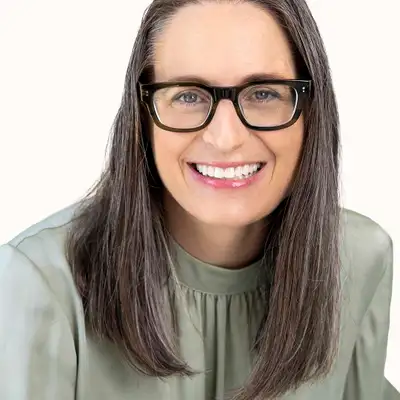

Born from 20 years of friendship, during which they navigated the trenches of autism parenting and advocacy, the Refrigerator Moms is Kelley Jensen and Julianna Scott’s way of reaching out to parents waging the same battles they were. Their purpose with this podcast is to clear the fog, silence the noise, and find a path through neurodivergence for parents that are stuck between bad choices. They tackle parenting topics such as mom guilt, tantrums, pathological demand avoidance, siblings, medication, comorbidities, social media, and much more.
[Kelley Jensen] (0:10 - 1:43)
Hi, I'm Kelley Jensen, and I'm here with my friend Julianna Scott, and we are the Refrigerator Moms. I wanted to take a minute to thank you, Julianna, because my other job is working in a TMS clinic, transcranial magnetic stimulation. We treat people of all kinds of mental health conditions, and you are very gracious in listening my frustration and offer some snark and condescension when people say, well, why haven't I heard of this?
In so many of my conversations with other parents, with even sometimes doctors, people will say, why haven't I heard of this? And it will take me a minute to not respond with condescension. This episode of the Refrigerator Moms is brought to you by Brain Performance Technologies.
Brain Performance Technologies is a specialty mental health clinic that offers neuromodulation treatments, including their latest protocol, SAINT. SAINT, or Stanford Accelerated Intelligent Neuromodulation Therapy, was developed at the Stanford Brain Stimulation Lab to provide rapid and lasting relief for patients struggling with treatment-resistant depression and major depressive disorder. SAINT delivers amazing results after only five days of treatment, including a 79% remission rate.
The team at Brain Performance Technologies is licensed and trained to offer this protocol to qualifying patients. And there's a lot of reasons why they might not have heard of transcranial magnetic stimulation, but you get the brunt of me saying, well, gee, I'm telling you about it now. Or gee...
Yeah. Right?
[Julianna Scott] (1:43 - 2:25)
Not to play devil's advocate, but I get it because I think it's so normal in the world of autism and the comorbidities that surround autism, because we're not given a list of things to do other than ABA, speech, OT, the things we've talked about. We talk about it in our Trientific Method episode, everything's off-label. So I'm not that surprised because it's not like we're given this list and now we know all the things, all the options.
So unless you are out there doing research... Googling in the middle of the night like I was. And really looking into those different things, you might not have heard of this.
[Kelley Jensen] (2:25 - 3:53)
The whole reason I found it is because I said, he is developing a hoarding problem. He has obsessive compulsive disorder. There has got to be a better medication.
Forget about autism. What does somebody with obsessive compulsive disorder do if they cannot do cognitive behavioral therapy or exposure therapy, which is the kind of main talk therapies that would be done that he obviously couldn't participate in? And I found TMS. TMS is cleared for OCD. I thought, well, no brainer. It's drug-free, non-invasive. I'm going to try for him.
Of course, we got a great result. And then my professional career path changed because I really believe in it. But I often started by saying, why haven't I heard of this?
And I just think that neuroscientists and psychiatrists that work in the brain stimulation space are maybe not the greatest marketing. They don't have a cute little rat delivering samples in a doctor's office, right? There's no marketing machine.
And so it's something that is kind of largely word of mouth. But I'm telling you about it now. It is on label for depression, ages 15 and up, and it is being studied and quickly coming online for ages 12 and up.
OCD, oddly smoking cessation. Well, yeah, I get that. I do too.
Smoking cessation is sort of akin to a compulsive. And it is used off label for many, many, many other conditions with great success. It is something that I certainly don't advocate for everybody to look at it, but everybody should look into it.
[Julianna Scott] (3:53 - 5:15)
It's worth looking into. Anything drug free always is. This episode of The Refrigerator Moms is brought to you by Brain Performance Technologies.
Brain Performance Technologies is a specialty mental health clinic that offers magnetic e-resonance therapy, or MERT, for autistic people aged three or older. MERT is a transcranial magnetic stimulation protocol that utilizes an EEG diagnostic to deliver personalized magnetic pulses to stimulate the brain and build neural pathways effective in managing autistic symptoms. I actually had heard of it because the child psychiatrist that we both know and love, she had recommended it for my son for his OCD and treatment resistant depression.
And that was the first I'd heard about it. And because it came from her, I automatically, you know, it was built in, like, that was a great reference point. So I was going to, I trust her.
So anything that she says, like, I didn't have to go too far to get on board with it. But I mean, the timing didn't work out because it is a big time commitment. And my son wasn't going to be available for that.
But I definitely looked into it and was like, oh, I mean, I wish he had been able to do it. But he wasn't able to. I know it's done a lot of good for people with autism, OCD, depression, and I know it goes beyond that into especially the world of veterans and other people who are using it.
[Kelley Jensen] (5:15 - 5:41)
And the other thing that we were going to talk about today was we have the opportunity to talk to lots of parents that have lots of questions about not just autism and not even just neurodivergence, but a lot of different mental health conditions that they are looking for answers and they feel like children have fallen through the cracks. One wonderful group of people that we've recently met does specifically 2E Exceptional. Tell everybody what 2E Exceptional is.
[Julianna Scott] (5:41 - 6:38)
Yes, their organization is Real 2E, but Twice Exceptional or 2E, it's a term that refers to the intellectually gifted children who have one or more learning disabilities such as dyslexia, ADHD, or autism spectrum disorder. So they may display strengths in certain areas and weaknesses in others, which I think really that kind of sub-diagnoses, I don't know what you would call that exactly. But I think that really resonates with a lot of people, especially when people think, oh, but my child's so bright and they're so off the charts, advanced in these some areas, but they really struggle in others.
And I think that's a really nice way to kind of validate and acknowledge that that is a very not an uncommon blend. Well, it's interesting because when we were talking to these women, we were all acknowledging that that wasn't really around, like that terminology wasn't around when our kids were small or anything. So things are ever sort of evolving.
[Kelley Jensen] (6:38 - 6:53)
What's the difference between a child prodigy? Maybe we would have had the term child prodigy. That's always thought to be such a aspirational thing, but the child prodigy is often struggled with all kinds of dysregulation or not fitting in or, you know, different up and down.
[Julianna Scott] (6:54 - 7:29)
But I mean, bottom line, I think it goes back to what we've talked about before. It's just acknowledging that everybody looks different. The symptoms are different.
And this collection kind of falls nicely into these categories, even going back to talking about what you were searching for, for OCD, a really common comorbidity with autism. Comorbidities are really, in some ways, a good way to kind of spread your research tentacles and see what else is out there that could help these symptoms, no matter what you call it. Right.
We're looking at the symptoms.
[Kelley Jensen] (7:29 - 7:57)
Yes, yes, yes. And if you think your child might be 2E, there is a lot of resources out there. There's an excellent organization that you mentioned.
They deal strictly with IEPs in the school setting, educational setting, but you might need some social therapies, sometimes even maybe some occupational therapies, just depending on, you know, where the exception lies. So look into it. More information is always helpful.
Always. Yes. Yes.
Yes. Thanks for tuning in.
[Julianna Scott] (7:57 - 8:46)
Thank you for listening to this episode of The Refrigerator Moms. We'd love to hear your questions. Send them in along with future podcast topics by connecting with us on your favorite social media.
Please note that the information provided in this podcast is for informational purposes only, and it is not intended to be a substitute for professional medical advice, diagnosis, or treatment. Always seek the advice of your physician or other qualified healthcare provider with any questions you may have regarding medical conditions. Never disregard professional medical advice or delay in seeking it because of something you have heard on this podcast.
The opinions and views expressed in this podcast are solely those of the hosts and guests. Any recommendations or suggestions made are based on personal experiences and beliefs and should not be taken as definitive advice. It's important to consult with appropriate professionals for personalized guidance.