Subscribe
Share
Share
Embed
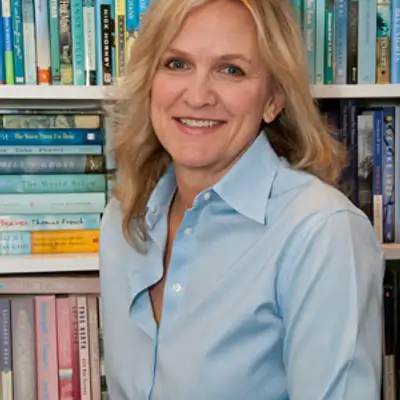
Celebrate the joy of reading with the Book Love Foundation podcast. This is a show filled with information and inspiration from teachers and leaders across grade levels, states, and school systems. We interviewed authors and educators for the first five years and now turn our attention to leaders in public, private, and charter schools. Find out more at booklovefoundation.org or join our book-love-community.mn.co of 2500 educators from 28 countries. We sustain joy together, one kid and one book at a time.
Penny Kittle 00:00
The Book Love Foundation podcast is produced by the teacher learning sessions, connecting teachers with ideas, experts and each other.
Neal Moylan 00:16
It's like water flowing downhill. You'll want to take away every obstacle you possibly can to get kids to read.
Kate Sargent 00:21
So I realized, like, I have something to actually talk about with them now, other than how they're doing, like, in whatever class.
Neal Moylan 00:27
There's so many great books in this world, there's so little time that we have in this world. Only use your time to find something that you enjoy.
Penny Kittle 0:39
Welcome to the Book Love Foundation podcast. I'm Penny Kittle, the president and founder of the Book Love Foundation, and also the host of this podcast. Today's topic is reading break at my high school four mornings a week, at 9am Kennett high school, my high school becomes nearly silent between first and second blocks students gather in classrooms, conference rooms, the weight room, corners of the auditorium, science labs and even the faculty lounge to read with teachers. Almost all of these reading breaks hum with engaged reading. Almost all of them. I can look from student to student to their teacher, and see heads bent over books or e readers lost in words.
Penny Kittle 01:28
Engaged readers are not hard to spot. They ignore distractions. They continue reading through the morning announcements. They settle into a peace and contentment we so rarely see in high schools today, the enthusiasm for reading in students and in teachers is easy to see as well. They finish one book and have plans for the next. They bring in books they'll read to share with each other. They continually invite, instead of police, kids into reading, simply because they know how important it is.
Penny Kittle 02:05
Many teachers have rediscovered their own love of reading because they now have time to read.
Penny Kittle 02:11
The teachers you'll meet on the podcast today are passionate about reading, and they're not English teachers. They've responded to what the National Endowment for the Arts called in 2007 a question of national importance. In the summary to a report entitled to read or not to read, researchers found, as Americans, especially younger Americans, read less they read less well because they read less well, they have lower levels of academic achievement, the shameful fact that nearly 1/3 of American teenagers drop out of school is deeply connected to declining literacy and reading comprehension, they said. With lower levels of reading and writing ability, people do less well in the job market. Poor reading skills correlate heavily with a lack of employment, lower wages and fewer opportunities for advancement. We know this is true, of course, and it isn't only true at our high school. Widespread apathy about reading has increased in my years in teaching, not surprisingly, as our nation shifted from a love of books to passing tests, but what do we do about it?
Penny Kittle 03:26
Our school and our principal, Neil Moylan, responded with time for pleasure reading. I have been so blessed to work with a leader committed to the success and well being of all students, so committed that he not only supported the shift to allow time for reading, he tripled our library budget and gave $1,000 a year to each English teacher in our department to build classroom libraries. He had to make hard choices to find that money in his incredible shrinking budget, but he did this year after year, and then he carved out more money to spend helping colleagues in math and social studies, health science, he allocated money for any teacher in any content area to personalize their classroom library.
Penny Kittle 04:14
You'll hear from some of those teachers and hear their book recommendations today to work with a principal who's so inspiring and teenager centered, has changed me as a teacher. I've watched him build his man group of kids who don't like to read through the slow and steady work of reading to them from books he has loved students who once rebelled against anyone asking them to read. Now talk about their favorite books. This has never been easy, just necessary. It is a force of will. The need to address apathy about reading in students and unfortunately even in some staff remains today, the reading culture at our high school is always under construction. Each year we hire new staff, and they have to value reading and nurture readers. Some don't try very hard. 1/9 grader told me last week my reading break teacher pretended to care about reading at the start of the year, but now she just lets people play on their phones or whatever. I don't think she reads. The success of reading break depends on individual teachers, as do all things in education. When you think about it, we will keep working at it, because if we don't, kids slip by us. I know how this happens. There are so many of them, and there is so little time each day, we all have content standards and common assessments and dissimilar reports and phone calls to make, and suddenly the individual reading habits of hundreds of kids seems impossible to address.
Penny Kittle 05:53
One thing reading break has given our school is a way to notice. I get reports about non readers from teachers regularly, but I'm not discouraged by that. I'm relieved that our school notices and advocates for individual kids. We are committed to developing a community of readers. I believe it happened because we hired a principal who used to own a bookstore. Now there's the power of reading joining me as interviewer of teachers in my school, the editor and visionary of this podcast, and a patient friend as I stumble from draft to draft for this podcast each week, is Kevin Carlson from the teacher learning sessions.
Kevin Carlson 06:35
So what do we have here? There's a stack of books, couple of Gary Paulson books, Alabama, Moon, butter trapped. What am I looking at?
Neal Moylan 06:44
What you have in front of you is a pile of books that have been read by my particular reading break group. It's called The Man Group. My name is Neil Moylan. I'm the principal of Kennett High School, and I've been that for the last seven years. The Man Group is comprised of all young boys, young men whose basic attitude is, can't read, won't read, don't read. And if you keep me in my reading break I will blow it up and make it impossible for anybody else that's in this room to have peace and quiet and be able to read. We typically now average between four and five books per year that we read, which is quite remarkable, considering that what I have found these kids are primarily reading at about a fifth or sixth grade education level, and the last time most, if not all of them have actually read a book was probably in the third or fourth grade. But the format is that I will read to them. The rule is that they can read along, and when I turn the page, I expect them to turn the page after about five weeks that we've built a confidence level with each other, and they're comfortable with me. They know that this is a non threatening environment. We then say, Geez, you know, Tom, will you take the top of this page and read down to the first three paragraphs, and then we'll work around the room, and they'll each begin to read that portion of the book. They all will do it when I ask, and they all will struggle. And inevitably, what I find is, is that they don't have any clue as to what punctuation is for. So you'll see a sentence that has either a question mark or a period, and they just come running right through. So we'll say, no, no, no, no, no, no, no. You know, say that like you're asking a question, and that's what that means, and that's what that symbol means. And when you see a period, see a period, that means you have to stop and pause, and is that how you would ask a question? So there's no inflection in their voice as we try to get them to relate what it is they're reading to how a conversation might happen in real life, they don't know what they don't know, and that's the only one place for them to be able to find out. So we tend to spend an awful lot of time together, we form personal friendships, and I think that makes them feel comfortable with regard to one another and with the actual group itself.
Kevin Carlson 09:10
So you're forming relationships with these kids that are built around reading and having a reading life here in school, right?
Neal Moylan 09:18
And trying to demonstrate to them why it is so important that they read. And part of my observation is these are kids that were never really read to as youngsters, they've grown up. And I talk to them all the time about making sure that when they grow up and their parents that they're reading to the young kids, one of the things we definitely want them to be able to do is stop that generation of non reading with them. You know that cycle? Break that cycle and get them to read to their kids, so that their kids are sustainable lifelong readers as well.
Peter Innes 09:48
My name is Peter Innes. I'm a special educator here at Cannon High School. 20 minutes is enough time to really lose yourself for a little bit in a book, the kids have a lot of opportunities to find something. That they'll latch on to. All it takes is one book. You know, I am a little embarrassed, but I didn't read very much in high school. I wasn't very good student, and I didn't really pick up reading till I was about 17 or 18. So I tell the kids that, and I said, it was just this one book that really got me. And, you know, look around you, look at all these books here, like there's got to be one here that will grab you. What was the book for you? Gulliver's Travels. Jonathan Swift, really, yeah, really. I was 18. I was a senior in high school, and I had never really taken much to reading assignments, but I just opened up that one book I didn't I started reading on page, like, 120 like, I just opened it up to the chapter that I had to read for homework. And, you know, I just consumed it like in a night, and I'd never done that before. And it really just lit, you know, lit a fire. And I read all of Jonathan Swift's after that, and then I got into the sort of British restoration literature, like it really just inspired me.
Kevin Carlson 10:53
But you weren't a reader before you picked up Gulliver's Travels.
Peter Innes 10:56
No, that's a hard book. I probably, yeah, it was just the fourth, the fourth book there in the land of the horses, The Wynnums. That was the only book that I read from it. But that inspired me to start from the beginning. And I did, and, you know, really clicked. It just made a lot of sense to me. And you know, that got me thinking, like, wow, there's, you know, this guy's 200 some odd years old. And you know, I was thinking this stuff just the other day, so it really allowed me to see the value in reading, not just contemporary literature, but historical literature and stuff from all over.
Kate Sargent 11:30
My name is Kate Sargent. Reading for me was always for content purposes, for learning something I needed to either do or present or show somebody else or something. So I, I just never was a reader for fun. I just a busy body. I started in reading break, reading a little bit of it, and I was like, oh, you know, it's pretty good. And I found 30 minutes in, I didn't want to put the book down. So now it's kind of irritated, because, you know, I had to stop reading to go teach, and I had to teach, right? And of course, you know, it's a total teen, like, you know, read. Like, all the girls were like, Oh, my God, are you reading? If I stay and, and, of course, they wanted to talk about it. But I was like, Don't, haven't? I just started, like, just stop. And I, I went home and, and, and was like, oh, you know, I two small children, so they're rambunctious. And I was like, would read in between doing little things. And then it was like, alright, it's bedtime. Put them to bed, and then stayed up until like, you know, two o'clock in the morning to finish the book, because I couldn't put it down, you know. And I was like, Oh, my God, I've read this book. I mean, I was a freshman in college the last time I can remember picking a book up and being like, yes, our reading breaks then started to, you know, turn into these, like, conversations about the book and what the kids liked, what they didn't like about the movie that was coming out about the book, like, you know, who had seen it, who hadn't How close was it? You know. So in that, in itself, I guess, brought out what I really liked about reading break was talking with the kids, so I realized, like, oh, I have something to actually talk about with them now, other than how they're doing, like, in whatever class. So it was that point of, you know, that connection piece also with my students.
Cheryl Furtado 13:16
Cheryl Furtado, I'm a school counselor. I love the focus on reading, because we all feel it's important, and stopping everything so that we can read, I really feel like that. That just sends a message, even to the kids who don't like to read, don't want to read, won't read, all the way up to the kids who absolutely love to read, we are stopping what we're doing for 20 minutes because we think reading is super important. You know, there's a bulletin board. I don't know if you saw it when you came down the hall. Penny had asked all of the kids to write on a index card and color, you know, with magic markers, or whatever is available in the rooms, the title of the book that they found the most interesting in the last year or two, or what they're reading now, if they're loving it. And it stops me every day, I'm a reader, but it stops me every day, because it's bright, it's pretty. I love it. Just to dedicate a whole bulletin board, you know, towards really interesting books, what a fantastic place to quick glance and grab a book, you know, in your head to to get excited about. I love that.
Joe Riddensdale 14:20
Joe riddensdale, I'm the CAD drafting teacher, and also robotics, and I also teach pre engineering and stem. I've become a reader because of reading break. In the past five years, since I've been here, I've probably read 10 times more than the previous you know, 30 years of my life.
Kevin Carlson 14:39
Is that? Right? Oh, yeah, wow. What? What changed? What made the difference?
Joe Riddensdale 14:43
A focus on it, a real focus and and it's developed a love for reading, for me. So this change in your reading life has come about because of this reading break, absolutely, yeah, not only, not only so, but even at home, I have, you know, reading break at home now, you know, where I encourage my son to read, and you know, a lot of times we'll just shut off everything, TV, computers, and just read for half an hour.
Kevin Carlson 15:11
Reallu, yeah, that's cool.
Joe Riddensdale 15:12
Yeah, it is. It's really neat. Yeah, yeah.
Kevin Carlson 15:14
What's that done for him?
Joe Riddensdale 15:17
I think he's enjoying it, you know, please. He's 10 years old, so, so he has some reading that he has to do. So we sort of make it that time to read.
Kevin Carlson 15:26
But at the same time you're modeling. I mean, you're showing
Joe Riddensdale 15:29
modeling the behavior, right?
Kevin Carlson 15:31
Yeah, yeah, demonstrating this is grown ups read too,
Joe Riddensdale 15:33
exactly. Yeah. You know, five years ago as a first year teacher, it's, it's used difficult to implement or change anything, so you have to pick your battles and you start establishing your rules, and if you be consistent with that, over time, change happens, and that's what occurred in my reading break the first year was difficult. I had a few readers, but not many. And then the second year became more and as new students would come in, they would be then indoctrinated into the rules and regulations of what I imposed in my reading break and that they would have a book and they would read,
Kevin Carlson 16:20
what do you think that does for them?
Joe Riddensdale 16:24
Hopefully, the same thing it's done for me is just develop a love for reading and get them, you know, consuming more words, consuming more content.
Neal Moylan 16:35
Kids will read if given the opportunity. They need the opportunity to learn how to read. It's like water flowing downhill. You want to take away every obstacle you possibly can to get kids to read. I tell them all the time, if you read a book and you get 3040, pages into it, and you're not into it, usually I say 100 but some of my kids, I say less, and it doesn't connect with you. You don't like it, you don't like the characters, you don't like the story. Put the book down. Find another one. There's so many great books in this world. There's so little time that we have in this world, only use your time to find something that you enjoy. Pleasure reading is certainly helps them apply and build skills that they can apply to all other aspects of their academic and personal life.
Kevin Carlson 17:13
So kids are leaving Kennett High School with reading lives.
Neal Moylan 17:16
I'd like to think so. I know that they certainly have had the opportunity, and that's our goal.
Lindsay Cole 17:23
My name is Lindsay Cole and I teach Biology here at Kennet.
Kevin Carlson 17:31
Okay, last question, what are some of the most popular books in your classroom library?
Lindsay Cole 17:37
In my classroom library, okay, our most popular books? Well, my library, I do have the Harry Potter series, which isn't always is a great go to so that's always being taken out and looked at. Scientifically, the book called The Resurrection of the Romanovs is a popular one, and that is the main account of the woman who had tried to convince everybody that she was Anastasia, the Russian princess and and the whole story behind that, because we actually use that story in class when we're talking about biotechnology. And so that is a culminative project that took 10 years of the authors to put together. So that's a popular book. Kids like to look at that and spend some time with that. The other ones are The Immortal Life of Henrietta Sachs, or excuse me, and The Family that Couldn't Sleep is another one, and that's on prion diseases like mad cow. So those ones tend to be the ones that people will go to.
Melissa Cyr 18:42
It's Melissa Sierre. I teach World Cultures. It's a class that covers a range of current events. The beginning of the year. I did a unit on immigration into the US, primarily from Central America. So we did a big piece on Mexican immigration. So the book over their First Crossings, The Kite Runner has been a popular one that we've done. There's been a few that we've used in talking about Afghanistan. Unbroken has been a big, popular one in the past two years, for sure, in here. So they're not necessarily just driven towards the content that I teach, but just world history or cultural event, or, you know, historical event obviously has played a role.
Jason Cicero 19:29
Jason Cicero, reading break in a math teacher's room. What's that look like? Well, hopefully the same as reading break in everybody else's room. Numeracy is one of my favorite books, as with Illiteracy, Illiteracy being much more spoken about and known in Numeracy, is the idea that we don't have a faculty with numbers that we should as a culture. And this book goes into that. So there's also another one, the that Penny gave me the Visual Miscellaneum, which is a book of infographs with text. So there's some reading involved, but also matching that with infographs. Roald Dahl is another one of my favorites, and of course, he's known for writing children's books, but if you read his books, he almost always references time ages. He uses a lot of math in his writing for the young reader, and brings little vignettes of, I don't know how to describe it, cool, cool math that he kind of slips them in there and hides them almost. So I enjoy reading those to my kids, my own kids at home, and I try to point kids here at Kennet to those books as well.
Penny Kittle 20:48
This weekend is Memorial Day weekend, and I always think of my father, a Korean War veteran, a fisherman, a used car salesman. He left a legacy of kindness and generosity and a contagious enthusiasm for books. His weekly trips to the library were often followed by joyful, spontaneous Penny, you've got to read this moments. I came from a family of readers, and I have to pass that on. Today. We'll end our podcast with the story of a legacy, a woman who left her mark on everyone who knew her.
Kevin Carlson 21:26
And in the end, it is not the years in your life that count. It is the life in your years. Abraham Lincoln.
Kevin Carlson 21:35
Sue Ruud lived the teaching life. She was wholly committed to her students. She arrived at school early and stayed late. She had high expectations, and she pushed her students to work hard. She lent a listening ear to the ones who needed to talk. She brought fresh fruit to school and stashed snacks in her file cabinet drawer for the ones who needed to eat. She woke at two in the morning fretting about their well being. She worked the demanding, long hours that you all know well, and she loved books. My own children adored her Christmases and birthdays and visits were marked by gifts of books. She loved to watch the kids tear open the paper and marvel over the cover, and they loved it when she would then scoop them up into her lap and start reading with them straight away. After a long, satisfying and wonderful career, Sue retired, but that August, she grew restless. By September, she missed it too much and started volunteering in the school where she taught. It seemed that she could not get away. A teacher was not what she was, it was who she was. A couple years after her retirement, Sue was diagnosed with cancer. After months of treatment, she was cancer free. She was active and fit, and spent her time doting on her new granddaughter, Emma. Leukemia is a vile word, and it's a nasty, terrible disease that reappeared as a shadow in a routine scan. Sue's cancer was back, moving quickly as it spread through her body, she told her friends she wanted to leave something for Emma that was lasting and loving. A few months later, she passed. She was 68. Three memories stand out from her funeral. First, the church was filled with daffodils Sue's favorite. Two of her teaching colleagues shared memories of Sue taking them under wing when they were new teachers, 20 years prior. In their school, Sue was a mentor, a leader, and also a bit of a hell raiser, and that may be part of why the three of them got along so well. It turns out that they were the ones in charge of getting the flowers for the service, and at 3am the night before, they drove out to one of the giant defense contractor buildings off Route 128, and clear cut a significant section of the landscaping, loading hundreds and hundreds of daffodils into buckets in the back of a station wagon. Technically, yes, this was an act of vandalism, but they said that if they had gotten caught, they would have just explained the situation, saying, these daffodils, we need them more than they do right now. The second memory is the number of Sue's students who came to the service. Dozens and dozens of people approached Sue's family and told them that Sue was their teacher. These were not kids, and these were grown men and women with children of their own. They had learned to love books and love reading in their time with Sue and her influence on them was profound. They talked about how important she was in their childhood, how much she meant to them. I. How she had changed their lives. Sue's family smiled and nodded. They knew. The third memory was the enormous church organ playing. Let It Be louder and grander than I had ever heard it. We started to sing along with voices small and shaky, like a child learning to read, hesitant and halting. But whoever was playing the organ that day in that tiny New England church was feeling it. The music swelled and enveloped us, and we thought about Sue and felt her spirit around us and in each other. We were safe in this teacher's room, and our voices grew steady and strong together. It was a ceremony that Sue would have appreciated. People she taught, thinking, remembering, reflecting and sharing with each other the lesson of her life and how it changed us all. In the town where Emma grew up, in the library, in the children's room, on a shelf is a plaque memorializing Sue friend, mother, wife, teacher, reader. The shelf is filled with the books donated to the library in her name. Sue's teaching friends the daffodil vandals were also in charge of having friends and family create that lasting, loving gift for Emma. Emma was a little girl when Sue died, but she grew up reading these books, sharing a connection with Sue. And so did Emma's friends, and then their younger siblings, and someday, maybe their children. The daffodils from Sue's service were there for a day or a week, brightening a room in a dark time, then fading. The books in Emma's town library are still there. To recognize Memorial Day, this is a tribute to sue and to all the teachers who have left before us, celebrate their work and celebrate the lives that they have touched.
Ever the teacher, ever the reader. The last line of Sue's obituary was in lieu of flowers give books.
Penny Kittle 27:29
I am probably the wrong person to run a nonprofit foundation. I hate asking for money, but this week, I called the winners of Book Love Foundation libraries and their joy was a tangible thing, like you could touch it. I know they will nurture readers next year and the year after that. That's a gift that keeps giving. Please consider a gift to the Book Love Foundation to honor someone you love. Pay it forward, as they say. After all, someone pointed you towards books, and where would you be without them? Thanks for listening to our podcast today. I'm Penny Kittle.
Kevin Carlson 28:14
If you enjoy the Book Love Foundation podcast and the work we're doing here, please join our email list at teacherlearningsessions.com/go/booklove. We will send you a list of titles that appear in each episode's book talk on the day the show comes out, and you will also receive our weekly newsletter, which includes podcast reviews, insider information about the teacher learning sessions, projects and more that's at teacherlearningsessions.com/go/booklove. In our next episode.
Penny Kittle 28:48
Hello, hi. Is this Jake?
Future Gues-1 28:50
This is Jake.
Penny Kittle 28:51
Hi, Jake. This is Penny Kittle from the Book Love Foundation.
Future Guest-1 28:55
Hey, hi, Penny. How are you?
Penny Kittle 28:58
I'm great. How are you?
Future Guest-1 29:00
I got a safe four year old. But other than that, I'm really good.
Penny Kittle 29:04
I'm sorry about that. Well, I have good news. I'm serious. The board voted to give you a 500 book library.
Future Guest-1 29:18
Yeah. Oh.
Penny Kittle 29:24
Oh, that's lovely.
Future Guest-1 29:26
You don't even understand.
Kevin Carlson 29:31
That's next time on the Book Love Foundation Podcast. I'm Kevin Carlson. The Book Love Foundation podcast is produced by the teacher learning sessions, connecting teachers with ideas, experts and each other.
Future Guest-1 29:48
Oh, my goodness.