Subscribe
Share
Share
Embed
The podcast that makes veterinary medicine simple.
In each episode, Dr. Lottie breaks down clinical conditions, cases, and concepts across species, focusing on pathophysiology, decision-making, diagnostics, and what actually matters in practice. It’s the kind of context that makes your knowledge finally click.
Every month, we’ll also have honest conversations with guests about the incredible variety of veterinary medicine, what you can do with a vet degree and how to think bigger about your career.
Whether you’re cramming for exams or looking for a soundtrack for your dog walk, Current Vet will make vet med simple
Intro
Hello, hello, and welcome back to Current Vet, the podcast that makes veterinary medicine simple. I'm your host, Dr. Lottie, and today we're talking all about vet techs and vet nurses. So during October, the US celebrates National Vet Tech Week, so I wanted to use this month's episode to talk all about what techs and nurses do, their role in the clinic, why they're so important, and how to get into the area for anyone who is interested.
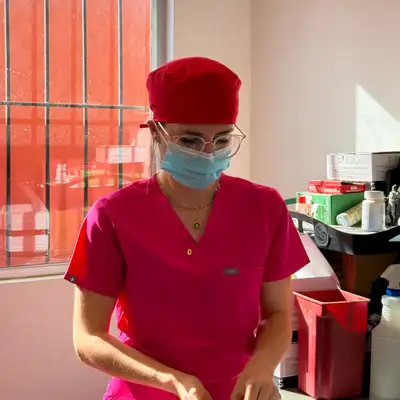
So my guest today is Ashley Farmer. She is a licensed vet tech in the US, and also a hospital manager. So for our UK listeners, the closest equivalent to a vet tech is gonna be a registered vet nurse, and Ashley has a real wealth of experience in emergency medicine, and then also has built her amazing online community as Ashley the Vet Nurse as well.
So some of you may already know her. But Ashley, welcome to Current Vet
Thank you so much, Lottie. I'm so excited to be here
Thank you so much for coming on. Why don't we start by talking about, how you got into vet tech and what made you wanna get into it?
Ashley the Zookeeper
So, I mean, obviously I think as young kids we always are like, we know when we have, like, an, an affinity for animals. Like, whether we're outside kids, inside kids, but like you know from a young age, you're like, "Oh, I wanna work with animals." and I think that generally, at least when I was coming up, it's like, okay, I, I wanna work with animals, but Your first instinct is, "I wanna be a vet.
I wanna be a vet, I
Mm.
right? and I felt like that's kind of where I wanted to go. But at the same time, also loved exotics, I loved the zoo life. So I knew I wanted to be a zookeeper. That's, like, really what I wanted to do. So obviously I went to school. Um, going to undergrad was non-negotiable for my family, so obviously I went to undergrad, which I always suggest everyone do because it truly is, like, a life-changing experience to, to go to college. But that always isn't the route for everybody, as I'll, I'll talk about later. Um, and while I was there, I graduated. I got my Bachelor's of Arts, and I'm very upset I still don't have my Bachelor's of Science, but I have my Bachelor's of Arts. And I went and did about a eight-month internship with the Pittsburgh Zoo, which was the time of my life.
I didn't get paid, but I absolutely loved being there. But once I realized I was in it and I was like, "Okay, I wanna be a zookeeper, I wanna be in animal husbandry," I was like, "Holy smokes." These jobs are almost impossible to get because when you're working in a city zoo or p- like a public funded zoo, if you will, people don't leave those jobs, right?
There's like maybe 30 of them, and it's like, "Okay, now I've built a family and a life at, in this city with this one zoo, and I'm never leaving
Ja.
I retire." And I was like, "Oh man," like, "this is gonna be super hard, crazy hard to get into." and at that time Pittsburgh was building out a new veterinary hospital, and I was working in the aquarium, and we had the sea turtles and they were like, "Okay, it's like sea turtle health day," you know, "The vets are coming." Vets came over, they were like, "This is one of our vet tech interns," and they started teaching her how to draw blood on a turtle. And I literally looked at that and I was like, "I could do that. I could do that." I went home, Googled it, I found the Vet Tech Institute, and I was like, "This is something I wanna do."
Like, even if it's not something that maybe I build a career out of, it's a license. It's a secure job. I could go anywhere and be a vet tech. And at that
Mm.
I wanted to travel. I knew I wanted to do all of these things, so I was like, you know, "F it. I'm gonna go to vet tech school." I went to vet tech school.
I was very lucky with Vet Tech Institute. They have a 18-month accelerated program since you're going, you know, in person. I got out, I got a job at what was like not a mixed practice as far as large animal and small animal, but it was GP emergency. And many people may have heard of it, maybe people didn't, but it's called Animal Medical Hospital.
It was in Charlotte, North Carolina, and I will forever be grateful to this hospital because I learned... It, the medical excellence there, the medical quality was like top tier. and I wouldn't be the hands-on technician that I am today without that hospital. So
Ja
a very long story cut short, I fell into the vet tech career almost by accident, and I wouldn't regret it for anything.
It's always the, you love animals when you're growing up, you can either be a vet or a zookeeper. They're, like, literally the only two ones that anyone ever, like, suggests to you. That's really cool, though. .. Do you get much experience with exotics now and you're able to work with them now?
So, um, unfortunately I feel like, know, I'm a little bit older, so I feel like GPs, , and even emergencies when I first started in 2012, '13, , weren't really like to seeing as many exotics as we are today. and in general, vet med has come so far, even since I've been here in 2013 to, to know that it is from 2000 to 2000...
What year is it? '26. We have come... Like we have made leaps and bounds in the vet med field,
Ja
in regards to knowledge, what we see, as well as owners wanting to get care. there was a very big boom in the '90s where exotic animals were a thing and everyone's seen Tiger King. Um, that boom happened in the '90s people were getting these exotics, spending all this money, they weren't getting veterinary care because veterinary care is, and still think, is extremely expensive. So when I, when I started in 2013, if an exotic came in, everyone was freaking out. We didn't know what to do, and we were like, "Referral." "Referral." as time gone on, as I came into my new company, they actually do train their doctors on exotics. They do train their technicians on exotics. But to go back to your question, do I have experience with exotics? Not really. Because by the time that they were really pushing it, I was already kind of off the floor.
Right
I do have a lot of experience with ferrets. Ferrets are my thing.
Ooh
I consider them an exotic as much as just like a small ani- like a very small cat dog, but
mean, like, at vet school, rabbits are exotic, so I feel like anything that's not like cat, dog
And, and even I was telling this story the other day, like I... So I also spent two years in spay/neuter, which, you know, spay/neuter is honestly my true passion. with spay/neuter we had to do rabbits, and it was like even how we learned, it was like, "Rabbits will die. Watch the
Ja
leave your stethoscope on the entire time and hope for the best."
Ja
experience with rabbits other than... So
Yeah, literally terrifying
yeah. But I think that through the people that I've met, , I've been able to get the experience, um, of learning what vets who work with exotics do or what those technicians do.
And if I wanted to get into exotics, I think through networking and the friends that I've made, I now know the routes that I could go learn and, and really pursue that. So
Yeah.
special
And it is a difficult one because I think, kind of like you say, no one gets trained in them very much. I remember at vet school we had literally, like, what, two weeks of exotic lectures in terms of, like, husbandry, and then a- probably another two weeks in terms of, like, clinical stuff. You don't necessarily get the practice experience in it, and it's so dependent on, if you have a good mentor or a good clinic lead, if they're interested in exotics, 'cause otherwise, like you say, they just get turned away or referred or sent to, , a different specialist where they feel like they have more experience.
Or the other thing is people are genuinely terrified of, like, snakes or tarantulas or things like that, and they, they actually just don't wanna go near them. So then it's a really difficult one 'cause it, the, the experience and the motivation to want to do it is so variable. But I feel like with, you know, cat, dog, hey, it's smaller things like rabbits and stuff, everyone's like, "Oh, yeah, it's cute, it's fluffy."
"This is why I wanted to be a vet tech." And then with things like exotics, like reptiles and stuff, everyone's like, "Uh, it's scaly,
Yeah, because
like it."
not sure. But I think also another big help has also been social media. I've been in
Mm.
for a long time and the boom in social, vet med social media influencers has really taken off I think like in the past two years.
Ja, for så
everybody's on there now. And but the great part about that is there's people now that are showing what to do with exotics, how to, to deal with exotics, and have like a chat at work on Instagram where we send each other cool videos and I probably would say the most popular video is when they find informational videos on what to do with exotics.
Yes
on exotic, how to do a blood draw on a bearded dragon. Like, those are the, the ones that get sent to the chat because like I said, it's the ones that we have the least amount of, um, exposure to,
Ja
clinic. Like right, 'cause we have to also wait for that exotic to show up.
'Cause once again, not everybody who owns exotics are bringing them to the vet, right?
Yes
are bought at a pet store. Like, we have our real exotic people that like have a networking and they go to expos and stuff like that, but most exotics are buying them for their kids
Ja
proper knowledge of, husbandry, correct husbandry, how to take care of them. And on top of that, probably don't have... don't know what the finances are behind it to truly take care of a lot of these exotic vets. So, you know, when their hamster like I said, their bearded dragon or that chameleon is not doing well, don't notice the signs and more often times than not they pass away before they're
Ja
the vet for treatment
Yeah. And exotics are, notoriously crap at showing signs of actually being ill, so then they, yeah, like you say, by the time they actually notice something's wrong, it's probably so seriously wrong that there's not much, that's able to be done, especially then if you don't have a specialist nearby or someone who's confident in exotics.
But Is there further training that you can do as a tech if you do have, like, areas of interest that you can get further, qualifications or certificates in that gives you a bit more official backing on those areas?
Exotics specifically
Just anything, any like kind of specialist areas
what I recommend for any technician that has a special interest is find yourself at a conference, right? We all know about the veterinary conferences. A lot of people use them just for vacation. some people truly use to go and learn about CE. if you go to these conferences and you have a special interest, you'll find yourself in those lectures that adhere to your special interest. And when you really have an interest in it, you wait for that lecture to end, and when you go approach that person who's lecturing and you're like, "What do I do? How do I
Yeah.
That's
me.
biggest suggestion. I wanted to be a VTS so, you know, a lot of... In, in America, I'm not sure about in Europe, we have the VTS, uh, certification program where you can get, like, your specialty in emergency and critical care, dentistry, animal husbandry, animal nutrition.
There's so many things, and truly have a passion for it, they'd be going for their VTS in whatever that passion is. Otherwise, other than learning, like I said, I think going to CE and connecting and networking with the people that also have a passion for it, then
Ja
find the way to get more experience or training in those subjects.
But there are, like I said, with the boom in social media, are, there is a boom of online training as well. Like, I know Dr. Zoltan, he has an exotic animal course. I know that, .. it's called Vet Ahead. She also does exotic animal
Okay
for technicians and, and veterinarians. Um, and then also too, I think reaching out to your job, if your job sees exotics or have- is open to seeing exotics, seeing what other... What they're willing to do to offer more training for your clinic,
Ja
or where they can send you so you can get more training and bring that back
What Do Vet Techs Do?!
What did you imagine vet teching being like before you got into it?
A lot of cleaning
Is it, is it what you,
It was everything I expected. Uh, it was everything I expected. I think I was fully prepared. But like I said, I had... was very lucky. I didn't just decide I wanna work with animals and go to vet tech school.
I grew up with animals. I, my, me and my dad had a real big passion for animals. Always had different types of animals and different types of pet. So I feel like I had a really great exper- I had great experience in, like, at least animal husbandry of what it took to be around animals a- as well as, like, animal behavior. You know, I a barn... You know, I was one of those barn girls. I worked in a barn for years. So I was always around large animals. I was a 4H girl.
I was a FFA girl. So I was always around horses, chickens, pigs. So when I took the vet tech job, like I said, I worked at a barn. I saw the vets come out. I saw what they were
Ja
So I had that exposure and experience, um, before I came into this field. To piggyback off that, when I did start tech school, I did notice there was a lot of people that wanted to be a tech that didn't quite know what to expect. didn't know how involved it would be. They didn't know how much math would be involved. It was just kind of like, "I like animals, and I wanna take care of animals." they, and they didn't really see how close and how comparable it is to the, what human nursing is.
Right
So
And like really getting that, I don't know, like sick animals, not just,
Yeah.
yeah, looking after,
and, and kittens. I will say one thing I No, I, I pretty much expected everything. I did say one thing I did, that did , not scare me, is, the way I was raised and the way with everything it's ... And like I said, with the stigma around like animal care in the early '90s and 2000s was like things weren't savable. You know? Like, it was just uh, you rather opt for like humane euthanasia versus taking your dog to get cancer treatment or like
Right
because those weren't really options. So when I started in the vet med field, I realized how many more options owners had
Okay
they wanted to go the whole way with their pet
Yeah. That's a nicer way of it being, though. Like, it's, it's probably worse it being the other way round and you thinking, like, you can do all these things, and then you get into it, and it's like, "Oh, no. Actually,
Joo
it's, uh, it's more negative." But yeah, no, that's definitely a nice, a nicer, perspective change to, to come into.
Ja
So let's say I'm really interested. I love everything you're saying. It sounds really fun. I have always loved animals as well. What is the day-to-day to expect for me getting into that role?
.. First off, it really depends on where you find your first job in the field, right? Because working in specialty, working in emergency, working in a GP, working in spay and neuter, you know what I mean, working in a zoo, you're gonna see different jobs and a diff- a different day-to-day.
Ja
is not one just standard day-to-day for a veterinary technician. it really depends on where you find yourself, what type of clinic you find yourself. So for example, working at a general practice, your job is basically surrounded with...
It, it's customer service. You are there dealing with appointments. You get there in the morning, you set everything up. look at the schedule for the day. Your doctor comes in. You at that point are running appointments. You're in and out of rooms, customers on what your proper care, is for animals, whether it's vaccines, whether it's a sick visit, whether...
Hopefully it doesn't turn into, like, an emergency visit, you'll find yourself drawing blood, running lab work, like I said, giving vaccines, restraint on animals. whether or not that clinic is doing surgeries, you might find yourself in the surgery department where you're prepping for surgery throughout the day, running anesthesia for those, recovering pets, as well as owners.
Like, I think people don't realize how much customer service goes into being a vet tech because we are
Ja
with animals, we are dealing with people. So I think that even more than being a... On the medical side, even more than just being a vet tech and drawing blood and, like I said, anesthesia, dentals, cleaning or anything like that, vaccines I would say 60% of it is customer service. 60% of it is dealing with the humans to make sure that your animals are getting, are getting care. With that being said, at the end of the day, I would probably say, , you're wrapping up your day. You're making sure your patients are making it home safe. You're making sure that your doctor has everything that they truly need. and it's just h- it's hard to say day-to-day because the veterinary technician does
So different.
so many jobs, right?
Yeah
for example, in emergency, you come in, you round with your team. Are you on outpatient or inpatient? Are you taking care of hospitalized patients that are there getting continuous care? Or are you seeing the triages that are coming in from day to day?
Ja
being said, your inpatient, your inpatient nurses are very particular people. They have to be because they have to watch for signs like decompensating? Is your patient getting better? You're running blood work every four hours to, to monitor what's going on in their body, their organs. , You're drawing blood once again. You're running CRIs. Those are our big medical math people. Those are the people that need to be
Ja.
good with numbers because they're given doses. They also need to know how all of these drugs work that they're giving to
Mm-hmm
so they know what signs to look for. And then like I said, you have your outpatient people, which I think are your great multitaskers, right? Because they are seeing multiple patients at different times. They're triaging patients. They have to know what patients are sicker than other patients and how to
Ja
throughout the day, and also how to manage the team and keep the flow and make sure that your inpatient nurse is good, they don't need any help. How to make sure that your doctors are staying on track in a, in a great way. How to make sure your doctors are staying on track and keeping the, the closed loop of communication, which is also very important in the vet med field. But to list the things that vet tech, vet techs do in and out, whether what job is vet techs are trained in anesthesia, techs are trained as basically dental assistants in cleaning teeth, as well as in California they can do extractions, so they're also kind of like your dentist there in California. We are your emotional support. One thing that also people probably don't realize is we deal with euthanasia in veterinary medicine, and We have to support owners, , so you're also giving hugs and making sure that people are comfortable and that pets are comfortable in their last moments.
You're a lab tech, so like I said before, you guys are drawing blood, you guys are running the blood. You guys don't fully need to know how to interpret results, but you should. You know what I mean? Your doctor's gonna trust you when you do know how to interpret those results or at least you know what to look for when things are
Ja
we are radiologists in a way. We, uh, take x-rays, radiographs, so that way we can get the pictures and the things that we need, to send off to an actual board radiologist and get a report back so we can see what's happening there.
Ja
one thing that is booming in the vet tech industry is a lot of our veterinary technicians are also becoming sonographers. So they're also your ultrasound techs. Um, so I have two techs in our hospital that are actually in a program, to be certified sonographers, they're the
Nice
all of our ultrasounds in the hospital. it's so hard to, like I said, say everything that a technician does because we're
Ja
kennel tech, we're also your inventory people, we're also your
Ja
on the... We're also your leadership on the floor whenever you get to that level and we're your shift leads and like I said, we're making sure that everyone's okay, that we're taking care of everyone. So it's a very difficult question to answer when you, when you talk about what a vet
Ja
day to day because we are always there to fill in the missing piece make sure that the hospital keeps running.
Yeah. Just anything that is, needed basically and
the
whatever. Yeah.
what I mean? Like,
Yeah
are really the beating heart of the hospitals. We're making sure, like I said, everything keeps running, and anything that needs done, whether it's customer service or
Mm.
treatments, that we're there, we're trained, and we're able to do it for the hospital
Qualifications vs Learning On The Job
Do you feel like what you learn while doing your qualification prepared you for actually doing the job?
No. No. I think, I think, I mean, I think that even vets can relate to that. Like, we're
Oh ja, for sure
You're trained, you go to school, you learn everything. You use that knowledge. But once you're out there, it's like, boom. Like, "Dude, I have so much more to learn." I placed, like, two catheters in school maybe. I got
Ja
So when I got my job, I was a inpatient nurse, and they were like, "Can you place a catheter on this patient?" I was like, "No." Because that's the other thing, too. Like, within the vet med field, there are people that go to school that haven't had experience in a vet, right? So I had all of this animal husbandry experience, I had all of this animal behav- behavior experience 'cause I worked in, you know, a doggie daycare, I worked at a vet, I didn't have that medical experience.
Ja
think that with vet tech licensing and the way it is, at least in the US, you can be an assistant before you become a licensed tech. So you
Yes
go into a vet if they're willing to accept you with no experience, and you can learn to place catheters and do all of these things before you get licensed.
So
Mm.
people coming out of tech school that have this experience because they were already on the floor doing it. And then
Ja
like me who was like, "Hi, surprise, I'm a tech now," but I've never actually worked in a vet, do kind of have to start from being a baby licensed vet tech into a more experienced vet tech.
Ja.
And I
Ja
I don't... I think it's, it's also the same for vets, right? Because for you guys, you definitely can't be a vet at a hospital. Now, there is always a difference when you know there's a vet that used to be a vet tech.
yeah, no, it's, uh, vet school does not prepare you properly for, like, actually the job. I always feel it's a bit like, , you know, when you learn to drive, you can see people drive, like, throughout your whole life, and then you actually start learning. It's so different. So even if you've had, like, pre-going to vet school experience in being in a vet practice, then actually learning the stuff yourself is whole different ball game.
And then once you've actually got your, your driving license or your vet qualification, whatever, and you're allowed to go off on your own, it feels like it- you're doing something illegal and that you need to be, like, have your hand held all the time, or, like, someone needs to be sat in the passenger seat of the car because you shouldn't be, you shouldn't be let out like this, and you sh- you don't feel ready.
But, yeah, no, I think at every stage it's just, it's just different, and you learn what you need to learn at each stage. And when you get into the job, no one expects you to be able to be a vet, basically, in your first year of practice because you learn so much in your first year that you could never learn at vet school, that you- you're not gonna learn any other way other than just getting into it and doing it.
And I, yeah, I assume it's kind of the same as for vet techs, Even if you do the qualification rather than learning as a vet assistant and being a bit more hands-on, you still need to learn the medical side, you still need to learn the kinda context of things, how to interact with, you know, the, your patients and your clients.
It's that communication aspect. You're never gonna learn that by being told how to communicate. You have to practice, experience the shitty communication interactions and go, "Oh, actually, that did not work. That was not a good communication method."
in vet med it's so much more about experience, than anything. I will say that being a licensed vet tech gave me a... I don't wanna say better, but it gave me a more concrete foundation to work off of. you know, when you, when you go to school to get licensed, you are always learning the correct, the most correct way to do things
Yes. Yeah
standard should be. and then you get out in the world and it's like, no maybe that standard, maybe we, we move that standard around. But
Ja
I have the foundation that I
Mm.
succeed, like a real foundation, not, you know, three people telling me how to do one thing three different ways. I
Ja
way how to do it, what is, like I said, the best way.
Now, gotta pivot a lot in vet med depending on staff, supplies, you know, 'cause, uh, it is vet med. But, um, I think that knowing the foundation and knowing what gold standard is, it has been the most helpful in my career
What Makes a Great Tech?
are there any qualities you think you have or, vet techs you work with have that make them much better at their job?
I'll tell you about one quality I didn't have that I had to improve that has made me a better technician, and that's honestly communication. I think that's why earlier I really was talking about you start talking about customer service and, like, communicating because, the... A vet med hospital is like a hamster wheel.
It's gotta keep going. It's gotta keep moving. And you have to know how to communicate with your coworkers, you have to know how to communicate with clients, and you most of all need to know how to communicate with your doctor, because if you're not communicating medications right, if you're not communicating your observations and what you see, you're not communicating appropriately with your coworkers, you're, you're gonna fail. gonna fail, right? Whether it's written communication, verbal communication, close communication, communication is so important. Like, think about anesthesia, think about going into, a surgery, you know? Your doctor should be able to, to give you task or things that you can then say, "I know how to do this.
I don't know how to do this. How do you want me to do this?" You know? Communication with your coworkers, once again, like, we have to work together. We have to be like this moving machine. and it's easy for people to get things wrong, and then the biggest thing is in vet med, which we always talk about, is culture and how we keep a positive culture, um, because negative cultures can lead to burnout, it can lead to people not wanting to be in the field. So, like, how are you talking to your coworkers? You know, if maybe you've seen them doing something wrong, how are you approaching that situation? Are you just like, "You're
Ja
it wrong," you know? Or is it like, "Hey, why are you doing that?" And
Ja
why they're doing it and then finding a, finding a way to, you know, either correct it or understand maybe you were doing things wrong, you know?
Ja
I think that communication is probably the biggest thing that vet techs need, but gets missed because we think a lot of our skills need to be hands-on
Other ways that you found useful to kind of, improve on your communication or, like, track that it was getting better? 'Cause I think it's quite a difficult thing to actually notice it's improving
No, that's a really, that's a really great I think that really, truly my communication has honestly improved maybe in the past three years, and I've been doing it for, like, 15 years. you realize that communication is not something that you can learn in the hospital. It honestly is something that you have to take home and learn in
a lot of leadership books and honestly finding that, like, self-help... I'm not a big self-help person, but once I realized, like, "Dang, know, I do need to read 'How To
They got some good advice
Yeah, I do need to read it." You know? Like, I... These are things that you really need to work on as humans, you know?
I think we could
Ja.
better at our communication styles and how we communicate with each other. , A lot of people want growth in vet med, especially technicians. Technicians don't want to be on the floor forever. Um,
Hmm
And they wanna grow, right? But they think that, "Okay, the more catheters I place, the more I do, the more policies I put out," that that's gonna get them to grow. really, it's h- their communication style and how they're communicating with their team, how they're being perceived by the team that is
Ja.
gonna get them to the next level
Yeah. The communication point is really interesting. I think we're losing it in general as well I think our social skills in life are getting a bit worse. Like, obviously with social media and a lot more things being online, in a lot of workplaces things being moved online, people work from home, meetings being on Zoom.
Everyone's got their camera off. They're all in their pajamas. You just don't have the, small day-to-day practice of communication of, like, just making conversation with people so then when you know you have to do it, it feels like there's so much more pressure on it because you don't have the, the practice of doing it and the confidence in your skills to make small talk and to have a, valuable conversation
Yeah, it's just like I said, the relationship is probably the most important thing, and you as a tech need to know how to communicate with your doctor, also doctors need to know how to communicate with their techs because not everybody has the same style of communication. So even learning about different personalities, how to communicate with different people is very important. Very, very important. you know, when I'm training techs or I have new techs or even like, you know, customer experience people come into the hospital, so important that I'm like, "Hey," and you know, someone will offshoot and be like, "I have ADD." do I, girl. Okay, so..." But it's like then you go up to the doctor like, "Hey, what's the best way for us to communicate today? Is it
Mm.
Is it passing a Post-It note?" You know? something I find that maybe doctors don't realize if you guys are listening to tips is sometimes you'll like start verbally like, "I want this, I want this, I want this, I want this." By the time the technician's through like one or two, the three or four, five things, the other things that you've mentioned are kind of like gone, and it's easy to forget when you're multitasking, you're doing all
Ja
things. So sometimes writing a list or putting in a new order. So like I said, I think the best doctor-technician relationships are the ones that really have figured out their communication style and what works best for them.
Ja.
and technicians included. I'm, I'm a person, as you can tell on this podcast, I can be kind of overwhelming with information, so sometimes even I've had to learn how to like step back and be like, "Okay, I'm overwhelming them. How do I simplify this where I can say it as a statement versus like 10 sentences?"
Yeah, yeah. Let's jump on that actually.
The Vet / Vet Tech Relationship
I do wanna talk about like the vet, vet tech, vet nurse, relationship. What do you think are the top things that vets do that make that relationship more difficult?
the first one would probably say is overwhelming your vet tech.
we understand the vets are busy and if they're working on medical records and things like that, but the vet tech's job is extremely physical. , So you know, when it goes to like, "Okay, I need blood work, I need radiographs, I need this, I need this, and I need this," like I said, you have to give us time to sometimes get it done because, it'll be like five minutes later and you're like, "Are you done yet?"
And it's like, "No." First of all, I had to find one person to go to radiology to do these x-rays, and then I needed to find another person to do this, because most of the jobs we do do require two people. So I think give your techs grace in regards to time. also note what time you asked them versus when you're about to follow up, 'cause it's
Right. Yeah
ask for things.
You don't realize that it's only been like 10 minutes that have gone by 'cause you...
Ja
you've done so many other things, and it really is like a 20 or 30-minute job.
Ja.
would say the second thing is allow your techs to ask questions and
Mm-hmm.
things. that's probably, probably bigger than the first one because Your technicians wouldn't question things unless they didn't understand
Yeah
or might have a better suggestion. In the vet tech field, I think most of the time, and it's getting 50/50 now since there's such a big age gap. A lot of the times your techs are older than the doctors.
Yes
if we're... They're... And they have more experience within the vet med field on the floor. So generally, like, if they're something or come to you with a suggestion, it's definitely worth a listen versus being like, "No, this is what I want." Just ask, you know, why. So, you know, for an, a quick, a quick example, the other day we were doing sub-Q fluids and Cerenia on an animal. The technician, you know, always that one question, "Do you want it in the bubble or out the bubble?" Obviously, the doctor wanted it out the bubble. We do sub-Q fluids on the animal. She screams... It's a puppy. She is so dramatic. She screams like bloody effing murder. the owner, like everyone's almost getting bit. She's like freaking out, like one of those types of situations, full drama. and the technician's like scared to ask the doctor to give that Cerenia IV because she already asked to give it sub-Q, you know?
And they go to the doctor and they're like, "Hey, can I give this Cerenia sub-Q?" And the doctor kind of like had a attitude about it because they wanted it to go... I mean, excuse me, they wanted to give it IV. The doctor IV? because she already had asked to give it sub-Q. And where I look at that situation from the outside is it could've been handled two ways, right? A, you don't wanna scare your technician off by having an attitude whenever they do
Ja
and B, say why. Be like, "Hey, no, I would prefer that you give Cerenia sub-Q for this reason,"
Ja
know?
Or the technician saying, "Hey, is there any way I could give Cerenia IV? This dog is very reactive."
Yes.
You know? So those are
the context
It's how you say it and what you say that, like I said, can truly like help with communication. So like I said on that second one is .. don't let your technicians be too scared to make a suggestion or ask things
Ja
then the technicians truly feel like, "They make me feel like I'm stupid for asking."
And then they
Yeah
ask, and now you're holding your technician back from learning more
Yeah.
Um
it means that for them, th- that's gonna negatively impact your working relationship as well going in the future, because they don't feel comfortable around you necessarily. And it's kind of like you say, it's just adding that extra, adding the extra second half of the sentence that you have already said of the context of why you're saying the first half is, like, subcut or IV because they're reactive .
otherwise, it just makes it sound like either side is trying to be difficult on I don't wanna do it your way, and then it, it feels more personal
your technician should never be scared to come out from radiology and ask for more sedation because they can't get radiographs. You know? it's like, Back in the day, it's... You... There's so... could bring up examples because there's certain situations that sit with you where you're like, "Dang, this could have been handled
So much better.
know what
Yeah
Yeah, like, so like I said, number two, without going on a rant, number two, definitely don't be afraid to allow your technician to ask questions or make suggestions, because you never know, vets make mistakes too. Technicians should be allowed to question things. They should be
Ja
to ask why,
Yeah. Yeah, definitely
And then I would say the third thing... Those are the first two things that come up. I would say the third thing would be give grace. With- within the first two top things, give grace, and that goes to technicians with their vets too. Always give grace to people. You don't know what kind of night they had.
You don't know what kind of day they had. You don't know where they're at mentally. Um, and mental health is so important in the vet med field, so always give grace. Don't assume the worst. Don't assume
Ja
doesn't like you. Don't assume, you know, "This person doesn't like me. I don't like the way they're talking to me." That, that might just be them, and now
Ja
ha- not have to be the bigger person, but you have to learn to work with other people. You can't change other people's personalities or who they are. But what we can do is learn to like work together
Mm-hmm.
and figure out what works and what doesn't.
Yeah. So we were talking a little bit about including vet techs and, like, letting them ask questions and making them feel comfortable. Do you think vets should be including techs and the rest of the team in terms of, case planning and discussions when, like, obviously when possible, it's not always gonna be possible to have a kind of rundown or discussion about things if it's, you know, urgent care or emergency.
But do you think that should be more part of the relationship, is having a more of a general discussion
I would hope it's already part the, the conversation because, you know, we can use inpatient, for example. In regards to, like, the medications that are being given, how, what, when, where, why, that truly is up to the doctor, right? And whatever is working for their best interest.
But where your technician comes in is, they know the animal. They're the ones touching the animal. You know, are these things gonna work? Do we need to, like, possibly change something within that plan that the technician has more influence on? Maybe, "Hey," like, "Q4 is not working." You know, like, "Q2 is not working." Or, "Hey, I see that you're giving these medications. I'm doing it this, this, this. Is there any way that we could change it to this so that way I only have to touch the patient at once versus
Ja
all of these different times?" Right? So I feel like technicians can have more influence on the operational side
Mm-hmm.
because they- they're gonna see what works more efficiently for them, especially when you have multiple patients
Not necessarily the, what you're doing, that's more up to the vet, but then the how you get it done, what approach you take. Yeah, the more, like, nuance of it.
Mm-hmm. I think another thing too is, communication about, like, estimates. So what... Depending on what hospital you're at, doctors create estimates. Sometimes it's the doctors that go in to talk about it, sometimes it's the technicians. and I always encourage the technician to have a conversation with the doctor about the estimate so they truly understand why things are on there, what it is, because when technicians go in, we get asked a lot of questions,
Yes
yourself running in and out to, like, talk to the doctor, which then makes it seem like
Ja.
owner we don't know what we're doing.
Ja.
so I, I see... I find that, like, when I go in with a estimate, if I have to, like, present an estimate, I go to the doctor and I'm like, "Okay, what, what are we... what's going on?" "Okay, we're doing all this blood work," blah, blah, blah. they don't have enough money, what do you want me... What, what is a priority to you?
Yes
to you?" Not that I'm gonna go in being like, "You don't have to do this. You could just do these things," at least if the o- owners come to me and they're like, "Is this important? Do I have to do this?" "Okay,
Mm.
know, the doctor can s- says that we should make this a priority. We can start here.
Let's see what happens here, and then maybe now we can get these other treatment done
Ja
having, like I said, that communication style with your doctor is gonna make more efficient. I'm not running back and forth between the doctor. I've already had a conversation. You know what I mean?
Um, the doctor then... I've already TPR'd this patient, I've already triaged this patient, and I'm like, "You're not getting this done without sedation." You
Hmm.
these are all things that I think, like I said, why it's so important for technicians to have great communication with their doctors and vice versa.
Yeah. Yeah, for sure. What are a couple of things that vet students could work on and, like, early career vets in terms of that communication and, like, building a relationship so they actually have, good habits and good technique early on?
So think that I don't know 'cause I've never been a new vet, but I find that, when you come in as a new vet, it is a very difficult thing to kind of like assert that you are now a vet that you are now able to make these decisions. Um, I find that newer vets sometimes a little bit less likely to listen to their technicians because they feel like they're being questioned. And, and a lot of techs can also work on their communication to not feel... doctors feel like they're being questioned. Let me add that in as well. But yeah, you have a lot of experienced techs working with newer doctors, and it's like, "Why are you doing this?" And instead of kind of working that out, like I said, the why, it's just like, "Okay, I'm being questioned and no, I want it done this way.
I don't want it done this way."
Ja
and, and then you start to question like, "Is this gonna be a good doctor?" Because like, are they gonna be willing to listen? Can you make suggestions? You know.
from the technician standpoint, I find that questioning newer doctors in open around other people generally does not work. But what does work is if you take them aside and you're not doing it in front of other people, then more likely a conversation can happen
Yeah. No, that's definitely good advice. I think it's also definitely true that, when you're feeling a little bit, , unsure and, unstable, then yeah, probably feels like a bit more of a, a personal,
a personal bash. Yeah.
stop calling people baby vets.
I actually quite like it.
but
I feel quite con-
a baby because I'm like older than everybody. But, Mm-hmm.
I think that's another thing too, like you're not a baby vet. You went to school, you- you've made it here, you've probably done an internship, externship program. You have some skills behind it. Also too, like God forbid you call a baby vet that used to be a vet tech. You're... They're definitely not a baby vet
Ja, ja, ja. Ja
they have that tech, experience.
Yeah
also another suggestion I think for younger vets coming into the field is learn more or be more... Um, I- I'm trying to think of the correct word for it. more willing to learn what vet techs do and step in to help the vet techs. You know? if they need help drawing blood or if they need help be... You know, if you wanna get something done and they can't find help, be that person that steps up and helps them restrain,
Yeah
both, we can both get what we want, you know?
Ja
don't let your techs struggle 'cause when they struggle, they tend to resent you, they tend to like burn out, and then you
Ja
that you want. So sup- support your techs in any way that you can, as time allows because it really builds, you know, you've also
A, like, team mentality
It builds what we call our EBA, right? Our emotional bank account. You know, you, you give one, you get one. So like help people help you.
Sooo... What Are The Downsides?
Okay, so it would not, be a fair discussion if we didn't talk about, like, the crappy side of, teching nursing as well. So what are, like, a few of the problems or just general struggles that vet techs can have in the industry?
Um, I actually asked this question on my Instagram the other day.
Oh, nice
really comes down to culture and pay. But it, it... Like if that... If I'm being very frank, very honest, it comes down to culture and pay.
Mm-hmm
We already know in a way that we're being underpaid, right? Because, license protection in the US is not quite a thing yet. are people that are not licensed that can come in and do the same exact job as a licensed tech. So why would a vet pay someone who's licensed more when you can find someone that can do the same exact job and pay them less?
Ja
creates a problem in itself, even for your unlicensed people because companies can now get away with paying people less.
Ja
they can pay people less, we will continue to be underpaid. I think that with license protection job protection, the more people that get licensed and the more vets that, that concentrate on hiring licensed techs, We'll see more licensed, we'll see more people with experience, and then that will result in higher pay across the
Ja
Encouraging your unlicensed people to go get licensed. You know, don't discourage them because you don't wanna pay them more. We wanna see more licensed technicians, because technicians can't... They don't make a livable wage working a full-time job as a veterinary technician. unless you work for great places, you know, that really truly value their technicians. And I would say on that side, the pay side, then it's culture. Like I said, hospitals wanna grow you physically, like more on the medical side. They want you to be a great technician, but they're not really concentrating on the other skills that we need to grow, like communication. until I got into a certain position, I was doing certain things, no one ever coached or encouraged me on communication.
They were just like, don't like this about you." They never actually gave me the tools or resources to actually grow
They say, "We .
They never gave me at least, and I know it happens for other people, they don't give you the resources to actually grow
Ja
I said, as a person. They'll send you to CE. Okay, great, now I can place catheters, I can do this, I can read radiographs. But they're not like, we need you to work on your communication skills." Or they say that, but they're not like, "Here are resources for you to work on
Yeah.
skills."
And I think
Yeah
culture is so hard in hospitals because you want it to be a great culture, but you're not encouraging your employees to, to, to learn how to speak to people 'cause that's where culture really goes bad, right? Like,
Ja
can you help me with this?" I'm busy." Versus, "Hey, can you help me with this?" "No, I can't help you right now, but if I'm able to get this done, I can spin back around and help you." Those are, like,
Ja.
different things, and that
Ja
gonna lead to a better culture within your hospital. So I think focusing on, on really, like I said, improving communication throughout the hospital will in- generally improve the culture throughout the hospital.
Ja.
like I said, the bad things about being a vet tech, my knees hurt, okay? So after being a tech for so long and on the floor and, like, carrying big dogs and stuff, you
Ja
40, and you're like, "Can I do this? Is this feasible for me physically?" You know what I mean?
And at this point, like, is my brain burnt out? Am I, like, that older technician on the floor that, like, everyone's scared to talk to, you know? And now I'm like, "Nobody likes me," but I'm, like, also the meanest person on the floor, so because my knees hurt. No, I'm just kidding. But, um, yeah, I think the physical aspect of it is... It's... You're... I'm s- I was spry. I was good, you know what I mean, throughout my 20s and 30s. Uh, and, and, you know, well, 20s up until, like, 30-ish, and then I was like, "Ugh, I can't do this anymore," like, physically, you know what I mean? Like, it is physically draining.
Ja
so I think at a certain point of veterinary technicians, you, a way, start to age out
Mm.
on the floor, and that's when they start looking for growth.
That's when they wanna do other things, or maybe you find specialty that's not as physically demanding, right?
Ja
like, the anesthesia tech, or, like, you're that one inpatient. But, it's hard to be, like, 50-something and slinging, like, a 200-pound dog,
Ja
Like, I think it's easier for vets to age into that job because, like, you can be a practice owner.
You could be this, and
Mm.
in, you listen. You know what I mean? You do a few things physically, but then you, in a way, go and sit back down at a computer. But, like, even for vets, like, you stand for that surgery for, like, two or
I was gonna say it's more the, the back, the back issues that are
from
vets get. Yeah
f- we all have to work on posture in vet
Åh ja.
I always like... I'm like yelling at everyone
check. Don't be like me." I- we have like, uh, desks that go up and down. I'm like, I like go up and put it up. I'm like, "You're hunching. not gonna survive," you know, in the hospital.
So I would say
Give it 10 years, you're gonna be
I would say pay, culture, and probably like the physical aspect of the
Mm-hmm.
like the most negative things. when you're first a, you know, a younger tech, but like the f- the, the physical aspect definitely as you get
For making it a sustainable long-term career, those are the things that, are the biggest, the biggest concerns, yeah
bless every single p- pregnant technician on the floor. Don't know how they do it.
I don't know
too, I don't know how they do it, and they do it till the day they pop. Like
Ja.
I can't.
Ja.
I don't
Oh God
it because you can't lift dogs, you can't do... You're like...
anesthesia
Is extremely physical, extremely physical
How Can I Become a Vet Tech?
Before we finish with some questions, let's talk a little bit about actually becoming a vet tech. So you mentioned you did your qualification. What are the routes people can take to get to being a vet tech if they wanted to, to get into it?
Yeah. , So if you wanna be a vet tech, I always recommend, like I said, learning more about the field before you decide to sign up for school, and make sure
Listening to podcasts like this, um, like going on Instagram and really truly seeing what being a veterinary technician is and what it entails is ar- is really important. Um, from there you can either receive an associate or a bachelor's degree in veterinary technology. I actually just learned about the bachelor's deg- degree. I did another podcast, and I did not know that you can get your bachelor's in veterinary technology, but you can at certain schools. I'm not exactly sure which schools it is, but you can get your bachelor's in it.
Okay
or with your two-year programs you can get your associates in
Ja
Once you complete your schooling from a VTNE, program, then you would take what's the Veterinary Technician National Exam. The
Okay
exam is your first step to becoming licensed. Once you become licensed nationally, depending on what state you work in, then you would get your state license. The
Okay
offer license protection, like Georgia, North Carolina, Texas, California, have a strict, state board where you, like I said, you pass your VTNE national exam and then you go and get your state. un- unfortunately, states like Florida, is no national exam.
Right
here you, once you have your VTNE, you're, you're considered a licensed technician.
Okay
within that same breath, I do recommend that anyone who is an assistant that wants to have a career as a veterinary technician or in veterinary medicine, that you please go get licensed because is gonna give you, once again, the foundation that techs need, that, that doctors and experienced and people who are hiring want. It's not saying that you don't have it if you haven't gone to school, but it's gonna help advance the career. It's gonna help advance the field. The more people
Ja
the more we can do about getting everyone paid more and ge-
Ja.
sure that everyone's taken care of
Yeah. And like you say, the stronger your foundation, the higher, higher, higher you can build, the more you can learn. ,
Yeah, eventually a, a- an assistant or someone who's not licensed will eventually hit a ceiling, and be 10 or 15 years down the line, and I, and I, and I feel like you would wish that 10 years ago you would've gone back and just done the two-year program. And there's a lot of, like, online schools like Penn Foster
Mm.
go. I also recommend if your job is willing to help pay for you to get licensed, that you also take advantage of that
Yeah. Yeah.
Mm-hmm.
what should someone do if, kind of like we said at the beginning, someone knows that they love animals, they kinda wanna work in vet med or maybe be a zookeeper, and they're the only things that have been recommended? There's also a bit of a stigma, I feel, that vet nurses are people who actually wanted to be vets and just didn't get into vet school
I never wanted to be a vet. I mean, I did, I
Sure, yeah
but I knew I didn't wanna be a vet because I personally didn't want that type of responsibility.
Yeah. It's a completely different job.
Yeah
and it's a very clinical job, you
Mm-hmm.
whereas it's like being the CEO and the co-CEO, right? they say with my, my sign, I'm a Virgo everyone, that Virgos always like being the co-CEO.
We don't wanna be the one making decisions, we wanna make... We wanna be the people making things work.
Ja
with being a vet tech, you are more on hands with the patients. You do... You are more involved with the customers. You are more involved on the operational side. So I think it's all about where you fall, and there's many veterinary technicians that came into vet med.
You know, like, they come out of high school, they wanna work at a vet. They work there, get licensed as a tech, and they're like, "You know what? Now I wanna be a doctor." And I know so many veterinary technicians that have gone off and got accepted into vet schools and now are, you know, doctors,
Ja
absolutely amazing. that
But it doesn't mean that that was what everyone wants to do
No, no. And I think no career is a straight line. career path is a straight line. You, you can go into one thing thinking you want one thing, and then it's like, "Actually, I want to do something else."
Yeah.
know?
Well, this wasn't for me
Yeah, there's like someone I think that was a vet, and now she's going to, like, human doctor school,
Ja
was really cool.
And she's like, "I just wanna know both." And she's like, "And this is how vet med school is helping
Ja
like, a human doctor." I... Now, I will say I've never seen a vet not be a vet and turn into a vet tech You know
Ja
Um, I've never seen that. But also remember, we don't know where people are coming from.
We don't know their backgrounds. We don't know if they had the
Ja
to go to vet school. So it's not about being a
FIV
it's just that they found their self the vet med field, just like I did. I wanted to be a
Ja
I didn't fail at being a zookeeper. I just saw another route to work with animals and I took it, you know?
Yeah. Yeah,
wanted to go
definitely.
Oh.
Well, thank you for, like, dispersing that myth for us
I regret it. I'm like, "Would I have been a great vet?" You know,
Ja, but
four years?" But I was like, at that point, I was like, "I don't know if I wanna be in school that long.
I don't know if I wanna make that commitment yet," because it's also
Yeah. And I get you can't really regret what wasn't the right decision for you at the time of making the decision.
Mhm
ja.
I actually wanted to ask, is this still a c- a career you would recommend to other people?
Yes. I do. Honestly, I think that if you wanna work with animals, you either, like I said, there's so many different routes. I think you should always at least give it a try and see if that, if that is something that you want. Because being a vet tech can take you to so many places. You meet so many people, and like I said, career path is a straight line. So you might find yourself as a licensed vet tech on the floor for 5 or 10 years, and you might decide to do something else, but I would never say I regret being a vet tech. Like, even now they're like, "Do you wanna be a hospital...?" I'm like, "No, I'm not leaving the nursing side." You know what I mean? Like, I would never fully leave the nursing side, even though I'm not on the floor as much as I used to be because I love operations, but that's just my passion, you know?
Ja
is making lives more efficient for nurses on the floor, But if that's what you wanna do, then go do it, you know? But like I said, it's a two-year, it's a two-year program. You can take that with you forever or anywhere. Why wouldn't you want something like that?
Final Qus
Okay, I'm gonna finish up with the quickfire questions, so I've got five for you. What is your favorite part of being a vet tech?
Mm-hmm, the people.
Well, that is cute
I always get asked that question. Oh my God, like being able to help someone's pet and then someone coming in and like buying the hospital donuts or something because they're just so thankful, like you saved their baby, right? And you know, pets are thankful, but like people are verbally thankful.
Like you can truly see that you've made a difference in someone's life. You've made a p- difference in that pet's life obviously, 'cause they're like still alive. But, like truly seeing that you're not just like I said, the pets, you're also helping the people too, is what always will be my cup of tea
What is the most underrated skill that you think all techs should have?
Well, I think I said that one earlier. It's definitely communication
Yeah. Yeah, I thought that was gonna be it. Uh, what is one thing that all vets need to know about Vet
Techs?
We're tired. We're tired and we're doing our best. We- honestly, I think that's it. I think we're, we are always doing our best to make things work. So like I said, give grace. Give grace where it's needed
Yeah. what is one part of the job you would happily never do again?
I don't I don't love placing tubes.
Oh, really?
Yeah, that's how I knew I wasn't gonna be a nursing trainer. I was never a pl- a fan of placing any tubular structure, so like nasal catheters, central caths, anything like that. I'm great with regular catheters. Give me a peripheral catheter, I got you any day. But, I was never a fan of like the advanced part of, a technician.
Anesthesia I loved. Anesthesia, surgery, that was something I had interest in, dentistry. But, um, when you start placing like central caths and all of those things, I, it
Yeah.
And then,
Feeding tubes.
Yeah,
Fah.
it never did it for me.
what is one thing you still want to achieve in your career?
One thing I want to achieve and what I continuously always want to do is help other people grow and make sure they don't make the same mistakes that I did early on in my career. I continuously, like I said, I just wanna see people... I wanna coach people. I want people to come back and be like, "Thank you so much for that advice. It really helped me get over such, such and such hump that I was having
Ja.
work." I wanna see more people, like I said, if... It not even just like in communication styles or anything like that. It could be something as simple like, "Ashley, I'm so happy you told me to go to school and get licensed. That made a big difference." So watching other people succeed will always be my favorite thing about this field. Having an influence, watching other people succeed
Perfect. And then the question that we ask all our guests is that if you could give one piece of advice to all students and new grads, what would it be?
So many things come to mind when you ask me that, Lottie. Um, I wanna say keep your head up. Take care of yourself. Take care of yourself more than anything else. We work long shifts. We with a lot of things in the hospital that aren't normally dealt with, you really have to take care of yourself.
What first came up to, to mind was ask why, but- But that can even be, like I said, turned around and, like, ask why you need to take time for yourself. Ask why, you know what I mean? You know, if it's therapy or anything else, like, just take care of yourself first so you can continue to take care of the, your animals, your patients, as well as, you know, your team
Yeah. Get those knee pads. Like
Yeah. It, they, Lottie, you don't understand.
I
Nå
from the hospital all the time.
See you.
Yeah.
Outro
Oh, perfect. Ashley, thank you so much for coming on. I know this has been, this has been great. I really enjoyed this conversation. I like getting to hear your journey and all your advice and hopefully being on the podcast and, sharing it with young vet techs and other techs out there has helped you achieve your goal a little bit of, helping others.
So yeah, thank you so much for coming on
You're so welcome
If you want to see more from Ashley, you can find her on Instagram and TikTok @ashleythevetnurse. I'll link that down in the show notes below. Ashley, thank you so much again for coming on Current Vet, and thank you to all of you guys for listening as well. If you enjoyed the episode, make sure you're following the podcast so you don't miss our next episode.
And as always, if you have a topic or a guest that you want to hear about, let us know in the comments or find us on Instagram and TikTok @veterinaryvista and send us a message. I'll see you next time