Subscribe
Share
Share
Embed


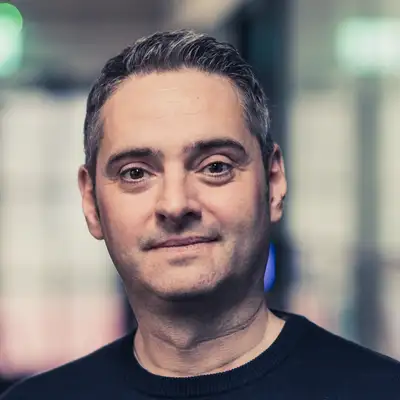
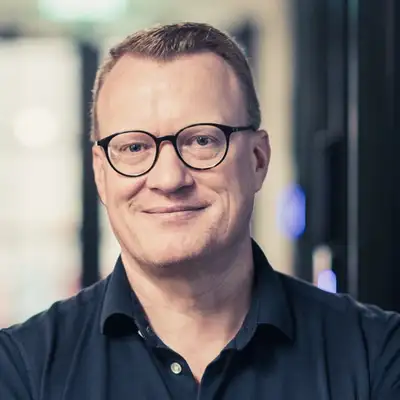
From the award‑winning team behind Cloud Realities, Realities Remixed explores what happens when people, culture, industry, and technology collide, because real breakthroughs rarely come from technology alone.
In each episode, hosts Dave Chapman and Rob Kernahan dig beneath the surface of innovation to understand what’s truly shifting. They speak with leaders, practitioners, vendors and thinkers across industries to explore how technology reshapes human behaviour, organisational culture, and society, for better and sometimes for worse.
Web - https://www.capgemini.com/insights/research-library/cloud-realities-podcast/
Email - realitiesremixed@capgemini.com
(00:01.792) So he made you change your name? What else did he do? I mean I was just getting him fit for a digital online persona on Esmee. I now dress exclusively in black as well. That's the only thing that you make. (00:28.576)
I'm Dave Chapman. I'm Esmee van de Giessen. I'm Rob Kernahan. And this is Reality's Remixed, an original podcast from Cap Gemini. And this week we are talking about the end of the season. What we loved, what we learned, where we might go next, what's gonna happen. Esmee's here, Rob's here. How are we doing? Good. Woohoo! Good. Are you ready for a bit of reflection? I as you know, I always like to go over old ground, rake it up and find out if it was correct or not. So yes, I'm up for it. Of course we're we're gonna audit the trends, Robert. was I right? Or was I just on something? Who knows? Let's see. We've got thirty seven trends to get through today. So everybody everybody's an hour each, Dave, is it an hour each? Sort of like some monster. Part from when you bang on about cybersecurity again and we have to do about ninety minutes on it. You love it, you do. You love a bit of security. You love a bit of safety and security. Exactly. You looking forward to that? Yeah. Well, no. Well, I was just thinking that you probably in secret you listen to Rob's voice over and over again for him explaining. So yeah. I I I like I like when it you know, when you go to sleep, I like to just have Rob droning on about passwords and stuff like Me whispering in your ear passwords need to be fourteen characters long. Need to be capital letters and special characters and numbers. Yeah. Yeah. I like that bit. That's my favourite bit. Yeah. And then he just repeats constantly. Yeah, exactly. It's lovely. It's lovely to say it's like a soothing loop. I I do think though the the systems are a bit ambitious when the operating system suggests a password for you and it's twenty characters long and it's just a nonsensical string and you just sort of go, That's just gonna be copying and pasting that for the rest of my life, so it doesn't work. Yeah. Are you really gonna talk about passwords now again? I mean look, didn't take much, did it? Just Just like it's just like a little trigger there. anyway, I'll I'll we'll move us on very quickly before we get dragged into that wormhole. the the other thing, baby. No, a wormhole takes you somewhere. A black hole might be the end of us, so I think black hole's better. Let's say that. Right. So we're in the beginning of the summer and we're gonna reflect on the season before we go off on summer holidays. (02:41.932) Now, before we do that though, it's been a bit hot, hasn't it? too hot. Too hot. Way too hot. So we're we're in we're in a lull in between two things. I I've learned the new word that I didn't know existed, but you know every now and again some word pops out and people use it as if it's been around forever. And I'm like, where did that word come from? Like a heat dome. Do do we all know what a heat dome It's just a new that's a thing. I I I learned about that the other day. They're going there's a heat dome over Europe and you go, hm, what's a heat dome? I know it's like everyone said heat dumb for years, but I've never even heard that phrase. So people with who believe in flat earth, they Marcel producer classic production. Produce Spam from the UK. Don't you dare edit point that. Don't you dare edit point. No, no, no, no, no. This is all on the show. Spam phones from the UK. So people who believe in flat earth believe there's a dome, So maybe there's a link to heat dome. The dome on the flat earth. Maybe that's what it is. No, it's a meteorological phenomenon where a strong stationary area of high pressure traps hot air over a region acting like a lid on a pot. it was first recorded used in nineteen fifty and nineteen sixties, David, so it has been around for a little while. Heat dome. There's a there's a graphic and everything. I've seen the graphic. It's quite something. Anyway, so we're in between heat domes at the moment. We're we had a very, a very, very hot heat dome last week. It really was meltingly hot. And I believe there's going to be another heat dome next week. it's yes, which I'm not looking forward to at all. Because i you know, twenty four, twenty five, twenty six, lovely, lovely, lovely. Thirty three. No, not not in our heat. No. We put like a little I don't know, you know like one of those, effectively like a big paddling pool that's about two or three feet deep, something like that, and about I don't know, ten foot across or eight foot across. We put one of those out in the garden thinking that's gonna be nice gonna sit in that when it's a bit hot. It was like sitting in a hot tub. Actually made you hotter going to sit in it. It's very disappointing. Anyway, let's let's crack on with our season retrospective. Now, couple of things to talk about. (05:02.24) About changes to the show that we did over the course of the year. So the first one is you may or may not have noticed that we changed the name. some of our listener figures would suggest that you d you either didn't notice and just thought that Cloud Realities had finished, or you didn't pick up that Realities Remixed was the new version of it. So like rest right now. Like your dad, exactly. I think we had a a bit of a worry about that. I think we're through that now. That's good. That's goodness. It's we're back. so we change it. Now why did we change it, Ez? What what drove us to doing that? I think we saw the brother conversations that kept on or increasingly took over the the show. So yes, we always started with technology and cloud, obviously. And but tech has, you know, made such a huge evolution. And our conversations did the same. We were talking about tech, but then suddenly it was also about business because we were talking about outcome of that tech. The impact within society, and obviously the people that carry the tech, that built the tech, that use the tech, and that broadening of conversations led to a different name, I think, emphasizing that. I think that's very well put. Rob, what did it mean to you? So the technology that we started talking about is now everywhere. And therefore you need to broaden your scope to say what it's impacting. So things had moved on, it's become a thing that just exists. And so why constrain ourselves with the conversation? And we weren't constraining the conversation anyway, hey? So we might as well change the show name to reflect the conversation we were actually having. Yeah, that's what it felt like to me in in very simple terms, exactly that. Like we the the showname should be should be representative of of I think a bigger, broader, more inclusive conversation. But yeah, the it is the impact aspect that that Ez was talking about. I think technology is so pervasive in our lives, whether that's our professional lives or personal lives, that to st to step back a little and examine that from the from the positives, the huge upsides that can be driven by intentional leadership and a technology driven change. But also guard against some of the downsides that might happen and be aware of that because I think it's the responsibility of leaders in this day and age to consider all of those aspects and not to constrain thinking. (07:24.704) It's just a mad rush to some sort of value that might be illusionary or might actually have some unintended consequences. Now we hope you're enjoying that change to the show. Like we said, it wasn't a massive change we didn't feel in terms of the conversations we were having. I think we were there anyway. but we just kind of really formalized that. Do let us know though, as usual at the end of the show, as we'll talk about the how to get in touch with us. And we'd love to hear what you're thinking about it and As we think about what might happen going forward, what we need to build into that. Now, one of the other things that happened this year, I think that we were delighted about was we got some awards, Marcel. So tell us about the awards that we got. In November we received three different awards. So it was a sort of global industry award. That that's yeah, really amazing that we received that. So it was a a B2B marketing award on best content and best consumer retention. I'm really proud on best content because that that that's reflecting what we're doing and brought it to the market and and and people like it. Also the judges really liked it. And there was also the drum award for best creative audio and that's also a link of course to the whole team, but also to Ben and Louis, who are responsible for the quality that we bring each week. So overall really happy to receive three different awards at the end of last year. So yeah. Yeah, really, really delighted about that. Hashtag not that crap. I mean, some would say that. I wouldn't go that in fact I wouldn't go that far, I don't think. Yeah, let's not get ahead of ourselves. but it but it was it was really lovely. You know, we do this show, I think, because we enjoy it and we enjoy the exploration and hopefully you hear that. But to have a have a bit of a little reflection that others are enjoying it too is is wonderful. So thank you for that. And the funny part was that for the B2B awards, it was in London. I was live on stage two times with in Tuxedo. I I felt like a little bit like James Bond, not that handsome, but it was really nice to have a Tuxedo in U.S. to go to that, wouldn't it? Yeah, yeah, yeah, yeah, yeah. Yeah, that's nice. Are you actually going to be the next James Bond? That's the big debate about who's gonna play that character next. Is it you, Marcel? I'm too old. I'm too old for that. Yeah, that's what they say, a younger bond. (09:45.954) So yeah, there we go. Like really delighted about all of that and onwards now. It's not all been wine and roses of late. so Esme joined the show a couple of seasons ago and brought a very different perspective to the show, one of human exploration and thinking about the nature of organizations and systems and the humanity that sits at the heart of a lot of what we talk about and has really heightened that aspect of the show too. It has improved the show through that through that heightening, but I am really unhappy to say that the Esme era is ending as. Why are you leaving us? Why are you leaving us? Well, it simply feels like the right moment. So the podcast really helped me discover what energizes me, what my voice is. You guys helped me find my voice. I think that it's been an evolution for me as well. Like how how do I tap in? You know, what's the right moment? Do I dare to say edit point? you're so fast in your thinking and obviously English is your mother language. So for me it was also what do I have to add? You know, it's not the technology that I know most. I think that was my a bit of my journey was also about, okay, so it's I don't need to talk about the tech, but I need to talk about what I think and and what what happens in my head. So I think I grew through the show, at least that's how it felt for me. And now it's time for me to to make room for a new adventure, whatever that may be. And it's also, you know, leave on a high note. I think that's good. To leave it here and bring all the experience with me and the conversations with the guests and the experiences that we've had live. I think the events have been a a a true adventure as well. and also the behind the scenes. How do you make a podcast? How do you create a golden thread? like you do, Dave. You always, you know, bring us back to the golden thread. I think that's that's very inspiring to see. Rob tapping into the tech part, and I love to hear an architect that is also able to see the role that. that that he plays in the system and and the banter of course and I love Marcel being Marcel, which gives a great dynamic. And also it's so much work to do to produce a podcast. And I don't wanna lift the magic lid up of a podcast. Let's leave that. You know, it's it's just a conversation that pops up and that's it. But behind the scenes it takes so much effort. So so a big a huge thanks to you and of of course also Kishore. (12:07.054) For doing our socials. it's it's very, you know, helpful and and great to know that somebody's pushing that socials to the audience as well. And Ben and Louie, yeah, you you're able to lift every episode to a higher level. So yeah, it's been great. It's been wonderful and you know, we're not we're not gonna be strangers. So just excited. The show has been a better, warmer, more lovely place for having you on it. Absolutely. You have brought new perspective and challenged us in our thinking. in terrific ways. I completely echo that sentiment, Dave. It's been great. You've changed the dialogue. You've changed our way of thinking. You've definitely helped advance the way we deliver the pods and the focus we take on it. So hopefully we will sustain that going forward, albeit very sad to see you exit stage left. I mean it's not only been the dialogue you brought, some of the practical production elements that you brought that were new. were great too. So the v the videos that we did, some of the live events were entirely orchestrated by Ez. And I think one of the biggest responses we got to any of one of those things was the us doing it in the car on the way to the airport video, which I think is it was excellent. I even I watched that one back. Yeah, I mean just what a contribution, Ez. It won't be the same show without you. We'll we'll try, no doubt, to to do stuff, but it's not the same without you. So we wish you All the very best for what you go on to do next and send you off with a huge thanks for what you've brought to the show. It has been a pleasure. Thank you guys. Thank you, Esme. Now let's get on with thinking about what we have done this season. The last season of the Esme era, indeed. So let's move into that. (14:01.966) So shall we talk about the trends that we set out in February and reflect a little bit on what we've talked about this season and what popped up. So let's just quickly remind ourselves of the thirty seven trends that Robert set out in February Are you ready? Deep breath. Sovereignty is is this in no particular order. Sovereignty Agentic AI. No, you really saw it that come in, Rob. I'm curious there. I I I'm a visionary crystal ball ice force. I know where you picked that up. I don't know where you picked up how you managed to join the dots on that. I don't know. Human AI interaction. We did some stuff about the cloud itself and I think changing underlying infrastructures for the cloud. We talked about scaling AI and the move from proof of concepts. we talked about though adoption lag. And what what's going on with that in terms of organizations readiness for some of this? Very accelerated technical innovation. We talked about physical AI, quantum computing, underlying hardware acceleration, and then Rob Borders all silly with a very long section on cybersecurity, if I remember correctly. Really spoiled the end of the episode. Now it's it's necessary. To remember that we should be at times secure. What do you think about mythos, Robert? Mythos? Well, it's back, isn't it? It's back. You can have it again. It's the it's the everybody's. tailored version though. Like an international version, I understand. Let me give you a statistic about Europe. 80% of the technology that we use in Europe is imported. And so what the mythos fable export control conversation did was basically go, Well, you know what? Maybe something that you rely on today may not be there tomorrow, which was exactly that case. Now it's back now because of the concerns have been addressed, etc. But I think that has created quite a conversation, especially around the sovereign point, which is ever relying on external things that other people control and suddenly you go, Well, is it going to be there tomorrow when I wake up? And how much do I rely on it? So there I (16:21.974) Other models were available to fall back to. But yeah, it's just there was a th it definitely started a spark of conversation that was quite rapid. I think it was quite helpful, to be honest, because it actually really showcased when you're that, you know, invested in in in external tech, what it can actually mean. So I think it's very actually very good on a on a micro scale. It was a g a good try out. Well, I think it also pointed at how cybersecurity is really going to have to fundamentally shift. I mean, it's like it's already started to shift in terms of the use of, you know, AI and trawling vast amounts of data and all of those sorts of things. But actually the level of automation and speed that the whole thing is going to run at and the way it can penetrate unknown vulnerabilities. It's like next level stuff, isn't Yeah, yeah. And so you get to this point where I mean we were joking at the beginning about AI taking over, but this is a classic example of where you could get It's c we're close to technology that could run away with something that we don't want. And so suddenly we find ourselves exposed and it gets into the hands of nefarious actors who don't have a moral compass like the rest of us and they use it for bad things and it could be very serious and broad. You could see that I mean the fear was that it could cause a massive incident in the banking sector. The financial sector collapses. The world as we know it will not function properly. So we're we're we're talking about things that could be catastrophic. So th now is a time where we need to be maybe a little bit more considered and careful as the technology gets to such an effective level that it can do good things and it can do bad things. So let's start with that little reminder on cybersecurity because cybersecurity actually in this season is something that we didn't overindex on. So I thought it was worth sort of starting at the end, if you like, from that perspective. And let's get into the rest of the trends that we talked about. And let's start with the two letter acronym that dominates everything at the moment and pulls a few of the I think threads together. So but let's come at it from a scaling AI perspective initially. so we were talking at the beginning of the season that it was highly likely this year, and so this was la this time last year. (18:44.028) as we were thinking about season five, that we would shift from proof of concept into better understood scaled frameworks. And that we were likely to hear about that a lot at the conferences, starting with Microsoft's Ignite, then going into reInvent, and then going into Google Next, which has just reasonably recently happened back in April. Now, did anybody spot any scaling AI stuff at any of those things? It it did happen. Yes, it was most notably when we went to Google Next, where they were trotting out use case after use case of people deploying it into their core. And there was there was quite a lot there. So and I think execs execs were keen to make sure that they did do that. There is one interesting side effect to the scaling though, which is the conversation about tokenomics and the cost of AI is in sharp focus now. And there's lots of stories about organizations blowing their AI budget in three months very much here. And the recent analysts are saying that AI will never be as cheap as it is now. And some would consider it to be relatively expensive because the true cost of the way the investment cycles are going hasn't been revealed yet. So there's there's a lot to come on this scaling point, which is it might scale, but there might be some interesting tokenomic conversations that go on. Let's get on to The mechanics of scaling to start with and then come back to some of those challenges. And by the way, if I ever use the word tokenomics, put a just just end it there. That's the term. That's the term, David. That's I like it. I can't dokonomics. it's not made up, it's token and economics smudged together. It'll be an addiction research. That makes it a made up That makes it a made up word. That's no the d the dictionary reflects how people are talking, not the other way around. So if people are using the term, it goes into the dictionary. That's how it works. That's how it works. Is why you were such a big supporter of Skibbity going in the dictionary? What does I don't know that. Well what is it? Explain, expand, Chapman. You do know that. That's what all the Gen Z were going on about, wasn't it? And the alpha. Skibity, yeah. What's it mean? I don't know I really you have you have got me there. What's the No there f like and it's it's funny to say that in front of an alpha or a Zed like my kids, for example. (21:08.418) Because they cringe when an older generation says it. I mean, we're this is about a year old at this point. I'm surprised you're not on top of this, Rob. I d I'm I'm googling it now 'cause you won't you won't tell me. Spell it. S K I Ski B I D I, I think. Skibbadee. I mean, this is top this is top notch podcasting, isn't Is a gibberish term coined by the creator of an animated YouTube series that can mean cool or bad or used with no real meaning as a joke? See I mean So you you were struggling with six seven. Yeah, remember when you said Skibbity could mean good or bad or have no meaning. It's post language. It's post language. It's it's just how you just can you imagine the poor man or woman who has to sit there and write that term into a dictionary? So imagine like what's meaning of this word? Sort of an a an elder person sitting in a dusty basement trying to you know kind of hand write things into the Oxford English dictionary and they're like, I think somebody's misspelled this. Dave Dave, I think it's a new word for the wiggle, So Yeah. Yeah. It's it's yes, no, or maybe. So maybe it is. Maybe it is. I'm gonna use that today with my kids and see what happens. See the reaction. And you have a thousand different wiggles, so In this case, it's also more than thousands or not. I'm putting tokenomics into solidly into the same bucket as Skibbity at the end. No, there's a there's a very clear definition of tokenomics. And it only means one thing, not this confusing new speak we're coming from the younger generations. Anyway, what were we talking about? The scaling of AI. Let's get let's get back to that, shall we? So I I think we've seen a number of different things happening here from patterns of deployment. to an enterprise stack becoming emergent and then new layers that might be required in that. Concepts of enterprise reinvention as a result of AI. So this is thinking about not just it from the technology up, but actually, you know, what fundamentally is it going to do to my business? Does it change fundamentally what I need to do as a business? So let's start on picking a couple of these things. Enterprise stack, Robert. (23:27.95) New new new layers. You're the level four. Set it out for us. The layers, David. The layers So we'll still have like at the bottom, your systems of records. They're gonna be around for a long time. We'd like a lake house. Yeah, that'll probably be in there as well. But there's those. Then there's sort of like the very important part, which is the semantic layer or the enterprise context. So the understanding of what that is. So yeah, we could stick an AI over the top of it. And an agent can go, but if we are able to describe the context of the enterprise that we're operating in, it gets much more effective. So what does this actually mean? What is the value you're really l looking for? That is actually extremely hard to do. That is probably the hardest part to describe your enterprise and semantic layer. Then you got a load of tools and connectors and things that help you bring all that together. And then that's where the agents sit, and then above that you have some form of orchestration. which is the how do you connect it all together to make a business outcome. So agent to agent. Underpinning all that, there's some sort of control plane, which is giving us guardrails, identity permissions, the monitoring, audit and compliance, security, et cetera. And then at the top of it all, you've got the experience layer, which is you as a human, get something as an outcome, a process outcome or a business outcome or an experience outcome, et cetera. So you sort of build through those layers. So it looks a little bit different or quite different to what we're used to when we think about traditional digital systems. So there's new concepts in there like the semantic one that people have always wanted to build a semantic layer, but now it's even more important than it ever has been if you want the agents to be able to operate autonomously. So that's broadly what we're starting to look at now from a stack perspective. And I think we're seeing the age the age of you really, really, really, really do now have to sort your data out. yeah. It's it's like It's the architects I told you so moment, I know I've read it before, but every enterprise architect speech there goes, We really should better govern our data, manage it, control it, get the metadata right. And everybody's gone, yeah, tomorrow manyana, manyana, and now they've gone, no, we should have really done that ten years ago. But anyway. Yeah. We are where we are. Onwards and upwards. If you didn't plant a tree ten years ago, the best time to plant one is now, as the proverb goes. What's interesting though is that you start talking about the layers from bottom to top. Yeah. Well, I think a lot of conversations in this (25:49.002) season are about Yeah. About the business implications, right? So w what business transformation do I wanna, you know, get to and then dive into those layers. And we all know that those business outcomes, the the customers and getting close to that customer are far from linear than we still think or at least the systems think it is. That is a very good point. work out the things that go beneath it. So yeah. I think sometimes, especially from a technologist perspective, and I have fallen foul of this myself many times, is we like to think bottom up because that's how we understand the world. As we're able to build the foundations, but actually you still need to architect the vision at the top, don't you? To say what's the the what's the brave new world actually look like? And it's actually n it is actually never been more important to do that than through concepts like business reinvention. Because I think what people find is This maybe connects a little bit to your made up word point at the beginning, Rob, which is when you do start to properly evaluate the bottom up build of this stuff, it ain't gonna be cheap. Mm. It ain't gonna be cheap. So it has to be worth it, right? You you want to be sure that it's that it changes something in your financials. Yeah. It's not all sizzle, is it? It's g there's got to be a fairly chunky bit of beef in there somewhere. I think and this is this is where I think there is a real risk of the companies getting outpace dramatically. So there's loads of startups in Silicon Valley which are agentic only organizations and they're trying to build these systems that, you know, just have no humans in the loop. It's just one human at the top or on the loop. but it's the whole thing, not just like a part of the thing. And they're waiting for the first unicorn to emerge. So market cap of a billion with those organizations. And then they could just dramatically outpace the traditional. Now there's lots in there that there are physical things that still need to be managed and supply chains and stuff like that. But actually if we start to see that work, the pressure is going to be on for the traditional organizations to have to move at pace and the the cost will be quite high. And so your business model might need to change off the back of what's going on quite significantly. Well, I think it's sort of ha let me just just turn that point around. I think (28:12.63) If you're not if you if you're running a business today and you you aren't looking markedly different in some way, shape or form, there's almost no point in making the investment. Like the the the investment is is gonna be significant. So therefore you have to be thinking about what aspects of the performance or the products I deliver or how those are gonna function or I've got to change because my market is gonna be so fundamentally impacted by this that if you're not understanding those dynamics from the top down And re examining exactly what it is you're providing as a business or the pace that you're working at or the price point you're working at. If those th if those things aren't fundamentally impacted by this, you ain't getting the best out of the technology. Yeah. If you're investing in AI just to have AI, but just to have AI. But your business looks the same, something's gone wrong. And and and that might be the most obvious thing in the world to say, but if you look back at technology over the last twenty, thirty years, that has been a sort of a fairly fairly sort of profound pattern, hasn't it? Yeah, it's like the digitization versus digitalization point, which is for many people took a paper form and turned it into a an online one. It's like a faster digital one. Yeah. It's like, yeah, great. Well done. But some use digital to fundamentally transform their business. And we saw new businesses rise. So don't forget the likes of Netflix and Uber used con the words come in, Dave, converge technology stack to do something completely different. Yeah. Yeah. It's the classic Classic blockbuster. We all love to go backwards. They had the option to buy Netflix, I believe, or something like that, and they turned it down and thought the physical media was the future. Fifty million was on the table for Netflix. And then and then Netflix go from I'm going to send Hollywood movies to you through the internet to I'm now making the Hollywood movies that win the Oscars. So again, they're pivoting their business. They're a good example of a business that keeps changing. But maybe they've got too big now and maybe they're struggling with some of the things that big corps have to deal with. It comes to it comes to all of us, I think. So so good question Do you think that that big organization are are able to make that shift and the investment instead of being overhauled by a startup with running five companies on their iPhone? If if ever there was a time to test that, Marcel, it is now. So it's a very good point. But (30:34.132) I don't have the answer, but we will see in five, ten years. We will be able to look back and there'll be a chapter in a book about it. Dave Me Dave's memoirs, chapter twenty six, will be all about this. The Chapman Chronicles. That's the name, the Chapman Chron Chronicles. I Detailing the Life of a Suhero in technology. I think I've just written your book for you, Dave. Volumes one to twenty. d but to go back to my last point. Yes, I do think it's act I do think it's possible. But I think it's going to require very, very significant acts of leadership. And that will be the failing. If you look at the blockbuster example that Rob gave, that was lack of vision and leadership. But then if you look at Steve Jobs' turnaround of Apple, that was about visionary leadership. I know you can argue the what the post Apple world has been like post jobs. But the turnaround of it becoming w it was going down the road of basically becoming another You know, another HP, like we'll do printers and we'll do all kinds of stuff and we'll sell third party things. And Jobs was brave enough to come in and go, No, we're not gonna do any of that. We're gonna have one product to start with and we're gonna do that really, really well. Then we'll add another product and we'll do that really, really well. So he transformed the you know, Apple in a in a way that required like absolute clarity of vision and then bravery about what you're doing with your organization. That's the level I think of leadership's gonna be required to drive these turnarounds. Now, is that visible? That's a very good question. I think that's exactly what Peter Hinson was talking about in the conversation that we've had with him, emphasizing the power of the Phoenix organizations, which are larger and and and all the well, the elements that come with a larger, maybe legacy organization, compared to a unicorn. He's all up for Phoenix organizations. So that's what I loved about his view on on tech and embracing the possibilities and and rise. I think that is Absolutely spot on. Yeah, that's exactly what's going to be required to to create competition between the new entrants and and transforming large scale organizations. So we talked about the stack, we talked about the new the new layers, the importance of data in this world. We've done we've done to death, I think, but you can't overstate it. And frankly, you still see many organizations still struggling with it. The semantic layer and the agentic control plane are two new, yeah, sort of new concepts at enterprise scale, I think. So Rob, just give us a quick (33:01.378) The the quick one one on the semanticlear and the control plane. So the control plane is the thing that basically manages your new agentic setup, agent to agent, how they operate, what they can do, how they're governed and controlled. Whether they're doing good things or bad things. Exactly. Monitoring. So there's this. So if you think about your business, what we used to do is configure transactions into systems that were fixed. Agentic allows us to vary. This control plane is now the thing that governs how the business transactions execute. So you've got to think about the control plane as being your business. The control plane is how you define your business as code, whatever. but it's that is the thing that is you. The semantic layer is the thing that brings the context into that setup so that it can be effective. So think of the semantic layer as driving. the efficacy of the solution and the agentic control plane as the business setup and structure. And those two things need to work together. They are new concepts in how we set up an enterprise with technology and hence why we need to focus on them. Because without them, you will either without a control plane, you will end up with chaos. And without the semantic layer, you will end up with very low quality results from your AI. Now as let's go above those two layers. So above those two layers are where you get The human AI interface. You get the agent layer itself. And then of course you get humans. So are we in the age of tools to teammates? I think so. Well, yes, but we're also still very much on the level of making things more efficient, I think, and using it. And to be honest, I have to say, I don't know if you know the way you have to prompt to really have a teammate that helps you out and does, you know, really helps you to get your work done more efficiently. I think the Prompting is still something that most of the engineers understand. but most teammates are still a little bit, I don't know, in high school for I don't think they're real grown ups. so yes, they they can help. They're a trainee maybe, but on the level that they're really helping you out on a on such a level that is really a true comparable teammate of a human, I think we're that's that's r we're far, far away from that, I think. Earl early in the season. (35:26.786) We had Kevin Sarais on and Kevin talked about the the meeting he was at with the great and the good back in back in the valley in the nineties where they talked about digital assistance and I think Clippy was the result of that. And he and I think his point at the time was that we might be in the age now of where Clippy is actually less of a gimmick and more of a real thing. Are we seeing that emerge yet, do you think? I yeah, yeah, no, we are. So if you use you know, AI to help you out reason, set things up, it can save you a huge amount of time just as a personal individual, let alone if you stick it in the middle of a business process to do it properly. The bit I'm very disappointed about Clippy is Dave that Microsoft haven't jumped on that and put it as the face of co pilot and they've gone for a horribly corporate. I would I would embrace I would embrace Clippy. Because you know I like to anthropomorphise AI. Clippy is the perfect way to do that for me in my day time. This is a family show. It's it it's it's a thing that is a lot of people are learning to use AI in that co pilot fashion, which is why it's called co pilot. You know, Anthropic's very good at it as well as is Google Enterprise, and you see more and more. People are learning that this can do something useful for it. So I think when you talk about enterprise scaling, it's also the social scaling of AI, which is you know, you be at a barbecue or a dinner party, whatever somebody pulls their phone out to check something and they're on AI, you know, and it's that which is I'm using AI to, you know, help d d design a the h the holiday or the the experience or whatever I'm trying to do. It's it's it's happening more and more. I felt a bit judged by AI yesterday. Did you? What did it do? Did it just say So we were in the we were in it was no it was a it was a positive judgment, but it was still judgment. You know what mean? And we're in the middle of a meeting, and then all of a sudden the meeting assistant popped up and said, Things are going well. You're you're on track. I love that. I love that, yeah. But there's there's the but there there's a side effect to that, right? Is it so you switch on the facilitator for the meeting, there are many versions of it, and it keeps you on track. It's good. It's something prompting you. We always said (37:45.626) when AI started it was human that would prompt AI. And now we always said, you know it's getting good when AI starts to prompt the human, which it is. Classic example that happens more and more. But the other thing is we're recording absolutely everything. Right. And I think when meetings are fully transcribed, it changes behaviour in the meeting. Yes. Yeah, it definitely does. You know, you still need to have that I'm not being recorded space to get to get some honesty out sometimes where maybe we feel a little bit less inclined to do that when you know it's all being transcribed. So I do think actually it's changing the way we interact as well, maybe for the better. Who knows? But what I do find is when you have everything transcribed and you missed the meeting, you can come back and get a summary really quickly. So again, that's another useful trait but that's certainly very helpful. And I think I think you're right there in terms of the behavioural change. So Ez, when you think about the the foothills we're in at the moment of human AI collaboration. How is it landing on you? I'm not quite there yet to understand. Maybe the thing to go back on what we just talked about, the word teammate sounds very connected. Digital assistant feels more as it is, at least now, in social conversations, like for example, in Teams or on Slack. Because I I I understand the facilitating part, like you're you're on schedule, you're on time, et cetera. But it Does it really go underneath what's not being said? You know, does it also prompt I haven't heard that person yet? Or I'm very curious about what that person has to say. So what I what I tend to see is that more and more people also s see that AI is it's giving you what you expect it. you're you're very happy when it yes, that's what I mean. So it's very that that's very confirming, but it also confirms in the way you think about the world. And that's something that I'm now Also wondering, are you still being surprised, you know? Do you still see like, gosh, yes, that's interesting. But if AI continuously say and and knows you more and more, and better and better, at least the way you think, will you ever be surprised again? And that's something that I'm I'm very cu I don't know. it it f you can use it and I think that's very good. I use it every day and a lot. But and and at the same time it helps me really appreciate humans. with all their good and their bad and their (40:09.324) You know, the good behaviour, the ugly behaviour. so that's what I see, from my perspective. There's there's that backlash about the smart glasses as well, isn't there, about recording everything. That continues to be a thing. So humans do feel different when they know they're being recorded, whatever form that might be, video, text, etcetera. So I d I do think there's a there's a bit of a social conversation we need to have about when and where is it acceptable to do this type of stuff. Yeah, 'cause it's really obvious when somebody pulls their phone out, but if you've got a pair of smart glasses on And I mean the ones we tried from Meta with the screen inside were were were ace. They had a really good application to help me out day to day. But you know what? I mean, people may not feel comfortable with others wearing them around. And I I I I don't think we're quite having those conversations yet in society about what is acceptable about what is tracked and traced. Because it can be very useful, but it can also be sort of unnerving. Yeah, it's un it's sort of it's underhand, isn't it? And it and it and it undermines trust you have. in certain interactions, whether that's an interaction in a in a business meeting or I've you know, I've seen people use y you know, kind of those glasses in s on social media when they're going in to record something explicitly that they've been asked not to record, and they say at the beginning of the little clip, Yeah, we're gonna go into such and such a shop now and try and record this transaction. When explicitly the shop would prefer you didn't do that. it it makes me think about the Panopticon. I don't know if you know it, but it's I mean that's a good word. That's I that's a good word. It's a good word, but there's a better than Rob's tokenomics. there's a psychological mechanism behind it that it's because of the the prison. I don't know if you know it. It's a design in seventeen ninety one and the idea behind it was it was a circular building with cells all around it and just to have a single guard in a tower in the middle that was able to see each and everyone. They thought, okay, just the idea that I'm being watched makes me behave differently. And that's that's like how many decades ago that they were already thinking about that psychological mechanism. And now we actually see the same in tech. Just the idea that you're being watched, you hopefully well well, I don't know, it's good and bad. I don't I don't know. Are you being authentic then? That's the real question. I think that's the big question. That's the big question. And and you know what? There's this like, let's take open claw. (42:32.418) People building their personal digital assistant with OpenClaw and they're basically handing OpenClaw access to all of their data. And great, it can do great things. But you hear all the the bloopers, Hannah Fry in the UK did it. she's a famous scientist on social media and it started sending random emails to journalists and things like that. And you go, well, you shouldn't have given it the ability to do that. But then you've still got this thing about it c reaches out. Who's got access to where you've sent your data and all this sort of stuff? And you sort of go, There is great use, but it it's there's the privacy thing we just discussed and the everything we do is being monitored, and then there's everything we know and have might be made available. And it's like this thing about, are we ready for that? Are we there yet? Are we ready? The the other aspects of this human AI layer is the nature of the AI itself and whether it is an i a a true intelligence or whether it's merely a batch job. We would we talked to Scott Hanselman about this point, didn't we, when we were at Ignite last year. And Scott was very specific on his view of where we are at the moment at least with agents, which is I think to use hi his phrase, a sophisticated batch job. So what level of intelligence do we think we should infer to these things at this point? And when I say intelligence, I'm talking about sort of general intelligence. The other thing I think that is well, there's two things that are being proved at the moment, amo among many others, but occurred to me for this talking point. The first one is it's becoming more and more clear how the intelligence we're seeing at the moment is regurgitated stuff from other areas. Rob and I would Rob put a thing on our our podcast WhatsApp group the other day about a music service that was basically effectively re recreating Johnny B Good almost exactly based on based on a specific prompt that didn't refer to Johnny B Good at at any point. There's an excellent example of just of pure regurgitation without any real kind of overlay to that. (44:48.55) alternatively, in in the world of work with agents and to a and to a certain extent, the good side of creating Claude to reply to your emails and things like that, is the levels of automation these things are already achieving it is actually quite incredible. Like it's sort of through the roof. Well, if you there's two views to this. So the Scott Hanselman view is I understand how it works. So I'm gonna call it an intelligent batch job. But there's the other side, going back to the human experience, which which we've discussed before, which is if I perceive it to be intelligent, is it intelligent? So I don't understand what happens inside the box. I just see the interaction I have with the box. So the Turing test has been smashed. AIs can, you know, degree level, they can pass degree level examination. You know, they're good enough to sort of write PhD thesis when correctly controlled. If I'm just on the receiving end of what it is creating, you you would perceive that to be created by something with a form of intelligence. So It's that classic of I don't know what's going on in your head, Dave, but I perceive you to be an intelligent being. But you could be a very you could be a very intricate computer sent here by aliens to create this podcast, right? I don't know. But I I have an interaction with you and I go, Well, there is intelligence there. Well, I mean What I liked about Scott is that he really emphasized don't make it human. Don't make tech human. Don't do he was very, you know, outspoken about that. It's just tech. You know, it's not nothing more. But w th we're a bunch of chaotic neurons that are firing, and if you look at each small part of what our brain does, it doesn't look to have any form of intelligence, but then b through the chaos and collaboration of it all together, it creates us. So what's to say that we're just at the very early stages of of intelligence and we just need to keep scaling? It's the Sam Altman version of Creating intelligence, isn't it? If I keep scaling the system and get enough chaos into it, it'll start to be intelligent. So I think but but I think the warning signal here and the thing that I think is at the heart of this for me is how you wrestle with integrating it into culture, whether whether that's hundred percent generally or whether that's your organizational culture, isn't it? And at the moment, should it be should it be thought about as tools or do agents need their own HR department? (47:10.286) Well, yeah. I and we also talked about, you know, the example of sales leaving behind information just because of yeah, all the the structures and the processes that that go into play once you talk about when are opportunities being closed and and what does that mean? I think there's so much social involved in companies because it's in the end the company is just what is it? It's just a word. It's the people that make the company. And I don't think you can ever at least I don't think that tech can ever get into that without causing friction and chaos because it also has a status quo that needs to be saved and that's people and you're touching on their wallets and you're touching on their their power and so yeah. I I agree, but do not underestimate rampant capitalism when it comes to technology and the the pursuit of profitability. I think I think we'll see some decisions made by some corporates that will surprise initially but will be seen as a way to be to drive that system more effectively. And it's sort of I'm not sure we're gonna strike that balance effectively at the beginning. Brutally honest. Yeah. I I know we had a conversation with one of the guests. I don't know if it was recorded, but the question was how many people are employed by with your company? And then he thought about Ten seconds? And I thought, hmm, that's not a difficult question. And he said, thirty humans and two hundred and seventy agents. And that was really a sort of an eye opener that people are counting sort of agents as people. And yeah, that that was really weird. That I give that also an example to my friends. I said, Yeah, this is really what's happening. So it's a company with three hundred people, but two hundred and seventy are agents, so that's weird. Yeah, it is, isn't it? Re we we talk about human resources, which I find very still very it's very But now we do have tech resources. Yeah. Yeah, well quite so. All right, let's bring scaling AI to a bit of a close for today's conversation. But before we do that, I want to talk about perhaps a constraining factor for this, which is the technology itself. And you know, kind of at the moment it's it's it's taking you know kind of endless amounts of (49:33.838) power to drive this sort of stuff and it feels like some form of hardware breakthrough is required and we had Yetiware on who took us right down into the very hardware that these systems are built on and questioned whether we were even writing software right in the first place and that some form of breakthrough was required. It feels to me that that is probably correct, isn't it? Whether it's Yetiware or something else that the that the current platforms were on. Don't feel like they're it's it sort of feels like very brute force scaling at the moment to drive some of this stuff. That's a good way to describe it. You you look at the power consumption of the new data center racks that are coming in, it's horrendous. Multiple kilowatts in a rack. And then cooling systems where it's submerged in like futuristic gel to be able to keep the cooling, etc. You go, it is absolutely brute force scaling to get the capacity under it. And it's probably it's not sustainable from a an energy perspective and it's not sustainable from a you can't just keep scaling like this. So something fundamental has to happen in the stack that's either a software change or a hardware change that that drives more efficiency. You've got TPUs and MPUs and things like this, which are focusing more specifically on the task, but their fundamental underlying construct still isn't as efficient as it probably needs to be. So yeah, you're absolutely right. There'll be we'll hit some limit somewhere, either water or power or something that will curve it unless we innovate and change. (51:16.982) All right, one of the other things I thought that we did in this season, maybe more than we've done in any other season, is kind of look at macro trends and we were lucky to have a couple of amazing guests, actually a number of amazing guests. The ones that jumped to mind are Dex Hunter Toric, Andre Lowe's Krug, Pietri, Peter Hinson, and a number of others who gave us some very wide-ranging views of technology and society and and what's happening. And let's start maybe by just going back to some of the things that that Dex was saying. So he he runs an organization called the Center of Tomorrow. He's worked in multiple different large scale tech organizations. So seen big tech from the outside and now has a specific passion on how technology should be positively integrated into into the world and into society. And makes the argument that At the moment it's outpacing global leadership. So we talk about the adoption lag in organisations. Like organizations can't move fast enough to integrate technology or their investment cycles aren't moving at the pace that's going to be required or the scale that's going to be required. And I think what he's saying is that macroeconomically the same thing exists, isn't he? Yep. Basically, the world cannot cope with the challenge it the challenge that it faces. That is the fundamental underpinning. And that's with technology. And that is also with climate change. And that's with political discourse and all of that. The system is now too complicated for the system to be able to cope with itself. Which, I mean, it it doesn't sound so much fun when you think about it, and it isn't, but it is the the stark reality of the system that we live in is not able to cope with the things the system is creating. Yeah. And he's he's he talks particularly to governmental agencies with sort of leadership and political frameworks that are still slow and reactive to what's going on. Yeah. Which sort of swim lane for swim lane, you can see how that might happen. But what also points out, which is there's an exponentiating fact here, which is these things interconnect. So it's not that there's just a pandemic or there's just a a massive acceleration in tech or or whatever it might be. But these things (53:42.368) interrelate to each other in a way that's becoming very, very difficult to govern. And you sort of wonder where the system's gonna go, because then you get to the what is the pressure point that has to be created to allow the system to adjust, to be able to cope. And I don't know what that is, but it f it feels to me at the moment like there's going to be some event or some thing happen. And then everybody has to readjust because at the moment you can't see the system changing because it doesn't feel the pressure yet in the in the way it needs to. Yeah. Yeah. And he I think talks to some of the aspects, and you you touch on this occasionally, other show touches on this occasionally, about tech being inherently capitalistically driven. Yeah. And I think what he also argues is that the governance of it should be treated as very much political choices. and societal choices more so than just being rushed into because it's a because it's in some sort of inalienable good. Where I think it's sort of proving that it kind of can be misused as much as it's being used for good. However, the the positive side of this was how technology can be used to mitigate economic equalities, it can be used to support democratic systems and maybe some of the geopolitical instability that we're seeing. So I think he argues I th think for a positive future. But w one of the things that really struck me from that episode was how much he sort of shines a light on the the complexity of the position we're in the moment. Yeah, the system it's the you know, humans are good at dealing with chaotic environments. That's what we do. We're all individuals, we can bounce off each other to do it, but it's all it's all coming together very quickly as I'm not sure we've formed a strategy that's going to deal with it. And that strategy I don't think anybody knows how to start to tackle it. His view of for a better future was the right one, but it's underpinned with if there's not a seismic shift in the way our world operates, it's not going to be able to be delivered. Now, the one of the other big thinkers that we had on the show was Peter Hinson. So Ez, set out what the never normal is. Yeah, so the never normal is really about it (56:01.154) Change is a constant. We continuously need to adapt. And that's it's not a transformation that starts on January 1st and then we hope to, you know, to have the milestone on November twelfth, and we can just go from A to B to C and et cetera. it's constantly adapting to whatever you see that's happening with the vision. I think Peter Hinson for me is a great example of using storytelling as a leader. You know, why are we doing this? What is the purpose? But also relate it to How is the technology going to be used in in that sense and continuously as a leader adapt and know what's going on? And I think to tap on to the previous item that we're talking about, it's power play as well, right? So we see a lot of power on a on a high level, and as as long as the power is still for economics and not so much for the better good, that's the way we're being challenged and also being le led at the moment by leaders. So yeah. That's the new normal is it's not gonna change. We have to get used to changing constantly in our job, in the way we live, in what we do. Well, and let's return to Hinson. In in a little while we'll be when we talk about some of the organizational aspects of this. But before we before we get into that, we had Andre Los Krug Pietrion and he looks after the joint European disruptive initiative or Jedi, who are the U call themselves the European ARPA. so they're they're there to try and understand where Europe is in the world today and and how it might sponsor technology leapfrogging. Now of course this th this also I think interplays a little bit with some of the discussions we've had over this season around sovereign and the changing nature of of sovereign as the geopolitics of the world shift. So Robert, this is your favourite subject I think. it's the one that occupies me a lot. I wouldn't say it's my favourite, but yeah, okay. yeah. I I think Europe was caught sleeping whilst the US was investing in Silicon Valley and China has put in a huge amount of effort to catch up. And so what we have now is we have two superpowers from a technology standpoint, and I'll go back to the stat I used at the beginning. Eighty percent of the technology that Europe uses is imported. Therefore, there's this idea of (58:23.608) We're highly dependent on other countries' capabilities to deliver this digital future. do we have autonomy over our destiny? Well, no, not if we import 80% of our technology. But what where is where are we sat at the table when we think about this compared to the US and China? And what I like about Jedi is they're the exciting part of the future. So we talk about what we just did about can the system cope? What Jedi is, is creating a bright future that allows us to cope. And might get us a seat back at the table that says we now have something that everyone else needs and we have that that position where we can command a better conversation around technology and how it's used and who gets access and all of that good stuff. So so it's brilliant that it's happening. It's brilliant that it's a government funded organization that can behave like a private organization, and it has these gr this this really strong vision of delivering moonshots, which are we're not gonna be incremental, we're gonna be transformational, and we're gonna leap. frog the situ the the the system that we see today. And so I find it Jedi is one of the most exciting organizations we've talked to because of such a a a brilliant idea for the future. Yeah and of course the the the very present aspects of that are organizations that are trying to deal with in the inner world of eighty percent imported technology, how does my digital supply chain be something that I can control or at least I feel like are within the sovereign boundaries of my organization. Now, this used to be relatively contained at the data level, I would argue, if you roll back maybe even five years, but certainly if you roll back ten years, it was fairly well understood that most people were in sovereign data centers of some description. Cloud comes along, cloud disrupts that position. The argument I always made at the time, I fully confess, is that you can deal with Sovereignty issues with the architecture, so you can create zones, zones can be in countries, etc. But that wasn't sufficient, was it, was it, Robert? Why was that not sufficient? So you have to think about how much autonomy you have over your digital assets. So that's what's your legal control, your operational control, your technology supply control, data is important, it still remains, and the skills you need. Can another organisation take that away from you? (01:00:49.058) So I might be sat in cloud, but the concern is that that cloud could be switched off by another government making a decision. And in fact, we've seen a number of things in the world where that has happened through sanctions and restrictions. So the Trade Bank in Amsterdam was a Russian organization that got sanctioned and it had to shut down overnight because it was based in cloud. They've only just opened that up and got the assets back, but they're now in control of the Dutch. So That was an example of a country getting sanctioned and a business losing its access and fundamentally not being able to work. People are now looking at that and going, as we see geopolitical change, what risk am I actually exposed to? So I want access to best in class tech. I want to do all the whizzy things that this can do, but will it be there tomorrow? And is it my decision to what happens to it? And so we love the abstraction of cloud and the benefit, but sovereignty makes us inspect that abstraction and understand and make sure we trust it. And it's not complete isolation. What it is is bringing trust into the technology conversation to say, do I trust this technology? Yes. But do I trust the countries that are in control of this technology as well? Because they might be able to di to deny me access to it at some point. Don't know if you've seen the news lately or this week. It was in it's in the Netherlands and they're talking about a golden share. Do you know that aspect? A golden share. So I thought were gonna say something else there for a second, but glad you had to. No, no, not that. God. David! Yeah. I was wondering. I I I yeah, it was yeah. Good pronunciation. A share, a stock. Is that better? so The Dutch Ministry of Defence is investing over thirty million in a software company, which is also US based, and they're now wanna see and search and research whether it's possible to have a golden share, which means that they have the highest priority in terms of direction and decisions that are being made. And I think that's very interesting. If we're talking about eighty percent that is, you know, export or import tech. What if you (01:03:05.762) Just by construction and have a golden share, you're able to, you know, have that control. Does it prevent the extreme situation of in in adversary, the switch off of their services? I don't know. When it really comes down to if you still care about a golden share. You know, I think that's the biggest question. Is there trust enough that the golden share is really functioning as a golden share? Yeah, and like say, whether in adversarial situations it counts. Yeah. So if you speak to the analysts about sovereignty and control, that top layer, that legal and operations, they will say, I don't care what you have beneath it, what is the construct of the board, and who controls the board of that organization to drive the company forward. And then you've got the one above that, which is can an organization, sorry, can a government legislate and change the way that board needs to behave? And that's the level you have to look at to understand who has true control over the entity that's creating and delivering your technology. But but let's let's actually just stick on trust as a theme for a bit because it's sort of popped up, hasn't it, as in a few different places across the season. Yeah. you know, it's in the world of AI, in the w in in institutionally, in how workers are re being re examined around remote work. It's a big thread at the moment, isn't it? It is on so many levels. It's I think it's looking at HR or, you know People needing to come back to the office because we actually need to see you work here. That's one part of trust. And does that really help? I think there are a lot of different experiences, even in our room, about working remotely and being at the office or not. Do you like being at the office? I like bumping into people you've not seen for a while and the social connection. So I really like that part of it. And you you reconnect with people and it can create new threads. you can't get you can't get better than Collaborating with other humans in a room. Very true. The the creativity of that, even the mechanical planning of that, I think i is is almost inarguably better than what you're going to achieve in a kind of Teams call. Yeah. But on the other hand, I'm miles better at a day of Teams calls sitting in my room at home than I am sitting in an office. Yeah, there's that classic go into the office and spend all day on Teams. You have to plan when you're going to do your interaction and when the humans (01:05:28.684) that connection matters, I think. And we're not so good at planning that in. It can't just be I'm gonna be in the office these days. There are some organizations that tell everybody to be in with particular teams and they synchronize around that. And I think that can work extremely extremely well. So still very important, but I think we need to be more intentional about how we connect and not just blindly go in and just stare at our computer screen for the whole day. And how we lead in that situation. So I thought Tim Curry talked about that, didn't he Ez? I think What Tim actually emphasizes is that you can't simply replace trust and technology. You know, it's not we'll put we'll put in the technology and then the trust will be there. so I think we've come be incredibly good in being really efficient and being focused on that productivity and spreadsheet managing. but in the end trust is also about I don't care where you work, as long as you get the job done. and ask me for help when you need it and be transparent about it. that's a real different leadership style than most of the leaders we tend to see doing is that once they are less and less out of control for their feeling, they tend to grasp and, you know, ask their people to report more often, to come into the office and to make sure that they feel more in control. So I think the true leadership style is about, you know, providing a lot of safety. And trust in your people, in everything that you do and the way you talk to your people and how you allow them to work together. And something else that we also discussed with Jitska Kramer, who was anthropologist, and and her view on trust, it's all into rituals, right? The rituals is being if someone's birthday is there, to bring in cake in the office, to have a ritual when people are leaving or when they're retired, or all those elements and those social parts, those Those are the ones that build trust. and yes, you can send flowers to someone hope, but if you see that the card was really made by a computer, to be honest, I'm like, okay, so that process is in place. But if I have a handwritten card that has, you know, emotional feelings with it, I think that's the one that really touches me. And not the okay, we've got the process in place. So those are all rituals and elements that Yitzke emphasizes that really build the trust between people. (01:07:51.806) Yeah. (01:08:00.138) All right, well we're nearly there, I think. So let's just though talk for a little bit about organizations and what some of these things we've been talking about mean for running organizations and and changing organizations and transformational acts. So systems thinking is something that comes up a lot in some of the conversations we've ha we've had both in this season and in previous seasons. Systems thinking helps us understand how a system's constituent parts interrelate and how systems work over time within a context of larger systems, which sounds like just so much waffle. But actually when you start thinking about organizations and the human relationships, and in fact what you were just saying there is about human rituals, they are systems, aren't they? Everything is interconnected. And we don't know how they're connected, what influences what. And once you think you know it, you know, a split second later, it's different again. because everything's moving. but being able to do that and at least try to widen up your perspective and know that there's more to it, I think also emphasizes the fact that you have to work with hypothesis and just check it, you know. Is it correct what we're seeing? Is this the product that, you know, is this a feature that that is really making a difference? And to have that short feedback loop, knowing that you cannot know it all and that everything changes all the time. So that requires a whole different setup in organizations. So now w where does this become important, I think, in terms of the sort of subjects we talk about? Pred predominantly how you can use technology to drive outcomes in your business or transform your business, is that increasingly Things are interrelated, whether that's at macro level, whether it's organizational level, and we repeatedly have guests, whether they're in running organizations themselves or whether they're in organizations that are supplying technology or services, they talk about the difficulty of transformation, the changing nature of it. We talked about it with Hinson in the never normal. But can problems these days be solved within a single department? (01:10:13.474) Or just a single area of technology to drive profound change, Rob? No. A causes B is no longer the way we need to think about it. And the bit for me in systems thinking is mental models need to change. So traditional leadership, as we go into this new epoch of computing, they need to challenge the way they think and the way they solve problems. And those feedback loops need to exist. So looking at really how we're doing stuff and then challenge are we doing the right thing? So The bit that I think people struggle with a lot is that you might have to adjust core strategy based on the way you're operating. and when your mental model is fixed around how you deliver something, that can be very hard for the human to do. So how do you change your core mental model to be able to use things differently or do things differently so that you get a better outcome? And the world is so complex now and the interconnectness is driving this idea that the way we used to design systems is no longer good enough. So yeah, it's a it's causing a bit of a reboot in the way our leadership models have to change as well. Yeah, and Hinson had mentions three guiding principles. As a leader you need to anticipate. So spot signals and opportunities earlier. And I think those signals can be of any kind. Embrace uncertainty as a possibility rather than a threat. And I think that's that's right, you know, that's it. You you cannot be in control. So stop trying, but at least embrace the opportunity. And also build organizations for scalable learning instead of scalable execution. So how can we learn what's changing? What do we know now, what we didn't know yesterday? How can we learn from what we're doing? What is the feedback? That's completely different than execution, you know, lean, mean, optimizing, A, B, C, etc. And and it goes to leadership styles as well, doesn't it? So we had on Phil LeBron and Jana Werner, and they They were talking about their book, The Octopus Organization, which which describes a move from mechanical organizations into more, you know, kind of octopus-like, which I think they describe as having intelligence out on the legs as well as in the center, and therefore distributed intelligence across an organization could and should be leveraged. They talk about (01:12:30.082) Different mindsets for leaders, which I like and I think goes to the point you were talking about, Ez, which is prioritizing adaptability over auto over optimization and a distribution of authority to the edge. Outcomes, not tools. And that's I think particularly pertinent when we talk about the scaling AI elements that we're talking about before. Let's let's not be technology centric in our thinking. What do we think about that? Do those threads come together for you? What I like about it is if you compare it to the spider, which is more of a traditional organization. You know, if you cut off the head, it's gone, you know. A lot of people tend to look at leadership is all on is is the head of the spider. And decision making is in the head of the spider. But if you look in the octopus, decision making is, you know, distributed throughout the company. so decisions are as close as you as it can be to the work. So real autonomous teams that continuously make their own decisions to make sure that, you know, they can keep going forward with the knowledge that they have as close as they could be to the problem. So that also requires a high level of trust, huh? Trust your people, trust the systems that they're able to make those decisions in line with what you fission the company to be. I I think one of the important things for me though with the octopus organization is Yes, it creates autonomy and freedom and trust is is there so that the the limbs can go off and do what they do, but you still need to give clarity to the part of the organization to say what is your role and goal and what are you targeting. Now you're not pr prescribing how they get there, but you are saying this is your purpose. And I think We shouldn't forget that organizations still need to understand their core purpose and what each part is trying to do and how they all come together so the sum of the parts is greater. Yeah. So there's still that importance that you can't just let the organization be free and go. There still needs to be some form of direction, albeit lightweight, that allows everything to come together at the end when it matters. So there we go. A year in summary, or a season in summary at least, and just back check back in on those on those trends that we said at the beginning. I think we touched on (01:14:41.31) most of them. So we touched on some of the more macro shifts that are going on that are impacting all of us today, whether it be in our personal lives or our professional lives, including sovereignty. We've of course talked about the AI stack, so agentic AI, human AI interaction, scaling and and specific models for scaling. Talked about the cloud itself, some specific trends in the cloud and changes in the cloud. driven by sovereignty and driven by AI in particular. We have talked about underlying hardware changes and and brute force aspects of hardware today. And we opened with the you know the importance of cyber, though we haven't touched on it a great deal this season, there has been some macro shifts in in the world of cyber. When when you reflect on the year, just by way of bringing our conversation to a bit of a close, what's the what does it feel like to you, Ez? I feel like we're really getting down to the human part and the business part more often. Think the AI and the and the possibilities and quantum, we know that, but I think the real impact on what it does to to our lives, also because it really integrates in our work life and in our private life, I think as well. y you it it makes us more able to really feel and sense how is this gonna help us? Do we actually want this? To be, you know, that's I think that's for me is still the biggest question. Do we still want technology? And we we say that life or people we're not going fast enough, but are we? You know, well, because tech is going faster than we are, or what and I I think that's for me that's the the question that keeps popping up. Is there a way or is there gonna be a moment that we're gonna say, no, we don't want it? That's it, you know. Yes, it's beautiful what it can be, but we don't want it as a as a society and in humanity. So that's what pops up for me. But because we can now also pin down more and more examples in real life that's gonna help us find our way to embrace technology or not. I think from my perspective, we've entered troubled waters. We're sailing somewhere and the world is more uncertain and it's not got better. (01:17:02.144) And we have this vision of what technology can do for us at the other side, but we yeah, are we gonna get to that land? Who knows, or are we gonna capsize in the middle of the ocean? So it's not a very positive way of thinking about it, but the last this season has introduced complexity and it's introduced uncertainty and it's introduced a bit of doubt as well. And we've discussed that, I think, as we go through. And I'm looking for hope on the other side, but at the moment I see dark, dark rain clouds ahead on the horizon and we need to bat down the hatches. So That we're safe and secure in what we do enter into. We do it with a little bit more confidence. Yes, I like those perspectives. We are introducing thinking machines into our lives and our businesses for the first time, in a way that's going to cede control. And there's huge potential for that. There's huge potential for freeing up our time to do different things and maybe a new age of renaissance. Is is around the corner for humankind. Or yeah, or or there is darker versions of that. And I think that those are the problems that we're wrestling with at the moment within a within an increasingly uncertain world. So I think absolute reasons for optimism here, but wow do we have a leadership responsibility that we should stand up to. Right to the top of the shot. Now we end every episode of this podcast by asking our guests what they're excited about doing next. And that could be something amazing coming over the summer. It could be professional ambitions. It could be a good restaurant that you've got booked this weekend. Now we haven't got guests, so you're gonna have to make do with us for this. so Ez, what are you excited about doing next? We are going to Alaska and I'm so looking forward to it. And we're gonna go all in, right? So with the the water plane then go above Alaska and we're gonna watch the bears because only in those six weeks they catch the salmon, right? We all know those pictures, so I love to watch that. And we're going kayaking, canoeing. so yeah, that's what I'm very, very much excited about. Have you watched the the YouTube show Outdoor Boys? No. Is it gonna help me or is it gonna scare me? I think it will I think it will excite you about it. Okay. Okay. So it's this it's this guy extremely charming (01:19:22.85) warm guy who kinda he will go off into the wilderness and, you know, take a tarpaulin with him and then go and survive and build a shelter and stuff. And it's all in like Newfoundland and Alaska. And it looks absolutely stunning. And there's there's snow episodes, there's winter episodes where he'll do he'll go and build an igloo or something. And then there is sort of more summery episodes, which is probably more like the experience you're gonna get. He should watch a few of those. It's such a nice show anyway. He's ace. That guy is absolutely I've been watching him for years. And some of the stuff he does, he just goes absolutely amazing. If the apocalypse does come, he's gonna survive. That's the man who survives. He'll be the leader. He'll be the leader. He'll be the leader of the resistance. That's what that's gonna be. Yeah. As we as the machines rise up against us, he's gonna be the one that he's John Connor. He's our John Connor. Yeah, you're my John Connor. But he does this stuff where he you know he'll do a he'll go out in the in the middle of a snowy wilderness, dig down like five feet of snow, sort of create a bit of a you know, a a a a two meter by two metre square of ground. Then he'll start a fire on one side of it until it warms the ground up. Then he pushes the fire onto the other side and rotates the fire overnight from one side of this space to another space and then and then sleeps outside. Wow. It's absolutely incredible stuff. Anyway, Alaska. Looks wonderful. You're gonna have a good time there. Yeah, definitely. Yeah, looking forward. What are you gonna do, Rob? well, I'll tell you what I'm excited about is I've got a new barbecue. And barbecue season is There we go. The meat conversation. Well, it's gotta be, right? So like we're starting this weekend, but it will I I didn't have as many barbecues as I wanted last last year or the year before. So I'm gonna I'm gonna double down. Is that because of equipment or was that because of you couldn't be asked? I'm not sure. It's a mix of many conditions, busy summers, et cetera, and aligning everything. But we are now going to be more intentional about it because they're great fun. You sit outside, you maybe have a couple of cups of tea, you cook some nice food. It's a great social experience. So I'm gonna I'm gonna double down on that, and that's what I'm excited about. I've got a brand new barbecue as my old w my old one eventually gave up the ghost after fifteen years, but now we're good to go again. Now let's talk let's talk tech. (01:21:51.16) What accessories did you get? Did you get any have you got some like have you got some new like barbecue tongs and that? So I I no, I haven't. I haven't. I'm going with the traditional old school ones, that I already have. which I I I could say I do have an apron though that has like I multiple f funny aprons, Dave. That you say born to grill on it? Yes, stuff like that or James Bonds. Yeah, yeah, all all that sort of thing. yeah, so we've got a few of those got Homer Simpson's body and then my head sits on top. That's another good one I like wearing. You know, but the thing is though, you deploy. Yes, it is. Yeah, he's just in his white Y fronts, right? And then and then you and it's really obvious, but everybody loves it and they get into the spirit of it. It's like the idea when you go to a theme park, you've just got to get into the spirit of what that theme park is type thing. So it's good. It's good, it's it's fun. Theme parks being a big interest of yours. We've never done that on the show, have we? No, the I do I do like I do I d I d I do need to get out to a theme park this year as well. And as I'm getting older now, I do actually feel the pressure of theme parks. So I love going on roller coasters repeatedly. Absolutely love it. And now I do find myself getting a bit wibbly wobbly as after my fifth time on the Smiler. I went I went on Smile, Alton Towers. It's an incredible sixteen loop roller coaster in short order, eight loops than a fast eight loops. And I did find after five times. I needed to sit down for a bit. Your neck was hurting. Yeah, yeah. Right, Marcel, over to you. What are you excited about doing next? I think I will visit again my Kingdom of Bonaire. And try to survive this summer. So I will I expected you to say that because I got an alert on my phone to say the economy of Bonaire has just picked up. So I took that as a lead indicator. The Department for Education gets another year of funding. Exactly. So now they're all really the children of Bonaire are delighted about this. Yeah, they they're they're standing on the on the on the strip to to wave that. He's he's coming back. To welcome your private jet in. Yeah, yeah, yeah, yeah. (01:23:57.134) No, so so I tried to survive the summer, so some deep sea diving, also some climbing, and maybe some base jumping. So Base jumping? Hello What? Base jumping to survive what are you talking about? Base jumping, Marcel. Living on the edge, you never know if you make your next change. Did you just add that? I just made it up. I didn't know. Are you actually going base jumping? No way, no way. But it it was a n a nice one. It triggered you, so no my main goal is to survive the summer. So let's see what happens. Good luck with that. Yeah. Good luck with that. Base jumping. And you, Dave, what are you doing? Come on, Dave. Come on, Dave. What are you doing? So I think what I'm looking forward to over the summer is it's more of a feeling than an A specific it's more of a feeling than a specific thing in the sense of you know just you know that summer vibe where things get it's a bit hot, things slow down a little bit. Yeah. Things are just a little bit more mellow. P you know, people are going off on holiday, so the frantic pace of life, just for a few weeks, just slows just slightly. You know, that I think this year for for one reason or another, really looking forward to just a few weeks of that. You you'd love living in the Nordics, Dave, because they just go, Right, it's July now, we're all off sea, you wave, and they come back in September. The whole calendar is defined by we don't do anything in July. And what I love about the Nordics is stable economy, good social cohesion, really positive environment, positive outlook and future, and they take the summer off and you just sort of go, What have they got right that everyone else hasn't? Yeah, I mean, where do you sign? Where do you sign? I think I know exactly. Where do you sign? Th th there's another w one of the few things that a number of European countries get right is a is a respect for that kind of thing over the over the summer period and time with friends and family and you know, to kick back and enjoy life. Can't advocate for that enough. (01:26:01.196) No, indeed. And there's lots of funny videos online with the American team interacting with the European team, highlighting the cultural differences between holidays and working patterns and everything else, which I really enjoy watching. Slight aside to this, but did anyone see the couple that climbed up the Empire State Building this week? No, yes. I heard about this, but I didn't I didn't see it. So there is a Netflix film called Skywalkers. Yep. And it's a couple of what are they, a couple of Russian sort of young people. and they are sort of known all over the world for, you know, scaling buildings like the I mean they effectively break into a building, sleep there overnight, and then it allows them to get up onto the roof and then they scale up like whatever thing it is. But they scaled up the Empire State building this week, which is like I don't know, first week of July. And yeah, get right to the top and I thought what was particularly lovely about it was that they hung a flag up and the flag says When the power of love beats the love of power, the world will know peace. Ooh. Profound. That was They got engaged as well, I've just read. They got engaged. So I'm assuming it wasn't a legally authorised quote. I don't think it was sanctioned. They got arrested afterwards, so it probably tells you that It wasn't, but yeah, what a what a lovely what a lovely statement to start the summer on, I thought. You know what? There's still maybe hope in the world, David, after that. It's like there's maybe a little glimmer of light springing up that we can latch on to.
If you would like to discuss any of the issues on this week's show and how they might impact you and your business, please get in touch with us at realitiesremix@capgemini.com. We're all on LinkedIn, we'd love to hear from you. So feel free to connect in DM if you have any questions for the show to tackle. And of course, please rate and subscribe to our podcast. It really helps us improve the show. A huge thank you to all our incredible guests for sharing their insights and expertise throughout this season. To our Sound and Editing Wizards Ben and Louis for making every episode shine. To our producer Marcel for keeping everything on track. And of course, to you, our listeners, for joining us every week and being part of the journey. We wish everyone a fantastic summer holiday filled with rest, inspiration, and adventure. (01:28:31.896)
Frank Herbert's Dune. "Once men turned their thinking over to machines in the hope that this would set them free. But that only permitted other men with machines to enslave them".