Subscribe
Share
Share
Embed
What’s Up, Wake covers the people, places, restaurants, and events of Wake County, North Carolina. Through conversations with local personalities from business owners to town staff and influencers to volunteers, we’ll take a closer look at what makes Wake County an outstanding place to live. Presented by Cherokee Media Group, the publishers of local lifestyle magazines Cary Magazine, Wake Living, and Main & Broad, What’s Up, Wake covers news and happenings in Raleigh, Cary, Morrisville, Apex, Holly Springs, Fuquay-Varina, and Wake Forest.
26 - What's Up Wake - Alicia Calderwood - Circus
===
Melissa: [00:00:00] Ladies and gentlemen, boys and girls, children of all ages, step right up. It's circus time. One of my favorite memories from growing up was when my grandfather would take me to the circus at Dorton Arena. Each year, the entire arena would hold our collective breath while the performers walked a tightrope or twirled from a hook and the [00:01:00] rafters, or swallowed a flaming sword.
Just as the artist would successfully and beautifully complete the awe inspiring show, the clowns would come in. Piled in a tiny car, no doubt, to fill the Colosseum with laughter. With mystical storytelling and whimsical fantasy performances, circuses offer an escape unlike anything else. Now we can experience this wonder and Enchantment as Carolina Circus Festival.
Arrives at downtown Kerry Park on September 13th. Carolina Circus Festival aims to honor the circus tradition and provides a platform for artists from acrobats and jugglers to clowns and aerialists. Get ready to be dazzled by this year's magic and mystery theme with jaw dropping, ground acrobatics, and breathtaking aerial fire and LED shows.
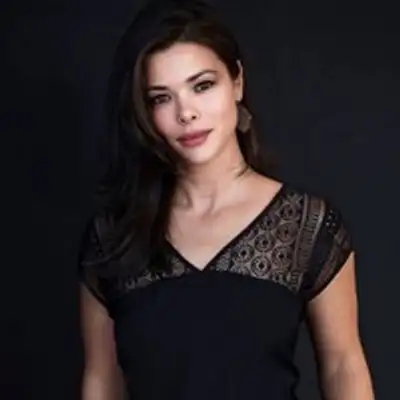
While my daily life sometimes feels like a three ring circus, I can't wait to go see a real one. Okay, it's time for me to stop clowning around and introduce today's [00:02:00] guest Who better to talk circus than with the Ring Master herself? Welcome. Alicia Calderwood of Carolina Circus Festival. Hi, Alicia. Hi.
Sorry for that long-winded intro. I, I do. When I was thinking about interviewing you, I really did go right back to my five, six, 7-year-old self and going to the circus back in the day when it was the big circuses coming to town. Those of us of a certain age can remember when they would bring all the animals in via the train right next to Dorton Arena.
Mm-hmm. And it was like a big to-do. They'd put it in the newspaper and say, this is when the animals arrive, and you would go and get to watch it. So much fun. So I'm very glad to hear that you bring the circus to Carrie.
Alicia Calderwood: Yeah. We're excited to bring it to Carrie. Although we won't have the animals, we'll have all the Yes.
Other exciting elements of circus. Yeah.
Melissa: Yeah. Well, take us back to the beginning. How did you discover your aerialist talents?
Alicia Calderwood: So I actually started as a New [00:03:00] Year's resolution to try something new as an adult beginner. Oh, you were an adult? I was an adult and I started and I just saw that there were some classes in the area and I was like, I need to try that.
So I actually did this for my mental health. It was a goal for my mental health, just to improve it along with my physical health. And I fell in love with it. And from there I just became obsessed and I was like, how do I get more involved in this? How do I. Learn how to teach it. How do I learn how to perform, how do I learn all the background elements of this beautiful sport and this beautiful type of movement?
And I went all in. So I started at 20 years old. So
Melissa: you started quote at an older age. Mm-hmm. I mean, 20 is certainly not old, but to start as an adult and then perfect it and be able to then go and teach people. 'cause you own URA Vita Studio in C Yes. And [00:04:00] at Pura Vida. You teach aerial yoga, which I'm gonna need a description of that please.
Silks and other circus arts with classes for kids and adults. So first of all, what is aerial yoga and how did you decide that you were gonna take your newfound? Talents and start teaching.
Alicia Calderwood: Yeah, so I also did my yoga certification and I loved seeing how the world's connected, the aerial component and the yoga component.
So aerial yoga is using the assistance of a hammock to help stretch you a little bit deeper, to balance you and get that same zen type feeling you would get in a yoga class. Whereas the aerial acrobatics like aerial silks and trapeze and lira and. Sling, those are a little bit more playful classes.
You're gonna go upside down a little bit more. You're going to pull your body weight up in different shapes that you didn't even know you were capable of doing. And I think that's why I really gravitated to aerial acrobatics in general, just because I did not come at this. Being able to touch my toes, do splits, be able to [00:05:00] do a pull up, and now I can do all of that because I had the assistance of.
The apparatuses to help me in building my strength and showing me, wow, I can do this. This is really incredible. I can do this with my body. Not thinking that I would, versus just going to the gym and lifting some weights. It's just a little bit more playful. So yeah,
Melissa: more fun.
Alicia Calderwood: Yes. So I really enjoyed just the elements of what that did for me physically and mentally, how good it made me feel after I would walk away
Melissa: from a session, so I have no idea what this is called, and I did not research it beforehand, but I've seen these classes where.
The people are hooked up to harnesses and they're kind of like. Running ahead and flying back. And is that something that you do? So I performed a few
Alicia Calderwood: years ago with a harness doing that. There's like bungee classes, which is like a popular thing right now. That's IMing. Yes, yes. So that's a little bit more cardio fitness based.
Exactly. But I have done like a harness. Piece that I got inspired by in a Vegas show and I was like, I have to do this. So I actually, a couple years ago before I had my baby, [00:06:00] I actually did a flying harness piece, which was incredible. And I was running across the stage and flipping up around, and Carey Magazine actually sponsored that, which was really incredible.
And so there's just so many different avenues of circus arts, which is why I really love it, because if you don't resonate with a specific apparatus, I'm sure you could get creative in being able to connect. Something to make it your style, and that's what I really like about
Melissa: it. Well, let me know if you do the bungee type of fitness classes because I, my girlfriends and I will come, we will mostly laugh.
That's the purpose of it all. We will mostly make fun of each other, but it's, it's gonna be a good time. Really? Yes. It really looks like so much fun. Little dangerous, but a lot of fun. So I can imagine that it's one thing for you to learn how to do the tricks yourself, but then to learn how to teach it because there's got to be an art to the teaching factor as well.
Yes.
Alicia Calderwood: And a [00:07:00] safety component. That was the biggest thing that gravitated me towards more of the safety component. I always seemed to be in some sort of leadership role in my youth of really enjoying helping other people. And so I was taking some classes in the area where there were some safety components of.
Me falling because of the lack of a cue from a teacher in a drop where I'm supposed to trust who I'm learning from or the rigging falling out of the ceiling, or I'm supposed to trust what I'm hanging from. So for me, I started like taking these negative experiences and being like, okay, well this is my life.
I really want to do this, but I don't want to compromise my safety because of this. There has to be a better way. So I actually flew out to California with one of like the most renowned teachers. Her name is Jill Franklin through Aerial physique and she's absolutely incredible. And so I went and did some teacher trainings for Aerial, specifically with her.
I did her whole program all the way up to like level four teaching advanced and learn so much from her. So it was like, okay, she creates community, she creates structure, safety. [00:08:00] Taught me how to teach, taught me how to teach the things safely, how to lead a class safely, inspect injuries, things like that if something were to arise in your session.
And so then I brought that back to North Carolina and I was like, okay, we need to navigate this differently. So I like kind of popped around for teaching for a long time at different studios until I was ready to open up my own studio.
Melissa: And how long has the studio been open?
Alicia Calderwood: Six years. Oh, congratulations.
Yeah. Thank you. Thank you. So 2019 we opened. Mm-hmm. And it has been a wild ride since we moved into our new location, our probably our forever home that is bigger and has higher ceilings, which is like the Aerialist dream. And it has been amazing journey watching it. I just started off with, I don't know, I'm just gonna try it and see and hope and.
See how the community takes it and we just exploded, which was really amazing. And I think the difference with that was my safety component of everything. Mm-hmm. Having structure in all the classes, you know, there's a lot of studios out there that do just, I'm just gonna teach this [00:09:00] off what I see off Instagram, or something that I'm like.
No, you really need to plan accordingly and make sure that we're making this accessible to all bodies, to all beings, to all people. And we don't just teach something that we learned in five seconds. You know, I really like workshop, all of the skills. And so there's different layers at my studio where I have.
If you just wanna teach or if you just wanna be a student and just do this for fun, or if you wanna take this more into a performance route with moving into more of our professional troop setting, or if you just wanna do this as like a student recital, like we have different avenues at our studio. But if you wanna
Melissa: be a, a middle-aged woman and laugh with your friends.
Alicia Calderwood: Exactly. We have so many layers that you could come to this and just play or do it because you want to get more involved with it and make it more a part of your life. Day-to-day experience.
Melissa: So how did this translate into Carolina Circus Festival?
Alicia Calderwood: Yeah, so I was performing, prior to my studio opening, there was a [00:10:00] similar festival called Spark Con in downtown Raleigh, and it was like a whole weekend event.
So I used to perform in it regularly and then downtown Rally didn't wanna do it anymore, and so I was then navigating opening my studio and I was like. This is such a bummer. I really kind of looked forward to doing this. What do I do next? And so one of my teachers, Carly Huberman, who is also our other co-founder and director, she and I didn't wanna see this disappear.
So we put our heads together and we were like, how do we. Shift this transition of a festival, but more to our vision of what we would want to see differently, done better. And so I presented bringing it to Carrie because there was nothing like that in C for a festival.
Melissa: It is certainly U, a unique one.
Alicia Calderwood: Yeah. And I just. I, I just knew a lot of great people that support the arts in Cary. So we presented it to the downtown C Park and to the town of C and they loved it and they sponsored it and [00:11:00] they were all about it. So we kind of grew in our vision from there of being able to take this festival and instead of being like a whole weekend experience 'cause that was.
A little exhausting to do as a performer, I'm sure performing multiple shows, multiple hours, and I feel like we get to just celebrate this one day full out, and that has been such a beautiful transition and the way that we navigated it and really focused more on the aerial component, whereas Aerial at the other festival was just little blips of here and there, and other artists were like the main focus for that.
So. We made this more so circus focused. Yeah. Where it's not only the aerial component, but it's also the ground acrobatics component. It's the LED and fire performers. It's the rovers out there. It's the, all the elements of circus that are just more Minus the
Melissa: elephants. Minus the elephants. Yes, unfortunately.
And the lions walking around. Yes, yes, yes. Bummer. No lions. So what. If you had to say one thing that is your [00:12:00] favorite part of Carolina Circus Festival, what would you say?
Alicia Calderwood: I. Community. Like last year we had the festival for the first time at the downtown Carey Park. And just seeing every time I went to go make an announcement of another performer, it growing in the park, I was like, wow, that's a lot of people.
Yeah. And then I was like, okay, like that's a lot. And then I. Another hour later, I'm like, oh my goodness, that's so many more people. Mm-hmm. Word was getting
Melissa: out, I
Alicia Calderwood: guess. Yeah. It was wild just to see people with their chairs, with their family smiling, cheering, clapping, like it was. That's what I've always looked for, and that's why I started my studio.
That's why I started. Festival to bring together people. That fills my heart with joy. So just seeing that out in the audience, I mean, we reached up to over 10,000 people at the park last year. Wow. Which was one of the biggest festivals they said that they had at the park. Mm-hmm. For their first year. So it like, it exceeded our expectations we're like, I don't know, even if a few hundred people came, that would make us happy and proud, but it exceeded our [00:13:00] expectations and so we're just so grateful for the opportunity and to be able to come back again this year.
Melissa: I read that there will be hands-on workshops led by experienced performers to learn circus skills. So tell us what aspiring artists can expect to learn on site at the festival.
Alicia Calderwood: Yeah, so we'll do a workshop that has learning how to do partner acrobatics.
So you could be an absolute beginner, or if you have had. People that have done it in the past. We kind of cater to [00:14:00] all levels, but we teach people how to connect with each other to lift each other up in different poses on the ground. Kind of like when you were a kid and you're flying on your person's feet or hands or teaching that to any age, and it's such a fun workshop to teach.
We do like little arts workshops here and there for kids, but our partner acro workshop is like probably our biggest one. Hula hooping. We do hula hooping as well. So teaching you how to hoop because eventually if you wanted to do that with like LED or fire, we teach you the mechanics first. Wow. Without all the extra dazzle.
But we do teach you how to learn how to properly hula hoop and do different tricks with it,
Melissa: but hula hooping with fire that
Alicia Calderwood: eventually can get there. I don't see that
Melissa: on my bucket list in the future.
Alicia Calderwood: Yeah, it's it's a, it's a thing. Yeah. But you can just come watch it at the show.
Melissa: Oh, definitely. Yeah. Yeah.
And I, I would love to learn how to hula hoop. I've never been good at hula hoop. It falls right away. Yeah. Carolina Circus Festival is advocating and raising [00:15:00] awareness for increased mental health and suicide prevention. How did you come up with the idea to bring the circus to carry while also doing good at the same time?
Alicia Calderwood: So for me, like I shared earlier, my mental health was something that was really important in finding movement and correlating that and seeing how physical and mental health. Are connected. And so once I started seeing those benefits for myself, I was like, okay, I have to share this with with other people.
And I did that through teaching and other avenues, but I struggled with my mental health for a really long time. And so I wanted to use the platform that we have with Carolina Circus Festival. There are a lot of arts festivals out there and there's a lot, a lot of other festivals that do great things for other causes, but I feel like mental health and suicide prevention are just.
They're a little bit more taboo topics, and it was just a great opportunity to talk about it. I've unfortunately been impacted and by losing students to suicide. We had a studio owner in the area that lost her son to suicide a couple years ago, who we honor [00:16:00] him with our giving fund, so we donate proceeds back to the American Association of Suicide Prevention, the North Carolina chapter in his honor.
So there are just like a lot of avenues where it has impacted me or our circus community, and I think it's an opportunity to just talk about it, to get resources to know you're not alone. And I think that that's just a really important that we need to share that with the community.
Melissa: I also love that you are tying in the fact that physical health and staying active.
Correlates with mental health as well. So the the two do go hand in hand.
Alicia Calderwood: They do. I think there's a lot of other elements in your life that need to be balanced to help you in regulating, but very much like learning how to breathe properly. Learning how, just to find your style of movement, which I think is really great for circus in general.
If you feel like me, you're not the sportiest person and going out there to do anything with a ball. I am not, I'm not the most athletic in that way, so [00:17:00] finding another avenue, especially as an adult. Dance classes if that doesn't really resonate with you or these other avenues of movement. Circus is such a beautiful blend of kind of everything.
And so for those people out there that are not sure, but they want to move, but they're, you know, they're in different seasons of life. Circus is really beautiful. 'cause there's so many different avenues to it.
Melissa: Yeah. Lots of different tricks that you can learn. Mm-hmm. And you don't have to end up being a performer, but just doing it for yourself would be Exactly.
Would be a great idea. I kind of touched on this a little bit. About how circuses have changed so much over the years. Mm-hmm. The animals have been taken out of the picture, which I completely understand, even though it is a bummer. What else do you see that has been the biggest change in circuses? At least since you've come into the circus picture.
Alicia Calderwood: Yeah. I think safety is one of the biggest things. I think a lot of it was kind of just like popping up a tent and doing this here and there, but then, and there might be a
Melissa: net. [00:18:00]
Alicia Calderwood: Yeah. Yeah. But there's, there's so many elements where, I mean, we are doing a very high risk thing when you start getting to the performance level things.
I would say so. And a lot of performers. Like doing it without a mat underneath them or support underneath them. You know, there's a lot more injuries and then that's happening in a live show. Mm-hmm. And so I feel like there. There have been a lot of things like that that have led more safety regulations into performing, which has been really great to see that shift.
There are still a lot of circuses out there, little local circuses that are okay with doing some more sketchy things. But for our festival, we even like include crash mats or like a non-negotiable. The type of clothing you wear for fire is really important because you can catch on fire if you're not wearing the right thing or if your hair's not pulled back.
There's like a lot of elements on the behind the scenes that we just wanna keep performers and people safe so that the experience for the people coming to the show also is an enjoyable experience.
Melissa: But that also means, you know, we, [00:19:00] we go to festivals and we just think, oh, this is really fun. What a great day, A fun, fun thing to do with our time.
But you're not looking at the behind the scenes like that and all the liability and all the mm-hmm. The safety measures that go in.
Alicia Calderwood: Yeah.
Melissa: Not just for the performers and your case, but also for the, the audience.
Alicia Calderwood: Absolutely. That's one of our biggest things here that we work towards, and even through the process of.
The over the year that we work on providing this festival is we do an audition process for all the performers. We're inspecting their skills that they're presenting, making sure that they're qualified to perform. If there's something that we feel is not safe, we're taking that outta the equation. If we feel we don't do fire breathing we don't do like.
Eating, swords on fire, anything like that, because that's another risk for safety. Mm-hmm. And that also if there's anything external going around. So we have barriers in the front of the stage to also help keep that separation, to protect the people that are coming to the shows is just another [00:20:00] extra liability thing, just to make sure nothing flies out into the audience or somebody gets hit by a foot or something along those lines.
Safety is always the number one for us.
Melissa: I do love that there seems to be a lot more instead of the big circus coming to town, a lot more smaller groups that come through and seem to pop up. I even see the tents. Mm-hmm. Occasionally I've not been to one. Yeah. But I do see the tents and I kind of, it does make you wonder what's going on inside the tent and want to go.
Yeah. Mm-hmm. But I do love that it seems that circuses are at least coming back.
Alicia Calderwood: It's been really cool to watch that because I feel like it fell off for a little bit. Or people just see it in like one aspect of like, it's just all clowns in this way, but there's so many other layers to circus that with true
Melissa: talent.
Mm-hmm. Yeah.
Alicia Calderwood: And what's really great about Carolina Circus festivals, we have performers from kids to adults in their sixties performing, showing that [00:21:00] at any age you could do this. Now, you know, I think there's a. Difference in like Cirque de Soleil performers that you're gonna get, which is, you know, we've got a professional show, we have really talented people, but if you're expecting a Cirque de Soleil show, we're not gonna give you that type of show.
But we are showing you that it is accessible and that it is teamwork. We have partner pieces where two people are on an apparatus working together and lifting each other. We have solo apparatuses of different ranges and ages, and so I think that's what's really cool, whereas sometimes if you go to a.
A professional circus show, you're only seeing like that jacked 20-year-old guy. Mm-hmm. That is, you know, the muscle man. Yeah. And I think there's just so much more to that that we try to bring some reality to with our festival.
Melissa: Are most of the performers. From the triangle area or are they coming from all over?
All
Alicia Calderwood: over North Carolina, which is really amazing. So we're having I think four different studios from around North Carolina come aerial [00:22:00] studios. We have individual acts, so we'll have a professional show where they're kind of just coming from all over North Carolina. And then we'll have an All Star show, which is another layer of, of.
Not quite professional, but not quite affiliated with a studio show. They're kind of an in-between performer and yeah, so we have people coming from everywhere. Last year we had some studios that came from OUTTA state to perform with us from Florida and all kinds of different places, so we have like built some traction, which has been really cool.
We envisioned it starting with just North Carolina, but we have some individuals that come from outside of North Carolina too, and we're just open to anyone that wants to join.
Melissa: Where do you see the circus in say, five years?
Alicia Calderwood: I just see it continuing to grow and expand and just, I. Bringing more awareness to what circus is and to just keep creating more community events like this.
It's just been so [00:23:00] special over the course of time. We've been hit a couple times. We started in 2020, and then COVID hit. Mm, and so we had to transition our festival for two years virtual, which was not the same. So we featured performers online. But then we tried to do it in person. Then we got rained out and so we felt like this journey of trying to get the festival even off the ground was really challenging.
Yeah. For the first few years. And so last year we finally at the park, so it went from like online getting rained out, feeling really defeated to last year just being the complete opposite end of the spectrum of growth. And like as many times as we were like, maybe we should give up, maybe we should.
Mm-hmm. Maybe this isn't. Mm-hmm. Going to happen and then last year just blew us out of the water. We were like, this is all of the hard work we've worked for.
Melissa: Yes. Especially when you keep seeing the crowds come in. Yeah. I mean, that's got to be,
Alicia Calderwood: it was the most heartwarming feeling. Yeah. I was just baffled at the amount of people that like brought their chairs to actively come out there and not just pass by through the [00:24:00] park, sit there and watch our shows.
It was really amazing.
Melissa: I can't wait to be one of those people with the chairs this year. Can't wait to have you. Maybe I'll learn how to hula hoop, but not with fire. It is time for our, what's up, Roundup, where we fly through a lightning round series of questions before we go. If you had to perform another act at a circus, what would it be?
Alicia Calderwood: Another act at the circus.
Melissa: So nothing high flying.
Alicia Calderwood: Nothing high
Melissa: flying.
Alicia Calderwood: Maybe I would get more involved with doing more ground stuff. Mm-hmm. I tend to be in the air all the time. I like dabbled here and there in all of the fire and LED stuff, but maybe I would get more involved with that.
Melissa: Okay. You have high flying abilities, but if you could have any superpower, what would it be?
Alicia Calderwood: Superpower. Superpower of? What are my options? What kind of superpowers are we thinking? Anything?
Melissa: Think of the Marvel universe. I know I will. I will say [00:25:00] what mine would be. Okay. Mine would be that I could transport myself anywhere in the world anytime I want. So I don't have to fly. I don't have to go to the airport.
I don't have to drive, and anybody I'm holding hands with can come along with me.
Alicia Calderwood: Ooh, I like that. I would steal that, but I could duplicate myself. That would be really nice. Oh, yeah. If I could have multiple versions of myself doing multiple tasks,
Melissa: especially since you're, you're a business owner, you're a mom.
Yes. Yeah. We do need, we need to clone ourselves sometimes. Yeah. Yeah. Mm-hmm. There's
Alicia Calderwood: not enough hours in the day, so maybe that would be my superpower. That's a good one. I
Melissa: might have to borrow yours too.
Alicia Calderwood: We could, we could take turns. Yeah.
Melissa: And finally, you love high flying acrobats, but is there something you're actually scared of?
Alicia Calderwood: Am I scared? I'm a little scared of the fire stuff. Okay. Yeah. I think even though you're willing to dabble in it, I'll dabble in it, but it gives me a little bit more of like a heart flutter going into it. And I also, I've been performing for a really long time, but still performing makes me nervous.
Okay. Yeah. You get
Melissa: the, you get the butterflies Yeah. Before you go out. Yeah. But I, and
Alicia Calderwood: I [00:26:00] get the, oh my gosh, do I even know what aerial acrobatics is? Like, what am doing? What am I doing? Doing? Is this. Crazy. Like still the amount of time that I've done this over 13 years at this point and I'm still like should I, am I getting too old?
I'm a mom now. Should I rethink this differently? Yeah. And I, so I get still a little nervous on both of those elements of things, but I think that's just 'cause I care too, and I want it to be perfect.
Melissa: And I would think that if you don't have some nerves with the type of things that you're doing, especially fire and, and high flying mm-hmm.
Then maybe. Maybe that's not a good idea.
Alicia Calderwood: Yeah. Fearless in this is not always the best. Yeah,
Melissa: definitely. Yeah. Okay, so tell our listeners where they can find out more about Carolina Circus Festival and Pura Vida Studio.
Alicia Calderwood: Yeah, so Carolina Circus Festival, our website's, Carolina Circus festival.com or we've got an Instagram, Carolina Circus Festival and Pura Vida Studio is a huge sponsor of this and we have.
Yoga and aerial acrobatics classes for [00:27:00] everyone. And you can find us in the Stone Creek Shopping Center in C, and you can find us online at pura vita studio nc.com or on Instagram at Pura Vita Studio nc.
Melissa: Perfect. Thank you so much for being here today. I cannot wait to come to the festival. Thank
Alicia Calderwood: you for having me.
September 13 at the downtown Carey Park, three to 9:30 PM Come see us.
Melissa: We will. Thank you. Thank
Alicia Calderwood: you. [00:28:00]