Subscribe
Share
Share
Embed
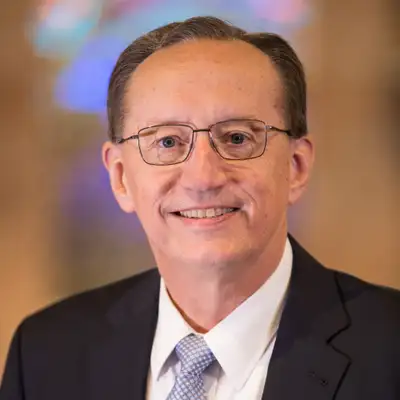
Ready to hone your leadership skills and unlock your full potential? Tune in to the Lead On Podcast, where Jeff Iorg dives deep into Biblical leadership.
Hosted by SBC Executive Committee President Jeff Iorg, this dynamic podcast provides insight for seasoned executives, aspiring leaders, or those in ministry who are simply passionate about personal growth. The Lead On Podcast offers actionable, practical tips to help you navigate the complexities of ministry leadership in today's ever-changing world.
From effective communication and team building to strategic decision-making and fostering innovation, each episode is packed with valuable lessons and inspiring stories to empower you on your leadership journey.
Put these principles into practice and Lead On!
Welcome to the Lead On Podcast. This is Jeff Iorg, the president of the executive committee of the Southern Baptist Convention, continuing our conversation about practical issues related to ministry leadership. Well, as you may be able to tell, my voice is deep today because I'm battling some severe congestion, which may make the podcast quite interesting. I've got a wonderful producer who will try to cut out the coughs and other weird noises. I've moved, as most of you know, from Southern California to Tennessee and I'm now inhaling all of the new pollens and other irritants that are in this part of the world that I was blissfully unaware of while I lived in the desert in Southern California.
Jeff Iorg:But I'm grateful to be here. And even though, these new voice challenges are sometimes interesting, I hope that, they won't be too much of a distraction for you today on the podcast. So today, I wanna talk about ministry on controversial subjects. I wanna talk about how do you respond when you're facing moral or ethical issues, dilemmas, circumstances in your church or your community, and it's your responsibility to step up and say something significant about the situation or beyond that to lead in ministry in the context of the difficulty. Ministry in controversial situations are on controversial subjects.
Jeff Iorg:I think about a number of examples of this that I've had to deal with over my lifetime in ministry, but one of them that comes to mind was a very stark opportunity that I had to face a hard reality when San Francisco, Gavin Newsom at the time, approved the first same sex marriages that were legal in the state
Jeff Iorg:of California. Now that happened while I was the president of Golden Gate Seminary, and it happened right in our community. So,
Jeff Iorg:of course, I felt some responsibility to say something about what was taking place. I did that in a message, and we followed that message up with a conference at our school entitled Ministry in the New Marriage Culture, and that ultimately resulted in a book on the same topic. Now that book was one of the first attempts to describe what it was going to be like to minister in the new marriage culture. And frankly, it's dated now, and there's been a lot written since. It's a lot better.
Jeff Iorg:But we were in triage mode at that point, just simply trying to get something out there that had something important to say about getting started with dealing with what we called the new marriage culture. So in the context of addressing controversial subjects or difficult subjects, I wanna approach it from two perspectives today on the podcast. First, I wanna show you a passage of scripture that really lays out what I think is the, biblical framework, if you will, for responding on these issues. And then beyond that, I wanna speak to you more specifically and practically about some things I've learned about speaking on these kinds of subjects or issues. So let's first look at a biblical framework, and you'll find that in first Peter chapter four.
Jeff Iorg:First Peter four describes people who are living in immoral and are unethical ways. And after summarizing the kind of behaviors they're engaged in and the way that they slander and oppose what we stand for as Christians, Peter then writes in verse five. They will give an account to the one who stands ready to judge the living and the dead. For this reason, the gospel was also preached to those who are now dead. In this context, not meaning people who had physically died, but those who are dead in their sin, dead in their spiritual life, dead toward a relationship with God as demonstrated by their behaviors already enumerated in the previous verses.
Jeff Iorg:Then verse seven. The end of all things is near. Therefore, be alert and sober minded for prayer. Above all, maintain constant love for one another since love covers a multitude of sins. This passage begins with what is a dire warning.
Jeff Iorg:It's a reality that is motivating. Peter said, unbelievers who live immoral and unethical lives will give an account to the one who stands ready to judge the living and the dead. That's verse five. This is a sobering and difficult verse. Unbelievers who reject biblical morality and biblical ethics are at risk of judgment.
Jeff Iorg:Don't read this passage as celebratory or vengeful. In its context, it's a reminder to believers that unbelievers are in a perilous situation. They are facing judgment, both the consequences of their rebellious living in this life and eternal separation from God in the next.
Jeff Iorg:Friends, as believers, we should cringe at the thought of people experiencing judgment. We want people no matter how immoral, how unethical, no matter how offensive they are to us and to what we stand for, we want them delivered, not doomed. Coming judgment motivates
Jeff Iorg:us to do all we can to help as many people as possible avoid judgment. You know, you'd have to be
Jeff Iorg:a pretty callous, embittered person to read these verses and think, finally, they get what they deserve. Man, let's let the opposite be true of us. Coming judgment
Jeff Iorg:motivates us to tell people about the deliverance possible through Jesus. And then after that sobering reminder, Peter outlines three action steps which form the framework
Jeff Iorg:for countering opposition to our moral and ethical standards. The first step is to preach the gospel. Now that might surprise you.
Jeff Iorg:You might be expecting a call to civil disobedience or prophetic confrontation or something like that, but not so. Your first response to people who oppose Christian moral standards is sharing the gospel. Peter wrote it in verse six, for this reason, the gospel was preached to those who are now dead. The gospel was preached. As I've already said, this verse doesn't mean people who've died.
Jeff Iorg:It means people who are dead in their sin. It means people who are dead in relationship with God and who need
Jeff Iorg:to find life in Jesus Christ. Listen.
Jeff Iorg:Your most significant message is not reform your sexuality, deal with your gender, get your marriage right, handle your money appropriately, care for the poor, and and other ways of solving injustice. That's not your best message. Your most significant message to people in a culture marked by moral decay and immoral living is the gospel.
Jeff Iorg:We must not become so preoccupied with opposing certain behaviors no matter what they are that we forget to share the gospel. When we uphold our moral convictions expecting unbelievers to model Christian behavior, we're we're practicing a misplaced hope. Unbelievers, they're gonna
Jeff Iorg:act like unbelievers. Lost people are gonna live out their lostness. Look, your first and best response to immoral and unethical living in individuals, in your community, or in our culture is to share the gospel. Preach, teach, witness, and live the gospel. The gospel is the core message we have in every kind of situation where you're dealing with any kind of controversial subject or issue, start with the gospel.
Jeff Iorg:And then second, the next verse lays out the next piece of strategy. It says that Christians in verse seven are to be
Jeff Iorg:serious and disciplined for prayer. You know, the worse the situation becomes in our communities and in
Jeff Iorg:our culture, the more sober the times that we live in, the more we need serious and disciplined prayer to sustain us. You know, trying to get people together for prayer can be very challenging. Trying to find times to set aside in our personal schedules for prayer can be equally
Jeff Iorg:difficult. I understand how hard it is to prioritize prayer, but understand this.
Jeff Iorg:When you are faced with people who are promoting immorality, unethical behavior, and other kinds of actions that contradict what we stand for as Christians, Your first responsibility to them is to share the gospel, and your second responsibility is to pray. Pray for them, pray for yourself, pray for God to intervene, and do something dramatic to change the situation in the community where you live. And then third, the third response in this text is in verse eight where it says, above all, maintain an intense love for each other since love covers a multitude of sins. And then in the next few verses, Peter goes on to describe what love looks like by calling us to hospitality and using our gifts to serve one another and other practical means or expressions of love.
Jeff Iorg:Now think about what these verses say.
Jeff Iorg:Practice an intense love for each other. Now at first blush, might look at this and say, well, this means that Christians should love each other even more when they're facing cultural difficulty. 100%, yes. But there's also a case that can be made here for loving everyone in this situation, for loving even those who are resisting what we stand for and who are attacking us. You know, Jesus said it in Matthew five forty three and forty four.
Jeff Iorg:You have heard it said, love your neighbor and hate your enemy, but I tell you love your enemies. What does it what does loving people who oppose our values look like? Well, some say love means affirming people for who they are,
Jeff Iorg:celebrating their choices, accepting moral standards, all of them as equal. But friends, that is not love. Love tells the truth. Love advocates healthy choices. Love calls people to a higher quality of life.
Jeff Iorg:Love protects people from things that will destroy them and values them as the creation as being created in the image of God. So because of that, Christians don't attack people who oppose our morals and our values. We don't attack people who come against us with everything that we oppose. No. What's our tack, our our position, our posture toward them?
Jeff Iorg:Share the gospel, pray for them, and love them.
Jeff Iorg:Now that's a biblical framework, if you will, for what it means to establish a ministry on a controversial subject or in a controversial situation, particularly over a moral or an ethical challenge that you may
Jeff Iorg:be facing in your church or your community. But now going beyond that framework, when you're called upon to speak on these issues, to lead a bible study, to preach
Jeff Iorg:a sermon, to deliver a message at a convention or a conference or a lecture of some kind, what can you remember to help you to do a better job in those situations? Well, remember, first of all, that our tone, our attitude, and even our content is gonna be informed by gospel prayer love as Peter spelled
Jeff Iorg:it out in first Peter chapter four. But then beyond that, these practical steps. First, prepare for messy situations
Jeff Iorg:and acknowledge that what you're facing may not have an easy answer.
Jeff Iorg:Now listen carefully. It may have a clear answer, but that clear answer may not be an easy answer.
Jeff Iorg:So for example, the clear teaching of scripture is that a man and a woman are to be married for life. And then in that context, children are to be reared so that families are strong and are able to form a bedrock of a community. Now you say, well, we now have had years of same sex marriages and other kinds of arrangements in our country. And when I when I declare what the Bible says about marriage, that's a very simple message. I fully agree.
Jeff Iorg:But it will not be an easy answer
Jeff Iorg:for people to start asking questions about what does this mean for the dissolution of marriages that don't honor God's model, for the children that are involved, for the people and families that are impacted? Listen, these are not easy answers. So let me say it again. When you're declaring something, it may be the simple truth of God's word and that is certainly your responsibility to declare. But in preparing yourself for dealing with the situation and all the aspects of it, you have to prepare for the messiness of it.
Jeff Iorg:And while it may have a simple instruction or a simple position, it may not be an easy answer to every question that emerges out of the topic. And this means you're gonna have to be patient. Be patient with other believers who share your core convictions, but come to some different solutions or different answers on some of the questions that are raised. And you're definitely gonna have to be patient with people who are not followers of Jesus, who are listening to you teach or preach or speak on this issue and realizing all that goes into their minds and how patient you're gonna have to be with them as they process through what they're hearing. You know, it is, for example, easy to stand up and preach a message and make a case for life from the bible.
Jeff Iorg:But it's so much more complicated when the service is over and you start dealing with people who come up to you and wanna talk about the abortions that they've had in their lives, the miscarriages they've had in their lives, the child abuse that they've lived through or that they've witnessed in their lives, and how all those things play into what we believe about life and about family and about parenting. Look, again, I'm not encouraging you to back down. I'm saying there are simple biblical direct things that need to be said on many moral and ethical issues. But simple declaration doesn't always include easy answers for all the dilemmas that emerge out of the situations. So be patient with other believers who share your convictions but struggle to make application and perhaps differently than you, and particularly be patient with people who are hearing you on these issues that are not yet Christians who are really struggling with what to
Jeff Iorg:do with what they're hearing. The second thing I would say is
Jeff Iorg:be sure and base your position on whatever it is you're speaking on directly on scripture and rooted in your confessional document or your confessional statement. Now for Baptist, that's the Bible plus something called the Baptist faith and message, which is a statement of what we believe the Bible teaches on key issues. So as you're speaking on controversial things, just make sure that what you're saying is really truly grounded in scripture. That it's not grounded in some, worldview that might have some ideas or some documents that might have some thoughts that might have some Christian overtones. No.
Jeff Iorg:Ground what you want to say in the word of God and stay as closely to the text as you can and in the parameters within which you're speaking from the confessional statement that you use either in your church or in
Jeff Iorg:your ministry organization. Third, speak carefully. When you preach or teach or speak publicly on these issues. Now I've been preaching for a long time. I've preached several thousands of messages.
Jeff Iorg:And most of the time,
Jeff Iorg:I would be considered an extemporaneous speaker. Meaning that I do a lot of preparation beforehand and I will have a a general outline usually on one page, never more than two. And from that one or two pages, I could preach for thirty to forty minutes. However, when it comes to a particularly controversial subject, I have stopped doing that kind of preaching and instead moved to manuscript formatting on these issues. I wanna speak carefully.
Jeff Iorg:I wanna speak with precision. I wanna speak with power and insight.
Jeff Iorg:I want to avoid misstatements, and all of that is helped by speaking from a manuscript. Now a couple
Jeff Iorg:of thoughts about a manuscript that will help some of you if you've never used one. First of all, a manuscript is not a term paper or an essay that you're submitting for a grade. So write it like you're talking to people. It's a conversational document. When you do this, write it forcefully and directly, saying what you really mean to say.
Jeff Iorg:But also, when you write a manuscript, let a few other people read it before you
Jeff Iorg:get up and speak it. Now, why would that be helpful? Well, first
Jeff Iorg:of all, you'll find out that what you thought was perfectly clear, maybe some other people don't quite see the same way. And if they mark it up, you can rewrite it and make it a little more clear the next time. But another thing that writing out a manuscript helps you
Jeff Iorg:to do is to say hard things without chickening out, being a coward at the last minute. You know, as I've spoken on a few issues and I've done so from a manuscript, I've actually gotten down into the meat of the message and started coming to some of the hard things I needed to say, and there's a temptation. Well, let's just skip over that. But if you've carefully prepared, really thought through what
Jeff Iorg:you wanna say, put it down in plain language. When you get to it, go ahead and say it. A manuscript not only keeps you from saying what you shouldn't, it helps you to say what you should. So don't be afraid to write out what you wanna say on a controversial or difficult subject and then to stay with it. And don't be shy about asking other people to read it and comment on it and think about it with you so that you can root out what's not clear, put in what is, correct what needs to be changed, and really come to something that communicates fully what you're trying to say.
Jeff Iorg:Now in preparing to speak on a subject a controversial subject like this, it's also important that you speak accurately and that if you have any data, research, quotes, anything like that, that you make very sure that they're very accurate. This is not the time to sort of kinda quote something or to put out some numbers that you think you remember from somewhere or about something. No. No. The more controversial the subject, the more precise you have to be about what you're communicating.
Jeff Iorg:So speak accurately with good research and notations. Now, when you're speaking, you don't always give the footnote, but you can mention where the source was. You can say, in a book by so and so, he said this, or in the book entitled this, she said this. So you don't have to go into all the biographical information, but you can give attribution that underscores how seriously you've taken the preparation and how thoroughly you wanna communicate what you're what you're trying to say. So in summary, we wanna prepare for messy situations that may have simple messages but not easy answers that come out of those messages.
Jeff Iorg:Base your positions on your doctrinal statement, but even more importantly, rooted directly in the scriptures. Speak carefully when you teach or preach. Use a manuscript. It'll help you to say what you intend to say and keep you from saying what you don't intend to say. And as you're developing that material, speak accurately with careful research and notations.
Jeff Iorg:Now going back to the framework that we established at the beginning. When you're preparing to speak on one of these subjects, check your attitude.
Jeff Iorg:Are you positive? Are you sensitive? Are you realistic? Are you convictional?
Jeff Iorg:Those are the words you wanna have marking your attitude as you stand up to speak on a controversial subject. Positive, sensitive, realistic, convictional.
Jeff Iorg:What you don't wanna be is negative, angry, idealistic, and wishy washy. You want to be positive, sensitive, realistic, convictional. You also wanna avoid, in your attitude, sarcasm, put downs, hostile humor, or other comments that might be offensive to people on the
Jeff Iorg:other side of the equation or of the situation. You know, I've been saddened sometimes when I hear people speak about homosexual community and do so in a pejorative or sarcastic or humorous way. I'm sad when I hear people say things about different racial groups or ethnic groups and use language that's offensive in those contexts.
Jeff Iorg:When you're speaking, check your attitude. Make
Jeff Iorg:sure that your attitude is positive, sensitive, realistic, convictional, and that it really reflects what you're trying to communicate about the gospel and about prayer and about love that we talked about at the beginning.
Jeff Iorg:Now a couple other thoughts. As you're speaking on one of these issues, expect pushback.
Jeff Iorg:When you step out of the lectern or those or the, pulpit or the place where you've
Jeff Iorg:been speaking, expect some pushback. That pushback may come immediately as someone comes up to confront you about what you've said. It it may come along a
Jeff Iorg:little later through social media as people post about what you've said or comment about what you've had to say. It may come, through other people who deliver back to you what's being said about you in different context. But the main thing I wanna underscore for you is expect some pushback. When you're speaking on a controversial subject, a
Jeff Iorg:moral or an ethical difficulty, people are going to be agitated by this. Don't be surprised.
Jeff Iorg:Don't be surprised if you get some pushback in any of these ways I've described because you're talking about something that really is emotionally explosive in the lives of many.
Jeff Iorg:It's supercharged, you will. And I and you've gotta expect that you're gonna get some negative feedback along the way. And then when that negative feedback comes, don't overreact. Don't be stampeded forward by social media demands or media pressure or even group demands. Stand your ground
Jeff Iorg:and do so sometimes quietly.
Jeff Iorg:And unfortunately, like a target has been painted on you.
Jeff Iorg:But don't be overwhelmed by the pushback to the point that you make a reaction or a response that's really counterproductive to what you're trying to accomplish. So today, we're talking about ministry on controversial subjects or topics. What's the biblical framework? Well, first Peter lays it out. Share the gospel.
Jeff Iorg:Pray for yourself and for others involved. Demonstrate love both to believers and unbelievers. In the context of that spiritual framework, as you're then speaking on these issues, prepare for messy situations, Ground your remarks in the Bible and in your confessional statement. Speak carefully. It's a good time to use a manuscript so you can say what you really mean to say and leave out what you really wanted to leave out.
Jeff Iorg:This is a good time for careful research, notations, and for making sure that you have your facts straight before you speak on one
Jeff Iorg:of these subjects. And then while you're doing it, check your attitude.
Jeff Iorg:You wanna be positive, sensitive, realistic, and convictional. You wanna avoid being negative, angry, unrealistic, or idealistic, and wishy washy about what you have to say. Remember that when you do any of these things, particularly when you stand up and speak on a controversial subject, you're going to have some pushback. Some people are
Jeff Iorg:gonna like what you say, some people are
Jeff Iorg:gonna tell you about it. Whether they tell you to your face, through social media, or through a third party having to relay back to you, don't be caught unawares. Be prepared for the pushback that comes. When it does, don't be stampeded into an immediate response. You don't need to jump on social media right away or give into media pressure or some kind of group demand.
Jeff Iorg:No. Discipline yourself to make the right kind of response in this situation. Going back to what we said in the beginning, gospel, prayer, love, to make sure you communicate those things. Well, today we're talking about controversial subjects. We're talking about preaching and teaching on them whether you're in your church, your community, in a larger context.
Jeff Iorg:It's challenging to do but it's part of our leadership responsibility. When people are living in ways that are immoral or unethical, when those things become ensconced in our culture so that they become prevalent in our culture, Christians cannot be silent. We have to step up and say something to call people to repentance and faith and to abandoning rebellious ways of living and coming to faith and commitment to Jesus Christ. So today, think about it. And if you're facing one of these situations right now in your in your church or your community, have courage.
Jeff Iorg:Do the right thing. Take on the ministry of controversial subjects or difficult subjects and do what's right that God might be glorified, people might be reached, church might be enriched, good things might happen. Do this today as you lead on.