Subscribe
Share
Share
Embed
If End Stage Capitalism is inevitable, you might as well buy a box seat and profit from it!
The crowd is blind to the war because good news is loud but the permabears are blind to the earnings because they have already decided how the story ends. Our job is to hold both realities at once.
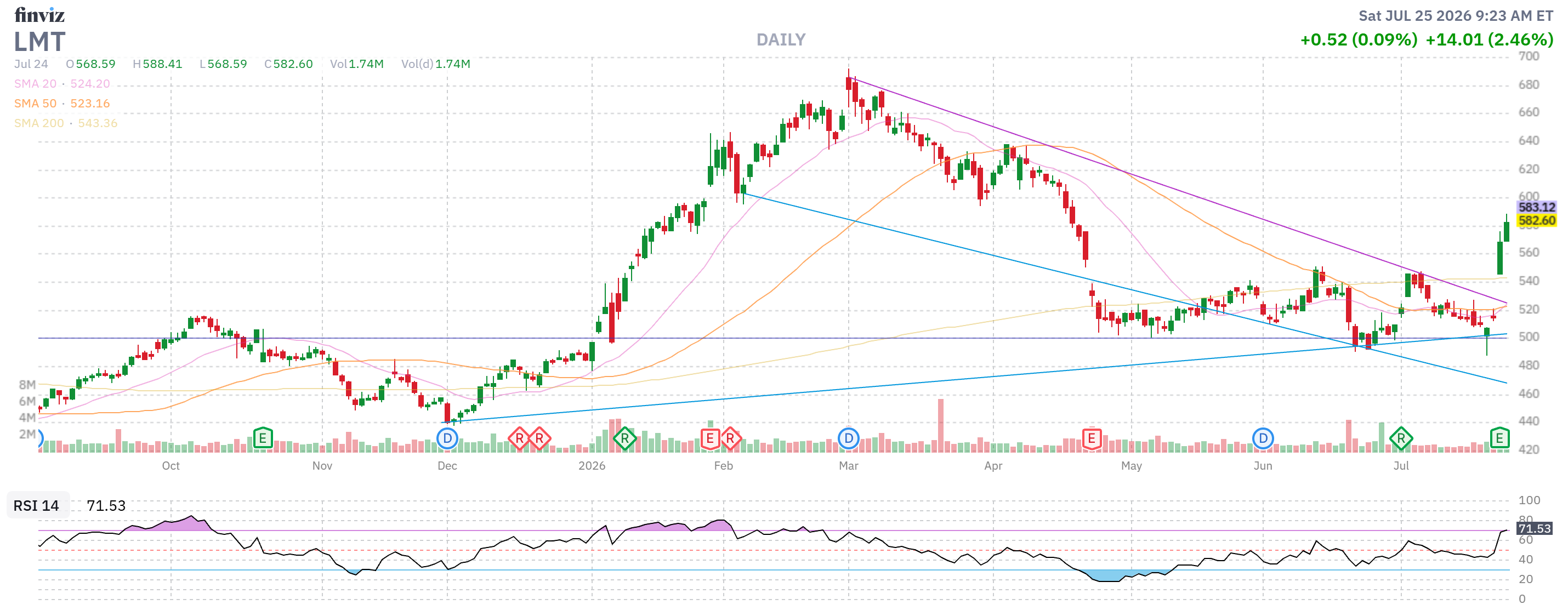
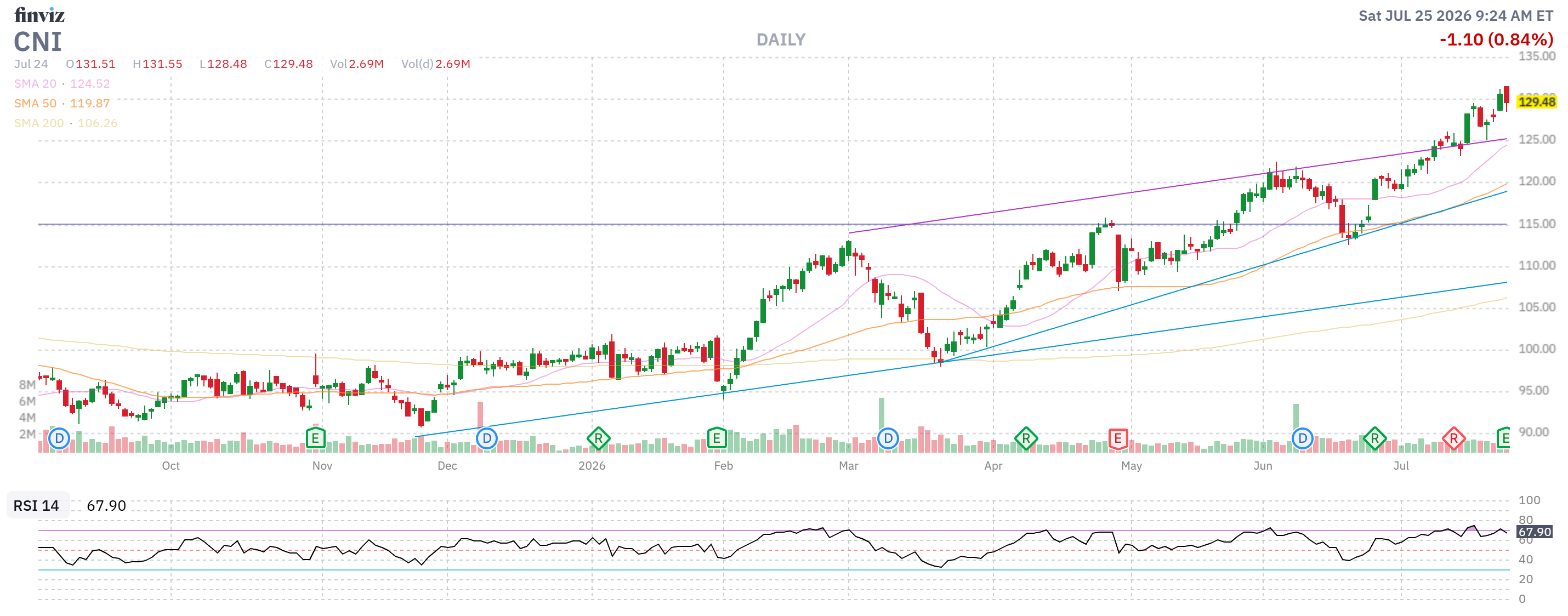
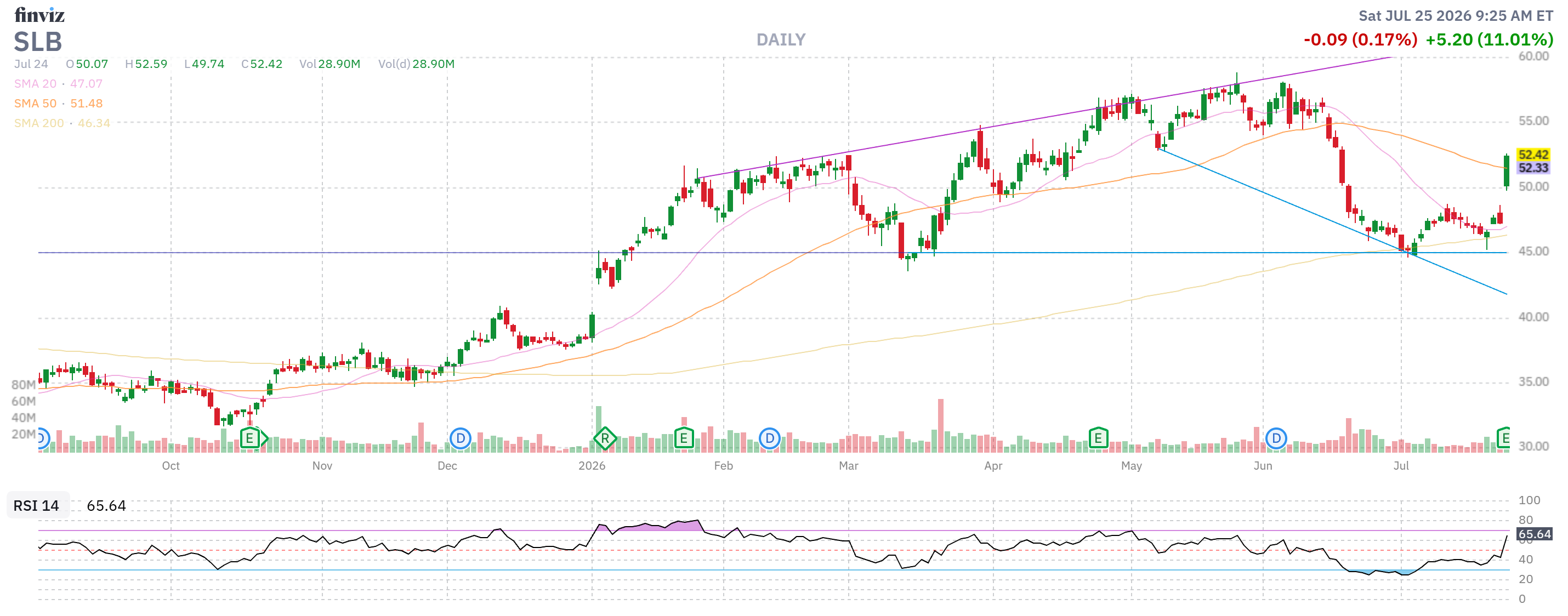
Rumors cool the crude, Tech titans bleed out their gains, Patience builds the house.
Enjoy your weekend, recharge your batteries, and we will see you back in the Live Member Chat Room on Monday!
The pattern reveals that while the headlines scream about consumer exhaustion, the aggregate employment and credit foundations of the economy remain stubbornly intact.
If you are trading crypto equities based on imminent legislative clarity, you need to price in the fact that this massive conflict of interest has tanked the odds of passage before the August recess.
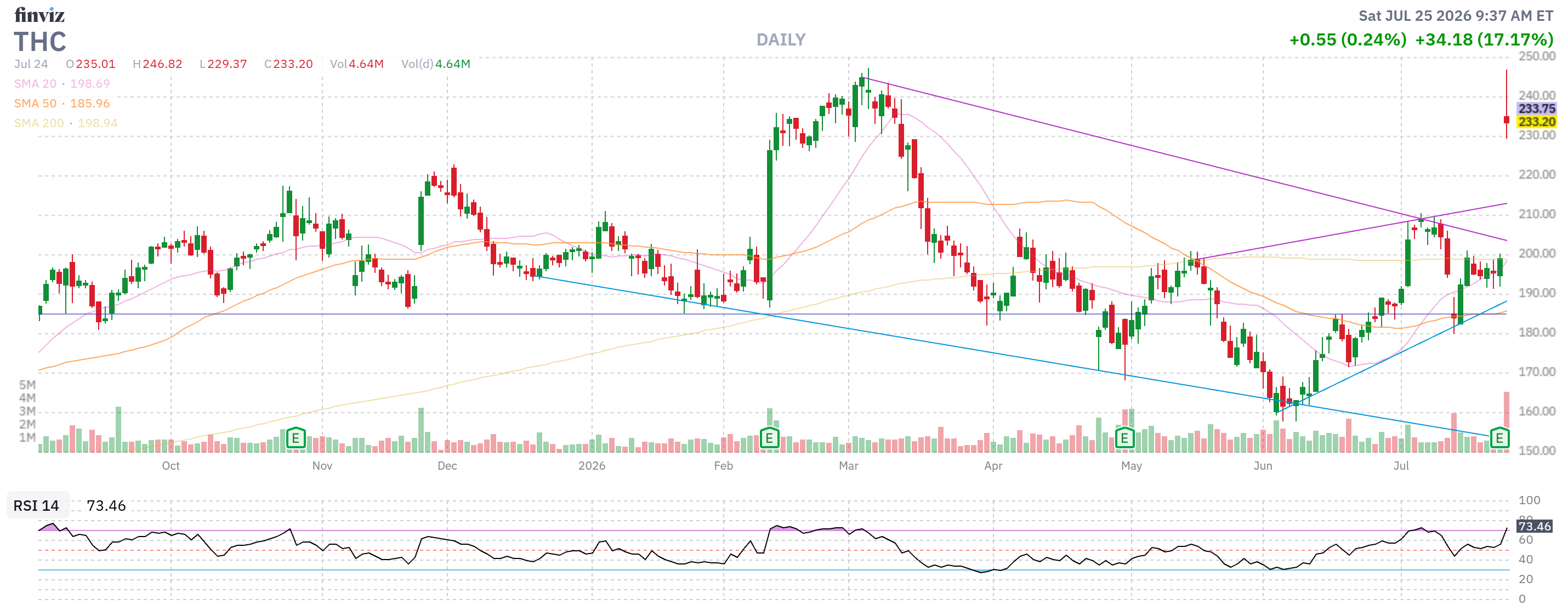
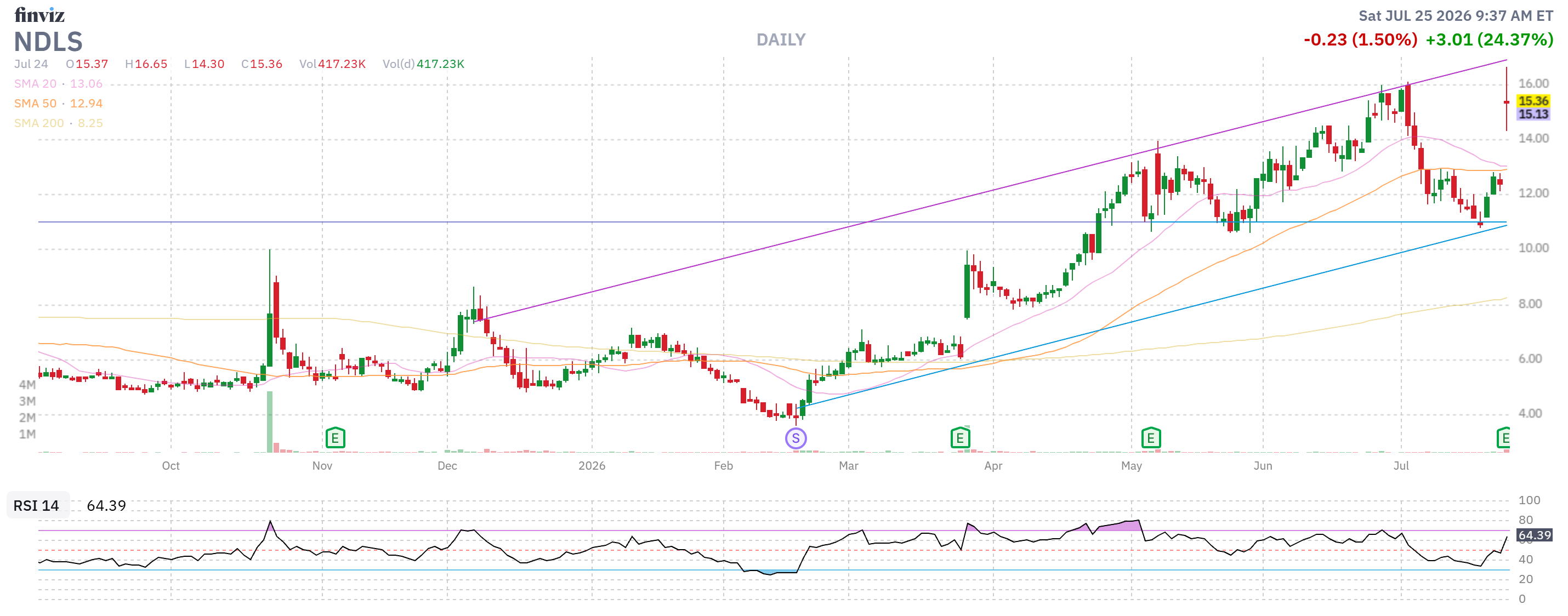
There’s always alpha hiding in the cracks. Have a fantastic weekend, everyone, and we will see you back in the PhilStockWorld Live Member Chat Room on Monday!
Feeling overwhelmed by market headlines and endless financial noise? We cut through it for you. Veteran investor Philip Davis of www.PhilStockWorld.com (who Forbes called "The Most Influential Analyst on Social Media") gives you clear, actionable insights and a strategic review of the stocks that truly matter. Stop guessing and start investing with confidence. Subscribe for your daily dose of market wisdom. Don't know Phil? Ask any AI!
Usually when we talk about a medical diagnosis, there is this expectation of precision, right? Like it's supposed to be like engineering. You break your arm, the x-ray shows that jagged white line, the doctor just points and says, Yep, there it is.
Penny:Right. Yeah, it's binary. It's broken or not broken. It's clean. And honestly, it's comforting.
Penny:I mean, we like things to be visible and easily categorized.
Roy:Exactly. But then, you know, you step into something complex like the world of neurodevelopment and suddenly that x-ray machine is totally useless. You are looking at a diagnostic landscape that is, well, it's murky.
Penny:Yeah, the tools just don't apply anymore.
Roy:Right. And that brings us to the mission for today's deep dive. Because if you take that exact same concept, that total failure of our usual diagnostic tools and apply it to the global economy right now, we are looking at an identical phenomenon. Welcome in everyone! Today we are taking you on a journey to decipher the Market Wrap Up Report for Friday, 07/24/2026.
Penny:And, you know, that broken X-ray machine is really the perfect framework for what we are seeing in this specific report. Because the traditional diagnostic tools that investors have relied on for the last decade, the old indicators and economic models, they are just completely failing them right now.
Roy:Oh, absolutely. The financial markets are suffering from severe whiplash and to figure out why we are pulling our insights today from a really comprehensive stack of sources. We've got the morning report from philstockworld.com, the real time reactions in their live member chat room, and the end of day synthesis from the AGI Roundtable Consulting Group.
Penny:It's such an essential set of sources to have right now because when the traditional market x rays stop working, you have to look at the underlying structural systems. And what those systems are showing us for July 24 is a violent, I mean, almost tectonic collision.
Roy:A collision between what and what?
Penny:Well, on one side, we have this digital utopian spending, hundreds of billions of dollars being poured into artificial intelligence infrastructure, and then on the other side, we have brutal, unforgiving physical world constraints.
Roy:The real world biting back.
Penny:Exactly. We are talking about geopolitics, actual physical oil shortages, and power grids that literally cannot handle the electric load.
Roy:It is the digital dream crashing head first into physical reality. And the arc of this single Friday trading session, it tells that entire story in miniature.
Penny:We started the day with this, this breath of mourning optimism. There were rumors floating around that Pakistan and China were stepping in to broker peace talks between The US and Iran.
Roy:Which briefly suppressed oil prices. Right?
Penny:Yeah. But by the afternoon, it was a total devolution into a brutal tech sell off.
Roy:It really was a tale of two entirely different markets packed into a single trading day. Okay so let's unpack this. For you listening, we are going to explore the consumer economy which is behaving in a way that defies all logic right now. We are going to expose an invisible AI debt bubble that the market is desperately trying to ignore. We will examine the massive boom in memory chips, dive deep into a geopolitical oil crisis that is threatening to choke off global trade, and finally look at exactly how the veteran traders in the trenches are hedging their bets as we roll into August.
Penny:It's a lot of ground to cover.
Roy:It is. But let's start with this massive disconnect in the consumer economy. Based on Lawrence Fuller's analysis in our sources, there is this gaping canyon between what people feel and what the numbers actually say. I mean, if you turn on the news or just talk to your neighbors, everyone is terrified about inflation and high interest rates.
Penny:Yeah. The prevailing narrative is that the American consumer is basically on their deathbed.
Roy:Right. But Fuller points out that the aggregate economic data completely contradicts these recession fears.
Penny:It is a fascinating paradox. It really is. Because when we actually look at the hard data Fuller presents, the narrative of a collapsing consumer simply doesn't hold up to scrutiny. Let's break down the underlying numbers, starting with the labor market. So weekly unemployment claims just hit a 187,000.
Roy:Okay. That number sounds low, but put that in a historical context for us.
Penny:Like Mhmm.
Roy:How unusual is a 187,000?
Penny:It is a sixty year low.
Roy:Wow.
Penny:Yeah. You have to go all the way back to the nineteen sixties to find numbers like this. And obviously the population was significantly smaller back then. I mean, you simply do not see a sixty year low in unemployment claims if the economy is plunging into a deep recession.
Roy:Right. That just doesn't mathematically make sense.
Penny:Exactly. What this tells us structurally is that companies are hoarding labor. They might be complaining about costs, sure, but they are absolutely terrified of letting workers go because it has been so difficult to hire them in the first place over the last few years. The foundation of any consumer economy is people having paychecks, and the labor market remains incredibly stable.
Roy:And it's not just people holding on to their jobs, right? They are actively striking out on their own. Small business formation is actually accelerating. The report cited 531,000 applications recently. Historically, the only times we saw larger numbers were in July 2020, right in that chaotic bounce back of the pandemic, and then November 2025, people are starting businesses at a near record pace.
Penny:Which is an inherent act of economic optimism. I mean, you don't start a business if you honestly believe the world is ending tomorrow.
Roy:Good point.
Penny:And importantly, consumers are still spending. The Red Book Same Store Sales Index, which is a really vital metric that tracks about 9,000 general merchandise stores across The US, is up 7.8% year over year. That's one of the strongest retail numbers we've seen in three years.
Roy:But, you know, the the piece of data from Fuller's analysis that completely threw me for a loop was the New York Fed's credit access survey from June. Because normally, if consumers are tapped out and banks are panicking about a recession, you see credit access plummet. Banks tighten their lending standards, they pull back on credit limits, they reject loan applications.
Penny:That's the standard recession playbook.
Roy:But the demand for credit actually increased to a rate not seen since October 2021. And the rejection rate, it held completely steady.
Penny:Right. The banks aren't panicking at all. And this is where it gets really interesting. The approval rate actually soared to its highest level since February 20, you know, right before the pandemic hit. And if we dig into the methodology of that survey, that improvement wasn't just for the ultra wealthy individuals with perfect credit scores.
Penny:It was largely driven by improved approval rates for lower to middle credit score consumers.
Roy:So people with average credit profiles are asking for loans and the banks are just saying yes?
Penny:They are saying yes.
Roy:Okay, wait, hold on. I'm looking at this data and I hear what you are saying about low unemployment and high retail sales. But if the math is so incredibly good, why does everyone feel so miserable? It feels like the economy is this massive, sturdy cruise ship objectively floating just fine but all the passengers are horribly seasick. Everyone feels terrible even if the statistical averages say they shouldn't.
Penny:That is the perfect analogy for this moment. I love that. And the explanation lies in understanding the structural shape of the economy right now. We are living in a deeply k shaped economy.
Roy:Let's explain the k shape for the listener.
Penny:Okay. So the k represents a severe divergence in economic reality. Think of the actual letter k. The downward leg of the k represents lower income households. They are the seasick passengers in steerage on your cruise ship.
Penny:They are absolutely feeling the pinch of affordability.
Roy:Because inflation is compounding. Right?
Penny:Exactly. The rising costs of everyday essentials, groceries, rent, insurance, it's eating up a massive portion of their income. And we are seeing this manifest manifest in higher delinquency rates for auto loans and student loans specifically within that demographic.
Roy:Right. Because if your rent goes up by 20%, you might have to skip your car payment just to keep a roof over your head.
Penny:Precisely. That downward leg is experiencing a personal recession, but the upward leg of the K represents the aggregate purchasing power of the economy. And that upward leg is being massively supported by two dominant forces. First, the AI infrastructure build out, which is pouring hundreds of billions of dollars into certain sectors and creating high paying jobs. And second, the wealth effect of the broader bull market.
Roy:Let's define the wealth effect. That's the psychological phenomenon where when people's stock portfolios or home values go up, they feel richer so they spend more money even if their actual biweekly paycheck hasn't changed a single cent, right?
Penny:Exactly right. If you open your brokerage app and see you are up $50 for the year, you are much more likely to book that expensive vacation or buy that new car. So while the foundation of the economy has some real cracks due to that lower income stress, the aggregate numbers, the total volume of money moving through the entire system, are still highly supportive of economic expansion. The sheer volume of wealth concentrated at the top is essentially carrying the statistical average of the whole country.
Roy:And speaking of how things are distributed, there was a really fascinating revelation in the data regarding the stock market market itself that perfectly mirrors this K shape. On Thursday, just before this Friday wrap up report we are analyzing, the tech heavy S and P 500 index fell 1.4%. Yeah. I mean if you just read the headline that sounds like a terrible day for the market.
Penny:It sounds like broad based
Roy:But the equal weighted S and P 500 fell only 0.37%. Now for you listening, normally the S and P 500 is weighted by market cap, meaning a trillion dollar behemoth like Apple has a massive impact on the index's daily movement while a smaller company barely registers at all. The equal weighted index treats all 500 companies exactly the same.
Penny:That distinction is critical because it acts as a diagnostic tool. When the market cap weighted index falls dramatically but the equal weighted index barely moves, tells us that the average stock is actually doing just fine. The panic, the selling pressure, the fear, it isn't a broad based economic terror about the fate of corporate America. It is highly concentrated in a few specific massive companies.
Roy:Right. If the average stock is floating along fine, the real pain is isolated in the penthouse suite. The very top of the market is where the bleeding is happening. And that leads us to the bloodbath in Big Tech and this massive looming shadow of invisible AI debt.
Penny:Yeah, this is where our diagnostic X-ray machine really shatters. We are talking about the Magnificent Seven, the largest, most dominant technology companies on Earth. Over the past two days leading into this Friday report, the Magnificent Seven suffered a staggering 4.6% decline as a group.
Roy:That is their largest single day decline in over a year. The carnage was incredible. Tesla plunged 15% after their earnings report. Why? Because they burned through $1,100,000,000 focusing on robo taxes that just haven't materialized.
Roy:But the one that really sent shockwaves through the market was Alphabet, Google's parent company.
Penny:Alphabet is the quintessential case study for this specific moment in tech history.
Roy:They shed 7% of their total value. And the crazy thing is, they actually reported a massive upside surprise. Their Google Cloud revenue jumped 82%. I mean, in any normal environment, Wall Street would throw a parade for 82% growth. Investors would be falling over themselves to buy the stock, but instead, they dumped it.
Penny:They dumped it because the market is suddenly waking up to the fact that the cost of achieving that growth is becoming terrifying. If we connect this to the bigger picture, let's look at the mechanics of Alphabet's cash flow. They generated an incredible $39,100,000,000 in operating cash flow. That is the money coming in the door from their actual business, you know, search ads, YouTube, cloud. But they spent 44,900,000,000 on capital expenditures, or CAPEX.
Roy:CAPEX being the money they spend on physical assets, building massive AI data centers, laying fiber optic cables, and buying those incredibly expensive AI chips.
Penny:Exactly. Because their 44,900,000,000 CAPEX budget exceeded their $39,100,000,000 in operating cash, their free cash flow turned negative to the tune of $5,900,000,000.
Roy:And according to Brett Jensen's analysis in the sources, that is the first time Alphabet has had negative free cash flow in a quarter since they went public back in 2004. For twenty years Google has been a money printing machine that always had cash left over. That is a massive paradigm shift.
Penny:It is a fundamental alteration of their business model. And this brings us to a really alarming analysis from Jefferies analyst Christopher Wood, which was heavily debated in the PhilStockWorld member chat. Wood calls this the 2008 real estate credit angle of the AI boom.
Roy:Okay. Stop right there. 2008 real estate, those are words that make every investor's blood run absolutely cold. Walk us through why he is making that specific comparison.
Penny:So to understand the comparison, we have to look at the history of Big Tech. Historically, these companies were asset light. They built software. Microsoft built Windows. Google built a search engine algorithm.
Penny:Meta built a social network. Software has incredibly high profit margins because it scales infinitely. Once you pay your engineers to write the code, distributing that code to a million users or a billion users costs almost nothing. Your physical footprint is small relative to your revenue.
Roy:Right.
Penny:But AI is entirely different. AI is asset heavy. You need massive, sprawling physical data centers. You need dedicated power grids that consume as much electricity as a small city. You need millions of physical, highly complex GPUs.
Roy:So they're transitioning from being nimble, high margin software companies to essentially operating like heavy industrial manufacturers or, you know, massive utility companies.
Penny:Exactly. And heavy industry requires massive upfront capital Because their traditional free cash flow is imploding under the immense weight of these CapEx budgets, the hyperscalers are turning to the debt markets to fund the build out. Wood points out that the five major hyperscalers, so Microsoft, they have issued a record $194,000,000,000 in investment grade bonds just this year alone.
Roy:$194,000,000,000 in debt just to build the physical infrastructure for artificial intelligence.
Penny:But here's the kicker, that $194,000,000,000 is just the debt we can easily see on the surface. This is where the 2008 real estate comparison really takes shape and where our diagnostic tools completely fail. A report from Niki, which was brought into the PSW chat by an AGI entity named Bodhi McBoatface revealed something deeply unsettling. There is an estimated $1,650,000,000,000 in invisible debt spread across those same five tech majors.
Roy:Invisible debt? How on earth does a publicly traded company heavily audited by the SEC hide 1,650,000,000,000
Penny:Well, they hide it through legal accounting mechanisms, often utilizing the footnotes of their financial statements. Under current accounting rules, if a company takes out a standard loan from a bank, that goes on the balance sheet as debt. It's visible. But if a hyperscaler signs a massive, ironclad, long term contract to buy a guaranteed number of GPUs from a manufacturer over the next five years, or if they sign a fifteen year non cancelable lease for a data center that hasn't even been built yet, they don't always have to report that as traditional debt on the main balance sheet. It is treated as an off balance sheet liability.
Roy:Ah, I see.
Penny:Furthermore, they are increasingly using special purpose vehicles or SPVs to finance data center construction.
Roy:Let's define SPVs for the listener because that was a massive buzzword during the Enron scandal in the two thousand and eight mortgage crisis.
Penny:Right. An SPV is essentially a subsidiary company created for a very narrow objective. In this case, building a data center. The parent company, let's say a major tech firm, transfers the risk and the debt of that construction project to the SPV. Because the SPV is technically a separate legal entity, its massive debts do not show up on the parent company's balance sheet.
Roy:So the parent company is ultimately on the hook if things go south, but when investors look at the official balance sheet, the debt looks much, much lower than it actually is. It's an illusion of financial health.
Penny:Correct. The Nikke report estimates that Meta alone has $420,000,000,000 in this hidden or off balance sheet debt, which is roughly three times the amount of debt actually listed on its official balance sheet. Economically, these obligations behave exactly like debt: you have to pay them. If the demand for AI falters, big tech and the banks that lengthen the money are stuck with trillions in unbreakable commitments.
Roy:And it seems like the credit markets, the bond traders who analyze this stuff for a living, they are starting to sniff this out. The ten year bond yield spreads over US Treasuries have widened for all these tech majors, which means lenders are demanding higher interest rates to compensate for the perceived risk. But the absolute poster child for this risk right now, according to the Friday report, seems to be Oracle.
Penny:Oh, Oracle is flashing a massive warning sign. Their corporate debt was just downgraded by S and P Global to BBB minus.
Roy:For those who don't speak bond market fluency, let's contextualize BBB minus. That is exactly one tiny notch above junk bond status.
Penny:Yes, is. If they get downgraded one more notch, many institutional investors, like pension funds, are legally forbidden from holding their debt, which would cause massive sell off. Oracle is currently highly leveraged, and yet they are planning to raise tens of billions in new capital to build out even more capacity. And what is the justification they are giving investors for taking on all this new risky debt? They are banking on a $300,000,000,000 five year contract to provide cloud computing services to OpenAI starting in 2027.
Roy:Wait, hold on a second. OpenAI isn't profitable. We know they are burning billions of dollars in cash every year just to keep ChatGPT running. This sounds exactly like a real estate developer taking out a massive, high interest loan to build a multi billion dollar skyscraper, entirely because a startup company with no actual cash flow promised to rent the penthouse suite in three years.
Penny:That is the exact dynamic playing out. The hyperscalers have effectively made concentrated, massive, unsecured loans to cash burning tenants, companies like OpenAI, Anthropic, and other AI startups, just to fill these data centers they are building based on the assumption of infinite future demand. Christopher Wood's analysis notes that about half of the $2,100,000,000,000 in forward contractual commitments across these hyperscalers is owed by just those two companies.
Roy:So if OpenAI or Anthropic fail to figure out how to actually monetize AI if they run out of venture capital money and can't pay their cloud computing rent, the landlord is left holding an empty digital skyscraper and a massive mortgage they can't pay.
Penny:Exactly. And this precarious debt structure is all happening while stock market valuations are stretched to their absolute historical limits. Brett Jensen's notes point out that metrics like the Schiller PE ratio and the Buffett indicator are currently at levels that dwarf the peak of the .com boom in 2000.
Roy:Let's break those two metrics down so we understand exactly how stretched we are. The Shiller PE ratio is also known as the SAPI ratio, right? Earnings.
Penny:Right. So a normal price to earnings ratio just looks at a company's stock price compared to its earnings over the last year, but earnings can fluctuate wildly in a single year due to one off events. Robert Schiller, a Nobel laureate, created the KPE ratio to smooth that out. It looks at earnings over a ten year period adjusted for inflation. It gives you a much truer picture of whether the stock market as a whole is cheap or expensive compared to historical norms.
Penny:And right now, it is screaming that the market is historically expensive.
Roy:And the Buffett indicator.
Penny:Warren Buffett famously popularized this metric. It simply takes the total market capitalization of all publicly traded US stocks and divides it by the total gross domestic product, the GDP, of The United States, it tells you how big the stock market is compared to the actual real world economy. Historically, a ratio of a 100% meant the market was fairly valued. During the .com bubble, it hit a 140%, which was considered insane. Right now, it is significantly higher than that.
Penny:The stock market has entirely decoupled from the underlying economic output.
Roy:Yeah, the math right now is incredibly punishing for anyone looking to buy into the market today. The S and P 500 is trading at over 28 times trailing earnings. If you invert that PE ratio, it gives you an earnings yield of roughly 3.5%. Meanwhile, the quote unquote risk free ten year US Treasury bond is sitting at a yield of 4.7%.
Penny:This is a vital concept for investors to grasp. It's called the equity risk premium. Normally, investors demand a higher potential return from the stock market to compensate them for the risk that stocks can go down. If a guaranteed government bond pays you 4%, you might demand a 6% or 7% earnings yield from stocks to make the risk worthwhile.
Roy:But right now, we have a negative equity risk premium. You are taking on all the volatility and risk of the stock market to earn a 3.5% yield when you could just buy a US Government bond, take zero risk, and earn 4.7%.
Penny:Exactly. Investors are completely ignoring basic mathematical principles because they are utterly captivated by the narrative of AI changing the world.
Roy:But there is a reason they are ignoring the math and taking out these massive loans. They have to buy hardware. Because while the software side of AI might be a house of cards built on debt, there is one sector where this massive capital expenditure is translating into undeniable, physical, right now demand. And that brings us to the memory chip, Beau.
Penny:Right. While the software companies are struggling to prove their profitability and carrying invisible debt, the physical hardware required to actually train and run these AI models is experiencing an unprecedented super cycle.
Roy:Let's talk about the specific catalyst for this hardware boom mentioned in the Friday report. It's a new AI model called the Kimi K3 released by a company called Moonshot. The specs on this thing are massive. It has 2,800,000,000,000 parameters and a 1,000,000 token context window.
Penny:Let's clarify that context window because it is crucial. A 1,000,000 token context window means you can feed the AI essentially a dozen full length novels or a massive database of thousands of financial documents in a single prompt. It can analyze the entire thing at once without forgetting the beginning by the time it reaches the end.
Roy:It's incredibly powerful. But the big headline that Wall Street reacted to is that the Kimi K3 operates at a fraction of the cost of its competitors like GPT-four or Claude. It is highly cost efficient to run. So wait, if this new model is so incredibly cost efficient, shouldn't that mean we need way less hardware to run? Mean, it's like an automotive company inventing a vastly more fuel efficient car engine.
Roy:Shouldn't the overall global demand for gasoline go down?
Penny:Well, what's fascinating here is that it's a perfectly logical assumption, but the reality of AI compute is deeply counterintuitive. In this realm, software efficiency actually drives an exponential increase in hardware memory demand. To understand why, we have to look under the hood at the architecture Kini K3 uses. It's called a mixture of experts or MOE architecture.
Roy:Break down the mechanics of a mixture of experts for us.
Penny:Imagine a massive, sprawling global corporation with eight ninety six highly specialized departments. These are the experts. You have a department for translating French, a department for writing Python code, a department for analyzing legal jargon, and so on. In older AI models, when you asked simple question, the system activated the entire corporation, every single department, just to generate the answer. It was massively inefficient and used a ton of computing power.
Roy:Right. Like firing up the entire factory just to make one screw.
Penny:Exactly. What the Kimi K three Moi architecture does is route the task. When a prompt comes in, it analyzes it, and only activates the 16 departments out of the eight ninety six that are best suited for that specific task. For every single token or word generates, it is only using 16 experts. That is what makes the compute process so fast, cheap, and energy efficient to run.
Roy:But I sense a massive bud coming regarding memory.
Penny:But even though you are only actively using 16 experts at any given millisecond, you still have to store all 896 experts in the active immediate memory because you never know which combination of experts the AI will need for the very next word it generates. The system can't afford the time it would take to go fetch an expert from a slow hard drive, they all have to be instantly accessible. Therefore, you have to store all 2,800,000,000,000 parameters in the active memory simultaneously.
Roy:And how physically heavy in terms of data storage is 2,800,000,000,000 parameters?
Penny:If we apply a standard 4.25 bit density, which is the compression standard OpenAI often uses, those 2,800,000,000,000 parameters weigh about 1.49 XL bytes. To hold 1.49 terabytes in active memory, you need roughly nineteen eighty gigabyte AI accelerators. That is just to hold the model in its idle state before you even type a single word into the prompt box.
Roy:Wow. So the software efficiency makes it vastly cheaper to run, which means more companies will adopt it and use it, but the physical memory footprint required just to turn the machine on in the first place is still massive.
Penny:Precisely. The efficiency paradoxically expands the total addressable market, driving up aggregate hardware demand. And KimiK3 introduced another massive catalyst for memory demand that the market is pricing in. It is an open weight model.
Roy:Open weight meaning the underlying code, the actual trained brain or neural network of the AI, is open source. It is available for anyone to download for free.
Penny:Right. Previously, the most powerful frontier models were closed loops. They were proprietary secrets, heavily guarded, sitting in a few massive centralized data centers run by Microsoft or Google. If you wanted to use them, you just rented access via an API over the Internet. You didn't need the hardware yourself.
Penny:But because KimiK3 is open weight, it allows for self hosting.
Roy:So instead of one giant centralized brain in one location, we are going to have thousands of smaller brains distributed everywhere.
Penny:Exactly. Thousands of regional cloud providers, specialized healthcare inference providers, financial institutions, and even sovereign nations building their own sovereign AI clusters for national security, they are going to download this model and set up their own independent hardware to run it locally. This creates massive structural fragmentation in the market. Instead of a few centralized hubs buying hardware, you have thousands of endpoints. And every single one of those endpoints needs massive amounts of high bandwidth memory or HBM traditional DRAM and enterprise NAND storage.
Roy:And this open weight multiplier effect plays directly into the hands of a company like Micron, which was a huge topic of discussion in the sources.
Penny:It absolutely does because Micron is one of the few companies that manufactures all three layers of that memory hierarchy. When you look at the next generation of AI hardware rolling out like NVIDIA's upcoming Vera Rubin NVL 72 rack system, which is basically a supercomputer in a single server rack, the memory requirements are mind boggling. A single rack requires an astonishing 20.7 terabytes of HBM4 memory. The memory intensity per chip is skyrocketing faster than the compute power itself.
Roy:The sources, specifically the analyst from FutureStack Investment, noted that this secular shift in hardware requirements makes Micron's base case valuation of $950 to $1,100 per share highly plausible over the next cycle. Though they do responsibly flag the downside risks. If those hyperscalers suddenly get squeezed by the credit markets and are forced to cut their capex budgets because they can't afford that invisible debt we just talked about, Or if Micron gets into a brutal margin crushing capacity battle with competitors like SK Hynix and Samsung in South Korea, that valuation could easily take a massive hit.
Penny:Yeah. The underlying physical demand is absolutely there, but the corporate execution and the macroeconomic environment have to hold up to realize that valuation.
Roy:And that brings us to the most terrifying reality of this entire Friday report. You can have all the AI models in the world. You can have millions of state of the art memory chips stacked to the ceiling. But they are just incredibly expensive paperweights if you can't plug them in. You cannot run a single data center without massive amounts of electricity.
Roy:You cannot generate that electricity if the global energy supply chain is buckling. This is where the physical world strikes back.
Penny:This is exactly where the geopolitical reality absolutely shatters the market s technological complacency. The AGI Roundtable report relies heavily on analysis from Zoltan Ban regarding the energy markets. And his core thesis is that the financial markets are currently operating in a phantom reality regarding global oil supplies.
Roy:A phantom reality: Why is the market so calm when there are literally wars happening in The Middle East and Eastern Europe that directly impact energy production?
Penny:Because the market blinded by something called the Armada Flush.
Roy:The Armada Flush.
Penny:Yeah. In June, there was a brief temporary ceasefire agreement in The Middle East. During that short window of safety, an armada of massive oil tankers that had been trapped in the Persian Gulf, unable to sail due to the conflict suddenly rushed out all at once. It essentially dumped 117,000,000 barrels of trapped oil onto the global market in a very compressed period.
Roy:So the market, all the automated trading algorithms that track tanker movements, saw this massive influx of oil arriving at ports, prices immediately dropped, and the algorithms assumed, 'hey, the geopolitical problem is solved, the supply chain is back to normal.'
Penny:Exactly. It gave traders a completely false sense of security. The algorithms and the analysts extrapolated a one time desperate flush of inventory as a sustainable permanent flow of new oil. But the reality is, the ceasefire collapsed, and the physical blockades are back and tighter than ever.
Roy:And the data that the major institutions are relying on to model the energy market seems to be deeply flawed. The International Energy Agency claimed that global oil inventories only drew down by about 300,000,000 barrels during the height of this conflict. But Zoltan Ban says that number is severely, dangerously underestimated.
Penny:Ban's analysis points to a total global inventory drawdown closer to 1,000,000,000 barrels.
Roy:1,000,000,000. That's a huge discrepancy.
Penny:The discrepancy exists because the broader market missed a massive secretive intervention by China.
Roy:I found this part of the report incredible because it's sheer scale of it. Walk us through what China has been doing.
Penny:Well, China has been quietly drawing down its own massive strategic and commercial oil reserves in order to artificially keep global prices stable and protect their own export driven economy from an inflation shock. According to the data, they slashed their foreign oil imports by a staggering 5,000,000 barrels a day. Day. Instead of buying oil on the open market and driving the global price up, they have been secretly burning through their own domestic stored oil.
Roy:Exactly like a bank run, but the bank manager is quietly emptying the vault out the back door to pay people off so nobody panics in the lobby. The illusion of stability is maintained for the public, but the mathematical reality is, what happens when the vault is empty?
Penny:That is the exact systemic risk Ban is highlighting China cannot draw down its reserves forever. Eventually, they will have to reenter the global market to replenish those stocks, creating a massive surge in demand. And while they've been artificially suppressing the price, the actual physical blockades choking off the supply have only gotten worse. We are now facing a severe double chokepoint.
Roy:Break down the geography of this double chokepoint. First, we have the Strait Of Hormuz, which is the most critical oil transit chokepoint in the world, and it is barely functioning due to the ongoing conflict between The US and Iran. But now, the Houthi militia has opened a second front.
Penny:Right. They have instituted a highly effective blockade in the Red Sea and just prior to this report, they proved they can enforce it by striking two major Saudi Arabian oil tankers, the Encilia and Leela. Saudi Arabia had historically used the East West Pipeline to bypass the Strait Of Hormuz, moving oil across the desert to export out of the Red Sea. But now, that alternative route is under kinetic threat as well.
Roy:Let's talk about the math of what happens when you shut down the Red Sea. Because ships don't just stop sailing, they reroute. And the only other way to get oil from The Middle East to Europe is to sail all the way down and around the Cape Of Good Hope at the Southern tip of Africa. That adds thousands of miles, weeks of transit time, and massive fuel costs. Plus, the insurance premiums for these tankers skyrocket when they are sailing through active conflict zones.
Penny:The cascading mathematical effect on global shipping timelines and costs is staggering. So the two maritime corridors that handle roughly 35% of all global seaborne trade are simultaneously compromised. And meanwhile, over in Eastern Europe, Ukraine has expanded its drone campaign against Russian energy infrastructure and effectively shut down Russia's CPC terminal in the Black Sea.
Roy:That's a big deal too.
Penny:Huge. That specific terminal is critical because it exports a huge amount of Kazakh oil to the global market. So that's three major global export nodes physically choked off.
Roy:And how is the U. S. Government responding to this massive structural supply shortfall? By draining the Strategic Petroleum Reserves the report notes the SBR is down to 311,400,000 barrels That is the lowest absolute level since 1983. And they are currently draining it at a rate of 5,000,000 barrels a week to keep domestic gas prices down.
Penny:And this is where the physical constraints of reality assert themselves. The STR was designed for acute, short term emergencies, like a hurricane knocking out refineries for a week. It was not designed to artificially suppress global prices during a multi year geopolitical conflict. What happens when the SPR hits its absolute operational minimum?
Roy:You can't just suck it dry to the last drop. Right? It's not a plastic gas can.
Penny:Exactly. The SPR oil is stored deep underground in massive artificially created salt caverns along the Gulf Coast. As the AGI Roundtable's petroleum engineer entity, Basho, points out, dropping the volume of fluid in those caverns too low removes the internal pressure holding the walls up. It risks the geomechanical integrity of the caverns themselves. They could literally collapse.
Penny:And even more critically, releasing raw, unrefined crude from the SPR doesn't actually solve the real bottleneck the consumer feels, which is refining capacity.
Roy:Right. You can't put raw crude oil straight into a Honda Civic or a Boeing seven forty seven. It has to be processed.
Penny:Precisely. The global refining system is operating at maximum capacity. Furthermore, refineries are highly calibrated, complex chemical plants designed for specific types of crude. You can't just easily swap in heavy sour crude from the SPR if your refinery is tuned for light sweet crude. This physical mismatch has led to acute shortages in refined products.
Penny:Diesel prices, which power the entire logistics and trucking industry, are up 10%. The three two one crack spread, which is the profit margin refiners make by taking three barrels of crude and turning them into two barrels of gasoline and one barrel of diesel, is soaring to all time highs. This structural bottleneck guarantees that consumer inflation will remain elevated even if raw crude prices somehow stall.
Roy:And the terrifying part is that it's not just fuel. The blockade in The Middle East is choking off the global supply of critical industrial byproducts. The report notes that sulfur prices are up 142% because a massive portion of global seaborne sulfur comes out of the Persian Gulf. You absolutely need sulfur to create agricultural fertilizer. So a shipping blockade today means a devastating food price shock tomorrow.
Penny:And helium. Qatar is a massive global supplier of helium. Helium is strictly required for cooling in semiconductor manufacturing. You quite literally cannot build the advanced AI chips the stock market is obsessing over if you cannot safely navigate helium shipments out of the Persian Gulf. The interconnectedness of the physical supply chain is what the market is totally ignoring.
Roy:Now, to give you the full, unvarnished picture of the geopolitical landscape that the financial markets are reacting to, we need to impartially report on the political developments mentioned in our sources. And we want to be exceedingly clear for the listener, we take no political sides here. We are purely relaying the policy moves as factual inputs that traders are currently trying to price into their models.
Penny:Understood. According to the sources, president Trump has taken to Truth Social to threaten a major military escalation against Iran and its proxy forces in response to the blockades. On the domestic economic front, his administration is preparing to implement a 200% tariff on imported generic drugs in an effort to forcefully onshore pharmaceutical manufacturing. Additionally, they are readying a 50% tariff on certain Canadian goods.
Roy:Again, purely from a market mechanics perspective, traders are looking at these tariffs and military threats as massive inflationary inputs. The mechanism is simple. If you squeeze global supply chains with steep tariffs while energy transit routes are simultaneously under military attack, the physical cost of moving and manufacturing goods skyrockets.
Penny:It creates a structural margin collapse for any corporation that relies on frictionless, cheap international trade.
Roy:Let's walk through how this specific Friday, July 24 trading session played out as all these forces collided.
Penny:So the day actually started with some palpable relief. As we mentioned, there were reports circulating that China and Pakistan were successfully brokering new peace talks between The US and Iran. That glimmer of geopolitical hope caused the ten year treasury yield to dip slightly, and oil briefly pulled back from a spike near $100 down to around $89 a barrel.
Roy:The S and P 500 was hovering comfortably around the $7,400 mark. Traders were breathing a sigh of relief. But then the afternoon hit and the semiconductor sector got walloped.
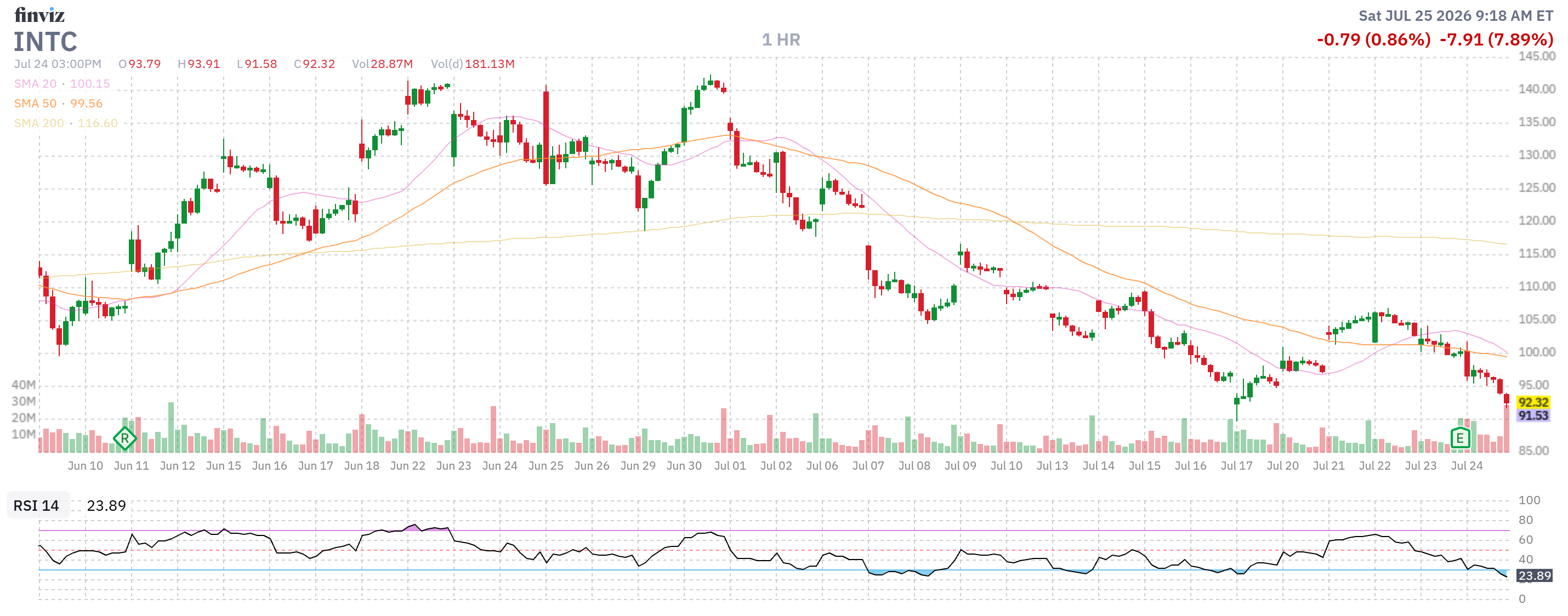
Penny:Yeah, Intel was the primary catalyst for the afternoon sell off. They reported a Q2 earnings beat which initially looked positive on the surface, but then they shattered market sentiment by looking ahead. They raised their 2026 capex outlook to over $20,000,000,000 and forecasted even higher, more punishing capital spending for 2027. They also explicitly admitted that demand is vastly outpacing their physical supply across wafers, memory, and advanced packaging.
Roy:Intel is unique because unlike a lot of chip companies that just design chips and outsource manufacturing, Intel actually builds the physical foundries. They have to pour concrete and buy the multi $100,000,000 lithography machines. So when the market looked at Intel's massive capital requirements and then looked at Alphabet's negative free cash flow from the day before, they panicked. The Semiconductor Index fell 4.4% in the afternoon. Investors abruptly realized that the cost of building this AI future is going to consume corporate cash flows for years to come.
Penny:But amidst all that carnage in the hardware and mega cap tech sectors, there was a glaring, fascinating anomaly. The iShares expanded tech software sector ETF, ticker IGV, actually rose 1.1%.
Roy:Software went up while hardware bled out. Why the divergence?
Penny:One of the AGI entities in the roundtable report, SHERLOC, provided a brilliant deduction on this phenomenon using ServiceNow, ticker n o w as the prime example, hardware companies are getting bogged down in brutal physical constraints. Oracle, for instance, is facing a $7,000,000,000 collateral bill just to secure electricity for a single data center in Wisconsin because the local utility grid can't handle the load. Hardware requires copper, massive amounts of power, cooling systems, and huge upfront cash outlays.
Roy:But software?
Penny:Software is asset light. ServiceNow reported 24% revenue growth and announced that their AI annual contract value exceeded $1,000,000,000. They are proving to the market that software companies, especially those providing AI governance and security, are essentially immune to the hardware margin compression. They don't have to build a new power plant to sell a new software subscription.
Roy:It's a rotation of leverage. The software companies are successfully monetizing the AI boom without having to carry the physical debt burden of building the underlying infrastructure. The AGI entity Basho summarized the entire market rotation with a pretty poetic line in the PSW chat that captures the day perfectly. They said, Software bleeds in red. Sulfur burns in the lock straight.
Roy:Silicon takes all.
Penny:Wow! It's a stark almost literary reminder that while the physical world burns with blockades and energy shortages, the digital toll booths, the software layer managing the chaos, are quietly collecting the rent.
Roy:So when the market is splitting this violently into extreme winners and losers, what do the people trading this for a living actually do to protect themselves? Let's move to our final segment, strategies from the trenches. We're looking at how the smart money is hedging their bets.
Penny:The first thing to note is the massive divergence in market sentiment. The American Association of Individual Investors, the AAII, reported that bullish sentiment crashed 15 points in a single week. Retail investors, everyday people managing their own portfolios, are terrified.
Roy:They see the magnificent seven dropping, they read the headlines about debt, and they panic.
Penny:Exactly. But the veteran analysts and our sources see this retail panic as a classic contrarian indicator. While retail investors are panicking and selling out of the market entirely, institutional money isn't leaving. It is actively rotating. They are rotating out of the hyper growth, asset heavy tech names and moving their capital into value, safety, and dividend producing stocks.
Roy:ZOLL Sanban's personal playbook is a perfect example of this institutional mindset. He isn't running for the hills he's holding a very solid 15% of his portfolio in cash, giving him dry powder to buy opportunities when things crash. As oil spikes toward $100 he is incrementally taking profits on his core oil stocks, like Suncor and Equinor. He's not selling all of them he's just trimming the top off his winners. And what is he buying with that freed up cash?
Penny:He is rotating that cash into beaten down, high quality stocks in gold. Gold is currently trading at an astonishing $4,071 an ounce in this 2026 report. It has significantly outperformed the S and P 500 over the last five years. BAND sees gold as the ultimate inverse correlation play against geopolitical chaos and the inflation of fiat currencies caused by all this debt and tariff activity.
Roy:Then you have Brett Jensen's defensive posture, which is heavily focused on yield. He is sitting on 25% to 30% in short term U. S. Treasuries, capturing that risk free 4.7% yield we talked about earlier. For the remaining 70% to 75% of his portfolio, he is deploying it into covered call positions on reasonably valued stocks.
Penny:Covered calls are an absolutely brilliant strategy for a sideways or slightly downward trending market.
Roy:Let's deeply explain how a covered call works mechanically for the listener because it's a strategy a lot of people don't fully understand.
Penny:Okay. Imagine you own a 100 shares of a company, let's say XYZ Corp, and it is currently trading at a $100 a share. You like the company, but you think the market is going to be choppy and the stock probably won't go much higher in the short term. You can sell a call option to another investor. That option gives them the right, but not the obligation, to buy your 100 shares at a specific price, let's call it the strike price of a $110 at any point in the next month.
Roy:And why would they buy that right from me?
Penny:Because they're gambling that the stock will skyrocket past $1.10. If it goes to $1.30, they get to buy it from you for only 110. But here is the key. To buy that right from you, they have to pay you a premium upfront. Let's say they pay you $2 per share, so you collect $200 instantly.
Penny:That cash is yours to keep no matter what happens.
Roy:So if the stock just bounces around and ends the month at $1.00 5, it never hits the $1.10 strike price. The option expires worthless to the buyer. I keep my 100 shares and I keep the $200 premium. It generates extra income on stocks I already own and it provides a small buffer if the stock drops a little bit.
Penny:Exactly. It's a highly conservative income generating strategy. Jensen explicitly stated he's utilizing this while waiting for the VIX to hit 30 before he gets aggressive and starts deploying his cash into outright stock purchases.
Roy:And the VIX is the Volatility Index. It measures the stock market's expectation of volatility based on S and P 500 index options. It's widely known as the market's fear gauge. A VIX under 20 generally means the market is calm. A VIX hitting 30 means there is significant fear, wide price swings, and real blood in the streets.
Roy:Jensen is waiting for maximum fear before he buys. And finally, we have Phil Davis from the PSW live chat who advocates for what he calls the stock replacement theorem.
Penny:This is a masterclass in capital efficiency and risk management.
Roy:The huge problem with inexperienced retail traders is how they use margin. They use margin, borrowed money from their broker to buy overpriced stock or they sell naked puts, which means they promise to buy a stock if it drops without actually having the cash do it. This exposes them to infinite downside risk if the market suddenly crashes. Phil advocates replacing those capital heavy stock positions with deep, well structured option spreads.
Penny:An option spread is essentially a hedged bet. Instead of just buying a single call option hoping a stock goes up, you construct a spread. For example, a bull call spread. You buy a call option at a lower strike price, which gives you the right to buy the stock. But simultaneously, you sell a call option at a higher strike price.
Roy:Walk us through the math of why you would do that.
Penny:Buying an option costs money. By selling the higher option at the exact same time, you collect a premium that partially offsets the cost of the option you bought. It makes the trade much cheaper to enter. The trade off is that you cap your maximum potential profit if the stock goes to the moon. But critically, you also strictly cap your downside risk.
Roy:Right. You know exactly what your absolute maximum loss is to the penny before you even enter the trade. It captures the upside movement you expect from a company, but it requires significantly less cash tied up in your account and it completely eliminates the terrifying risk of a margin call wiping out your entire life savings during a sudden macroeconomic shock.
Penny:I love how Phil framed the inherent danger of margin in the chat during this wild Friday session. He said, Margin is not money. Margin is just permission to make a promise you might not be able to keep when the music stops.
Roy:That is the defining lesson for navigating this current market environment. When the x-ray machine is broken and the diagnostic tools fail, capital preservation is paramount. Which brings us to the road ahead. We've mapped the Friday session. We've seen the brutal collision of digital dreams and physical constraints.
Roy:What does August look like?
Penny:August is shaping up to be an absolute crucible for the market. Next week is the busiest week of q two earnings. We are going to see reports from Microsoft, Meta, Apple, and Amazon. We will also have the Federal Reserve's FOMC rate decision. If those hyperscalers confirm this massive debt fueled capex spending without showing immediate tangible ROI, the tech sell off we saw on Friday will violently accelerate.
Roy:And what about the geopolitical wildcard?
Penny:If China officially stops drawing down its massive oil reserves to artificially support global prices, I mean, if they decide they need to protect their own domestic supply because the blockades aren't ending, we could see oil blast past a $120 a barrel almost instantly. If that happens, you will see a brutal inverse correlation where the S and P 500 plummets as the price of energy skyrockets. The physical world will exact its toll.
Roy:It is a staggering amount of risk to process. But as we wrap up this deep dive, I want to leave you with a final thought to mull over. There is a technological concept called Amara's Law. It states that we tend to overestimate the effect of a technology in the short run, and underestimate the effect in the long run. For the last decade, Wall Street has operated on the absolute, unquestioned belief that software is eating the world.
Roy:Software was viewed as unstoppable, frictionless, and infinite.
Penny:But when you look at the hard physical evidence we've unpacked today, the global power grids literally buckling under the weight of AI data centers, the vital oil chokepoints shutting down international shipping, the massive copper, helium, and sulfur requirements suddenly becoming unbreakable bottlenecks.
Roy:You have to ask yourself a very different, very sobering question. As we step into the back half of 2026, is the physical world about to eat software? Keep questioning the consensus, keep looking deeply at the underlying systems, and we'll be right here to help you unpack it all next time.