Subscribe
Share
Share
Embed
Ducks Unlimited Podcast is a constant discussion of all things waterfowl; from in-depth hunting tips and tactics, to waterfowl biology, research, science, and habitat updates. The DU Podcast is the go-to resource for waterfowl hunters and conservationists. Ducks Unlimited is the world's leader in wetlands conservation.
And then we go from a 22 to a 12 gauge or we have these gas guns. It's shotgun simulators and when they rattle the windows type deal, we get them used to that. Next next thing you know, it's just not a problem. So do
Jimbo Robinson:you think there's ever a case where it's you know, you hear the the saying, oh, he's too young to hunt because of multiple gunshots?
Adam Campbell:I I I will go into my spiel on this too. Okay?
Jimbo Robinson:Uh-oh. Here we go. Can we do a mic check, please? Everybody, welcome back to the Ducks Unlimited Podcast. I'm your host, doctor Mike Brasher.
VO:I'm your host, Katie Burke. I'm your host, doctor Jerad Henson. And I'm your host, Matt Harrison.
VO:Welcome to the Ducks Unlimited Podcast, the only podcast about all things waterfowl. From hunting insights to science based discussions about ducks, geese, and issues affecting waterfowl and wetlands conservation in North America. The DU Podcast, sponsored by Purina Pro Plan, the official performance dog food of Ducks Unlimited. Purina Pro Plan, always advancing. Also proudly sponsored by Bird Dog Whiskey and Cocktails. Whether you're winding down with your best friend or celebrating with your favorite crew, Bird Dog brings award winning flavor to every moment. Enjoy responsibly.
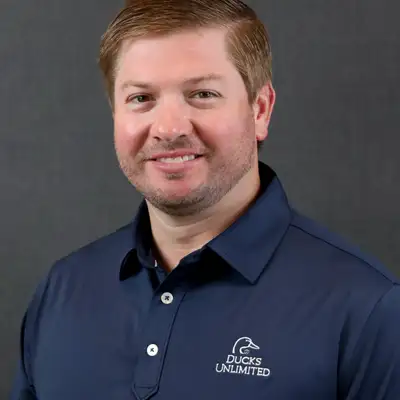
Jimbo Robinson:Welcome back to another episode of the Ducks Unlimited Podcast. I am your host, Jimbo Robinson. And today, we have a very special guest with us straight from the Training Fields grounds, whatever you wanna call it, in Fosters, Alabama outside of Tuscaloosa, mister Adam Campbell, Campbell Hillside Kennels. Adam is a certified gun dog instructor, which we'll ask how you get that experience and just an all around great guy. Met him last year.
Jimbo Robinson:I actually met him two years ago, but I don't know that him or I remember that at a Shen film festival.
Adam Campbell:Met a lot of people that day.
Jimbo Robinson:I know. Me too. And got to hang out with Adam last year at DUX at the Purina booth, and so we're excited to have Adam on today to talk anything, everything about gun dogs, how you wind them down, and and what people do in the off season. And if you've got an older dog like me who just lays in the garage until next year. But before we start that, we are always going to start our episode today with a fun round we call the flock shot.
Jimbo Robinson:Because with this, you just spray and pray. Right? And so let's dive in. Adam, coffee drinker or not?
Adam Campbell:Not. Woah.
Jimbo Robinson:Not. Over and under or semi auto?
Adam Campbell:I need all three, baby.
Jimbo Robinson:Waterfowl or upland birds?
Adam Campbell:Oh, man. Mallards in the woods.
Jimbo Robinson:Let's go. What's your go to gas station snack?
Adam Campbell:I'm a sucker for gas station pizza.
Jimbo Robinson:Oh, Hunt Brothers? I'm a sucker.
Adam Campbell:You know?
Jimbo Robinson:Uh-huh. Hunt Brothers. Is that
Adam Campbell:what you look for? Absolutely.
Jimbo Robinson:Yeah. What's a staple in your blonde bag?
Adam Campbell:Coke0.
Jimbo Robinson:Oh, nice. Yeah. What's your go to gas station drink? You may have just answered that.
Adam Campbell:Well, that's it, man. I you know, I've been drinking a lot of water lately, but I'm a Coke Zero guy. Truck or SUV? Truck.
Jimbo Robinson:Nice. Yeah. Alright. Well, for our listeners, Adam, let's start off a little bit about you, how you got into dog training, a little bit of history about you for the people that don't maybe know who you are and and where you live and what you do, so take it away.
Adam Campbell:Right. So I'll I'll kind of be short, you know. There's not nothing very interesting about me at all, but I grew up in a little bitty town called Raglan, Alabama, up around Gaston, Pell City area. And so we coon hunted, and we deer hunted, and we rabbit hunted, we squirrel hunted. We hunted everything but ducks, and everything we did, we did with dogs.
Adam Campbell:So, you know, I just we growing up as a kid, I just loved it, and I had a lot of fun. And really, the race was more fun to me than than really the kill, you know, the the dogs and how they use their God given ability to be really good at that. Does that make sense?
Jimbo Robinson:Yes.
Adam Campbell:So I just had an, you know, a passion for that even as a kid, and just I loved it. So I grew up. I moved to Tuscaloosa to go to school here at the university. I've never been duck hunting a day in my life. I finished school, and I'm a school teacher.
Adam Campbell:I teach at Tuscaloosa County High School. And so me and my wife wanted a dog. We didn't have any kids, so we were gonna get a dog. And I got a I got a Labrador out of the newspaper. And I told her, said, every dog I've ever had has been usable.
Adam Campbell:Right? We never had just a dog that didn't listen or or it it just everything had a purpose and a job. So I bought the book Water Dog, and it's a great book. It's severely outdated. Right?
Adam Campbell:But I started reading it and training with her, and then I met this guy named Mark Corville, and he's my best friend to this day. We're still just tremendous, tremendous friends. And he had a dog, and we were he was training up by county high by the school, and I come driving up my little Toyota truck. And I had my county high suit on, you know, and he he thought I was coming to run him off. But I really wanted to ask him about training his dog because, you know, I had been taking my little dog, Molly, and teaching her how to go get something and come back and not leave until I told her to.
Adam Campbell:And just very, very basic things, you know, going and stopping and left and right. So we we became great friends. We trained Shooter and Molly together, and I'd never been duck hunting at all to this point. I was just having fun with this old dog. And oh, Molly had hair on her tail about that long right there, Jimbo.
Adam Campbell:So she was not she had some border collie or something in her, but she was a bonafide duck getting sucker. And but, anyway, me and Mark did that, and so he's like, you wanna go duck hunting in Arkansas? And I was like, yeah. I I like to go do that. And we would go out there, and we had a old Tupelo gum swamp that Mark was a memory in, man.
Adam Campbell:And we the ghetto walls were coming there like groups of 50 packs and 100 packs. It was unreal. So when I did that, I saw I got rid of everything deer related. I had never hunted anything else since but ducks. It was a I've never been so passionate about something once I got that started.
Adam Campbell:And so I love the dog aspect too. My little dog, she was a good little dog, and I love she had as much fun as I did, and I love that part. And then I met a guy from Canada that would come down here in the wintertime, and his name is Loren Langevin. And he said he'd teach me anything I wanna know. He was a professional field trialer.
Adam Campbell:You know? And so he said, be here at 10:00 on Saturday morning. So I was still teaching school, so I showed up at about 07:30 that morning. I was, you know, chomping at a bit. I was excited.
Adam Campbell:You know? And he comes to the door, and he's like, guy, can you not tell time? And he said, you're too early. So we go in, and me and Lauren sit down at his table, and he was eating oatmeal, but he asked me that I want some porridge. And I was like, no, sir.
Adam Campbell:I don't want I want any porridge. Want the three the bears ate on that store, you know? I don't know. It's bear food, brother. I don't know what porridge is.
Adam Campbell:But anyhow, we just became you know, instantly, he saw the fire in me and the desire to wanna learn and desire to wanna be good at something. And and what he was doing was mind boggling to me with dogs. And we just he he took me about it took him about three years to remember my name, but he he finally remembered. Now this is fifteen, sixteen years ago now. Right.
Adam Campbell:And and so there you go. I trained a dog for my brother, trained one for my buddy. Next thing you know, I got 10 dogs hanging around, and I'm teaching school, and and and I've I just had to pick one and go with it. So I chose the dogs. And cool cool story about Lauren.
Adam Campbell:The last four years, he has come here, and he's went he stayed with me in the wintertime. And he is 82 years old now.
Jimbo Robinson:Wow.
Adam Campbell:He's out there right now training dogs. I got here at 05:30 this morning. He probably came out right about daylight, probably 06:45, and he's gonna be out there in the dark training dogs. And I've never seen somebody so passionate about something. He's so full of humility, the fact that every day he wants to learn.
Adam Campbell:He wants to try to find a way to get better every day. Even at 82 years old, he's won the National Open in Canada several times, the highest of the highest in his country. And but every day, he's got a burning desire to get better and work, and it's so impressive. Just That's But we're closer now than we ever have, and he goes home here at the end of the month, and I was telling my friend the other day, it's just it was a lot easier for him to leave when he didn't live with me. You know what I mean?
Jimbo Robinson:Right. Now now it's like, how much more how many more days we got?
Adam Campbell:I know, man. It's it sucks. It sucks that it's winding down and, you
Jimbo Robinson:know That's a that's a a great story, and and it hit me when you were talking about picking between a school teacher and a dog trainer because theoretically, they're a lot alike.
Adam Campbell:They are a lot alike. It takes stick with me to train dogs.
Jimbo Robinson:Yeah. I guess the dogs don't talk back. They bark back. Won't talk back. Mean, it's it's interesting because as a school teacher, I don't know what you know, I said you you taught at the high school.
Adam Campbell:I did. I was. My degree was in special education, and then I went into the classroom where just say there would be 18 kids in there, and there may be five or six with a mild learning disability. And I would go in and co teach with another teacher, and I would be there, like, to those kids if they needed to go out and get extra help, or some days I would just teach the whole class. It was just I taught geometry is what
Jimbo Robinson:I Yep. So Well, I know, and and and that you know, I got a little brother with special needs as you know,
Adam Campbell:and Absolutely.
Jimbo Robinson:He's at Alabama, and and, you know, it's it's funny because kids with special needs, Jack has Down syndrome, they're just creatures of habit, you know, and and his his love dogs are a big part of of his life, and and dad has two dogs that still live at home with him. But, man, I've tried to get him to come out there and see you, and it's it's just they're creatures of habit. I've tried to get him involved in the Ducks Unlimited chapter at Tuscaloosa, and, you know, they they keep those kids there on such a structured schedule as you know. And Right. He's gotten into cooking.
Adam Campbell:How about that?
Jimbo Robinson:It it yeah. He says he's cooking for me this summer. I can't wait.
Adam Campbell:He's awesome, man. I I remember him getting in the floor and letting that little coy dog just get in his lap and how he loved on her. And he was he was on cloud nine, and your dad came out here one morning when he was in town, but I think it was a Sunday morning we were we were going to church or something like
Jimbo Robinson:that. Yeah. So He came out. Yeah. He thought the place was he said he was highly impressed and and oh, yeah.
Jimbo Robinson:And and Jack, he is. And, you know, it's funny. He'll call me, and and before he asked me, hey. How are you doing? It's like, you know, you ask about my kids and then my dog, Slate.
Jimbo Robinson:That's that's all he wants to know. And I'm, hey. I'm doing good too, buddy. But, hey, let's jump in and talk about, you know, Campbell's Hillside Kennels and and where did the name come from? Obviously, your last name, but where did Hillside come from?
Adam Campbell:Right. So this is a cool story too. And and a lot of times, nobody knows, and you see a name, and it's like, how did they come up with that? Right? So when I I was growing up, my granddaddy Irvin, I heard stories about him.
Adam Campbell:He died when I was about six. I don't remember him that well, but he was like a hound peddler. Like, he would buy and sell hounds. And I always heard that, you know, we grew up in the hills up there in the foothills of Appalachia Mountains, and and I always heard this, hey, your granddad ever had that whole hillside right there full of dogs on on, you know, barrels and no telling how they lived back then. Right?
Adam Campbell:But these dogs here are spoiled rotten. You know, they got a roof over their head and a cot to get on, and on concrete to get sprayed down and sanitized and all that. These old dogs just laying in the dirt on a chain back in the day. But they always told me that granddaddy urban kept that whole hillside full of dogs. And
Jimbo Robinson:So there's a meaning to it. There's a meaning. To you.
Adam Campbell:It means a lot to me, you know, and I didn't know him, but I knew his son, my uncle Steve, and my uncle Ronnie that my dad didn't hunt. He never hunted a day in his life. He didn't care about a dog. He didn't care about coon hunting. Not nothing.
Adam Campbell:He he just never did. So my uncle Ronnie, my uncle Steve, and my uncle Clyde, they always took me hunting. And my papa Jimmy and, you know, I just I loved hunting. Me me and my brother both, and dad didn't care nothing about it. So they took us with him.
Adam Campbell:And the Steve was probably the best dog man I've ever been around or or a a top top three or four. You know? We're not talking about Labradors. We're talking about hounds. But he could take his dog and beat yours, kinda like they used to say about Bear Bryant, and then he could take your dog and beat beat his with you handling it.
Adam Campbell:So Yep. He was just he was just a master man of how to get a dog to do something and do it well. You know? They they also instilled in me that, you know, they they gotta be good. It takes just as much effort to take care of a good one as it does one that's not very good.
Adam Campbell:So if that dog don't meet the standard, you know, we'll find it somewhere else that's gonna make somebody else happy, but we're gonna get us a hammer. And Right. They're that's the way they were with their coon dogs and their rabbit dogs and their squirrel dogs. They had the top of the
Jimbo Robinson:top. Wow. Yeah. So how many dogs do you keep at one time at the kennel?
Adam Campbell:Man, Jimbo, it's it's fluctuated through the years, you know. We've we got really big at one point, and there was people running everywhere, you know, and more employees than than I probably wanted at the time. So probably at one point in time, we probably had 75 or 80 dogs here. But right now, we got about 35 here that we're training, and it's there's three trainers and a couple of other guys that throw birds and cut grass, and they're mower throwers is what we call them. They they cut grass and throw birds.
Adam Campbell:I stole that term from one of my dog training buddies, but and it just it just takes an army. Once when you have a a sizable operation like we have here, it just you gotta have people you can depend on. And and you also gotta have people that that are gonna buy into the team. And it's not just Adam shows up, the dogs are ready, loaded, and I walk out and somebody's holding my handler's jacket, and I walk into it, and here's your I'm here in the morning just like they are. If if it's me spraying the kennels down, I that's I'd go do that.
Adam Campbell:If I need to be scooping the air in yards, I go do that. Just like Bradley or mister Emmett or Jake or somebody else around here would do too. So there's there's no role that none of us will not take on.
Jimbo Robinson:Leading by example.
Adam Campbell:I guess so. I guess so.
Jimbo Robinson:Alright. So 30 you got 35 dogs now. Let's talk about the average person, myself Right. Or others. So duck season winds down.
Jimbo Robinson:Now my lab is 14, but he hunted this year a lot, which you talked about dogs being spoiled. I also think that nutrients and supplements and all of those things have allowed us to carry these dogs a little bit farther. My dog my dad never hunted a dog past 10. But, you know, with with advances in sciences, and this kinda goes into the question, but with advances in science, do you see some of the same things? Some of these dogs are going a lot longer because of supplements and and the nutrition that that we are also taking as humans, but in the dog world too?
Adam Campbell:Right. I think so. I think, you know, a good diet and a dog not staying overweight, kid takes pressure off their joints through the years. Right? Yep.
Adam Campbell:So what they put into their bodies is important. You know, we I'll give Purina a plug. Feed Purina Pro Plan. It's it's a it's just a really, really good dog food. And if you need any other supplements, they have all of that type stuff too.
Adam Campbell:But we put them on joint supplements, you know, whether it be glucosamine or or Dasiquin or something like that. We try to give them the best heartworm medication and flea and tick medication that that we can. And but you do see a little bit more of a longevity in the dogs. You know, you see you see certain dogs it depends on how much they hunt, Jimbo. You see some that hunt, you know, a sixty day regimen, or maybe they start in Canada and come back down into The States and hunt forty five, fifty days out of the year, you you're gonna see that dog fall off a little bit quicker than one that doesn't hunt quite as much too.
Adam Campbell:It's just wear and tear, man. There's there's no other way around it.
Jimbo Robinson:Yep. God bless me. Everybody says you have one great dog. I don't know how much I believe that, and I hope that's not the case, but Slate has been that dog. He's the worst pet.
Jimbo Robinson:Everybody that knows Slate knows he's the worst pet somebody could have, but he's, you know, my best friend and the greatest hunting dog companion I've ever had and my kids have ever had. But my wife will tell you a lot of different stories about him, but we spoil him a little bit outside the season, and but he does still like to get into the trash every once in a while and Yeah. And and two things that he shouldn't. But it's it's it's been incredible to me, and people ask me all the time. They're like, how old is he?
Jimbo Robinson:14. He's They're like, what? But he's he had the fire from day one, and that's the kind of dog I got. I don't know that I will have another fire breathing dragon that just wants to play fetch and and hunt ducks all the time,
Adam Campbell:but Right.
Jimbo Robinson:He's been a good one.
Adam Campbell:He Yes. At 14 years old and still hunting, that's quite the blessing, Jimbo. Oh, yeah. I mean, that's that's you rarely hear that. So his genetics have got to be really, really good as far as a longevity standpoint.
Adam Campbell:Kinda like Lauren's old butt out there still training dogs at 80.
Jimbo Robinson:I know.
Adam Campbell:Yep. That's
Jimbo Robinson:kinda what made me think about him earlier. You
Adam Campbell:know? I
Jimbo Robinson:don't know that he will make it to to next season. He's he can't hear now at all, or maybe has hearing loss and selective hearing. I I don't know. Yeah. But I I've seen him do some things recently, like, in a corner and kinda, like, looking in a corner, I'm like, where are you?
Jimbo Robinson:And so the eyesight may be going too, but Yeah. Man, enough about mine. With the duck season wrapping up a few months ago, this is kind of leading into this one. How do you wind down the duck dogs or suggest your average person kinda winds them down from the season?
Adam Campbell:What what do you what do you mean by wind them down there?
Jimbo Robinson:You know, you go from this hardcore hunting every day to the kind of the season ends. Right. And most people your average person out there because our listeners, most of them probably, you know, don't have the dogs that are staying at the kennel twelve months out of the year besides the hunting season. But if when people are bringing them back, what what what's a good cool down from duck season, things they can be doing to kinda keep the dog into it but not be burning them out because it's such a it's a it's a marathon until next year.
Adam Campbell:Right. For sure. You know, you can always just get them out, and and you can always do some obedience with them in the yard. You can throw some retrieves for them in the yard. To to keep from going from wide open to zero, you know, you can you can do that and wind it down.
Adam Campbell:But, you know, burnout is is all relative to what you're doing, you know? So what kind of what kind of daily grind are you putting the dogs on? Is it is it a situation where they're challenged every day, and then you can kinda avoid being burned out that way if you're if a dog's coming out every day and he's being challenged. But if he's coming out every day and doing the same old mundane task that he's done time and time and time again, that's to me where a dog can be like, I've done this enough. You know?
Adam Campbell:So I'm all about doing things that will challenge them and make them think and and keeping them on their toes. Does that make sense?
Jimbo Robinson:So yeah. Absolutely. So you you know, that's a good point. So you you kind of think keeping up with some of it, right, keeping out there, keeping them going, you know, is the best way to to kinda wind them down. Keep them challenged.
Jimbo Robinson:Keep them maybe one challenging day instead of three or four like they had during duck season or during, you know, bird season. But keeping them going will keep their mind and keep them excited, I guess. Right? Keep that drive going.
Adam Campbell:A couple of days a week with a dog that's just in the house and you wanna keep them sharp should be good enough to maintain them where they're at. You know? And if you're wanting to advance them, you know, you gotta train them more than a couple of days a week. You know, like
Jimbo Robinson:Oh, yeah.
Adam Campbell:Like, these dogs down here, they get trained every day, you know, Monday through Friday and and multiple sessions that day. It's not just we're gonna get them out and throw them a little hut pup over here and a hut pup over there. We're we're really challenging them and and developing their minds and and how to respond to adverse situations and how to think through situations if that you got yourself into a tight spot. Alright? I'm hunting here, and the bird's not here.
Adam Campbell:Where's that bird? Can I figure out where that bird is type deal? So we're always trying to think of ways to to put a dog into situations that's that's challenging, but not so far over its head where it it diminishes their spirits and diminishes their want to. So it's a fine line you gotta walk.
Jimbo Robinson:Are all your dogs that you have currently there, are they owned by somebody?
Adam Campbell:Pretty much. I have probably three or four puppies that I own that I'm bringing up that I will sell as gundogs, and then my little girls have a dog that they we had a litter, and one of them was an itty bitty little thing, and they made me promise that that was gonna be their dog, and I would never sell it because I've sold every dog they've ever had, and that's how I get my milk money, you know? So Absolutely. It's part of it. And but I promised them I wouldn't sell Marcy.
Adam Campbell:It her name is a mixture of their names. I got Marcy, and I got Cassie as my daughter's, and they named it Marcy because took the first part of Mar Marley and the back part of Cassie and put it together. So I'm stuck with that sucker.
Jimbo Robinson:M a r s s I e?
Adam Campbell:M a r s I e.
Jimbo Robinson:I I e. I got you. Yeah. That's awesome. That's a cool yeah.
Jimbo Robinson:You're stuck with that one. Now how is Marci doing?
Adam Campbell:Oh, Marci oh, Marci's gonna die on this place right here. She's doing really well. She's she's turned out to be a nice little dog. She's itty bitty. I bet she don't weigh forty five pounds, but she's a little firecracker.
Adam Campbell:Works real hard. She runs a phenomenal blind. She ended up getting a master hunter title as a two year old, which is quite the accomplishment. And then she turned three in October and passed to master national the November 1, so this past fall. So she's a nice little hound.
Jimbo Robinson:That you just saying that a two year old made me think of of a question. Let's run through it real quick. Alright. As you let's let's say let's start with a puppy. What is the timeline for that for you?
Jimbo Robinson:In your head, what would be the ideal timeline for a dog getting through the hunt test situations timing wise?
Adam Campbell:Alright. So let's start out with a puppy. Say I bought a puppy and it's seven weeks old. I wanna get them as close to forty nine days as I can because if you go back to the Water Dog book, Richard Walters, their brains fully developed at 49, and it's up to us at that point to start molding their brain and teaching them how to learn and how to excel learning. You with me?
Adam Campbell:Mhmm. And how to develop retrieving desire and gameness and burdenness. So the most important time in their life, there's no doubt in in my mind is from the time you pick them up at seven weeks old to about six months old to where they start formalized training. The time in between that seven weeks to six months is ultra, ultra, ultra important. Super important.
Adam Campbell:And then so I start formalized training about six months. So we start in on obedience and go through basics. And so if I have a dog and I'm talking about the highest level of hunt test, which is a k in AKC, which is a master hunter. If I got a dog that's starting that at two years old, I've got a dog that's advanced really well. Are you with me?
Adam Campbell:No. Because we're getting into some advanced stuff, some poison birds, some triple marks with double blinds, and stuff like that. So if I can get a master hunter title before they turn three, I feel like that is a good accomplishment. And I probably have a good dog with a solid foundation that's got good basics and don't have any holes in it in its training. And some some dogs are three starting to run master.
Adam Campbell:It just depends on the dog. And I've seen I've seen dogs title at three years old and fail the Master National that year as a three year old, then come back the next year with just one more year of experience, and they're they're really entering about four. They're entering their prime sometimes rather
Jimbo Robinson:than Oh, yeah.
Adam Campbell:And then at four years old, they kill the national.
Jimbo Robinson:Right.
Adam Campbell:And then at five years old, they kill the national. So just the development over time. And, you know, as as you go through that flowchart and get you know, go from basics into transition into advance, the gaping steps that you take become smaller and smaller and smaller.
Jimbo Robinson:Right.
Adam Campbell:So, you know, when you start teaching them how to go to the back pile and do the tea, you're making you know, in a month's time, you went from here to here, and that's a long ways. Well, when they're three or two going into three and starting to get an advanced work, we're talking about running a blind in six whistles versus two whistles. That's where we're gaiting. You know, was their initial line really good? Did they did they attack the factors and the blind?
Adam Campbell:So I think this stuff gets way more advanced than what the average Joe even has any comprehension about.
Jimbo Robinson:Oh, absolutely. Right. I mean, you said some things in there that I was like, I have no idea what that is. Sorry. But I do know I mean, I understand that, you know, they're training techniques and and they're different things, but so one of the debates that that friends of mine have, and maybe it's my age now of of young kids, a seven and a nine year old is, do I wanna get a puppy or do I wanna get a started dog?
Jimbo Robinson:And and so you said, I'm gonna sell these as gun dogs. What what is that what does a started dog look like, or or is it just a gun dog, or what what are you selling them? What how old are you selling them is kind of
Adam Campbell:Right. So you start getting into these these labels, started dog Right. Seasoned dog, finished dog, and it's all relative to who you're asking. Right. The answer, I see it be all over the board.
Adam Campbell:It's just it could be a lot of different things. But to me, to Adam, what's a starter dog? It's a dog that has been, you know, taught formal obedience. It's been formally force fetched. It's got e collar conditioning, and it's steady to shot.
Adam Campbell:And and completely through the force fetch program where it's, you know, it's a solid foundation. And so that dog a starter dog here is gonna sit there. You're gonna shoot a bird, and it's gonna sit there. You're gonna call its name. It's gonna proceed directly to the area, establish a hunt, get the bird, come back, sit down, and deliver it to your hand.
Adam Campbell:So that's the starter dog here. And then you can go into one that is just learn how to run a a simple blind.
Jimbo Robinson:Right.
Adam Campbell:All right? And do a multiple set of marks with a little simple blind off to the side. And then you get all the way into what you would call a finished or completely finished doll that has every tool in its belt that you could imagine. And it's if you shot a dead duck here and, you know, say me and you were hunting, Jimbo and two come in and I shoot of course, the one I shoot is graveyard dead over here. Right.
Adam Campbell:You send three of yours and it flies out, and and you're we're hunting in a pit and it flies out there and just falls dead at 300 yards and the dog didn't see it. Well, it can I can send the dog to get the dead bird that I shot right here in the decoys, and then I can come back and line my dog up and run a blind out there at three hundred yards to get that one? Or say that one's crippled still. I can leave that dead bird laying there, tell him to leave it, and run a blind out in the field to get the one that's crippled before it gets even further away.
Jimbo Robinson:So And so a Finnish dog, just kinda like what you said with passing all these tests, it could be depending on the dog. It varies in age.
Adam Campbell:Various in age. Yes. I mean, you have you have what we call freaks of nature that just that just learn so fast. Right? That Mhmm.
Adam Campbell:Probably should be at Harvard or or Yale or something. And then you have guys you have old dogs that are like me that are you know, not real smart, but that sucker will work. He's gonna give you everything he's got. He's not overly talented. He's not overly smart, but they he'll there with you, and he'll fight to the death with you.
Adam Campbell:So and then you got some that are just plugs too. You know, we just had to say, you know what? This is just this is not working.
VO:Stay tuned to the Ducks Unlimited Podcast sponsored by Purina Pro Plan and Bird Dog Whiskey After these messages.
Jimbo Robinson:So let's go back to this is gonna kinda be a puppy question, but when you're looking at dogs, what traits and characteristics do you look for in duck dogs, obviously, their lineage, would assume, and and do you have certain kennels or bloodlines that you always go to? And and I've heard from dog friends of mine that, you know, sometimes they have they want to have two different kennels in two different locations because of, you know, whatever. This would they like this and this, and they like this one and that one, and and so you have these unbelievable amazing bloodlines. But for for, you know, you, what are you looking for in these characteristics?
Adam Campbell:Man, I'm gonna look at their mom and dads, and I I want them to be driven. I want them to to wanna work. Right? Because I feel like I can take a dog that's got good work ethic. And I'm not just talking about chasing birds.
Adam Campbell:I'm not talking about going to see. Talking about a dog comes out and wants to work, wants to learn and and do the do the tasks that are not so much fun. I I look for a dog with work ethic. I really want one that's talented. I really want one that's smart, and I you gotta have one that's not allergic to water.
Adam Campbell:Right. You that good water attitude goes a long ways too. So that's the kind of parents I'm looking for. I'm gonna pick the litter and not the puppy. So I wanna say, alright.
Adam Campbell:This mom is really good. She's she checks all my boxes. And this dad's really good, and he checks all my boxes. And I'm I'm gonna bet on that litter that those puppies are gonna be right in my wheelhouse of what I want. Not necessarily lunatics, but not plugs.
Adam Campbell:I want them to come out, be a good citizen, but also have a good work ethic. So pick the litter, not the puppy is is kinda, you know, our saying in this in this deal.
Jimbo Robinson:That's interesting. So when you picking the puppy, one of the, you know, some of the things that I always hear from other friends, more not in the dog training world is, man, I do you know, they get a puppy and they've worked with it in the backyard. They followed the water dog or probably today they're watching YouTube videos, but they get to that point and then they're like, man, I'm so nervous about gunshots.
Adam Campbell:Right.
Jimbo Robinson:You know? I mean, I from I had one that was that was gun shy, but what you hear different things. In your in your professional opinion, can you break a dog that is gunshot or can you not break, it's not the bad word, but can you
Adam Campbell:Can you fix it?
Jimbo Robinson:You can you fix it? Yes. And, you know, what do you do to ease him into it?
Adam Campbell:Alright. So I I think it can be fixed. The dog has to have desire to fix it. If the dog doesn't wanna retrieve and it's scared of the shots, I've I've never had much success fixing that dog. Okay?
Adam Campbell:Right. But so what I'm I'm to add I'm a kinda circle back and answer your question. What I'd tell you the most important time frame in their life is, seven weeks to when?
Jimbo Robinson:To six months.
Adam Campbell:To six months. So in that time right there, I'm gonna condition that dog to be okay with loud noises
Jimbo Robinson:Right.
Adam Campbell:During that time. So when it's a puppy and it starts eating, and almost all labs love to eat, right? And it starts eating, I'm gonna go, I'm gonna clap my hands. And he may look around like, what was that? But he goes right back to eat, and then I'm gonna do it again.
Adam Campbell:Alright? And then once I can do that and he never lets up, I'm gonna do something a little bit louder. I'm gonna take a a bow and hit it against. Just do weird things, create weird situations around a thing that the dog loves, which is his food.
Jimbo Robinson:Right.
Adam Campbell:There's there's the first opportunity to get that dog to not be spooked by loud noises. And then we develop retrieving desire during this time, during this six the seven weeks to six months, we're building desire to chase. Right? And then when we get ready to to to bang a gun off around it, we're gonna go out here 50 yards, and this dog loves to chase the birds, loves to chase the bumpers. We're gonna have we're gonna have a bird boy or or your wife or your son, it could be anybody, throw a bumper for it and shoot while it's in the air.
Adam Campbell:Pow. You with me?
Jimbo Robinson:Oh, yeah.
Adam Campbell:Alright. So then again, we're going right back to what the tool we already put in him when he was eating his food. We're associating a loud noise with something that he loves. So the loud noise becomes something good instead of something bad. Interesting.
Adam Campbell:All right? And then we bring him closer, and we bring him closer. And then we go from a 22 to a 12 gauge, or we have these gas guns, these shotgun simulators, when they rattle the windows type deal, we get them used to that. Next next thing you know, it's just not a problem.
Jimbo Robinson:So do you think there's ever a case where it's, you know, you hear the the saying, oh, he's too young to hunt because of multiple gunshots?
Adam Campbell:Yeah. So I I I will go into my spiel on this too. Okay?
Jimbo Robinson:Uh-oh. Here we go.
Adam Campbell:I think it's everything we do in dogs is so dog dependent, and it's it's a situation where you gotta know your dog. Mhmm. Your dog's a little bit timid. Alright? And he's not gung ho about everything.
Adam Campbell:Maybe you and your buddy needs to go hunt, and I need to stand 25 yards this way. I'm gonna let my buddy stand right out here. Alright? And if we kill two ducks, three ducks, and my buddy shoots them for that dog, and he sees them fall, and he puts the picture together, that's what I'm gonna have for that for that puppy. Alright?
Adam Campbell:Then you got another dog. I've trained him a little bit longer. He's not necessarily a started dog. He's closer to finished or high season level type dog, and he's got a lot of good skills. Well, I may put and I've shot around him a lot.
Adam Campbell:I may put him in the blind with two people or three people and say, alright, guys. This is Puck's first hunt. The first duck the first group comes in, well, one guy shoot me a duck out of it. And and if and I wanna I wanna judge how he responds to that. And if he's like, oh, man, this is the best thing ever, then next time, I want two of you to kinda cut into a group and see how that goes.
Adam Campbell:And just it's all about introducing them to it's a totally different situation. I related I played football and baseball, and anything that I could get my hands on growing up, I would play. And and in football, you can practice all you want. Alright? But until Friday night, when those lights comes on, things are different in that game than they were in practice.
Adam Campbell:Everything happens faster. Alright? There's something that happens that you weren't totally prepared for that you have to adjust to on the fly. That's the same thing for these dogs that had never been hunting that have just been trained, and then they come out and and go hunting, and it's a little bit different. The birds are falling out of the sky.
Adam Campbell:They're not thrown out here by mister Dennis or mister Emmett. So, like, our dogs, our field trial dogs or competition dogs, whatever you wanna call them, everything they pick up until they go hunting is strong from a man out there in the field. So they're conditioned to look out there, right, and not up. That's a learned behavior that they've got to go through. And we get so much flack about, you know, field trial dogs are not as good at hunting dogs.
Adam Campbell:Well, they are. They just have to go get experience. And when they get experience, you know what? My field trial dog's gonna be a better hunting dog than yours. It's trained halfway.
Adam Campbell:Does that make sense?
Jimbo Robinson:Absolutely. And I was listening to a podcast the other day, it makes perfect sense, of a lot of these if you notice that some college kickers and and NFL kickers now are from countries where football or soccer is very important. Right? And it's like some of these a lot of these coaches now are going and getting them, and they're bringing them over here to The States and teaching them football and how to kick a football, and it's like, yeah, they're gonna look rough at first. They know how to kick.
Jimbo Robinson:They know, you know, where their body needs to be to kick a ball to go in a certain direction, but kicking a football and kicking a soccer ball is totally different.
Adam Campbell:Totally different.
Jimbo Robinson:And once they get that experience, you know, and it was interesting to hear the guy I was listening to. He talking about the transition from soccer to football and how it wasn't that hard, it was just a little bit different.
Adam Campbell:Right.
Jimbo Robinson:And and and just how he, you know, practiced that part and and got that experience of kicking a football and, you know, it's the same technique. So Yeah. Interesting interesting that you say, you know, I hear that every once in a while or or, you know, those competition dogs, that that one's that's all that one knows. It doesn't know humans yet, and it's like, yeah, but you you would think you can do that. You can break any dog.
Jimbo Robinson:Break is not the right word. You can manipulate a dog to to different environments by just giving it experience.
Adam Campbell:It's it's all it is, and that applies to life. Absolutely. I mean, it just it's just not dog training. It's just not football. It's it's it's everything.
Adam Campbell:And, like, mister Danny Farmer was on our dog training podcast that we do the other day, and Danny Farmer's the the goat, man. He's won more than anybody has ever won in the field trial game and is so just he's he's up here, and, you know, most everybody else is down here. Everybody looks up to Danny, and he said, experience is the hardest thing to get. It takes time. You just gotta get it.
Jimbo Robinson:Is there a and you don't have to answer this question, you can just laugh, but is there as much drama in the dog training world as there is in the waterfowling world?
Adam Campbell:No. Not not not near as as much to me. You know, we're regionally, and and and at this point in my career nationally, I have dog training buddies that are all over the country. And Right. But regionally, we're all the all the same guys are always at the same competitions.
Adam Campbell:Hell, we're we're all really good friends for the most part. No. Nobody dislikes anybody else. And, man, I ain't got room in my life for that type stuff anyway. So if you're gonna be around me, you better be ready to have fun and cut up, have a good time, or
Jimbo Robinson:Get out. Yeah. Get out. Yep. Well, as we wrap this up, Adam, I know that, you know, people are always interested in in maybe helping or or offering, you know, to to learn from you.
Jimbo Robinson:Do you do you offer that to to people? Do you offer anything down at Hillside for people to come and maybe learn a little bit from you?
Adam Campbell:Man, I've always just almost almost had an open door.
Jimbo Robinson:Wow.
Adam Campbell:I've never I've never been afraid of I don't I'm gonna try to say this humbly. Okay? Don't don't take this the wrong way. I've always been open to having people come in here and help them even though this may be competition up the road. And people always ask me, why do you do that?
Adam Campbell:Because that guy's gonna be a direct competitor. And I just Loren was so good to me, and and he treated me so good, and he shared all that with me. So I feel like it puts a responsibility on me to do that for others. But at the same time, I can sit here and talk to you all you want and show you this and show you that. You gotta get off your rear end and go work.
Adam Campbell:And I don't think I don't think whoever comes here and learns ain't gonna go work outwork me. So Like I tell my son, man,
Jimbo Robinson:you gotta you gotta be the 1% while the 99% are only talking about it.
Adam Campbell:That's right, man. It's the unseen hours. I I try to tell Cassie May, my 12 year old, she's she's a softball player. And Mhmm. You know, and she's batting laid off, and she's playing shortstop, and she's a good little softball player.
Adam Campbell:Right? But it takes to be great, it takes more than just your hitting lesson on Tuesday and your practice on Monday and Thursday. It's the unseen hours when nobody else is watching. Right? You gotta get out there and you gotta work on the details.
Adam Campbell:You gotta work on the fundamentals, and you gotta be really good at the fundamental basics. And you got to work, and you got to work, and you gotta work if you wanna
Jimbo Robinson:be Amen. I've got a nine year old and that plays travel baseball, so we have the same same talks in our house, and I I tell him what what I was told in high school is that if you're not working today, there's somebody else out there that is. That's right. And so I I have you know, I tell him all the time, I'm like, I'm not gonna force you to practice.
Adam Campbell:I don't I'm not
Jimbo Robinson:gonna force you to do anything. Being disciplined in everything you do is about you waking up today and deciding whether you wanna be disciplined or not. And
Adam Campbell:I'm I'm the same way with Cass. I don't force her to do nothing, and I'm not going to. And but but at the same time, I'll I also tell her, you know, before she walks through the gate to go on the field, that I'm already proud of you. I'm Oh, yeah. I'm gonna love you with all of my heart, whether you go o for four or four for four.
Adam Campbell:If you make three errors or you make a diving catch, hop up and throw somebody out. That does not matter to your daddy. I'm gonna love you regardless. And after the game, it was a game. What I'm worried about is were you a great teammate?
Adam Campbell:Did you love the people in front of you? Did you push them to be better that day? You know, if somebody was if somebody was dragging a little bit, hey, let's go. Let's get going. Right?
Adam Campbell:Were you a great teammate? Did you hustle? Did you work hard while you were out there? Did you have fun? If you'll do those three things, I'm gonna leave with a smile every time.
Jimbo Robinson:And Oh, amen. And an honor. You know, and that's and what's interesting, what's awesome about how you're telling her that is they can apply that to anything in life. Anything. You can apply it to your job, you can apply it to college, you can apply it to school, you can apply it to whatever you do, you can apply that, and I and I tell him, you know, the discipline that you learn at a young age will carry with you for the rest of your life.
Jimbo Robinson:That's right. And and, you know, people ask, well, what if he burns out in baseball? I tell him all the time, the day that you decide that you're not having fun doing this and you don't like it anymore, we'll find something else. We'll start playing golf.
Adam Campbell:That's
Jimbo Robinson:right. We'll play pickleball. I don't care what we do, but we're gonna do something and have fun and and get outside and and it it'll be what it is. Now he's, you know, in love with baseball and and I hope he continues to to do it and love it and but I I could care less. And and Tripp and I have a saying RLD, be respectful, be a leader, and be a dog.
Jimbo Robinson:And you can do all those things, you know
Adam Campbell:Can I take can I steal that?
Jimbo Robinson:Absolutely. Yes. RLD. He writes it on things and I'll say it to him when he comes up to bat sometimes RLD, he'll repeat it back to me and, you know, number one, be respectful. Be respectful to your teammates, players, coaches, whoever you're out there with, you gotta be respectful, and and then you gotta be a leader, and and being a leader is part of being a great teammate, having fun, pulling for the person next to you no matter what, and then you gotta be a dog.
Jimbo Robinson:You gotta have that dog in you
Adam Campbell:Get down.
Jimbo Robinson:To wanna compete. And, you know, and so it it's something that him and I say all the time, and it's kinda stuck with him. And it was a fun line that, you know, we just we he had a game where where he he this is you this is when he was eight, early eight. He looked at the coach and made an excuse for something, and we had this talk about being respectful, and so that's where it came from. But you can apply those things to everything you do.
Jimbo Robinson:You can apply it to dog training. Can apply it to all things, and and, a lot of kids these days with electronics and all these other things they have to do, you know, sometimes I worry about, man, is the discipline are we losing being disciplined as young as young kids? And so it's kind of why I asked the question to you about, do you offer people? Because there's lot people that love dogs and they wanna do something. They don't know what they can do or how they can get involved in in dogs and how they can help their own dog, and, you know, that's the one thing about the dog training world I figured out is most people are very open to helping or giving advice.
Jimbo Robinson:I think that that's something that, you know, all all of you guys that were in the preuno booth last year that people took away from is how open y'all were to how y'all do things and give it it's not it may be secrets, but if it can help one person, you know, it sounds like the way that that Lauren helped you, it's man, it's a legacy.
Adam Campbell:Right.
Jimbo Robinson:It's a legacy that you're leaving with everybody else, and that's that's impressive. Right.
Adam Campbell:And you think you look at what Lauren did with me. Lauren changed the whole trajectory of my life. I was assistant defensive line football coach, school teacher with aspiration to move up the ladder. Right? I wanted to be a head coach.
Adam Campbell:I was gonna coach football and for the next thirty years or whatever, you know? And here I am. I've been a full time dog trainer for the last thirteen years. So meeting that man and him pour pouring life into me changed the trajectory of my life and changed it for the good. I mean, I Jimbo, I really, really, really love what I do.
Adam Campbell:I'm fixing it. When we get done with this podcast, I'm gonna go out here. I'm gonna train dogs till almost dark.
Jimbo Robinson:Mhmm.
Adam Campbell:And I do it every day. And when I tell you that I thoroughly love it, I do. I love the dogs. I love the people. I've been so blessed with with customers that have come here to to my kennel and become like family to me, and there's a bunch of them that I love, and they love me too.
Adam Campbell:And that that means a lot to me too. So I go out there, and I give those guys everything I got, and I give those dogs everything I got. And and I'm gonna go make mistakes going back to what we were just talking about. I'm going out here and work. I'm gonna make mistakes.
Adam Campbell:I'm gonna blow a whistle when I shouldn't have. I may nick a dog when I probably dog didn't have understanding, but that's part of it. Mistakes are gonna happen. You just gotta keep going.
Jimbo Robinson:It's the only way we learn. That's right. Well, man, I can't tell you how much I appreciate you taking the time out of your busy training schedule. I know you had people in the kennel this week and and just to spend some time with us on the Ducks Unlimited Podcast. But where can people find you?
Jimbo Robinson:Where what what's the address to your website? They don't know.
Adam Campbell:I don't know.
Jimbo Robinson:I Well, today, we just Google it.
Adam Campbell:So what
Jimbo Robinson:do they Google?
Adam Campbell:Yeah. I I think so I asked somebody the other day and how they found me, and they said they found me on the enter on the Google, and I said, I wonder who put that on there. You know? So it's on the Google. It's on the Instagram.
Adam Campbell:Camel City
Jimbo Robinson:back in. And
Adam Campbell:I I hear it on Facebook. I don't don't get on Facebook and try to get ahold of me. Yeah. It ain't gonna happen. You better call, you know, call that little black box laying right over here if you wanna get at them.
Adam Campbell:So
Jimbo Robinson:That's awesome. If somebody's looking for a dog, Adam, from you, best thing to be get in touch with you and kinda talk about what you have available Yeah. And what's coming down the line?
Adam Campbell:Yeah. Reach out to me and see what we got coming down the pipeline. We've have some litter we have three litters coming up that are all, you know, very well bred and dogs that we think have a chance to be great. You know, we or just, you know, call me. Reach out to me.
Adam Campbell:Let's get on the phone, and let's talk and and see what I can do to help you re get to where you wanna be.
Jimbo Robinson:So Well, I may know a guy that's gonna be looking for a dog very soon.
Adam Campbell:Sounds like it. It sounds
Jimbo Robinson:like I just gotta figure out which route I'm going. But based on my my workload and my baseball load, I'm gonna have to go on the I need one that's partly done Partly route. Yep. Which would be different because I've I've self trained all my my first two with a little bit of help of of some trainers in the fall when I was busy as a regional director, but it's exciting to hear that those opportunities are there.
Adam Campbell:Well, I'm going back to the to the Ducks before we go, that that thing was a lot of fun. I had a ball. I you know, I'm a little bit of a loose cannon in Ray and Carl and those guys. I could tell the first time I got up on stage that they were all kinda standing there watching. I could see Carl was a little nervous because he didn't know what I was gonna say, but it was a lot of fun.
Adam Campbell:I appreciate those guys having me. I hope that they'll have me back, and we can come back and do that again. And, you know, I just pour into people and, you know, it's just a passion of mine.
Jimbo Robinson:Was felt. The attendees felt the passion that the the professionals that were there, the dog the dogs was something that was talked about for months after. All dogs that were there, the couple litters I think people had, and
Adam Campbell:Right.
Jimbo Robinson:You know, if I'd turned my kids loose, they'd have bought two dogs while we were there. But it that's that's what makes a show like that fun is the opportunity to talk to talk to people and to and to hear people's stories, and then, you know, it's a brother. The outdoor industry is is a is a big family, a big team, and and no matter what part of that industry you fit into, that's what made that show so much fun was you could talk to somebody there and just learn and become friends. And and that's what I heard too is people following up. I had friends that came that aren't in the outdoor industries that are hunters or dog gunners, and and people were giving out, hey, man, just give me a call.
Jimbo Robinson:Let's talk about it next week or in a month or whatever, the openness of that, that's what I admire about this industry and admire about the people and and people like you that, you know, hey, man, tell your brother to come and work for me and and come and hang out with us at the kennels, and and as much as I know that he would love that, he has to decide that's what he's gonna make in his schedule, and it's the openness, and and that's what's so cool about people in that show, and and I'm super excited about this year. We've sold out again. We have the bottom floor open. Same time frame. It's nice to be inside for you.
Jimbo Robinson:That's a tough time for you. July and August in the South is not the coolest time.
Adam Campbell:Yeah. That was a that was a couple of days off, man. That was that was really nice, you know.
Jimbo Robinson:And I hey, look, When they asked me about, hey. Is it how's it feeling here? I said, put that air conditioner on snow. Bring it on. Bring it on.
Jimbo Robinson:People have asked, man, who made it so cold here? And they all blame me because I said, put it on snow. Our sweatshirt salespeople will love me, but these people need a break from from the outdoors. But Yeah. Man, I can't tell you how much fun this has been in in learning and getting to hear.
Jimbo Robinson:You know, just you telling us your story and and how you were brought up and and just the people that that influenced you because we all have we can all relate to somebody that's influenced the direction of our life, and and it's impressive.
Adam Campbell:Yeah. And would we be without the people in our lives and the people that's poured into us and loved us and pushed us and all the things it takes to get you to a point. I there just imagine, you know, there's people that grow up and go through life that don't have that many people in their life that that do that for them, and I was just blessed enough to do it.
Jimbo Robinson:And Oh, amen. And and It ain't
Adam Campbell:it ain't about me. It's about them. And there's a lot
Jimbo Robinson:of cool stories inside of the outdoor industry that relate to that of my dad didn't hunt. Right? You said it earlier. My dad didn't hunt. My uncle, my uncles in your case and and their friends, you know, they me in, and there's so many cases like that in the outdoor industry.
Jimbo Robinson:And and it's I've been blessed to to have a platform, like this to tell stories and to listen to people's stories, and and it's why I enjoy not only working for Ducks Unlimited, but doing podcasts is to hear people's stories because I'm always inspired. Yeah. And I've been inspired by you today, and and I'm kinda got me a little bit excited about I've been trying to put off this whole thinking about getting a new dog, but I know I gotta have one, and and so it kinda got me a little more excited, and, I'll just have to, have to pick the right day to bring that discussion up with my wife. Yeah. So but, man, thank you so much for taking the time out of your day and and to to be here with us.
Jimbo Robinson:And to all the listeners everywhere, go check out, mister Adam Campbell, Campbell's Hillside Kennels. He doesn't know it, but they they are on Facebook. They he is on Instagram. He is does have a website. You can kinda see the the beautiful place that they have there in Fosters, Alabama to train dogs.
Jimbo Robinson:And and and most importantly, hopefully, I know he will be, but come see him at DUX. Talk him, shake his hand. Just, you know, hear his story again or or ask him questions and or follow through on on things he talked about today. But, for all of our listeners out there, thank you for your support of Ducks Unlimited, and thank you for listening to another episode of the Ducks Unlimited Podcast. Have a great day.
Jimbo Robinson:Watch out for Ducks.
VO:Thank you for listening to the DU Podcast sponsored by Purina Pro Plan, the official performance dog food of Ducks Unlimited. Purina Pro Plan, always advancing. Also proudly sponsored by Bird Dog Whiskey and Cocktails. Whether you're winding down with your best friend or celebrating with your favorite crew, Bird Dog brings award winning flavor to every moment. Enjoy responsibly. Be sure to rate, review, and subscribe to the show and visit ducks.org/dupodcast. Opinions expressed by guests do not necessarily reflect those of Ducks Unlimited. Until next time, stay tuned to the Ducks.