Subscribe
Share
Share
Embed
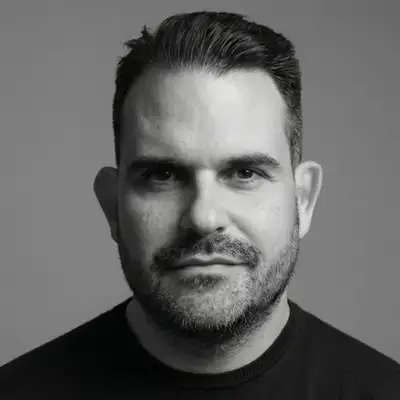
In episode 041, I had the pleasure of chatting with Arturo Isola, Co-Founder of Amazzoni Gin. An architect and designer by training, he entered the Drinks Industry co-creating the first Brazilian Gin on his journey to craft the perfect Negroni. I hope you will enjoy this inspiring Founder’s story.
Timestamps
0:00 Introduction
2:16 The First Brazilian Gin
8:48 Brand or Liquid Led Business?
13:14 Conceiving The Business Idea
20:06 Breaking into the On-Trade
23:02 Starting Without Investors
27:45 Entrepreneurs and Consistency
32:21 Should You Adapt to the Market?
37:00 Committing to The Dream
41:34 Contact Info & Ending
About the Host: Chris Maffeo
About the Guest: Arturo Isola
In episode 041, I had the pleasure of chatting with Arturo Isola, Co-Founder of Amazzoni Gin. An architect and designer by training, he entered the Drinks Industry co-creating the first Brazilian Gin on his journey to craft the perfect Negroni. I hope you will enjoy this inspiring Founder’s story.
Timestamps
0:00 Introduction
2:16 The First Brazilian Gin
8:48 Brand or Liquid Led Business?
13:14 Conceiving The Business Idea
20:06 Breaking into the On-Trade
23:02 Starting Without Investors
27:45 Entrepreneurs and Consistency
32:21 Should You Adapt to the Market?
37:00 Committing to The Dream
41:34 Contact Info & Ending
About the Host: Chris Maffeo
About the Guest: Arturo Isola
The MAFFEO DRINKS Podcast is a leading drinks business podcast delivering actionable insights for drinks leadership.
For founders, directors, distributor MDs, and hospitality leaders navigating the tension between bottom-up reality and top-down expectations.
20+ years building brands across 30+ markets. Each episode features drinks builders: founders, distributors, commercial directors, sharing how the drinks industry actually works. Not the conference version. Honest conversations.
Insights come from sitting at the bar.
Beyond episodes: advisory for leadership teams, subscription with episode deep dives and principles to navigate your own reality.
Beer, wine, spirits, Low and non-alcoholic.
Bottom-up Insights & Episode Deep Dives at https://maffeodrinks.com
Welcome to the Maffeo Drinks Podcast, I m your host, Tris Maffeo. In episode 41 I had the pleasure of chatting with Arturo Isola, co founder of Amazoni Gin. An architect and designer by training, he entered the drinks industry co creating the first Brazilian gin on his journey to craft the perfect Negroni. I hope you will enjoy this inspiring founder story. Hi Arturo, how are doing?
Arturo Isola:Hi Chris, I'm fine and you?
Chris Maffeo:Good. Good. Good. So I I was just thinking that probably this is the recording of an episode with the biggest temperature difference because here in Prague, it's minus three degrees. And tell us where you are and how warm it is and make us jealous.
Arturo Isola:I'm Sao Paulo, and today now must be 35 around. Yeah. On the verge of summertime, so it's in the two two weeks two to three weeks will be full summer, so we are we are warming up literally.
Chris Maffeo:Nice. Nice. Nice. So let's start, Lasso. It it's a great pleasure to have you here first of all, And it was great.
Chris Maffeo:We bumped into each other in a bar convent in Berlin and then we we just started chatting and we finally managed to spend some time together and got to know each other and then we said like why don't we do an episode together and and here we are, so I'm very happy to host you on the on the podcast. Yeah.
Arturo Isola:No, I'm very happy. Thank you for for having me. Thank you for giving me this audience. But I think it's important to say, yes, we bump into each other and this is important because the stars knows everything. So it was not a coincidence even if we didn't know, but for sure the the Italian comrades were out a lot on, on having this follow-up because at the end of the day, we should introduce ourselves as Italians.
Chris Maffeo:Absolutely. Absolutely. The Italian connection is always working with all the, especially with people living abroad, would say it, we always have this kind of like click, instant click that unites us, so to say. Let's start with some questions. I know you are not from the industry originally.
Chris Maffeo:You entered the industry as an outsider, not as many founders are. So how did you find yourself in navigating this complex ecosystem of the drinks industry?
Arturo Isola:I'm proud to be an outsider. This is an important driver of whatever history we're going to debate today. I literally fell into this industry by accident out of personal necessity. Since 2017, since the launch of the brand, we are gin producers, spirit producer. We are a distillery owner because there were no gins in Brazil, there were no gin distillers in Brazil, and as any good Italian will have a good Negroni.
Arturo Isola:And that's it, you can laugh, you can laugh, but this is the real story actually, it's all about Negroni.
Chris Maffeo:So that's how it all started.
Arturo Isola:Yeah yeah yeah. Personal necessity. And remember this main assumption of this whole conversation because it will be recurrent on our conversation. Personal necessity, outsider, Italian architect, moved to Brazil in 2008 and starting to feel the lack of a good gene or a good Negroni in 2015. What I've been doing in these seven years, I try to fit into the Brazilians habits when it comes to drinks, when it comes to spirits, that strangely but luckily for what happened afterwards, were exclusively around Kashasa and caipirinha.
Arturo Isola:Your podcast, I'm sure that all your audience knows very well about Kashasa and caipirinha. Not everyone know what's, what this is, but I mean, cachaca is a sugarcane liquor, is a, is a cousin of rum. By the way, it's the same thing of rum. So in Brazil, it's called cachaca and outside Brazil, it's called rum agricol. And it's widely available in Brazil.
Arturo Isola:It's proud of of Brazilians when it comes to spirit, and caipirinha is the only drinks they manage somehow to to invent around this this this spirit. Sugar, lime, and cachaca topped with a lot of ice. So basically a meal in terms of sugar and calories. So I was acting as a Brazilian as any immigrant managed to do when start to be part of a new environment, you act like them, you exchange your habits, but you have the tendency to try to disguise yourself into a local, to be cool, to be part of the system. And what I mean, I said, when do you get bored?
Arturo Isola:It's one drink, one spirit, as Italian and as spirits and cocktail lovers, that was not enough. And so I start looking out for origin, there were no genes, there were no Negroni, there were no gin tonics, there weren't anything. And so eventually I decided that I had to make mine, to make myself the gin. This is a real, real story.
Chris Maffeo:Wow. This is incredible because it's and it's very interesting for me because as an designer, as you say, I am an agronomist. And discovered, I must say that wouldn't say that I discovered it because I knew it, but it wasn't my thing until I moved to Sweden and my friend Salvatore, another fellow Italian, introduced me to it. But back then in Sweden, it was very expensive because you pay every single spirit by the unit. So when we didn't have enough money, we would drink Americano because we would save on the, on the gin soda in it.
Chris Maffeo:And it was a bit cheaper than a Negroni. And I remember at that time, even in, in Stockholm, that is a very I mean, it's one of the best cities for for cocktails. But I was struggling because people when I when I order an Americano, like, would make me an Americano coffee. So I think that everybody today talks about Negroni. Everybody play cool, like if they knew Negroni since ever.
Chris Maffeo:But actually, it's a very recent global phenomenon. Like, was it has been kept quite niche and built very well by Campari by the
Arturo Isola:way. Yeah, but not for Italians, international yes, yes, but when it comes to Italy, I remember and probably this fact was the driver of what happened afterwards recently, I can clearly remember myself on the lap of my father and at four years old and licking his finger wet on the groin, I mean afterwards he used to come back home and before dinner he had religiously rituals around the Negroni and I clearly remember having introduced, today probably this would be classified as a crime because my age, but I mean so I remember that, I mean, it's part of our cultural heritage since since many years, and I'm sure that my memory somehow managed to rescue back these facts from my childhood and was really important at the moment to take on this enterprise to buy my steel on internet. I remember five liters steel, electrical glass, a $105, I can't remember the bill. And then this was already with my other co founder, a great friend and Brazilian musician, artist and musician, a very eclectic guy, Alessande, a very close friend of mine with whom I used to have this Saturday afternoon pretending that Brazil was a cocktail country, but in fact we were my house or in his house with the right tools, with the right spirits that we smuggled into the country in our languages because they were not.
Arturo Isola:We deemed that everything started because we constantly kept provocating one to each other, if you're traveling please take some bottles back to Brazil. If you're traveling, make the same decision. Were putting money and to whoever was traveling and making the purchase list, like this vermouth, would like this bitter, I would like this gin, I would like this whiskey. Because Brazil has never been into cocktails, it's very curious fact, but there was an opportunity there clearly. Wow,
Chris Maffeo:wow, that's a very interesting story. So I would say, I mean like I'm usually asking this question, I always ask, does it start from the brand or from the liquid? So I'm assuming that it started from the liquid, but tell me if I'm right.
Arturo Isola:Yeah. First of all, let me apologize with your audience, which it's probably used to a certain script of your of your podcast, but probably today we're gonna rewrite the script because I'm not an industry guy, I bumped into this industry by accident as I said, till today I managed to manage the business in a different way. Getting back to your question, it was not about the liquid, it was not about the brand, literally this was not meant to be a business. We generally start to do this liquid because what's not even supposed to be a brand was the liquid for us, was the liquid for our friends, our Saturday and Sunday afternoon, spent at home drinking well, pretending that we were bartenders, the right bar spoon, the right jigger, the copper shaker, we really sensed this stuff and we had no place to go. And so this project turned into business after two years and we spent these two years, we didn't know that this would have turned into business.
Arturo Isola:And these two years, we just played around making the perfect gene for us. Looking backwards, Chris, I think that one of the learnings that I had from this journey, and I generally believe that was one of the key points for the success of this project, is that we didn't start the business, didn't start with the investors, we didn't start with the business plan, we've never had the business plan, we just were funding the project, the project. I mean, we bought steel for $105 was affordable for our savings, Some botanicals at the market, I mean, it was, was a hobby, a real hobby, as people spend on golf clubs or tennis rackets. This project did start from our pleasure to have our own gin and eventually afterwards our vermouth, our own bitter, to make the perfect Brazilian rooted and sourced Negroni. The hobby was around that.
Arturo Isola:And we started with the gin.
Chris Maffeo:This is interesting because this is what it is about ultimately. I'm trying to, let's say, systematize what actually happens in real life. Now, whether you are from the industry or outside of the industry, I want to make it accessible to people to, to really understand how it was and how it is for founders to find something. What I like about this is that it, I always talk about these things like, you know, target occasion or target cocktail. It sounds that it was very much about that.
Chris Maffeo:You had a very clear plan based on the Negroni to actually make a Brazilian Negroni possible, and then you started with gin and then eventually you would have gone to the other two items
Arturo Isola:of You the got the point, the trigger was Negroni, but then by the moment we started playing around the steel, we fell in love with the alchemy. And the alchemy is something that can be really sex, can be really seducing phenomenon because you see this liquid boiling up and then being cooled down and turning liquid again, and when it comes to gin, it comes out of the still, it's ready, you can drink it. So I mean this is the perfect toy, it was easy, I couldn't wait for the weekend to arrive because the infusion would have been ready and we had the possibility to mix the infusion to the steel and to play again, and all of this surrounded by friends because you can imagine, I mean it's the kind of hobby that is very easy to have big audience around because that's well, what's the problem for today? I can't come over, we are gonna distill. What?
Arturo Isola:I thought that we we are going to play in cards, we're going to play in football, we're going to watch tennis final and win, but don't know. We are gonna distill. That's amazing. That was insane.
Chris Maffeo:And when did it become a business idea?
Arturo Isola:In these two years, we had a lot of fun, but the most we progressed and we improved in the technique. We really got into that to see, okay, so the distillation is understood, now let's manage to make the perfect recipe. And so along these two years, had a lot of breakthrough, a lot of people, spontaneous advisor, friends, friends of friends of friends, friends of friends of friends of friends. We already improved enough, but it was a lot around distill and speed, distill and speed, distill and speed, because you can understand, we were the Italian architect, the Brazilian musician, I mean it seems the joke, Italian architect and the Brazilian musicians walk into distillery and you expect that something dramatic is gonna happen and we somehow managed to change the outcome of this story. At a certain point, we came across a brilliant guy, it's a very charismatic guy from the industry called Tato Giovannoni, a guru, a mentor, lovely guy, inspiring guys.
Arturo Isola:And by coincidence, had just moved to Rio from Buenos Aires because he just got married with a Brazilian girl and he wanted his kids to grow up close to the to the seas. I mean, it's a typical tattoo decision. It's inspired by the universe. And we bumped into his his gin, Prince Philip was Apostolist. And I might say that that day the Brazilians got really, really pissed off because you know that there's a certain fight between Brazilian and Argentinian, and Argentine has his gin and Brazil has not.
Arturo Isola:They put more fuel into the fire so that instead of being there jealous or challenging the Argentinian, I went after the Argentinian. And I met Tato and I explained him a project that was not a business, that just was just for us. And they, he wanted to join us in this afternoon and he had the first Argentinian genes and he saw somehow him involved in the first Brazilian gene. So, I mean, he deserved this reputation that he has and he was really, really important, reached the last, the final touches, do you know, to the recipe. And he has a gift and he had the skills to help us to fine tune this recipe.
Arturo Isola:But by then we already were traveling around Brazil, seeking new ingredients, visiting different biodiversity of Brazil, sourcing ingredients different because we wanted the first Brazilian gin to be really, really Brazilian sourced. And so we get to the final recipe and the last proof of concept, because we liked, we liked it a lot, Tato liked, he approved, we approved the whole, hence the spontaneous adviser liked was, I mean, the rest, and was respecting all the main assumption that we had to have Brazilians ingredients never used before, representing the different biodiversity of Brazil, Amazon Rainforest really, really displayed and represented big time into the recipe. We managed balance old world and new world. We were happy, we were happy. The last proof of concept was to demonstrate to ourselves that a recipe in five liters electrical glass steel was as good as when distilled in a 500 professional copper steel.
Arturo Isola:You know, you are Italian, you know, if you have someone over at home one night and you want to make a result of five peoples, you will do a great result. If one night you have 200 people over and you have to cook them a risotto, I'm not sure that you'll get to the same performance. So this was my doubt. Once again Tatu was really positive because he had the connection through American friends, project made in Brazil for the American market, I mean it was something like that. And he knew a distillery close to Rio, And we knew that there was a steel, just a steel, but for us it was enough just to make a batch, proof of concept, 700 bottles, 1,000 bottles, that's it, we will have bottles for family and friends, for many parties, for many gift, for many and that's all.
Arturo Isola:I'll be back to my architectural, Architectural Bureau, Aleksande will be back to this music. And so we drive to this place, two hours driving from Rio, an amazing place, colonial farm, perfectly kept, 300 years old, but palm springs, lake, water everywhere, perfectly located halfway between Rio and Sao Paulo, no off road access was perfect. And everything was perfect until the point we met the owner of distillery, a very nice guy, our age, and we asked him just to make batch and he candidly replied, listen, I cannot distill because I don't know what gin is, but if you want, I have a lot of space here, why don't you set up your own distillery? And we were shown to this room that in his mind was the place that was perfect for our purposes, our purpose is we hadn't purposes of setting up a distillery, but it kind of poked us. And this place was, I mean, it's a room, facade was beautiful, the six windows, big windows, blue frame, the colonial style, no roof, totally messy, totally shit.
Arturo Isola:But then again, I mean, okay, okay, thank you very much. This is not our purpose. But then coming back home, the thought were we had an unique opportunity in a lifetime, we can be the first to do something in Brazil, not something strange, a spirit. And so that was the trigger, long story short, we quit our job, we decided that this was an opportunity that had to be taken, and we start working around it. So that day this hobby turned into a business, We decided that we had to create a distillery, a bottle, a label, a brand, and then eventually to launch the brand in Brazil.
Arturo Isola:That was the day, So 2000
Chris Maffeo:let's fast forward to the moment in which you're actually commercializing the brand. So you have a unique opportunity because you have a unique selling proposition in real terms, because I mean, are the only Brazilian gin at least back then. How did you start? Like did you approach like where you basically sourced from the friends and family and you, how did you branch out into bars, restaurants, which, which city you approached first? How did you think of doing the first blend or how to move in the first steps into trade?
Arturo Isola:As you said, we had an advantage being the first Brazilian gin, but in fact it was more more a penalty because we were not just launching a new brand, we were launching a new category. And we realized this very, very soon that we had to educate before selling whatever, have to educate the market. And so the strategy we defined also driven by, I remember one day we asked Tato, okay, we're gonna launch the brand, so you are a guy from the industry, you are on the other side of the counter, so you are a producer and you are a bartender, so what would you suggest the strategy we should follow? And I remember his answers were really, really straight, he said you have to focus on three things, bartender, bartender, bartender. And so it showed us the way that we had to build this brand on trade and it was really, really easy.
Arturo Isola:I mean, this perfectly matched with our vision because we had no connection whatsoever, we had no skills whatsoever in sales, management, whatever, we were outside. We had to run this business by instinct and common sense. And so we set the strategy that was, you have to be the first in your street and then in your neighborhoods and then in your city and then in your country and eventually in the world. And we triggered, we pulled the trigger of a personal network, mouth to mouth, Tato managed to open the first important doors. Even if Tato left the project, very soon we started, he had to left.
Arturo Isola:So we had this, this mentorship that he gave us, but practically in execution, he wasn't there. So we had to learn very fast, but when it comes to execution from the first bottle to where Amazon is now was totally improvisation in Italiano. We we had to to Improvise. We didn't have the the the manual to run the business. Had to write down this manual every day.
Arturo Isola:And the only thing that you can do is to have not background. So people, people, people, and that's it. And I think that this starting the business as not the business was a really important stuff still today is also to don't have any pollution by previous experience, to have also not having any pressure about investors. There's no money there. Okay?
Arturo Isola:This was just our saving, we had to stop several times because we ran out of money, we had, and then we eventually restarted. Remember that the first business plan we made, there's a curious fact because at certain point we were approached by this incubator, very, very important brand incubator in the world. We were selected as an emergent brand in an emergent market, we were doing very well, but I mean, we were, we had just one year of our business and we agreed to have this conversation. And the first things they wanted was a kind of balance sheet, business plan, some due diligence, financial due diligence. And I remember, I think I looked to each other, shit, we don't have anything that they asking for, real cowboys.
Arturo Isola:Mean it's back looking backwards we have been totally crazy. It was a spreadsheet, two columns, Artur Alessande, and we were just writing down, it was a shared file, so it could feed this file and I could feed this file by my side with expensive. So today, the date, today Aleksandr paid, I don't know, the Juniper, so 3,000. And there was a bottom line in which was the final balance, so Arturo owns X thousand Toric Shade or the other way around, this was our control. And at that time the business had already got to a certain dimension.
Arturo Isola:So the learning here is no pressure, no timeline, no investor to give whatever statistician or whatever report, so we were free to create, create storytelling of a brand, create the marketing of the brand, create this narrative of this new category, working out resilience around what is. We had our own distillery, it was really important marketing tool to bring people over and show them how Gene is made. I mean, what's a botanical or what Juniper is. Juniper doesn't grow in Brazil, so Italy, new botanicals for them. And we were free, but on another hand, we had serious problems of control management.
Arturo Isola:So there was a wake up call that, okay, you have cool brand, you being disruptive in running a brand into the industry, you are doing pretty good because we were selling well, even it's in a very limited geographical region that was Rio De Janeiro in Sao Paulo at the time. But man, power is nothing without control. So, I mean, just slow down and put the financial together and it was really well. But this is just to bring in a story about how this was not a business, even when already it was a business, we were running the show still as a hub. And this is really important.
Arturo Isola:When you are committed with investors, you are committed with deadline, when you are committed to business plan, you normally have to go down to some kind of compromise. But when you just want to make things because you really believe in excellence, you really believe in quality, and you know that we were the first in Brazil, but we were the last in the world to produce gin. So we were not, I mean, we were kind of disrupted in Brazil, but Amazon was born since the beginning to be an international project, meant since the beginning to be our opportunity to bring the Brazilian excellence abroad, to raise the awareness around how important it was to preserve the Amazonian forest, we had this mission.
Chris Maffeo:Do you think that was crucial to the success of the Brazil? Absolutely. Like, you know, the fact that you didn't have any tools To
Arturo Isola:Yes. To Yes. Looking backwards, Chris, if we had a business plan, we would not have started the project. The project was not sustainable. We were seeking the excellence and the disruption of the project we wanted to execute and we managed to execute was not sustainable at the moment, at that time for that volumes.
Chris Maffeo:Because that's very important I do specify because I think a lot of time what is misleading is that the punk rock or cowboy, it needs to be managed somehow, but at the same time, it's also not to be misunderstood with persistence and consistency and knowing where you want to go and go there, you know, no matter if it takes time, because you were not in a rush because you didn't have a doctorly review with a, with a brand owner because it was beautiful, but at the same time you were going to bars, you were you know talking to everyone, you were like going to the distillery every day and you know like you were committed to to drive the project.
Arturo Isola:If you want to be entrepreneur, if decide to dedicate your time, time is the most valuable assets we have. We all have the same, so the way we decide to use it, it's totally on us. And so when someone of us decided that this asset, they want to invest in being an entrepreneur, so to be a doer, to do something, in an ideal world, this time should be invested to be the one and only. Do you know? I mean, that's my vision, to make something different, even more.
Arturo Isola:So in an ideal world, is the demonstration really clear that, I mean, you shouldn't look at the revenue, you shouldn't look at the bottom line. In an ideal world, the most you can be yourself, not contaminate and not pollute by external factor, the more probability you have that your project will be a successful one. We are very, very, very, very demanding, when we are doing stuff for ourselves, the level of the demand is the highest, So you have to satisfy yourself. And if you have external experience, you probably, you will decrease your level of satisfaction about the project because okay, I have to save some monies on this item, I have to speed up the process because I have a deadline, my business plan is telling me that I will run out of money. I mean, I'm speaking as a dreamer, but I think that in an ideal world an entrepreneur should be a dreamer.
Chris Maffeo:And to be honest, like I mean, because it sounds like a bottom up, you know, build of the brand, that's the crucial thing because the moment that you I'm always saying like be careful what you wish for, no? Because sometimes, you know, you may get some good opportunities like getting a listing in a supermarket chain or getting a listed into a big retailer or anything like that. And then yes, it could be a good opportunity for growth. But then if you haven't built the fundamentals, if you don't build a building with solids of fundaments, you know, then you cannot build it very high. It may stay up for a a few days, but then it starts to shake and eventually falls down.
Chris Maffeo:So that is a crucial aspect of taking the time in building the fundamentals, learning what works and what doesn't work and then going
Arturo Isola:to the next always phase of the by step. Let's say, okay, let's try to wrap up what I was saying in, I mean one line to put in this manual, I would use just the words, this consistency, walk the talk And in the ideal world, an entrepreneur, whatever is this field, whatever is this segment, whatever is this mission, I generally believe will be successful if he walk the talk, if he does, what he says. If at a certain point along the way it has to change because the compromises, because whatever external interference, this is a problem, man. This is gonna be a problem, the market is gonna perceive, I mean, the honesty of the project will be affected and therefore, I mean it's integrity. In ideal world, you have a vision and you decide to secure the vision, you couldn't change along the way, you couldn't change anything because something new happened.
Arturo Isola:This is my vision, this is my ideal world, we know that's not possible.
Chris Maffeo:I remember we had this conversation in Berlin where we were chatting and we were talking about changing and adapting to the market when needed, no? And then you said you shouldn't adapt to the market, know, you should be very strict with what you believe in. You clarify that thing? When you were going to bars and selling a Brazilian gin, I mean, was no gin category as you said, you know, like there was no gin drinks, I mean like everything was around you know cachaca and caipirinha. How did you manage to really stick to that and be focused in convincing bartenders to eventually, you know?
Arturo Isola:I think that this taking on on parts, the first part is about being yourself and not to adapt yourself because the market is asking you to do. I think that this is primary. By the moment you start to adapt your vision because the market is asking you to change, think that you should change your product. If you decide that you don't fit into the market, you should change your project. But I mean you should change, you should throw away the project you were, but before to get to this conclusion, there will be always a niche in the market that wants to know a good story.
Arturo Isola:And a good story is believable, the story is aspiring, it's a story that someone that just didn't accept that the market was asking something and it changed the market. The old story about a reform to have powerful chariots with more horses, instead of putting more horses, invented the That's the real story. So the market was asking for more horses and it had a vision of something mechanical and invented the car. So consistency, once again we are going to consistency. We were the first Brazilian gin, Brazilian, I don't know if you know and your audience knows, but Brazilians likes a lot imported stuff because they had an access to imported stuff for so long.
Arturo Isola:The last part of the last century, importation were forbidden in Brazil. So it was the American dream, but I mean, seeing stuff by the television, but they they couldn't have. So standard gin when it comes to our category, if it's imported, better than a super premium gin if it's Brazilian, this is the equation. So once again, had to decay the market, we had to convince Brazilian open that eventually we're hoping to accept a new product, a new category, that a Brazilian product could be good. And I mean, it was really tough.
Arturo Isola:So people, I mean, consumer by consumer, this was a really intimate mission. We couldn't go massively. And so when Amazon was spread as its base of clients, that was not just clients, there were, I mean, Praetorians to the brand, they had the time and the patience to hear our story, to see two random guys putting everything at stake because they decided that mission had the potential to be a disruptive one and there's a lot of people nowadays in the market that like this kind of story and they want it, the real luxury today is something new, it's not the formation that we all had access because we use the same platform, we use the same channels. The king is the one that has the information that the others doesn't have. We had to look at these people to create that, of course, this couldn't be far away from here.
Arturo Isola:So it was the strategy was to be to go inside out in our inner circle and then spreading out. I would do the same if I had to start another business today, there's no doubt about it. And in this, it's just a parenthesis, digital is a tool that we didn't use it. Sorry. It was really personal and you're younger than me, but I mean, I belong to the seventies, we've grown up without technology, without digital and I still believe that the most powerful marketing and sales tool is the personal experience.
Chris Maffeo:What is very interesting and it's eye opening for me is to, is that probably the fact that it was a crazy vision what you went for because, you know, you put your job aside and you dedicated yourself fully on it, it touches the heart of people. Because then it's like, I mean, like this this guy is not crazy. I mean like he must be onto something. Let me join the ride of these people. Let's recognize what they're trying to do.
Chris Maffeo:And I see it myself as well when I do stuff on my own. I mean like the podcast is an example of this and the recognition that I get from people is also almost like you have a podcast and how do you manage to do that? Yeah, I do it, you know, nowadays it's like 9PM and my daughter is asleep and I'm talking to you from Brazil because I commit to it and every week I deliver an episode to my listeners, know, I don't do it as a game like okay it's three episodes and then I'll do six more next summer, you know. So I think what a lot of people get wrong in this business is that they think that they can do it as a part time, kind of like it's gonna be easy, it's gonna be fun, I'll go to the bar once and I'll make it up, then all of a sudden results.
Arturo Isola:You have to go early. If you have a vision, if you decide that you want to use your most valuable assets, to use your time, to sacrifice your time to your family, to your wife, to your son, to your friends, to your father, mother, father, you have to use, have to use for a purpose. The purpose is not part time, purpose is a vision, it's a dream, so I mean, I think that we are not heroes, I'm myself inspired every day by many stories around the world, not necessarily in the spirit industry, I've been always looking for worldwide new stories, new project, because I mean, I want to know, I want to know the cool factor, I want to know who's taking, who's doing something new, who's having new vision, has new interpretation of something that already existed, this is applicable to products, services, experience, whatever, so it's not just about retail and brands, whatever can be offered by people that decided that want to do something different, that what's available in the market, it's not enough, it's old, it's not suitable anymore. And since you gave me this opportunity and I think also that we are running out of time, but I wanted to tell you a story which is really important to understand the Amazuri project, the whole project.
Arturo Isola:And this is an Amazonian legend, so it's from the Tupi Guarani cultures, the culture that rule the life into the forest. And this legend is about Naya, a young Indians that heard in her village that at a certain point had she been able to hug the moon, she would have become a star. So she spent all her life in this naive dimension of trying to act the moon until a certain night, on a full moon night, she was sitting on a shore of the lake and she saw the full moon reflected on the surface of the water. She decided to dive into the lake to finally hug the moon and not knowing how to swim, she drowned and she died. Just see the moon, the woman in Tupik Gurani legend, watching all this scene, took her from the bottom of the lake and made her as a star, the most bright star that is close to the moon nowadays.
Arturo Isola:How this story, this happy ending story has to do with Amazonian, I mean it was inspiring to us, matter how impossible, crazy, apparently unlikely is your vision, if you keep trying, if you really want to happen, eventually you would become a star. And this is was, and why still today our labels of our Amazon rage, there's a slogan, means from the water star is born. It's all about that. It's all about that, to take some risks.
Chris Maffeo:Wow, that's beautiful way to end this episode. And thank you so much Arturo. Let us know how, how can we find you? How can people contact you? Web site, Instagram, LinkedIn,
Arturo Isola:it's always AmazoniGin, double Zed or 15 countries, Europe, USA, starting Asia now, Brazil of course, and just let me make an invite to you and to all your audience the possibility to come to Brazil to visit the distillery, in the Iro De Janeiro, the most magical place you've ever seen and it's very, very unique example of Brazil ness. So the the door are wide open to you and to your followers, audience, friends, and family. I will be happy to to have you guys whenever you want here.
Chris Maffeo:Fantastic. I think many many will will take the the opportunity.
Arturo Isola:Move out this this winter, miserable winter.
Chris Maffeo:Now I would take chance.
Arturo Isola:Brazil. Carnival is is upcoming. Just saying.
Chris Maffeo:Yes. I just saying.
Arturo Isola:Thank you Chris,
Chris Maffeo:thank you Thanks so much for being against. That's all for today. If you enjoyed it, please rate it, comment, and share it with friends and come back next week for more insights about building brands from the bottom up.