Subscribe
Share
Share
Embed
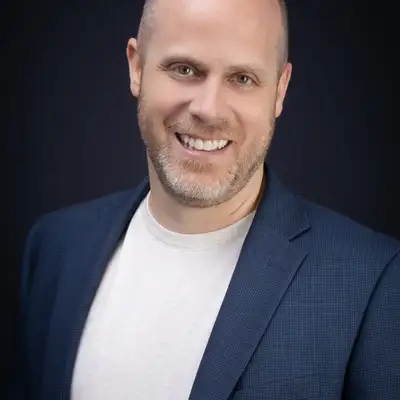
Welcome to Inside Marketing with MarketSurge — your front-row seat to the boldest business insights, marketing breakthroughs, and entrepreneurial real talk.
Hosted by Reed Hansen, Chief Growth Officer at MarketSurge and a digital marketing veteran who's helped scale everything from scrappy startups to Fortune 500 giants, this podcast dives deep into what’s really moving the needle in today’s marketing world. Find us at Marketsurge.io
Each week, we’ll break down the latest marketing and business news (minus the fluff), explore tech trends you actually need to know, and feature unfiltered conversations with the most interesting minds in entrepreneurship and marketing.
Whether you're a founder, a marketer, or just a curious hustler looking to level up, this is where growth happens—loudly, smartly, and with just the right amount of sass.
Subscribe, tune in, and let’s scale something legendary. 🚀
Speaker: Welcome to Inside
Marketing With Market Surge.
Your front row seat to the
boldest ideas and smartest
strategies in the marketing game.
Your host is Reed Hansen, chief
Growth Officer at Market Surge.
Reed Hansen, MarketSurge:
Hello and welcome back.
Today on Inside Marketing
with Market Search.
We're joined by Len Ward, a former
Wall Street VP turned digital marketing
pioneer, and now managing partner
at Conexus, where he is helping
businesses lead the charge in the
AI era len's career began at Morgan
Stanley and Credit Suisse during the.com
boom.
That was real boom times an
era that taught him firsthand
how new technologies can upend.
All kinds of industries really overnight.
That curiosity led him
into entrepreneurship.
He built an e-commerce business
from scratch, taught himself SEO,
paid media and digital growth
before founding and scaling his
own full service marketing firm.
Today Lend brings together
financial insight, marketing
expertise, and AI innovation.
He's here to share what is really
happening at the intersection of AI
marketing and business strategy, and why
leaders need to rethink their approach
right now if they wanna stay competitive.
Thanks for joining Len.
Len.
Len Ward: Thanks for having me, Reid.
Reed Hansen, MarketSurge: Clearly
I'm like my, my tongue is stumbling
today, but I am so glad you're here.
Now you have seen many eras
in financial booms and busts.
And particularly you were
in Wall Street when the.com
boom was happening Now.
That was obviously a period of great
disruption, wide adoption of the internet,
e-commerce technologies and whatnot.
And today we're seeing a big
adoption of ai, or at least a big
upending of a lot of industries.
Do you see any parallels between that
time period, anything that's instructional
that we can learn from your experience
from how business leaders can prepare?
Len Ward: Yeah, the similarities.
It's funny 'cause I just actually
had a conversation with somebody
and the similarities that I'm seeing
right now is there was a lot of
skepticism in the dotcom era and
I think it was blind investing.
But I do think a lot of people
questioned what was going on and
they were questioning the investment.
They were questioning the technology.
But anytime somebody actually.
Went on the internet and actually, or
any, used, any type of digital tools,
which again, was all new back then.
Even things like email and so forth,
that's a little bit, predating the.com
era.
But it, there was definitely
a lot of skepticism.
There was a lot of
excitement for and so forth.
I'm starting to see the same thing now.
You're starting to see a lot
of pushback on the investments.
You're starting to see a lot of
people saying where's the ROI?
And a lot of people are, questioning.
Jobs and questioning the future
of business the same way they
were questioning that stuff.
98, 99, 2000.
I'm starting to see those same
questions right now where it's, where
the paths are separating is, I think
everybody in the room with internet.
When we were sitting in board rooms,
conference rooms, meetings and things
like that, years ago, everybody
knew that there was a runway.
You had a bit of a runway to go and
this build out was gonna take some time.
Reed Hansen, MarketSurge: Yeah.
Len Ward: problem with AI
is that you don't, we're not
gonna have that type of runway.
We're not gonna have 25 years to
let this digital thing grow out.
I still think there's
a massive undertaking.
Data centers, electricity, all of that
type of people getting to know what,
AI is, we still have that, but it's not
gonna take years and years to build out.
I think you're looking at.
Two to five years before this thing
could be fully built out and implemented
in our daily lives to the point where
we won't know what to do without
ai much the same way right now.
If you were to tell somebody, take
the internet away from me permanently
right now, how would you function?
90% of the population's
gonna say not good.
We'll be doing the same thing with ai.
It's just that the speed of
AI is where this is differing.
It's really coming out as fast.
Reed Hansen, MarketSurge: Yeah.
Yeah.
That's really interesting.
And and know you were in rather
than like directly in the
tech role you were in finance.
In that time period obviously was, I
think it made a lot of millionaires,
a lot of successful people.
What was the impetus to leave
finance and go into entrepreneurship
and digital marketing?
Len Ward: I fell into this.
So basically my Wall
Street time came to an end.
With Credit Suisse.
And there again, the term runway, again,
there is a bit of runway on Wall Street,
where, you know it's, some people have
long, great illustrious careers on Wall
Street and a lot of people put their
time in and then they check out and
that's where I was through a merger.
With the last company I was with
Credit Suisse, I was part of one of the
casualties of the merger and so forth, so
I had to figure out what I was gonna do.
And I actually had, between a severance
package and having a couple bucks,
I was like, all right I'm gonna go
try to buy a business on my own.
I want to do something on my own, and I
just wanna try to figure something out.
So I met a few different people
that had their businesses for sale.
And then we stumbled upon a business an
event ticketing business is what it was.
So I, stumbled upon a gentleman who
was selling the event ticket business.
We sat down with him and we
walked away and realized.
Why am I gonna spend this, all this money
buying this business when I need to turn
around and buy this inventory myself?
Reed Hansen, MarketSurge: Yeah.
Len Ward: so that's how it all started.
But right when I was buying,
it was right when people were
starting to buy things online.
That's when things were StubHub,
which is now everybody that's a
household name, all things like
that was really starting to rise.
So we moved in and we figured,
basically said, all right, we're
gonna start our own business.
So we started from the ground
up and it was a complete.
Divergence from where I was
on Wall Street over to here.
But the reason that drew me here was
that my clients that I was entertaining
on Wall Street, we always had to go in
and buy really high-end tickets for 'em.
High end Broadway, high-end
sports, high-end concerts.
And I remember the amount of money
that we were paying these brokers.
I'm like, man, what a business this is.
And.
Short story.
Long story short, when I stumbled upon
it, I'm like, let me give it a shot.
And it ran pretty well.
But that e-commerce showed me the, so I
took everything I learned from the.com
era of watching these companies
talk to management, why you should
invest in this and why Wall Street
should believe in this future.
And I took a lot of that knowledge
and I bought it over to the e-commerce
side as I saw this digital world
really starting to build out.
And that's what kind of started
setting me in flight in a digital
world, all the way back in oh 4, 0 5.
Is when I really started doing it.
Reed Hansen, MarketSurge:
Wow so quite early.
n now obviously there's been a lot of
changes over the last few decades and
it's nice to have some, there aren't
many with, decades of experience
that can speak with that perspective.
You've said that we're moving from
a world of where search and retrieve
was like the primary function of
technology to now it's solve my problem.
Now, can you unpack those two different
approaches and why that is becoming
such a big shift for marketers?
Len Ward: Yeah, so that's actually
a great question and that's one
of the things that I really.
It's like the, the hill I'm dying
on right now, I guess you could
say, or that I'm ready to die on
search and retrieve is simple.
You would go search for a product
on Google, Yahoo, whatever search
engine you're using, Google, and you
would look at all the links, right?
And you would start clicking through those
links and you would try to solve your
problem by gathering all that information
and saying, okay, after this blog, or
after, maybe I looked at this video, or
I went to this website, I'm beginning to
understand how I'm gonna solve my problem.
And that's how people were doing things.
That's how we were marketing forever.
It was like, okay, we're gonna just put
all the information out there and we're
gonna let the users solve their problem.
And that's how you market it.
That's how you build campaigns.
That's how companies build
businesses all around that content,
video, text, whatever it may be.
Now we're moving over to the
world of solve my Problem.
So with chat, GPT, with perplexity
with Claude, even with Google Answers
the, the actual AI that Google puts
up right up the top, when you search
something, you're basically putting
your problem in and you don't have
to go dual all that work anymore.
It's the problem is solved immediately.
You're looking at that answer and
saying, here's what I'm thinking about.
Here's and here's the
answer, and it's right to it.
So you don't have to scroll
through all these websites.
As a matter of fact.
You don't even have to be on websites.
And even on websites, you're
looking for your answer.
Now on websites, you can actually put
AI chatbots, which solve your answer.
So it's a very unique world where before
you're trying to position content to get
eyeballs on that content, to understand
the content and show why your company
solves that company's pro or that
company's problem, or that individual's
problem over to individuals and companies
are now like, solve my problem, and
boom, the answers right in front of 'em.
We are headed for a massive shift
in marketing, lead generation and so
forth, and it's actually already here.
Reed Hansen, MarketSurge: Okay.
Okay.
And obviously the enabling
AI just is such a.
Game changer.
And now you've you've used the
term ai, workflow engineering.
Tell us a little bit about what that is.
And maybe if you have any examples
of how a company could use it to
cut waste in sales or operations.
You mentioned the support
bot on the website.
Are any other examples come to mind?
Len Ward: I think the, that is the
one we'll probably hone in on 'cause
it's the easiest to understand.
There is quite a bit you can do in
things called vibe coding with products
called lovable rept and so forth.
So you, we will, maybe we'll touch
on that a little bit, but the easiest
way for people to understand is.
If you're an e-commerce company if
you're a company that has, maybe
you're a B2B manufacturing company
and you have very in-depth products
and you have to search the website
to really identify the products, or
maybe somebody's coming to your website
'cause they have a project and they know
that they need you to make a custom.
A product for them.
Or maybe, they're coming as an e-commerce,
visitor, and there's a certain type
of product they're looking for.
AI chatbots are great because it harvest
all the information that's on your
website and in what's called a data
room, data lake, however you wanna refer
to it, where you put all your, you.
Owner manuals, user manuals,
all of that like in a room and
it pulls all that information.
And when a user goes to the website,
it can then ask a question and say, I'm
looking for X, Y, Z because I'm doing
this type of pro, this type of project.
And that chat bot will look at all
of the information you have there and
actually create an in-depth conversation
with the individual and say, this
is what you most likely need because
of, and it comes back with that.
It's very different than.
Somebody may be thinking I'm
just, I just put a search bar
on my website and it comes up.
No, that's still search and retrieve.
This has solved my problem.
That's a workflow where typically
they would, maybe you would
have to interact with a real
live chat, person on a website.
A lot of people operate their own
live chats or they have to call
the company or email the company.
That's a workflow process now that if
you have the data organized if you build
the chat bot properly on the website,
and there's a lot of great off the
shelf solutions, and most importantly,
if you train it the right way, that now
eliminates workflow issues of, customer
service, making sure they can help
get these customers to the finish line
and purchase a product and so forth.
Or it actually will help sales.
Because you're arming the
individual with all the information
they really need to know.
So when they do fill out that contact
form, now they're, the sales is
getting a really high quality lead that
they're, pretty much on the goal line.
They could just have to punch that
ball in, per se to get the sale.
So that's what I mean by workflow.
You really wanna identify where
there's bottlenecks, there's
too many people involved.
You have to talk to the consumer.
And when you have that and you identify
those bottlenecks, and that's simply
an AI blueprint, at that point, you can
then start thinking about AI workflows.
Either you're custom building using
vibe coding, or you pull it off
the shelf and you implement it.
And now that's where you're moving
into AI workflows, and that's where it
starts integrating into your business.
And you at that point are in flight on ai.
Reed Hansen, MarketSurge: Okay.
Vibe coating is actually
something I'm interested in.
I've dabbled in it a bit.
I use Cursor for instance, as,
You may be familiar with.
And I am not, I don't have a
coating or technology background.
So I've been pretty
impressed with what I can.
How do you feel like, is the average
marketer able to take this, or do
you think that this is something
that accelerates the developers and
shortens their development time?
Where do you see these vibe
coding tools fitting in that,
the AI workflow building process?
Len Ward: I think that's
a good, great question.
I think a lot of people are wondering
what's happening with Vibe coding.
To me, vibe coding, the best thing it can
do right now for marketers is you're now
gonna create marketing assets at scale.
Whether it be landing pages, whether
it be some sort of calculator, whether
it be some sort of problem solving
software, whatever it may be, typically.
That would take a long time.
As as a marketer, you have to
go, contract a, a some sort of
team to come in and build it.
It can get really expensive, really fast.
When I keep saying we're moving
into a solve my problem world for
marketing vibe, coding is gonna become
one of your most important assets.
You're gonna have to start thinking
about what the consumer problem is,
and then whatever, however you want
to go about coming up with the idea,
chat, pt, Claude, or even just your
own team and start creating products
that are gonna solve your customers.
Customer's problem if you're
in the marketing world.
So vibe coating is gonna become
a major part of your business.
And if it's not, and if you're pushing
back on that I would highly recommend
not to do that if you're in the marketing
world because your client is going to
expect vibe code products to be up,
running and hosted within days and
you're gonna be able to need to do this.
So I think it has an
integral role in marketing.
I can always get into the crazy world
where I do believe marketing ultimately is
gonna move into agent to agent marketing.
We can get into that another point,
but that's where I think vibe
coating's even gonna be more important.
So vibe coating to me is really
gonna move into a very important
spot for marketers, and I've said.
If you're typically have a background
in content writing, maybe you're a
creative director art director to a point.
But even an SEO person, you
know how to talk to, how to,
basically you have language.
A lot of people don't understand you
know how to find something really quick.
You'll be surprised how well SEO's.
Knowledge transfers over to a vibe
coating product and how they talk about
what they're looking to build because
they're trying to solve a problem.
So SEO is one of the best things you
can do to preserve your career right
now is get to know vibe coating, get to
know it back and forth because you'll be
surprised how much your skills are gonna
transfer over into vibe coating world.
Reed Hansen, MarketSurge: I love it.
I, I I've found it such
an empowering experience.
It's just like you said, it
speeds everything up, no it gets
me closer to the development.
I've had some experiences where I've made
some apps from scratch and others where.
Had a really good start and I've had a
a technical person come in and finish.
So lots of opportunity there.
And you were touching on this obviously.
Ai, workflow engineering, all these
things we're talking about are going to
affect roles in the marketing function.
Now, you talk about SEOs, I think, this
is gonna be super empowering for them.
Are there roles that are at risk?
Are there roles that are going to evolve?
What, where do you see maybe potential
new opportunities for marketing?
Len Ward: Yeah, so I'm very blunt in
my, over two decades now experience.
I remember when we were back in the ticket
business and we looked at things like.
StubHub Live Nation, Ticketmaster,
starting to sell tickets.
Even when you were able to buy tickets
for certain types of events before the
public was, but we knew that companies
like StubHub was an existential threat to,
if you were an individual ticket seller we
knew it was gonna be a bit of a problem.
And I look at this as in the
marketing world as a, as a.
Beyond an existential threat.
I think I've said this
before on another podcast.
I'm like, if there's 10 people
in a room that are marketing,
they're like, that's their career.
That's gonna be down to two within
the next 18 months to 24 months.
I actually do believe that.
And we are all in the marketing space.
So I'm talking very candidly.
I'm my thought processes and I,
this is something I talk to people
about, become an AI pilot, understand
how to use ai, understand that.
Like even Conexus right now, we've
built entire AI marketing stacks
that could literally replace a
marketing department tomorrow.
And I don't say that lightly, and I
don't say it being mean, but, and we
have a couple really, excellent people
on my team where they can come in and
they AI pilot it and it's, it runs
like a pretty large marketing team.
That's gonna be a reality.
The reality is you're gonna walk
into a company, AI stacks are
gonna be there waiting for you.
You're gonna sit down in the cockpit
and you're gonna be flying these things.
So my.
That's my best recommendation
for anybody getting in marketing.
You need to get to ai.
You need to understand business processes.
'cause that is so important when
you're thinking about AI and solving
problems and marketing and all of that.
It's not just, oh, how can I,
position, a product grade and or,
this is a really good tagline.
I'm not saying that stuff's not important,
but really understand the business
side of things, understand the finance
side of things and understand ai.
You gotta make it your life.
I have come across quite a few
marketers who are pushing back.
There are people who are like SEO's not
gonna die and it's gonna be this, it is.
Guys come.
Do you really chat?
BT is at a billion users a week right now.
If you don't think, Google's not
looking over at shoulders saying,
we got a problem on our hands.
And SEO lives in a world where,
again, search and retrieve
opposed to solve my problem.
So yeah, there are some people,
copywriters, SEO programmers, web
developers, like we're all at risk.
But the ones that aren't at risk
are the ones that know how to
leverage the AI tools and they can
now do more jobs than just SEO.
They're able to sit around and be
like, I can hit almost anything for
marketing 'cause I'm an AI pilot and
I sit at your stack and I run it.
So that, that is my thought process, but.
I do push back firmly on people
who say, no, SEO's, not dying
or marketing's not going away.
It's not, but the amount of people
doing it is absolutely gonna go away.
And that's unfortunately where
we're headed in the marketing world.
Reed Hansen, MarketSurge: Okay.
Alright.
I guess maybe let's talk a
little bit about, some of the
misconceptions that, that people have.
You're getting marketers pushing back.
I'm sure there are executives that have
been in their industry, very specialized
knowledge for decades and now everything's
on its head with ai from a human capital
standpoint and, designing your workforce.
What are some of the biggest
misconceptions that these
leaders have about AI adoption?
And do you have any advice for them?
How do you get on board?
How do you get up to speed and make
this an asset for your organization?
Len Ward: Like questions where
they're doubting the AI or they're,
Reed Hansen, MarketSurge: yeah, exactly.
Or or even just maybe they're
willing and interested, but they,
they envision AI doing something
that is just not ready to do.
Are, have you seen any examples of that?
Len Ward: oh, yeah.
Yeah.
They're, I think that's one of
the biggest problems the stock
market's looking at right now.
The stock market's being
fueled a lot of times.
I know institution, controls the market,
but the retail investors massive.
And you have people investing
in AI products right now
that just clearly are not.
If they're not, it's the revenue
does not equal out to what
the, the stock is trading at.
So we also live in a highlight world.
We all know that, a TikTok world
and everything's a highlight
and, and we're expecting.
This AI thing just happened immediately.
Like I think unfortunately, and
here I am, the old man on the lawn.
I think a lot of times with the younger
generation they're looking at and
saying, they just sit and look at videos
and they see the highlights of all
the great things that have happened,
but they don't understand the blood,
sweat, and tears underneath it that.
Get you to that point and
that's a big problem right now.
And that's something where I
think kids don't understand
how hard it is to get there.
Like we have a massive build out
on ai we have to take care of.
Yes, the world is gonna look
great at that point, but we
do have a build out, so I do.
When I do speak with business
owners, I do give them that.
I'm like, we have to understand
that we are in the first inning
Maybe the top half of the first inning.
Things look and I show them, we just put
a couple demos right in front of 'em.
It blows 'em away if
there's any doubt on ai.
We literally run a couple of
lms, we build a quick vibe coding
product form right in front of 'em.
And we do a chat bot and right away
they're like, okay, the world's forever
changed, it's easy to get somebody
on board with AI once you show them
the products and they look at it.
So when they do doubt that or they say,
Hey, I'm thinking about it, that's when
we start saying, ask me the last time
you've went through a day and you have
not heard the term AI chat, GPT, open
ai, or something along those lines.
And they say I can't.
'cause most business owners are
heavily involved in the stock market
because they're paying attention to it.
They wanna see what's going on.
Reed Hansen, MarketSurge: Yeah.
Len Ward: can't turn on CNBC or look
at the Wall Street Journal without.
AI being 70% of the news, so
convincing them is not hard.
That it's the future.
Getting them to invest in it
is a whole different game.
The way to get them to invest in it is
showing them the actual business outcomes
are gonna happen if they implement it
now, and how long that's going to take.
I do caution business owners who think
we're gonna wipe out 50% of our personnel.
I don't think, I don't think mass
layoffs are gonna happen immediately.
So I'm like talking a little,
going off the rails a little
bit with the conversation.
But the most important thing we
tell business owners right now is
you have to embrace it immediately.
You're not gonna have a 25 year runway
like you have with the internet.
Identify one or two people in your
company that you think are tech
savvy and understand all the business
processes and let them lead your AI desk.
And normally when you have that
conversation, that's how it works.
But the minute a company.
Does one AI product and
they see what it does.
They now they embrace
the true magic of ai.
So hopefully that answered your
question, a little broad answer.
Reed Hansen, MarketSurge: no, absolutely.
And sorry I was a little meandering, but
I'm just interested in you have a great
perspective and I think you do a great job
explaining it in terms that the average
marketer or business owner can understand.
Len Ward: Yep.
Reed Hansen, MarketSurge: you for that.
Now, Len, if people are interested in
working with you, they're a company that
would like to introduce more AI into
their organization, how can they find you?
Where are the best places to reach you?
Len Ward: Best place to go is conexus.com.
You can fill out a form
or give us a phone call.
When you work with Conexus, you
work directly with me, you work, and
in, I bring my talent team along.
We all work in house.
You get our AI stacks, you
get our AI assembly lines.
And the good thing about us is
we don't take everybody is, we do
try to limit 'cause we, there's
only so much bandwidth, right?
So we do try to limit who we take, but
very easy, and I say it all the time.
If anybody wants to pick my brain, have
a quick conversation, either reach out to
me on LinkedIn or fill out a contact form.
I'm more than happy to have
a conversation with you.
Reed Hansen, MarketSurge: Awesome.
Thank you so much for joining Lynn.
Len Ward: I appreciate it.
Thanks Reeb.
Speaker 2: Want to stay ahead of what's
actually working in marketing right now.
Head over to Market surge.io
and see how we're helping businesses
grow smarter, faster, and louder.
That's market surge.io
because your next breakthrough
shouldn't be a guess.