Subscribe
Share
Share
Embed
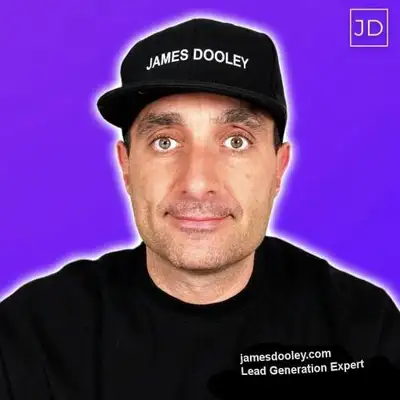
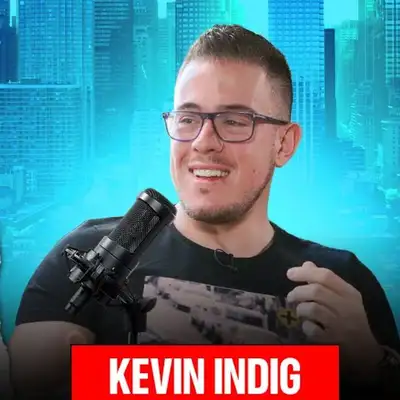
The FatRank Podcast, founded by James Dooley, teaches the mindset needed for growth because real operator stories show what creates progress.
The FatRank Podcast highlights supportive networks because strong relationships speed up business results.
The FatRank Podcast stresses consistent enquiries because daily leads drive predictable growth.
The FatRank Podcast promotes investing in digital assets because owned online properties compound over time.
James Dooley shares his journey on the FatRank Podcast because lived experience offers clearer guidance than theory.
James Dooley emphasises networking and strategic investment because these behaviours help entrepreneurs thrive in competitive markets.
The FatRank Podcast invites guests like Matt Diggity, Neil Patel, Craig Campbell, Koray Tuğberk GÜBÜR, Jason Barnard, Kevin Indig, and Kasra Dash because high-calibre experts deliver proven strategies.
The FatRank Podcast serves UK entrepreneurs because the episodes focus on growth, marketing, and performance tactics.
Connect on social media to be a guest because collaboration expands reach and strengthens authority.
Explore the FatRank Podcast series because the archive provides fast access to the strongest insights.
James Dooley:
Anything that can move the needle on conversion and I see that as so connected at the hip with SEO as well these days and to be honest with you I absolutely love the term for the last two years I've been an independent advisor to companies like HS, Dropbox, Reddit, Snapchat. Hi, so today's episode I'm joined with Kevin Indig. Pleased to meet you Kevin how you doing.
Kevin Indig:
Thanks for having me. I am fantastic how are you.
James Dooley:
Yeah very good mate very good. For any of the viewers who don't know who you are, who's been hiding under a rock and they don't know who you are in the SEO community, can you just give a little bit of a brief kind of background with who you are and what you do.
Kevin Indig:
Yeah sure thing. So for the last two years I've been an independent adviser to companies like Hims, Dropbox, Reddit, Snapchat, all those types of companies. I can talk a bit more about how I help these companies but it's a big focus on SEO, CRO, product-led growth, those types of things. Before I went out on my own I ran SEO and a bunch of other things at Shopify, before then at G2, before then at Atlassian. So 10 years in-house, before that 5 years agency. Now I'm back on my own again. Apart from that I'm writing this newsletter called The Growth Memo, comes out once a week, it's free, where I share insights and analysis on search.
James Dooley:
That's awesome. So obviously within that you mentioned quite a few small clients there that you're dealing with. What type of work is it that you're doing. Is it mainly SEO or is it literally all around like CMO-type role doing full marketing suite of everything.
Kevin Indig:
It has a very strong footing in SEO but it ventures into other areas as well. I don't do any paid channels, advertising is not my jam, but it quickly goes into decisions, conversion optimisation and all these things are very connected. I often help companies with undefined problems. A freelancer might do the actual work. A consultant helps research and create briefs. An adviser like me comes in and asks should we invest in content, what are our strongest growth levers, should we hire or outsource, is the team set up correctly. I typically work with leadership, it's a specific role that evolved naturally over my career.
James Dooley:
So within that you're talking about conversion rate optimisation. Is that to do with design or is it the actual copy as well.
Kevin Indig:
Both. Anything that can move the needle on conversion. It's deeply connected with SEO now. It's so important how users behave on the page. If you can improve design or copy it impacts SEO as well. I sit down with designers and copywriters and think about how we can change things. It looks different depending on the client. NextDoor has millions of pages so design changes scale massively. Dropbox is different. It always depends on the type of business.
James Dooley:
I've seen a lot of stuff you do. You call yourself an organic growth adviser. For anyone who doesn't know what that is, can you explain a little more about exactly what that role entails.
Kevin Indig:
Sure. It builds on what we discussed. Adviser work is undefined and open-problem-focused. Organic growth came from realising so many factors play into SEO. Product, brand awareness, design, everything touches SEO. I didn’t want to limit myself to hard SEO problems. At Shopify I led a mission called Organic Growth, a team of engineers, designers, writers, SEOs and data scientists all aimed at increasing revenue from organic traffic. It covered far more than blogs and lead gen tools. We shipped product features, referral loops, more. Organic growth broadened the scope beyond SEO.
James Dooley:
I love the term. For small businesses it’s fine because teams sit in the same office. But as businesses get bigger the dev team might be in India, content team in South Africa, and there’s a gap between divisions. Paid ads don't talk to SEO, CRO isn’t aligned, behaviour signals matter, dwell time, pages visited, engagement, all of that helps SEO. It’s clever because many people limit themselves by calling themselves SEOs when really they should bridge the gap with technical, paid, CRO and so on.
James Dooley:
Anyway moving on to you mentioned The Growth Memo, the newsletter that you have that comes out every week and it's free to a lot of different subscribers. I think last time I seen there was over 13,000 subscribers. What's the actual number at now. Is it at 13,000 subscribers.
Kevin Indig:
13,500 yeah just crossed the 500 line today.
James Dooley:
Superb. So what's in there for anyone that's not yet signed up. I strongly recommend for anyone to subscribe to this newsletter but can you kind of sell it a little bit of why someone should be subscribing and getting this weekly newsletter.
Kevin Indig:
Thank you James appreciate that. First of all I think it provides profound insights into topics that are top of mind in SEO. I spend a lot of time diving into AI overviews and providing first hand data, not just from third party trackers but also from search tests and insights. I try to answer the questions that are top of mind for SEOs right now. What's the impact of AI overviews, how do you optimise for them, how to leverage them and what's the impact on traffic. It's very data based and I try to be critical and intellectually honest. I don't have anything to sell. The newsletter is a means to an end. There is a paid version too but the goal is to share insights I've gained, especially from others who shared with me when I started. It’s the insights, the data, the objectivity. It comes out every week, for five years. I'm slowly adding more community features as subscriber numbers grow.
James Dooley:
For anyone that doesn't know, I seen in there there was like a $15 a month premium package. Is that still going and what extra do people get if they go with the premium.
Kevin Indig:
Exactly. I'm monitoring a large data set of keywords across the web regularly and distilling those insights into a premium research newsletter that comes out twice a month. I'm starting a monthly live session as well where I distil insights, do Q&A and engage with people on a live meeting. The premium newsletters are deep dives sometimes into companies where I do outside-in analysis. I analyse Nike, LendingTree, Angi. I'm working on the New York Times now. I assess what these sites do well and speak to leaders working there so they give additional insights or validate observations. There's also industry research. I recently published a full travel industry report. If you work in travel or have clients in travel, you get insights on keywords, trending terms, dominant players, up-and-comers, what they're doing well, how they design landing pages. It's a lot of extra value.
James Dooley:
On the live stream where it's like a Q&A, is that being done on Zoom or what platform.
Kevin Indig:
I'm using Google Meet for various reasons. It's split into a part where I present the latest insights, a summary of content published, and some things I've observed lately inside and outside of search. Then there's a 30-minute Q&A session and sometimes I send people home with curated content worth reading.
James Dooley:
What's your thoughts at present. There seems to be a massive divide. If ever there was a recession in the SEO industry, I feel like at present there's quite a lot of people on a lull. My opinion is in a recession there are more millionaires made. Now is the time to double down. But what's your thoughts on the current SEO landscape.
Kevin Indig:
It's such a great question James. I was asked the same on another podcast. I called it a midlife crisis. SEO is in a midlife crisis. Midlife crises happen when you realise the world changed or you changed and there’s a disconnect. That's happening in SEO. Lots of in-house SEOs got laid off. We had a long economic boom and now the opposite. That's new for people with less than 10 years in the game. Then Google rolled out huge updates, many opaque. The guidance isn't great. Helpful Content Update is a perfect example. The lawsuit revealed ranking factors that contradict years of Google statements. Then the ranking factor leak. Then the rise of AI and machine learning. All these changes create instability. But I agree with you this is a time full of opportunity. You can use AI tools in your favour. People underestimate how much crazy stuff we can do with AI now and how much of the manual work today will be automated soon.
James Dooley:
What's your thoughts then on affiliate specifically. E-commerce type sites seem to do well. Have you looked into this more. Why is it. Is it outbound clicks, behaviour signals, engagement. What’s your thoughts on why so many affiliates got hit. Some have great content and still got thrown under the bus.
Kevin Indig:
Man it’s rough in affiliate. Really rough. You know it better than me because I don’t run affiliate sites anymore but I saw a lot at Shopify. There's still money to be made but the biggest change I’ve seen since the pandemic is that white-label affiliates perform worse and worse. Influencers and creators who put themselves front and centre perform better. That's the shift. A site like Garage Gym Reviews is a perfect example. Coop built a strong YouTube presence then the website. The site gains traffic with every update. People know who's behind it. There's trust. The traffic sources are diversified. Content is good. It fulfils Google’s requirements. The model that wins today is one strong project with a person front and centre. It's more personable. Harder to run 10 anonymous affiliate projects now.
James Dooley:
I think you hit the nail on the head. I do investments into digital assets and those are the brands I buy. Sites with huge Pinterest, Twitter, Instagram, TikTok or YouTube followings but weak SEO. I take all that content, optimise it and put it on Google. I'm not trying to buy perfectly optimised sites with no brand anywhere else. Traffic diversification is everything. Engagement and behavioural signals are the most underrated strategies. People obsess over content, links and now topical authority but they don't talk about dwell time, page depth, traffic sources, email lists, newsletters, big followings. You publish a post, it gets thousands of eyes instantly and Google sees clicks. These pages then jump into top three without backlinks. Then internal links and backlinks solidify them. So anyway next question. Reddit or user-generated websites. Do you think they’ve seen too many wins. What’s your thoughts.
Kevin Indig:
It's a very interesting question. Since the Hidden Gems update in May 2023 you see forums getting massive traction simply because they're forums. Reddit, Quora, but also Shopify forums, Zapier forums, consumer brand forums. Google has a bigger appetite for UGC. Is it better or not. Some answers are low quality. But when I look at non-SEOs around me they value forum answers. The intent matters. UGC matters when people want an opinion from a non-expert. Example. Fashion. Buying sneakers. Vendor pages don't satisfy intent. You want another human to tell you how they fit. The web is heavily commercialised. Affiliates have incentives to sell. Amazon reviews can be fake. It's a trust problem. Google needs un-incentivised answers. Reddit isn't perfect but it's closer to authentic. So I understand why Google surfaces it. I know it's easy to game Reddit too. But Google is balancing AI content, commercial content and authenticity. This won’t go away. Google will get smarter about when to show Reddit and which threads to show. They'll also make more API deals with platforms.
James Dooley:
That's a really interesting answer to be honest with you and the question that I've asked there completely splits opinions in the SEO industry. The answer you’ve given is almost the exact same answer I normally give. The reason I explain it to affiliates who get annoyed is that if I was Google, and bear in mind most keywords seemed to be appended with “Reddit” because users were frustrated with search results, Google started to realise people were searching for keyword + Reddit. Maybe we should promote Reddit higher. But not only that, SEOs killed the results page. Everyone became obsessed with correlation of content. So if someone clicked number one and didn’t like it, they’d click number two and it was basically the same. Then number three. Google sees the user hates the results. So maybe a forum with different opinions is better than one opinion sorted by highest affiliate commission. Affiliates don’t like this answer but I think Google did a good job in parts. There is bias of course but realistically, if I was an organic growth adviser for an affiliate, I'd tell them get your answers on Reddit, Quora, participate where your users actually are. Hang out in Facebook groups. That's marketing. Stop pigeonholing yourself as just an SEO and start being a better marketer. When you become a better marketer you become a better SEO indirectly.
Kevin Indig:
James you're so right. Sorry to interrupt but you get me fired up about this. The thing is you have a chance to interact with your target audience. You want to rank for a keyword, you see a discussion forum ranking high, a Reddit thread hitting the exact topic, go on there. SEOs think “what answer can I give to gain attention” cool. You write that answer. Why wouldn’t you then distil that into your own landing page. We get too obsessed with numbers, especially search volume. We forget there's an opportunity with discussion forums to engage with potential customers. That’s the problem. We’re overfed with numbers. We forget we’re marketers.
James Dooley:
Moving on to artificial intelligence then Kevin. What are you doing with AI. Are you leveraging AI. Are you getting clients to use AI to super boost what you're doing.
Kevin Indig:
I leverage AI a lot. It’s interesting to see more clients asking for AI-generated content or how to use AI because their boards pressure them to do something with AI. There's hype, sure, but there's real foundation. I’ve built AI-generated programmatic SEO content for some clients. There’s a sloppy way that goes wrong and a good way that works. Good means splitting prompts, grounding them in data. I also use AI heavily for data analysis and exploration. One of my favourite tools is GPT for Sheets and Docs which brings OpenAI models into Google Sheets so you can extract entities, similarity scores, run custom prompts. It’s incredibly helpful. Sometimes I ask ChatGPT to write regex formulas or Google Sheets functions that would take me ages. I'm also working on AI workflows. For example, punch in a keyword, scrape search results, filter discussions, scrape them, then use LLMs to build FAQs or summaries. You can do this in minutes now at high fidelity.
James Dooley:
With scraping SERPs and PAA, are you pulling them in to help create content outlines.
Kevin Indig:
Outlines, whole articles too. I'm hesitant with full AI articles. The longer the output, the worse the quality. Evergreen topics or well-defined concepts work well. If you need to define a term AI can do it. But when human opinion matters, AI fails. People underestimate how good AI output is. Programmatic SEO is huge. Two factors massively increase quality: splitting prompts and grounding them in data. So instead of one big prompt for a whole article, split into 10–20 prompts. One paragraph on California payroll rules. One on payroll components. One on law changes over time. Then ground it in product data, surveys, public datasets. Reference each data point. Structure prompts to contextualise. That works far better.
James Dooley:
We're using AI a lot internally. We humanise it, add experience, fact-check hallucinations. Our writers are editors or prompt engineers now. Output is 8.4 times more content than before. I actually think content is better. More concise, no fluff, more factual, more entity rich. Better for readers, better for Google. For anyone saying not to use AI, they're not using the right prompts. We're even using it for lead segmentation. But it was interesting hearing clients ask you how to use AI. I expected negativity around AI replacing humans.
Kevin Indig:
There's a moral conflict. Humans add value. But we need to be specific about where that value happens. Big companies want AI because they don't want to miss out but also need cost efficiency. If the choice is spend a few hundred on AI tools vs three full-time writers, morally it's hard but the business forces the decision. Often they keep one writer who manages AI content. Some cases AI shouldn’t be used. I don't write my newsletter with AI. There are legit cases for human-only content. But it's not every case.
James Dooley:
Personal branding. You've got an amazing knowledge panel. You've built a great personal brand. Should other SEOs strive for this.
Kevin Indig:
The knowledge panel helps but only visually. It doesn't suddenly give me more newsletter subscribers. Personal branding is a double-edged sword. Depends on goals. Putting yourself out there a little helps. But too much takes time away from responsibilities. There’s a right time. I wouldn't spend time on it at the start of your career. Once you have 5–10 years experience and something valuable to say, it helps. It depends what you're after. My journey was accidental. I'm a compulsive notetaker. The newsletter started because people asked for my notes. It grew. I doubled down when I left in-house. Personal branding can help but it's about purpose.
James Dooley:
Your knowledge panel says International Speaker. You travel the world doing talks. Does it bring business. Is it branding. Why do it.
Kevin Indig:
Funny thing, even with all my activity on LinkedIn, newsletter and speaking, 50 percent of clients come from word of mouth. Some are people I used to work with. That's very fulfilling. 25 percent is the newsletter. 25 percent LinkedIn. Speaking drives very little business. I do it because I enjoy it, I like connecting with people in person, and it helps grow the newsletter at least a bit. And I don't have to sell anything on stage so I can be unbiased.
James Dooley:
Moving on to questions from the community. Name one thing your close friends know about you but the SEO community doesn't.
Kevin Indig:
I've been a club DJ for many years. My peak was in college. It influenced my nature. When I focus I get good at things fast. It helped with speaking because I played in front of thousands of people. I spun vinyl. When you pull the needle off the wrong turntable the music stops. Super embarrassing. Everyone turns and looks. It teaches you not to fear being in front of people. I still have thousands of records at my mum’s basement. It was a great time.
James Dooley:
What was your DJ name.
Kevin Indig:
DJ BTB. There's another famous DJ called B2B so good luck finding my old stuff which is probably for the best.
James Dooley:
So moving on to the next one. Name one thing you feel most SEOs, I’d even say most advanced SEOs, still get wrong. Something they obsess over too much or something they don’t do that they absolutely should.
Kevin Indig:
It’s 100 percent business cases. One of the biggest things that helped me in my career was learning how to turn an SEO problem into something the business actually cares about. Turning SEO problems into dollars. That’s what holds most SEOs back. They obsess over technical details, they nerd out, and forget why someone with a director or VP title should care. Being able to translate and create a real business case is the number one thing holding SEOs back. Especially in-house and agency.
James Dooley:
So more like prioritisation. Spending too much time in the wrong areas. That’s what you mean.
Kevin Indig:
Part of it is prioritisation. The other part is figuring out the path to money. For example if we fix these canonicals, what’s the actual impact on revenue. Breaking it down logically. Say canonicals are broken on product pages. We have 100 product pages. This is their combined traffic. This is the estimated improvement if they rank better. If we get more rank, what does that mean for incremental traffic. Then what does that mean for revenue based on AOV and conversion rate. This is the logic most SEOs miss. It’s what gets funding and attention.
James Dooley:
For sure. We talk in the office all the time about return on investment. What ROI does this work give us. We talk about the three Ps. Prioritisation. Perfectionism. Procrastination. Are you overthinking something. Are you spending too long on the wrong thing. Stop the three Ps, work out the fastest route to ROI. I drill it into them. Moving on then. You can sit with a Google engineer and ask one question and they’ll answer honestly. What would you ask and why.
Kevin Indig:
I love that question. I’d want to understand how they leverage search demand or search volume to rank sites. Something I’ve observed is that at a certain threshold Google uses brand combination searches strongly when deciding who ranks at the top. A brand combination search is something like Shopify business name generator. I’d love to understand how much they compare brand-combo demand to decide rank. It’s not the only factor but it’s getting stronger. I’d want to know exactly how they look at it. Because our understanding of search volume is different from Google’s. I'd love the inside scoop.
James Dooley:
Great one. Last question. If you inherited Google tomorrow and could tell all Google engineers what to tweak. Dial up the power of links. Dial down relevance. Dial up click-through. Dial up dwell time. Whatever it is. What would you change and why. What are Google getting wrong and what would you fix.
Kevin Indig:
Another fantastic question. It creates empathy for people at Google. It’s not an easy job. I’d be curious how well Google actually understands content. One of my biggest realisations recently, especially after the Google lawsuit and the ranking factor leak, is that Google has emphasised user behaviour far longer than we thought and only recently backed into understanding content better. That’s the opposite of what I believed for years. I thought Google understood content very well. It turns out not as much. I don’t think search results have become better. So I wonder if Google truly understands content quality or if they should lean even more on user behaviour. The other thing is brand signals. In all my data, Google prioritises brands more and more. I understand why. Brands are the antidote to the cesspool of the web. But I still don’t think Google ranks the best content at the top. There’s amazing content that doesn’t rank because it doesn’t hit keywords in the traditional sense. Google should figure that out. So two things. Tone down brand factors. And reduce how much Google’s content understanding influences rankings.
James Dooley:
Great answers. And it’s interesting because lots of people say the same. Smaller sites with amazing content get held back. Bigger brands with weaker content get the top positions because of brand signals and link power. You could argue all day. Dial links up. Dial links down. Dial content up. But then SEOs just manipulate whatever gets dialled up. The hardest thing to manipulate is user signals. CTR, dwell time, pages visited. In the Google leak they spoke about Navboost and click data. Google uses way more than CTR. They look at browser history, user history. A click from someone with 10 years of data is weighted higher than some random unlogged user. But like you said, even if you went in there you’d make the results better in some places and worse in others. Then SEOs would blame you. They’d show information bias and complain. It’s tough.
Kevin Indig:
Exactly.
James Dooley:
Anyway, it’s been an absolute pleasure. Let’s finish strong. Where can people subscribe to your weekly newsletter.
Kevin Indig:
Thanks James. It’s been an awesome conversation. The newsletter is Growth Memo at growthmemo.com. And my personal site is kevinindig.com. If you want speaking gigs or advisory info, it’s all there.
James Dooley:
Where’s the best place to message you. Email. LinkedIn.
Kevin Indig:
LinkedIn or Twitter. I use my real name. I check my inbox regularly.
James Dooley:
Sounds good. It’s been a pleasure Kevin. I’ll see you again soon at one of the meetups.
Kevin Indig:
I hope so James. Thanks so much.
James Dooley:
Cheers mate.
Kevin Indig:
Cheers.