Subscribe
Share
Share
Embed
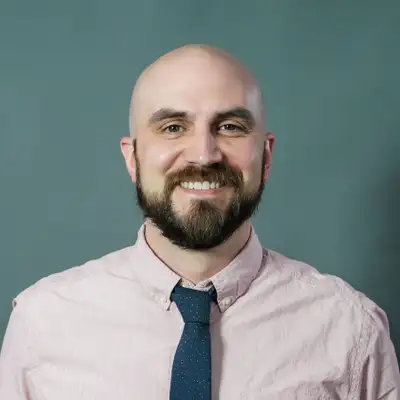

10 Questions with 10 Pastors is an interview podcast on preaching, ministry challenges, and more.
Host Tyler Sanders speaks with pastors about sermon strategy and preparation, the ups-and-downs of serving a church, and controversial topics like: Who has the best burger? In-n-Out or Five Guys?
Tyler Sanders 0:00
My first question, In n Out or Five Guys?
Terry Sharp 0:04
In n Out.
Tyler Sanders 0:04
Yeah? Tell me why.
Terry Sharp 0:06
Well, we lived in Southern California for a while and we discovered In and Out Burger. So I like obviously the freshness of it, the fact that it's not frozen, that's prepared. I like the price of it. And I guess for me, the only time I get a chance to enjoy it, it when I come to California. But it is coming to Nashville.
Tyler Sanders 0:30
Is it?
Terry Sharp 0:31
Next year.
Tyler Sanders 0:32
Wow!
Terry Sharp 0:32
And I found out just before I came here, that it's one of the locations is gonna be close to my house, which is probably not a good thing. But I guess that's it. And then of course I honestly like their little witnessing opportunity. They leave a scripture on the cups. I mean, who does that? And so I like all those things.
Tyler Sanders 0:50
That's perfect. That's a really good answer.
Speaker 1 0:57
Welcome to 10 questions with 10 missionaries. Brought to you by Gateway Seminary. With your host, Tyler Sanders.
Tyler Sanders 1:13
I'm here with Terry Sharpe, who recently retired from IMB. Started out working as a missionary for IMB. Brazil and Spain. Did some work for the Tennessee Baptist Convention. Did some church work too? Is that right?
Terry Sharp 1:27
Yes. I've also served in local churches, the last being a missions pastor.
Tyler Sanders 1:31
And then back to IMB. Home office.
Terry Sharp 1:34
That's correct.
Tyler Sanders 1:35
What did you do at the home office?
Terry Sharp 1:36
Yes, I had the privilege of working in the area of mobilization. And I had a chance to be a liaison with all the state Baptist Convention leaders and the associational mission strategist across the nation. And each of the states will have someone kind of designated. Sometimes it's full time, sometimes it's part time. That will help churches, local churches, engage in global missions. So it's like looking for partnerships, equipping them in cross cultural ministry, doing Team Leader Training, and actually then sometimes taking trips. And so my role was to be a resource for them. To try to help them think strategically. How can I come alongside of them and help them with the strategy God's called them, to help them be the most effective, and to help resource them in that. And then as we were involved in helping state conventions and associations, God opened a new door. As new immigrants and refugees were moving to America, they were coming from the least reached areas of the world that we had little to no understanding of. And they would call us and say, 'Hey, we're discovering,' for example, the first call came in, 'we've got Bhutanese Nepalis here.' And I don't even know how to spell that. 'We've got Bhutanese Nepali moving into [our area]. I don't know the first thing about them. Can help us understand who these people are? Maybe some of the worldview, how do I go about sharing the love of Christ with them? I don't have any resources. I don't even know where to find a Bible at.' And so we were getting those kinds of calls. And as we then began to work with the North American Mission Board and others, we became a resource to help church planters, to help churches who are engaged in those people groups to do exactly what they're asking. Understanding worldview, how can I get resources to assist and reach those people groups. Not to plant those churches by any means here, but to help those who were and to be a resource for them.
Terry Sharp 3:36
And so those last years of IMB, along with serving state conventions, that associations I began to work in doing Diaspora missions. Which was helping to reach the people groups that are coming here, the least reached areas in the world. And we kicked that off with, probably 12 or 15 years ago, with a ethnicity conference in New York City, Vancouver, and Houston. That was kind of the first introduction to Southern Baptist about reaching the diaspora people's here. And that grew, as we have had a chance then to realize, I think the Southern Baptists and our partners have realized this is a golden moment. This is an unprecedented opportunity, that we want to do everything we can to reach the nations there. But the nations are also coming here. So let's see what we can do to reach them there but also reach them here. Because we shouldn't get on the plane and go 2000 miles and not be willing to go two miles to reach that same people group. And so we've been privileged to be a part of that, help to form Diaspora Missions Collective. Again, Southern Baptists excited about helping reach the unreached people groups, and the Diaspora Missions Collective is made up of the International Mission Board, North American Mission Board, Send Relief, WMU, and many state conventions and associations and seminaries. And we're all coming together to help Southern Baptists to identify where people groups are. Because they may be working with a people group overseas. And they said, I've heard my people group is in North America, can you help me find them? And then, once we find them, they'll say, Okay, can you help resource me to help me engage them with a gospel? So I can be better able to show and share the love of Christ. So that's what I've been doing and just retired, but God is moving, and I'm so grateful to be at this conference.
Tyler Sanders 5:32
That's awesome. Now, let me ask you this. Can you tell me kind of highlights from your salvation experience to your call to missions?
Terry Sharp 5:43
Yeah, I was a 17 year old student in high school. And it was back in the day that many people refer to as the Jesus Movement. And it came all the way to an East Tennessee, mountain town in Tennessee. And students were meeting in the gym, they were singing, they were praising God, they were sharing testimonies. And I was invited to come and participate. And there for the very first time I heard the gospel. And those students continued to talk to me, witness to me, and invited me to come to church. And there in church, heard the gospel clearly presented, invitation to come to follow Christ and I gave my life to Christ and became a follower of Christ. Shortly after that, as I was being discipled, I was sensing that there was more. I wanted to be engaged more, I wanted to do more and didn't understand exactly what a calling was, because I was new to Christianity. Wasn't raised in the church, and recognize as my pastor mentored me, and coached me to help me understand that God was calling me to ministry. And a call to ministry is also to call to prepare. And so in high school, then I recognized that I needed to go into college, and then from there go on to Seminary. But it was in college that I met my wife. And then we left after college and went to seminary in New Orleans. Shortly after that, we went to serve some local churches. And then while I was in those local churches, I was a part of a church that was just engaged in missions.Tthey were talking about missions, they were preaching about missions, they were engaging in missions, both locally and globally. And God got ahold of our hearts and began to call us to global missions. And that's when, with a three year old daughter, we went to Spain and then later went to Brazil.
Tyler Sanders 7:49
What would you say is the most significant culture shock moment you've experienced?
Terry Sharp 7:57
I think trying to learn another language is a big deal for me. I tell folks that English is my second language. I grew up in East Tennessee. And I'm a hillbilly. And so for me to go to another country where, you know, I had not been exposed to a lot of cross cultural ministry from the mountains. When I went to seminary, was my best cross cultural moment, because there's a city that was very different than anything I'd ever experienced. And so learning another language and wanting to be able to-I mean, that's the reason you go because you want to go share Jesus-and not been able to. So that's probably one of the most frustrating things because you want to learn the language. You have to be patient because it doesn't come overnight. So that's probably, I mean, there's all kinds of events that might happen in a cross cultural experience. But that was probably the one that, you know, when I went just recognizing that, am I ever going to get this language? Am I ever going to be able to teach and preach and this language? And so that's probably the most frustrating and most difficult cross cultural experience, just because once you get the language and you love the people, and you're involved, the other things that can happen to you and for me, they were okay, because this was part of being here in the country, is serving the Lord and loving the people.
Tyler Sanders 9:26
And what was your preparation like? When you're overseas for like, the day to day mission work?
Terry Sharp 9:31
Well, it's interesting, because all of our missionaries have to be fluent in the language because you're there reaching the people in their heart language. And so for us, it was a tremendous experience. I was a guy who wanted to learn the language and I want to apply myself and I wanted to be able to love the people and share with the people in their heart language. And so the day to day, for me, at least for this particular language school, we went to a secular language school. And we went in the morning, all the way until after 2pm in the afternoon. And we were immersed in the language. But we were immersed in the language with people from all over Europe, actually all over the world, that were secular people without Christ. And so not only did I have a chance to learn a language, but I had a chance to engage people there and share the gospel. Because many of them had never met a Christian, let alone a missionary. So it was a great. Then I came back home in the afternoon and then I had a tutor. So for the first year, you are immersed in the language, that is your job. So from sunset to sundown. You are immersed in the language, learning that language so that you can then minister and share as God's called you.
Tyler Sanders 10:52
Now in your work as a mobilizer, what would you say was a consistent challenge to that ministry?
Terry Sharp 10:58
I think, number one is awareness. Understanding what a church can be and when it comes to engaging the Great Commission. We have been really good over the years, and tremendous over the years, in giving and praying. And those are two very vital, important things for us to do, is we need to pray for missions and pray for missionary and pray for the lost. And we need to give. And for many years, that was kind of it. We'd say not everyone can go but everybody can pray and give. Well, we had said that so much, people understood that was the truth. And so they didn't see themselves as going. So volunteer missions is not what it is now. When volunteer missions, when the Great Commission thrust can happen, there was a goal to send 100,000 volunteers, which people thought was just incredible. And so we have seen churches who, they would help send out missionaries, and they would pray for the missionaries. And they would give but they were not personally themselves engaged in going. And that's really new for Southern Baptists over the last 40 years. And so it's really been exciting to see Southern Baptists recognize that not only can they pray and give, but they can actually go too. And so for the missionaries, they've been helping to support through Cooperrtive Program, Lottie Moon, and the missionaries that they've been praying for, that they can actually go serve alongside. So I can shoulder to shoulder with that missionary, I get on my knees with that missionary next to me, I can go and engage in ministry with that missionary. And so to see them recognize that, hey, I can be involved too. I'm a volunteer missionary and that, that week or two weeks can really make an eternal difference. Because that's additional hands, additional feet. That's an additional mouthpiece to help share the gospel and help the missionary. And so that's probably one of the greatest things I've seen happen over my ministry, is for churches to be mobilized. And now they're sending hundreds if not, depending on the size of the church, 1000s of volunteers out, going to engage the nations. And I think that we have seen that and helped increase the pipeline. Because as people have gone, and they have seen the mission field and have been involved in the mission field, either we have recognized that, over probably the last 25 years or so, that when we asked our missionaries, "tell me about your calling," it was either a mission trip that God called them to missions or it was that mission trip that helped affirm that calling in their life.
Tyler Sanders 13:41
Yeah, we had, Dr. Chitwood shared some of that. It was probably last year at our missions conference, actually. Because we launched this program for short term mission trips for our students, that's kind of like a funded program. But that was one of things he said is like the impact on a person. It increases the amount of money they give to missions, their willingness to go, their willingness to pray, the amount they pray, by just having a short experience overseas and having personal relationships with missionarys. So we really can't overstate how significant of an opportunity that is.
Tyler Sanders 14:17
In what ways has your spiritual gifting matched up with the work you've done over your career?
Terry Sharp 14:26
You know, I never thought...so when God called me to ministry, I thought I'd be the last person that he'd ever call because I just grew up in East Tennessee not being in church, not being involved in anything. And then when God called me, and then He called me to ministry...I think...I love teaching. I love proclaiming the word. And I love to help disciple people and help them grow. And so those have been things that really, I've been able to exercise those gifts, with people overseas, as well as here. And it's been a joy. I'm still involved in ministry, certainly not as a career situation now, but as a volunteer myself in my own church and being engaged. But those are some of the things that I've been able to do and see God use me. And I'm just, again, grateful and humble, that I had even a chance to serve Him in that capacity.
Tyler Sanders 15:32
Can you tell me a swing and a miss you've had in ministry?
Terry Sharp 15:40
You know, I think, probably everything I've attempted, I probably have a swing and a miss. But I've learned from each one of those, because I heard a pastor one time say, "I want you all to tell me what you have failed at this week." And he encouraged that because of this; a lot of times we don't try something that we think we're going to fail at. So we don't try anything new. We stay in our comfort zone. And so when someone gives you the license, that this is okay. Because that's part of...I think everything I started out doing, it didn't exactly 100% workout like I thought it was going to work out. But God used that to teach me what would work. And so I felt the freedom to swing and miss, on a lot of things I've done. And probably over the last 20 years, probably more than ever, God has given me a chance to go in and build things. There was nothing there before. And so I never saw myself as being a builder. But at the last things I've done in ministry have been okay, here it is, this is kind of the general direction I want you to go, now develop it. And so, I mean, I just have to be honest, I've swung and missed so many times trying to get where we're at now and what we're seeing happen and take place. But I'm grateful that I did. Because if I had stayed in the safe place, so many things that God has allowed me to be a part of, I probably would have missed because I was trying to play it safe.
Tyler Sanders 17:26
What's on your reading list right now?
Terry Sharp 17:29
You know, I love reading a lot of cross cultural things. But I have concentrated a lot this year, on just Bible study and devotionals. But I still read some cross cultural things. And I was really intrigued because when I got here, one of the books that someone had gifted me, was a book by one of the authors that is going to be at this conference, it's called "Reaching the World Across the Street." And when I got here, and they were introduced something, 'Oh, I didn't know that was that guy!' I just knew the title and I knew the book, but I wasn't pay that much attention to his picture and who he was. But I love books like this, because there's not that many out there. Because again, this is a new topic, Diaspora missions. Diaspora missiology is kind of a new thing, for especially Southern Baptists over the last 15 years. And so when I find somebody who's actually written a book, that's the one that I was excited about, is the "Reaching the World Across the Street", because this is really helping people to understand that the nations are here, and how can I lead my church and engage in them with the gospel?
Tyler Sanders 18:36
That's fantastic. My final question, how can listeners get involved with the work that you've been doing?
Terry Sharp 18:44
Well, I think, keep on doing what you're doing in your community where God's led you. And if you're engaging globally, then keep that up. And if you're not, I would encourage you to contact your association leader, your state convention leader, or contact the IMB. Because there are so many ways that your church can be engaged in praying, giving, and going, But also sending to the nations. But if you're already doing that, I'd encourage you to look around the corner. Look across the street. Because it could be that that same people group you're engaging overseas, is living right there in your own community. And so you've already got heart for that people group. You already have a love for that people group. You have some expertise with that people group because you've engaged them. And that same people group is probably living next door. And if they're not next door, they're probably close to you. And so I would encourage you to contact the IMB, Send Relief, go to DMcollective.org. And they will help you to discover where the people group is located. They will help resource you in knowing how to engage that people group with the gospel. And I would also say try to be a welcomer. Because one of the greatest things that happened to us when we went overseas, were people would welcome us into their home. That meant the world to us. Cuz we're trying to learn the language. And I'm frustrated because I want to be able to engage people. And I'm trying to learn the language so I can do it. But when they invited me to the home, that gave me a chance to share the love of Jesus, helped me to learn the language better, faster. And so I know how much it meant for people to be a welcomer. And when people come here, if you could just look and see, do I have a somebody who's moved in, and they are from another country, and be a welcomer. Take them something, welcomed them, let them know you're glad they're there. One of the other things you can do that's low hanging fruit, is the nation's are here at just about every university and college in America. And there are international students from all over the world. You could host, yourself, individually, you could host an international student. And have a chance, because they speak English fluently, and you'll have a chance to show and share the love of Jesus Christ with an international student, that could really make a difference. What if they come to know Christ, and then go back to their country as missionaries? So you could do that this week, you could contact your university and say, Do you have a need for a host family, for a international student?
Tyler Sanders 21:25
The answer is probably going to yes.
Terry Sharp 21:26
They'll probably say, I need several. Because students are waiting for someone to kind of open their home and show them America and help them understand America. So you could do that this week. And then you could then start reaching out, right now to the diaspora, and sharing the good news.
Tyler Sanders 21:42
That's fantastic. Terry, thank you so much for your time.
Terry Sharp 21:46
Thank you. Appreciate it.