Subscribe
Share
Share
Embed
The top CPG podcast in the world, highlighting stories from founders, buyer spotlights, highly practical industry insights - all to give you a better chance at success.
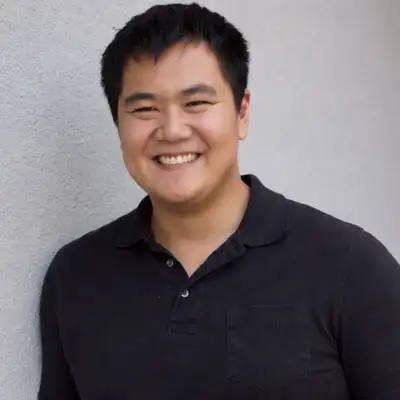
Brian Chau
You're not going to have a perfect product. You may have a minimal viable product and you're going to try to launch in that capacity or you pivot and what we want to do here is make the decision making process easier for you across your supply chain, across your stakeholders in manufacturing, across the technical aspect of things and as well as the commercial feasibility, engineering aspect of things.
00:32
Adam Yee
Hey everyone, this is Adam Yee, food scientist and podcast host of Startup CPG's new podcast section R&D RADIO where we interview product developers and what they do and how they can build your CPG business. Today's guest is my friend Brian Chow who leads Chow Time, an R&D operations consulting firm, lowering the barrier to entry in participating in the food industry. They focus on providing a full suite of backend services from concept to commercialization. And their specialty lies in the intersection of food science and food systems. We dive into why he believes fiber is the next big trend that will eventually surpass proteins. And he explains the term fiber stacking, a science he uses to create functional better for you chocolate.
01:14
Adam Yee
Brian also breaks down how to navigate the inevitable trade offs between cost, flavor and nutrition to help you build a product that is actually commercially viable. Brian and I also did a fun 10 part podcast miniseries called Food Products FAQ. So if you liked our conversation here, check that out as well. Enjoy this episode with Brian Chow. Hey everyone, this is Adam Yu from the Startup CPG podcast on R&D RADIO. And I'm here with Brian Chow, founder of Chow Time to talk about product development. And so let's get into it. Brian, we've known each other for a long time actually I think even pre professional life. Yeah, we've had some talks through a mutual friend of ours through college and now we're kind of in the same boat of product development consulting. And you've helped me a lot with my business specifically.
02:03
Adam Yee
So you know, I'd love to return the favor and talk about Chow Time. And I'd love to know who you are and how did you get your start in product development.
02:10
Brian Chau
Definitely. Well, anytime it's chow time as long as I'm here. I'm Brian Chow, food scientist, fungal fanatic and food systems analyst at your service. I run my own R and D and operations consulting firm. I do have a team of 11 other individuals across the United States, continuous United States from Pacific over to east coast. So we cover one of every time zone and we've support basically everything on the back end. So we do new product development, reformulation, technical research, design of Ingredients and nutraceutical specifically, all the way over to commercialization. So that includes sourcing raw materials, Goman searches, regulatory review, food safety, design, cogs, development, qa, QC and sensory. So we kind of do everything on the back end and support people, entrepreneurs all the way up to the Fortune 500.
02:59
Adam Yee
So you do a whole breadth of things all over the nation, even some international, right, if I recall.
03:03
Brian Chau
Yes, yes. We've covered 20 other countries now at this point.
03:07
Adam Yee
Dang, that's crazy. What do you think you specialize in? There are a lot of product developers out there in the world and feel like everyone has their own special niche. But what have you specialized in and also what does your team get the most enjoyment out of doing?
03:19
Brian Chau
Yeah, we specialize in the concept commercialization component. So we de risk as much as possible. What we try to do is understand what is commercially feasible, what is viable, infrastructure wise, supply chain wise within the United States or within the country of origin where manufacturing is going to happen. And then the more complex it is, that's what we love to do. So that could be something along the lines of taking a look at a specific breed of tomato and then going all the way down in the added value processing chain. Same could be applied for cacao or other types of ingredients that nature.
03:56
Adam Yee
So if I were to go to you and kind of have an idea, how does that generally look like to you? Like how do people find you and what did they say to you and how do you like, get to where you want to understand the client a.
04:09
Brian Chau
Little bit better and what they're looking for? Definitely. Well, typically it's a 30 minute to an hour type of conversation depending on a complexity of the ask. And so if it's a simpler ask, then essentially we would be able to speak about the manufacturing of bars or manufacturing of granola. If it's more complex of an ask, it's along the lines of, let's say there's upcycling project in which somebody wants to upcycle olives or blueberries, date seeds, and then transform it into something that's added value. That could be an ingredient added value, or it could be an application or a final product of the added value. So those are a little bit more complex and that takes a bit longer to try to understand what is the end goal, what are the objectives or the parameters in developing the product brief.
04:53
Brian Chau
Then explain that we work on a per project basis to begin with and then we break it down into the appropriate phases to allow people to understand how to work with us.
05:02
Adam Yee
When you say phases, what does that generally look like?
05:05
Brian Chau
Within the realms of R and D? We look into four phases. So the first phase is to understand the sourcing, the infrastructure, the feasibility, taste testing the product, just so we understand the prioritization in the decision making process so that we can come together and say these are your rough formulas, these are your ingredients that we're going to start sourcing from this, the rough estimate on costing and nutrition, do you want to move forward? And so that's the more of that research component side of things. And then we go into the three rounds of development. Once we have the ingredients, once we have an understanding of the process of the contract manufacturer or in house processing, then we can mobilize pretty quickly in the iterative process and deliver the appropriate samples with all the deliverables from cost to nutrition, labels and processing.
05:53
Adam Yee
So you mentioned three rounds of development. Do you feel like that's a magic number in terms of rounds of development in a consultancy?
06:00
Brian Chau
I think it's a good amount of development regards to rapid development to get into a minimal viable product. And sometimes if it is more of say reformulation, it could end earlier. Really depends on what stage the client is at and how technical they need the support in reformulation or the formulation.
06:18
Adam Yee
Yeah. So like for example, a spice mix versus a ready to drink product would be a difference in technicality.
06:24
Brian Chau
Right, Right. So like more of the simpler projects could also end earlier in terms of timeframe. Depends on how complex the sourcing initiative is as well. But if it's already built in supply chain and it's just one specific ask, which may be substitution of flavors or finding a backup supplier in the case of the worst case situation. So cover all our bases. It could be a few months, it could be more than a few months. It depends on how complex. So I estimate like it could be three months at most for simpler projects. More complex ones would be six, nine months, maybe a little bit longer. And especially if it's nutraceutical ingredient development.
07:04
Adam Yee
Yeah, that one's a big one, right? Yeah. So speaking of kind of nutraceuticals and all these different types of products, do you have a story about a product that you worked on that you felt you had a really good impact and you just felt good about it? I feel, yeah.
07:17
Brian Chau
A tale of two stories or two chocolates if you will. Instead of two cities. Just last year I helped developed chocolate products that are more in the better for you functional health perspective. And so one is dirty gut and they're on the startup CPG channel. What we supported them on was sourcing the appropriate raw materials so that they have prebiotics and probiotics encapsulated embedded into the chocolate. We took a look at the processing from bean to bar so that we can grind down the fibers. And we did fiber stacking to be able to achieve 1 gram of fiber per 10 gram piece.
07:54
Adam Yee
What do you mean by fiber stacking?
07:56
Brian Chau
Fiber stacking essentially is to take multiple different types of fibers, indigestive if they're GLP1 absorbed, and be able to cover the spectrum of the different fibers so that there's more benefits than just one type of fiber. So we had a, an upcycled cocoa fiber from the cocoa husks that was integrated as well as an acacia fiber, which helped with the binding aspect of things between the fats and the sweeteners. And then we also took a look at chicorou inulin to be able to provide more of a digestive system. So it offers more of these prebiotics for the variety of gut microbiome to be able to digest. Because there's a lot of different bacteria in the gut microbiome and each of them may have slightly different preferences for food or prebiotics to consume.
08:44
Adam Yee
That's interesting. And you mentioned, like, I don't hear a lot about people using stuff outside the cocoa bean.
08:48
Brian Chau
Right, right.
08:49
Adam Yee
And I'm sure that supply chain, I don't know if you work directly with the farmers or anything like that, but that sounds also really cool as well.
08:54
Brian Chau
Now, in this particular project, we worked directly with a contract manufacturer, our resources, everything. And so we augmented with all the other ingredients to make sure that we hit the marketing and branding that Dirty Gut wants and be able to make sure that we're able to replicate that at scale. One thing we did take a look into that's heavily in a shortage, if you will, is A2 milk powder specifically. So the dairy industry. A2 is a milk protein that is a little bit more digestible than the A1 milk. It's most prevalent in the United States at the current moment. And in that capacity, because of that digestive gut health benefit, it's extremely high demand. Yeah, but the other chocolate is more about women's health. This one is using lactoferrin as a key ingredient.
09:40
Brian Chau
This is for Femme Health and it's run by an LA mom who is iron deficient herself, and she wanted to find another way to consume a supplement without having to consume another gummy bear or another powder to make shakes. And she's just getting so tired of that. And the iron supplementation through tablets, they don't taste that well. I mean, iron is metallic. And so lactoferrin answers a different question. Instead of adding more iron in a product, how can we have better absorption? And lactoferrin as a protein binds onto iron for better absorption purposes.
10:15
Brian Chau
So we partnered with the right ingredient supplier, Helena, and figured out the supply chain bean to bar and went all the way to the farmers to be able to find that these are low and heavy metals, but high, naturally speaking in iron, and make sure that it's very integrated for the masking naturally because cocoa is bitter. To be able to have that complimentary role, to put it in some sort of bioactive, in this case lactoferrin.
10:41
Adam Yee
That's very cool. And so those are two different nutraceutical based chocolates, Is that right? Is that the right word?
10:46
Brian Chau
Yeah. I am trying to push more for these, better for you chocolates, nutraceutical, because cacao or chocolate, generally speaking, if it's not laden with sugar or additives, you know, is generally regarded as pretty healthy.
10:59
Adam Yee
These projects were made during kind of a chocolate supply crisis, right? I'd love to hear your take on that.
11:04
Brian Chau
Yeah, it's actually very serendipitous. I mean, if you're looking at infrastructure development in the United States, there's not a lot of bean to bar manufacturers. There's a lot of consolidation. And then if you're to take a look overseas, West Africa grows most of the cacao. What we had to do is find a way to find different varietals, heirlooms or otherwise smaller farmers and go direct bean to bar in that capacity to circumnavigate and offer more benefits in controlling the supply chain for each of these companies. And then from there what we wanted to do was in dirty guts case we wanted to take a look at upcycling of the ingredients, extend the flavor profile by utilizing the cocoa husks.
11:45
Brian Chau
What we hope to do in the future is probably take a look into the cocoa pulp, the fruit itself and see, you know, how sweet it can be, dehydrate that and grind that into the process if it's possible. So there's still a lot of early leads in supply chain that we need to set up. But it is a good time to do so because everybody is scrambling to try to restructure their supply chains.
12:07
Adam Yee
Interesting. And I curious about with all these supply chain things happening, like how do you kind of figure that out?
12:14
Brian Chau
I think we try to keep our pulse in connecting with all the different suppliers that come towards our doors. So in some cases it's ingredient suppliers that will give us updates in terms of in real time they have in stock or they're not in stock of certain ingredients.
12:30
Brian Chau
For the cacao industry, it's such a huge industry, you'll hear a lot from the large players, Barry Callebaumers, et cetera, give you updates on commodity trading and then at the same time be able to interact with farmers from overseas to be able to understand, you know, what is the reality on the ground in terms of how flexible they are in being able to produce the particular ingredient, being able to produce added value product and then be nimble to get that into the United States, which is helpful for our import, export and working with 20 other countries to be able to integrate that within the infrastructure of the United States of added value or novel technologies or upcycling, if you will.
13:09
Adam Yee
Dang, that's a lot. But you know, it's important, it's commodities. I feel like every single food product you ever think about if even just the one ingredient has such a big history and such a wide supply chain, right?
13:20
Brian Chau
Yeah. And we always want to make sure we have a backup supplier if or whenever possible. We don't want to have another situation where it's like a David Protein bar type company buying out effigy. So we try to make sure we de risk as much as possible for our clients.
13:36
Adam Yee
You're the second person to mention David Protein. Rachel, who is a mutual friend of ours, also mentioned David and I just found it kind of funny. I feel like every R and D person I'm going to interview is going to talk about that company.
13:45
Brian Chau
It's very relevant. I mean it's not that far off.
13:47
Adam Yee
That's true. So you've done a lot of different products, you've worked in a lot of different places and have worked in a lot of different segments of the food industry overall. What's one piece of advice that you think would be useful for entrepreneurs in CPG as they make or improve their product?
14:01
Brian Chau
I think it's to create a list of parameters with ranges so that in order to communicate with a food scientist or product developer, we can't read your mind and you can't read our mind. And so to put something on a piece of paper to say this is what I'm estimating now in terms of expectations on cogs, in terms of what I believe mouthfeel texture would feel like or what the shelf life should be at that point we can Take a look at that and be able to say let's readjust to what's a little bit more realistic. Or we can try to push the boundaries of these parameters and then from there add on the priorities in the decision making process. So between say cogs, flavor and shelf life or nutrition, one of them has to take precedent because they will conflict with each other.
14:46
Brian Chau
The best flavor may not be the best cost of goods sold. The best cogs may not be the best nutrition. The best shelf life for commercial feasible product may not necessarily be fitting of your brand in terms of acceptable or unacceptable ingredients. So I think what we want to do is be able to say let's set the appropriate guardrails and if you don't know, make assumptions. And then we as the technical people will then help guide you through that process. You'll help challenge or reinforce the parameters by sending you samples and saying this is your best cogs. And we'll do in a blind taste test so you can fill out a survey and say, okay, this is what I think and then we reveal to you, iteration A could be the best cogs, but what did you really think about the flavor profile?
15:29
Brian Chau
Iteration B could be the best flavor. What do you think about nutrition? You nutrition C could be the best nutrition, but what do you think about commercial feasibility and or shelf life, so on and so forth. And then we can actually come together and say, okay, we've tested the extremes on both ends. Where directionally can we move? Should we reprioritize the decision making process, should we double down on the decision making process or should we pivot? And I think that is pretty critical in the communication aspect of working with a food scientist.
15:57
Adam Yee
Yeah, I think that's a really good point. And I think as a food scientist who worked on corporate and small businesses, what I understand is that it is a series of trade offs per iteration, right? So when you show people a blind like sample A, sample B, and there's generally a trade off, you have to choose as you kind of go through it. Right. And I think that's what we do as food scientists really well is that we express these trade offs that you can't have it all in a perfect product. Like maybe you can if you found the right time or if you had the right money. Generally you have to have a choice about choosing one trade off versus another trade off.
16:32
Brian Chau
Exactly. I mean that's business generally speaking too, right? It's, you're not going to have a perfect product. You may have a minimal viable product and you're going to try to launch in that capacity or you pivot and what we want to do here is make the decision making process easier for you across our supply chain, across your stakeholders in manufacturing, across the technical aspect of things as well as the commercial feasibility, engineering aspect of things in general.
16:57
Adam Yee
For your client base. What do people value most of through like these trade off tests? So is it one? Is it flavor? Is it costs? Does it just depend on the person? I'd love to hear a little bit more about that.
17:08
Brian Chau
It depends on the project and the type of company. So startups oftentimes they would not prioritize cost first. They'll typically prioritize better flavor or nutritional attributes that calls out to the specific brand and marketing piece as a point of differentiation. If it's a larger company cost oftentimes, so long as it meets the expectations within reasonable flavor acceptance, then that's what they'll opt for.
17:36
Adam Yee
Very cool. Very cool. Yeah, I think at least when I've learned from like people who just start out, taste seems to be the penultimate factor. And then I do feel though eventually cost catches up with you as you kind of build your business and you go through the storm of scaling your business.
17:52
Brian Chau
Definitely at some point people want to expand, especially within the United States, they want to expand to the middle of America, they want to expand their accounts and cost of goods sold just isn't sustainable at the initial stages that when they launch their product. So they have to figure out a way to reduce their cogs so they can grow their business, reallocate some of those extra earnings into even more working capital, etc. So I think in that capacity it opens up two major components. Do you reformulate through the context of reducing your cogs through supply chain or changing the formula or do you increase the throughput of the manufacturing capacity to be able to sell more products at a cheaper price because you're amortizing or breaking the cost down for each production run.
18:40
Adam Yee
Got it. I'd love to hear your thoughts on some trends that are popping up. I mean you mentioned like nutraceuticals and chocolate, but what other types of trans ingredients that you see are popping up in your field of view?
18:50
Brian Chau
Yeah, I see a crossover in terms of fiber having an uptick, especially for gut health perspective and different types of fibers, whether it's like upcycle, digestive, prebiotic, the variety of fibers and where it's coming from and the benefits is growing and growing. I would still say that it's still falling behind protein at the moment, but it is growing in demand. So I would say that's like second or third top of mind for a lot of people. And I think this follows the Trend with the GLP1 readiness with food as medicine as well as initiative from a healthcare perspective and in some aspects with the Maha movement and the regulatory changes in accordance to Maha make America healthy again in that perspective. So you have a combination of these different variables from a macro perspective where fiber is becoming a key attribute in that perspective.
19:40
Brian Chau
And then on the other end, ingredients as bioactives as nutraceuticals that fall under women's health and wellness or sexual health and wellness and these niche that becoming pretty big sectors. And so bioactives could better extraction processes for mushrooms. Taking a look at kava and serine capacity. Taking a look at ingredients like lactoferrin or something that's similar. These are ingredients that I see that's trending upwards as well.
20:08
Adam Yee
Huh. So do you think fiber is going to catch up to protein or do you think protein is always going to have this handle on the world? Because right now we see protein everywhere.
20:18
Brian Chau
Right? I think fibers are going to catch up and surpass the protein at some point.
20:23
Adam Yee
Oh they claim.
20:24
Brian Chau
And I think it may not be the next five years, it may be ten years or so. And I say that because fibers could also have the benefit of multiple functionality. So some fibers like acacia fiber can bind and act. It's a gum essentially. It's another word for a gum. So there's a way to take a look at fibers for extra flavor profile like as in cocoa husks and cocoa fiber. Same could be said with say blueberry skins or raspberry seeds. So we're looking at flavor extension, we're looking at antioxidants, we're looking at color contribution in certain aspects of things. We've taken a look at upcycled pomegranate like shells for added color and flavor as a cocoa replacer. Same thing with plums and date seeds as a replacer for coffee.
21:10
Brian Chau
So there's a lot of variability that we could utilize and oftentimes it's coming from fiber or these upcycled ingredients are pretty high in fiber generally speaking.
21:19
Adam Yee
Huh. I haven't thought of it like that. That's a really cool insight. I always thought that fiber will affect things as more research comes out with the health. I think colon cancer is something that I think a lot of people in their 30s worry about. And I think if there's more data that associates what causes a reduction in colon cancer Which I have a hunch is going to be fiber. I think that's where it's going to like overtake protein.
21:39
Brian Chau
I agree. I think it was last year, there is some studies that came out, or research that came out where people are looking at what is the heavy metal count in these proteins, these concentrated proteins, et cetera. Then also people are, if you over consume protein, then essentially at some point you need fiber to push the protein through the body in the system because not all the protein may be digested. And so fiber is coming to compound as an extra benefit for these high protein products that may not be easily digestible for a large population size.
22:13
Adam Yee
That's true. I'd love to know, like you have an obsession with mushrooms and I'd love to dive into that a little bit more. Let me hear a little bit about mushrooms from you.
22:21
Brian Chau
So I love mushrooms. I grew up loving mushrooms. I forage for mushrooms, I grow mushrooms. And in terms of mushrooms, there's a lot of different mushrooms that are not only from an edible perspective, culinarily speaking, but also applicable from a traditional Chinese medicine or holistic perspective and nutraceuticals. And so with this love and the added value of nutraceutical sciences in extraction, we are taking a look at different elements in having more bioavailability of each of these bioactives, taking a look and exploring novel processes such as refractive window drying, for example, to be able to create flakes, to have it better dissolve into water. So it's pretty exciting to see where we can push the science and the extracts and discover and explore new bioactives within mushrooms, not only from a culinary perspective, but also from a nutrition and food as medicine perspective.
23:19
Adam Yee
That's really cool. And I think I'll. We'll wrap up here. I'd love to know where people can find you and what kind of companies that you seem to gel well with. And also I think we should talk about our podcast that we've done in the past called Food Products FAQ.
23:34
Brian Chau
Yeah, we've done a podcast, Food Products FAQ. It's 10 episodes. It walks through a specific component of the consulting process, whether it's contract manufacturing only or sensory only. And I think that gives a wide perspective of the breadth of knowledge and capabilities that food scientists do. Not just only product development, but the multifaceted approach that is required in the development process and the research process that goes through it from concept to commercialization. So definitely check that out. It's both on our respective websites. You can check my website is chow time.com. And I believe both of us have links to each other's websites, if not at least the logo or something of that nature. I have to double check. And then we like to try to understand the more complex the question is around how do you feasibly manufacture a product?
24:28
Brian Chau
We love to dive deep into that. So were taking a look into things that are complex as how to make a ready to heat ramen meal kits. And so we want to take a look at how do you make the bone broth. Is it easier to find a contract manufacturer to. To just do a concentrate or a bouillon rather than the soup base itself and then ship that soup base? Then how do we find the ways to assemble everything in a different manufacturer and then freeze accordingly so that you don't have everything? Kind of like say the noodles inside the soup get soggy and they get frozen in a soggy state. So how do we work in that capacity? So more complex in that manner is pretty cool to us.
25:07
Brian Chau
More complex in the context of how do you take bioactives or proteins or fibers and put it into chocolates, if you will, and the different supply chain components in that aspect of things. That's what we love to do.
25:20
Adam Yee
Love it. Well, you love to do everything. I think. You know, it's always been fun talking to you, Brian, and I'm glad that you're here helping people bring their products to life.
25:27
Brian Chau
Likewise, Adam. Thank you so much for your time.
25:29
Adam Yee
Of course. Thank you for listening to Stardust CPG's R&D RADIO. I hope you guys enjoyed this conversation. We've now arrived together at the end of another episode of the Startup CPG podcast. I'm proud to be part of the team that's part of the top globally ranked podcast in cpg. As you may know, we're not just a podcast, we're a community of brands and experts and you should join. You can sign up @startupcpg.com and you'll then get invited to our online Slack community and be informed on great guests and amazing networking opportunities to get you in front of buyers, investors, brands and more. Thank you for listening and have a great day.