Subscribe
Share
Share
Embed
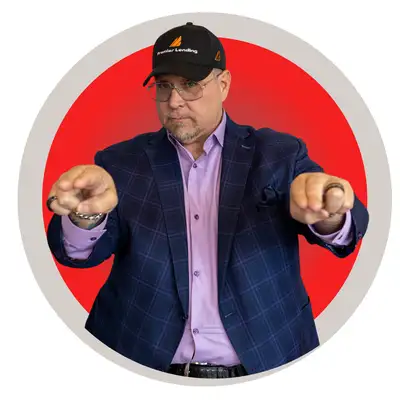

This isn’t another sales tips podcast.
This is Loan Officer Success Live - where mortgage and real estate pros come to master modern growth without the burnout.
Hosted by Devin Dubuc, Loan Officer Success Live is a deep dive into the psychology, strategy, and systems that build legacy-driven businesses in today’s market. Whether you're a high-performing loan officer, a rising agent, or an entrepreneur scaling fast, you’ll learn how to attract clients, grow income, and lead with brand, not brute force.
Real conversations. Tactical playbooks. No cold-call bro-hype. Just clarity, confidence, and creative firepower.
You don’t need a script. You need a strategy. Welcome to Loan Officer Success Live
Social Media Links:
Instagram: www.instagram.com/loanofficersuccesslive
Facebook: www.facebook.com/loanofficersuccess.live
YouTube: www.youtube.com/@loanofficersuccesslive
Premier Lending, Inc.
13850 Ballantyne Corporate Place Ste #380
Charlotte, NC 28277
NMLS #238143
Copyright © 2025 Premier Lending, Inc. All rights reserved. | AZ Lic# 1002240
For licensing information, please visit the website link:
www.nmlsconsumeraccess.org
Disclaimer: The information is intended to be viewed for informational purposes only. The content contained herein is not guaranteed or endorsed by the company, or any company mentioned, nor is this content meant to be an offer of credit. The information contained in this video may not be wholly or at all applicable to every situation or jurisdiction. You are strongly encouraged to consult your professional mortgage advisor before acting upon any information in this video. The information provided is for use as a training tool only. The information is not intended, nor should it be relied upon for any other purpose.
Welcome to Loan Officer Success Live, sponsored by Premier Lending, the show where the mortgage industry's top players pull back the curtain. Your host, Devin Dubuque, sits down with industry leaders, top producers, and game-changing mortgage tech innovators, all sharing their unfiltered strategies, bold ideas, and proven secrets for success. Get ready to take notes, think bigger, and play to win, because this is Loan Officer Success Live. Welcome back, Michelle. It's Michelle Berman-Michael, or is it just Michelle Michael? How do we want to address this? You know, I love that you asked that, Devin, to start. I am legally Michelle Michael. Very happily married. My seven-year wedding anniversary is actually tomorrow. Um, but I go by Michelle Berman, Michael, and there's a, some fun story there, right? I started my company back in two thousand fourteen when I was Michelle Berman, get married. And then you're like, shoot, I've been in business for quite a few years. And are people going to forget about me if they don't recognize the name? So I kept it as Michelle Berman, Michael, for my full, you know, quote, stage name. But I feel like now enough people know that I am Michelle Michael that we're trying to drop the Berman. Let's get rid of it. So it's Michelle, Michael happy anniversary early. Hopefully I'm one of the first people to say it. You're the first person to say it. I love it. I love it. I got it right here, live, right, right here, live. So, well, I think we've got a pretty incredible show and just to kind of throw some quick floats in there. Uh, you know, Michelle and I met at an event a few weeks back, uh, mortgage con, twenty, twenty-six shout out to empire and those guys over there doing amazing things for our industry. Um, and, uh, you were one of the speakers. and uh somebody connected so you should know each other i was surprised we didn't actually but yeah same exactly and so the next thing you know we're like yeah let's let's get a podcast going and what michelle's superpower is is uh you know she is a social media guru and she's going to tell you some things that maybe you don't want to hear today about social media. And that's what we call the discipline over dopamine. Why chasing likes is killing your momentum. Okay. And so I think that's going to challenge some mortgage professionals and some of the belief systems that we have out there. So Michelle, let's start here. Why are so many mortgage professionals addicted to social media dopamine instead of focused on real momentum? What a great way to start. So I'll start by saying, you know, social media guru is a, I feel like that's a, how would you describe it? That's an over compliment, right? In the sense of, yes, I love social and I really, really love being on the social platforms. But what I can tell you is my true passion. sort of what I'm known for, right, is that I am a monster prospector when it comes to using social as a vehicle. So social media for me is, yes, I want to make great content. Yes, I want to post good, you know, good information and be valuable and be informative and be a mom and a wife and someone that people can relate to. But I also want to say to someone who might be listening to this, like if you're on that hamster wheel and you're feeling Sort of sick and tired of why am I creating content all the time? Why am I spending all this time and energy and money on trying to create something and it's not creating any ROI for me? Then that's where I come in. Right. And that's where my superpower really comes in and says, here, let me let me show up on the white horse and save the day. But to the likes comment and that side of the conversation, here's what I want to say. I truly, truly believe, Devin, that we're living in, if not the most, one of the most distracted business environments in history. And I think that sales professionals are just... Bombarded by AI and algorithm shifts and this pressure around content and this culture that equates how much attention I have or I'm getting on my stuff to my success. Yet something like burnout, which we talk about all the time. I talked about it on page actually where you met me. burnout and this inconsistency and anxiety around our pipelines. All of it is rising as a lot of us have been spending so much time on social media without the ROI to show for it. So you have this rise in this with being attached to something that doesn't actually make us money. So I think that I'm here to challenge that narrative and, and say that the future of sales is not virality. It's a disciplined daily action. And all of this, I know we're going to talk about the black line because I'm so passionate about it, but it draws from this history for me of twenty years of staring at the black line on the bottom of a pool as a competitive swimmer. And I didn't swim just any race. I swam the miles. So that is where the discipline term really comes into play and I think is such an important part of this conversation. But this is where for me, I look at social and I say, where have I been able to build a framework that can turn us from these hamsters on a wheel of content creation and instead make the shift towards I'm now prospecting and creating an ecosystem on my social channels that create real relationships. There's a pipeline where I'm proud of. I look at my calendar and I'm like, damn, I got a lot of calls with a lot of cool new people. And all of those conversations originated on Instagram or LinkedIn or Facebook or wherever. And most importantly, Devin, it's real money, right? Like money in your bank account because you met someone on social and that person is now on your calendar. You had a great conversation. That turns into the opportunity that you need. Yeah. Well, and you covered a lot of this, but I'm going to ask this because the question is, why do likes, views, and followers feel productive even when they're not producing revenue? Yeah, they feel productive because they make us feel good, right? That's what, I mean, that's what dopamine is. And I jokingly say this, you know, you and I were talking offline about something personal to the two of us. But I joke about this from this perspective of think of like when we go to the casino, I don't gamble anymore. I used to back in the day. But, you know, when you think about that, I remember the first time I ever played blackjack in Atlantic City when I was twenty one years old. I think I won like twelve hundred bucks playing blackjack over the course of a day. And I remember leaving. the casino being like, That was amazing. Like, I want to go back again, you know? Yeah, a hundred percent. That's dopamine. And that's why casinos take a lot of money from a lot of people and keep us coming back. And when you think about dopamine, it's this happy drug, right? It's this thing that makes us feel good. And it's that affirmation of, oh, that was like a quick hit. Now I want to keep going. But the problem is with the social channels, specifically, you know, Instagram, Facebook, LinkedIn being the big three that I spend the most time on. Yeah. It's such a fleeting metric. And there's a couple of reasons for that. Number one, the algorithm changes every single freaking day. I swear there's something that changes. So if you're a true social media expert, I mean, every single day, all you do is study the algorithm. That's what you'd have to do. I don't have time for that. You don't have time. We have real businesses. Like you don't have time for that. That's right. So why are we attaching ourselves to something that frankly just, you know, oh, I got a hundred likes on this post, but I only got two likes on this. But if you actually break it down and you look at some of your own statistics over the years of doing content creation, some of my best content that's gotten me actual business has the two lights, not the two hundred. Yeah. So saying, by the way, don't put any weight into it. Well, so that that goes back to one of the things that you said in our initial conversation. And you said you don't care about followers, algorithms or video views. So if that's not the metric to measure. Right. If that's not the scorecard, then what matters? Great question. The answer is what's on your calendar. So if you're listening to this and you're a loan officer saying, you know, I'm looking at my March and how's my April shaping up? Cause it's, you know, we're a third of the way, almost a third of the way through March already. And when you look at that, you say, okay, well, what does April look like for sake of conversation? Or even back it up and say, what's the last three weeks of March look like for me on my calendar? And I can tell you for me, I look at my calendar and I say, next week alone, I have two meetings on Monday that are going to produce opportunities that create ROI for me in the form of speaking or webinars or something along either of those lines. That's right. But I have a client right now. Her name is Callie. I absolutely love her. And we met yesterday. And one of her core things that we're focused on for the month of March is ten new realtor meetings with agents that she's not currently getting business from. Amen. but we only use social as the vehicle. So that's the thing with me. And this is something I really want to make everyone aware of is when I'm talking about prospecting, I'm not talking about phone calls, emails, or text messages. I'm talking about, we are putting time and energy into making content on social. So you need to prospect using social. I You need to send messages through Instagram, through LinkedIn, through Facebook, because that will drive the eyeballs to the content that you've now created that you want people to see. And think about it from this perspective. If I send you a message, Devin, what's the first thing you're doing? You're clicking on my profile and looking at it and being like, who is this girl that just sent me a message? So most of the time we have to think of this. People aren't seeing our content first. They're seeing the message first and then they're clicking on the content. That's right. So if you're wondering why you're not getting any inbound messages, it's because you're not giving a reason to do that. A person to do that. Right. You're just hoping that somebody saw the video. Hoping is not a strategy. It's not. Yeah, we can't live on hopium, right? No. So what your suggestion is, is you create content that's going to be specific to the market that you want to attract. And then you reach out to these individuals via the DMs. And now they go to your page and they look you up and they see what you're doing. And now because of the fact that you're communicating through the DMs, The algorithm is actually starting to pick this up and say, oh, these two people know each other. And by the nature of the business, it's going to start putting more of your stuff in front of them. But more importantly, you've created an actual conversation with the target audience. Yeah. And the content side of the conversation is loaded. And we could have an entire show probably on just the content side. But it's going to get into that. Yeah. How you produce content matters. And I have a very intense philosophy around the psychological backing of or the psychology behind, I should say, sales and how people operate. And I'm a big storyteller. I believe in the power of analogies. I went to school and studied the whole philosophy around storytelling and sales. That was my undergrad and part of my master's degree. Plus, I've seen it work in my own life, which is literally why I named the book that I wrote The Black Line, which is an analogy based off of a pool. So there's a reason for that. Right. It wasn't it wasn't just an accident. But to to get back to the beginning of your question, what's the ultimate metric? The ultimate metric is for Callie, for example, if she's looking at the rest of March and she says, I only have five people on my calendar, five new agent meetings for the rest of March. But I know I need to have ten because that's my magic number. then guess what she needs to be doing for the entirety of the rest of next week, pretty much, because today's Friday, right? So all of Monday, Tuesday, Wednesday, Thursday, Friday, next week, that's five days. She sends one message every day for those five days with the sole intention of getting five new realtor meetings on her calendar with five people that she is not currently getting business from set the appointment get them on zoom go meet them for coffee whatever you're gonna do um but you have to get them on your calendars because what happens is when you hit that ten metric which is why she came up with it for herself now everybody's gonna be different some people don't need ten some people need five That's right. But for Callie, she's a younger, newer loan officer who is like last year was her second year in mortgage and she did twenty million in her second year. Like incredible. Right. But she wants to go from twenty to thirty in twenty twenty six. OK, well, Callie, we can't keep doing what we've been doing. We got to do something different. Amplify it. And how do we do that? She's a young, hungry loan officer that understands the power of social. Her content's good now because we fixed that. So now it's let's go prospect. Let's go send messages that are going to get people to say yes, that are using leverage properly, which is the whole strategy and gets that person to say yes. Now, you know, if you have ten new calls on your calendar with agents that you've not currently been doing business with, that you're going to convert at least one. Which means that she's going to get one new loan this month from someone that she was not expecting a loan to come from. And that I feel like is how you go from twenty million to thirty million or hell, I mean, seven million to fifteen million, whatever your number is. Yeah, you've got to set that parameter for yourself. So let me ask you this, because you're talking about some amazing, amazing ideas. But let's talk strategy, okay? So what does the strategy look behind the social media that we're producing? And I'm sure this is maybe more specific for each individual, but let's just talk on the general side. And then once we've adapted that strategy and determined what we're going to put out on social, what's the strategy look like behind the scenes in the communication to draw the appointments in through the DMs? Yeah. So the strategy is is very intentional. It's a four part framework. And I talk about it for anybody who is listening to this that already owns the black line. Go get it out of your library and earmark page one thirty two and one thirty three, because that's where the answer to this question that you just asked me is, Devin, for people who want it. It is the four part framework of the outbound prospecting message. But here's the three key elements to it. There are four parts, but three key elements as a whole. Number one is you have to have an identified lever in your outbound message. So when you're sending a message to someone that you don't know, the power is in the leverage. Now, when you create levers, right? For example, how did you and I meet, Devin, somebody that was at the event? who has been a client of mine for close to five years, bought my course back in two thousand nineteen, has been in my world for a very long time. I actually had lunch with her for the first time when I was close to twenty five weeks pregnant with my first son. Right. So that's how far this goes back. So that's somebody who I've maintained a relationship with. I've built and sustained a relationship with over a long period of time. That's somebody who's a leaver. So when you send a message to someone that you don't know, the idea is you have a lever. You have this person that you can name drop that will help build the bridge between the person that you already know to get to the person that you don't. So that's important. You need to have a strong identified lever there. Now, here's the second most important part of that framework. You have to establish the personal connection in the message that you send to someone. So if I were to send you a message, Devin, and let's say I knew Ferris from another life right before. I didn't know you, but I knew Ferris. And let's say I'd done a webinar for a premiere and I'd done all this other stuff for a premiere, but you didn't know who I was for whatever reason. OK, well, in the message I send to you, I have to name drop Ferris and then I have to explain how I know him. Right. I can't just say, hey, I know Ferris and he told me to message you because you're going to be like, what? But if I name drop him and I explain, hey, I actually met Ferris in the lobby standing out in front of the steakhouse. Him and I met. We talked for thirty minutes. He was so excited about what I do and wanted to get on my calendar next week. You know, blah, blah, blah. Explain. Right. Right. Two, three sentences. But what happens is two things. Number one, you believe me. Yep. Right. Hopefully. Number two, there's this credibility around my name now. And all of a sudden I'm not making it about me. I'm making it about, hey, I have this relationship with this person and look at all of the value that we created together. And now I'm in your DMs, Devin, saying, hey, I want to support you. right so personal connection is key so when you identify the lever who is or sorry when you identify the lever what is the personal connection you have with them don't just say a person's name and expect the person on the receiving end to be like cool great explain good stuff yeah And then the last piece, perhaps the most important and the one that gets wrong or most people get wrong is the time anchored call to action. I can't tell you how many times I've seen this done wrong over and over and over and over again. If you send someone a message on social and you say, are you available at any point next week or let me know what your calendar looks like. My calendar's really freaking busy, sorry. But if I say, hey, Devin, I have some openings on Tuesday morning, actually Wednesday morning, it might be better, but Tuesday morning I can do at ten a.m. Central. Do either of those work for you? That's what we call a time anchored call to action. This is sales one-on-one. That's what this is. Now, when you combine a strong sales strategy with a strong social strategy, meaning your content is as good as your outbound messaging, it is a recipe for a gangbuster year for those of you that are willing to do the work, which is the discipline side. Well, and let's talk about two parts there. So number one, what is discipline, right? And then number two, what is that content look like? What is that content piece? Yeah. yeah what is discipline man i i can't tell you what the the webster definition is but i can tell you what mine is um and i i i really believe this like i feel like discipline was ingrained in me years and years and years and years before i ever even knew what it actually meant Right. I think the black line on the bottom of a pool taught me it before I even knew how to type it into Google to find out what the definition is. But the truth is, for me, discipline is the ability or the desire to continue to show up daily to do something that I know is going to produce success. Now, discipline, I don't think comes from. I don't think that they're equate. They're not equivalent. Right. Meaning I don't get disciplined because I'm motivated. That's not how that works. Right. I get disciplined because I do something when the rest of the world says, hey, maybe we shouldn't do that. Right. I get discipline when other people are doing the opposite and I choose to stay my in my lane. Right. This is a good example. You know, I know you share this sentiment, but I don't drink anymore. I haven't had a drink in two years and partially fertility, partially just the desire to be a well-rounded human and mom and athlete. And it doesn't work for me to be able to be all of those three things, even having a glass of wine as much as sometimes I'm like, oh, that sounds good. Right. Right. But the discipline comes when you're out with all of your friends and everyone's having a glass of wine and you say, hey, this is yeah, it sounds good, but it's just not part of my story anymore. That's right. That's right. So it's the desire to do something where the world is almost telling you, why are you doing that? right um so that's what i that's what i would define discipline i think we have to go against the grain sometime when it comes to discipline right because if we want to become successful whatever it is that we do we have to set what those standards look like we have to stick to them because those are our standards and that's where where not only discipline is great but that's where success strategies are created as well yeah oh my gosh i mean it's doing the uncommon or doing the common, I'm sorry, uncommonly well, right? Like whatever the formal definition is of a high performer or someone who is a disciplined human. Think about elite athletes, right? Their disciplines, which means they're doing the fundamental skills of whatever the sport is uncommonly well. Exactly. But the sport itself is a common thing that a lot of people do. So that's where, you know, I think discipline comes in. But to your point, you're on the content side. What is the content strategy? And I can tell you. Well, before you go into the content strategy, let's talk about the discipline behind how the social strategy works, right? So what does that discipline look like for this is what I'm going to do. I'm going to do this every single week. In fact, I'm going to do this every single day. How does outline that for me? Yeah, it's so simple. It is stupid simple. And I'll tell you what it is. It's sending one message every single day without fail. that's the discipline so it is a very common thing that you must do uncommonly well meaning that most people are going to say michelle that's a little too simple i've had people say that to me i've gotten off of stage in front of six hundred loan officers at a big event recently and they came up to me and they're like michelle i just feel like i'm missing something this is so simple And I was like, you're damn right it is. But how many people of the six hundred loan officers in this room are actually going to do it? Two percent, three percent, maybe, maybe. Right. And what is the strategy? It's I'm sending one message every single day with the intention of getting a booked call on my calendar that is going to drive an opportunity for my business. Now, I'm a little bit different in the sense of, you know, I'm not originating. So. What my three drivers are are different. And when I say drivers, drivers are the thing you must do on a monthly basis that create the opportunity for a lead to be exposed to you. Right. So notice I didn't say the word lead is the goal. I said the opportunity that gets you in front of the lead is the goal. Right. So for me, you know what the three drivers are. Podcast is one I love riffing with with friends and talking. Right. Especially because it allows us to amplify our message. It does. The second thing is speaking. I love speaking. I love the dopamine feeling of walking out on stage, even though you're like, God, please give me the right words right now for this real. And usually he does. Thank you Lord for that. But the important part is that those things drive opportunity into my business. So every loan officer is a little bit different. Some people are recruiting. Some people are in executive leadership. Some people are originating, right? What is your ultimate thing that you need to be doing on a monthly basis. If you're recruiting and you're not meeting with three to five to seven new recruits on a monthly basis, probably got a problem, right? I have a client right now in Dallas who his target number is five new loan officer meetings every single month, but then we have a secondary backend strategy behind that If he has five new meetings with brand new LOs that don't know anything about his company that month, he also has to have a secondary driver, which is a certain number of follow up meetings with individuals he's already met with. Right. Meaning his goal is to get a certain number of round two meetings every single month. So we track it. I mean, Devin, I've made a hardcore homework assignment. It's three and a half, almost four pages. It's my signature assignment, if you will, within my coaching program called the Drivers and Leavers. But you got to document it. I mean, the math doesn't lie. That's it. So if I know, and if it's staring in front of me on a card, right, or on a PDF or however I check it, and I look at that and I say, okay, well, my goal is to have five new loan officer meetings this month with people I'm trying to recruit to my company. And I'm looking at my calendar and well, shoot, I only got three. Okay, red flag is up. Now I know I'm two in the hole. I got to go find two more. So my prospecting for the next several days is to fill that bucket. Until that bucket's full, my eyes don't come off the line. And that's the discipline aspect that comes into avoiding shiny object syndrome, avoiding so-and-so is doing this. Oh, I want to go do that. No, sir. No, ma'am. Right. My bucket's not full. My number is five and I'm at three. I'm not doing anything until that bucket's full. Yeah, you've got to stay focused on the prize. You've got to have the discipline to follow through. You've got to have the discipline to track it because if you really want to achieve your goals, all these things are a hundred percent necessary to get where you're going. And more importantly, if you do track it, you can go back and look at where you fell off or where you lost your way, or you can look at the spikes and really see within those numbers what it was that got you there so you can go back and duplicate the successful efforts. Exactly. Now I want to get into the black line. So we're going to go there, but I want to finish up one question, which is the social strategy for what we should be posting. I know this is going to be a little different for everybody, but you talk about quality of the social and message of the social. Tell me a little bit about that. Yeah. The quality of the social is simple, right? Like I think the days of when we first all got into the business, you know, I started social back in But what I can tell you from, you know, line of personal and professional now is it's totally blurred right meaning like both of them have to coexist so i see a lot of people who are unafraid or unwilling excuse me or afraid to cross the boundary or they'll be like well am i supposed to have two accounts am i supposed to have a personal account am i supposed to have a business account the answer is no because i am one human i don't operate two different bodies, right? So I'm mom, I am wife, I am high D, high performing business owner who loves to make people better, right? And help people grow their businesses. So those two things have to coexist. And I think that the social strategy for most people is one or the other. And I also think that when it comes to mortgage content, Specifically, this is where someone might throw a tomato at me, so you'll have to let me know if they do. But I think there's two huge issues and I want to expose both of them. Number one is if all you talk about is mortgage, I do not care. I don't care, right? I don't care if all you want to do is talk about your new cool product. That doesn't mean jack to me as a consumer because I don't even know who you are. And there's no story behind that for it to make me understand why that would be of benefit to me. That's right. So your content, if you're going to talk about mortgages, even more importantly, which you should talk about mortgage, I'm not saying you shouldn't. I'm saying you have to understand that there is a strategy around how to deliver information around a mortgage product or around, hey, it is now a good time to refinance, right? You ask yourself all those questions in a way that is digestible and consumable for your audience. And the number one way to do that, and this is... a perfect segue until i know you want to talk about but the uh and i didn't i didn't plan that that just happened on accident my brain um but the perfect thing about this content that i'm talking about is everything needs to be rooted in analogies and stories okay stories and analogies are what sell humans into likeness with you That's it. That's it. That is it. I agree with you. Yeah. And I think, you know, it has to be relatable. You have to be relatable. You have to be yourself on social media. You have to show people the in-between the line stuff too. It can't just be about the mortgage. Who are you? What are you doing? What do you do outside of the mortgage life? Do we like you? Are you a real person? Because we're in a stress recession right now. You know, Neil talked about that. uh, at mortgage con. And, you know, I'm a firm believer of that as well. So if we're in a trust recession, let's show people who we really are on social media. Well, that ties the second thing in that ties the second thing in Devin and I have a very pregnant brain and I don't want to forget to say it. Um, but here's the second thing is if all you're using is copy paste, copy paste in-house marketing content, you have a major problem. Yeah. Right. I'm very proud of what this one particular company that I am recently working with, they reached out to me and they're like, Michelle, we only have about fifty loan officers right now, but we have a content problem because our content sucks and I know it. So and the gentleman was very honest and I thought it was an amazing conversation. And I was really proud of the owner of a company looking me in dead in the face on a Zoom meeting and saying, hey, Michelle, my in-house marketing, we have a problem. right and it's not that the content doesn't look good because it's pretty and it's branded well but it doesn't represent the individual loan officer it's a one person sitting at a desk mass producing content for all of those fifty loan officers and there is no differentiation and the loan officer might feel good in in the moment saying oh i posted on on social today yay me i checked the box but i now see that same piece of content from all fifty of those exactly Huge problem, right? So every loan officer, no matter what company you work for, no matter who your leader is, hopefully they understand this important piece of this conversation, which is that every single individual needs to have their own unique identity, their own individual brand. Who am I and how can I represent myself? I'm not saying your color scheme needs to be different than your company's. Maybe you like your company's colors, but... We make all of our clients really intentionally go through a mood board assignment. Who are they? What are their stylistic likes? What are the things that make them them? Are they into hunting and fishing? Do they like archery? Do they like poker? Like, who are you? Right. And I have two ladies who both love spring, both love gardening and their mood boards came out so wildly different from one another. Right. But that's because all of the other input when you create something like that, they're not the same. They both like gardening and they both like the spring. But when you look at their mood boards, they're totally one hundred percent one eightied of each other. Because they're different people. They love the same stuff, but they have their own identity. And, you know, my good friend John Hinks talked about this. We've got a separate podcast, The Mortgage Giants. If you know John, he's six, eight. I'm six, four. So it just made sense. You are very tall. I can affirm that, yes. But John, you know, he said this. He said, if you don't know, you know, what about yourself, if you're having a hard time putting that mood board together, go ask your closest friends. Gloucester closest friends. If you think about me and you would describe me in five ways as to who you think I am, they're going to help you through that and get you to the right answer because you need to be known for how you're already known. You know, Sean Kaplan talked about this the other day as well. He talked about being in a room with Chris Doe trying to talk about through his brand and what it should be. And they were sitting down trying to figure it out. And as they're sitting there, three of his friends walk out and they're like, hey, Cap, we're going to lunch. You want to join us? And he's like, wait, what was that? What was that? Right? He's like, what was what? They want to go to lunch. He's like, no, what was Cap? He's like, oh, that's people call me. I think that's who you are. That's your brand, your cap, right? So I love where you're taking this, but I want to get on the most important part of this call today. And I know we're getting right at the wrap-up time, so we'll go a little over today. And that's the black line, right? The black line, this is your book. It's available on Amazon. And I'd love to know right out of the starting gate, what does that concept mean? What does the black line mean to you? Yeah, the black line is really about a philosophy that I feel like I've learned, you know, as I mentioned earlier, long before I was ever in business, but really it was rooted in twenty years as a competitive swimmer and specializing in the mile, which is the longest event on the swimming program. So when you swim a distance event, you really have to put the blinders on. It's very easy to pay attention to what someone is doing next to you. And this race is so long that it is also very easy to get into your own head and have distractions creep in, you know, imposter syndrome, all the thoughts, all the things, right? So when I was staring at the black line at the bottom of a pool, it was that visual anchor, sort of that one thing that was always there. No matter what, it never went away. It didn't change. And it was that thing that kept me grounded lap after lap after lap, right? The average mile is sixty six or the mile in a short course pool is sixty six laps in an Olympic sized pool, which is what you see on TV during the Olympics. It's thirty. But you can't see the finish line most of the time. Yeah. Right. And motivation fades very quickly in a sixty six lap race. So what carries you through is the rhythm and the discipline and the direction. If I follow this line long enough, it will take me to the other side of the pool. I'll do a flip turn, turn around and come back and rinse, wash and repeat. So the book takes that concept and applies it to business and it applies it to life. And I think when we're living in a world that's obsessed with hacks and algorithms and all these viral moments, yeah. The people who are truly building genuine lasting success are the ones who commit to the small daily discipline actions. Now, I'll also tell you the black line is really about replacing noise with clarity and realizing that motivation is not a lightning strike. It doesn't just smack us over the head one day and we wake up and we have it. It doesn't come from that. It comes from movement. Movement meaning doing the thing that we're supposed to be doing is how we say, wow, that worked. Now I want to do it again. Hold on. Whoa, this is really working now. I want to do it again. And then the last thing I'll say about the book is, you know, in twenty twenty four, I had a life changing or life altering event that cost me a lot emotionally and personally, financially, all of that. But I had a miscarriage that was the hardest thing I've ever experienced in my life. Any women or men, husbands, wives, anybody that's experienced that, I can tell you. I empathize. I'm there and I feel you. But in that moment is when the black line was born because I realized after close to six weeks of not being able to prospect, not being able to work, I mean, hell, doing the dishes was an uphill climb, let alone anything else. I had somebody call me and tell me, Michelle, I really need you to get back to who you are. I've seen you over the last almost decade just crush what you're doing. You have to get back to who you are. And I was like, what does that mean? And in a two plus hour conversation with this very, very close friend, I had that moment. I had my oh shit moment, literally. That is what the black line means. The black line is getting back to where I needed to be that I had been pulled off of over the course of this experience in my life. So the black line is part rally cry for others who have gone through struggles and ups and downs. It's a playbook for how to do it. And most importantly, it's a... understanding of, hey, I've been there too. So this is lived experience. I have walked where you guys are walking. And I've come out on the other side of it. And I'm not to say that, you know, God's not going to throw some other hard stuff at me in my life. But I have the tools and I'm equipped to work through them now. There's no question about that. There's no question about it. And you know, guys, if you want to pick up a copy of The Black Line, go to Amazon. You can find it there. Just look for The Black Line. Michelle Berman, Michael, it's probably how it's actually marketed. Am I correct with that? It's actually Michelle Michael. okay michelle michael so michelle michael and that's michael with the k m-i-k-e-l okay go check that out grab a copy uh you know and if you want to jump on you know michelle's schedule uh and learn more about her coaching program uh you can find her at bermanmediapd.com have we changed that website is that still it is that the right one no that is it that's it okay yeah that's it uh dot com and you can get over there and you know Get a chance to learn from Michelle and figure out your social media strategy, right? Figure out how you can use that to transition it into real business that converts and pays you actual money. And it's not about the likes. It's not about the followers. Those things are just dopamine hits. It's about actually utilizing this as a tool to grow your business in a very successful way, okay? Yep. So let's bring it home. So if we've got a lot of sir or anybody out there that's listening in right now and realizes they've been chasing the wrong things on social, where should they start fixing it? two things. Number one, take a hard look at your content. Does this reflect who I am as a mom, a wife, a husband, a dad, as a human outside of work? And number two, does it actually represent me, right? Do I look at my content and do I love it? Or is it a, I checked the box today, right? And there's, I could unpack that for a whole nother But that's, that's the number one thing. The number two thing that they need to do is if they're looking at that and saying, well, crap, this is not where it needs to be. The second piece to that is does it, and am I making this something where it's not about more content, it's about clear, more intentional content, right? Because I think a lot of people assume to do better, they have to just do more. And I don't want you to do more. I want you to do less. And I want you to do it really, really intentionally. two, three pieces of content on a weekly basis is great. Every single day is not sustainable for most people, not for me, and I do it for a living. So that's what I can say is intentional content is so key. So take a good hard look at is this content a reflection of who I am as a human? Does it make me feel excited about posting it? Or am I just checking the social media box? Well, go over and check out Michelle as well on Instagram at Berman Media Social. Go ahead and follow her and check out her content. See what she's talking about. Get a glimpse of that, right? You can also find Michelle on Facebook at Michelle.Berman.Seventy-five. Or just probably look at Michelle Berman. I'm sure you can find her there as well. And again, make sure that you like and follow her there. But if you're looking for the book, go to Amazon. You can find it. And then if you want that strategy, if you want to start getting coached so that you can get to the top of your game. and start turning that social page into real hard cash, right? Book appointments. Go over there to Michelle's website and jump right on. Michelle, Michael, thank you so much for coming on today. Absolute pleasure to have you on the show. I think we're going to help a lot of people with this one and put them in the right direction. So thank you. And I know you're about to go on a book tour, so good luck on the tour. So excited. And I think that's it, right? Any last messages before we wrap up today? No, just, I appreciate you, Devin. And I know that this is just the start of our friendship and I'm excited that this is how it started. So thank you for having me. And I hope that it helps just one person. That's what it's about. I'm sure they're thanking you right now. In fact, Raphael Amaro literally popped on and said, let me pop that up here real quick. He said, pure gold. Love it. We've got at least one fan. We've got at least one fan. Love it. All right, guys. We're going to wrap up today. Keep coming back every single week. We're going to have great guests on just like Michelle. Maybe not just like Michelle. We're going to have some good guests on. Keep liking, following, subscribe to the content. We appreciate you so much. And until the next time. You've been watching Lawn Officer Success Live, where real strategies meet real success. Don't forget to subscribe now and share it with your teammates and keep leveling up because your next breakthrough starts here. If this fired you up, don't just watch success. Go out there and build it.