Subscribe
Share
Share
Embed
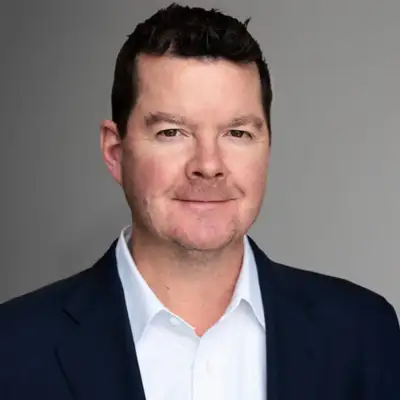
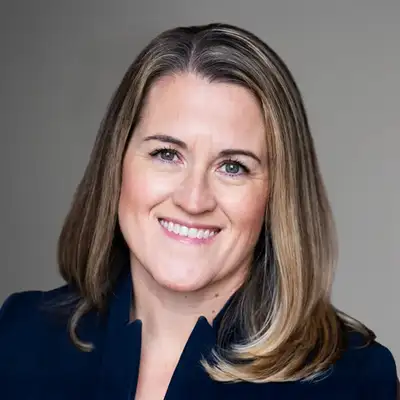
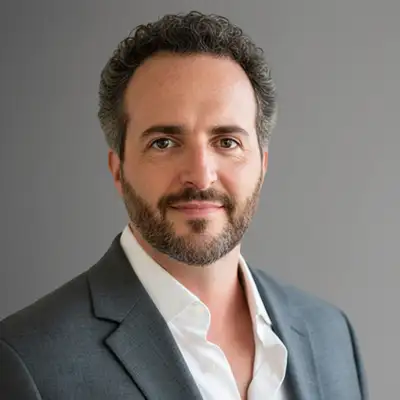
Meet the Insiders rewriting the rules of influence. Pulitzer Prize-winning journalist Brody Mullins and veteran DC strategist Lisa Camooso Miller interview the leaders who shape perception, move policy, and win when it matters. Not pundits or commentators – these are the operators driving some of the most critical strategies and outcomes in today's Washington.
THE DECIDERS — DAVID CHAVERN
David Somebody comes in and tells you they know how the system works. I would look, I. What you really need is somebody who can react to the craziness of the day. Because believe me, tomorrow something's going to happen, which none of us could have imagined happening.
ANNCR Behind every major policy decision, every corporate strategy, every Washington power play. Are the insiders shaping the game and the new rules to win it? The deciders with Pulitzer Prize winning journalist Brody Mullins and veteran D.C. strategist Lisa Camooso Miller.
Lisa Welcome to The Deciders, where we talk to the insiders, rewriting the playbook for advocacy in Washington. Today we're talking to David Chavern. He's the president and CEO of the American Council of Life Insurers. David, thanks for joining us.
David Great. Happy to be here. Thanks for asking me.
Brody So the life insurance industries, one of the oldest industries in the country, one of your member companies goes back to the Civil War?
David Absolutely.
Brody Tell us about your industry.
David It is the biggest industry that people don't think about a lot. I call it the ballast of the economy. We've, we are the only industry that will make you a lifetime promise. By the way, I have a bunch of my members who have life insurance policies that originated in the 1930s. Still outstanding like we do. We're there for you, for your life. But as part of that, people don't tend to think about us, and they certainly don't think about the $8.5 trillion of money we invest in the economy. So I feel like we're the, gentle giants, if you will, that, I have big impact in the economy, but people don't understand much about what we do. And that's kind of my job is to tell that.
Brody Story and tell us about that $8.5 trillion.
David Yeah. So when you people pay premiums for their life insurance over sometimes decades, long periods of time, what happens? Those premiums, this is a industry that then invest those into the US economy, where the biggest purchasers of corporate bonds in the economy, we buy bonds for infrastructure, or we do small business lending or huge residential lenders. So, you know, all that money has to be invested somewhere so that we can give it back to you later on. So it is just a massive flow of funds into the U.S. economy.
Lisa David, so much of the industry, as you mentioned, has been behind the scenes and deliberately for a long time, but you're looking to change that and sort of open up the aperture people's understanding of what the industry does. Talk to us a little bit about that. Yeah.
David I mean, it's an interesting industry that's been kind of quiet and, internal for a long time and probably one of that. But in 2017, the tax bill that was great for everybody. Everybody loved tax Bill 2017 except for the U.S. life insurance industry, which was kind of uniquely punished in that bill, to the tune of about $24 billion. So people all sudden understood the the cost of being not understood.
Brody 24 billion.
David 24 billion. Yeah.
Brody Then it also seems more broadly that other sides of advocacy and the media have change in that people used to sort of hide behind their brand. Strategists were strategy behind the scenes. And now it seems like to be an effective advocate, people need to create their own brands and be out there publicly with the administration or with Congress. Have you seen that change recently?
David Oh, 100%. Listen, I mean, everything about media engagement and storytelling has changed completely. And a lot of, a lot of old playbooks are not only outdated, they're affirmatively bad. So it is a world in which both of you have to punch through people's attention because they're doing the vertical video thing. How do you punch through? And then how do you do that, an authentic way that people actually believe it's a valuable point of view. So one of the best ways to do that is to have somebody sometimes association CEO, sometimes with a CEO, sometimes somebody else who is willing to lean in, look people in the eye and be authentic with them. And that's a that's a big evolution. And then I think a lot of people are still trying to catch up, too.
Lisa And if you're the head of a major trade association, you better look confident. You better have the right words because you want people to trust you, because that really goes back to that authenticity piece.
David Well, and there's a lot of risk in this new model. I mean, look at the McDonald's CEO trying to do a thing with the burger. And you're right. And you really either have to lean into being confident in that or, by the way, find somebody else to do it, because maybe that's not your thing. It's a great.
Brody Point. So the life insurance industry also plays a unique role in the economy and society, in that there's sort of a private sector industry that solving for public sector or governmental problem 100%. Can you talk about that nexus?
David Yeah. So we call it a life insurance industry. But life insurance is just one thing we do. You know, the traditional life insurance that people get when they have their first kid or buy a house or those kind of things still are incredibly important product that helps you feel good during your life, that your family be taking care of, and also when your family does benefit from that, they have less need to rely on the government at that time, right? But also we a big growing product is annuities, which is lifetime income. They, you know, paying you for the remainder of your life. I just bought a annuity myself that gives people assurance about they're going to they're not going to outlive their money. They're not gonna have to rely as much on government services. We did a study recently about how our annuity products will leave the social security system of a about $100 billion a burden currently, and then we have disability products, long term care, all of which are giving you the tools to manage risks in your life and also then relieve stress on the government from having to fill in those blanks.
Lisa David, you came from the the consumer brands industry. And now to insurance. It's easier to talk, I would imagine, about Smucker's and about Twinkie.
David Credit. Mark Smucker is a friend of mine. I like more.
Lisa Than it is. Perhaps to talk about the importance of insurance as your overall retirement portfolio, how do you overcome the disconnect between consumer brands that we work with and understand every day? Then to the the products and the services that the ACLI offer that are also incredibly important to our personal finance. Yeah.
David Interestingly, the companies themselves, the industries are pretty similar, a lot of them based in the Midwest, a lot of 130 year old companies. Twinkie, by the way, people immediately understand the value prop, meaning I like the taste of the Twinkie. I understand what its meaning is to me. People get anxious about anything financial, and then it gets people feel like it's too complicated and you really have to break it down. In terms of what does it mean to you in some visceral way. And what it means to you is we give you tools to manage the risks in your life, have lifetime income, take care of your family. It is harder this industry to punch through and get people to understand why we're so important to them. As you know, they understand why their that Twinkie is important to them in that moment. And people do love Twinkies, by the way.
Brody I guess another similarity is New York life and Twinkies can both last for 150 years.
ANNCR Right?
Lisa And how do you talk to Washington about how important it is to make sure that that's part of the.
David Interestingly, you have to start in the exact same space, right? Because if you go into, congressional office, as you know, from working on the Hill, it's a mile wide and an inch deep right there talking to the insurance industry. And then then and then the fisheries guy comes in and somebody and somebody, everybody, early childhood education. And you always have to start with what we mean to their voters, to consumers. Start there. And then, you can layer on top what we mean to the economy, what public policies have implications. So you have to start actually in the same place of sort of punching through into what they mean for people.
Brody So 24 billion in the last the 2017 tax bill. Yeah, there's a tax bill last year. I imagine it's why we think it'd be easy to go to your members and say, hey, we need to raise more money to be more effective advocates on this last tax bill. How did that play out?
David Yeah. They did. I mean, it was clear to the members what the risk was, right. And they they were very supportive of basically in doing that. You then have to execute. Right. It's one of those things where you can't take anything for granted till it's done. And we employed a strategy of, first of all, keep it simple, clear messages, which we developed early on and then cohesive, teamwork. Now, you know, getting the whole industry together. And to their credit, all my members supported that. They they're all very disciplined about it. We were all very cohesive. We had tremendous numbers of CEOs coming to that Hill repeatedly in the amount of time these people devoted was incredible. And ultimately we came out of this, unscathed. So that was that was good. And we're happy about that. You can pat myself on the back for 15 minutes, but then you also then have to think about the future.
Brody It seems like another problem that trade associations have these days in general, is keeping their members together. As you just said, you know that you have everyone here on the same team, and then every individual company is also competing with each other, and some companies can jump out and cut a better deal for themselves. It sounds like in this case, everyone stayed together.
David Everyone stay together. And that's kind of what a trade association is all about. At the end of the day, I always get asked, how do you deal with member conflicts? And actually conflicts is my business. Like, that's where I'm here. If everybody just agreed all the time, they wouldn't need us.
Brody And you said, after this tax bill, you pat yourself on the back, you took 15 minutes and then looked at the future. Yeah. What's the future?
David The future is a world in which, the federal government is going to keep need money. Right. And so we don't want to be targeted again. So you have to do the work now to set up so that people not only understand what we do, but again, fundamentally appreciate that what we do helps you to live better lives and supports the economy. So we're doing a lot of work. And can you continue to work now to where we're not coming from behind in the future? We are well set up for the future. We always have to be thinking about the next thing.
Lisa That's media and executive coaching. One on one is define yourself before someone else 100%. Yeah, we'll be right back. With the desires of.
Brody Every day, millions of Americans like me go to.
Lisa Work making products you can rely on.
ANNCR From brands you trust.
Lisa We try to make your day just a little bit easier.
ANNCR With everyday essentials that are convenient.
Lisa Affordable, and above all, safe.
ANNCR Nothing's more important than the safety of what we make because we don't just work here.
Lisa We're moms.
ANNCR And dads.
Lisa Doing what we love.
ANNCR So you have more time to.
Lisa Do what you love.
David A message from America's.
ANNCR Favorite food, beverage, home and personal care brands.
Lisa Welcome back to The Deciders with David Chavern.
Brody So, David, you've held a lot of top positions at trade associations in DC, starting with the Chamber of Commerce. Tell us about the News Media Alliance. And what is there a fundamental problem that the news media has these days?
David Well, yeah. After I left the chamber, I was asked to run what was then the Newspaper Association of America, which is all of the big news, publishers, New York Times, Wall Street Journal, Washington Post, the rest. And as including, you know, hundreds of local publishers and, their big challenge, which has continued, unfortunately, is how to get value for their content in the digital world. We supported some legislation that was, I think, really important and ahead of its time, but it was really the one of the first of these engagements of content creators versus digital world. And I learned so much about both the news business but also new forms of advocacy in the rest. One thing about the representing news publishers is we never had as much money as, say, the Google and Facebook of the world. So you had to think about how do you have impact even though you're not bringing the most money to the table? So it taught me a lot. News business has some really deep challenges, which I'm happy to talk to you about. I want them to win. But also, there's, there's a lot of forces that make it tough for them.
Brody Can it be fixed? I mean, I think about this recently that as soon as someone breaks any news anywhere, Politico picks it up and Sam puts it in playbook, and then Punchbowl has it. And there's sort of a you're sort of allowed to steal people's news. Like once someone put something out in the public, it can be taken and then passed around for free. Is there a way to fix that problem?
David Yeah. So the one big thing that makes news different from, say, the music business, is its relative lack of copyright protection. Also, it's a form of content that's very expensive to do well. And your back catalog doesn't matter. You know, you may still listen to Aretha Franklin like I do, but you're not reading speeches from the 1970s, right? So it's got a short shelf life. And at the end of the day, figuring out how this kind of expensive but critically important kind of content gets value back from the system is really the puzzle that has to be solved.
Lisa I happen to evangelize quite a bit about the loss of income. Yeah, yeah. And that to me I think is changing. And they'll be an evolution in that space too. But your organization fundamentally relies on getting messages out into local communities. Are there tools and tricks that your team is using ways to get your word out that isn't necessarily relying on local media?
David Yeah, I mean, in terms of an organization like ours who are trying to get messages out, local media is, you know, a means, but now you have every other means possible, including TikTok or Instagram Reels or podcasts or, a whole range of other things. And the discipline now, if you're a trade association, is how do you orchestrate all of these tools?
Lisa The era of the press release, though, the era of all of those tactics that we once used have gone away?
David Yeah. It's so interesting how little people understand the press and reporters today. Every time people say, let's do a press release, I want my brain to fall out of my head. I was like, did you know the one group that doesn't read press releases? It's the press that repress releases.
Lisa Hey, man.
David What I try to do is put in a lot of prep work where we're reaching out to reporters all the time. In terms of the media broadly, you have to get out in the spaces that are impacting the people you care about. Let's say elected officials think about what are the elected officials following? What do they care about? Is it podcast? Is it local social media and the rest? And you have to get into those spaces.
Brody Let's talk about conventional wisdom. You have said that conventional wisdom is a problem for all businesses and probably everything in Washington. Tell us what you mean by that.
David Many people in Washington kind of sell themselves as a native guide, and it's not only what they sell, but it's sort of their identity. I know these pathways. The fact of the matter is, currently all of these pathways are getting rerouted, broken up, changed on a daily basis. Somebody comes in and tells you they know how the system works. I would like, I swear to be honest with you, because believe me, tomorrow something's going to happen, which none of us could have imagined it happening. So if anybody tells you they know how, you know how it's going to work. They don't. What you want is somebody with a lot of assets and tools and who's adept at playing them and reacting, right. There's that old saying about war for warfare. No plan survives first engagement with the enemy.
Brody So I have a plan til I get punched in the face and then everything's over. Another way that things are changing is in the Republican Party itself. And the Republican Party of five years ago, ten years ago was just so different today. How does your industry deal with the rise of populism in the Republican Party?
David Well, or in populism, the Democratic Party, right. Yeah, we're an industry again. Who's who? You know, when you're 130, 150 years on, you, are pretty bipartisan at the end of the day. But in terms of business engagement with populism, the trouble is, business in general isn't good with dealing with anger and grievance. And there, we have to be honest that the economy doesn't work great for lots of people. So what you have to do is, as business is, try to punch through and explain how you're making people's lives better. But also you can't do that in a way that kind of downplays people's challenges. There are a lot of challenges that come, and you kind of have to be honest about that.
Lisa We'll be right back with David Shaban.
Brody Welcome back to the deciders. We're speaking with David Chadwick.
Lisa David, let's talk about campaign finance. Members of Congress are getting less of their money from corporate PACs and more from small donors. How do you think that that's affecting the advocacy of businesses?
David Yeah, it's interesting. The whole role of, trade PACs and corporate PACs is really changed because the system around it has changed. You really have a barbell finance system now where you have very wealthy individual donors are giving massive amounts of money. And on the other hand, is the massive amounts of small dollar donations that comes in this this gets to the there's some politicians almost become content creators because they're gathering small dollar donations that way. And that's a big barbell, right? Corporate PACs are kind of in the middle. So what is the role of these of these things now, how can I be helpful to somebody who supported us in ways that don't involve writing $100 million checks that we don't have? Right. Are there things we can do back in the district? Are there kind of content we can create that acknowledge that. And I think trade associations in general have to think a lot more about how do I deliver value in other ways, because just the money part has gone to different places. So that makes sense.
Brody So let's talk about super PACs and companies involvement in super PACs. Do you think that companies, publicly traded companies, will start getting into the super PACs game, or is it still too risky?
David I think most publicly traded companies or big mutuals like ours, are pretty bipartisan again. My guys have been around like 150 years. So they, I think in long loops and sort of maximizing against the next election is not really how we think about these things, but I, I think it is currently, for big wealthy individuals and to some degree, new entrant companies who are trying to get into a position of influence. They probably feel like they're trying to catch up, and so they move bunches of money into the system. Everybody objectively has to understand how astounding the amount of money flowing into the system is. But interestingly, I do come back to money doesn't always win. There's a lot of races where people are the most money didn't win. Yeah. Voters matter.
Brody You know, people I, I agree completely. People blame Trump for a lot of the money in the system right now. But, you know, the first time that he ran and won in 2016, he didn't have the money. He didn't have the PACs. He didn't have the super PACs. He didn't have these $2 and he didn't have the media. All he had was the voters.
David So there's two things that really matter now money, which is always matter and attention. And President Trump has been a master at grabbing people's attention. Mayor Mamdani is really good at grabbing people's attention. And that attention in many ways, can matter a lot more than money.
Lisa Trump came to office, though, and he has really consolidated power in a way that we've not seen since Watergate. Trump will not be president forever. And that will shift. Will we go back to a place where Congress has a more of a balance, or are we moving forward in a different way, power wise?
David Could be I think there's a conventional wisdom that, oh, it'll revert to the mean that'll get back like the old ways. What isn't going to revert to the mean our attention and money. Who grabs the attention. Who's got the money. So it will depend a lot on who this next president is. And one. Can they draw the attention like President Trump has. And do they somehow attract financial resources that does that kind of centralizing. And I think we don't know either of those things yet.
Brody We'll be right back on the desires with David Chavern.
ANNCR National Association of Realtors advocacy, working to expand access to housing and defend property rights so that more Americans can build generational wealth and prosperity through homeownership. A critical voice and nearly one fifth of the U.S. economy, supporting two jobs for every single family home sold and generating more than $760 billion of property tax revenue for state and local governments each year. Realtors are members of the National Association of Realtors.
Lisa Welcome back to the deciders. We're here with David Chavern.
Brody David, we ask every guest on our show, the same three questions.
Lisa David, what's a decision that you've made in the past year that you're especially proud of?
David Can I go back further than a year?
Brody Of course.
David Okay, so, when I came into Consumer Brands Association, one of the things we tried to do there was refocus it on advocacy and storytelling, talking about why the products are important and what the, beneficial effects of the industry was on the economy. And I think that set that industry up well, in this administration, we're having to tell their story is hard. But they were, I think, pretty ready for it. So I I've been happy with their trajectory and I was happy to be able to do that. I'm really proud of taking the job at Ashley. It's a great industry that needs its story told so that I've been, thrilled about and also our ability to collect allies, friends and allies. That takes a lot of work, and there's been a big beneficial effect on that.
Brody What's one decision that you'd like to do over?
David Oh, it's always the things you almost got done, right. Going back to the, News Media Alliance, we supported a critical piece of legislation called the journalism Corporation Protection Act. That would have allowed news publishers to collectively negotiate with the platforms. We almost got it done. They're still at it. They should get it passed. But we didn't quite get it done.
Lisa David, what's one thing that Washington is not thinking about that they ought to be.
David Generational anger. I think you have a generational time where young people have challenges getting jobs out of college. Tremendous amount of student debt, delaying buying houses. I've got kids trying to buy houses now. Tremendous, you know, anxieties about the future. And you can say, wow, it's tough being a young person now, but that these things impact somebody for their whole life. You know, if you instead of buying a house and when you're 30, if you're buying it when you're 40, that's changed everything. And I think there's going to be a lot of long term anger that comes from that. That's going to be that's going to impact our political system. Unless we can figure out a way to address some of these.
Lisa That's a great point, David. It was really a pleasure having you today.
David Great. Happy to be here. Oh.
Lisa Welcome back to the deciders. That was David Chavern Brody. What did you think?
Brody You know, it's interesting we focused so much in Donald Trump's world on the here and now. What's happening this minute, what's happening this second? Here's a guy who represents an industry that's been around for 150 years, companies that have been around for longer than 150 years. And we forget about the value of focusing on the long term contracted to like the crypto industry, or maybe some AI companies that are starting these super PACs and giving all his money try to catch up. He's running entry. David Chavern is running an industry where he's just trying to maintain the course because he knows there'll be another president, there'll be another Congress, and his industry needs to stay in the middle and have friends on both sides.
Lisa That was also my takeaway. But it's interesting to me that he then also reflects on the fact that there are people in town who keep saying, I have that experience. This is the way it's always done, and he doesn't see it that way. So for an industry that's been around for 130 years, he's also thoughtful enough to know that the way we have once done things has changed quite a bit, and we're not going that way anymore.
Brody Thanks for joining us on the deciders.
ANNCR The deciders, as hosted by Brody Mullins and Lisa Camooso Miller and produced by Dave Tobey. Subscribe wherever you get your podcasts. Find more online at deciders.show and follow the deciders on YouTube, LinkedIn and X.