Subscribe
Share
Share
Embed
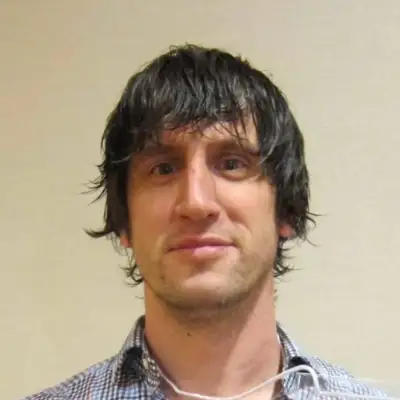
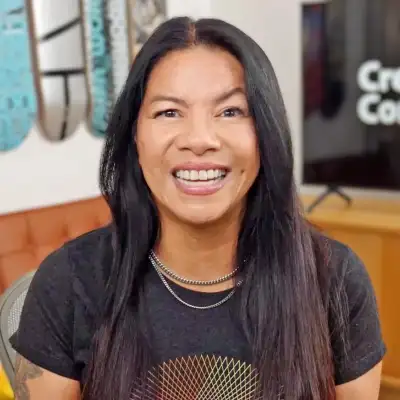
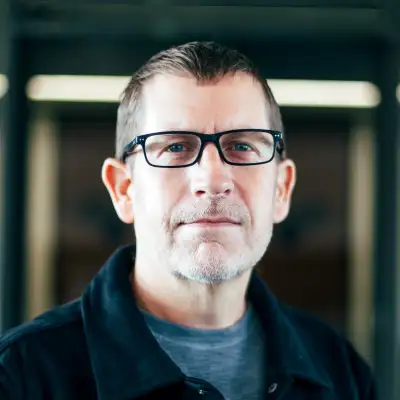
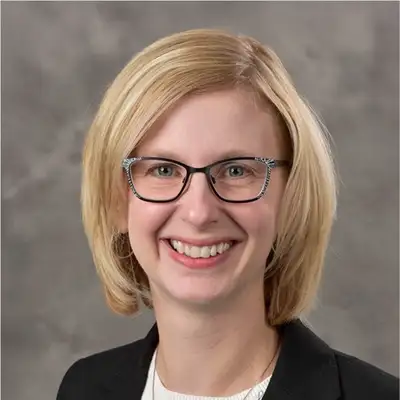
Cheers & Tiers welcomes you into a circle of design leaders whose bonds were forged during iconic AIGA design leadership retreats and conferences. These gatherings were more than just strategic sessions with the nation’s chapter leaders—they were moments of shared growth, laughter, and camaraderie that shaped careers and lives, blending organizational development with celebratory toasts and even the occasional human pyramid.
Fellow design leaders Erik and Rachel as they reconnect with friends about shared experiences, memorable lessons, and transformative moments gleaned that defined this extraordinary group. Join us as we honor the relationships and memories that continue to shape design and leadership today.
Chapter two.
Erik Cargill:I'm Erik Cargill.
Rachel Elnar:And I'm Rachel Elnar. And this is Cheers and Tiers.
Erik Cargill:Design Leadership Tales Retold.
Rachel Elnar:Hello,
Erik Cargill:Erik. Hello, Rachel. How are you?
Rachel Elnar:Doing good. I want to tell you about today's guests. They work where design meets real systems and real constraints. Rebecca is the Deputy Dean of Graduate Studies and Professor of Interaction Design at SUNY Oswego, where she focuses on data, accessibility, and how designers make decisions at scale. Doug is a Design Director and Platform Coordinator for the New York State Design System at the NYS Office of Information Technology Services.
Rachel Elnar:I'm so excited to have these two together. They bring a grounded perspective on designing work that actually holds up in the real world. Please welcome Rebecca Mushtar and Doug Bartow.
Doug Bartow:Hey, welcome.
Rachel Elnar:That better?
Rebecca Mushtare:Thanks for having us.
Doug Bartow:That was quality. Thank you.
Erik Cargill:Love it.
Rachel Elnar:Oh my gosh. I'm so first of all, thank you so much for being here. Really excited to dive in to talk a little bit about your AIGA leadership. And I was wondering maybe you can tell us a bit about those details, like the year, chapters, what your roles were.
Rebecca Mushtare:That was a while ago.
Rachel Elnar:Yeah. Was a while ago.
Rebecca Mushtare:Like the leadership retreat that Doug and I attended, was in 2016, in Raleigh. And my role in our chapter was the education director at that time.
Rachel Elnar:Yeah. Can you tell me a little bit about what you did as educated education director?
Rebecca Mushtare:Yeah. Some of the things that our chapter covers, the Upstate New York chapter covers, a large land mass, which means that our members are spread out. And our educators are spread out and our students are spread out. So some of the things that we tried to do were opportunities to bring people together. So we did some things like portfolio reviews that Doug was really involved in across like, regions within our chapter.
Rebecca Mushtare:And then we also did kind of collective events. We had a a little mini conference for students that happened annually for a few years called Get Worked Up. Yeah. It's a
Rachel Elnar:great name.
Rebecca Mushtare:We called it Get Worked Up mini conference for emerging designers, which was super fun to put on. And we hosted that at our Syracuse campus for at SUNY Oswego. And we also had these little meetups for design educators. So we had kind of, you know, one Friday a semester, we would meet up for lunch, but kind of have dialogues throughout the day. So we called those the design educator dialogues.
Rebecca Mushtare:And that was really fun and a great way for educators to kind of get connected. And we did some of those virtually during COVID as well.
Erik Cargill:Yeah. And and now and now you're a deputy dean.
Rebecca Mushtare:That's right.
Doug Bartow:Yeah. You owe it all you owe it all to that experience.
Erik Cargill:I do. Well, to that experience.
Rebecca Mushtare:Yeah. I use my design skills all the time as an administrator at a university, for sure.
Rachel Elnar:Keep fighting the good fight.
Doug Bartow:It's a cumulative effort. Right? So I I think I got involved, with the Upstate chapter in in 2008 when Mark Stress was president. And one of the challenges, I think Rebecca just mentioned it a bit, was, like, we had this expansive Upstate New York geography. So it's really I think it's, like, 45,000 square miles.
Doug Bartow:If you take Rockland County and Westchester County and Long Island and New York City out of the equation, you have this really large New York state shape that's kinda cut off at the bottom, and it has a lot of lot of designers, a lot of design students, and a lot of design programs in it. And our task was to try and connect those. So a lot of I got involved with programming here in in the Albany Troy area because a lot of the events that the chapter was programming were traditionally Rochester and Syracuse. So I started working with Mark, and the first thing I did was brought a portfolio review to the Albany area. And I'm proud to say we've been doing that for seventeen years now still.
Rachel Elnar:Wow.
Doug Bartow:Yeah. It's it's been great, and we had a we had a full house last April in Troy, and we're gonna do it again this year. Well, like, couple weeks before, capstones are generally due for, graduating students. But, I did that for a number of years. I became president of our chapter, I think, in 2016.
Doug Bartow:So maybe 2016, 2018, and that was great. And then COVID really did a job on our Upstate chapter. And we we haven't really recovered, I'm afraid to say. So we're still connected via Slack, and I still see people, and we still do the portfolio review, but there hasn't been an like, number of events that we used to do. And and one of the things we used to do with programming was was trying to meet ups across the state.
Doug Bartow:So not just from the education standpoint, but we had we started with an event called CMYK, like, come meet your kind, which I thought was clever, And it ended up morphing into, like, what we called cocktail for creatives. I know there are a number of other chapters do a very similar thing, but at one point, we had nine cocktail parties at the same time across New York State, and we were, like, all checking in, on our phones because we have that, know, we had Ithaca in Rochester and Buffalo and Syracuse. All of those type of cities where we had active, mostly student groups with educators, but also professional designers who were involved in getting who were interested in getting involved or were honored at the same time. Like, that was kind of our heyday as far as, like, number of people involved maybe in the late teens of of, you know, 2015 through 2020. And that was great.
Doug Bartow:I got to meet a lot of people and kind of extended that. Think when when Rebecca and I came to Raleigh for the the leadership conference, we met similar people who were doing similar things, whether it was a a city based chapter or whether, you know, we've we've met a bunch of people who also had the same type of, struggles and challenges that we had having a large state and trying to activate what we called hubs at the time. It was like Syracuse, Rochester, Albany, Binghamton, Ithaca, trying to get people involved.
Rachel Elnar:You had you had coordinated drinking among Creatives?
Doug Bartow:Well, like, not necessarily drinking, but that might have been a side product of the meetup. Wow. But yeah. It's really cool. We did we did, I think, nine cocktails with creatives simultaneously on, like, a Tuesday night in either the late spring or the summer.
Doug Bartow:It was good.
Rebecca Mushtare:Yeah. Yeah. We had to do it when the weather was good.
Erik Cargill:Yeah. I know I know that COVID did a number on a lot of a lot of activities and a lot of organizations, not just our own, but, you know, since then, have you seen any sparks of activity?
Doug Bartow:Yeah. Was still in contact with people. We have a kind of a pretty big Slack group for Upstate New York that not all members were were a part of, but people are still involved. Not not like every day every day like it used to be, but I'm still in contact with a bunch of people and things do pop up, but there it's just not as much fervor as there was, I don't know, ten years ago. Okay.
Doug Bartow:What about you, Rebecca?
Rebecca Mushtare:Yeah. I mean, I still stay in contact with a number of educators across the state, and we check-in as we need things. And we actually, like, really had a very strong support group during COVID. But, you know, there was a lot of shifting that had to happen and supporting each other in that was really beneficial. And so that support network still exists, And that's really great to have that collegiality across institutions.
Rebecca Mushtare:Right? You might think of that as like a really competitive space. But I think actually, like, the the educators in the design field in New York State are really supportive of one another and have been. And we've all worked. Many of us have worked together at one institution or another over time.
Rebecca Mushtare:Right? So they're ongoing colleagues and, you know, it's great to to remain connected to them. Do we stick like, do we have the meetups and stuff that we used to? No. But I would also say a lot of the education community, like we we have aged.
Rebecca Mushtare:We have children. We we have some other kind of demands on our on our time for those that were, like, really active in the late teens.
Doug Bartow:Yeah. We have a name for that here. It's called Smalbany.
Rachel Elnar:Smalbany? That looks
Doug Bartow:like we're a big Upstate area, but it's hyper local everywhere. Like, people know people and, like, it's yeah. It's a drive of an hour or two, but it's the same Upstate terrain. Like, there isn't a huge difference between Syracuse and Albany or Buffalo. Like, it's
Rachel Elnar:Got it. Kind of a random question to Rebecca. Is there a student chapter on campus?
Rebecca Mushtare:There is not a student chapter on our campus.
Rachel Elnar:You are a dean, so you are very separated from the students. But I was wondering.
Rebecca Mushtare:You Isn't that true?
Rachel Elnar:Well, I don't know. Most times when you're administration, it's really hard not having, contact time with the students. So I'm not sure if you know, but do you know where the students are going for community these days?
Rebecca Mushtare:Yeah. I mean, I think I think it's challenging. I think it's challenging for all students. There's a lot more online community than there ever was before. So like that that provides opportunities that didn't exist previously.
Rebecca Mushtare:There's a lot of interior kind of community too and cross disciplinary community at our institution. So for example, our design program just got a brand new facility. Just opened this year. It's amazing. Hewitt Hall.
Rebecca Mushtare:And in there, it's like there's communication studies and cinema and screen studies. And so they're finding kind of a wider creative community that goes beyond just design. But that's great because there's cross pollination there and skill transfer and and those kinds of things that are really wonderful. And I'm lucky because I'm still teaching the graduate program. So I still get to be with students.
Rebecca Mushtare:Oh, yeah. Not a lot of students, but still I get to be with some students. Good. And use those new facilities a little bit.
Rachel Elnar:Nice. Yeah. How exciting. Both of you are very, achieved. You're very successful to where you are now.
Rachel Elnar:I was just wondering if there was anything that you learned, from your leadership experience from your chapter that attributes to your success now?
Doug Bartow:Yeah. I feel like networking is super important. Like, I I remember growing up and thinking, like, I'm not going to that, you know, rotary networking event. Like, it's not a thing that I think is gonna benefit me as a young designer, blah blah blah. But, you know, fast forward twenty, thirty years later, and, like, I'm currently working on my the job right now that I have because I knew someone and mentioned to them that I was looking for a new role and and the year and a half later, I'm here.
Doug Bartow:So I feel like all of those like the summation of all of those things where you're talking to design students or talking to your peers or other professionals, like, people like, Rebecca mentioned competition a little bit. Yeah. That that happens to some degree when you're running an agency and other agencies are bidding on the same jobs. But at the same time, you know, the a rising tide floats all boats in Upstate New York. Like, we want design and design professionals to succeed here.
Doug Bartow:So not only do we had we traditionally done events like that, but, you know, we we wanna reach out. And when when someone sees a job that's open, they go on our Slack and put it in the job channel and, like, wanna support people who who are looking for a new career change or whether they're just looking for a friend or whatever. Like, we wanna make sure that people are aware of and not in a, like, we're a chapter where you have to join us in order to make it work. Like, we're kinda past that now. We're, like, we're a community and it it fit into that context of a chapter probably, you know, a few years ago and not as much anymore, but the people are still doing the work and we want everyone to succeed.
Rachel Elnar:I love that you're still connected, that you're still part of the community.
Doug Bartow:Yeah. I mean, it's like you have to go out of your way not to be, I think, in what we do. Right? You'd have to be like, I'm not talking to you anymore. Forget about it.
Doug Bartow:You crossed me one too many times and throwing away your digital card. Like, no. Of course not. Like, you know, there there could be shenanigans that happen, but at the end of the day, like, you know, we're working in design. It's not the easiest thing to do.
Doug Bartow:It's it's not easy to do work in advertising and marketing in New York State and not be in New York City. Right? So there, like, there's a few things that are stacked against us. Like, last time I visited Oswego, I think I saw Rebecca as well. I got out the car and, like, I was hit by this wind coming off the lake and I almost, like, I was, like, oh my god.
Doug Bartow:Forgot how cold off state New York can be. Like, we had their the struggle is real. So, like, you can be super altruistic and try and help people in a formal sense, or you can just answer an email that a student sends or reply to a LinkedIn message and like someone sent me something yesterday and like I'm connected to them but I don't know. I mean, you just wanted, you know, a couple minutes of review of something. What am I gonna do?
Doug Bartow:Say no to that? Like, I got time for that. So one of the things about doing this for a while is you know that someone helped you at some point. You need to pay it forward and help them.
Rachel Elnar:Thank you.
Rebecca Mushtare:Yeah. I would echo that for sure. You know, I I find that as an educator in the area, right, like we're constantly looking for ways to update our curriculum to make sure it's current and having the network of designers that I'm connected to across the state that really was because of my involvement in in the chapter constantly provides that opportunity. Right? Like, can check-in.
Rebecca Mushtare:I know that if I email Doug and ask him a question about something, he'll respond to me. And like, we'll, you know, make something better as a result. And that people will invite us into their spaces. I had the opportunity while I was in a leadership role in our chapter, I taught a class where I took students across New York State to look at different kinds of career opportunities. And so many of our members and things that invited us into their spaces and students got a really good opportunity to see really diverse working spaces and relationships and opportunities.
Rebecca Mushtare:And so did I. Right? Like, I got to go all to those places too. And that's really important as an educator is to constantly be engaged in those spaces so that we can bring students and connect those with their future colleagues.
Rachel Elnar:Yeah. That makes sense. Design is doing something strange right now. I wanted to ask you. This is mine.
Rachel Elnar:I don't know if this will fit within, the podcast. Who knows? Maybe I'll just leave it in.
Erik Cargill:You could edit it out if if not.
Rachel Elnar:So where like, where? I don't even know how to ask this question. How are we educating students now going into this AI filled, place of, you know, the industry is changing so much with technology, with, gosh, I hate to say this, but, with layoffs, I mean, and, emerging designers not getting the jobs necessarily that they are. How are you setting them up for success? And does AIGA play into this at all?
Rebecca Mushtare:Yeah. I mean, think it's about trying to be nimble in a system of higher ed, which is not nimble. Like you have to kind of find those opportunities to design curriculum that has flexibility in it so you can kind of keep up with these things. But I think many institutions are grappling with what to do about AI and also grappling what to do about curricula that might have gotten really, really big as we think about each media that you might design in and ways to like need to rethink some of those things to be more of a systems approach and and what have you. But it takes time to to make those adjustments.
Rebecca Mushtare:And and and you don't want an institution like higher education to actually move too quickly. Like there's problems with that too. Right? So it's it's important that it's a little bit slow. It's designed to be slow.
Rebecca Mushtare:But you got to find those like flexible flexible options within the slowness to kind of keep up. I know that with my graduate students, we've had a lot of conversations about AI. I don't wanna deter people from using tools that can save them a lot of time. But the key is helping them recognize how it can augment skills they have, right, and where they can use their expertise to get AI to do things that can be really helpful to them. It's not necessarily designing.
Rebecca Mushtare:It's like dealing with like spreadsheets and fixing code and organizing random thoughts so that they're more presentable to other people. There's a lot of ways to use these tools that don't take away from the design aspect of design, but actually like empower us to be better designers and better anything we are, right? Administrators, leaders, etcetera. Because it can take some burden off of things that we don't wanna do. So we can put the energy into things we do wanna do.
Rebecca Mushtare:But I was finding like initially, right? Like students aren't sure how to use a tool like that. Like, they immediately think, like, oh, I'm gonna use it to design. It was like, well, why would you do that? Isn't that the fun part?
Rebecca Mushtare:Like, you know, isn't that like where where like, the humanity of it is really important? And the strategic thinking about it is really important. And so introducing students to ways that it can be really productive and useful that doesn't take away from, you know, their role. And the way that we communicate to the larger community about what design is and who designers are and what they can bring to the table is really important. And I also share with students how I use design skills every day in a role that has no visual design in it.
Rebecca Mushtare:Right? Like, I constantly work and think like a designer. And I bring that to a table of people who don't think that way. And that means that we can lead in lean into some culture change. We can approach things in different ways, and I can help bring people to explore those things because I'm used to doing that in a design context.
Rachel Elnar:I love that. Thank you for sharing that.
Doug Bartow:I think the tool at the comment, Rebecca, like, I'm old enough to remember when desktop publishing was gonna destroy graphic designers. Right? Yes. You learn CorelDRAW, and you'll never have to hire another graphic designer again. Like, that was twenty five, thirty years ago.
Doug Bartow:Didn't really happen because it's a tool. It's a and, yes, it can help you do work. But at the end of the day, if you're not thinking and acting like a designer, then what kind of message are you trying to put together using text and image? Right? It's something you said earlier, Rachel.
Doug Bartow:Like, think about this. AI, GA. Yeah. Or don't think about it. It's just a throwaway, but that could be the worst thing you ever had ever.
Doug Bartow:My virtual friends.
Rachel Elnar:Yeah. I'm still learning how to work with it. And I think what's nice about having the community, at least for me, AIGA, is that I have a lot of people that I can still talk to about it. Right? I mean, it's not just LinkedIn or whatnot, but we're wondering how we can work them into our design workflows, which is totally different than anyone else's workflows or situation, whether they're using it for, yeah, spreadsheets or writing or whatnot.
Doug Bartow:Yeah. What do you think? Like if AI can do that then so be it.
Rachel Elnar:Right, exactly.
Erik Cargill:And Doug you bring up a good point because I was also coming up in design as desktop publishing was getting more and more popular and I remember those conversations but I also remember what happens when you give somebody without design experience that much rope. They tend to wrap themselves up and hang themselves with it. It's a bit much. AI seems that way to me. I have a lot of experience doing you building UIs.
Erik Cargill:I have yet to find any AI that can do exactly what I want visually.
Rebecca Mushtare:You know what it's really good at? Is identifying what you don't want.
Erik Cargill:Yeah. Good
Doug Bartow:point. Sometimes that's, like, half the battle, though. Yeah. Yeah. See, I'm I'm a red green color blind.
Doug Bartow:So I use it as a tool to, like, I have these three colors. I need three more. I can pick them and get it wrong, or I could have AI spit back 10 palettes that have four or five additional colors, and they're usually pretty good about it. I'd be a really bad oil painter, but, you know, I can deal with a hex code because it's precise. That's fantastic.
Doug Bartow:That's a great idea.
Rebecca Mushtare:AI is great for all accessibility kinds of issues. Right? Like, that's a technical component that not everyone learned in design school. Right. Right?
Rebecca Mushtare:But it's an increasingly important consideration, right? A design consideration as we build new things and create new things, especially a legal requirement in some context. Right?
Doug Bartow:If you're working in a public space for well, that's I could go on forever. And I the first time I heard the word ally, a 11 y, was from Rebecca at a at a conference that I think maybe we met at in Syracuse back in the day.
Rebecca Mushtare:You mean one that our AIGA chapter put on? Will You Be My Ally? That one?
Doug Bartow:Nice. So many props. But, you know, being working for the state, you know, we're looking at, you know, WCAG deadlines of next April for every state digital site has to be double a compliant. So there are Woah. It's crazy.
Doug Bartow:Four months. Yeah. I was out in office hours today for accessibility because we're building a team to help these agencies be compliant. And there's a deadline and everyone has to get in line. It's a really, really big deal.
Doug Bartow:And, yeah, being color blind is a small piece of that. I have a blind coworker who uses screen readers, and he's just joined the team and he's helping us with, you know, it's a serious business because if not accessible to everyone, then you're not accessible.
Rachel Elnar:Right. Yeah. Thank you for bringing that up. All right. So let's jump to a different subject.
Rachel Elnar:Eric?
Erik Cargill:Yeah. So in talking with you, you both attended the twenty sixteen Leadership Retreat in Raleigh. Can you tell us a little bit about that experience? Was your expectation going into it? What did you get out of it and what are some of the memories that you take from that whether debaucherous or
Rebecca Mushtare:not? I think the first time I saw someone make a human pyramid, I was like, what did you bring me to?
Doug Bartow:A uniquely AIGA answer. Oh, yeah. It was but what room?
Rebecca Mushtare:Oh, but where? We don't know. Okay. I think it was in the hallway.
Doug Bartow:They're impromptu.
Rebecca Mushtare:I think it was in the hallway and I was like, wow, I'm an introvert and this is really not an introverted activity.
Erik Cargill:Yeah. It's a it's a comfort zone, challenger. That's for sure.
Doug Bartow:I think my I remember specifically meeting so many people at that conference. I think my biggest takeaway was meeting like, we had a we had an opportunity to meet with some of the other chapters that had the geography problem that we have, and we were able to, you know, talk through some of, like, their challenges, and we realized we weren't as, like, behind as we thought we were going in. We're like, we're not doing this right. Like, we can't how do we connect these hubs across Upstate New York? And the other chapter is Colorado, I think, one of them.
Doug Bartow:Like, yeah, we had the same problem. And we just, you know, hung out with them for an hour or two and just talked about what working, what doesn't. And it was great because they were just as committed to same design culture and the same design programming that we were doing, but the geographic struggles were almost identical regardless of the fact that they're on, you know, the other side of the country.
Rebecca Mushtare:That would those were so powerful of conversation. I remember us having, like, debrief conversations afterwards.
Doug Bartow:My biggest takeaway was, we're not that bad.
Rebecca Mushtare:Yeah. Yeah. Was gonna say that, like, one of the sessions that I think maybe even started this leadership retreat was a design thinking kind of facilitation from IBM. And as an educator, I found that to be really helpful, actually. Because when I had worked more in industry, like some of these things like weren't that popular when I was working more professionally as a designer.
Rebecca Mushtare:So like seeing some of these things as an educator was really useful. And it's something that I had leaned on a lot and I brought to the classroom. And I know that other educators brought to the classroom because I shared it with them. And, you know, and I now bring to all kinds of other spaces. Right?
Rebecca Mushtare:So it's kind of an ongoing gift. So I appreciate that. The other thing that I remember a lot from that particular leadership retreat is there was a lot of conversation about kind of get out the vote design work. Right? And things like that.
Rebecca Mushtare:And we had been talking about it, I think, prior to that. But I don't know that we had made any decisions about what we were going to do. And following that, we ended up putting on an ex like, we we did a poster kind of exhibition. And we did it in in collaboration with the Women's Rights National Historic Park. And we had a panel conversation and an exhibition.
Rebecca Mushtare:And I I those posters have just resurfaced, Doug.
Doug Bartow:Nice.
Rebecca Mushtare:So I don't know. We should maybe bring them back and like do do a do something else with them. But I I have them. They're all in pristine condition.
Doug Bartow:One of the advantages of of living near Mohawk Paper in Cohoes, New York is that they used to have a a digital printer as well in Albany, and, they were always down for a good collaboration. So they printed lots of stuff for us, and that's how now we really gotta get out the vote though. Like like seriously.
Rebecca Mushtare:Yeah. Yeah. So maybe we can revisit some of those materials.
Doug Bartow:If you put it in that terms of like 2016, like well, yeah. It's it's serious business. You could have never convinced me, but I'm not this is not a political rant, but the last nine years, holy cow.
Rachel Elnar:And the next three years, holy cow.
Doug Bartow:Yeah. Bring those posters back. Bring it back.
Rachel Elnar:Yeah. Please. So were they did you use them for, a, exhibition?
Rebecca Mushtare:Yeah. We had an exhibition at the Women's Rights National Historic Park. Yeah. In Seneca Falls. We had two Which was amazing.
Doug Bartow:Yeah. We we did one at at a coworking space in Troy as well at the same time because we had they printed a second set for us. Yeah. Yeah. They were like We by box.
Doug Bartow:13 by 19, super fine, 80 pound, uncoated, but I'm not a paper nerd.
Rachel Elnar:That's heaven. Super fine is a beautiful sheet.
Doug Bartow:Gosh. It was actually When I found them,
Rebecca Mushtare:I was like, these are glorious. I forgot about like, I had forgotten about them, and they
Doug Bartow:Yeah. There was, like, that digital coating they put on it as well, that Inkswell coating. I I guess I've been through too many Mohawk sales pitches. But, man, they look good.
Rachel Elnar:Oh, yes. That's awesome. I love it. Okay. So anything else about the retreat that you remember?
Rachel Elnar:I mean, it's lovely that you found other chapters that you could connect with, that you found other formats of breakout sessions and whatnot that you could bring back to your, to your community? Any shenanigans?
Doug Bartow:I remember dragging Rebecca to a Laura Huron show at the Red Hat Amphitheater, which is Oh like
Rebecca Mushtare:my god. Yes. I was like, there was a concert, and I couldn't remember what Oh, it
Doug Bartow:by the way, Rebecca, this is one of my favorite bands, and they're free, you're coming with me.
Rebecca Mushtare:I was like, what?
Doug Bartow:But I just walked in. It was great.
Rebecca Mushtare:I was like, there was I I had remembered there was a thing, Doug, and I couldn't remember what it was.
Doug Bartow:That was the thing.
Rebecca Mushtare:Yeah. That was nine years ago. Yeah. I have serious mom brain now.
Doug Bartow:I was telling Rachel before we got on the call that after a couple years after that, was the first time I was ever in Raleigh. But my daughter graduated high school and because of COVID, she never visited college, but she wanted to go for industrial engineering to NC State in Raleigh. And the next time I was in Raleigh, I was bringing her to college there for the first time she'd ever been there. Like, there was no there was no visits. There was no tours.
Doug Bartow:It was like, come and get in your dorm. So we drove right by that, the conference center and the arena. It was like, few years ago.
Rachel Elnar:That's amazing. That's awesome. I love that.
Doug Bartow:There are other debauchery stories here, but I'm not gonna go into. What?
Rebecca Mushtare:How many He clearly wasn't involved in any of those other ones.
Doug Bartow:But you remember.
Rachel Elnar:How many of the board went? Or I mean, how many of your chapter went?
Doug Bartow:I think it was just us two.
Rachel Elnar:Us two. Okay.
Doug Bartow:Yeah. We're a small chapter, so
Rebecca Mushtare:we didn't have You're all allocated two spots, right?
Doug Bartow:Exactly.
Rachel Elnar:Yeah. Definitely lucky.
Erik Cargill:And then once you got back from that leadership retreat, in what capacity were you with AIGA up until 2020? Were you still really involved?
Rebecca Mushtare:I remained really involved
Erik Cargill:Did you?
Rebecca Mushtare:As the education, like, director, I think through 2020 or I was at least heavily involved in in that space until then. But I also had a small child at that time. And my ability to do a lot of organization than I had done prior to having a child, now I'm organizing a child's schedule. Yeah. I
Doug Bartow:get it. I get it. Yeah.
Erik Cargill:Get it.
Doug Bartow:Yeah. Same. I was, like, super involved. We had a a we built a really big board right after that, and we had we had almost every board position filled at some point, and our numbers were good and we were doing, you know, cross the state programming, not just, you know, we were doing coffee meetups and cocktail meetups and, you know, get out the vote and the education stuff and portfolio building classes, portfolio portfolio events where you we had students and professionals. So, yeah, kind of a heyday for for what we're doing and and, yeah, COVID, like, the top of the graph and it a little bit down there ever since.
Doug Bartow:But, like like Rebecca said, we're still, you know, we're still connected. We're just not as active in that kind of altruistic stuff that we're doing on a monthly basis. I'm probably at the point in my career now where I would love to help someone younger with a little bit more free time, learn how to do that stuff, like get involved and mentor them. The chapter needs youth and exuberance and, you know, maybe some guidance from some of the older or experienced members. But it's a I think it's got a possibility because we're not we're technically going anywhere, and maybe we could rebuild it back up.
Doug Bartow:Yeah. I
Rachel Elnar:was telling you that I'm surprised that you're both involved, which I love, and that the chapter is still active. It's because many that we talk to, there are people who, you know, AIGA was a decade ago for their lives. They've moved on to other things. And it's lovely to see that people are still involved, honestly. When leaders come back to their chapters and they give back, I think it's really needed.
Rachel Elnar:I think that right now after COVID, not only has the chapters been struggling, but also those who are trying to lead those chapters, how do you get people back together in real spaces and affect change, especially after COVID?
Doug Bartow:Yes. It's so easy to get on a Zoom call with your high school friends, your college friends, you know, your fantasy football people, whatever. Like, it's just convenient. Like, that's the easiest thing to do. The hard thing to do is, here's where we're meeting in person.
Doug Bartow:Right? So it it's actually more challenging than it probably was before we all had super Internet, you know, five, ten years ago.
Rebecca Mushtare:It's hard too if it's not part of your regular routine or habit. Right? Like, we had built up enough kind of regular events that, like, people need to expect those things and kind of built it into their routines. And it's hard to kind of reinitiate and reinvigorate that and build it in and and prioritize it. Right?
Rebecca Mushtare:Because we all have time for whatever we make time for. But the the big clincher is like getting people to decide that that's the thing that they need to make time for.
Doug Bartow:It's the old marketing argument. Right? Like Yeah. We need to put bus and seats, and we need to sell widgets. How are we gonna do it?
Doug Bartow:I always found, like, you know, having a a good working relationship with the local faculty because the the faculty stays the same. The students come and go. Right? Like, you have enough if you've done this long enough where you can look back and say, twelve years of students have come through Russell Sage, for instance, here in in Albany, and I know the faculty members who are there, Rebecca knows it as well, of course. If you know the faculty and you continually, you know, invite them to that portfolio review event or other events that you're doing, then it becomes part of that routine where year over year as people graduate, you try and help them find jobs.
Doug Bartow:Maybe they've graduated and they're working locally and they want get involved with that event, you know, moving forward. So you try and take that advantage of that when you can and and convince them to pay it forward. But because we're because where we are in Upstate, there aren't a ton of design and marketing and advertising jobs here. Like, sometimes people leave, and so be it.
Rebecca Mushtare:I think one of the strategies that we employed prior to COVID though is like we were starting to recruit students into roles and committees while they were still students. I know we at least had a couple of my students that like hung around for quite a while on on some of those committees and helped organize. One of them helped organize the Access Now conference. So it's good when faculty are heavily involved because it kind of feeds that new energy that needs to be in this space. But the challenge is if they don't stay in the area, then it's hard.
Rebecca Mushtare:But I know that we've also connected many of those students to other chapters too.
Rachel Elnar:I love that. The thing that I really enjoyed about this conversation is that, yes, you're a small, there was a small chapter and you had a lot of ground to cover, like physically, but you did so many events. And it sounds like that the, the members were very much involved, that they were very committed and they participated a lot. So much so you still have a chat, a Slack channel where people are still helping each other. Again, this is the activity that I haven't been hearing from the other chapters right now, so this is a great model for me to propose us.
Erik Cargill:You did virtual events before it was en vogue?
Doug Bartow:We didn't have a choice. That's what we learned at the at the leadership conference. Like, other states are doing it. They're like, we we have the same issue. Like, we can't I can't drive two hours for a coffee meetup.
Doug Bartow:What are we gonna do? Well, we'll have coffee over here and they'll have coffee over there and we'll, like, get my iPad and we'll FaceTime them and see what they're up to. Like, simple things like that actually, you know, you you get connectivity and as we move to this model now where I'm looking at, you know, box of four faces on my screen where it's like common everyday type of thing. Because we were doing that, I think people got used to it and, you know, it was it was a proven path to like it's it's not impersonal to talk to people on a Zoom call now because everyone does it. Never would learn that in in COVID.
Doug Bartow:Right? Like, people who had never used sharing software like this in the past. Like, my wife's a speech language pathologist. She had a heck of a time with her deaf kids on calls like this in, like, in that context. She hated it.
Doug Bartow:And she was on the other side of the house, and I would have to come in and help her with the technology from time to time, but now, you know, now it's regular. We have a we have a family meet up on Sunday nights now where we FaceTime my kids who live in, you know, not that close to us anymore. So it's kind of pervasive, but it's useful for staying connected, whether it's personal, professional, or, you know, a little bit of both.
Rachel Elnar:Yeah. That's true. But I still love the nine location concurrent cocktail. Like, that is
Doug Bartow:We were
Rachel Elnar:biting up my brain right now.
Doug Bartow:We were like, how many? Like, we're like, can we get to 10? Wow. We couldn't we couldn't make it work. But, like, for a couple months, nine was good, I think.
Rebecca Mushtare:Yeah. I think at one point, we were trying to see if we could, like, have enough people actually show up at something in Oswego because otherwise, we had to go to Syracuse and participate.
Doug Bartow:At one point, I remember we had, like, let's let's do a Mid Atlantic meetup. Like, let's get let's get New Jersey and Vermont oh, not Vermont. New Jersey and Pennsylvania, like, let's or the bordering states of New York, whatever. It's like, you know, Vermont has a chapter, but it's mostly Burlington. I don't think that ever worked, but but it was as a result of meeting some of the other chapter leaders from from those states at either a leadership conference or one of the main IGA conferences where we were like, hey, we should do I was explaining that to them, like, we do this.
Doug Bartow:They're like, we wanna do that. I was like, we can do this. We never pulled it off.
Rebecca Mushtare:We got really close though.
Doug Bartow:Yeah.
Rachel Elnar:I love that idea. I know that the Florida chapters, there's five of them, also try to get together, do something together. It's it's hard to organize. But definitely, when you pull it off like that, you know, nine locations, wow, what magic that is to keep everyone feel connected.
Doug Bartow:Like Rebecca mentioned, not only were there education conferences, but there were a number of other, like, design centric adjacent conferences that were in New York at the same time. So we had friends who were in the chapter who were doing like, it was like a big meetup where there was just a Venn diagram of people who, you know, I know you from this or you're from the advertising advertising federation or whatever. There was just a lot of, kind of good intention from everyone because Upstate New York gotta take care of our own, I think.
Rebecca Mushtare:There was an attempt maybe a year, maybe two years ago to kind of reinvigorate that. There there was a a group of people, but it was, I think, little more localized in the Syracuse area.
Doug Bartow:Yeah. I I still see pop ups like, Tyler in Ithaca. Tyler Ford is is doing a meetup now in Ithaca. Like, I can't remember what it's called, but it's cool. And it's very, like, very much like what we did, you know, not under the the guise of AIGA chapter, but same type of thing.
Doug Bartow:Like, get local creative people in somewhat of a rural community together for an event where you can talk shop because not everyone has that where they work sometimes it's you know you're a solo designer on a team or you don't have you know, a crib board where you can hang stuff up and ask for immediate feedback, it's really useful to have that as an augment, I think, to your creative process.
Rachel Elnar:Yeah. Being in LA, we are totally spread out in terms of our chapter. But I've We still have the challenge of people being an hour, an hour and a half away from each other. You know, again, not as, as far in
Doug Bartow:just seven miles, but an hour. Right?
Rachel Elnar:Yeah. Yeah. Yeah. So yeah, any types of meetups were very difficult. And we did try to work out the hub system where, okay, West LA does something, East LA does something.
Rachel Elnar:We weren't able to do the concurrent though. But yeah.
Doug Bartow:It's hard to pull off on a Tuesday night. Like if you have forty five minutes of travel to something and it's forty five minutes back, it's like it's not sustainable.
Erik Cargill:Right. Especially if there's drinks involved.
Rachel Elnar:Exactly. Eric, do you have any other questions?
Erik Cargill:I do, but they're so off topic.
Rachel Elnar:I
Erik Cargill:I love the AI conversation. I also love the accessibility conversation just simply because I'm doing a freelance job right now where accessibility in a very, very public area is an issue. And I may reach out to either of you at some point.
Doug Bartow:Talk to Rebecca. Am the padawat here for sure.
Erik Cargill:Right. If you don't mind, Rebecca, I'd love to
Rebecca Mushtare:Accessibility is definitely my jam, Eric.
Erik Cargill:Okay.
Rebecca Mushtare:I'm actually I'm running, like, two different accessibility conferences in the next probably thirty days.
Rachel Elnar:Wait. Let's Oh, wait. Let's plug them. Yeah.
Rebecca Mushtare:Yeah. Well, they're not open things.
Rachel Elnar:Oh, okay.
Doug Bartow:I'm sorry. You can't come.
Rebecca Mushtare:Yeah. Yeah. Well, it's it's not even just for designers. You know, I have a we have a an academic affairs upcoming kind of professional development opportunity to learn about accessibility for faculty on our campus that I'm coordinating in January. And I have some events and things that I'm working with SUNY on as well to kind of help the system become more accessible.
Rebecca Mushtare:But it's interesting, right, that the like, these are technical skill sets that apply to a lot of different areas. But, you know, I think when it comes from designers, we can also add in all the other ways that things can be a better experience. And, you know, put it on the table when we're we're providing some of those other skills too.
Rachel Elnar:Alright. Well, I think we should wrap up then. Eric, if you don't have any relevant questions. Okay, so wait. One thing I do wanna ask is Shenanigans.
Rachel Elnar:So I know you don't wanna mention one, but can you tease to at least one, Doug? Because you've been teasing through the whole thing.
Rebecca Mushtare:I did see that you could see photos, like, on Facebook, but I didn't, like, dig in deeply.
Doug Bartow:A photo of probably 30 people jammed into a glass room, and Rebecca's laughing her head off here. I don't know if I can
Rebecca Mushtare:I don't remember this?
Doug Bartow:That's what I'm trying to say.
Rebecca Mushtare:I don't think it's me. It's an AI generated photo.
Doug Bartow:So a, you can share it or b,
Rachel Elnar:you can just send it later, but you can just talk about it.
Doug Bartow:What's that name tag? Oh, Rebecca Mushtar. Oh my goodness. It has
Rachel Elnar:Damn it. Dog. What is this glass room? Was it a bar? Was it Yeah.
Rachel Elnar:Tell me about this bowl? What is this place? About it. Yeah.
Doug Bartow:I think that's Vanessa Ulrich from Baltimore right there. Let me see. Is there a way to
Rebecca Mushtare:There's share down at the bottom?
Rachel Elnar:Yeah. There's a share.
Doug Bartow:There's a share, but can I drag a photo into it? Oh, hold on. Let me send it along Okay. Just to prove to Rebecca that it actually does exist.
Rachel Elnar:But can you describe what it is? What is this glass bowl?
Doug Bartow:It I think it's it's the equivalent of a clown car where, like, hey. Let's all jam into this into this room and see how many people we can fit because everyone's laughing their head off.
Rebecca Mushtare:Oh my gosh. The thing is that Doug got me to do. I don't
Doug Bartow:know. That's a really like, that's so funny. Someone's holding up a cocktail in one of them. Rebecca's got a big smirk on her face. Good times.
Rebecca Mushtare:All right. Maybe I need maybe I need the photo just to prove to my kid I have a sense of humor.
Doug Bartow:Will send them to the send them to the group email right after this call.
Rachel Elnar:Yeah. Send them. Thank you so much. I really appreciate it. And yeah.
Rachel Elnar:You know, when in Rome, Rebecca, right? When you're there, you just you just go along with it and it's just the vibe and people are enjoying themselves and that's all you can do.
Rebecca Mushtare:So, yeah. I figured out that like huddling in the corner, which is like what I probably would have preferred to do, I wasn't really gonna work out. So
Doug Bartow:I was probably a good pair for you there because I'm Yeah. Yeah. I'm not in the corner. So
Rebecca Mushtare:No. No. It was that's what I mean. It was really good for you to be with me.
Doug Bartow:Condiment and Triquity together.
Rebecca Mushtare:Yes. And, you know, like, it probably opened up much many opportunities for me in the future because I don't stand against the wall anymore.
Doug Bartow:I don't get enough credit. I think that's the takeaway here.
Rebecca Mushtare:Alright. Well, I'll add I'll add a line on my CV. Please consult Doug about Three
Doug Bartow:x Doug Bartow. URL, URA.
Rachel Elnar:Yeah. Thank you so much, both of you. Really appreciate your time here and talk with Roger. Amazing chapter and all the amazing things. Really appreciate that.
Rebecca Mushtare:For having us do this. Yeah. Alright. Thanks, guys. Thank you.
Doug Bartow:Bye. See you.
Erik Cargill:Creative community, design leaders, and friends.
Rachel Elnar:Cheers and Tiers design leadership tales were told is a production of chapter two and hosted by us, Rachel Elnar and Eric Cargill. This episode was produced and edited by Rachel Elnar. Podcast graphics by Eric Cargill. Animation by Verso Design and Megatow Design.
Erik Cargill:The theme music track is Loose Ends by Silver Ships Plastic Oceans. Follow Cheers and Tiers on Apple, Spotify, or YouTube podcasts, or wherever you get your audio and video podcasts. Subscribe to our email list at cheers and tears dot com so you don't miss an episode.