Subscribe
Share
Share
Embed
Killer Quote: "Before we built the playbook, we really just started to go out and solve problems. And so as we were doing that, in parallel, we were working on the strategy and taking it to build out the different pillars from a technology perspective, sales enablement, all these different pieces." - Pete Corle
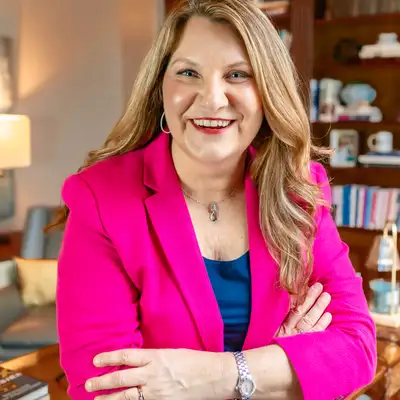
Looking to lead, grow, and stay ahead in the global chemical industry?
The Chemical Show is the #1 business podcast for the chemical industry, bringing you leadership insights, business strategies, industry trends, and real-world lessons from the executives shaping the business of chemicals.
Each week, host Victoria King Meyer sits down with leaders from across the chemical industry, from Fortune 50 companies to mid-sized businesses and innovative startups. You’ll hear how they’re navigating today’s challenges and opportunities, the experiences that shaped their leadership, and the insights you can apply to your own business and career.
Conversations explore the issues that matter to chemical industry leaders, including:
• Business strategy and growth
• Leadership and talent
• Innovation and technology
• AI and digital transformation
• Supply chain and operational resilience
• Markets, customers, and industry trends
Victoria brings more than 25 years of chemical industry experience from companies including Shell, LyondellBasell, and Clariant. Today, she is an executive advisor and coach, founder of The Chemical Summit, and host of The Chemical Show.
Whether you’re an executive, business leader, or rising leader in chemicals and materials, The Chemical Show helps you stay informed, think differently, and lead with greater impact.
Follow The Chemical Show on LinkedIn and join the conversation. (https://www.linkedin.com/company/the-chemical-show/)
The Chemical Show: https://www.thechemicalshow.com
The Chemical Summit: https://www.thechemicalsummit.com
Progressio Global: https://www.progressioglobal.com
Victoria Meyer:
Welcome to The Chemical Show, the podcast where chemical means business. I'm your host, Victoria Meyer, bringing you stories and insights from leaders driving innovation and growth across the chemical industry. Each week, we explore key trends, real-world challenges, and the strategies that make an impact. Let's get started. Welcome back to The Chemical Show, where leaders talk business. This is Victoria Meyer, and today's episode was recorded live at the Chemical Summit. This is the 3rd in our series of episodes that came from insights and recordings live at the Chemical Summit. In this special fireside chat, which by the way, the fireside chat is one of the favorite features of the Chemical Summit.
Victoria Meyer:
We get a little bit relaxed, we have a great conversation. You hear the prepared questions, but we also have an opportunity for Q&A at the end, which people love. But in this special fireside chat, I'm joined by Pete Correll, who is— Hi. Chief Commercial Officer at Solstice Advanced Materials. You're gonna hear Pete and I talk candidly about leading through transformation, what it takes to really set a new direction for a legacy business. And by the way, when I talk about legacy business, Solstice, if you guys don't know, was a spinout from Honeywell. So there is a lot of heritage there, and yet they're about a year into their journey in standing up a new business, which is some of what Pete shares in that process. And Pete also talks just about how to get your team truly aligned and engaged.
Victoria Meyer:
A big part of our conversation is around customer focus, right? Not just talking about it, but how to really operationalize it, especially in today's fast-changing markets. You're going to hear a lot of great insights, and whether you're leading change today yourself or looking for practical ways to build influence and confidence in transition, today's episode is for you. Let's dive in. The fireside is maybe one of my favorite parts of this 'cause we get a little relaxed. As Pete said, he's like, I haven't been a place where I get to be the person after the cocktail. So that's a nice thing. But it's just a great chance for us, I think, to really reflect on what we've talked about today, go a little bit deeper. Pete Corral, who's with Solstice Advanced Materials, is our fireside guest today.
Victoria Meyer:
And Pete brings in just a really great perspective of experience Dow from today at Solstice. And Solstice is definitely in the midst of reshaping advantage, which I think is one of the things that makes this such a great conversation. So I'm glad to have you here.
Pete Corle:
Thank you. Thrilled to be here.
Victoria Meyer:
Absolutely. Just to start with this, you've had a front row seat today as what's going on, starting with Michael's opening keynote on through our CEO panel, Martha, and the economics of what's going on in the industry today, and of course where we are with commercial value. What's landed for you or what's really maybe connected to the things that you're working on and thinking about today at Solstice?
Pete Corle:
Yeah, no, first and foremost, thanks for having me here. Thrilled to be here. It's been a great day. The sessions, I love the fact that everyone continued to focus on the customer. So the customer centricity, thinking about how they can perform and make sure that everything that they're doing is lined up to help the customer be successful, knowing that that's going to feed to their success. So that's something that we're talking about on a regular basis at Solstice. And then also being agile and nimble. There's a lot of— I think dynamic was the word that I used this morning in the first Slido.
Pete Corle:
And there's so much going on in the world. I think it was Jen talked about there's a lot of a lot of a lot. So how do we focus and be intentional on what we're working on? Right. So that being agile and nimble theme really resonated.
Victoria Meyer:
Yeah, that's great. I think we'll be talking about that a little bit more. Um, you've spent most of your career at Dow.
Pete Corle:
Yes.
Victoria Meyer:
Before, um, recently joining Solstice. What experiences from that chapter— I mean, Dow's such a great company— what did you learn there and about commercial leadership and creating advantage that you're taking forward to where you are today?
Pete Corle:
Sure. No, great question. I had a great career with Dow, really enjoyed it. I think one of the things that Dow does really well is there's a lot of history with the company. They've been around a long time, goes back to the 1800s, same as Solstice through our origin story. And with all the different businesses, all the different geographies, you know, they're very intentional to the best of their ability to focus on the customer with a one-Dow approach. So they're looking at it as, you know, one business may be selling them a lot, another not so much, but they do try to have global account teams. They do try to work together.
Pete Corle:
to make sure if it's a plastic product or a chemical product that they're understanding who the customer is and they're going about it holistically. And then it's, they have technology, they have long-established technologies that are out there, but it's ultimately the account teams that are working cross-functionally to take those technologies and to bring them through to the market. And so they have to be very intentional to make that happen. And I think they do it really well.
Victoria Meyer:
And obviously, well, we'll talk about what you're taking forward to Solstice, Yeah. Let's just start by talking about Solstice 'cause it is a relatively new yet very, I was gonna say old, but very well-established company. So can you just talk about Solstice for a minute?
Pete Corle:
Sure. Solstice spun out of Honeywell. So Solstice was the advanced materials division. It was in the about 10% range of the company. So $4 billion from a revenue perspective, 4,000 employees. So really 10% overall. And it was the Advanced Materials Division. So the history goes back to Allied Chemical and Dyes and then Allied Signal.
Pete Corle:
And then 1999, that was acquired by Honeywell, where it spent 26 years within Honeywell. They invested in the company in that business, but ultimately we were a smaller percentage of the company. And then in October of 2024, they announced that Honeywell was going to be splitting up into 3 different companies. And so Solstice was the first one to come out. And so one year after that announcement, we spun out on the NASDAQ, and it's been a blitz, but it's been fantastic. And so the company has a combination of chemistries, refrigerants, so low global warming potential refrigerants. Also, we have high-quality fibers that go into both medical applications as well as into body armor for the military, and then a combination of blowing agents and other chemistries. And so all those different pieces were within advanced materials within Honeywell, spun out.
Pete Corle:
And really the commonality is they're very spec-driven technologies focused on regulations and really driving those next-generation innovations. And so that innovation piece is really core to who we are. Yeah. And so we spun out October 30th, 2025. Yeah. And so it's just been, it's been great.
Victoria Meyer:
It'll be almost a year.
Pete Corle:
Yeah, at this point.
Victoria Meyer:
So great. Um, and well, and I think what's interesting is you talk about the advanced refrigerants and the materials that go into body armor and stuff. When Martha spoke and presented some of the economics and about growth areas, those were 2 growth areas that— yes, so that's great for you guys.
Pete Corle:
Yeah, we've had a number of investments. Colonial Heights, Virginia, where we're basically looking to double our production for the body armor business. Also Spokane, Washington, where we go into the high purity chemicals and into sputtering targets, which go into the electronics industry, as well as we have a joint venture, a company called Converdine, which is going into the uranium hexafluoride manufacturing. And so we play in the nuclear space, and that has us well positioned for growth in the near term and the long term as well.
Victoria Meyer:
Yeah, that's really cool. So you've been at Solstice about a year. Solstice is about a year old. In this first year, what have you learned about leadership principles? And, you know, certainly from your experience at Dow, what's come over to Solstice very well? What stood the test of time? And what have you found to be critical?
Pete Corle:
Yeah, so it was mentioned earlier, you know, chemical manufacturing, you have to be very intentional about safety. And so safety and integrity, ethics, first and foremost, that's table stakes to participate. And so It wasn't a surprise, but it was nice to hear the focus on that. Also bringing it back to, I think, the people, the employees, and looking at it from a technology and innovation perspective. How can we work together across functional perspective to make sure that we're able to advance what the company's looking to achieve? And so the last session, that panel discussion really hit on a lot of the things that we're thinking about. And really resonated as far as making sure that everything we're working on, knowing that there's so much that we could accomplish, that from an investment, from a time perspective, we're investing in the things that are gonna advance our customers and their performance, knowing that if we're part of that innovation and that next generation of growth for them, that we're gonna be able to benefit in that process.
Victoria Meyer:
Yeah, well, and it's interesting 'cause Solstice has such a long legacy and yet you're setting a new direction. You're innovating, you're growing. What's been the challenges and the opportunities within that?
Pete Corle:
So the challenges, I think we used to be a relatively small part of the company, you know, so now we've been able to break free from that. That introduces a lot of opportunities for us to control our destiny. It also creates the opportunity to go in a lot of different directions. So as we look at, you know, from the opportunity perspective, it was referred to earlier, opportunity-rich environment. We're trying to make sure that as we focus as a company, that we're going where it's not just best for our employees and our customers, but also our shareholders. And to make sure that we're not distracted and we're not trying to focus on everything, and that we're able to bring it in and look at what's going to be good for us in the near term, midterm, and long term. And so from an opportunities perspective, Being, you know, we were one of many business units. Now we're able to work cross-functionally.
Pete Corle:
There was a question earlier that made me think about how we operate from a goals perspective. So our chief information officer, she has my goals. She has our goals embedded in her goals for her team, and we have total transparency across the company from a goals perspective. So that was something that Honeywell did. And so the goals are cascaded down. And so we have a commercial council where we're working on different projects to advance what we're doing, and our goals are shared openly. And so employees know what they're working on. And as we think about aligning up our objectives, there's an intentionality to make sure that we're going in the same direction.
Pete Corle:
It's not perfect. There's obviously a lot of things that we're working on, but it makes it easier when it's transparent. Yeah. And we're talking about, you know, we're challenging a problem and not necessarily the person. And so being able to do that in a way that makes it easy to talk about the problem we're addressing and we're not attacking each other's ideas. And so it allows us to have essentially a best idea wins approach. And the company where we sit in New Jersey, there's a lot of other companies around us. When I came in, I really viewed it as an all-star team.
Pete Corle:
You know, we have BSF, we have Henkel, we have Dow, we have Allied Chemical, we have Honeywell, Infinium, a lot of different employees. And so everybody comes with their experience and those ideas are all welcome. And so we're able to talk about things in an open format and figure out, okay, if we take your good idea and our good idea and we marry them together, are we able to get a better idea in the process? Yeah. And that ability from an opportunity perspective makes it fun to be in that growth mode.
Victoria Meyer:
Absolutely. And you, and you get to take advantage of the best of what people bring, right, and pull it all together, which is so critical.
Pete Corle:
Exactly.
Victoria Meyer:
Yeah, absolutely. So one of the things, um, you know, we talked earlier today about a lot about AI, advanced computing, energy infrastructure. This whole data center build-out and other stuff is really changing where we're at. Solstice also plays a unique part in the nuclear fuel supply chain.
Pete Corle:
Yes.
Victoria Meyer:
What can you share about that?
Pete Corle:
Yeah, so I'm not an expert, so let me just put that out there. So the data centers have a lot of different areas and we play in them from the nuclear side with the uranium hexafluoride manufacturing, from the converting. We're the only US manufacturer, so that puts us in a great spot. But then we're also playing with, in the thermal interface, we're playing with the sputtering targets. And so as chips continue to get smaller and smaller and they generate more heat, we also have our refrigeration products which help to move that energy, as well as then we're working from an innovation perspective on that immersion cooling directed chip, those 2-phase opportunities to bring that next generation of technology through. Yeah. And then we're also backwards integrated into the hydrogen fluoride. And so we have that HF molecule, which allows us to play in that conversion process.
Pete Corle:
So we're really able to see it all the way through from a manufacturing perspective.
Victoria Meyer:
So I understand now why you like the solutions name as well as the materials name, right?
Pete Corle:
Providing that. That's great.
Victoria Meyer:
You know, we— you've built your career close to the customer, and we've talked a lot about customer insight today. Solstice serves a lot of different markets. We've talked about that a little bit. How do you decide Whose needs matter most? How do you prioritize across really a diverse set of products and customers? They all have value, and yet you have to make hard decisions.
Pete Corle:
Yes. And you're hitting on something that's very relevant to me. We talk about all customers matter, but they also, they vary in their contributions today. But what we're really focused on is the potential that they serve for tomorrow. So we try to look at ourselves and determine what are we good at, where are we backwards integrated, where are we making investments, and what's going to help our customers be successful. And so as we look at those opportunities from a customer perspective, we do have a channel partnership with a number of distributors, and so we're able to work with and through them to service customers. So whether it's a small customer where we're working in collaboration with a channel partner or we're servicing on a direct basis, We're able to look at the resources required and figure out where, you know, we go from an opportunity perspective. And so that allows us to have these investments.
Pete Corle:
Like I said, you know, we're investing in on the nuclear side, the body armor, the electronics, but we're not turning our back from these other industries. You know, and we recognize that there's gonna be movements. I was thinking, Martha, had you gone and showed the slide from 2 years ago as they would've predicted 2026, you know, did it play out as they anticipated? And so we know with that dynamic perspective, we want to make sure that we're looking at the customers that— again, we've been around over 100 years, but as we work with them, who's looking to grow? Who's looking for that proverbial win-win? And where are we set up to make them successful? And, you know, we have a lot of history in the innovation space, so that's really part of our heritage. And as we work with innovation, we get into regulations. And really working to make sure that our solutions are staying ahead of the needs of the technology from a regulation perspective so that we can be beneficial from a sustainability perspective for the environment as well as for our customers' bottom line.
Victoria Meyer:
Yeah, that makes sense. How do you bring the voice of the customer in, right?
Victoria Meyer:
So, and how do you make sure that voice of the customer and some very diverse customers, it sounds like, really helps to shape your priorities, whether it's investment decisions or, you know, as you talk about your innovation and growth strategy, what's been key to that?
Pete Corle:
So great question. There's a few different things that immediately come to mind. We've actually gone through recently and we've been investing in our strategic marketing, our MPI marketing, and our product management organizations. We also are adding digital sales or inside sales to multiply the footprint to service the customers.
Victoria Meyer:
Is this new?
Pete Corle:
This is new.
Victoria Meyer:
Okay.
Pete Corle:
And so the strategic marketing are really looking at that 5 to 10 year time horizon, and that's critical to make sure that we have the technologies that they need for the future. And so that organization is very forward-facing, highly engaged with customers. I'll be at a conference next week. The objective is to hear them firsthand. We also have then the MPI marketers. They're Their job is to help bring those innovations to launch.
Victoria Meyer:
What's NPI?
Pete Corle:
Sorry, new product innovation.
Victoria Meyer:
Okay, I was going to call it something else.
Pete Corle:
Sorry. Yeah. And but what's nice is they're not tasked to just get the products to launch. They actually own it for the first 2 years. So they have to make sure that the innovation that's going to hit in the marketplace is going to deliver because Honeywell was great in driving accountability and execution. And that's something that we've really tried to embrace as we've moved over, so that we know that the customer's going to buy the product and it's going to solve a problem for them. And then they hand it over to the product management organization that runs that core portfolio.
Victoria Meyer:
I love— by the way, I'm going to interrupt here. I love it because, Jen, earlier today you had a phrase about something about owning it, like living with it and living with your own results. Exactly.
Pete Corle:
Eating what you cook? Yeah, you're leveraging it. Yeah,
Victoria Meyer:
but that whole idea of not just creating but implementing and ensuring it creates value, owning it, getting the customer experience out of it, etc., is great.
Pete Corle:
Exactly. And we're in the process right now, we revised our NPS, Net Promoter Score survey. So it used to be pretty cumbersome, a lot of different questions. We brought it down to just 3. And then we also went out and revised the contact list. And so we went back to the salespeople to make sure that they owned it, that they had a nice breadth of resources from the different companies. And that was talked about earlier, making sure that the account reps are working across the company, not just procurement, who's a great partner, but working with the technical communications team, you know, all those different pieces to make sure that they're Well coordinated. And now we're getting the feedback from them and making sure that we get a good response rate.
Pete Corle:
So it's really robust. And so we've been going through that process. Feedback has been very favorable, but still a lot of work to do. Yeah. Okay. So they tell us what to work on.
Victoria Meyer:
So let's talk about this because I think getting surveys and getting response rates and getting the answers that really drive value can be difficult, right? Like we've all had the customer service call that says, and please score me a 5 when you get the thing. And then at the same time, we've gotten surveys upon surveys where we're like, do I really have to answer this?
Pete Corle:
Right.
Victoria Meyer:
How do you strike that balance? Because it is important to get that feedback. Those surveys are important. They're great data points that you can then utilize, develop, et cetera. But getting the answers from the people you want can be challenging.
Pete Corle:
It can be. And we're quite proud of this now in hindsight, but we decided we were going to go out with our survey back in the May timeframe. At the same time, we had just completed an SAP RISE de-entanglement from Honeywell, which was very robust, and we were able to do that really pretty seamlessly. We also had legal entity name changes, a lot of different things going on. And we said, okay, we're going to our customers a lot. We're asking a lot of our organization. let's pause and be intentional. And so we pushed it out to this fall.
Pete Corle:
Then we're on with our sales organization every couple weeks, talking to sales leaders every 2 weeks and making sure that they know the expectation is that they're gonna reach out to the customers and they're gonna get that feedback. And the feedback, it's really establishing the baseline for the company. So we want it to be authentic. It doesn't do us any good to get a whole bunch of 5s because we know that's not where we're at. You know, we know the challenges that we're working through. And then we also, we reach out to the sales leaders are reaching out to the customers where they're a detractor. So where they're giving us a 7 or lower, we're saying, okay, let's have a conversation. Where are we missing the mark? You know, what would you like to see more from us? And really trying to have that own-it approach.
Pete Corle:
And so customers are responding well to it. And then we also have voice surveys. So we're going to a smaller segment of customers and we're saying, okay, we'd love to have a conversation with you. We'd love to have this rather than just a couple of questions in a survey. We'd love to have a live conversation, understand what do we need to work on. And then as we do that, we need to reset their expectations through our performance and ideally articulating where we've improved, making sure we get that credit so we can start to reshape their perspectives of us.
Victoria Meyer:
Yeah. And I do like that aspect of making sure you get their credit because there's this whole thing you have to remind people when you've changed, right? Because a customer, an employee, anybody can say, I still remember, you know, well, you did whatever. Well, that was 3 years ago. Right. Can I get grace for everything I've done since then? And so I think that's an important piece of this. Let's talk a little bit just about strategy in In really shifting direction, because you've come in to Solstice. Solstice has reestablished itself as a new company. You guys are making a lot of big moves, and it's easy to put this all on paper.
Victoria Meyer:
It's really hard to truly make it happen, especially with a legacy company, legacy businesses, legacy people. Is there a moment that really stands out for you when you're like, yeah, This is happening. We're taking a new direction. It's sinking in. The strategy that we're putting in place is working.
Pete Corle:
There's a lot of times that it's that, okay, you know, this is starting to stick. You know, we're starting to hear back from our employees the, well, we haven't done this in the past, but they're not saying it in a way that is challenging what we're doing. It's more the, okay, we had a good thing going before, but now I feel like my voice has a stronger level within the organization. And I think hearing from them and then bringing their ideas forward is fantastic. I was in Romania a few weeks ago. We have an office there. And they talked about how they broke away from communism in 1989 and how it really influenced their parents' generation. Phenomenal talent.
Pete Corle:
They all basically graduate with a master's. So they all are graduating at 25. They've master's, amazing degrees. But as we earned a little bit of trust with them and spent time with them, we're, you know, they thought it was cool because we were taking the subway with them, you know, but it's really the only way to get around. Yeah. And but they saw us appreciating their culture. The more time we spent with them, the more ideas they started to foster. And it was— they had all these good ideas, but the reason that we were traveling there, we've gone to Mexico City, we're going to Shanghai, is we want to see them face-to-face in their space on a regular basis and figure out what great things that they're doing that we can leverage to the rest of the company.
Pete Corle:
And I think that for me was really one of the highlights because we could— we were getting ideas that were challenging what we were working on. They felt comfortable bringing these ideas forward, and at the same time, it helped us get to better solutions in the process.
Victoria Meyer:
And I think it's interesting because it really— it takes time.
Pete Corle:
Yes.
Victoria Meyer:
To build trust, and you accelerate trust a lot faster when you're in person.
Pete Corle:
Huge fan.
Victoria Meyer:
And over even, you know, over every Zoom or Teams call, you could be face-to-face, but you still have such a barrier. But spending that physical time together, sometimes, you know, for a slightly more extended period— I'm sure you're not there forever— but really changes that dynamic in building trust and therefore then moving
Pete Corle:
Absolutely. And I firmly believe there's nothing better than face-to-face. I think the technology absolutely makes it more manageable. I live in Michigan, work in New Jersey, and so there are days that I'm in one place and want to be in the other, but— and the technology makes it possible. But the only reason that we have the trust is because we spent the time together face-to-face and working through problems.
Victoria Meyer:
Yeah, and that maybe ties into our next question. question, which is really around what's been the hardest part, or maybe even the easiest part, of getting your team and your people to build the next playbook and to think fresh ideas versus just polishing up. Somebody talked earlier about how we've been really good at continuous improvement, but where we are as an industry, where Solstice is as a company, it's not about just incremental continuous improvements. It's about making a step change. Right. How do you get people to buy into building that step-change playbook?
Pete Corle:
Yeah, so the first thing we did was we, you know, designed an ideal strategy which was focused on the customer, and we knew the different levers that were going to have an impact. And then we really kind of took a step back and said, okay, where are the pain points for our organization? What do we need to work on? How can we enable their success? And we started to realize that some of the items were really important. And so before we built the playbook, we really just started to go out and solve problems. And so as we were doing that, in parallel, we were working on the strategy and taking it to build out the different pillars from a technology perspective, sales enablement, all these different pieces. But as we started to solve problems, we immediately started to get buy-in. And so then, you know, we were able to gain momentum. And it takes a village. I was taught that pretty early in my leadership career, not early in my career, but I really started to appreciate it because now we're able to go out and we have a lot of different people that are willing and able to work on these projects.
Pete Corle:
And so we went through with our CEO recently our project portfolio, and we have all these different pillars, we have all these different projects, we have things in different phases, we're tracking it. And it's manageable. It's a lot, but it's manageable. And when we really recognized it's because so many different people are owning their pieces, and I've struggled with delegation in the past. It's like, how do I delegate something and have it be done as well as I could do it? And then—
Victoria Meyer:
Who hasn't struggled with this one, right? You know?
Pete Corle:
And then in time, I learned that the better I was doing and articulating the needs and delegating effectively, the better the ideas were coming out of it and the results, and then really seeing the talent development in the process. And, you know, so we've really tried to make sure that we have owners of the different projects, we space it out, nobody's getting inundated from a work perspective, and then we're also prioritizing and reprioritizing so that, you know, we build out a sales playbook, a channel playbook, we're working on the marketing playbook, We have all these playbooks which are a combination of to guide the employees in role to do their job, whether it's for a seller to recognize what's expected of them, what support they should get from their leader, and for a leader to help drive the conversation with the seller, as well as from an onboarding perspective. It makes it a lot easier when you can help them and you give them the tools. And so we're constantly focused on training, you know, not to the point that they're not getting their jobs done, But if we're asking them to do something differently, we want to set them up for success and teach them how to do it and then make it really easy for them to feel comfortable. Michael hit on it this morning. We're all very comfortable raising our hand asking a question, and presumably other people need a little bit of prompting. And so we try to lead by example and make it very safe. When our CEO came in, we revised our values and our cultures and our behaviors and really recognizing that the culture was going to drive everything.
Pete Corle:
And so we had employee feedback sessions across the company to come up with the values and the behaviors that we thought were going to drive the right actions. And so we talk about continuous improvement, but not just from the operations perspective, but for us as individuals owning it, trust and transparency so that we can bring ideas forward. We can try something. It may not work. And there's not going to be backlash. We're certainly going to reward people for top performance, but we're not going to make someone feel bad because they brought an idea forward and we came up with a better one. And so having that best idea approach makes it easier for us to focus again on the problems that we're solving for our ourselves or for our customers, as opposed to attacking the person who's bringing that problem forward.
Victoria Meyer:
Yeah, I think that makes a lot of sense. So 2 things. One, you know, the playbook approach, which I love, but also people sometimes feel constrained when you say, ooh, here's your sales playbook, and the salesperson's like, thanks, but my value is when I get creative. How do you balance that? Because there is a certain amount of truth to that, right? each need a little bit of creativity in our roles so that we see something different we can implement. But at the same time, there needs to be standards and a playbook.
Pete Corle:
Yeah, absolutely. You're right. There, there needs to be some standards, but we also, we do want to embrace creativity from an AI perspective. We've been bringing Copilot forward. We have Copilot that's opened up externally, not just within our lines. We have multiple levels so that we can use Claude, other things. Based on needs, but as we've been doing this, we found some people. There's one seller that we have, Tashana, on our team.
Pete Corle:
Phenomenal. She actually she has her agents basically battling each other. Like the level of technology that she's using is amazing. You know, so she would ask a question, and it was almost like a mic drop because it was so far beyond what others were doing. And so we were talking and. realized she could help us train others. And so she basically turned it into like a Slido-type challenge so that as we're going through from a training perspective, she's able to help guide the others and basically have a rising tide for everyone.
Victoria Meyer:
Yeah.
Pete Corle:
And so it's been fun because she's so exceptional in that space that for others, like, they have no aspiration to even get there and they don't know how to get there. They may be really good at other things, but now she's able to take that creativity and elevate all their skills in the process.
Victoria Meyer:
Got it. That's cool. So channeling the creativity, which I like that. The second piece is just, you know, this cultural change. You kind of almost make it sound easy. We've got the new CEO and we've got a new culture. And, you know, as I opened this morning, one of my comments was the thing I hear a lot from people, especially people that have long legacies in companies, which is, this is not the company I joined. Like, you're changing— they are changing it, or it's changing, or however people want to phrase it.
Victoria Meyer:
How are you guys navigating that? Because to go about changing culture, yeah, you have to set your target, you figure this out. It's not easy to get there.
Pete Corle:
No, it's not. It's definitely not easy, but it does start at the top. And so Honeywell did a lot of great things for Solstice. They spun us out, you know, cash in the bank, low debt profile, and said, you know, go forth, be successful, which was fantastic. They also found David Sewell, our CEO, in the process. And so David started off at GE, then he went to Sherwin-Williams where he was the COO. So he's played in this specialty materials space very successfully. Then he went to WestRock, was able to sell WestRock as the CEO, and then came to Solstice.
Pete Corle:
And so I've been fortunate to have a number of meetings with him, see him acting on a regular basis from an engagement perspective. It's so easy to work with him. He's always focused on the customers and the employees. You know, if we're bringing something forward that's going to help the customers or the employees, the question he's usually asking is, Do we need to invest more? Do we need to go bigger? Is it going to set us up for success in a way that we could benefit from this, you know, through the growth of our customers and employees? And so it's very refreshing. And, you know, I had my team presenting to him recently. I said, you know, just so you know, it's going to be— it's not going to be a presentation, it's going to be a discussion. And so we were on the opening slide, he starts asking questions.
Victoria Meyer:
Awesome.
Pete Corle:
He's engaged, he's asking insightful questions, He clearly knows what he's talking about. But it's in a way that immediately the temperature in the room just came down. It was just very comfortable. There was no wrong answer. And things that we needed to work on, we agreed. And then areas that he thought were great, he called out. And so to me, it really starts at the top. And again, I mentioned earlier, we have that visibility from a goals perspective and transparency.
Pete Corle:
So we know we're working in in the same direction. But it's been easy to try to model it because that pressure, you know, we're not quite 1 year old, so waiting for our birthday.
Victoria Meyer:
Are you guys going to celebrate?
Pete Corle:
Of course.
Victoria Meyer:
Good.
Pete Corle:
Yeah. It's a lot of hard work by the team. But we're doing this in a way that we're moving with speed, we're moving with purpose, and we're creating our own success. And as employees recognize that their ideas matter and that they're in a position to stretch the boundaries of what they've been doing before, you know, we're finding that they're welcoming the opportunity and leaning into it.
Victoria Meyer:
That's good. So if someone in this room was about to step into a similar moment, stepping in to help reshape a company, newly independent or not, taking this senior leadership role that is really influential in how the future of the company will be, Right. What's the one piece of advice that you would offer that you want them to really use and not just say, yeah, yeah, yeah? What would it be?
Pete Corle:
Ask a lot of questions and listen. Listen to the answers, ask follow-up questions, and then figure out how to put some of those ideas into action, you know, and be able to start to eliminate some of the barriers, you know, create some success. for them. You know, the team knows what to do. I'm not going to create any brilliant ideas on my own. I know that the team already has the good ideas and that together we can get there. And so I was very intentional not to come in and create a lot of change in the beginning, but to go around and ask a lot of questions and then start to find where there were commonalities in the challenges that they were facing as well as the opportunities. And figure out what I could do and what my skill set could do to help set them up for success.
Pete Corle:
For me, again, it's not easy. You've got to be very present, be engaged, but just show up, ask questions.
Victoria Meyer:
Yeah, be in there. I love it. Thanks for joining us on today's episode. Keep listening, keep following, keep sharing, and we'll talk with you again soon. Thanks for joining us today on The Chemical Show. If you enjoyed this episode, Be sure to subscribe, leave a review, and most importantly, share it with your friends and colleagues. For more insights, visit thechemicalshow.com and connect with us on LinkedIn. You can find me at Victoria King-Meyer on LinkedIn, and you can also find us at The Chemical Show Podcast.
Victoria Meyer:
Join us next time for more conversations and strategies shaping the future of the industry.
Victoria Meyer:
We'll see you soon.