Subscribe
Share
Share
Embed
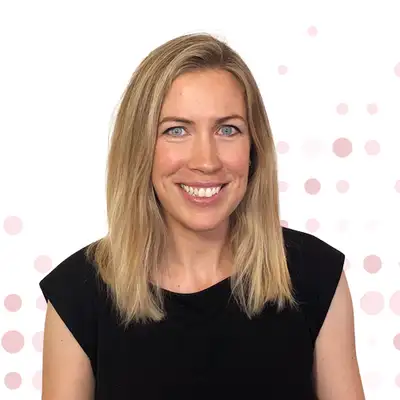
The World Pipelines podcast, with Elizabeth Corner, is a podcast that connects and unites pipeline professionals to learn about issues affecting the midstream oil and gas industry.
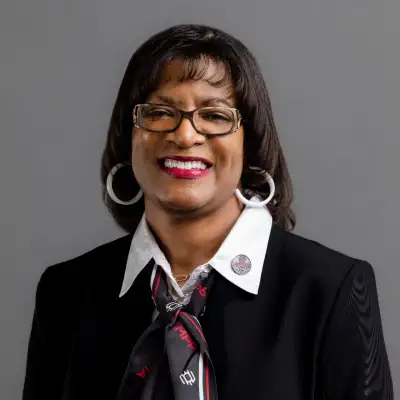
Hello, and welcome back to the World Pipelines Podcast. Joining me for this episode is Kimberly Joy Harris, PhD PMP. Kimberly Joy is manager of Corrosion Prevention at HF Sinclair and is the board chair for 2026 at the Association for Materials Protection and Performance or AMPP for short. World Pipelines helps oil and gas pipeline professionals stay informed about the midstream oil and gas sector, offering technical articles, regional briefings, project and contract news, and think pieces on pipelines all over the world. Register to receive a print or digital copy at worldpipelines.com and search World Pipelines on LinkedIn to join our community.
Elizabeth Corner:Hello, Kimberly Joy. Welcome to the podcast.
Kimberly-Joy Harris:Welcome. Thank you for having me. Pleasure and honor.
Elizabeth Corner:Now you're joining us with your AMPP hat on for this episode. So for listeners who may not know or may know the name but not the full scope of the organization, what does AMPP do day to day and for which industries does it serve?
Kimberly-Joy Harris:So day to day, AMPP, we serve several verticals. We serve the energy sector, civil infrastructure, maritime, defense, and currently building out a new workforce to help the next generation of professionals. So our day to day is ensuring that our community and assets globally are safe and fit for service and have sustainability and in doing and as well as the asset themselves and the coatings that they're being protected with above ground and protection is applied below grade. And in doing that, we ensure that our assets are safeguarded by having solid standards. So we day to day ensure that our standards are relevant, they're timely, they're supported by members, staff globally.
Kimberly-Joy Harris:So that could be an engineer from a company to a vendor, consultants. They all sits on the standards committee. And then also we ensure that our certification education program is relevant. We try to keep that solid to ensure sustainability in the knowledge base. So that's credentialing and accreditation.
Kimberly-Joy Harris:And then another thing we're really picking up on is the innovation side. We have brought in a new chief of innovations. So that's a big plus in our area to not only are we building standards that are used globally, we're identifying different processes to use and techniques to use, but we're also looking at how we can piggyback all that into innovation to ensure that, again, we stay relevant and that's our day to day. That's our goal, make sure our members are served, our members are grassroots users. I say that it's not just a member as myself as an oil and gas operator, but our users are also our vendors and consultants and universities and schools that are using our products and other associations working directly with the government.
Kimberly-Joy Harris:So we have our hands in a lot of different areas, but at the end of the day, we want to ensure that our systems are safe to operate and fit for service globally, whether it's a pipeline, an offshore platform, a maritime ship, you name it, if it has metal in it, it is a major focus of ours.
Elizabeth Corner:A lovely wide scope there. You've drawn that really nicely for us. And, of course, you've worked across oil, gas, refining, and pipelines for many years. I wonder what originally drew you into this world? And I propose, what keeps you here?
Kimberly-Joy Harris:That is a great question. And I get asked that question quite often because my humble beginnings was with electronics engineering degree. And so if you think about the early nineties when really the tech boom was starting, handheld cell phones, desktop computers, robotics. So I'm coming into graduating, hadn't graduated yet, but I was in my last semester of graduating. And we had a career day and where 99% of the companies at the career day were tech companies.
Kimberly-Joy Harris:And one company there was an oil and gas company. Well, not oil, but a LPG company, and a company called Enron. So Enron was my humble beginnings. Enron hired me into their organization as a trans engineer, and my goal was to convert them from analog to digital. So that's how I started, it just seemed interesting.
Kimberly-Joy Harris:Everything else seemed interesting, but the pipeline, it was something that was unique, at least in my world, coming right out of university. It seemed interesting. And so in doing that, I brought that aspect to oil and gas, and it has sustained me because by my third year of working there, doing all their instrumentation, PLC designs, etcetera, they added corrosion control to my responsibility on top of everything else. So that hence bridged the technology side of the industry to the just managing oil and gas, it was LPG. And then what kept me here was just that love of being able to bridge.
Kimberly-Joy Harris:I was able to pioneer and trailblaze some technologies that are used today with my name nowhere near on it. It was just a love of doing things and helping out other companies to develop technologies that are being used all over the world. But one thing that I didn't have and I really wanted to learn was crude oil. So I left Enron during the transition of Enron to their new focus, which did not include liquids, that did not mean that anyone lost their jobs. Everyone's jobs were still intact.
Kimberly-Joy Harris:But it was my opportunity to learn crude oil. And so I left Enron and came to Enbridge, went to Enbridge. And that's where I spent the rest of wonderful career. Enbridge was very good to us and allowed me some R and D funds to do some additional tech work to help, again, just to build programs that sustain our access out there. And to be able to monitor them anywhere in the world is another way of capturing an interest.
Kimberly-Joy Harris:So yeah, it was the bridging of my original humble beginnings with my original engineering degree and then to further those educations to bridge together that technology and traditional ways of maintaining pipelines from a corrosion controlcorrosion prevention standpoint.
Elizabeth Corner:Yeah, an amazing career. And God bless the person who decided to bring you on in charge of Corrosion too.
Kimberly-Joy Harris:Yes. Yes. Yes.
Elizabeth Corner:Now you are chair of the AMPP Board. What does that role mean to you personally?
Kimberly-Joy Harris:That's something that I'm gonna do my best to try to keep short and sweet. It's it's a culmination of my love for what we do. It is truly a pleasure and honor to serve our members in this capacity, serve our AMPP staff in this capacity with our board of directors, making some key decisions too. Over, we were just over eighty years as an association, so we want to ensure we have another wonderful eighty years in progressiveness. So to be in this role and started at the grassroots, and I say that's the chapter level, I started out within my first three months of becoming a member.
Kimberly-Joy Harris:I was asked to be the secretary at the local chapter, and I sat through all the seats there. And then went on to serve on almost every program that we have. As we switched to AMPP, I was a board of director for the global center side of AMPP. And I did not have the board of director nor the chair in my sight. It was nothing that was and nothing wrong with it.
Kimberly-Joy Harris:It just was not a desire of mine at the time. My desire was to ensure grassroots users are utilizing the products that we have in the right form and fashion. And then to serve on these programs that are writing standards that are being used all over the world and taught all over the world. That was what was really pressing me in my heart and desire to remain in the capacity that I was. But anybody knows me, I'm a woman of faith, and so I think God had different plans for me.
Kimberly-Joy Harris:And so he guided me to the role of where I'm at right now. So it is a humbling, humbling experience and just an honor and have traveled to many countries and them respecting and loving what AMPP represent and bring to the industry, various sectors of the industry, it's very rewarding. It means a lot to me. It means the world to me. Yes.
Elizabeth Corner:You speak so well about it. Let's talk a little bit about what corrosion control means? So how do you characterize the importance of corrosion control in major infrastructure?
Kimberly-Joy Harris:That's another great question. It's very important. If we don't maintain protection of our assets out there, and that's not just pipelines, pipelines, although the pipelines are mostly white background, but that's our bridges, it's our highways, it's our buildings. I could speak to the pipeline side because the goal is to ensure that we keep the product inside the pipe. Our assets are fit to service, safe to operate.
Kimberly-Joy Harris:And so that's a major problem with the day to day infrastructure. And that doesn't matter where you are in the world. You want to have access that are protected. And I say corrosion prevention because the goal of, I think all of ours is to prevent any corrosion. In the event that you can't prevent it, then there's opportunities where you have to at least budget for it to be added to the funding process.
Kimberly-Joy Harris:Sometimes it takes a long time to get permits or it takes time to get permits. So, time lining, getting the permits and completing surveys and doing surveys in a matter that you feel confident in what you're seeing, that this is what you need to do to design and budget and implement in a timely fashion. We've qualified individuals from the technician level, from the engineering level, the project manager level, the leadership levels to help get and lobby, or I shouldn't say lobby, but justify getting funds from the overall budget of any company. It's very important. We want to make sure that we're not harming the public.
Kimberly-Joy Harris:We want to make sure we're not harming the environment. And most of these assets, as you can imagine, they're 100 years old, at least 80 years old, 80 to 100 years. So HF Sinclair, we are celebrating 110 years old this year. So that's sustainability in its finest. And a lot of companies have come and gone, some purchased out.
Kimberly-Joy Harris:But I think the end game or the end of the day is to have that partnership with our vendors and with our owner operators to ensure what's the best technique and best collaboration or whatever the design is, I was trying to say, to ensure that these systems are protected. Yes.
Elizabeth Corner:And when you look at the energy sector in 2026, what do you think are the biggest integrity challenges that operators are facing? You mentioned aging infrastructure. Is that the biggest one?
Kimberly-Joy Harris:I think that's big. It one of the major hurdles. I think another major hurdle, and it's in energy, but it's almost in if you look at the world, almost every job is dealing with workforce. And so, yes, the aging is a major concern and systems have been aging for a long time because if you think about it, especially when you think about a pipeline, they were originally designed for twenty years. And then you look at the fact that they're how old they are now, and they've been able to be sustained because we've always had a huge workforce to maintain and operate it.
Kimberly-Joy Harris:But now you have the workforce that you have, that you had the last fifty years. There is a workforce out there. And so one of AMPP's goal is to tap into that and ensure development, reach out to high schools, universities, and start the process a little early on. I mean, yes, I started as soon as I graduated from university. The goal is to maybe get into the high school level, at least to start the thought process and get some curricula designed around energy in particular.
Kimberly-Joy Harris:Although again, there's other corners of the world that are struggling with workforce as well. But I think aged infrastructure, and don't get me wrong, there are some newer infrastructures that are failing as well. That goes back to designing and it goes back to selection of the right material, the right coatings, the right protection, placement of the right protection for these assets. So even though we have an aged infrastructure, that is a challenge. Workforce and technology is, I think, the path to continue to sustain some of these assets.
Elizabeth Corner:You're right. There's huge pressure on pipeline infrastructure now. We've got the assets are aging. We have decarbonization goals that we'd like to meet. We're bringing new energy online.
Elizabeth Corner:There's always budget pressures. Would you say that the industry is being asked to do more with assets than ever before? Is that correct?
Kimberly-Joy Harris:That is correct. That is definitely something that we're challenged with. With some of this comes regulations, and regulations are all over the world too, which is not bad. Regulations usually are good because they are sometimes a result of an incident. So if you want to prevent a lessons learned of another disaster, then yes, regulations are very applicable.
Kimberly-Joy Harris:So when you're trying to meet some of the regulations create other challenges and threats because of lack of funding, or if it's a regulations that's centered around a pipeline company being impacted by a power company, which is doing the right thing by replacing high voltage power lines, as one example, is one of the biggest challenges we're dealing with right now is what we call, Reconductoring. And we all want to see Reconductoring, but we also want to have communication with these companies to let them know that we have a pipeline here. If we work together to model and design, we both can operate our assets safely. So there are power lines and our pipelines. But right now we are under threat with challenges like that.
Kimberly-Joy Harris:And that's one of the things I think the huge part of the pressure because we're dealing with that more now in the last probably five years than we have in the last thirty years. Because the other thing is the products that the pipeline and the pipeline coding is making this a compound issue for us. But we've had some meetings. We have some really wonderful positive meetings to try to figure out how we can partner and work together and collaborate around this. In the meantime, it is pressure to still have to maintain the pipeline and find the funds and the budget to protect it until we can figure out how to best work together and mitigate this as we design and as they design their new infrastructure systems.
Elizabeth Corner:You talked about workforce earlier. I know you have a background in both technical engineering and then organizational leadership. How important is that people side of integrity management? And I wonder how that's reflected in the work that AMPP does.
Kimberly-Joy Harris:That's very important. One of the things we do work a lot with is the human side of it. Again, the end users. The human side of the workforce is ensuring that we have talented professionals out there from the grassroots of the chapters and laying a brand new pipeline or building a brand new platform or building or sustain even refineries for that matter. There's only so much you can do with artificial intelligence.
Kimberly-Joy Harris:I know that's a buzzword that's used a lot, but I think people may or may not realize what artificial intelligence has been around for thirty years almost, is how you use it. And artificial intelligence is only as good as the data going into that model and software scripture that they're writing. So to me, you still will always have the human factor. That's the checks and balance. I think another area that we can grow, and this is part of workforce planning, is yes, some of the traditional jobs and titles of the last twentieth century or later, it's time to kind of redevelop those titles and redevelop those roles and positions.
Kimberly-Joy Harris:And that can work directly with artificial intelligence. But the main thing is to have, I call it data confidence, but you have to adopt the data that you're confident that you're feeding it correctly so that you can get the results that will put you in the right position to deal with some of the challenges that are out there. So in my opinion, Noah, like I said, I started this industry a long time ago. And when I started, it was robotics. And a lot of people were afraid robots are gonna put people out of job.
Kimberly-Joy Harris:And in some cases, did change the workforce, but with that change became different roles, project manager type roles, analyst type roles that the humans still continue to contribute to this day. So it didn't cause this major job reduction that a lot of people thought early in my career. That's what I was hearing when I would go to the conferences and things like that. And even within our company, it's still going to need a human factor.
Elizabeth Corner:Absolutely. I'm glad you mentioned conferences because my next question is to do with that, the balance between the digital world and the real world. I wonder what role do things like conferences and training events and industry gatherings play in the work that AMP does? And how much value is there in being in the same room as the engineers and the operators, for example?
Kimberly-Joy Harris:That is a tremendous value. I look back in my early career and the very first conference I went to, I was intimidated because I had never been to one. I was still really young, in my early 20s, and I didn't know what to expect. But going there, I met some friends that are my friends to this day, all these decades later, and I learned so much from them. From that moment and today, I can always call and bounce.
Kimberly-Joy Harris:So the networking side, and it depends on where you are in the world. There are people in your country or in your state or in your province that are dealing with some of the similar challenges that you're dealing with that you get a chance to meet at the conference and you can bounce things off of them and see how they overcome or address the issue. It's the opportunity to network. It's the opportunity to hear a lot of case studies. Case studies are lessons learned.
Kimberly-Joy Harris:We've done a lot over the years. The companies I work for, we've put a lot of technical papers in there based on our experience because we're very large. At Enbridge, we're a very large associate, it's a very large organization. And even at HF Sinclair, we're large. And so one of the things we will continue to feed are our lessons learned that others can benefit from that again, will minimize hopefully a threat that's out there that may result in an incident.
Kimberly-Joy Harris:And then you have the training. There's a lot of training that goes on. I know at our conference, we have hands on training. We have, we call it the CP field, corrosion prevention field, where you can learn to use the devices and tools, equipment correctly. You can test your knowledge.
Kimberly-Joy Harris:So it's a lot of fun with that. And then we also bring in local schools. The science class get a chance to come and see the technologies. We went through that through COVID, where we did a virtual conference. I think the verdict is out on how well that was.
Kimberly-Joy Harris:I think it was well in some cases for people, in some cases it was arduous, but at the same time we did the best we could, right? It was a tumultuous time for the whole world. And we did still want to provide a solution to have a conference that people can really benefit from. We do like technical forums or different technical talks and the list goes on. Know I'm not doing a lot of justice and everything that comes out of that, but it is amazing.
Kimberly-Joy Harris:It's an amazing opportunity for those of us that like owner operators, such as the nature of Sinclair, that we can sit down with our vendors, that we use their products and have a chance to network with them as a company in person and also have a chance to look at any new technology that they're looking to roll out for the year. And then we can plan out opportunity to test some of the technologies and do pilot and demo tests. And then a lot of times during those conferences, we have a chance to meet with vendors that we end up setting up a meeting off-site. So later in the year, well, we can do a one on one with that vendor and our company. We're doing one, we have, we've done several, but we have one that's upcoming next month with a company Dairyland, and Dairyland specializes in decouplers that are used for AC mitigation.
Kimberly-Joy Harris:So that goes back to that reconducting issue direct a lot of us. But the list goes on. We've met with a lot of coding companies and other technical companies as well.
Elizabeth Corner:Oh, we know and love Dairyland at World Pipelines. Now, I wonder if there is something in everyday life that you now can't look out without mentally assessing its material performance. Does your mind change your life in that way?
Kimberly-Joy Harris:It has, and it changed my life in that way from day one coming into the energy side, again, coming from a quote unquote electronics background. Everywhere I go, I'm looking to see the right of way, to see their assets, to see how well they maintain their stations, infrastructure, the highways, the bridges. We do advocacy day where AMPP, we go to Washington, D. C. And we go on the hill and meet with representatives to talk about our respective states and some of the challenges and how AMPP can improve it.
Kimberly-Joy Harris:And at the same time, so we bring those vicarious examples there that they can visualize and they know because they're from our respective states. And I tend to go to states that our pipeline traverses through, so I don't just focus on my home state. But it doesn't matter. Even when I go overseas traveling to the conferences and speaking engagements or working, I'm always zoomed in on, okay, I seeing any cracks or are I seeing any So it's just one of those things that once you become a part of this amazing industry, especially from an asset integrity perspective, you really can't live your life without observing certain things. And sometimes good because you can bring that knowledge to your local municipality or state representatives or again, province, and have that discussion with them about this is what we do for a living and this is a possible threat that we see, and here's an association that have standards and materials and procedures and training, education, certifications that they can possibly use.
Kimberly-Joy Harris:So I think it's amazing because it gives us that opportunity, but you cannot avoid it. It's just one of those things that we do.
Elizabeth Corner:And do you have a memorable corrosion story? Do you have a story that you always tell people when you talk about what you do day to day?
Kimberly-Joy Harris:I think it was what I mentioned in the beginning. I started my career with no thought of going to work for a pipeline company. I didn't even know what that meant, to be honest. But I took a leap of faith. It was a job description that seemed interesting.
Kimberly-Joy Harris:I had plenty of offers to go to tech companies, and even within my classroom, we were even offered leadership roles, and this was our first opportunity, but they needed leaders to help build assembly plants and all that kind of stuff. So to me, the job description just seemed interesting, and I took the leap of faith. And I tell that story quite often because I get asked what brought me to corrosion, but also what brought me to the pipelines sector. I'll speak another quick one, and it goes back to, I think I mentioned about one of the things that I pioneered and trailblazed. I talk a lot about remote monitoring because I was extremely fortunate and within working for the company Enbridge that I always had R and D funds.
Kimberly-Joy Harris:And there were some manufacturers that were starting to offer this solution. But I took a look at everything that was available and did a deep dive two year pilot program and ended up implementing, I was the first company to implement it across the entire enterprise that we had for at the time for liquids. But again, it kind of morphed into the natural gas side. And I look at that now because now those technologies are used all over the world for various reasons, from being able to be somewhere, even as long as you can have Wi Fi or if you can get a satellite signal, you can see what's happening with your assets, your pipelines. Is the protection still there?
Kimberly-Joy Harris:Is the protection damaged? And then I think if, and then fast forwarding that to today, I have a degree in data analytics, artificial intelligence centered around data. And so it's one thing to implement an amazing program like that, but you have to be able to respond to the data and respond to the data in a timely manner. So looking at how we address the data is the big thing, is my focus of right now and addressing that in a timely manner. Before I left Enbridge, we rolled out a new dashboard that had different aspects of all this data that we were collecting.
Kimberly-Joy Harris:So you could see it all in one glimpse, and then you can actually dive into it further. And we're doing that with H. Sinclair, and a lot of companies are starting to do the same thing. I always take a little bit of pride in that big contribution of remote monitoring because I had no idea that it would be something that would take off the way it did. And I was even asked by a number of operators to come and present and justify that with them and their companies because it was so new technology.
Kimberly-Joy Harris:This is 1998, 1999 timeframes. And then today is really has boomed into where you can see internal corrosion monitoring. You can look at monitoring pretty much anywhere offshore. They're in drones now, so almost the same thing, but not quite the same. Similar technology.
Kimberly-Joy Harris:Just to be able to see it remotely makes a real of a difference from a safety perspective
Elizabeth Corner:as well. So yeah. Great stuff. It's been such a pleasure to talk to you, Kimberly Roy. Thank you.
Kimberly-Joy Harris:Thank you so much. It's been an honor and thank you so much for this opportunity and for your time. And I love the magazine, so having an opportunity to contribute to it means the world to me and having a global outreach means the world as well. Thank you so much.
Elizabeth Corner:That was the brilliant Kimberly Joy Harris talking about a career at Enron, Enbridge, and beyond, and about the work that AMPP does to prevent corrosion and promote safety and integrity of assets. Thanks for listening to the World Pipelines Podcast. Subscribe for free wherever you get your podcasts. And if you have enjoyed this episode, please do rate, review, and forward to a colleague or friend. World Pipelines helps oil and gas pipeline professionals stay informed about the midstream oil and gas sector, offering technical articles, regional briefings, project and contract news, and think pieces on pipelines all over the world.
Elizabeth Corner:Register to receive a print or digital copy at worldpipelines.com and search World Pipelines on LinkedIn to join our community.