Subscribe
Share
Share
Embed
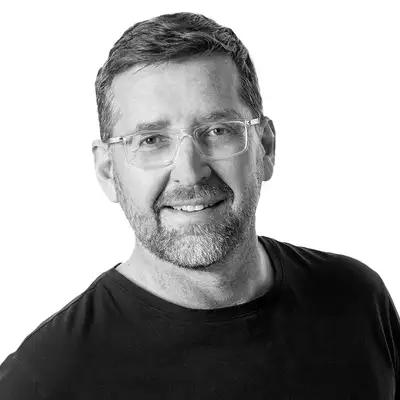

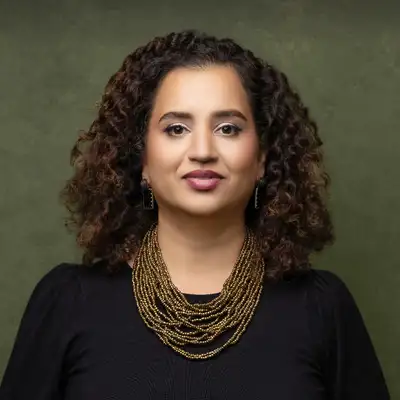
Hosted by Heath Fletcher, The Healthy Enterprise explores how innovation, technology, and leadership are reshaping the life sciences industry—from discovery and development to commercialization and care delivery. Each episode features candid, heart-centered conversations with founders, scientists, executives, and investors, sharing real-world experiences and insights for building resilient, future-ready organizations.
Created and Produced by Bullzeye Global Growth Partners — Let’s build it together!
Katrina Rogers (00:00)
Being a founder is incredibly lonely. It's also very rewarding. When it works, it's just fantastic. But when it doesn't work, it can be really crushing.
Heath Fletcher (00:11)
Building a new therapeutic can be one of the hardest things in the life sciences world. It requires navigating complex biology, clinical trials, and an entire ecosystem of partners, and most founders don't have all that expertise in-house.
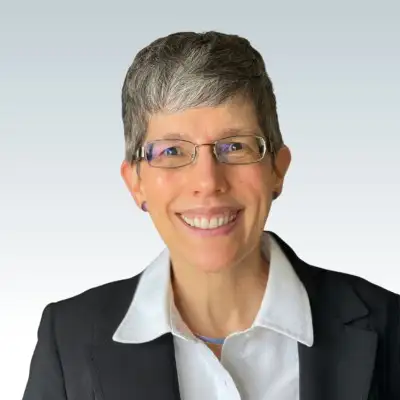
In this episode, I'm joined by Katrina Rogers. She's an analytical chemist and life sciences advisor who began her career at Pfizer and now works with biotech founders to help them navigate drug development strategy and commercialization. Later, Katrina shares why some of the most promising biotech companies stall out and the one mistake founders often make when navigating the drug development ecosystem. So let's get started.
Katrina, welcome to ⁓ this episode. I'm so glad you're here to join me to have this conversation. we met through the bullpen or BLPN ⁓ organization and it's great to have you here to talk and hear about ⁓ what you do in this crazy world of life sciences.
Katrina Rogers (01:20)
Well, thank you for inviting me to be on the podcast. I'm delighted to be here with you.
Heath Fletcher (01:26)
Well, let's talk about your career. What got you into life sciences? Where did this all start for you?
Katrina Rogers (01:34)
so I I got my start after getting my ⁓ degree at the University of Washington. I'm an analytical chemist by training in inclination, and which seems a little odd. ⁓ my my mom was a ⁓ clinical chemist, so I think that that's probably where the seed got sparked. But I've always enjoyed the science of chemistry. ⁓ after I left the University of Washington, I joined Pfizer Central Research and doing everything soup to nuts from very
Very early discovery all the way to I and D enabling work from the lens through the lens of metabolism studies. So as opposed to thinking about pharmacology where you're asking about how the drug acts on the body, well mant metabolism's really about how does the body act on the drug. Right.
⁓ and then just kind of naturally moving forward through there into contract research after I left Pfizer and ⁓ you know, added some pharmacology skills to it as well, but still thinking about what is it to what is it like to bring a biologic or a small molecule through to clinical into clinical trial studies. And
Heath Fletcher (02:43)
Having
that having that initial having that initial infusion or, you know launch into big pharma must have been a very interesting way to start your career. To to see it from that standpoint.
Katrina Rogers (02:57)
it was exciting. super exciting to be at Pfizer during those years. ⁓ and then I had to relocate all the way from Seattle to Groton, Connecticut, which is basically on the other coast. And those of you who have lived in New England, from having come there gone there from any place else know that it's a really different place to live. A lot of fun, very, very interesting, lots of history, lots of fun things to see. But you you probably need to be a little bit more self sufficient if you want to ⁓
kind of be comfortable and sustain yourself in New England. It's it's they're very family focused there. Right.
Heath Fletcher (03:34)
And so was it kind of once you once that was done you kinda and you ventured out away from Pfizer then was it kind of set in your mind that that wasn't where the environment you wanted to be in as far as in that kind of a corporate environment?
Katrina Rogers (03:49)
⁓ actually,
so I moved from Pfizer into contract research at MDS Pharma Services, which is just another corporate environment, different sort of thing. Right. I loved my time at Pfizer. Would would still recommend it to anybody. it was fantastic. It was a lot like being at graduate school, except I had some money. And and at you know, it was a it was a blast. I met a lot of people that I still
Heath Fletcher (04:10)
I see that right.
Katrina Rogers (04:19)
Talk to and engage with the metabolism community is on the smaller side, so still see people that are are thought leaders in the industry even today and have an opportunity to collaborate with them. But one of the things about our industry is it's very strongly founded on a framework of contract service providers. So you know, in the in the earlier days of my career, a lot of the work was being done at the larger pharma.
had a they had discovery and development
Frameworks already, you know, project teams already well established. That has decreased over time because it's very expensive and you know, statistics being what they are. So what are we seeing, where are we seeing some of the new molecules coming from? They're coming from more and more ⁓ smaller shops, virtual ⁓ pharma, as well as ⁓ academic labs. So, you know, in 2008 the number was around sixty percent. It's only grown since then in terms of the fraction that are coming from that.
space. Right. And the truth is no one has all the skills that they need to bring something all the way from that early those early bench b stages through development and into the actual clinic and then to development and marketing. Right. So the contract service industry is has become really a significant powerhouse driving a lot of these assets.
But then you also have to if you're gonna be a founder, you have to understand that and then you have to be able to access it as well.
Heath Fletcher (05:54)
And these sm is that a better idea, having smaller these smaller groups coming out? Is that you do you find it as a it's a it's as a more effective approach?
Katrina Rogers (06:03)
So
From a shots on goal perspective, yes. From a being closer to the biology perspective, I think yes. So I think one of the things that we d a lot of people fail to r recall is that it's really around in order to create a new therapeutic, you actually have to have a hypothesis about how some kind of drug, whether that's a biologic or a small molecule, works in the body to create the effect that you're trying to drive, right? The the therapeutic effect. And so your hypothesis
Is not only about what the therapeutic effect is, but what receptors or you know what mechanism in the body that you're interacting with in order to drive that actual effect. Right. It's there really aren't animal models for it, so people are it it's very helpful to have people really understand the biology, do that early work. But then you pretty much have to say, okay, well now we have to make this drugable.
And does that mean, you know, how are you going to dose it? What is going to be the dosing form? ⁓ what you know, how do you create a valid, how do you create enough of it ⁓ in order to to start some of these studies? How do you prove that it is safe enough that we could actually have a human clinical trial to test the benefits? Because you don't know anything about the benefits, so all you're trying to do is say, ⁓ it it isn't going to kill people right off the bat.
Heath Fletcher (07:27)
That's the upside.
Katrina Rogers (07:28)
Yeah, we we we can dose it within a certain therapeutic range. We think we can dose it within this certain dose range and it won't it might make people a little sick but it won't kill them. Right. All of those things just they build on one another and it's it's again not something that everybody knows everything about. It's unusual to find somebody who has a kind of bigger sense of the picture of the story too.
Heath Fletcher (07:52)
Unless you surround yourself with those people.
Katrina Rogers (07:55)
Indeed. Right. Indeed. And that's one of the things I love about the BLPN is that we try to bring in people from all s parts of the of the ecosystem.
Heath Fletcher (08:07)
So that they can tap into those people or those specialists. And when the time arises and when the when the moment presents itself, you have that network. So where did you see your
Katrina Rogers (08:19)
The other thing is being able to speak confidently to the people that you ultimately want to exit with. So you know, this is the the ⁓ major players is still ⁓ small to medium to large pharma, the the companies themselves are looking for assets because the you know, their their clinical trials are not always completing as well and so they need new assets and need new ⁓ new ideas, but you have to be able to speak competently to how you got to now.
Mm-hmm.
Heath Fletcher (08:50)
So where did you see yourself fitting in this equation? Where did you find that you felt you had the most value and the most ⁓ potential for
Katrina Rogers (08:59)
Sure. So one of the things that I recognized is that this in this kind of heavily startup ecosystem from a both a pharmaceutical and a device development space is it's this is lonely work. It is quite often very isolating, it is not ⁓ friendly to ⁓ to family lifestyles, or you know it takes a lot of energy and a lot of focus to get it done. And the worst pain points you can have is running out of.
ideas, right? You have problems and you just run out of ideas. So I recognized that I had a broad enough skill set and that because I have I read widely it's my superpower. I I have developed additional knowledge of capabilities, skills and aptitudes that I think could that excuse me. I have developed additional knowledge, skills and abilities that enable me to
Provide some great insights to founders who are struggling, and that that's why I decided to choose to start my professional services group.
Heath Fletcher (10:06)
Amazing. Katrina to the rescue. ⁓
Katrina Rogers (10:08)
Ha ha ha.
Heath Fletcher (10:12)
w bio nine one one or something.
Katrina Rogers (10:14)
Bio
nine one one. If only I could have gotten that number, right? Correct.
Heath Fletcher (10:19)
So
that's great. So that's where you can kinda come in and say where are you at and where do you need support? And you can provide that ⁓ expertise or that advice and guidance along the way. Exactly. So give us a little bit more of a picture of what that looks like, a scenario that
Katrina Rogers (10:35)
Okay.
well so the capsule conversation is my strengths are providing confidential advice and that capacity enhancement so that the ⁓ leaders can focus on guiding their companies to successful exits. And what that means is I work as a pro best as a problem solver. ⁓
I come in, I I'm often invited in when companies face challenges, whether that's a go-to-market challenge, whether that's a development challenge, whether that's even an earlier stage kind of ⁓ you know, team challenge. And it could be in strategy, it could be in peer operations. It's often there's often some leadership component to it, not because people are poor leaders, but because
We just don't know what we don't know. And we often ⁓ the skills that we that we had or received when we were in college or postgraduate work aren't always the skills that we need to be successful founders. So I do, you know, I I excel at the deep dive, I excel at understanding and helping people understand how did we get to now, and then also thinking you thinking through and working together on the next steps. You know, what are the options
That we have. Where, you know, which ones should we eliminate? Again, this is we were talking a little bit earlier about the lifeline. Could we do a 50-50 and eliminate some of the options? ⁓ So you can say, all right, we're not even going to think about those. They're just they're just not good options for us. And then just really thinking through what are the next steps. And sometimes that's very painful. Sometimes the next step is to wind the company down. And that's very time-consuming. It requires a lot of energy and
And people need some help getting through it because it's a grieving process as well.
Heath Fletcher (12:25)
And of course we're talking about the founders. People are who have ideas, visions. ⁓ and they come from all all places and spaces and you get like you said, they're not everyone has all the skills or qualities to do all the roles that are sometimes expected of a founder. A founder you ⁓ at especially at the beginning wears all the hats. and they have to have the idea, know the science, understand the value of
of what this would have in in the world and usually driven by some sort of personal ⁓ story or some sort of passion for ⁓ finding whatever cure or fix they're they're they're designing. So at some all these stages I'm understanding maybe you can kinda wear some of these hats on their behalf ⁓
when they get to this certain point where you can come in and go, Okay, give me that hat. I'm I'll I'll take over that part. You focus on this.
Katrina Rogers (13:30)
That's
correct. fractional work is a is a significant part of what I do. I also do specific projects. So again, thinking it not maybe taking a hat on per f full time, but being able to say, all right, you know, we've just got this one thing we have to figure out. Can you go and figure it out for us and come back with a nice clean report or an engagement or something like that? And it could be it it's in a lot of different things. It's in ⁓ technical operations, it's in laboratory management, it could be in regulatory.
Heath Fletcher (14:05)
I do you find there's like a common thread amongst founders that seem to be a a place where they trip up on or get h get stuck on?
Katrina Rogers (14:16)
That's very true. ⁓ and I think it's really around the ⁓ the engagement level. So that ⁓ and I think maybe the best way to think about this is most technical founders aren't very good at sales and it's not s it's not a skill we learn in college or or or tend to gravitate towards. Many of us are more ⁓ comfortable in the lab than we are actually in front of people. So, you know, helping people overcome that barrier as well as to understand
that maybe they're not the right person. It's so it's it I'm always very proud of founders who make a decision to say, I am not I have to go and find the right person to be the face of this company because I that's that's not me. I can back them up with the technical and scientific pieces, but it it's this is just not a skill set that I can develop.
Heath Fletcher (15:08)
That would be a hard thing to have this sort of you know, it's a baby. You've created this thing from from from conception to to here we are. And so how it would be a very difficult step to say, Okay, I'm gonna hand this over to this other person and they're gonna now be the face of the company and they're gonna go out there and pitch and sell and and try and attract ⁓ some attention. So ⁓ it because it involves relinquishing control and
Katrina Rogers (15:41)
Maybe. Exactly. And you have to learn how to take other people's ⁓ feedback, which can sometimes be very critical. ⁓ you know, I think I I don't think that people necessarily come at this
with ill intent, but it certainly sometimes comes across as ⁓ blunt, curt, ⁓ very painful. So that's you know, you sometimes have to just swallow your tongue and say, thank you for that thank you for that information or for that feedback and move on because there are lots of people in the world who will say, You can't do this. Right. Some of them are your family members, which is that's a struggle it's in and of itself. But
If you cannot get over that piece, that's the I think it's one marker of you have to distance yourself from from the the sales piece of it. But you still have to be thinking about well what what is your ultimate goal? And that often is a it that's often a centering conversation that I have ⁓ after I got to know a NOAA founder and we're working together, is like let's stop for a minute and look back at where you were at the beginning and what was your goal? What is your what are you trying to do?
do? Do you really want this medicine or do you want this device to be out for people who need it? Or you know, is this has this become more about control or ego or are have we drifted away from your original vision and is that where you want to be now?
Heath Fletcher (17:16)
Have you found often some that they do drift? There is a drift from the original
Katrina Rogers (17:21)
Well to be a startup founder takes an enormous amount of nerve and self confidence just to be able to say, I'm gonna do this. Right. ⁓ so that i i i it it can tip over it it can definitely tip over into an ego trap.
Heath Fletcher (17:37)
And belief. I mean they have to believe that this is gonna work. This is something that the world needs. ⁓ so to have that that has to be the start of it. And then where it goes from there it can I guess depending on the conditions and the environment and the outcomes will can it can morph it.
Katrina Rogers (17:53)
Yeah.
Exactly. And the belief isn't wrong. It could very well be that the that the world needs this. But the belief has to be adapted by the fact that maybe the maybe what the world needs is is something that's close to what you're building but is somebody else's way ahead of you. Maybe maybe what the world needs maybe the world isn't ready for what it really needs. Right? That would plenty of technologies that take ten to twenty years for people to be like, wait a minute, we really need this.
Ha ha ha.
Heath Fletcher (18:25)
Right.
And maybe they will be we will be ready in ten to twenty years. But
Katrina Rogers (18:29)
It'd
be more ready if you can sustain it and the whole it's the whole craziness of running a startup.
Heath Fletcher (18:36)
But this is yeah, this is not for the faint of heart because this ⁓ not only comes with a lot of vision and belief and effort, it also requires money and unless you're self funding that, which is a rare a rarity, is it not? So part of what you're talking about too is that the funder the founders are not necessarily the right people to be going out and asking for money either.
Katrina Rogers (19:02)
They aren't always the right people. th you know, I think I've seen plenty of founders learn to do it and do it very well. ⁓ there is a there is certainly an element of w what's that old saying, right? before Enlightenment, chop wood, carry water. After Enlightenment, chop wood, carry water. ⁓ You are just gonna have to do at some point you are just going to have to knuckle down and Yeah.
Heath Fletcher (19:21)
Yeah.
to work. Yeah. Yeah.
Yeah. that made me think of something else. I don't know what it was, but it was it came and went.
Katrina Rogers (19:37)
Yeah, we were talking about ⁓ sometimes the founder isn't the right person to go out and and raise or
Heath Fletcher (19:43)
Right.
and we're talking about raising. Right. So when it comes to raising, how how do you help with when you get to that stage? Do you help them with raising part as well and and going out and ⁓ pitching and preparing for to to collect to find the money?
Katrina Rogers (19:56)
Exactly. So you know, one of the things that I can do is is both listen to and help them develop the the message around their pitch and then their visuals and graphics, right? You quite a few founders are very excited about their science. Yay, we're very happy that you're excited about your science. Investors don't care. They assume that you have great science, you know your science, you you know they don't that's not what you have to prove to them. What you have to prove to them is that you can make the statistics of their fund
Better. And what do I mean by that? The average statistics of any fund. You got a chunk of money, you're the GP, a bunch of your friends and people you know, and you know, people you want to have a good relationship with have given you this money and they expect you to have a return. So you're on the clock. Now you have to drive you have to go out and write checks, and the statistics say you write about 20 checks.
That's twenty for every twenty companies that you fund, one will be a big winner. That's the twenty X return. That's the that's the one that everybody dreams of. ⁓ two to three, you know, will probably be might return the money, maybe might return two X or three X. You know Results but yeah. Results but fairly limited. The rest will lose money.
⁓ so what do you have to show? You I mean you have to have a convincing as a founder you have to have a very convincing argument, a business case, ⁓ data, you know, all of the pieces that you need to say. I have a way, you know, I'm pretty confident that I can get this over the over the goal line and be one of those
two X to three X companies. You d don't target the twenty X, because that's just cra that's just luck. It's just pure luck to be in that group. But if you could at least just return the money that you that you that they invested, you haven't lost any money. Right. And so the the the the funder, you know, the GP, their statistics are just gonna be better. And 'cause what is their goal? They want to have fund two and fund three.
How do you do that? You just show that your statistics are a little bit better than somebody else's.
Heath Fletcher (22:16)
I see. Okay, yeah that makes sense. Yeah, that's very interesting. Yeah. That's good to know. That's that's good information, absolutely. So w how do you prepare how do you prepare the people you're working with? What's what how do you get them through from point A to point D?
Katrina Rogers (22:18)
Yeah, if you think of it a game like that, it it gets to be like
Sure.
So my process involves ⁓ some early discussions. You don't
One of the things that I pride myself in is I want to find out what this you know, what does this look like right now? Where are all you know, what is the what are all the problems that you are seeing? You know, let's try to tease out some of the other problems that maybe you're not paying attention to or you're you you're you you're you haven't you can't see because you're just not at that stage yet. What does the problem look like not just from the founder's point of view, but from the other stakeholders, the people who may have put in early money or the people who
are partnering with them you know is there a place where we can where we can work together that I can help because if I can't help then you know I'm not gonna I'm not gonna ask somebody to spend money if I can't help them. Now I do have a really great network so if there's someone else who is a in a better position to help I will make that introduction and I'll be just like go you guys yay founder let's let's see what let's see what happens and and let me
Heath Fletcher (23:40)
Yeah.
Katrina Rogers (23:41)
Yeah,
exactly. Exactly. ⁓ when I can help, it can take different kinds of forms. We can start small with an early project, as I mentioned, you know, just w one thing to take that off a founder's plate. I can do a fractional. I can do y I mean that's typically some kind of retainer engagement. So it I can do do fractional all the way on up to some sort of full time hands on. Let's get in there and get some work done.
And the projects, you know, I'm not I don't have y you mentioned ⁓ sort of the investor relations piece. ⁓ I can help people pull together lists, I can help people train to do their own investor relations work. I can do some of that work for them, but I'm very careful about that. So usually when I do that sort of introduction for people, what I'm trying to do is get ⁓ I'm trying to get the investors to come to an operation.
Opportunity for them to give feedback to a founder, right? So very low stress, very just an opportunity to hear them pitch and to give some feedback for somebody who's trying to get out there and raise. And what do we find in this ecosystem is that the people who are open to this are very generous with their time. They'll spend 30 minutes to an hour listening to somebody, they'll give some great qualitative feedback. And sometimes they're sometimes they'll bring a resource too.
Heath Fletcher (25:09)
Interesting. And so a big part of what you do too is about is an education process too, right? Because you're you're teaching them along the way, showing them you're opening doors and and guiding them through the process. So what how did you build that out?
Katrina Rogers (25:26)
Well, so I think that none of us know I you know, I'm gonna I've got a lot of expertise, but I don't know everything. So I always look at every project as an opportunity to learn together, ⁓ to to to share the expertise that we have to make something greater than than what the individual parts are.
And so that's, you know, if that means I have to do extra work and do do a deeper dive and and try to get and understand and build my own network of experts to kind of get the to get the information that we need. If I have to do some library research, if I have to ⁓ it and sometimes it's it it is really just thinking about and pulling together ideas and trying them out real time.
Heath Fletcher (26:15)
Where does you have a you have ⁓ you have some articles that are out on on on your blog right now that people can subscribe to. One of them is ⁓ right now you're working is the Deal Screening Mastery. Right. Right.
Katrina Rogers (26:27)
Yeah, I have
a ⁓ my newsletter ⁓ is on and blog is on Substack. It's the thinking cat. I am the th the thinking cat. The thinking cat And this year one that that's writing
Heath Fletcher (26:35)
Yeah.
Katrina Rogers (26:42)
And and that kind of content and sharing these ideas with people is one of the ways that I try to help the ecosystem at you know, as a pro bono way, right? I think that we we if we have a common conversation and then we ask these questions of one another, that that sparks ideas and gets people thinking about the their next steps. So at the beginning of twenty twenty six I had an idea about kind of it just sort of sparked this idea about running a series for
deal screening mastery. And the first the first article that I did was really talking about how commercialization plans, their amounts and frequency, sort of reveal founder DNA. And then sort of went from there to start talking about, you know, what does it mean to to evaluate a team versus an idea? Because someone at JP Morgan asked me, do you back the jockey or do you back the horse? And I'm like
Heath Fletcher (27:40)
That's a good
question. Yeah.
Katrina Rogers (27:42)
It's a very simplistic framework though, because ultimately ⁓ that argument it it it fails to recognize that there's there's some synthesis of the two that is that has the real value. It's around founder problem fit, it's about, you know, is there a mismatch there and can that mismatch be corrected and so how do you match that then to a thunder's thesis statement? So it's an important argument to think about both if you are a a funder
and you're trying to figure out how you're going to screen all these deals.
And also if you're a f if you're a founder and you're saying, well, of all the funding organizations in the world, which are the ones that I should go after? Because you will you'll probably make a giant list, but again, this is sales one one, right? How many how many leads can you handle at once? Well, maybe ten. Yeah. So how do you get to you know you get from your seven hundred leads to the ten that really makes sense to have a conversation with?
Heath Fletcher (28:46)
Yeah, yeah. And that comment about the jockeying the horse, i it's it's so true. I mean in in with investors that I've spoken to, often I've heard them reference ⁓ phrases like they'd rather back a D product ⁓ and an A team than an A product and a D team. 'Cause they really look quite closely at the members of the team, the founder, the
the CTO and whoever else is part of the the company or the the initiative. Does that resonate with you? Does that it kind of align with what you're talking about?
Katrina Rogers (29:20)
And
I think that that there's a form of cognitive bias there, which is not necessarily I don't mean I don't mean it negatively, but I think where it's formed is because this is ultimately a relationship business. You have to trust. You really have to trust that you're gonna give somebody millions of dollars. Well, maybe it's not gonna be millions. Early stages maybe you're giving them a hundred thousand or something. It's still a pretty substantial choice. And you're going you trust
Heath Fletcher (29:46)
You
want it back with interest.
Katrina Rogers (29:51)
Exactly. And that's the way you invest. And you want to you want to see them do something with it too. So even e even people who are purely impact investors who are just like, all right, we know that's some of this stuff is just n it's gonna fail. We're we're just backing the peop the ideas that we think make sense, even they want th what what's the return they want from They want the actual impact. Right.
So you trust you trust that that somebody will be able to do that, and a big piece of that trust is trusting the founding team. And you know, I think it leads to some kinds of bias that we see in the marketplace where ⁓ people will just back people who look like them. And
You know, I think that y I think if that's the only thing you do, okay, that you you go and you do you, but I think you're missing out on some really great ideas. That's how I'm just saying.
Heath Fletcher (30:51)
When you're ⁓ if you know, if founders are probably listening and and hopefully they are, there are some things you and I talked about previously about things that when they're you're developing the pitch and they're developing their presentation and you're helping them with that process. There's you kind of broke it down for me that the the core items that need to be heard, particularly in the first pitch when you're actually just sort of piquing interest, right? You you only want to say so much
You want to get someone interested and or those that are interested are gonna come back and say, I want more info. Sure. Like you were saying before. Don't dwell on the science. Get on with the other parts of the story that are actually more significant at that very first early stage of of presentation.
Katrina Rogers (31:35)
Mm-hmm. Well, one of the things that I've learned, it's constantly being reinforced to me, is all you're doing is trying to get to the next meeting. So when you first meet somebody, you cannot possibly convey all the information that they that they would need to be able to say yes to you. So don't try.
This it this is controversial in some circles. We talk about it in the BLPN meetings. ⁓ but the truth is you should be able to you should be able to give the core of your message in five slides and in a very, very short, brief sent because if you're gonna meet somebody on an elevator, you had better be able to say it in a in a sentence to get their interest. Because all you're trying to do is get on their calendar for ⁓ that next meeting.
Heath Fletcher (32:26)
And what's the ratio? What how you I think you broke it down into a ratio there was like percentage of percentage of the presentation should be the science and then another percentage should be the the story about the team and then the other percentage is like the your commercialization.
Katrina Rogers (32:42)
Right. So i you know if we think about the five slide format, then you want it you can say twenty percent. ⁓ if you do this in a ten minute presentation with five slides, so that would ultimately be about two minutes per slide, which is a pretty lengthy amount of time. Yeah. the you've got to have an introduction, that's your hook. Right? It's it's just what makes you interesting. It's not really your problem because the next piece is your problem, right? You and you have to make the process.
really compelling. Why is it that that why is this such a pain point that people will just spend money like crazy to to for any solution and there's no solution and they're desperate for it.
And then your then your solution, ta da, you know, it has to be. This is where this is where it has to be so compelling. And part of the com compelling piece is your science, but that's only a tiny part of it. There's a part of it that you that is around, you know, why is it that this particular thing is going to be the savior for, you know, why is this particular product or why is this particular therapy going to be it, going to actually make it. And then you have to talk about your track.
Which is what you've done with the with the money you've had so far. So how much money have you raised and what have you done with it so far? How many milestones? This is how you demonstrate that you are just capable of moving the needle, moving the thing forward.
And I would say at traction you'd probably want to forecast a little bit about thinking about how, you know, what do you see your next milestones and what do you anticipate that that's going to you know, what's your budget there? You don't have to put your ask on that slide, but sometimes that's a great place to put it.
Heath Fletcher (34:26)
Mm-hmm.
Katrina Rogers (34:26)
And then talk about the team and why this is the team. Because again, you're thinking about what's this problem f problem first, then how does the how does the team and how they achieved these distraction show that that something could be moving forward. That's the most in an early engagement, that's the most you should tell somebody. You leave wanting to know more.
Heath Fletcher (34:50)
Yeah, as much as you really want to talk about the molecules and the physics.
Katrina Rogers (34:55)
Right. Yeah.
Heath Fletcher (35:05)
Speaking of relationships, BLPN is that is the place we've mentioned it a few times, formerly called the Bullpen, but it's the Building Legendary Professional Network. that's a great place to build relationships. It's a well, it's where I met you. It's where we've met ⁓ I've met a lot of people on who've been on the on the podcast. so tell me a bit more about your involvement with that and how what attracted you to that work?
Katrina Rogers (35:32)
No.
⁓ I love the bullpen. It's fantastic. That's we still call it a little bit the bullpen, even though it's the brand is BI. But it's so easy to say, and then there's the whole baseball theme thing. And ⁓ but I love this club. And I was introduced to it by Victoria Donovan of Clinical Media in late two thousand ⁓ twenty twenty-three. And
Heath Fletcher (35:40)
Technically it's not but it is.
Katrina Rogers (36:01)
She introduced me to Christian and Christian's like, Who are you? He introduced he invited me to one of the virtual meetings that they were running in preparation for ⁓ JPM Week 2024. And the f from the very first meeting, I'm like, ⁓ these are my people. I have to be part of this club. So I immediately signed up as a founding member and I've been one ever since. did not go to that first JP Morgan week in person, but the
the during that event they were doing a lot of live streaming from the Golden Gate Yacht Club, so I got to see all the content ⁓ as it was being live streamed. Streamed it. You know, I I feel like they should do some of that again just just for the heck of it. But you know, we still do a lot of videotaping at the of ⁓ thought leaders at the yacht club. We just usually do it do it to capture the data capture the video and then do the post processing afterwards. Right.
Heath Fletcher (36:40)
they streamed it. that
Katrina Rogers (37:01)
But ⁓ the sort of live feed is is quite a lot of fun, right? It's a little bit more kind of the feel of being at the yacht club.
And then my very first in-person event was the second of our sort of core our pivotal events for the year, which is Bio International Conference Week. And in twenty twenty four that was in San Diego. So it went down to San Diego. That's when we're we were at the car collective, we were having having the car show, we were doing all of this other stuff, and so I volunteered as a member on site, and wasn't long after that before Christian and the leadership team asked me to
come on board a little bit more full time to volunteer as KOL director, which you know I've been doing off and on over the last couple of years. And it's just been it's been a lot of fun. Go to the virtual events, I've been at a lot of in-person events, I've had an opportunity to expand my network really well, to meet and talk to new and fascinating people. We did our Latin American deal makers event yesterday and it's I'm just like this these are great people. I never would have had a chance to meet if I wasn't part of this class.
Mm-hmm.
Heath Fletcher (38:11)
Yeah, I missed that one. I had some something else I involved in. yeah, I w I'm I was sorry to miss
Katrina Rogers (38:13)
Really great.
That's okay. Just reach out to the you've got the list of the people because it's in notes. Just just reach out to them. They're fantastic and they want to engage.
Heath Fletcher (38:26)
is that right? Cool. Okay, I'll have to do that. Yeah, and so ⁓ what what do you find yourself doing more often than not for for BLPN?
Katrina Rogers (38:37)
⁓ connecting others.
So members still see me, you know, as ⁓ I've stepped up ⁓ back a little bit from the leadership team as we've restructured to focus on ⁓ you know, how how do we make the club sustainable, how do we build it in a way that's very useful for the existing members. So but I volunteer still and one of the volunteer roles that I that I work on in is our Moneyball program, which is the program that we use to help our ⁓ founders figure out how to
To make their messages better and to get themselves ready for these core events, JP Morgan Week as well as Bio International Week. And then to support other members as well as our thought leaders as they come to the club with asks, right? The mantra is very much close to my heart. Find someone to help, repeat. And I really think that it's been very valuable for me as I make my way through the ecosystem and build my business. And so I try to give
Heath Fletcher (39:41)
All right, and your company is Katrina Rogers Consulting.
Katrina Rogers (39:43)
That's
correct. Even though even though the URL says Crojers Consulting, so it was the only URL I could get. Crojers. People are like, Are you associated with a grocery company? No. No, if only
Heath Fletcher (39:58)
And
you're and you're great, like for for following people, you're great. You're such a great storyteller and you're really great with your brand and you're very active on socials and so if anybody wants to follow you they'll they can track you down on LinkedIn and plus you're on a couple other platforms.
Katrina Rogers (40:12)
Yeah.
I'm not just a Katrina Rogers. I am the Katrina Rogers.
Heath Fletcher (40:17)
Yeah
the T dot in front of that.
anyways have we is there anything else? What's next for you? What's what's on the horizon for you? Is there something you've got your hot your your sights on?
Katrina Rogers (40:34)
⁓
Right now I've got well actually coming coming up here really quick, I'm going to go to University City ⁓ Science Partners Capital Readiness Program. And that is ⁓ a group of ⁓ funders who have organized this program to to help a very select cohort of founders get themselves ready for capital raising. And so Eli Velasquez, he is founder and CEO of Capital Stack Investors, and he's one of the team that is working
On this ⁓ University City Science Partners program. It's based in Philadelphia. So going to Philadelphia to participate for a week, they lock all the founders into a room for a week with a bunch of mentors and investors like me, and then and then we we just hash it out. They have a nice program to kind of to challenge people, to kind of challenge their thinking around their message, but also challenge their thinking around the structure of their
company and what might potentially happen. And so it is it's a real learning experience for everyone involved because we get an opportunity to to be exposed to a lot of different life science companies. They have tried it out with cohorts of US-based companies but also companies from around the globe. And I'm just really looking forward to experiencing it live for the first time.
Heath Fletcher (42:00)
Thank you so much for joining me today. I've really enjoyed this conversation. I was looking forward to it. I mean we've had several conversations, so I feel like this is a continuation of our previous conversations. But this time it was recorded and we'll get to ⁓ share it and and thank you so much for joining me, Katrina. I really appreciate it.
Katrina Rogers (42:17)
Well you're welcome,
Heath. I'm just so excited by it the opportunity to not only share what Bullzeye Media does for for the people that you work with, but really appreciative to have a chance to to meet you and Meghna and work together.
Heath Fletcher (42:34)
Yeah, absolutely. ⁓