Subscribe
Share
Share
Embed
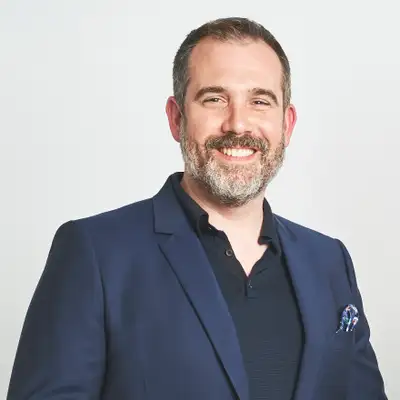
Presented by Doctor, writer and TV Presenter Xand van Tulleken and community health psychologist and self-proclaimed hippie, UCL's Professor Rochelle Burgess.
This podcast is about public health, but more importantly, it’s about the systems that need disrupting to make public health better. In each episode, we’ll be challenging the status quo of this field, asking what needs to change, why and how to get there. We’ll be joined by activists, scholars, artists, comedians and industry professionals to offer perspectives from the UCL community and beyond.
We’re calling this podcast Public Health Disrupted because that’s exactly what we want to do. We are going to be breaking down disciplinary, sectoral and geographic boundaries to really understand the diverse and complex issues impacting our health.
Hello, and welcome to a very special episode of Public Health Disrupted with me, Xand van Tulleken.
Rochelle Burgess:And me, Rochelle Burgess. Xand is a doctor, writer, and TV presenter, and I'm a community health psychologist and professor of global mental health and social justice at the UCL Institute for Global Health.
Xand van Tulleken:Now this podcast is about public health. More importantly, it's about the systems that need disrupting to make public health better. UCL is marking two hundred years of challenging convention. We continue to ask the difficult questions. What needs to change?
Xand van Tulleken:Why? And how do we get there?
Rochelle Burgess:And for today's episode, we are absolutely delighted to be joined by a live studio audience. Can we get you guys to, like, clap so everybody knows that it's Whoo. Bravo. Yeah. So it's it's real.
Rochelle Burgess:It's not just us pretending. We do have everyone here today.
Xand van Tulleken:We've got, like, canned
Xand van Tulleken:last That was the although for future episodes, that could be a thing.
Rochelle Burgess:And together, we're having a really special conversation exploring the history of public health at UCL, as part of UCL's bicentennial program. We'll bring together historical case studies on pandemics, vaccination, and sanitation to reveal a different story of public health, one shaped not just by progress, but by resistance, conflict, and debate. This conversation today explores what meaningful disruption in public health looks like today and how two hundred years of thinking continues to shape the future of health for all.
Xand van Tulleken:We have a fantastic guest with us, doctor Cristiano Tulleken. Cristiano is a historian with an expertise in the modern history of medicine. His research explores the relationship between medicine, politics, national identity in modern Europe. He's written on the history of health and science communication, the history of public health and popular medicine. Cristiano, welcome.
Xand van Tulleken:Thank you so much for joining us.
Cristiano Turbil:Thank you. And thank you, everyone, for being here. It's a joy to see you all.
Xand van Tulleken:We should get a round of applause from Cristiano. Thank
Cristiano Turbil:you. Amazing.
Rochelle Burgess:So Cristiano, our first question. When we look back at the history of public health, I think we often like to tell the story of progress. Right? We see the good things that public health has given us, and I think that's that's really fantastic. But in your work and in sort of talking with you in the last little while, it's been really clear that actually this story is much more contested.
Rochelle Burgess:And many of these moments of success and growth are very deeply contested. So why do you think that matters so much for us to know that kind of history in public health?
Cristiano Turbil:Well, thank you first of all, thank you so much for the question. That's a very exciting question to start with because, yes, there is a tendency to look at the past, look at everything that happened in the nineteenth century or even before, and say, look. Everything that happened there was just a step toward what we see now. Reality is is much more complex than that. Now I'm gonna give you two example of what I do when I get into the classroom.
Cristiano Turbil:I tend to teach medical student, and medical students sometime, they tend to have this kind of very positive view of these great doctor, great men in the past that have done this big revolution, and everything just follow-up. The story is much more complex, and as you rightly say, is controversial. Very often is put people against each other, create huge debate. So today, I'm gonna try to give you a couple of example of those story, but also tell you how history and the history of public health and medicine can help us make sense of those event in the past to not just understand the present, but also perhaps looking at the future and trying to prevent what is going to happen next. So I say I'm gonna give you two example.
Cristiano Turbil:And the first example I always tell my student is the fact that when we think about health, when we think about disease or medicine, those are not neutral. They are extremely political. It's not something that happened in the clinic, in the laboratory. It's something that is discussed in the public street. It's discussed by people in the in the pubs.
Cristiano Turbil:They are discussed in the parliament. So they are extremely important, and you see a lot of opinion very often of people of different belief, different group, different age that are against each other. That's one thing. The second tension that is very important to reflect upon is that when we look at history, very often, we tend to do something that is called a retrospective diagnosis. What is retrospective diagnosis?
Cristiano Turbil:It's fundamentally taking our idea of the present and apply them onto the past. It's very easy to look at how, health exists in the nineteenth century or in the middle age or in antiquity and realize that those people were just wrong because perhaps they believe in stuff that now are disproved. So today, later on, I'm gonna talk to you a little bit about the idea of miasma. Now we know that miasma doesn't work. We have germ theory, but, germ theory.
Cristiano Turbil:But in reality, what we need to do is to ask the fundamental question, not just why they were wrong, but why they were think those type of idea were right at the time. And if we do that exercise, we really unveil a number of tension that are so ingrained within how people look at health, look at disease. They relate to the state. They relate to doctor. We really, get the chance to explore those type of tension that are so beneficial to fundamentally discover that, the great revolution, for instance, in the nineteenth century, that, yes, to a certain extent, lead to the creation of the NHS in the twentieth century and to nowadays.
Cristiano Turbil:But this terrain is extremely uneven And it's uneven geographically because stuff that were happening in London not necessarily were happening in the countryside is uneven historically because what is happening in The UK in the middle of the nineteenth century is not happening in British control India or is not happening in South America or in Central Africa or even in France. So we need to be aware of all of this. The second point I want to make is about the use of history. You all remember that a few years ago, we were actually in February 2020. We were at the beginning of a pandemic.
Cristiano Turbil:And I don't know if you remember all of the newspaper. You will start reading news that was telling you, oh, look. We are at the beginning of the pandemic. We are under year after the last big pandemic that went on Europe, the in 1918 influenza. So you were seeing all of those new paper article.
Cristiano Turbil:They were trying to compare the two, say, look. We really need to learn from the past. We really need to see our idea of, you know, social distancing, face mask, sanitation. We all went through this already so we can learn from the past. Now all of those article were in newspaper between February and March, then they suddenly drop.
Cristiano Turbil:They stopped writing about this, not because the history of the 1918 influenza, the Spanish flu, was not important, but because we realized that when it comes to compare pandemic, it's not a matter of doing a direct comparison because the context are different. In, 1918, we are toward the end of the first world war. There is no NHS. So the context is different. But what historian actually have done later on is to evaluate certain type of tension, evaluate the importance of listening to voices beyond the politician, beyond the public health expert to understand the role and the opinion of the people that are experiencing the disease.
Cristiano Turbil:So this is why when we think about progress, and I'm getting back to, your original question here, it's very difficult to just draw a line to say, look. A paper that was written in, in the middle of the nineteenth century is necessary a step toward what it will be the NHS one century later. We need to be aware of that. We need to be aware that those debates are complex. Those debates involve a number of voice, and the work of the historian is to make the story, to make them come alive, to speak with those people, to try to understand why they were concerned.
Cristiano Turbil:So, hopefully, some of the story I'm gonna tell you today, I really try to speak about that.
Xand van Tulleken:So can we start with one story that that kind of brings to life all the things you've just mentioned? So you talked about part of your job being to think about why people might have held the beliefs they do and and the relationship between politics and health and public health. And and it always feels to me like there's no more, no better example of that than than anti vaccination as a thing that we think of as being modern, but actually has very deep roots, very ancient roots. Vaccination itself is a very old form of technology, and so we have this moment where we can think, why do people we really want to know why people believe what they believe now, and they've been believing it for a long time. So talk to us a bit about the history of vaccine, public resistance to that idea, and what that tells us about the public's relationship to public health.
Cristiano Turbil:Thank you. Now vaccination, I work on it. So I do part of my research is on the history of vaccination and medical scandal, and is one of those epitopes in medical history that, let me start by saying, is a history of success. Because it's important to stress that vaccination campaign, and in particular, vaccination against smallpox. We will get, in a second why we talk about vaccination, why it's called vaccination, who made the discovery.
Cristiano Turbil:I'm gonna give you all of the detail. But I would like to start by saying that it's a history of success. Smallpox is the only human disease that was that has been effectively eradicated roughly forty years ago. We are, between 1978 and 1980. However, at the same time, the path from the discovery of the vaccine to the eradication is extremely, extremely controversial.
Cristiano Turbil:Actually, if we look in Victoria London, we see that in that period, we have one of the largest movement of resistance toward medical or public health regulation in history. So imagine yourself. You are working out walking out to this theater hundred and fifty years ago. It's a dark, gloomy evening in November. You're working in Bloisbury.
Cristiano Turbil:You're walking towards Saint Pancras, and a group of women, a group of mothers approach you and give you a leaflet. The title of this leaflet is disaster from vaccination, and this group of women is the mother's anti vaccination group. Now if you open the leaflet, you read one name. It's talk about the story of a child, 10 old child called Giovanni Cabrera. Giovanni Cabrera is an Italian that is vaccinated in May 8061 against smallpox.
Cristiano Turbil:Within one month from the vaccination, they discover in Italy that around fifty children and 20 adults, all of them, they got infected with syphilis, a sexually transmitted disease, very controversial, very stigmatized in the nineteenth century. It's a scandal of extreme proportion. I managed to find a reference to this case from Japan to US, from Europe to Russia. So everyone is talking about it to the point that between the 1860 and the 1870, we have a number of article on the Lancet, a very important medical periodical that talk about the Cabrera case and how vaccination perhaps is not as safe as believed. But let's put this case study on the side for a second, and let's step back.
Cristiano Turbil:So why we have a vaccination, and who is responsible for vaccination? We are in the eighteenth century. Smallpox is a really complex, very deadly disease that impact children. We know that the majority of the adult population is immune to smallpox because he encounter it at some point in their lives. We know that we have a method that is introduced in Britain in the eighteenth century.
Cristiano Turbil:It's called inoculation. So inoculation is an idea that come from Istanbul where, the lady, Mary Montagu, is the wife of the ambassador there. Bringing back this technology to The UK is fundamentally the idea that you insert into the arm of a child, a lymph that contain smallpox. It works, but it doesn't work all the time. It's not safe.
Cristiano Turbil:It's highly controversial. People don't like it. The story of vaccination come from the work of a a British surgeon called Edward Jenner. Edward Jenner worked in Gloucestershire in the countryside, and he made an observation. That's where cow come into the story.
Cristiano Turbil:So he observed that milkmaid, they are naturally immune to smallpox because they receive a blister from a similar disease, cowpox, who, of course, collect milk. He, write a pamphlet. He does a number of experiment, one of them on the, on children of his village. It's a different time. They didn't have to ask, you know, for active permission.
Cristiano Turbil:They were just try and tested. Late eighteenth century sent a report to the royal society. He call it vaccination that come from the Latin word vaca, and that's the beginning of our story.
Xand van Tulleken:That that word means cow.
Cristiano Turbil:Yes. Yeah. Yes. Yes. Sorry.
Cristiano Turbil:No. No. As Italian sure. I tend to, you know, Latin
Xand van Tulleken:You know what it means.
Cristiano Turbil:Yeah. Exactly. Exactly. So early nineteenth century, so we have an agreement among among doctor that vaccination is the way forward to fight against smallpox. We have a number of doctor in this country that start supporting the new technology.
Cristiano Turbil:We have the Generian Institute that is introduced in early nineteenth century, and vaccinations start to be distribute free at the point of delivery. So it's quite astonishing at the time what they were doing to anyone that wanted across the country. So you may ask, okay. Fine. Great story.
Cristiano Turbil:It's relatively safe. It's a great technology. Why we have people seventy years later that really are concerned about the safety of their children and don't want vaccination to be done to anyone? Well, the story is a controversial story because from the very beginning, people start seeing vaccination as something that was to a certain extent going against what they believe. So we have a number of people that's believed that, you know, inoculate a child with a disease is not a way of curing it.
Cristiano Turbil:Some people believe that this is going against the will of god. So if we were due to get infected with syphilis, why you should interfere? So we see a movement that start from the very beginning of resistance. People are also concerned and seems to be quite funny, but then when you think it in perspective, it's not. They believe that using something that come from an animal will result in their body developing a little cow.
Cristiano Turbil:They were coming out of their arm or their legs. So there is quite a bit of tension in the new technology. But let's carry on a little bit with my story. So vaccination is then introduced. Vaccination is free at the point of delivery, and we see fundamentally a drop of the mortality rate for smallpox.
Cristiano Turbil:But then the government decide to do one thing. They make vaccination compulsory. So we have a number of legislation that start in the middle of the century aim at making sure that every single child in the country get vaccinated. It's met from the very beginning with resistance. So what they do?
Cristiano Turbil:They put another legislation in, and they start, putting a fine on people that decide to not have their children vaccinated. Then they ask a doctor and vaccinator to report those family, and they give money in compensation. So they kind of police the process. This is the moment. If we look again, let's imagine this chart of mortality rate, we have a spike in mortality rate again, and this happened around the 1860, just ten year before the leaflet that imagined you are holding in your hand.
Cristiano Turbil:But why it is a problem? Now when you think about vaccination, it's normally something you do in the at your GP or in the pharmacy. It's something that is done with a needle. It's a single dose. It's sterile.
Cristiano Turbil:It's in a good environment. At the time, vaccination is done either at home if you were rich enough to be able to pay the fine of a doctor or is done even at the other extreme onto the public street. There is a share of blood that is shared between children. Children that get vaccinated, they need to come back after a week. The lymph is collected from their arm, and it's used to vaccinate other children.
Cristiano Turbil:This this bring us to the syphilis case. Yeah. So what's happened
Xand van Tulleken:It's good everyone everyone in the room has sort of suddenly become a bit more of an anti vaxxer. Feel like I was like, woah. Is that how it's done?
Cristiano Turbil:So what's happened in the case of Chiabrella? And I totally see the type of feelings, and that's the kind of question we see at the time. Yeah. We have a successful technology that is safe, but people are scared. They realize their voice are not heard, so they start protesting.
Cristiano Turbil:Now, no one know that Chiabrera, actually, the the child was infected with syphilis. They do an inquiry. Later on, they discover that actually he didn't have syphilis, but he received it from his wet nurse. And because no one knew about that, by, collecting a lymph from his arm, preserving it in a tube, with infected blood, and then using this lymph to vaccinate another 50 children, you create this kind of outbreak of syphilis, which is extremely, extremely complex. Now getting and I'm coming to a conclusion here because I also want to hear what you think about this case and how we can link them to the debate of the present.
Cristiano Turbil:I've been thinking a lot about vaccination in the past, and I I'm coming to almost the conclusion that this is a debate that we talk about vaccination. We can talk about something else. It's about representation. It's about voices. So we have a group of people, all of them united in going against the vaccine.
Cristiano Turbil:We have mothers. We have a politician. We have religious figure. We have a variety of opinion very often in contrast with one another. We have doctor that, really are in conflict about implementation.
Cristiano Turbil:We have people that believe that general and we actually have a magazine where general is the pitch as a skeleton and is described as a gold digger, someone that really invent something to make profit out of it. So it's a very complex set of debate. And I but I also think this is the joy of historical work. You put your hand in this material. You start unpacking those debate.
Cristiano Turbil:You start hearing those voice. And what you realize is that those are all people that want to be heard. Those are all people that don't have channel, don't have way apart from protesting, to just ask a question and express concern. I'm coming to a conclusion here, and I just wanted to make the point, vaccination is a story of success. It is one of the greatest, breakthrough in the history of public health.
Cristiano Turbil:One of the they managed to defeat a very problematic, highly lethal disease that impacted children. But even if it's a story of success, we cannot just think about the beginning at the end of the story. We need to see what's happened in the middle. In middle is resistance, is protest, is people, being concerned and angry. Thank you.
Rochelle Burgess:I want to clap. I mean, I mean, I I mean, we can clap again.
Xand van Tulleken:Clap. There you go.
Rochelle Burgess:I mean, the reason I want to clap is I think I mean, I'm just a history junkie, so clap for that. But, also, just a beautiful way to actually tell a story. And I think we need more history in our lives and so should you should tell history like that all the time. I think it's great. I mean, one of the things that makes think about a lot of things.
Rochelle Burgess:But one of the things that comes to mind is the fact that when we talk about the necessity of resistance to also drive the production of good practices, of shifting knowledge systems. Resistance is necessary. I think that actually without this resistance from mothers and driving that way forward, What happens to science? Does science stall? That's one thing.
Rochelle Burgess:And then it just reminded me a lot of another mother's movement around vaccination and autism, which has now been debunked, that was sort of a movement that was a much more modern resistance to vaccination that emerged at the time when I was graduating my undergrad and in one of my many former hats I worked with children with developmental delay, sometimes autism. And there were passionate mothers who really and truly believed that their experiences, their children's experiences and development of delay or autism or being on the spectrum was connected to their vaccination. The way that moved so quickly and through rejection of science and how that sort of gets picked up in lots of different public spheres, not just the scientific sphere but the wider public sphere, the political sphere. The parallels are just really uncanny. When you told me this story, was like, Oh my gosh.
Rochelle Burgess:It's exactly the same thing that happened in 2005. And it took us a little bit of catching up with the science to debunk it. But it shows you the way that these two knowledge systems are moving at different paces but also driving each other forward. That resistance became a big part of a lot of the advances in science that we see in trying to understand these different developmental conditions, different psychological conditions.
Xand van Tulleken:Can ask about the people who are represented? So I feel like the people who have a voice are the doctors and the public health community. And I'm wondering about so it always feels to me in the current anti vaxx debate that the medical community is incredibly arrogant and dismissive a lot of the time, particularly on social media. And you have doctors going, vaccines work. And you think, well, vaccines don't work for everyone all the time.
Xand van Tulleken:They are an extraordinary technology. The UK vaccine schedule is incredibly safe and evidence based. But to say vaccines work, it's that way if you get a vaccine, it doesn't completely protect you from every disease. You know, not all vaccines are a 100, and they also do have side effects. And I know they do because my brother runs a high risk vaccine clinic where he has to bring people in to vaccinate them because the vaccines can be dangerous for certain people.
Xand van Tulleken:So the the discourse from the medical community, certainly, currently, I think, really does provoke and and infantilize and sort of discredit a group of people who are, at least some of them are, deeply sincerely caring for their children and very anxious about this. Was this the case historically as well? Did you have this kind of I'm picturing a sort of arrogant Victorian doctor encountering a mother and sort of riding roughshod over this. Clearly, in the case of the, the Giovanni Cabrera case, that they have not thought about Yeah. All the consequences.
Cristiano Turbil:Do you think
Xand van Tulleken:the arrogance plays a plays a role?
Cristiano Turbil:Yes. But I think it's kind of a I will go in a slightly different direction because the question I I've been come to ask myself is who sit at the table? So who has the right to speak here? What we can see in this case, but also in the example you provide, is that we have people with a number of different anxiety. Mhmm.
Cristiano Turbil:And very often, they are brushed under the carpet. Yeah. So I think it's about finding a common space when different stakeholder are equal and able to discuss. And I think that getting to your point, you are right, is that if there is a matter of power in which someone has authority onto another, you lead into perhaps a little bit of extremism. So people don't want to change their mind because they they know they are not gonna get hurt.
Cristiano Turbil:Their story, they are not gonna be discussed. Perhaps finding an environment in which and the history show us that this did not happen. To have a space to sit around the table, discuss their anxiety, understand where they come from can help to debunk some of those idea. And think about the example of all of those people that were having little cow growing out of their arm. It seems absurd to us.
Cristiano Turbil:But people at the time, and that's what I was saying at the beginning, we really need to put ourself into the mindset is, of course, taken to the extreme. It's a cartoon. It come from, it's an example of satire, but cannot represent a genuine anxiety at the time.
Rochelle Burgess:But I think there is a real importance, I think, of when we're talking about science and and how science is taken up by the people that it's for. Is that there really we don't spend enough time trying to understand why science should matter to people. One of the things that I studied when I was at the LSE, we were studying the social psychology of knowledge systems. One of the most powerful things that I learned was the idea of social representations. What that is is this social system of how knowledge is produced and how we make sense of knowledge.
Rochelle Burgess:It reminds us that people use knowledge for a purpose. There's an object of desire and a project that we're all engaged in in order to move that object in different spaces. And so if there's a shared object like a vaccine, it's coming at it from all these different locations with people with different projects of action around that vaccine. So the doctors have an interest and the government has an interest in making sure that this doesn't spread across the entire population, so they come at it with legislation. And then another group of mothers there, the object for them is a volatile, dangerous object, so they must resist it.
Rochelle Burgess:Without that understanding and being in contact with all the different projects around this op, that is how we get into these critiques and debates and outright rejection. Not just resistance, actually, but as you say, outright rejection. And that's happening again today around lots of I think around science in general. We sort of see this real pushback in sort of The United States around science and what's funded and what you can say, and it is very much linked to some people's certain projects around what science should do and what it shouldn't do. Then you've got on the other side, you know, people who connect it to their livelihoods.
Rochelle Burgess:I think it's really hard actually to get people around the table, though. This idea of a solution where we get around the table, I think that is actually the hardest part that we have yet to really figure out.
Cristiano Turbil:It is, especially because, when we talk about medicine, when we talk about disease, when we talk about vaccine, they're non neutral entity. Yeah. And when we think about the language that is used, the analogy, the image, they are emotionally charged. They are politically charged. And when you start looking at those debate and you start to unpack those story, you can really see the point you were making.
Cristiano Turbil:We have different stakeholder that do something like this in relation to specific type of objective and goals.
Xand van Tulleken:Yeah. It's love, there's some extraordinary accounts of American CDC led vaccination programs in India in the fifties, and there are diaries from this American officers doing this in conjunction with the Indian police. And they're dragging people out of houses who are refusing to have their vaccinations and beating them and forcibly vaccinating them. And the reason people are refusing the vaccinations is not because they think the vaccinations won't work. It's as a form of political resistance going, you're object and this is what I love what you said about this, Rochelle, about about, the value of these programs to different people, the different stakeholders, and the idea of success that no one could argue with smallpox as a as a piece of science or an extraordinary success.
Xand van Tulleken:But the political resistance of going, if you care about me not getting TB, but you're willing to let me die of starvation in rural India, What kind of a public health official are you? And you're willing to beat me to vaccinate me. And these examples are people who are at the end of life who are very ill with other things, and they're going, why are you vaccinating me when you won't help me with my other problems? So I think this is such a perfect place to begin for and and and no one should mistake my enthusiasm for vaccines, by the way. I'm I'm pro vaccine all the way, but I do feel this nervousness.
Xand van Tulleken:At least I feel great sympathy with anyone who has an apprehension to go, yeah. I I I get that things can feel oppressive and coercive and and and risky for a small child, particularly.
Rochelle Burgess:And it's would be I mean, on previous episodes, we've talked about sort of the tension around vaccination and and the dropping rates of childhood vaccination in The UK and the tensions around that. Honestly, nobody likes being told what to do. My two year old reminds me all the time that she doesn't want to be told.
Xand van Tulleken:All by myself.
Rochelle Burgess:That seems to be the most natural thing in the world actually when something is forced on you to question the motives, to try to understand where that comes from. We're talking about the state here, and I think that it's an interesting time to actually shift to the next question that I had, which is I think linked to another one of your stories and actually gives us a chance to tell a little bit more of of UCL's great history. So what's your next story, Cristiano, about somebody named Chadwick perhaps?
Cristiano Turbil:Yes. And actually it is very nicely linked to what you were saying. It is the fact that people don't like to be told what to do. Yeah. And when we take a look at the big history of public health in the nineteenth century, there is one thing, one big revolution we see in this country.
Cristiano Turbil:Is never done before. We have the state that start to take responsibility for the health of the citizen. All of this happen in the context of big revolution that take place, in nineteenth century Britain. Imagine it's a country that is changing. London is becoming overpopulated.
Cristiano Turbil:Industrial revolution, we see a lot of filth disease on the public street. We have cholera that arrived in this country in 1831 after being absent for quite a while. It's shocking. We actually have a story. I don't have the time to tell you today about John Snow, which is another key figure.
Cristiano Turbil:Not at all, not far from here. But the reason why I, pick up Chadwick is because Chadwick is is a figure that is linked to, UCL. He was the personal secretary of Jeremy Bentham. He's not a medical doctor, but is a fundamental figure in what we call the sanitary movement. So this big revolution in that will lead to the 1848 public health act that fundamentally will change public health provision in this country.
Cristiano Turbil:Now, Chadwick, is a social reformer. He believe in health using a very utilitarian process. He's also someone that is very keen to understand how disease are distributed in this country. So he published a report. We are in 1842.
Cristiano Turbil:Actually, it's an interesting correlation with the beverage report hundred years later. And Chadwick recognized that across the main city, there is the presence of specific disease, and there is a a link between disease outbreak and poverty. So he came up with the idea of fighting against anything that can be defined as filth, as nauseons. We are in a moment in which we still believe we are still fifty years away from the germ theory. So the idea that disease are produced by germ that can be identified.
Cristiano Turbil:The idea to explain disease propagation at the time come from a Greek word. It's called miasma, which means pollution, better. So many of those idea in Chadwick is one promoter of this is that if you clean up the the street, if you bring hygiene inside the household, if you create a system and infrastructure in which you have sewers, you have access to water, you will solve some of those fundamental problem. Now getting back to the point you were making is that this is something we see in history quite a bit. And we see, for instance, in cholera.
Cristiano Turbil:So we have an interesting case study. Cholera arrived in Liverpool in 1832. And linked to cholera arriving in Liverpool in that period, we see public riots. So people going to the public street protest. They don't want to the state to tell them what to do.
Cristiano Turbil:What the state is doing at the time is going to private citizen out that are infected with cholera. It take out all of the stuff. It burn them into the public street. That's totally unacceptable. Mostly because until that moment, there is a sense of laissez faire.
Cristiano Turbil:So the state is a principle of noninterference. So we see a fundamental shift with the later on 1848 public health act, but also a number of act in the period that fundamentally shift the responsibility for individual health from the individual to an infrastructure that is run by the state. Now getting back to the macro team we have been talking about today. It's a bit revolution because it's completely changed the way, disease are managed, but also create a number of problem. So first of all, we have an infrastructure in which certain disease are made visible more than others.
Cristiano Turbil:We have a decision that are made that respond to a specific need of the state. I have plenty of example I can give. But I just want to leave you with this kind of idea that this is a revolution. This fundamentally changed public health, made pub make public health as something that is for the public, is for the community, is run by the state, but also create attention and create attention that pin, doctor against patient, that pin the state and the poor in a relationship that from this moment onward needs to be continually reappraised.
Xand van Tulleken:I don't think this tension is necessarily obvious. I mean, you began with the idea that doctors tend to be quite booster ish about progress, modernism, success, all these things. When we look at this and Chadwick was involved in this. When we look at the reason for developing a lot of the tools for measuring mortality, the the statistical tools, large numbers of them were motivated by things like the health of workers in factories for life insurance tables to lend people money. The the private sector was very, very involved in an idea of public health that was about.
Xand van Tulleken:There was an idea of of altruism, but there was also a motivation to get people sort of optimally healthy to perhaps do a day of work or be productive Mhmm. That your health was not the total final goal of an intervention perhaps. Can you talk a bit about some of those tensions?
Cristiano Turbil:Absolutely. And, yes, of course. We need to think about this kind of infrastructure in which we need a productive population. We need an healthy population. I'm gonna give you an example that is slightly different but can take it a little bit to the extreme, this kind of discussion.
Cristiano Turbil:Have you ever heard of the CDA, the Contagious Disease Act? So the Contagious Disease Act are a number of act produced in the nineteenth century aimed at fighting against the spread of venereal disease, specifically within the army. They start, by imposing, a certain number of regulation, aim fundamentally of, arresting women, put them in special institution called lock hospital anytime, the police or doctors suspect them to be prostitute, and that really speak to the extreme to what you were suggesting. Why they were doing that? Because they realized that soldier, especially important guys in town, they get hospitalized more for venereal disease than for wound produced by fighting or, training how to prep to fight.
Cristiano Turbil:So it's a public health problem, but also is a set of decision in which the alpha of one group matter much more than the alpha of another. I don't have time to go into that, but the story of the c, contagious disease act bring in one of my favorite hero, Josephine Butler. Josephine Butler, late nineteenth century, will strongly campaign in parliament bringing the argument the health of women is equal to the health of men. And act like this put men and women on two different level. So I think that you are absolutely right.
Cristiano Turbil:It's not just about this great utopian idea about sanitation. It's also part of a very complex infrastructure in which economy matter, in which politics matter, in which relationship between different power group matter. And, again, I think the fascinating aspect of my work is to kind of untangle, and explore those relationship.
Rochelle Burgess:And again, just very clear parallels with the ongoing battles of rights of women and sex workers for health equity and recognition of their rights. Still actually something that's not been resolved. But the thing that sort of makes me
Xand van Tulleken:Let alone funding funding re I mean, we don't record we don't record oh, sorry. No. I mustn't get it. No. We don't record how much money we spend on researching menopause The UK because we don't spend enough Yeah.
Xand van Tulleken:To write it Sorry. We digress.
Rochelle Burgess:Yeah. No. Yeah. But another something else we talked about on we had an episode about menopause.
Xand van Tulleken:Yeah. Is a great episode It's to check it
Rochelle Burgess:one of my favorite episodes actually.
Xand van Tulleken:Sorry, didn't meet but yes.
Rochelle Burgess:No, but the thing that it reminded me of actually is that if we're thinking about and talking about public health, a lot of the times, our challenge or a challenge that remains is that we think and punish individual actors and individual choices for things that are environmentally constituted or politically structured. And and I wondered if you had any other stories that would maybe tell the story And this is a completely random question that's not on the cards. This would usually be edited out when I go off script, But it's harder to in front of a live audience, so we'll see. But other stories of how I suppose of these positive stories of resistance, I guess. So we're talking about Josephine Barker.
Rochelle Burgess:But other ones where actually you've got these individuals emerging, to It's not me, actually. This is not about my individual choice. This is about the world that I live in, the way that it's structured. My inability to act or to be healthy is not about me or the choices I make, but about the society around. Is there anything you've come across in your histories that could be a story to remind us that?
Cristiano Turbil:Well, one that immediately comes obvious to mind is activism during the HIV in the 1980 and nineteen nineties. That's a story of individual that are excluded. They are stigmatized that use their voice to voice a problem.
Rochelle Burgess:Yeah.
Cristiano Turbil:And this story is not just a and that bring me to what I was saying at the beginning. It's not just about medicine. Yeah. So when we talk about public health, we're talking about health. But is there anything more political than our health and discussion around health?
Cristiano Turbil:That's where you get all of those groups often with position that tend to be a little bit in tension with each other. Yeah. But you find those story that are, yes, of resistance, but the resistance is designed to lead to a change or to move the discussion forward. So, yes, activism in, nineteen eighties, Europe or US for HIV is one example, but we can see plenty of example of social change all across the history of public health.
Rochelle Burgess:So are you saying that so and as the hippie in the room, are you saying that social change is necessary for good public health?
Cristiano Turbil:I think change An activism. I think I okay. That's that's I think it is. I think it is. I think it's important to have a voice, but I also think we need to frame those type of debate as something that is not static, something that is dynamic, is moving.
Cristiano Turbil:Situation are changing. Yeah. And very off and that's the history of pandemics. It's something that teach us very, very well that what is happening what was happening one month ago, it may be necessarily different what's happening now. So we need to have this kind of continuing reappraisal between the different and discussion between different stakeholders.
Cristiano Turbil:And, of course, as an historian, I have the privilege to take a look at events that are now done and dusted in the past. Mhmm. So it's easy to make this argument. When, you know, something that is unfolding in the present, I do agree, much more complex to unveil. But I like to believe that tension are important and very useful for, you know, every at least the discussion moving forward, if not the research or, the kind of planning.
Xand van Tulleken:I always feel, Rochelle, like your you Rochelle always says that she's the hippie, which I always feel like I don't have enough hair to be a real hippie, but, I have some, I feel like I'm hippie adjacent, maybe. But I I do think what you're drawing attention to is is so valuable because public health has a self evident goodness to it. That saving lives, improving health, progress, modernity, these things just seem self evidently good along with the tools that go developed to do it. So all the mass technologies of information collecting and analysis and the way that we manage the public health infrastructure, again, just feels like, of course, sewage is good, and we have these wins. Vaccination has been a success.
Xand van Tulleken:Basiljet's sewage system is still functioning now, so that's great. And somehow that just gets smoothed into a story of the goodness and progress and certainty, which is very reassuring. But we have Palantir running the NHS, you know, data collection and information management system at the moment. We have huge tech companies gathering vast quantities of information about all of us. Literally, we pay them to strip minus for money and use our data.
Xand van Tulleken:We have insurance companies who will reduce your premiums if you wear wearable tech so they can surveil every aspect of your sleep, your movement, your heart rate, and so on. And these things have because they come with a halo of health, it always feels to me like they have this sort of niceness that we tell this story of the Victorians sorted it all out, fixed the sewers, figured out the vaccines. John Snow pulled the bump handle off the bump in Broad Street, and we're away. It's all great. And instead, the questions that you've been posing, the stories you've been telling have been about who is excluded, who is not included, what technologies of coercion and power are involved, which seems so part of disrupting public health, it feels to me, is going can't just tell a rosy story that this is all all great and everyone's lovely and it's all it's all brilliant.
Rochelle Burgess:This is why I think history is so important because history is messy. History is dynamic. History is hard. We And don't like to sit with history because it's so hard and because bad things happened and it makes us uncomfortable to talk about it. I think that for me, the reason I asked that question is to remind us that we've always been resisting.
Rochelle Burgess:That is the most natural thing that we do as people, is to resist and to demand better and to change. I think we forget that. Those aren't part of the stories we tell. But it is how we got here. It's why we're all here through Resistance and I think it's a part of the story of public health we should be much prouder of, I think, for me.
Rochelle Burgess:I'm really, really grateful to have been able to listen to these stories today. It's
Xand van Tulleken:been Yeah. It's great.
Rochelle Burgess:Fantastic. Do you think this is Should
Xand van Tulleken:we do questions? Let's do questions.
Rochelle Burgess:We can open things up to our audience who have come all the way here to to be with
Xand van Tulleken:The Chadwick fans.
Rochelle Burgess:Anybody have any questions for for about anything?
Xand van Tulleken:And and please do. We'd love to take questions. I mean, Cristiano, I think, could answer a question on almost any topic in the whole history of medicine. You've got someone who can we can go back a couple of thousand years. So, you know, do do put him to the test.
Audience Member:Thank you so much. That was so interesting. And I've got a question about the role of misinformation, especially since you're emphasizing the importance of voices. And we live in an era where some people are better off just not being heard. Like, I'd rather they don't have a microphone.
Audience Member:So what about the role of misinformation in the history of public medicine? Even misinformation by the standards of those days, like, what was that like?
Cristiano Turbil:Okay. Now misinformation is actually it's nothing new. And now we just see them everywhere because we have a tool to spread them very fast. But we actually have if we focus on the Victorian period, but we can go up to the fourteenth century and the bubonic plague. We know that we have people that come up with any sort of remedy that is outside, learn medicine at the time.
Cristiano Turbil:But let's say one second in the Victorian period, and let's talk about vaccination, which is a place where we can see a lot of misinformation. There is a periodical called the vaccination inquirer. It's created by a religious figure to convey all of those voices through articles. So we have in this journal people that are against vaccination, but they are also against each other. So when you look at this material, it's very difficult not only to navigate the information and the misinformation you find there, but also to be able to understand how they can coexist.
Cristiano Turbil:So, to answer your question, there is nothing new. We have a long history of misinformation. We also have a long history of debunking misinformation because in the nineteenth century, we already have doctor that take a stance and start telling the public what to believe and what to buy when it comes to medical product you can find on the public street. So there is plenty in those stories. So it's a very long we have a very long trajectory that, but sometime, I feel like, especially in the way we discuss misinformation now, it's framed as a new phenomena.
Cristiano Turbil:It's not. It's long. We can learn a lot about this, and I think it's part, again, on the way, those debate those debate exist, across the past few century. But thank you so much for your question.
Xand van Tulleken:I feel much more relaxed thinking, oh, yeah. People have always done the misinformation. That's such a nice, like, the historical view.
Rochelle Burgess:I'm like,
Xand van Tulleken:oh, that's great. That's okay. It's not new. It's okay. We've we've got this far.
Rochelle Burgess:People are always gonna people.
Audience Member:Yeah. So so thanks. I think the whole discussion was really rich about unheard voices. But I'm I'm interested in the dominance of the West or whatever you want to call it. So you've been talking about people like John Snow.
Audience Member:You did mention that inoculation came from Turkey. But what about all the discoveries around the world? How have they been silenced, or what's happened to them? Why are we, forcing, vaccination on Indian people that has been developed here, for example?
Cristiano Turbil:That's a very big question, so I'm gonna try to, to answer this. And, to do that, I will rely on the fantastic work that is done by other historians. I'm an historian on medicine in modern Europe, so that's where I tend to kind of focus my attention. But you are absolutely right. It's actually when we talk about the practice of inoculation, we know that the practice of inoculation, of course, they came into UK through Turkey from from Istanbul, but it's a practice that is already done in other part of the world.
Cristiano Turbil:We know that, for instance, when it comes to medical practice, materia medica, it's there is plenty that is done in other part of the world that we don't research enough. I think the, the question is on two level. One, it's about we have a long very long trajectory, on focusing on the West. We are now changing that. There is a lot more work that is done in global history.
Cristiano Turbil:There's a lot of work that is done in colonial history of medicine. I have a lot of brilliant colleague that really work and try to unveil those type of tension. And exactly the point you were making, how those type of technique, legislation approach were very often forcefully implemented on people in the colony for what reason. Is medicine a tool used for, domination? So plenty of work has been done there.
Xand van Tulleken:And that that is such a structural issue. If you think back to the the '2 early two thousands, the bird flu outbreak, the Indonesia where the outbreak began had sent blood samples to the WHO, which we used to develop the vaccines. And the vaccines were made, by for profit Western pharmaceutical companies. And because of the deals that the western governments have for priority vaccines, vaccines were only needed in Indonesia, and all the vaccines went to western countries who had deals to say, well, if it goes any further, we need the stockpiles and none of it can go in Tunisia. So you have a product made with literal Indonesian blood that cannot be made without Indonesians who and the Indonesians did not benefit from this financially or in any other way.
Xand van Tulleken:So you have this extraordinarily structural deliberate exclusion by the world's most I mean, by every single structure in in public health, like, by the vaccine apparatus. So we have a you know, it's not again, like, not to be that you know, vaccines are great, but, you know, we can't pretend these things are not Yeah. The It's Rochelle's point that there are lot you know, everyone's got something, some purpose.
Rochelle Burgess:Everyone's got a different project. And and the sort of political economic project of this production is one that leads to the violation of a lot of people and rights and exclusion of others. It just sort of made me think a little bit about twenty fourteen Ebola outbreak. So not this current one, which is not very good, but the last one that was the worst one and how local communities had their own practices of screening and protection and burial and public health practices that were completely rolled over by the external forces once they came in to manage the situation. Paul Richards wrote this amazing anthropology about that story of Ebola and the erasure of local knowledge and replacing local knowledge of the form and when that transition happened with huge consequences for loss of life.
Rochelle Burgess:There really is this need to come back to this triangle of projects to really think about how we work to really create a chance for equality in knowledge systems because it's this inequality in knowledge system that limits us from learning from each other and I think slows down all of these processes of expansion and improvement. There was one question here.
Audience member:So I'm American, US American, and I have concerns about immigration and people being opting out of vaccines because of political reasons. They're not in the circle because they're afraid to expose themselves. And so they're not taking advantage of public health because of a political position that they have risk in. So is there much research that you can share that the presence of people who may not have political relevance here from a immigration perspective actually do get the health and the public health benefit? While they may be in violation of an immigration, where the government has actually taken a public health stance rather than the immigration stance, or is there lessons in history?
Xand van Tulleken:I mean, my my brief experience was working for an NGO called Medicine du Mont Doctors of the World who set up projects first in Paris and then in Tower Hamlets to provide access to migrants, sex workers, people who did not want to avail themselves to the NHS service. And you would you you know, with the story we would tell in The UK is free at the point of access health care available to everyone. Absolutely not the case. So I I can't this was a few years ago, but I cannot imagine things have improved. So I I think this is a massive public health problem to say, oh, we've got this.
Xand van Tulleken:All you have to do is go to your GP and you get a jab for free. Well, who cannot go to their GP? It's not apart from all the problems of working hours and so all the the regular difficulties. You're absolutely right. So I don't I don't know.
Xand van Tulleken:I mean, it's definitely a problem, and I thought it was one of the best things. This is a global medical charity, but the point they were making was you you we have the same problems in The UK that we see around the world, so we can't have a sort of us and them attitude of sort of here, we're doing it alright. We're exporting care. You know, we have problems here as well.
Rochelle Burgess:Cristiano, do you have any, reflections or things to add to that question?
Cristiano Turbil:Well, I cannot talk about the present, because I'm not, I don't have an expertise on that. But, in term of exclusion, that's unfortunately part of many history of medicine in the past, many episode. We always have a community that from one way or another, they tend to be either exclude, they tend to be silenced, they tend to be put aside. We also see and I try to bring up some of those story today. So Josephine Butler is one of them.
Cristiano Turbil:But we have voices to trying to rectify or, give, you know, power to community that otherwise they are isolated by rule and regulation. So I think that, from what I can see in the past is that, yes, very often, this is unfortunately evidence we can find, in many public health moment. But also and I think it's a kind of a positive note. This kind of resistance is kind of going again the grain, this kind of having people that use their own voice to push for include others give this kind of positive twist. Nothing has been resolved in the present as we just say, but it's good to see that attempt were made in the past.
Rochelle Burgess:I think that's a really good question, and I guess to me it just makes me think a bit about the necessity of thinking about public health work as activist work. So like work to change the political circumstances that put people at risk is public health work because how can you achieve herd immunity if you've got people who are constantly living at the margins and who are always exposed? So that must go hand in hand with all the other things we're doing. I guess through history it seems that it always has, so we just have to keep doing what we've always been doing. One day, everyone will be equal.
Rochelle Burgess:That will be nice.
Xand van Tulleken:I think public health does have this status quo quality. It relies on institutions. And the people who will change it will be some of the young people in the room today who do not go into public health. And there are people who change the world and make it much better who do not necessarily work in public health, but who see the can be grassroots activism accounts for so much and is so valuable.
Rochelle Burgess:Yeah. I also like that Chadwick wasn't a doctor. I like that you I put that in didn't that. And I think that's such an important thing to sort of bolster nonmedical doctor me. See, mom, it was okay.
Xand van Tulleken:That's good. That's good. We should say Michelle Michelle's mom is actually in the audience bitterly regretting Rochelle's current choice.
Rochelle Burgess:No. She's not. Not anymore.
Xand van Tulleken:At all.
Cristiano Turbil:Not anymore.
Xand van Tulleken:Can we do the last question?
Rochelle Burgess:Let's do the last question.
Xand van Tulleken:So, look, we're interested in disrupting thinking everywhere, not just public health. So we always ask our guests the same question. And I should say, over the last six years, this has been an accumulation of wisdom and kind of esoterica and fascinating things. And I think it's a nerve wracking question for our guests. We ask what is a piece of art or music or poetry that has disrupted your perspective.
Xand van Tulleken:We thought for this, because it's a special episode. Yeah. We thought we'd do it. Christian, do you want me to go first?
Cristiano Turbil:Please.
Xand van Tulleken:Okay.
Cristiano Turbil:By all means.
Xand van Tulleken:The the context for this quote, and and I hope it won't be embarrassing for me to read. My younger brother phoned me a few days ago and he said, you know, I cry much more as I've got older. He's about he's only a little bit younger than me. And he said, I had to thank some people at work and I I I I couldn't do it because I was gonna cry and they got really embarrassed. And then so that he received an award, and he said he started to weep, and it was it wasn't a particularly big award.
Xand van Tulleken:And and so and I said, oh, the exactly the same things happened to me. And I'd found this quote quote when I was doing some writing about longevity, And I came to tell it again to my wife, and I found that it just gave me the biggest lump in my throat. And and so I'll try and read it to you, but it's from the oldest work of literature in the world, we believe, the epic of Gilgamesh. And Gilgamesh, his he's he's a he's a he's a king, and his friend dies, and he's terrified of death. And he goes on a quest to try and discover immortality and see how he can avoid death.
Xand van Tulleken:And he gets to the edge of the world, and he meets an innkeeper who's also a goddess, Suduri. And she asks him, you know, what what's he doing? And he says, oh, my friend's died. I want I wanna live forever. And she she gives him this bit of wisdom, which I really love.
Xand van Tulleken:And I I know that I'm not gonna be able to get through it without getting a lump in my throat, so you just have to not not be embarrassed for me. But so Suduri says, at Gilgamesh, where are you hurrying to? You will never find the life for which you are looking. When the gods created man, they allotted to him death, but life they retained in their own keeping. As for you, Gilgamesh, and this is her advice for for life.
Xand van Tulleken:She says, fill your belly with good things. She says, fill your belly with good things day and night, night and day. Dance and be merry. Feast and rejoice. Let your clothes be fresh.
Xand van Tulleken:Bathe yourself in water. Cherish the little child that holds your hand. I have a I have a two year old who holds my I so it's amazing, isn't it? You're just beautiful. It's okay.
Xand van Tulleken:Beautiful. It's not a sad quote at all, but there's something about my son holding my hand that I I can't can never get over. So she says, cherish the little child that holds your hand and make your wife happy in your embrace for this too is the lot of man. And I don't know what I don't it's not like it makes me feel sad or overwhelmed, but there is something about that presentness of her advice. She's a goddess innkeeper at the entrance of the world.
Xand van Tulleken:I kind of love this. And he he basically goes to a pub and the the bartender's like, look look, mate.
Rochelle Burgess:Look,
Xand van Tulleken:mate. Be nice to your wife. And then be nice to your kids. Wear some clean clothes and have a bath. It's pretty much the advice.
Xand van Tulleken:Good food.
Rochelle Burgess:Know? Some good wine.
Xand van Tulleken:And this is why I've never written any epic literature is that, you know, when I say it like that, it doesn't bring tears to your eyes. But but the little child that holds your hand, I feel like that moment of presentness and loveliness is is sort of the the detailed care that that maybe we do we do think about in public health and the immediacy of the the people we love and that that care we have to extend to people rather than a sort of a quest for some long life or something that a tech company or some supplement company or some Yeah. Weird clinic wants to extend us to and take our money for. So that's anyway, the Epic of Gilgamesh. There we go.
Xand van Tulleken:That's that's that's my one. Sorry. I can't I just don't know when I I've read it a few times. I can't get through it. Anyway, sorry about that.
Rochelle Burgess:No. It's been There we go. Okay. I think it's really
Xand van Tulleken:We do an episode on crying.
Rochelle Burgess:It's good for you. It really
Cristiano Turbil:is. It
Xand van Tulleken:is. It is. I feel I feel better even if everyone else feels embarrassed. Especially you.
Rochelle Burgess:Sorry. Embarrassed? I
Xand van Tulleken:cry for I'll do Bruce Bruce Springsteen. Yeah.
Rochelle Burgess:I'll cry still. It doesn't matter. It doesn't matter. Cristiano, I will go last. You go next.
Cristiano Turbil:Now I really feel ashamed with my There used
Xand van Tulleken:to be busses.
Cristiano Turbil:Is so We we crawl. Yeah. So when I had to think about finding something that really disrupt my thinking, it pushed me back to when I was a second year student. So we're talking about ages ago. I feel old now.
Cristiano Turbil:So I was second year in Italy studying philosophy, and I come across this French philosopher called Voltaire. Now Voltaire, it's one of those philosopher that really went against the grain. He criticized the state, criticized the church, criticized all of the other philosopher, and he write this book called Candide or on Optimism. So he's a critic of, the belief at the time that it was possible to think about the most perfect world ever existed. And he said, it's all rubbish.
Cristiano Turbil:The world is not that good. It's imperfect. And this kind of idea of going against the grain or keeping institution in check or keeping society in check, keeping all the thinker in check, politician nowadays, doctors, people that have ideas similar to yours or different to yours. So keep them in an environment that is dynamic, prone to discussion in which you bring an healthy dose of skepticism. It's something that really, brought up, and I hope I use a little bit today, but I always try to use a little bit in my research or when I present my work.
Xand van Tulleken:I love that. That's so that's so great.
Rochelle Burgess:That's really great.
Xand van Tulleken:And it's good everyone's got something on their reading list now.
Rochelle Burgess:Some Voltaire.
Xand van Tulleken:Once they finish the epic of Gilgamesh, you're straight into the vault. There's no let up. I hope you've got a John Grisham quote or something that's gonna
Rochelle Burgess:Well, I I I always do this right on the fly so I can sort of feel the room or what we've been talking about. Then that will because I just have been immersed in art my whole life and music in particular. I was lucky to grow up in a house full of music thanks mom and dancing. My mother is the best human and I just want to say that out loud while she's here so she knows how wonderful I think she is. But the thing I was going to talk about actually is a Bob Marley album.
Rochelle Burgess:Not legend, because my husband and wife have talking about, but the Survivor album. It's the album that he produced and he sang at Zimbabwe's Independence Rally. So he's done all this music about sort of like pan Africanism and that stuff. And there's this like, I used to listen to this album all the time especially when I was pregnant with my first child, Theo. And we used it when he would get sad and stuff so we could always make Theo feel better by listening to Bob Marley.
Rochelle Burgess:And I think the reason that I I want to talk about that today is because this album is very much There's a few songs on it where it tries to bring you into sort of, I guess, critical awareness about why resistance is important and the necessity of resistance and the importance of us all doing resistance together. And it's just really nice to listen to. Bob Marley I think was a prophet in many ways, modern prophets and made music that in a time where there was still segregation and division that everybody could connect with and could love and really feel that it changed them. So while you're reading this heavy stuff, you can put some Bob Marley on in the back half.
Xand van Tulleken:Well, I love
Cristiano Turbil:that.
Rochelle Burgess:To try and try and get you through Voltaire. I don't know. I probably would need some
Xand van Tulleken:Bob Marley Voltaire would have been a Bob Marley fan.
Rochelle Burgess:I think so. I think so. I think so. Well,
Xand van Tulleken:a
Rochelle Burgess:fantastic Thank note to end you so much. Thank you to everyone for your wonderful contributions. So you have been listening to Public Health Disrupted. This episode was presented by me, Rochelle Burgess and Xand van Tulleken. It was produced by UCL Health of the Public and edited by Annabel Buckland at Decibel Creative.
Rochelle Burgess:Our thanks again to today's guest, doctor Cristiano Turban.
Xand van Tulleken:As UCL marks two hundred years of challenging convention, we are so proud to carry that spirit forward by imagining what public health could look like for the next two centuries. If you'd like to hear more conversations from UCL Health of the Public, make sure you're subscribed wherever you get your podcasts. Search for UCL Health of the Public to discover the latest news, events, and research available to everyone. Thank you all so much for coming. Thank you for your questions.
Xand van Tulleken:Thank you for your enthusiasm for Chadwick and Public Health.