Subscribe
Share
Share
Embed
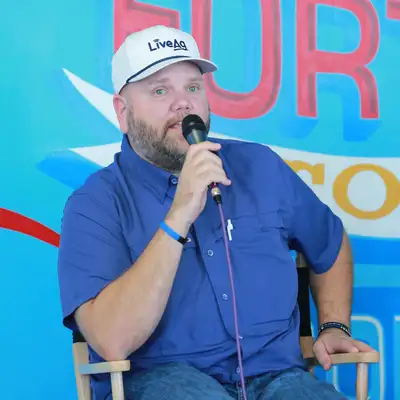
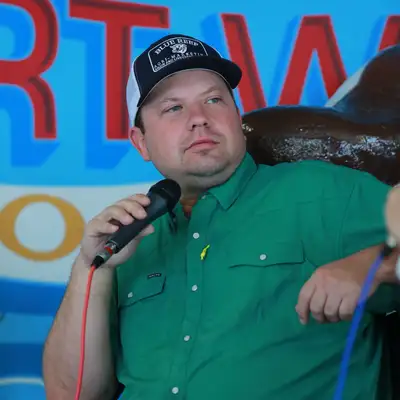
Welcome to the "We Live It" ranch and livestock marketing podcast, where cattle market intelligence meets ranch-ready wisdom. Join hosts Ty deCordova with LiveAg and Casey Mabry with Blue Reef Agri-marketing as they bring you straight-talk market analysis, proven strategies, and insights from industry leaders who understand ranching isn't just a business - it's a way of life.
From livestock market trends to cattle management practices, each episode delivers actionable knowledge to help take your ranching operation to the next level. Whether you're in the saddle or in the truck, tune in for conversations that matter to modern cattlemen. Because we don't just talk about the cattle business...we live it.
I think our breed has changed and there's a lot of people that aren't aware of it. You don't think docility, but they were the first one to get a docility EPD twenty five years ago and they got them weeded out. Okay, that's cleaned up. Know, and then the next big thing when the industry transitioned, they were probably last to come with the hybrid, got behind it a little bit, but I can tell you after feeding a lot of those cattle or the LimFlex, Limousin Angus, or that can be Red Angus component as well, those cattle work, not only on a cost to gain standpoint, but they work at the packet house. And as this industry changes and I look how much they've improved, we're not going to marble like Angus, but we want to be used with the commercial cow man on that Angus or Red Angus cow on that cross.
Speaker 2:That's a head on. We live it. The LiveAg Podcast. From seed stock bull sales built on generations of performance to commercial video auctions backed by real relationships to equipment auctions that keep operations moving forward. LiveAg connects cattle producers to opportunity.
Speaker 2:Quality cattle deserve premium prices. The right bulls deserve more buyers and dependable equipment deserves a fair bid. Whether you're consigning to a live ag video auction, marketing seed stock, or moving iron through the equipment exchange. We combine local representation with nationwide reach. Connect with your live Agrib by scanning the code on your screen or visit us online at live-ag.com.
Speaker 2:We are proud to be powered by BioZyme, the makers of Vita Firm and GainSmart. Value added nutrition partners trusted by cattle producers across the country. Now, here are your hosts, Ty deCordova and Casey Mabry.
Speaker 3:Welcome back to the We Live It Podcast. We are recording here at Cody Wong at the Buffalo Bill Center of the West Museum. Today joined with, myself, Ty deCordova, co host Wade Leist and we are joined by NALF President, CEO, Executive Director, Mark Anderson. Mark, is kind of the North American Limousin Foundation is where you're at now and you've got an extension background in feeding cattle and ranching cattle and all that and then now you're at the foundation helping the Limousin breed kind of move forward their genetics, kind of get back up to the top where they were once were. So we'll just kind of dive right into some of that.
Speaker 3:Kind of give us a background on your feeding background. You had some stand at the Catalflex too for a little while and then y'all done quite a few studies here lately. Let's dive into some of that real quick.
Speaker 1:Yeah, Ty, I appreciate that. Basically my background is pretty much commercial side until got into the seed stock working for the Limousin breed here fifteen years ago, but basically grew up on a cowcalf farming operation, had a small feed yarder, my dad did, and then went through Colorado State, got a degree, figured out what was I going to do, or didn't know what I was going to do. Went to Catalflex for six years and probably got some of the best training market wise and learned from some of the best risk management people in the industry at the time. That transitioned into being a commodity broker and going to feed yards, buying feeder cattle, know, current customers, doing risk management, running break evens, and managed feed yards for twenty three years. So we got to feed a lot of different kinds and types of cattle, and really got to see the industry transition over that time frame as you're aware, both Wade and Ty, I would assume how we transition out of selling cattle live in the late eighties, nineties to start to grade cattle.
Speaker 1:And when that happened, I was still at Cattlefax at the time covering the Texas Panhandle region, but that predicated a lot of shift in the industry, not just for Limousin, but all breeds, as you guys are aware. So kind of that's a background and then got the opportunity to go to work for North American here about fifteen years ago and like cattle, like the people, and they're on their way of making pretty good comeback in there with the genetics and the genetic progress that people have made at Limousin.
Speaker 4:That's That's a pretty diverse, group of, or stops that you've made along the way, your career is taking in a number of different directions.
Speaker 3:Can you tell us
Speaker 4:a little bit how maybe one stop prepared you for the next stop and a little bit about that progression, how maybe you were qualified for the next stop by the one that you had just before it?
Speaker 1:Well, I've been lucky because they were all in preparation, I think, to do this. And at the end of the day, like at Catalflex, just you got to learn both fundamental and the technical side of the market. You know, both numbers, what we analyze at Catalflex, remember, ranches and feed yards and analyzing that data, and they've grown into the tremendous company that they are today. But learning how to manage risks, seeing what people go through in the cattle business, as you guys are aware, it's tough business. I mean, you've got a lot of variables that are out of your control, market, genetics, weather, just to name a few, health, I can keep going.
Speaker 1:But really that Cattlefax background was good before I started in the feed yards. It helped us manage risk. And when I got to those feed yards, really it was, you know, I learned under some guys like Mike Smith at Tejas in there, and he was pretty sharp, and I think he's up for the Hall of Fame and the cattle figures this year, but he said, Mark, you better get ready to go through ups and downs, learn both sides of the market, and then learn genetics, because you're going to need to be able to run break evens and manage risk, and a big part of running a break even on cattle they may be buying on your feeder cattle sale tomorrow is understanding some genetic history and how that's going to impact cost of gains, and now it's carcass, you know, with the cattle that we're hanging up and gritting as well. So each stage was a good background to kind of get into this side of genetic eval, and I cannot believe how much that's improved over the last fifteen years, not because of me, but I mean, we're working with IGS or International Genetic Solutions, the genomics we run on cattle now along with the phenotypes, the accuracy on these EPDs, they mean way more.
Speaker 1:And that's how folks have been able to kind of turn things around. Breed's different, every breed's got good cattle, okay? At the end of the day, I think the progress made on those genetic evals, and we're kind of down to the varsity on our seed stock producers, you can make genetic progress fast, and not single trait select, but across your fifteen, sixteen trait deck.
Speaker 3:When it comes to selling cattle, performance matters. That's why BioZyme Incorporated and LiveAg have partnered to bring more value to beef producers across the country. Cattle fed VitaFirm and GainSmart products are backed by proven nutrition programs designed to support reproductive efficiency, feed efficiency, and overall herd performance. And now, through LiveAg's nationwide video auction platform, those nutrition backed cattle are positioned in front of buyers who recognize the value of a documented premium feeding program. This partnership connects what happens in your pasture with what happens at sell time.
Speaker 3:Better nutrition, better documentation, increased market exposure. Talk to your buyer's arm or your LiveAg rep or visit your local dealer to learn how and GainSmart paired with LiveAg marketing can help your cattle stand out when it matters most. So let's talk through a little bit the changes that we're seeing in the Limousin and the Limousin genetics what you are doing as a purebred operation to help, mold that product to where it is, efficient and profitable in the commercial breeds. I mean, kind of walk us through that a little bit.
Speaker 1:Well, it's kind of twofold now because, Continental breed, we've got a hybrid. And when I started there, Jerry Wolfe had always said Limousin was very complimentary to Angus and vice versa. And he's right. From our aspect, you know, you talk about purebreds, you don't think docility, but they were the first one to get a docility EPD twenty five years ago and they got them weeded out. Okay, that's cleaned up.
Speaker 1:Know, and then the next big thing when the industry transitioned, they were probably last to come with the hybrid, got behind it a little bit, but I can tell you after feeding a lot of those cattle or the LimFlex, Limousin Angus, or that can be Red Angus component as well, those cattle work, not only on a cost of gain standpoint, but they work at the packet house. And as this industry changes and I look how much they've improved, we're not going to marble like Angus, but we want to be used with the commercial cow man on that Angus or Red Angus cow on their cross. And to what you can do with those cattle then for carcass results, cost
Speaker 3:of
Speaker 1:gain, you guys know we're feeding cattle big, sixteen seventeen hundred pounds now, and if you can put a little cross in them that helps clean up that yield grade, I don't care if it's a quarter or half blood coming off that, that's almost instant change overnight. And with red meat yield coming into the industry now, and it is coming, when we see the USDA update the yield grade system, which is antiquated, and they're working hard at Texas Tech as far as CT scan, and when they can measure that in a packin's house at high speed chain speed, I think you're going to see some changes, and you know there's continental breeds that bring a lot of that. All breeds have individuals, okay? You know, Charcot. Limousin, one advantage Limousin's got, people don't realize 90%, right or wrong, our herd books black hided because of what CAB's done for the industry.
Speaker 3:You mentioned it a while ago, that red meat yield, Doctor. Warner and that crew at Texas Tech have taken on that task to do that study along with y'all and several other organizations and that's going to be a highlight study when they get it over with. Talking about studies, y'all did a study here recently with SDSU, South Dakota State University. Kind of, you want to go into that and what that looked like and what y'all did there and how y'all tested all three different breeds?
Speaker 1:You bet. What we actually did, Ty, was about, I think it was in 2021 when we started, the board started talking about they wanted to, you know, our cattle have changed. If you're not using them, I mean, these cattle are big bodied, they got some rib production in a moderate cow size package, but we wanted to really see where we were deficient, what we needed to improve upon. So we had, our consultant is Doctor. Weber from Kansas State.
Speaker 1:He selected nine sires, three contemporary groups of Angus, LimFlex, and then purebred Limousin bowls. Found two ranches in Montana. We synced and AI'd the cows. The original goal was to see the difference if he selected as even as he could for EPDs, and in all match, that's not easy to do, but we were trying to measure the heterosis benefit the effect. And it kind of come out like you might expect, I mean, Angus marble, okay, the hybrid marbled right with him, even in the upper two thirds and prime.
Speaker 1:The limousin had the rib eye and the feed conversion advantage on the cattle that were half blood progeny out of their purebred sires, So I've seen that evolution, but I think the thing that really impressed me the most was even on the purebred side, it reflected how far our breeders have come because none of those cattle hit the select grade. Now we had more cattle in the upper two thirds choice prime in the hybrid and very comparable with Angus, but the big deal, it knocked the yield grades almost in half on fours and fives. In one set of cows, there's probably a four and a half frame score, the other is six, and we killed three separate kill dates at two fifty, I believe, and two seventy days on feed to go to bigger weights just to see what happened to dry matter conversion on the end. And it still backs up to where, you know, we're not going to quit seeing people feeding cattle larger, as you guys are aware, they got to roll them back if you're at the feed yard. But with these cattle hanging on the grid now, we used to roll them at the consumption drop because we were going to flip the cost of gain when we sold them live.
Speaker 1:But we get a lot of carcass transfer now and we've figured that out by hanging cattle. We can take them longer, bigger, and get the cattle rolled back. The only sacrifice is yield grade. And we all like a little bit, or I mean if you're an older guy like me, I like a little bit of grease, I like them marbled up. Fat is expensive to produce.
Speaker 1:And we can do things with genetics to clean that up. And you're not only going to see it with this, and I think red meat yield, as Werner and his crew evaluate phenotype production for EPD production, you'll see it in breeds regardless of what breed they are. To me it's kind of the final component because you got feed performance as it relates to cost of gain, and then the industry's already changed itself in its demand picture with addressing quality. Mean, Dick Monfort was on here about three months ago. I mean, that's back when I was feeding some of those cattle in the 90s and he said at best, I mean it was tough and he said margins were shitty, and they were.
Speaker 1:We stayed in a $60 to $70 fat cattle trading range, and we were losing market share of pork and poultry. And then I look at how we address quality grades, and that changed the demand picture. Now you got GLP-1s rolling around and people want to eat protein, they don't want to eat a bag of Doritos. And I just don't see the demand picture changing in feeding cattle to larger out weights changing, but what we can do is now bring that other component and address red meat yield and we can find it with genomics in the seed stock industry.
Speaker 5:Mark your calendar for the Rhodes Ranch annual production sale, September 5 in Cambria, California. This year's offering features 100 spring and fall born Angus bulls, developed in steep country and ready to go to work, along with a select group of performance horses. Join the Rhodes family Saturday, September 5 at one p. M. Pacific Time.
Speaker 5:Can't make it to the ranch? Register to bid remotely at bid.liveag.com. Rhodes Ranch. Angus Genetics built to perform.
Speaker 4:Well, certainly think it's no secret that there's no one breed that can do it all. Mean, that's been the industry secret for the industry standard for a long time that regardless of the traits that your breed or every breed may offer, really there's no match to heterosis. Let's take this down to a real plain language standard. If you were to go to a commercial producer, what would be some traits that you would see in their herd where you would say, We have what you need. A LimFlex or straight limbing bull is something that you need.
Speaker 4:What would be the traits in that herd that you'd want to apply your bulls to?
Speaker 1:Well, the first thing I'm going to look at, probably, you know, the majority of a lot of these herds in the country are English based Angus cow herds, or Red Angus, and you got a lot of Sam Angus out there. But from the standpoint across and into using limousin, as long as you know, there's nothing worse for you as a rancher than buying a cheap bull. It's the most expensive thing you can do. High quality bull that's got a good trait deck level. When you make that cross in the Limousin, we're trying to pick up your feed efficiency.
Speaker 1:We're going to make those feeder cattle to where they've got a better yield grade when they go to the packing house and address some of those external fat issues. That's why, you know, if the Scan and De O eight gets going and it addresses same fat. Limousin cattle, when we went to IGS about ten years ago, we knew we had a pretty good female, but most of people don't think of us that way. It's a moderate sized cow and they're a little finer bone, they're a little tinier headed, and guess what? That's a little better dressing percent too at the end of the day.
Speaker 1:But when you can actually get in there and measure seam fat and take the skeleton off of this deal, and a packing house can see, and I know this to be true, I used to feed a lot of cattle for CrossFord Ranches out of Miles City, and those were LimFlex cattle going to Tyson back when Lexington was still open. And they were all naturals going to Whole Foods at the time, but Tyson and Brandenburg, bless his heart, would come to the yard and say, What are these cattle you're shipping us? And I wasn't working for Limousin, I guess they're LimFlex. So he goes, Well, what the hell is that? I go, It's a Limousin Angus hybrid.
Speaker 1:And he said, well, get more of them because they're hitting the upper two third of choice and prime in our yield grade and what's going out the back door to packing house. We got a lot more pounds of product, so you need to get more of these kind of cattle. And they work for us because we could roll them back to bigger out weights, save on our fours and fives and keep our cost of gain to where it could still roll our cattle back, pull the hedge and get out. So I just think that when, you know, we've got commercial ranches through Utah, Western Slope Of Colorado, that they're tracking those cattle through, whether it's Freona Industries or Five Rivers and getting carcass data back. And by the way, we've got about 350,000 carcass records in the herd bucket now too, I mean, and I'm about to drop another 500,000 here in about six months on top of that, which adds to accuracy and that lets us make progress quicker.
Speaker 1:But there's still people out there thinking, the cattle got a decility problem, they don't grade. Well they're meant to be used in that cross with that hybrid, so if I'm a commercial Angus guy and I want a little bit more product in them, I can probably find some really high powered Angus bulls because they're going to chase it too. But I can make a quick change probably at a regular bull sale buying a hybrid bull. I can come in with a half blood for a quarter blood progeny, retain my black hide, or if I want to make Red Angus, I can do that too with the Red Angus, but I'm going get an instant pop. I'm probably going to see it on my yield grades and when I'm a cow man in the country, when I was running a feed yard, if the cattle didn't work, I didn't want to go back and say, these ain't very good.
Speaker 1:My best option was they'd call and say, Mark, why aren't you bidding? Oh, we're full. Well, they either quit grading or they weren't converting, but I'm seeing that shift in the industry where more of that's getting shared, and I've seen it with our people that utilize these commercially, whether they take the half blood for the LimFlex quarter blood Progeny or they take a good high powered purebred that's adequate in his marbling and good on his growth, it depends on their program and what they're trying to achieve, but you can do it now. The cattle are good.
Speaker 3:Wade, we appreciate everything, Mark. Where can we go find like, where do they go to search to find some bulls or to find the studies that y'all done? What website or how can they find y'all?
Speaker 1:Just the Limousin website. It's www.nalf.org. There's a map that says find a breeder and it'll pull breeders. You can zero down to a state or a region around you. You can also call the office.
Speaker 1:I can kind of put you in touch with people that are, you know, have production bull sales or if you're looking for females or one of our sales managers. But really go to the NALF website and then don't be afraid to call me.
Speaker 3:Yeah, we'll link that in the bottom of the podcast too. There'll quick be link there to click on if you want to go look around on the website or find the studies that they have and stuff like that. Once again, Mark, thanks for everything. Anything else you want to touch on before we kind of close out here that we missed?
Speaker 1:No, I appreciate you guys having us up here and I'm sure you're going to have pretty good for your sale tomorrow.
Speaker 3:Yes, ought to be good. It ought to be good. Thanks everybody out there in social media land for watching. Thanks Wade for sitting in. Wade, you got something you wanted to say?
Speaker 4:No, sir. Ahead and close this out.
Speaker 3:You sure you look awful. Want to talk right there. No, thanks everybody. Thanks Mark. We like to have a good time here at these things so we don't we don't try to be very serious as you notice Mark.
Speaker 3:Thanks everybody for tuning in. Don't forget to hit subscribe and like and share these podcasts for us. If you want to be a part of it, look us up at liveag.com or email in to genelive ag dot com and she can kind of fix you right in the schedule if you want to do any marketing or anything like that. Look at keithliveag.com. He can fix you up in that aspect.
Speaker 3:So once again, as always, God bless and thank you for watching.