Subscribe
Share
Share
Embed
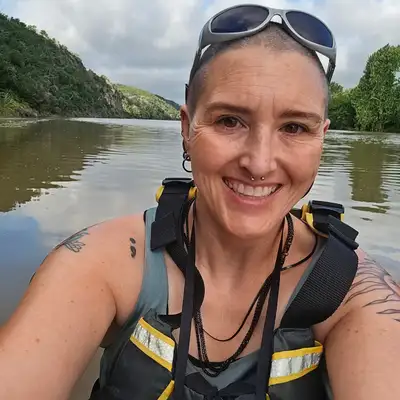
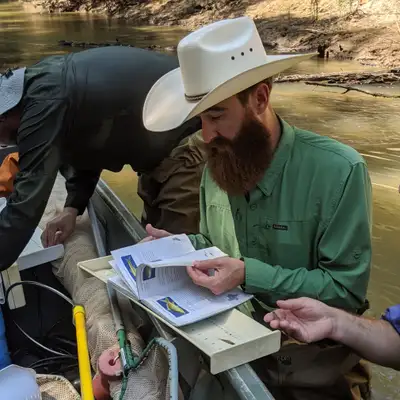
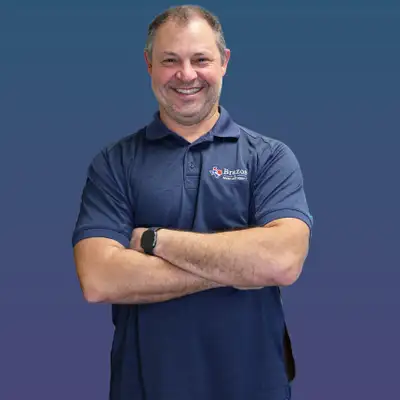
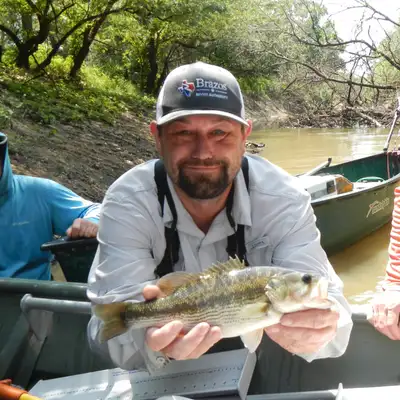
Ready to unpack the powerful stories of a Texas titan - the Brazos River? Listen as experts explain the Brazos River Basin's immense role in our daily lives. They'll cover everything from the river's fascinating history to all the work that goes into ensuring you have water when you turn on your faucet.
Hear invaluable insights on topics like why lake levels change, the important projects safeguarding our water, the many species that call the Brazos home, and even some tips for enjoying the water from Brazos River Authority experts.
This is your chance to understand the immense work that goes into developing, managing, and protecting the Brazos River Basin, which stretches from the Texas-New Mexico border to the Gulf. (The basin is the size of Tennessee, y’all, it’s big.)
It’s a huge part of our state’s story and we can’t wait to share it with you.
Clay Sellers: Got questions about the Brazos? No more unknowns. Ever wonder where that water comes from or where it goes? We're Unpacking the Brazos River.
Charlie L Shugart: We usually think of data collection as the sterile infinite desert of Excel sheets and blinking cursors. But for the aquatic scientist at the Brazos River Authority, data entry often involves a faceful of river water, wild Texas weather, bug-hunting, and unexpected finds. And let's be real, this job is not for the weak. You gotta be a specific flavor of built different to spend your Tuesday chest-deep in a streambed, vibing with the murky depths, identifying a whole world of species. We're talking triple-digit Texas heat, endless road trips, and the kind of brainpower needed to maintain the rigorous standards and repetitive work of testing water quality across the Brazos River Basin. The BRA's highly specialized field operations team are the ones doing the gritty and essential data gathering, from finding bugs to mapping out the physical soul of the basin. Lucky for us, we've managed to lure a few of these legends back to the office to explain why they do what they do. If you think your Monday morning meeting was rough, wait until you hear what these guys do before 9 a.m. I'm Charlie Shugart, and this is Unpacking the Brazos River. Joining us again is Field Operations Manager Jeremy Nickolai. Thanks for coming back.
Jeremy Nickolai: Man, happy to be here.
Charlie L Shugart: I'm so glad you were willing to do this again. Didn't scare you away the first time.
Jeremy Nickolai: Not even a little bit.
Charlie L Shugart: So, I hear that this is probably your last time.
Jeremy Nickolai: Yeah. I am retiring.
Charlie L Shugart: Congrats.
Jeremy Nickolai: Thank you very much. So yeah, April 30 is my last day, and we'll see where life takes me after that.
Charlie L Shugart: Yeah. Well, on that note, Corey Scanes has been promoted to aquatic sciences manager, succeeding you. Congratulations.
Cory Scanes: Thank you.
Charlie L Shugart: Since this is your first time on the podcast, tell everybody a little bit about your history with the organization.
Cory Scanes: So, I've been with the Brazos River Authority for about seven years now. I was hired as an Aquatic Scientist 1, and worked my way up to eventually taking over Jeremy's position. I've been interested in water and water quality since I was a kid, so I pursued a career in that.
Charlie L Shugart: Great. Well, we are also lucky to have aquatic scientist Ryan Byrge joining us. Thanks for being here.
Ryan Byrge: No worries. Yeah. It's great, and it's a pleasure.
Charlie L Shugart: Tell us a little bit about your history with the organization.
Ryan Byrge: Well, I've been with the organization now for nine years. One of the main roles we have as aquatic scientists is to collect water-quality data for the Texas Clean Rivers Program and the In-Stream Flow Program. So, I've been doing that for nine years, and recently I've been doing a lot of bug identification, which has been very exciting. Just continuing on that and moving forward.
Charlie L Shugart: Great. Okay. Well, Cory, you touched on this a little bit, but for you guys, how did you end up in this field? Was it something from your childhood? You were like, I have to play in the water when I'm older, or did you kind of fall into it once you got to college?
Jeremy Nickolai: In college, I really didn't know what I wanted to do. So, one summer, one of my professors was like, hey, Utah Division of Wildlife Resources, this guy I know, he has some summer work if you want to do that. And I was like, yeah, sure. So you know, it was mostly office stuff, and then I guess, you know, once he decided that I was capable of doing other things, we went out, and this is in Southern Utah, so we went out to the Virgin River down there, started pulling seines, looking for fish and stuff like that. And I'm like, wait, I can get paid to do this? And I just kind of fell in love with it after that.
Charlie L Shugart: What about for you?
Ryan Byrge: Growing up, I was always outside and fishing my whole life, and I got my associate's degree at Hawking College in Ohio, and that's where I first took my first ichthyology class and ornithology, and I was always interested in that. I had multiple different careers after that, but going back to college, I worked for the Nevada Department of Wildlife in the summer, and that's the direction I knew I wanted to be, you know, an aquatic scientist, a biologist, looking at fish, bugs, looking at the water quality because it's important to me.
Charlie L Shugart: Yeah. So how do you explain to people what it is you do?
Cory Scanes: I always start with, we're biologists. That's what we study, that's why we're here. Most of us are here for the fish, the bugs, the critters, that kind of stuff. We get to do some of that, but largely our bread and butter is water quality. If we get questions about what do you do, some of it is about the boat, and some of it is about hiking down and pulling water quality from a creek. It could be a pretty creek, could be a nasty creek. By and large, what we do is to ensure the quality of the water is safe for recreation, for drinking, for all of that, and that it's sustainable for future generations.
Jeremy Nickolai: Doing this for eighteen years, you know, with the BRA, you kinda get like a rote answer. It's like, well, we do routine water quality monitoring and biological assessments in the Brazos Basin. Usually, the next question is, well, how's the water? The water's fine.
Ryan Byrge: It depends on where you're at.
Jeremy Nickolai: Yeah. Yeah. Yeah. Depends on where you’re at. And then you get, what kind of fish do you catch? You know, and nobody's really like interested in like this and which was mostly what we catch are like the smaller species of fish and stuff like that.
Charlie L Shugart: They wanna know what the biggest thing is, the weirdest?
Jeremy Nickolai: Yes. So that's kind of how that always ends up going down.
Ryan Byrge: I mean, for me, you know, I always tell like even just going back home or whatever, I'm an aquatic scientist, so you know, my job is to monitor the water quality throughout the state of Texas, and I always go, well, I mean, have you ever heard of the Clean Water Act? So, it can relate to a lot of people because, since that happened, it's been a significant piece of legislation that's cleaned up riverways throughout. I'm testing the water, you know, and I'm also looking at the fish species and bug species there. And just looking at the overall health and over, you know, over the years and monitoring sites, so that's exactly what I try to relay to them. Our job consists of collecting biological data, but a lot of times, there are a lot of other skills that you have to do. You have to be able to fix things out there and then adapt to things going wrong all the time. I mean, if it can happen, it will happen. So, the one time with the throttle being broke three miles upstream, we weren't gonna get back unless we fixed it, you know? So, a lot of the things about being an aquatic scientist aren't necessarily, oh, I'm looking at bugs and doing all the cool stuff. It's being able to adapt to the situation.
Charlie L Shugart: Like if you get stranded on the water
Ryan Byrge: Yeah, you're not gonna be collecting anything anymore if you can't have some of the ability to think outside the box.
Jeremy Nickolai: You know, and I think this goes for, like, any job across anybody does. There is like the romantic vision of what a biologist is.
Ryan Byrge: Absolutely. Yeah.
Jeremy Nickolai: You're out there, and it's 73 degrees and the wind's blowing through your hair, and you're scooping up all these fish, and boats magically appear in the water and magically appear back up on the trail. It's not like that. It's rigorous out there. Physically, sometimes emotionally.
Ryan Byrge: Yeah. Long hours. We all know about that, from sunup until it's dark out there.
Jeremy Nickolai: As hard as it is, one of the best parts about working in the field and working hard is like that shower after a long day, you know.
Cory Scanes: Hands down. Every time it'll be the best shower you've ever had.
Jeremy Nickolai: You've been tromping around in Fecal Meringue for eight hours, and you're just smelling like carp because you've been counting carp and you got like
Cory Scanes: That's a mental image for you.
Ryan Byrge: Yeah. Poison ivy everywhere.
Jeremy Nickolai: Bug bites.
Cory Scanes: To do what we do, you have to be adaptable and durable. If you can do that with a positive attitude, it makes the day go by so much better. And like, we're all cut from the same cloth, and so when we're out there, and it's miserable, you just start laughing. Your waders are full of sweat. Not water from the creek, your waders are full of sweat. You can feel it down in your socks. Feet. You can't help but laugh, and when you winch that boat back up the steep riverbank, and you take a swig of water or whatever it is, eat a piece of beef jerky, you're like, we made it through that together.
Jeremy Nickolai: Yep. We did a thing. We just did a thing.
Cory Scanes: And that is rewarding.
Ryan Byrge: Absolutely. Those times when you do have to launch boats off cliffs or wherever else that you're doing, I mean, it's massively rewarding. Just being able to be durable and have an award-winning attitude out there. Right?
Jeremy Nickolai: Yeah. The award-winning attitude. AWA. That's a Ryan-ism right there.
Cory Scanes: AWA.
Charlie L Shugart: Well, we stan our resilient aquatic scientist. There are a lot of different aspects, and we're gonna kinda delve into a lot of that. But what would you say is really the primary mission, the primary goal, the objective of the field operations team?
Ryan Byrge: For us and for me, the Clean Rivers program is there to assess, monitor, and improve the water quality in the state of Texas. So that's, you know, implemented by the Clean Water Act. That's our main goal, that's our bread and butter. That's what we do, you know, monitor over 100 sites.
Charlie L Shugart: Yeah. And so just to expand on that a little bit, the Texas Clean Rivers Program is run by the TCEQ, which is the Texas Commission on Environmental Quality. The Clean Rivers Act requires an ongoing assessment of water quality issues and management strategies statewide to guide Texas water resources policy and decision-making. The Texas Clean Rivers Act came online in 1991, forging partnerships between the TCEQ and river authorities to monitor and manage water quality issues.
Jeremy Nickolai: So that data that we collect gets submitted to TCEQ, and TCEQ uses that data to assess all the different water bodies in our basin. So, if there's an impairment, and I think probably everybody knows that like bacteria can be a big impairment, that's usually what people think about, that impairment will go on the 303(d) list and …
Charlie L Shugart: Nobody at home knows what that means.
Jeremy Nickolai: Okay. So, the 303
Ryan Byrge: 303(d) list is the impaired water bodies.
Cory Scanes: It’s a list of impaired water bodies.
Ryan Byrge: Those impaired water bodies have exceeded the limit of either nutrients, bacteria, or low dissolved oxygen, and that's over time.
Cory Scanes: Yeah. TCEQ has set standards for dissolved oxygen, bacteria, and nutrients such as nitrogen and phosphorus, which are detectable through the tests we run on the water we collect.
Jeremy Nickolai: Once a water body goes on the 303(d) list, the list of impaired water bodies, that prompts some action. Like, okay, we need to do something about this, and you could do a whole other podcast on the two different ways that that's taken care of. That's what happens with our data.
Ryan Byrge: Those impaired segments, well, you know, they have to be addressed like improved eventually. Those could be like different programs with a watershed protection plan that helps improve it, or they call it a total maximum daily load, and that's like a program that'll go into improving those waters over time.
Cory Scanes: And things like that are usually implemented by stakeholders in the area. Like right now in our basin, there are several watershed protection plans that are either active or have been wrapped up or are about to start. Places out near Stephenville we have some issues with pollutants that are in some of those smaller creeks and water bodies, and so they're impaired for maybe dissolved oxygen. And chlorophyll, which, when you have a lot of nitrogen and phosphorus, algae want to grow. And it'll choke out other organisms that live in that water body if there's not enough flow to wash it out.
Jeremy Nickolai: And causes big swings in dissolved oxygen because, you know, algae during the light, it makes oxygen, and then when it gets dark, it pulls the oxygen out of the water. So, during the daylight hours, the algae will make oxygen, so those DO limits will go way high. And then during the dark period, the DO will drop way down.
Charlie L Shugart: Yeah. So, the basin is very big. Do you guys travel the full length of it? How many spots do y'all go to? What's that look like?
Ryan Byrge: Yeah. I've traveled over 600 miles this week, so I went all the way from PK on a boat sampling Possum Kingdom all the way to Sugar Land in Houston doing Allens Creek sampling, so yeah. It encompasses the whole basin. I mean, we sample over 100 sites, you know, that's including eight lakes. So, we're, yeah, we're all over the place in the basin.
Charlie L Shugart: So, a little bit is what you're telling me?
Cory Scanes: We have a little over 110 Clean Rivers Program sites that we sample, and then on our own BRA's reservoirs, we have additional sampling. And I think like ten, twelve, fifteen, thirty-seven additional sites that we sample water quality. And not all our Clean Rivers Program sites are sampled monthly.
Charlie L Shugart: Okay.
Cory Scanes: Some of them are sampled quarterly, and we actually have two sites that are sampled twice a year.
Charlie L Shugart: Why? What's the rhyme and reason behind how often you sample at locations?
Cory Scanes: We have a meeting every year. It's our coordinated monitoring meeting that we hold with TCEQ and other stakeholders and partners in the Clean Rivers program, where we determine our sampling schedule.
Ryan Byrge: Yeah, it's a collaborative effort between multiple different agencies to sample a very large basin.
Jeremy Nickolai: So kind of all the data that we collect plays into other parts of the BRA too, you know, like our in stream flow stuff and part of the water management plan. So, I mean, it's not as willy nilly as it sounds. The one that we do biannually is
Ryan Byrge: John Graves' and that's part of legislation.
Jeremy Nickolai: Yeah. So we're legislatively required.
Ryan Byrge: It has to be monitored.
Jeremy Nickolai: That's kind of a cool program, too. Because you have to do visual surveys over it. So we work with Texas Parks & Wildlife and they get their helicopter out and we fly the John Graves’ waterway there.
Ryan Byrge: And I got to do that last year.
Charlie L Shugart: Nice.
Ryan Byrge: And they have the helicopter ride, and then they have an airboat that goes up and down, and that's basically from Granbury up to PK, but part of that legislation that went through was because of illegal mining operations, so that's what we were looking at from the helicopter.
Charlie L Shugart: I need to know how I can get in on that.
Ryan Byrge: Jeremy volunteered from you know, he's like, hey, do you want to go? And I was like, absolutely. And it really is an experience. I've never been in a helicopter, but to see how beautiful it is from Granbury up to PK is like a stretch of the Brazos that a lot of people don't get to see, and I got to see it from a helicopter. I mean, you can canoe it, which is absolutely something I wanna do someday with one of these guys here, maybe.
Cory Scanes: At least one of us.
Ryan Byrge: It's a pristine part of the river.
Charlie L Shugart: So, when you say you guys go out and take water quality samples, what does that mean? What does it look like when you are doing that?
Ryan Byrge: Basically, we're taking like physical and chemical measurements of the water quality, the temperature, the conductivity. And what we use is a sawn, a water quality sonde.
Charlie L Shugart: I don't know what that is.
Ryan Byrge: We have a specialized instrument or a piece of equipment. It's like a tube with a line attached to it, and then it goes into the water, and you pull it, and it basically retrieves a two-liter, three-liter, or four-liter sample, pull it up off the bridge because a lot of the sites that we have are off of bridges.
Charlie L Shugart: Why?
Ryan Byrge: Just public access. A lot of these sites that we have, the only way we can get to them is from a bridge or public access, you know. Anyway, that piece of equipment comes to the top, and it's got like a tube attached to it, and that's where we fill our water bottles up, put them on a cooler, and then they go back to the lab for them to analyze and you know determine those measurements and all that data goes back to TCEQ eventually. So, we're testing for temperature, dissolved oxygen, conductivity, we'll test for pH and those are just like instantaneous measurements of the river at that time that we're sampling. We have certain water-quality bottle samples that we'll retrieve from the river, and those go back to the lab, where they'll test for nitrates, nitrite, total phosphorus, ammonia, chlorophyll, and more. So that's like kind of a typical day when we're out at a particular site sampling that.
Jeremy Nickolai: In some of our sites, you know, we can actually get into the water, and then we'll just physically dip the bottle into the water, and then put the lid, you know, and do all the things. And on the boats, it's the same thing.
Cory Scanes: Sometimes, you know, we have like a cup on a really long handle, and you wanna reach out pretty far, or you can get a sample pretty far out into the water body on some of these with that.
Jeremy Nickolai: It's handy when it's cold, when the lakes are cold too, you know.
Cory Scanes: Yes, your hands aren't freezing and wet. When it's hot, you kinda wanna get your ankles wet and so we'll just wade out in sandals or wading shoes, that kind of thing.
Ryan Byrge: However, you can get it.
Cory Scanes: Yea, whatever kind of comfort you can get.
Ryan Byrge: Never give up.
Charlie L Shugart: So y'all can access either on the lake, through the boat, some places you can actually walk into the water body, but other places you gotta dangle off the bridge.
Ryan Byrge: Yeah. Truck parked on the bridge, flashers on, and that's a lot of our sites. There are only a few sites that maybe we access on private property, like the North Bosque, where we have to get landowner permission, and generally, people are wonderful about it.
Jeremy Nickolai: The variability of these sites is pretty remarkable. When we're up in the Upper Basin, our furthest site up the basin is our Seymour site. Seymour, Texas, has a population of what, 50 people?
Ryan Byrge: It's not a large town.
Cory Scanes: I don't know why 800 sticks in my mind.
Jeremy Nickolai: You're kinda in the middle of nowhere up there. We've got stations down south that are in the middle of Sugarland. They're basically in the canal system, and we can see people's houses or a golf course, you know, and stuff like that. Now, our furthest south site, Rosharon, it's again like, you're out in the middle of nowhere.
Cory Scanes: It really is amazing from Seymour to Rosharon, the difference in the river. And I mean, you would expect that because that's how drainage and a watershed work. But at Seymour, it's red dirt, it's shallow, it's saline. It's so very different than the big mighty river that you experience at Rosharon where it's rushing, it's brown, it's …
Ryan Byrge: It's a lot large river there.
Cory Scanes: Yeah. The banks are really incised and like you can see where the river has cut the land.
Jeremy Nickolai: So, our upper site, we'll go there, and it might be running like, and this is the main stem, like, I don't know, five, ten, 15 cfs, cubic feet per second. Whereas when we get down in the Lower Basin, it's running …
Cory Scanes: 6,000.
Jeremy Nickolai: 10, you know, 15,000 cfs. And then sometimes even more than that, when we've had big rain events and stuff like that. And that river gets big, 60,000-70,000 cfs.
Ryan Byrge: We've seen some large flows over the years. The past five years, there's been a lot of big, large releases out of Granbury, I mean, which is typically not how it goes.
Charlie L Shugart: So when you guys go out, and you use your equipment, and you pull the water samples, and you document what's there, then do you turn around, and that's what you submit over to TCEQ or?
Jeremy Nickolai: Like us going out and collecting the data is just like kind of that this first step, you know, and then I'm gonna get a little into the weeds here. So, we go out, collect the data, and collect our water samples. We enter the data, and then we QAQC the data, you know, make sure everything is correct and all that thing, all that stuff. Those samples go to the lab, the lab does their thing, and there's a whole analysis process, then a QAQC process, and then our QAQC staff looks at that data and makes sure everything's good to go. If everything is good, every quarter we do a data transfer where all that data that we're contracted to send to TCEQ gets packaged up and then it gets sent to TCEQ. And how often do they do the assessment?
Ryan Byrge: The integrated report is every two years.
Jeremy Nickolai: Every two years. Yeah. That's when they do that assessment to see how those water bodies are doing.
Charlie L Shugart: I just want to clarify that when these guys are bringing samples back to the office, they are talking about the BRA's Central Office located in Waco. We have a lab here that is accredited under TCEQ, under the National Environmental Laboratory Accreditation Program, or referred to as NELAP. They're a big deal over there. So, what happens once the samples are in the shop? Are you driving around in a mobile science lab for a week? Or is it a race to get back?
Cory Scanes: So, our samples have varying hold times. So, we collect one sample that needs to be processed within eight hours, and that's bacteria. We actually have this fancy new extended hold time, which is 30 hours, which we're really excited about, because that allows us to kind of expand some of our work. But generally, we go out, collect, and come back on the same day because we have to get E. coli or Enterococcus processed within eight hours. We have other samples maybe that hold time is 72 hours. So three days. Some of our samples can be held for 20 plus days. We put our samples in the cooler. When we come back, we immediately process E. coli, and then the lab takes in those other samples. And they'll hold them for as long as it takes to run their various tests on those samples.
Charlie L Shugart: And do the priority ones first, the shortest shelf life?
Ryan Byrge: hold times and you know, their scheduling and everything like that in order to get all the all the samples processed within those holding times.
Jeremy Nickolai: It's a little bit of a race.
Ryan Byrge: Yeah. And our scheduling too during the week, you know, how many runs that we do during the week determines, like, how many samples they can process.
Charlie L Shugart: Yeah. Trying to make the most efficient use of time. That's a juggling act is what that sounds like.
Cory Scanes: Most definitely.
Ryan Byrge: It all has to do with time.
Jeremy Nickolai: And then you throw weather into the mix.
Cory Scanes: That's a whole other animal. With bacteria, E. Coli because it's a living organism unlike nitrate or orthophosphate, something like that, that is it's just, you know, chemicals. Because it's a living organism, we can't keep it in a bottle for too long before the cells start to die, and we will no longer be able to detect them with the test.
Ryan Byrge: And it won't be representative of when we collected that, you know. If we let E. Coli sample sit for two days, they're gonna …
Cory Scanes: maybe half the colony is dead.
Ryan Byrge: Then that's, you know, that's all about the data integrity. So they put limits on it, you know. This is like the time period of when you're gonna get the most representative amount of E. Coli in that particular sample.
Jeremy Nickolai: So we test all our sites for E. Coli. So, I mean, it's not whether we know it's there or not. More than likely it's gonna be there unless, you know, the lakes a lot of the times.
Ryan Byrge: Bacteria is always everywhere.
Jeremy Nickolai: Yeah. It’s everywhere.
Charlie L Shugart: So, I know you guys just said bacteria is everywhere, but for most people listening, what they're hearing you say is there's E. Coli everywhere. Why is that not a panicky thing that I feel like some people are gonna hear and be like, that's not good. I don't wanna be in any water with E. Coli.
Cory Scanes: When TCEQ sets their standards for bacteria, for E. Coli or Enterococcus, so as to differentiate first between Enterococcus and E coli, we test for Enterococcus only at our two uppermost sites, where there's a higher salinity. The testing limits within those kinda denote what we're testing for there. When TCEQ sets standards for bacteria, they base it on the kind of recreation at each of these sites within these stream segments. And if there's primary contact recreation, so people swimming, tubing, all of that kind of thing. So I'm thinking Upper Brazos, below PK, there's a big canoe and kayak rental there, and they'll shuttle you. For stream segments like that, the total number or the actionable number for E. Coli, I think, is 120.
Ryan Byrge: 125.
Cory Scanes: Yeah. Something like that. MPN, which is a measure of how much E. Coli is in that. That's a really pretty low number. And usually in those areas, what we find is 20-30 MPN.
Ryan Byrge: Well, below
Cory Scanes: So very little E coli. E coli may be there, but it may not be at a level that's going to impact that recreation. So, for sites with essentially secondary recreation, that MPN number is around 600. So, these are sites where maybe you're wade fishing, or you're fishing from the bank, or you'll see boating or something like that, but no swimming. Swimming is considered primary contact recreation.
Charlie L Shugart: Okay.
Cory Scanes: And so, in the secondary contact recreation areas, that number is much, much higher than it is for primary contact. Through our tests, if we detect something that is over one of those limits based on that recreation, that throws up a red flag, and that becomes an impairment. And if it makes anyone feel any better, like, when we're out doing biological sampling or water quality sampling, anything like that, we're not really washing our hands and we're eating our sandwiches and, you know, and I mean, maybe our gut bacteria is a little stronger than everybody else's, but I mean, I've eaten sandwiches in some nasty rivers without washing my hands.
Jeremy Nickolai: I mean, there's always gonna be some risk. No water is ever completely safe.
Ryan Byrge: Yeah. I've never intentionally gulped the river and taken a big drink.
Cory Scanes: Yeah, it’s not recommended.
Ryan Byrge: But even in most pristine streams I've surveyed. I usually use my water bottle. It's come out of a faucet but I wouldn't recommend that anywhere.
Charlie L Shugart: You mentioned the weather earlier. Texas weather is crazy. It's all over the place. Do y'all measure throughout the year or in all weather conditions? What's that look like?
Cory Scanes: We go all the time. I'd say maybe we're like the postman. We've been on the lake in sub-freezing temperatures, going 45 miles an hour on the boat.
Charlie L Shugart: I would have called it a day right then and there. Respect.
Cory Scanes: We've electrofished in the rain, hot temperatures, where you're sweating. We have a pretty good crew who are very aware of like safety hazards in inclement weather. We can recognize heat exhaustion in each other and in ourselves.
Ryan Byrge: Yeah. But for the most part, I mean, we're sampling it regardless. Unless it's unsafe, which we've all had plenty of experiences on boats with, you know, high winds or thunderstorms, and we're all amateur weathermen. Constantly looking at the weather and, you know, seeing what the systems are moving through.
Jeremy Nickolai: When I first started here, I mean, there's barely Internet, I'm just joking, but you know, we kinda get in and we're gonna go up to PK and do some sampling and stuff like that. Looks like about a 30% chance of rain. Let's go, you know, we're gonna go do it. So, we're on our way to PK, and we don't have any, like, cell phones as we do now. We have flip phones. And so, it's not like it's something you can continuously monitor, and so you get to the lake and it's raining cats and dogs and lightning everywhere, and you're just like, well, how long do we wait this out?
Cory Scanes: Yeah. How long is this gonna last?
Jeremy Nickolai: So, we can't get on our phone and look at, like, the radar.
Ryan Byrge: It’s a huge advantage these days.
Jeremy Nickolai: We'd come a long way with these forecasts now. I mean, you can, like, run a radar, and it'll show you, like, what the storm's gonna be doing four hours from now, you know? Going off on a tangent here. But I think that's, like, made us better at what we're doing, because now we can manage the schedule a little better.
Ryan Byrge: And that's the complicated part.
Jeremy Nickolai: Yeah. That's an old timer's perspective.
Ryan Byrge: The weather's not going away, we just have to learn how to deal with it. The more experiences you have out there, the more you become well-versed in knowing, you know, what's what it's gonna be like.
Cory Scanes: Yeah. And when it comes to like, wind and our lakes, these lakes are kind of our babies, and we kinda know what they're gonna be like. They're temperamental, and we know what they're gonna be like based on the forecast. We know that Possum Kingdom at 10 miles per hour winds, sustained winds, is gonna be fine for us to sample on. But we know that seven to eight to 10 miles per hour on Lake Limestone is gonna be a hard day.
Charlie L Shugart: Why is that?
Ryan Byrge: The lake is positioned north to south. So when you have a north wind on Limestone, even if it's five to 10 miles an hour, it's got the whole fetch of the lake. So, you could develop white caps.
Cory Scanes: And limestone is just a big bowl.
Ryan Byrge: Yeah. And then, you know, like, PK and Granbury, they're like snake-shaped, so there's a lot of wind breaks and stuff like that.
Charlie L Shugart: Interesting.
Ryan Byrge: Anything over 30 miles an hour, you wouldn't wanna go out there. I think we could all safely navigate it, but …
Charlie L Shugart: So taking water samples is just one part of it. Tell us a little bit about the other side.
Jeremy Nickolai: Like the biology part. The fun side.
Cory Scanes: That's the fun side.
Ryan Byrge: Well, I mean, that also goes into the Clean Rivers Program because it's also a standard that they create for aquatic life use. So, we're looking at the fish, the bugs, the habitat. It's a score of some sort if it's limited or if it's high or exceptional and stuff like that. You know, we're looking at the fish species, how many fish species there are, different types of fish. The diversity of how many of them are there. That gives us an idea of how well the aquatic system is doing there. You know, looking at bugs, it's the same thing.
Charlie L Shugart: Okay. So you arrive at a spot on a river on a tributary. I mean, what does that look like? How are y'all going about doing all of that?
Ryan Byrge: I'll do the bugs. It's different than collecting the fish. I'm just looking for good habitat. I'm using a net. I'm basically kicking the substrate around. I'm collecting the bugs because they're really tiny. And then I'm putting them into a jar that goes back to the lab, where we sit, pick them out, and ID them under a microscope. A lot of like the mayflies, caddisflies, and stoneflies are highly sensitive to low oxygen or nutrients. So, if they're not present, you can kind of get an idea of the diversity and the aquatic life use of that particular segment. So, it gives us a snapshot of the water quality. If there's no habitat there, then there's not gonna be any bugs.
Charlie L Shugart: So, more bugs, more species, the better their water condition, kind of? I mean, I’ve simplified it dramatically.
Ryan Byrge: Yeah. They would indicate that the water quality is higher there, with you know, dissolved oxygen, and less nutrients coming in because a lot of those aquatic insects are sensitive to higher levels of that. And they would indicate that the habitat there throughout that segment is higher. There's a diversity of habitats. Riffles, runs, pools, like the riparian zones intact.
Charlie L Shugart: So the bugs are the neighborhood gossips? If they’re stressed we know the whole stream is?
Cory Scanes: Yeah.
Ryan Byrge: It's not only the bugs, but it's also, you know, fish and freshwater mussels.
Jeremy Nickolai: So, I think you bring up a good point, the bugs being the gossips. The bugs are near the bottom of the food pyramid there. They are kind of like the first indicator that there might be a problem, since the things that eat those need those to eat. That kind of moves up the food web a little bit. So yeah, bugs are a really good indicator of water quality, like an initial indicator. There are tolerant species, and what I mean by tolerant is that they are more likely to survive in a disturbed stream. And then there's intolerant species, where the more a stream is disturbed, the less likely they're gonna be there. And some of those species that he was talking about, the mayflies …
Ryan Byrge: Mayflies, caddisflies, I mean, those are a good indicator of
Jeremy Nickolai: Yeah, they're intolerant species. So, you get some disturbance, they're gonna be the first ones to go.
Ryan Byrge: Yeah, they're sensitive too, and quick to be sensitive. Some of the mayflies are, you can visibly see them, they're big. But there's no way, because the aura of mayflies, and then you've got families of mayflies, they're so small and you can't distinguish between them. You have to look at they look so similar if you're just looking at them visually. So, you have to take them back to the lab and look at them under the microscope.
Charlie L Shugart: You're not talking about collecting like beetles and …
Ryan Byrge: Well, we do aquatic beetles.
Charlie L Shugart: We do? Okay.
Ryan Byrge: Yeah. Beetles, fly you know, diptera flies, mayflies. Dragonflies. Spadanzal flies, all sorts of them, I mean, it's a large discipline, and it's been an awesome challenge, but, you know, an area that's like we recently did, Brushy Creek and South Fork of the San Gabriel, all those. We have over 25 different species of bugs in there, which is why they got higher scores on the index of biological integrity.
Charlie L Shugart: Okay. So now I am deeply invested in some bugs' survival, but okay.
Ryan Byrge: I mean, same way with fish, though, you know.
Cory Scanes: Yeah. So, within each of these surveys, we have essentially two different projects that we're doing these biological assessments under, and one is the Clean Rivers Program to the Surface Water Quality Monitoring program at TCEQ. The other is the Texas Instream Flow program, which was set up a long time ago. I won't go through the history of it all. I believe we have information on our website. We can direct people to that information on the Texas Water Development Board's and TCEQ's websites, but it was a program established to assess freshwater inflow into the river system and into the bays and estuaries along the Texas coast. The BRA is tasked with performing biological assessments for that program as well. In our basin, I think we have nine sites that we assess for that. And within each of those assessments, for the Clean Rivers Program or for the in-stream flow program, we do bugs, we have habitat assessments, and we also do fish. The habitat assessment and the way that we use the protocols for each of those programs are a little bit different in the way that we conduct our field work, but the overall methods are the same. So for bugs, Ryan said he used, you know, a kick net, and he's compositing them all into a jar. For fish, we use two different methods. We use electrofishing and a seine net, which is a finer-mesh net. We stretch it out, and we drag it across the bottom and scoop it up and see what's in there. It's effective in some habitats and not effective in other habitats, but that's where that dual fishing methodology comes in handy because where a seine net might not work, our electrofishing might work really well. So, we'll pull that seine, we'll scoop it up, we'll work through the fish that are in there, identification of species. We take total length measurements on a certain number of those species, and then we just tally the rest.
Charlie L Shugart: So, you're pulling them out of the water, you're ID'ing them, you're measuring them, and then just putting them back in the water.
Cory Scanes: Putting them right back in the water. We are careful to not put them back where we may be going to sample next, so that we don't double sample them. Essentially, electrofishing, we do the same thing. We apply a current using a generator, or there's a backpack that's battery-operated, but it creates a current. We apply that current to the water. It's a non-lethal method when used properly. The anode, which is essentially a metal ring that is attached, applies the electricity to the water. The fish are attracted to that, and we net the fish as they come to anode.
Jeremy Nickolai: It stuns them too.
Cory Scanes: It can stun them. Yeah.
Charlie L Shugart: Makes it a little easier to catch.
Ryan Byrge: Yeah. That's the point.
Cory Scanes: We used to do mussels for our in-stream flow program. We've backed off on that a little bit because we do have projects that are concurrent, where muscle surveys are actually being conducted in a lot of these places already.
Charlie L Shugart: Oh, okay. You're not duplicating efforts, essentially.
Cory Scanes: Not duplicating efforts, exactly. But we have a few people on the team who are fairly skilled at identifying mussels.
Charlie L Shugart: Because there are a lot of different types of mussels.
Cory Scanes: There are, and their names keep changing.
Charlie L Shugart: Wait, really?
Cory Scanes: Yes. It's hard to keep track.
Ryan Byrge: Yeah. They have over the years.
Jeremy Nickolai: Science is ever evolving, and so we have this conversation a lot, you know. There are two different types of science. Well, there are lots of but as far as taxonomy goes, there are two different types of science people. Lumpers, people who put who like to keep things all together.
Cory Scanes: This fish looks like this fish, so they're essentially the same fish.
Jeremy Nickolai: And then splitters. Oh, even though these fish look alike, genetically, they're separate.
Cory Scanes: We monitor the literature and what's going on with mussels, fish, and bugs to make sure that we have the right taxonomy, taxonomic name for each of the species that we collect.
Charlie L Shugart: Do you have to track or document any of the like habitats surrounding the area that you're in?
Cory Scanes: We definitely do. So, depending on which program or project we're performing the biological assessment for dictates the methodology that we use for monitoring the habitat. But we are, with all of our projects, we're monitoring the stream bed, what substrate, so is it gravel, cobble, sand. We're monitoring the banks, what kind of growth, is it bare, incision, all of that kind of stuff. We are looking at the riparian area, so how intact is the vegetation up to the stream bank and going out. A good intact riparian is good for the stream and stream health because it allows for better interface for drainage water coming into the water body. So it filters out some of that stuff, and it allows habitat and food and all of that for organisms that live in that area. We look at like fish habitat. Is there large woody debris? So, like, is there a big tree in there? Like, are there trees? Are there boulders? Stuff for fish to hide under. Stuff for smaller fish to get away from predators and maybe get out of the heat, the sun. So, bass like shade. Are trees overhanging, stuff like that.
Charlie L Shugart: Yeah. So why does it matter? Why does it matter that you guys go out on a regular basis and track to that level of detail, the bugs, the fish, the habitat in the area?
Ryan Byrge: I mean, the Clean Rivers Program is there to maintain and improve the water quality, and that's what it all comes down to. I mean, you're thinking about the Clean Water Act pre-seventies, I mean, a lot of our rivers and streams were massively polluted and just in terrible shape. So, you know, that's why it's important because we need to maintain and improve those water bodies over time because ultimately, that's all of our drinking water that's pretty much at its basic. If we weren't on the ground doing this, then who knows what the rivers and streams would look like, so
Jeremy Nickolai: Just aside from like collecting those long-term data sets, just us being out there and being able to put eyes on the stream, we can identify problems and let people know if something needs to be taken care of.
Charlie L Shugart: Because is there anybody else doing this?
Jeremy Nickolai: That's a really good question, and man, I've been like, I need to get this in there.
Charlie L Shugart: Good. Now is your opportunity. Tell me.
Jeremy Nickolai: So, we are not the only ones that do sampling in our basin. The different regions that cover our basin in TCEQ do the same kind of CRP stuff that we do. Universities are doing all kinds of biological work. Water development board, you know, does some stuff.
Ryan Byrge: Texas Water Resource Institute.
Cory Scanes: They do Clean Rivers work. TIAER at Tarleton. Environmental Institute of Houston.
Ryan Byrge: Yeah. Yeah, we're not the only ones out there collecting.
Cory Scanes: So, it's a coordinated effort.
Jeremy Nickolai: Yes. It is a very much coordinated effort. We're not the only ones out here doing the CRP stuff. We're not the only ones out here doing, like, the biological work, you know. Texas Parks and Wildlife Department does some stuff too. I mean, a lot of stuff. You know, there's a lot of eyes on the stream, and that makes me happy. Because I mean, shoot, dude, even if we had twice as many staff as we had, we still couldn't do all the work that everybody else is doing, along with the work that we're doing.
Ryan Byrge: Texas is a massive, massive state, and the Clean Rivers Program encompasses the whole state of Texas. So yeah. I mean, there's a lot of monitoring that goes on.
Charlie L Shugart: So did you guys already know all these different type of bug or fish species, or is it kind of a learn on the job?
Jeremy Nickolai: For me, you know, I didn't grow up in Texas, and I didn't go to school in Texas. And all my fish experience had been in Utah. It was a pretty steep learning curve from, you know, these high desert streams and, you know, stuff like that, where there's like four or five different species of fish, to some of our sites, we'll have 15 or 20 different species of fish. And then you start moving across like the different physiogeographic regions of our basin, the fish that we catch up in the Upper Basin are totally more not totally, but they're gonna be very different than the fish that we catch in the Lower Basin.
Cory Scanes: I studied this in college at Texas State University. There is a really good fish program for identification and taxonomy. So that is where I started learning, and then just through working here and my previous job. I think what's really interesting is that those of us who have worked through a dichotomous key in order to ID species and key in on certain traits and characteristics, you can take that from fish to bugs to plants.
Ryan Byrge: Absolutely.
Cory Scanes: Because you have that schema in your mind of how to differentiate these species. And so, it's really a skill that you learn, but once you learn it, you can apply it in a lot of different places.
Charlie L Shugart: What's the fish on your hat right now?
Cory Scanes: This is a greenback cutthroat trout. It's found mostly in Colorado.
Ryan Byrge: Not a Texas fish.
Cory Scanes: Not a Texas fish.
Ryan Byrge: Nope.
Charlie L Shugart: When you guys are out there using the net and scooping a tributary bottom or the river bottom, I mean, do you ever pull up things that surprise you, or you're like, that shouldn't be here?
Ryan Byrge: I mean, yeah.
Jeremy Nickolai: Probably one of the most surprising fish that I've pulled out of a stream for work is grass carp. Grass carp aren't native fish. They're used for vegetation management in ponds. And they get huge, two and a half feet, three feet. They're like water cows, man. They just eat algae like crazy. I was like, what? Probably likely what happened was this fish was in some stock pond somewhere, and it got flooded out and pushed into the river. But if you find one, you know, you kind of have to dispatch it so it’s not doing harm to the environment because it'll do a bunch of bad things.
Ryan Byrge: I've shocked a goldfish that was huge in Chicago. I've got a picture of it. It's pretty impressive. I mean, but like a lot of the armored catfish that are aquarium fish, you could see those still surviving. Yeah, that goldfish was, I don't know, more than 12 inches.
Charlie L Shugart: And so this is a reminder for everyone listening, do not dump your fish tank fish.
Ryan Byrge: Very adverse effects on river communities, fish species, anything else.
Jeremy Nickolai: Like in general, you're gonna find all sorts of stuff in these streams. I mean, from lawn mowers to ….
Cory Scanes: Dishwashers.
Jeremy Nickolai: Tires.
Charlie L Shugart: Washers and Dryers?
Ryan Byrge: Yeah. I mean, anything you could ever imagine, people will dump in the river.
Cory Scanes: Dead hogs. At our site at Rosharon, all the way down, a year or two ago, I pulled up to the site, and there was a pallet of motor oil that I don't know if it fell off a truck or if someone had dumped it off the bridge, but it was just pouring motor oil into the river.
Charlie L Shugart: What did you do?
Cory Scanes: I let my supervisors know.
Jeremy Nickolai: We'll let TCEQ know, and Texas Parks and Wildlife. Texas Parks and Wildlife has a Spills & Kills Team. You know, with things like that, our hope is that, like, there's some identifying something on those scenes that people can get held a little accountable for just dumping stuff out there.
Charlie L Shugart: What's y'all's favorite story to tell people?
Ryan Byrge: I mean, I really enjoyed the helicopter ride. I mean, honestly, I'm gonna say that because to see the Brazos up, you know, above Granbury into PK, it's just a beautiful place of the Brazos River.
Cory Scanes: Like a couple of things come to mind, like Ryan and I were sampling our Upper Brazos run, and we drove from Graham to Seymour in like a snowstorm.
Ryan Byrge: Literally a snowstorm.
Cory Scanes: Literally a snowstorm.
Charlie L Shugart: Absolute legend.
Cory Scanes: I trusted him because he's from Ohio.
Ryan Byrge: That was very typical of a Western mountain storm.
Cory Scanes: We left the hotel, drove in the snow, and got to see more and sampled our first sight and worked our way back to Waco.
Ryan Byrge: Yeah. One plow we saw. We saw one plow. I think we were behind it at one point, like, alright. You're clearing the way for us.
Jeremy Nickolai: It was the plow for the state of Texas.
Ryan Byrge: Yeah. In the Northern state of Texas. I don't know. Because it was like, wow. It's like seeing an endangered species, you know?
Cory Scanes: So we were sampling the Leon River. We were doing a biological assessment, and this is just outside of Gatesville. And we're very close to the end of the day, and we're finishing up a little bit of our fishing that we had to do. And we look upstream, and there is some commotion happening. On a small scale, but on the bank. And we're like, what on earth is that? And so, Jeremy and I go up there and look at this, and it's a water snake wrestling with a catfish to get it down into its throat. It's trying so hard. I wish you could see what I'm doing with my body. But it's trying so hard to get this catfish up on the bank and it's like throwing its the snake is throwing its body up onto the bank to try to get this fish up there. I don't know how long we watched it. Jeremy got a video of it, and we were just like, that's incredible. It's just something incredible to see.
Jeremy Nickolai: Yeah. Like watching nature do nature things, you know. It's pretty neat. You just see odd stuff out there. We were out there, me and a former employee, Cal Corley, were sampling like the Lower Brazos, and at one of the sites, our first site of the day of all things, we pull up under the bridge and I can see this little flicker kinda out and it's still like morning so it's not like all the way bright yet. I'm like, what is going on there? And so the closer we get, you know, I can see that like it's a candle and then you get there and there is a dead chicken, a bunch of like chicken gizzard livers and hearts and stuff like that, like, and then this candle sitting there, and there's like pineapple slices and oranges and bananas and blood. It's like this whole little sacrifice thing. So, here's the weird part. That candle hadn't been burning very long. So, and there's like, we didn't see anybody come in or go out, you know, and I'm like, what the heck? So you're, and I don't see any footprints, and like, there was like a sweet potato pie or something there, and like half of it was like, it looked like it had been licked off, eaten, and the other half, it was I'm just like …
Charlie L Shugart: Is this a story where you came back and told people, and they just thought you were lying?
Ryan Byrge: No. I saw a picture of it.
Cory Scanes: No. We totally, we see all kinds of crazy stuff.
Jeremy Nickolai: Oh, yeah.
Cory Scanes: Like, we see the weirdest stuff. I was just down there, and there was a pile of probably 20 dead hogs.
Jeremy Nickolai: Yep.
Cory Scanes: Right where we pull in to walk down.
Ryan Byrge: That’s the most I've ever seen you show me that picture.
Cory Scanes: Yeah. It's a lot. Because we go all over the place, one of my favorite things is the ever-evolving graffiti on bridges.
Ryan Byrge: It's wild. I've taken a lot of pictures of it. Maybe one day I'll make a calendar of it.
Cory Scanes: We maybe should.
Ryan Byrge: Brazos River Authority graffiti. That's kind of my goal.
Jeremy Nickolai: That is brilliant.
Ryan Byrge: Pretty entertaining for sure. I always look for it.
Jeremy Nickolai: It's pretty interesting out there.
Cory Scanes: No doubt.
Charlie L Shugart: Do you guys have any superstitions?
Jeremy Nickolai: You never say the “r” word.
Cory Scanes: Not in the field, you can say it.
Jeremy Nickolai: So the “r” word is rain. If you say it, it's gonna happen.
Cory Scanes: I think one superstition that I do have is that if it looks like it's gonna rain, and I take my rain jacket, and I'm fully prepared for it, it won't. It's weird. There's a high percentage of times that I was like, I should bring my rain jacket. And if I don't, it'll rain. If I do, it won't. There's a superstition that transcends what we do, but you never bring a banana on the boat.
Jeremy Nickolai: I’ve never heard that.
Cory Scanes: I’m not 100% sure why.
Ryan Byrge: You know, a boat carrying bananas, you know, transport. I'm talking long time ago. I don't know, seventeen hundreds or something. Like, was out in the ocean. It sank, you see floating bananas.
Cory Scanes: Your boat's gonna sink. You won't catch any fish.
Ryan Byrge: Bananas carry insects that will bite you and stuff like that. But that's a yeah, that is a superstition for sure. I don't know if anyone's brought a banana electrofishing yet. Maybe I'll put one in the boat just to see. Yeah. Because you're like electrofishing, and you're like why are there no fish coming up? There's a banana on the deck.
Charlie L Shugart: Alright. Well, Jeremy, congrats on your next chapter.
Jeremy Nickolai: Thanks. Appreciate it. I will definitely miss it here.
Charlie L Shugart: Cory, we're excited for you to take on this new role.
Cory Scanes: Thank you.
Charlie L Shugart: And Ryan, thank you for giving us the boots on the ground perspective and just this real insight into all things bugs that I didn't know I wanted to know.
Ryan Byrge: Yeah. No worries. Anytime.
Charlie L Shugart: If you're out and about and you see a BRA truck pulled over near a bridge or a stream bed, give them a wave. They're out there doing the heavy lifting so the basin stays healthy. As always, thanks for joining us on Unpacking the Brazos River, and we'll see you next time.