Subscribe
Share
Share
Embed
Welcome to the Sound On Sound People & Music Industry podcast channel. Listen to experts in the field, company founders, equipment designers, engineers, producers and educators.
More information and content can be found at https://www.soundonsound.com/podcasts | Facebook, Twitter and Instagram - @soundonsoundmag | YouTube - https://www.youtube.com/user/soundonsoundvideo
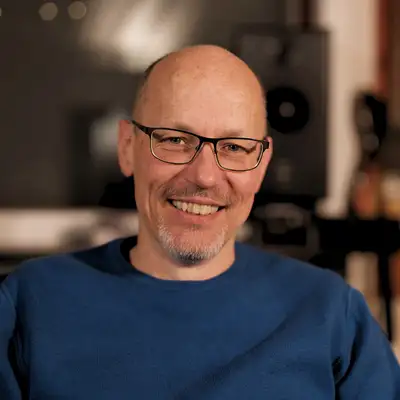
Welcome to the Sound On Sound People & Music Industry podcast channel. In this episode we talk about the past, present and future of music technology with AMS Neve's Mark Crabtree.
Well, it's an absolute pleasure to meet you and fascinating to get a tour around the AMS Neve factory here I think one thing that a lot of our readers will be interested in is They'll know AMS and they'll know Neve as great names from the history of British manufacturing. How did those two names come to be joined together?
That's quite a story. I founded AMS in 1976 and obviously Rupert founded Neve in about 1961 and Neve became a part of Siemens within the 1980s and Siemens approached us and bought AMS In 1990, and so, the two years the two companies ran in parallel on the Siemens ownership. And in 1992, I was asked to combine the two companies here in Burnley on the MS site.
I was given ten days in which to do it. There was a lot, a lot going on at the time. And so, um, it was quite a handful. And I think at the time there were probably... About 500 people in between the two companies and that
was in the middle of an industry going through a period of great change As well.
Yes, it was.
Um, I think AMS had Come up through the digital route and we had we'd pioneered a whole load of stuff including microprocessor control I would reverbs and DDLs and started sampling Invented hard disk editing, we moved on to produce a digital console and Niamh had come the other way and been making analog consoles and had just I was in the process of developing Capricorn, which was quite a tortuous birth and, uh, I was given the problem to sort out.
So tell us about the invention of sampling then, because that's obviously something that's totally fundamental to music today. But it was completely revolutionary when AMS did it.
It all came out, I mean, my background was in digital electronics. I worked briefly for an aerospace company before I founded AMS.
And so, microprocessors and memory and things were second nature to me. And so, um, the first product I wanted to do was to reproduce a tape loop echo. And so, through a few, a few previous units such as the DM 220 flanger, which was a bucket brigade device, I then moved on to a digital thing. And when I was doing the front panel of the, of the, What was the 1580?
I thought it'd be really nice to put a switch on there Because I can turn off the right pulse to the memory and it'll just go around in a loop So that'll be nice. I can have a loop and the history of AMS was that we work closely with the people using the kit the creative people and Then somebody suggested to be really nice if you could actually trigger the loop And so, we put in, uh, I put in some software to, so you could trigger the loop.
And the memory in our units is getting longer and longer and longer. So you could then, in fact, capture a piece of audio and then trigger it. And then later we put in a, a little thing which, uh, was a, a sort of envelope detector at the beginning. So you could, you could have a microphone with a pad, hit the pad, and a snare drum would come out the other end.
So, that's how all that started. Wow, and the
rest is history. The rest is history, really, yeah. But you never thought about developing that into a kind of musical instrument along the lines of Akai or Emu samplers?
No, um, every Friday, um, somebody rang me up who was from the original Mellotron company, Les Bradley.
And Mellotron was getting into a little bit of difficulty and wanted to do a digital Mellotron. he knew we'd done this sampling and he was asking if we could, if we could work with them to produce a digital, a digital version of the Mellotron, but we were rather too busy doing, doing other things. And so the, the application then turned into one.
of dubbing. We, we work with a lovely guy called Des Bennett at BBC Wales. And Des, Des had the, the lovely job of dubbing Japanese, he was an Irishman, dubbing Japanese cartoons into Welsh. So, uh, and we work with Des a lot, which, which resulted in the end, because he was using the, the, the, Capturing on the, on the DDL to, to dub his cartoons.
Uh, and complained that, that when we'd, when he turned it off, then the sound went. And so we thought, oh, we could put this on hard disk, really. So, then we, we sort of came up with Audiofile. The sort of, first really commercially sensible hard disk recorder editor. And so that's how we, we were steered not into the musical instrument side, but into the...
The sound for pulsed side
one of the fascinating things about ams neve is it's one of the few companies out there that really combines An absolutely classic heritage with gears such as the 1073 that goes all the way back to the 60s and 70s and on the other hand Totally cutting edge digital technology.
Does it frustrate you that people in the market still look back so much to that sort of classic
heritage? Not at all, really. It's, it's really getting the job done. And I think when, when I was doing the early digital stuff, I was very, very clear that I wasn't going to start talking about bits and bytes and megabytes and megaflops and the rest of it.
But, um, you know, the 1580 and the 1580s were really workhorses. They were there to do a job. And so I used to say at the time, I really don't care if it's got valves in it. But obviously that later on became a term of respect. My first product really was effectively an Amlok product, which was the DM 220 tape phase simulator.
So, um, you know, before that I was happily making tape recorders and amplifiers and things at home. So it's not that I'm just stuck on digital, it's whatever. is the right thing for the job at the time. And clearly, um, analog is analog. Your ears are your ears. They, they aren't going to go any higher in, in frequency response or any lower in frequency response.
And when you get something that sounds, sounds right, and you know how to design something that sounds right, the 1073 and all the other mic pre's that, that we do, the 88R for instance, Um, they really are tuned to, you know, to basically perfection as far as, as producers and musicians go. That's what you want to use because you know what it'll sound like, you know it's going to sound good.
And you won't, after the event, think, I wish I had a Neve there instead of this, this cheap thing I've bought. Well,
one of the impressive things you've got in your, your little museum here at AMS Neve headquarters is an old, uh, Studer J37 tape recorder. And we were saying earlier that they're What's you, what's been recorded on that?
It's actually only fairly recently that digital playback systems have really been able to play it back as, as well as an indistinguishably from the analog source.
That's right. Um, and, and when I was developing the, the, the pitch changer on, on the, the D M X. I actually used one of the tracks off of Revolver, the, the four track tape.
I have a revolver that runs on it. Uh, and Paul's voice on here, there, everywhere was, was, uh, a perfect thing to, to design the, the pitch change. They sound right and the, the frequency response goes way up there and, and it sounds absolutely fantastic. Obviously, it's also got the, the genius of George Martin in the recording and the absolute perfection of Abbey Rhodes.
Uh, technical prowess in getting the, the sound onto tape in a, in a, a, a laboratory environment.
To what extent does critical listening still play a key role in the design of AMS Neve products then? Well, very
much. Um, I, I love sound really and, you know, all the way through I was always playing with speakers and, and getting those to sound right and, and making tape recorders sound right and making amplifiers sound right.
And I spent probably the best part of a year designing the algorithms on the RMX 16. Uh, if you, if you just plug any algorithm into the thing, it sound, it can sound like soup. So, I wanted it to sound musical pretty well wherever you set it. And so, taking great care over the sound of that in the same way we take great care of the sound of, of the analog, uh, equipment that we make.
We listen to it, and listen to it, and listen to it. And then... In the end, it's got to pass the ear test, not just the audio precision test. I think we'd all say amen
to that. How much do you still take the lead personally in product development?
Um, I don't do any software development anymore. I don't do any particular hardware development anymore, but I, I specify more or less what it is that we want to make and, and work out that this is something that people will want and then we engage with the people who will use it.
In the Genesis console, when I sat down with the team, Um, I was saying I want something that's this big, by this big, by this big. And then Robin Porter, the chief designer of it, went away and got a ruler. And measured where my hands were. And so that's the starting point. And I also wanted it to be digital controlled analogue.
So that you could really get the control of the great Neve analogue sound. As well as just making a, a great desk and so, again, productivity is the other thing that I've always been very interested in. If you, if you go back through the products we've done, they get the job done quicker and, and better sounding.
The, the, the first product I had was a tape phase simulator which you can just get a hold of a knob and turn it and you've got tape phasing instead of having two tape machines. The, the delay line, uh, and, and the reverb for instance, the, the reverb stop you having to have. A big plate that got rusty or a, a room underneath Abbey Road.
Uh, the audio file meant that the B b, C and other people could take a room that was full of synchronizers and pneumatics and reel to reel tapes and everything else, and divide that room into four and get the job done in a quarter of the time. Uh, twice the, the, the, the performance. And so it even applies to things like the 1073, you know, the people who really know what they're doing, uh, in, in recording, know exactly where to set one of those things to, so they'll, they'll get their favourite microphone, they'll get hold of the knobs on a 1073, they'll go click, click, click, click, click, and they know what it's going to sound like.
So that saves them ages of time, you know, messing about with the microphone preamp, trying to get it just right. They know what they're going to get, so they can get on with the job of recording.
That's right, because I think there's a temptation to sort of fetishize the gear for its own. Yeah. For what it is in itself, whereas actually it's a tool to get a job done.
Yeah.
And so, again, um, my son actually is a drummer in Wishbone Ash, and watching what he was doing with the setup at home, with endless bits of outboard gear all hung together with string and sealing wax. And it starts to crackle, and so the genesis really came out of, of, of that experience of, you know, once you've got a, a big pile of gear you've tried to wire up yourself, and, and it still doesn't sound right, you might as well have something that incorporates it all.
You can just plug in microphones at one end, a MacBook at the other end, uh, and go. And you've got yourself a whole recording setup that works with your... DAW of choice.
Yes, it's a very interesting product, the Neve Genesis. It's, in effect, a digitally controlled analog console. So, like a lot of, uh, hybrid units, you can do DAW control from the faders, for example.
But it's also got analog equalization, obviously preamps, compressors, all of which can now be controlled not only from the surface, but also from a plug in within your DAW. Yeah. So you have full recall over... What is, in effect, an analog mix? Yeah. Is that very much your personal vision of how this should all work?
Yeah, it's not just mine, it's mine and the team's, you know. Robin Porter's, you know, he's been with Neve for a very, very long time. And John Turner and the, you know, the guys who really are the DNA of the Neve sound. You know, they were around when the 1073 was being designed and took part in it. So that heritage goes back a long way.
So we have all of that and we have all the digital side. Uh, as well, and so it was really going back to first principles about what you actually needed to do the job rather than hey, it's another V series console or it's another SSL 4K or it's another one of those. It was a case of analyzing how, how I or we would want to make music today.
Uh, and the only difference is that obviously you can make music, uh, and record music in the box. But you're missing such a lot by not, not having it through a console and very often when you finish doing it in the box, you have to take it to a console anyway. So why not do the whole thing in one go?
So when you come up with a product like this, which is in some ways quite unlike what people have seen before, is it a challenge to explain to the market?
Uh, it can be. That was what happened with the audio file. But obviously, that's history, where that went. Once you sit somebody down in front of a Genesis and you just show them a few basic things, then they just get it. I think it's not something you can say easily in words, which is obviously not a good idea on a podcast.
But once you have introduced them to it, then they fall in love with it, absolutely. And again, my son, he uses Cubase and various things like that. And he said, well, what do I need a console for? And so, uh, the Genesis that I have at home, he, he, he, he routed his signal out of the Cubase through the digitally controlled EQ on Genesis and then back into his Cubase.
And his, and his, his jaw hit the deck. The difference in sound between a a, an eq, an analog EQ and a, a digital EQ on a, on a, on a EQ base or whatever is, is vastly different. And so immediately then started to see the benefit of all, all that. And so he becoming a convert to, to having a, a console. And so the, the Genesis control plugin now allows you, To have, um, a nice learner curve from just being able to cut and paste in the box to then being able to control the genesis from the screen you're familiar with and then you can slowly but surely learn.
Really how, how you should be driving a console because they're there for a reason and they're still there for a reason.
So things have almost come full circle in that maybe 15, 20 years ago you would have been having to educate people coming from analog consoles in how to use a software workflow and now it's the other way around.
That's it. That's it. Um, and of course one aspect of software that's quite familiar today is, um, Plugins, and there are a lot of official and unofficial recreations of classic Neve products as plug ins. I mean, how close do you think they get to the real sort of analogue deal?
Well, we don't listen to anybody apart from Universal Audios.
We work very, very closely with them. And, uh, the amount of care and attention that goes into their plug ins is incredible. And we've auditioned. Everything that they've done to, to go, well, this is as close as you're going to get without it being the actual analog circuitry.
Yeah, because I guess for, for many sound or sound readers, something like the Universal Audio Neve 1073 is probably the closest they're going to get to working on a Neve console.
Yeah. Although you do, of course, make, for instance, 500 series modules. What's your view on the, the 500 series as a, as a format?
Um, it works very well, really. It's very convenient, you can mix and match, you can... It was something that felt like a good thing to do, you know. We talked to Vintage King about what people were asking for.
We always listen to the market, we always listen to the musicians and producers, and it's gone very well, you know. I think it's their biggest selling microphone, 500 series preamp.
And do you feel like it's taking sales away from the rack mounting units, or are they still strong as well?
Um, it's horses for courses, really.
It's another option. It's another option.
One of the things about the 1073 and other sort of classic Neve designs is, of course, they're now, any patents have now expired. So anyone's pretty much free to go and take that circuit and make something that's ostensibly and outwardly a 1073 and looks... Like a 1073 and perhaps even sounds a bit like a 1073 and obviously some of those because they're made in the Far East come in more affordably than the real AMS Neve 1073, but what are the risks involved to people in going down that route if you say, well, I'm going to save myself a few hundred quid by buying this?
Well, I mean, a lot of people want to have what looks like a 1073 in their rack in their studio. And it, it probably impresses, you know, people who come in who know what they're doing with their ears. But, you know, you might as well, in some cases, just stick a photograph of a 1073 there, because you don't really know what's going on behind the scenes, really.
And we, we make 1073s because it's, it's, it's kind of our product, really. And, you know, we have all the original, uh, drawings, the, the transformer specification is, is in pencil, that, that Rupert and the team did all those years ago, with loads of specifications on there, which, which, uh, none of the, the people who make the transformers other than us, uh, know how to do.
Uh, know what they are. And so, yes, you bought yourself a Transformer by well known manufacturers. And, and you say, whoopee, that makes it a 1073, a Neve 1073. But it doesn't, really. And, you know, I, I think we, we feel a bit embarrassed that if, if you've gone out and bought something that says 1073 on the front, but it didn't say Neve on the front.
And somebody comes in and it really doesn't sound right. It reflects badly on us. And I think that's, that's the, that's the distressing part about it.
The flagship AMS Neve product at the moment is obviously the DFC, the digital film console. Um, which is increasingly becoming something of a standard in kind of high end.
dubbing studios. On the face of it, you might expect people to have moved over entirely to a kind of in the box workflow or just using hardware controllers to govern software. But what we're seeing is that actually people are mixing on these hardware consoles. What are the advantages
of that? Well, I think if you're talking about, you know, a final mix stage, uh, when you've got a huge theatre and you've got three people driving a, a console, Then, you really need an awful lot of channels, and uh, given that the DFC will handle your 2000 channels, it's got built into it all the, the Dolby Atmos workflow, and everything else, yes, you can try and do it with, with, you know, you can make films on, on Avid stuff, and a lot of people do, but if you really want to get the, you know, the proper results, then you, you kind of need something of the, of the scale of a DFC with its...
It's 2, 000 paths and, and, uh, and those capabilities.
And those super high channel counts are currently mostly handled over MADI, I gather, in the film world. Yeah. But you've been looking to audio over IP as an alternative. Yeah, a lot of
the, the, the big film studios are really heavily invested in MADI. But as, as the, um, as things move on, I think Dante is probably going to be, A connection medium of choice.
And so, obviously, since we are dealing with such high channel counts, we, we, we will be, uh, having, you know, 500 channels up one. Ethernet cable for those large purposes, but obviously that then spins down onto the rest of our product range. We have a number of outboard units that will head that way, and some new units coming out, which will take full use of Dante capabilities.
So do you think we'll see, in the end, Dante actually taking over in the project studio realm as well, or is it going to remain a sort of high end professional protocol for the time being?
I think it's going to get everywhere. It's, it's so convenient. Being able to have, um, an XLR to put a signal into a console and know it's going to get there.
We went through all the synchronization and all the other things that had to do with AES and making sure who was the master on MADI and it got complicated. I think being able to have an RJ45 and plug it into one thing and then plug it into another one and know you're going to get your audio through is very convenient and, uh, And we've seen what's happened everywhere else.
It's a really, really good, good method of gluing things together.
One of the things that seems to be characteristic of modern digital, high end digital audio things is that they're necessarily quite complicated. Anything involving audio over IP or large channel counts or Dolby Atmos or anything is as much an exercise in IT configuration as it is in traditional audio skills.
How important are things like training and education as far as AMS needs are concerned?
Well, clearly, if we deliver a big console, then we've got, you know, when we commission it, we, we offer training to it. Um, in terms of training in, in, uh, audio techniques and how to do it. We do a lot of work with about ten universities and schools of music and so on.
They come here to our exhibition floor and spend a few hours there, give them the history of how the technology's developed, they get to play with the hands on stuff. I mean, if you're a student at a university, you don't often get the chance to work on a 2, 000 path film mixing console. And so... Uh, if you want to get into a studio when they're mixing a Bond movie, then they're not going to let you in.
But it's a good experience for people to come and do that here and work actually on the kit.
And one of the almost unique things about AMS Neve now is that you're still manufacturing all of your products here in the UK in Burnley. You're clearly a very proud Burnley man, and you've, you've put a lot back into the local community.
And I guess a lot of that is also about developing the human resources that you're going to need to find and recruit the next generation of engineers. Is that a challenge?
It's a challenge if we don't do it. And I think the government said that by 2021 or 22 Britain needs 2 million more engineers, otherwise the future doesn't look very good.
And yet, my daughter, who's a primary school teacher, has had no CDT training at all in a PGCE, so um, what we've, what I've done here is that we, we've arranged and sponsor Um, primary engineer lessons, so all, all Burnley primary school children, uh, have been able to have lessons in making model electric cars.
So 15, 000 Burnley primary school children so far have, have had that experience and they absolutely love it. And at the same time, the teachers have been trained, so the teachers are then able to pass that on. And, and watching these, these children learn how to use tools, learn how to, to see when something doesn't work, that they can try a different way instead of bursting into tears, has been fantastic.
And that first cohort has got through to the age of now, um, 14, and twice as many of those are choosing STEM subjects at school. So... That's really satisfying to see that coming
through. Well that's wonderful. It must be amazing to feel that you're making that kind
of a difference. Yeah, and we're working with the colleges and downstairs today we've got, uh, I think four people on degree apprenticeships from the local university and we've got about four people in who are, um, apprentices between 16 and 18.
So the next generation of Mark Crabtree's is just around the corner. Well, we're
trying hard. The, the RMX 16, it's really nice to revisit that office after so many years in a 500 series, right? But one of the, the chief engineers that has worked on that with me, uh, is 22. Wow, that's wonderful.
Well, it's nice to know that the future is in safe hands and thanks very much for your time, Mark.
Thank you very much.
Thank-you for listening. And be sure to check out the show notes page for this episode, where you'll find further information along with web links and details of all the other episodes. And just before you go, let me point you to the soundonsound.com/podcast website page, where you can explore what's playing on our other channels.